Danilo Corrêa Silva, Luis Carlos Paschoarelli (2022). Pressure Distribution on Hand's Palm as Evaluation Technique of Product Design. In: Advances in Ergonomics In Design, Usability & Special Populations: Part II. AHFE Open Access, vol. 19. https://doi.org/10.54941/ahfe1001285
Post-Graduation Programme in Design – Faculty of Architecture, Arts and Communication Univ. Estadual Paulista - UNESP Bauru, SP +55 143103-6000, Brazil ↗
The design of a product can be evaluated in various ways by selecting or isolating several variables. However, for studies involving ergonomics and usability of hand tools, it is common to study physical aspects of that interaction, such as anthropometric aspects, biomechanical forces to perform a task or normal usage. This study aims to discuss the analysis instruments available, their characteristics and applicability for comparative evaluations of different designs of hand tools. With the advancement of technology, new analysis instruments also allowed the assessment of pressure distribution over the hand palm while using a hand tool. The pressure distribution is related both to the force applied by the individual, and the characteristics of the interface. Thus, even interactions with relatively low forces can substantially impair the use of a product, if that force is concentrated in a small area. The knowledge of pressure distribution on hand's palm is decisive to the hand tools design.
Most of the Activities of Daily Living (ADL) involves the manipulation of objects, such as tools, packaging, handles, etc. However, many of these interfaces are not suitable for some users. Several aspects can impair this interaction, including informational problems, like instructions to use, or physical problems, like high exertions to use a tool or to open a container. These aspects involve several variables, many of them require methods and technologies that can make the evaluation of hand interfaces more complete, assisting the development of new and more appropriate products. Studies involving ergonomics and usability of hand tools commonly involve physical aspects of that interaction, such as anthropometric aspects or forces exerted to perform a task.
In addition to the hand forces applied to the interface, there is the possibility of assessing the pressure distribution over the hand palm. The pressure distribution is related both to the force applied by the subject, and the characteristics of the interface. Thus, even in an interaction with relatively low forces, if these forces are concentrated in a small area, it can impair the use of the product. However, there are few equipment available to perform such evaluations, and hence few studies about that aspect. This papers aims to gather papers that have investigated the pressure distribution over the hand palm and to discuss the equipment, methods and results obtained by such studies, highlighting the importance of that kind of evaluation to product design.
Ergonomics In Design, Usability & Special Populations II
PRESSURE DISTRIBUTION ON HAND'S PALM AS EVALUATION TECHNIQUE OF PRODUCT DESIGN Hand tools and pressure on hands
Hand tools can be thought as implements used to modify materials for human use, in order to accomplish certain tasks faster and more efficiently (Cacha, 1999). Usually, such tools function as force magnifiers, allowing the user to cut steel or secure a nut using small forces (Dababneh and Waters, 1999). Aptel, Claudon and Marsot (2002) point out that ergonomic hand tool design have been subject of interest for users, manufacturers and researchers in recent years. They claim that until recently the main concerns were about efficiency in operation, and standardization in production, achieving the majority of the users and, consequently, cutting costs.
The same authors, however, say that those approaches have changed to also include comfort and reduced biomechanical load, considering users capacities. Additionally, it is necessary to say that intensive use of hand tool occurs mainly in industry, but there is also the tools used at home, such as knives, scissors, screwdrivers, hammers, pliers and several others. Hence, this paper approaches hand tools not only as workplace tools but also as the various tools we use at home on a daily basis.
The wrists, hands and digits are the structures most susceptible to disorders in the upper limbs associated with bad design of hand tools (Barr, Barbe and Clark, 2004). There are several factors on the use of hand tools that can impair hand function, and even lead to hand disorders. Awkward postures, forceful gripping an repetitive tasks are well known to be related with work-related musculoskeletal disorders - WMSDs, or cumulative trauma disorders - CTDs (Hall, 1997) as well as discomfort and inefficiency of activity (Yun, Kotami and Ellis, 1992).
Barr et al. (2004) affirm that most of the hand WMSDs are caused by highly repetitive and hand-intensive tasks, especially when high forces are involved. Muggleton, Allen, and Chappell (1999) say that the palmar loading can increase the pressure on carpal tunnel, compressing the median nerve and possibly leading to Carpal Tunnel Syndrome (CTS). Also, the pressure on that region rises with the wrist flexion or extension, as well as when making a fist or holding objects (Barr et al., 2004). These last authors mention that is a strong evidence for a relationship between force-repetition or force-posture and CTS and even with other disorders, like hand or wrist tendinitis.
According to Tichauer and Gage (1977), high pressures at the hand can compress arteries, veins and nerves and other tissues, resulting in inflammation and calluses, or other injuries that can be spread to different anatomical regions of the upper limbs. In that sense, compression may damage nerve structures, may also induce neural fibrosis, and indirectly compromise hand function by restricting blood flow (Barr et al., 2004).
Whether at work or in daily activities, a poorly designed hand interface can harm the use of the object and cause several issues to the user. Cacha (1999) points out that force, posture, repetitiveness and duration are important variables associated with ergonomic quality of an activity. The author suggests that inconsistency of such factors can be dangerous to the user as the excessive pressure caused by hand tools with small contact areas can reduce the blood flow over the area (ischemia).
A major factor in the distribution of pressure on the hand is the shape of the handle. Hard or sharp edges can concentrate pressure on the tissues of the hand and must be avoided. We have also to consider that the forces applied during the handling of a tool are not evenly distributed, as well as the resulting pressure and the risk of injury in these regions (Hall, 1997; Muralidhar, Bishu, and Hallbeck, 1999). Therefore, the analysis of the hand-tool interface is essential for the design of hand tools or any other matter subject to handling.
Pressure can also be linked to subject's perception, another important factor which can vary according to the hand region. Johansson, Kjellberg, Kilbom, and Hägg (1999) assert in their study about pressure points on different regions of the hand that the pain and discomfort threshold on the thenar region occurs at lower levels of pressure, which points to a hypersensitivity on that region. Furthermore, the exposure time is also important when discussing what level of pressure on the hands is acceptable when using manual tools.
Ergonomics In Design, Usability & Special Populations II
The authors also claim that avoiding the discomfort is important for increasing productivity and quality of production in all kinds of manual work. The discomfort has both physiological and psychological effects, reducing productivity and employee motivation. Therefore, it is recommended that assessments be made to keep the activities within acceptable perceptual levels for users.
We can assume that the pressure has a role in both biomechanical and perceptive aspects. Excessive pressure is indicative of a poorly designed or problematic hand tool. Hence, Johnson (1993 apud Muggleton et al., 1999) says that effective handle designs can improve that situation, by distributing more evenly the pressure on the hand and fingers. Additionally, to Tichauer and Gage (1977) the evaluation and project of hand tools depend on the knowledge of how to grasp. That includes the definition of contact points at the hands, as well as the intensity of pressure at these points.
Assessment of pressure distribution on hands Although the pressure distribution is likely a determinant variable in the usability of hand tools, it seems to be a topic less studied. There are relatively few studies that evaluated pressure distribution over the palm, some of them in automotive industry (Garinei and Marsili, 2014; Imamura, Takeuchi, Zhang, and Miyake, 2012) and during the use of vibrating hand tools (Aldien, Welcome, Rakheja, Dong and Boileau, 2005; Gurram, Gouw and Rakheja, 1993; Welcome, Rakheja, Dong, Wu and Schopper, 2004). These studies show that pressure distribution on the hands palm is an important variable in the analysis of hand tools.
However, usually the hand tools evaluations involve assessment of hand force, posture and effort. Koppelaar and Wells (2005) say there are four main approaches to this kind of assessment: the contact force between the object and the hand; the weight of object; the rating of the effort; and electromyography (EMG). The authors continue describing three categories of measurement methods that correspond to self-report; observational methods; and direct (or technical) measurement methods. The last method commonly use force transducers or force sensors and have a good reliability.
Most of the studies involving grip forces involve collecting data using a grip dynamometer or a split cylinder (Nicholas, Corvese, Woolley and Armstrong, 2012). The authors say that although these devices provide a reliable method, there is a single force value for grip strength, which does not describe how force is distributed throughout the hand. Besides grip force evaluation, the distribution of forces at the hand-tool interface under both static and dynamic loading is gaining strength in recent years with the development of new flexible and robust sensors.
There are a few different systems for evaluating contact pressure applicable for hand interfaces. Some researchers have developed their own devices, suitable to their needs. Either way, a hand force/pressure mapping system can provide quantitative data on hand force or pressure distributions, hence providing insights to the biomechanics of grip, push, and pull (Nicholas et al., 2012).
Lemerle, Klinger, Cristalli and Geuder (2008) also say that the use of pressure sensors is an efficient alternative to evaluate hand-tool interfaces. The measurement of the pressure distribution has been the subject of few studies, including analysis of the design of handles, hand tools and packages (Fellows and Freivalds, 1989, Yun et al. 1992; Bishu, Wang and Chin, 1993; Björing, Johansson and Hägg, 2002).
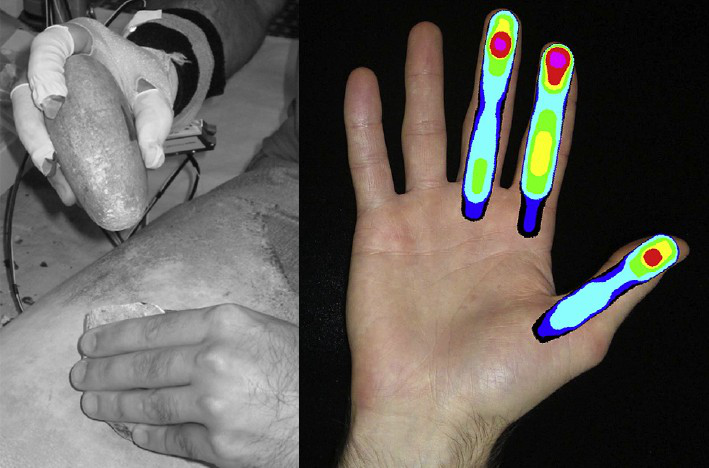
This data can be used as base for design and ergonomic evaluation of handles (Gurram et al., 1993). Even then, as mentioned before, few studies have investigated how those forces are distributed throughout the hand when manipulating objects. Among the studies that have pressure sensors to evaluate contact forces on hands is the Williams, Gordon and Richmond (2012), which used the Novel Pliance (Novel gmbh - Munich – Germany) to analyze the pressure on hands of six subjects during Oldowan stone tool production (Figure 1).
The authors were able to identify and quantify pressures on each digit during the task. The results showed that the pressure at strike was significantly greater on the second and third digits compared with the first digit. Hence, the thumb experienced normal forces and/or pressures lower than the other digits. Among the data collected were the peak normal force, pressure, impulse, and the pressure/time integral.
Ergonomics In Design, Usability & Special Populations II
Figure 1. Contact pressure during grip, pull and push trials. (Source: Williams et al., 2012, pp. 522,
530)
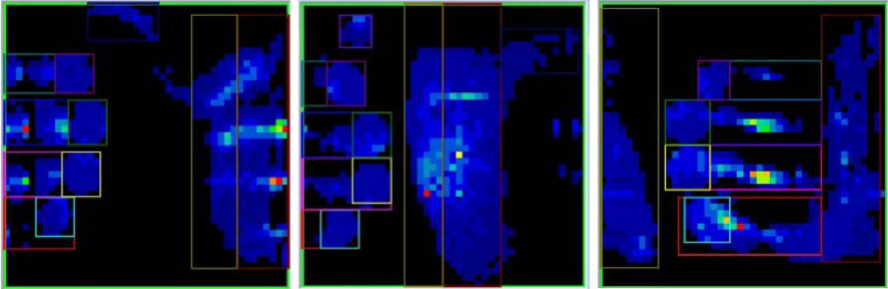
Another study was made by Nicholas et al. (2012) to better understand the hand force distribution when gripping, pushing, and pulling a cylinder. The Tekscan I-Scan pressure mapping system was used to collect the data. The authors affirm that the Tekscan system, with proper calibration, seems to be a reliable source to record force, pressure, and area data for a wide range of loads. Thus their study investigated the relationships between force and contact area during activities of grip, push, and pull a cylinder.
That study showed the distribution of forces could be analyzed in each trial, showing that the forces are evenly distributed during the grip trial, on the pull trial the higher contact forces were at metacarpal joints and in push trials the thenar region dominated (Figure 2). That study also showed that a larger contact area leads to a greater distribution of force, which causes a smaller resultant grip force on the pressure sensor. Additionally, higher exertion during grip, push, and pull led to a higher hand contact area with the handle.
Figure 2. Contact pressure during grip, pull and push trials respectively. (Source: Nicholas et al., 2012, p. 607)1
1 Reprinted from Work: A Journal of Prevention, Assessment and Rehabilitation, Volume 41, Supplement 1/ 2012, Nicholas, J. W., Corvese, R. J., Woolley, C., Armstrong, T. J., 2012, Quantification of hand grasp force using a Ergonomics In Design, Usability & Special Populations II
Welcome et al. (2004) also investigated the pressure distribution over a cylinder, but their study encompasses vibrating hand tools. The authors also mention that high contact forces increases considerably the risk of WMSDs. Their study aimed to identify the relationship between the contact force and the hand grip and push forces. To assess that, a Tekscan pressure sensor was also used, and the grip force was calculated with the sensor data, establishing a relationship between contact force and grip force.
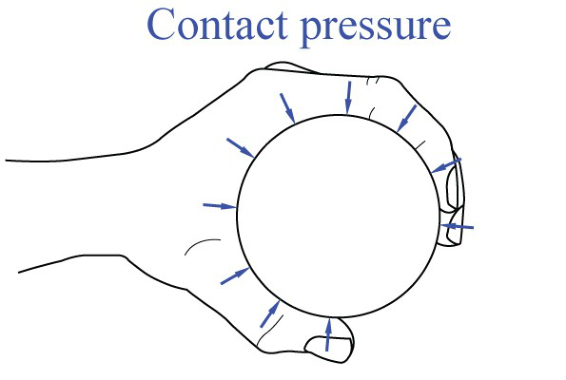
They derived resultant contact force from the contact pressure, and defined it as the sum of the distributed normal forces at the hand–handle interface surrounding the handle (Figure 3). The authors say that thin-film flexible sensors can be used to measure the hand force. Furthermore, such sensors may be applied in real tools in a less complex manner, providing quantitative and qualitative measurements of hand–handle interface pressure distributions.
Figure 3. Contact pressure. (Adapted from: Welcome et al., 2004, p. 508) In automotive field, Garinei and Marsili (2014) investigated pressure distribution during the use of a steering wheel. The assessment of pressure is becoming more increasingly important in for ergonomic improvement of both seats and steering wheels. The authors wrapped a capacitive matrix sensor (Novel) to the steering wheel and evaluated it under some different driving conditions (Figure 4). They were able to identify peaks of pressure over different regions of the hands for each condition, which can be useful to design of such interfaces.
pressure mapping system, p. 607, Copyright (2012), with permission from IOS Press. Ergonomics In Design, Usability & Special Populations II
Figure 4. Sensors on the steering wheel and pressure distribution over the hand surface. (Source:
Figure available in the original PDF paper.
Garinei and Marsili, 2014, pp. 115, 116)
The results of that study reveal that the system is reliable and suitable for evaluating steering wheels, being adaptable to different sizes and shapes of handles and extensible, depending on the area to be analyzed. The authors also suggests the use of that measurement system to evaluate steering wheels in various situations, like to assess grip forces and pressure distribution on hands during turning in motionless conditions.
Although all those studies have been successfully carried out, most of them involves grip forces on cylinders. There are few studies that used some kind of pressure measuring system to evaluate hand tool design. Some of them used sensors directly on hands or over the handle surface (Björing, Johansson and Hägg, 2002; Hall, 1997; Kuijt- Evers, 2007; Paschoarelli, 2003; Rice, Cathy and Carter, 1998) and others developed a glove to hold and position the sensors over the hand (Kong, Lowe, Lee and Krieg, 2007; Lu, James, Lowe, Barrero and Kong, 2008; Silva and Paschoarelli, 2010).
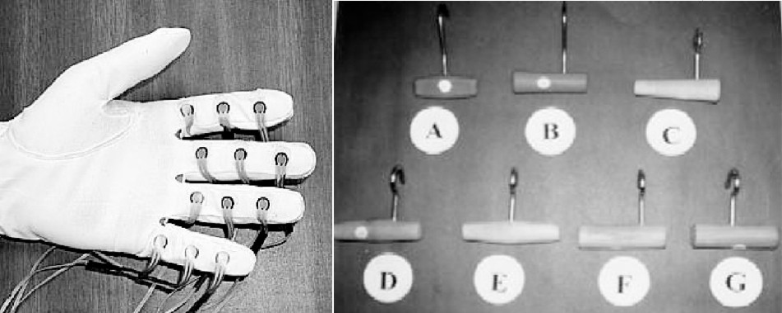
Kong and Freivalds (2003) evaluated 7 different designs of handles of meat hook (Figure 5), two of them already available on the market and 5 new designs. They used gloves with FSR sensors (Interlink Electronics - Camarillo - CA – USA) to assess pressure distribution on hands during a pull task. The results of that study include data from the pressure on each phalanx for individual digits. Two of the new handle designs allowed the user to apply a greatest pulling force, compared to the others.
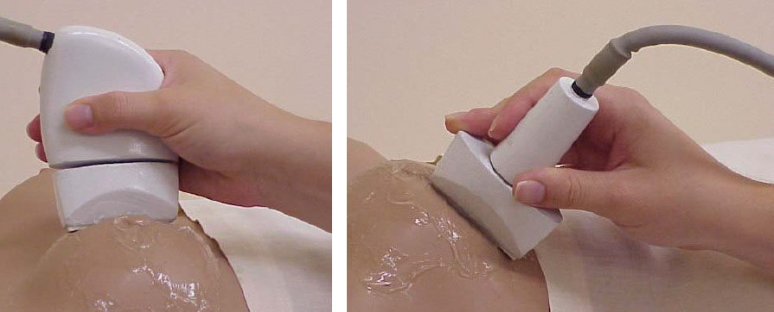
Figure 5. Glove and meat hook handles evaluated. (Source: Kong and Freivalds, 2003, p. 15) Paschoarelli (2003) evaluated two different prototypes of breast ultrasonography transducers (Figure 6), and found a significant difference between the different designs presented. The transducer that mainly required a power grip (palmar grip) caused less pressure on the distal phalanges (index, middle and ring), than the transducer that mainly required a precision grip.
Ergonomics In Design, Usability & Special Populations II
Figure 6. Two models of ultrasonography transducers evaluated with FSRs sensors. (Source:
Paschoarelli, 2003, pp. 108, 109)
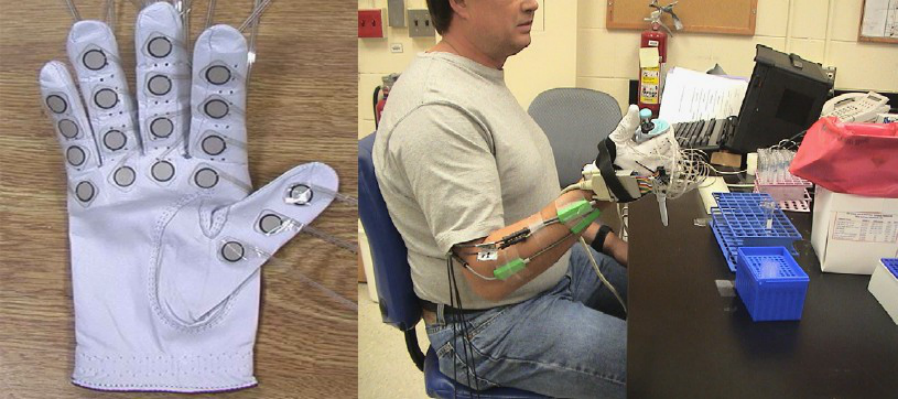
Lu et al. (2008) used flexiforce sensors (Tekscan Inc. - Boston – MA – USA) in a glove to evaluate the different models of laboratory pipettes (Figure 7). The pressure distribution on the digits was evaluated, especially the thumb, directly involved in transporting liquids samples with this instrument. The results of this study showed that the force exerted by the thumb and hand during tasks with pipettes are dictated by the design of the pipette, regardless of the task, body position and volume of the transported sample.
Figure 7. Instrumented glove and subject at the evaluation of laboratory pipettes. (Source:Lu et al.,
2008, p. 20)
All these previous studies have reported success in using a pressure measuring system, whether they use the sensors directly over the hand, the object or even when a glove is used. However, it worth to mention that the use of such sensors may interfere with normal usage of the tool. Kinoshita (1999) investigated the effect of several gloves thickness in grip forces, the subjects were asked to lift and hold a small object in a natural and ordinary lifting task.
The author found that the both peak and static forces increased with gloves thickness. That is probably due to the fact of the glove thickness modifies the cutaneous sensation, influencing grip force regulation. The study also reported conditions of slippery and non-slippery surfaces, and the grip force also increased for slippery surfaces. But when a user repeated the task, he adapt his force to the frictional condition. This information improves the adjustment of grip force.
Ergonomics In Design, Usability & Special Populations II
DISCUSSION
The research in ergonomics has been evolving to encompass a growing number of variables and aspects. Nevertheless in most organizations productivity and quality are principal business goals, which lead to such contributions not to be widely recognized yet. When it is, ergonomics is usually applied at too late a stage and with a limited scope (Koningsveld, Dul, Van Rhijn and Vink, 2005).
The hands are one of the most sensible structures of the human body, and have a key role in the human development, as we could create and use tools to extend the force and functionality of our body. Although hand tools can be designed to multiply the user force or to apply it in an efficient way, their constant use on industry is a common cause of injuries and disabilities (Dababneh, Lowe, Krieg, Kong and Waters, 2004).
Although machines and power tools may replace human force, there are still many tasks that require manual hand tools (Dababneh and Waters, 1999). Such tools vary in function and also in design, which makes its evaluation complex and specific. However, some variables can be assessed in most of them, as they usually involve application of biomechanical force.
The analysis of the hand forces has been widely used in studies involving the hands biomechanics, the functional evaluation of the hand, the development of control forces to electrical stimulation of the upper limbs and the product design. Therefore, we can consider that the analysis of the hand-interface is essential to the development and evaluation of new products (Dababneh and Waters, 1999).
The force is one of the most common target of ergonomic studies of hand tools, but it is not the only one that can provide insights of such interfaces. The pressure distribution is an important variable which is gaining importance over the years. As stated before, even with relatively low forces applied to a hand tool, if that force is concentrated over a small area, like a sharp edge, it can impair the use of a tool. Hence, it is important to assess how the hand forces are distributed over the surface of the object.
It is important to consider also that hand tools is a generic term, which is not restrict to workplace. Hand tools are used at home or even on the streets in our Activities of Daily Living (ADL). Such statement makes clear that we use hand tools all the time, whether to open a package (like a pair of scissors), to open a door (door knob) or to cut our meal (knives). Due to the several design characteristics of so many types of hand tools, assessing pressure distribution in all of them may represent a challenge.
That kind of evaluation is a topic little investigated. Most studies on this variable are made to assess it in purely experimental situations, such as handling cylinders. In such cases, the pressure is just a mean for evaluate grip forces. There are a few studies that investigated how the physical design of a tool can influence the pressure distribution over the hands. Those studies have reported differences on that variable, probably caused by the design of the tool.
There are relatively few reliable and versatile equipment and methods to collect and analyze this kind of data in so many different hand tools designs. Some studies have reported the use of resistive sensors, and others capacitive sensors by some manufacturers. Others have developed their own sensors, to their specific needs. Some researchers used the sensor fixed to the object of the interaction (e.g. cylinders), others have applied it to the hands of the user, with or without the use of a glove.
Whether at the object or at the user hands, it is necessary to consider the effect of the surface on the user's perception. As mentioned before, modified frictional condition can modify the applied grip forces. The thickness of the glove modifies the perception of the user, causing excessive forces. As the user makes more trials, he can adjust his forces to the new conditions, matching the necessary grip forces.
Hence, the assessment of pressure distribution on hands during use of hand tools is complex and needs to be made with various aspects in mind. Such assessment can be useful to the design and evaluation of hand tools, as Ergonomics In Design, Usability & Special Populations II well as evaluating the risk of WMSDs due to the use of a hand tool. There are also several aspects that have to be taken into account, like proper calibration of sensors and the influence the sensor itself (or gloves) has on the interface hand-tool.
ACKNOWLEDGMENTS
This paper was supported by São Paulo Research Foundation – FAPESP (Process 2013/24629-5).
REFERENCES
Aldien, Y., Welcome, D., Rakheja, S., Dong, R., Boileau, P.-E. (2005). “Contact pressure distribution at hand–handle interface: role of hand forces and handle size”. International Journal of Industrial Ergonomics, 35(3), 267–286. doi:10.1016/j.ergon.2004.09.005 Aptel, M., Claudon, L., Marsot, J. (2002). “Integration of ergonomics into hand tool design: Principle and presentation of an
example”. International Journal of Occupational Safety and Ergonomics, 8(1), 107–115. Barr, A. E., Barbe, M. F., Clark, B. D. (2004). “Work-related musculoskeletal disorders of the hand and wrist: epidemiology, pathophysiology, and sensorimotor changes”. The Journal of Orthopaedic and Sports Physical Therapy, 34(10), 610–27. doi:10.2519/jospt.2004.34.10.610 Bishu, R. R., Wang, W., Chin, A. (1993). “Force distribution at the container hand/handle interface using force-sensing
resistors”. International Journal of Industrial Ergonomics, 11(3), 225–231. doi:10.1016/0169-8141(93)90110-Y Björing, G., Johansson, L., Hägg, G. M. (2002). “Surface pressure in the hand when holding a drilling machine under different drilling conditions”. International Journal of Industrial Ergonomics, 29(5), 255–261. doi:10.1016/S0169-8141(01)00050-6 Cacha, C. A. (1999). “Ergonomics and safety in hand tool design” (p. 117). New York: Lewis Publishers. Dababneh, A., Lowe, B., Krieg, E., Kong, Y.-K., Waters, T. (2004). “Ergonomics. A checklist for the ergonomic evaluation of
nonpowered hand tools”. Journal of Occupational and Environmental Hygiene, 1(12), D135–45. doi:10.1080/15459620490883150 Dababneh, A., Waters, T. (1999). “The ergonomic use of hand tools: guidelines for the practitioner”. National Institute for Occupational Safety and Health. Applied Occupational and Environmental Hygiene, 14(4), 208–15. doi:10.1080/104732299302954 Garinei, A., Marsili, R. (2014). “Development of a new capacitive matrix for a steering wheel’s pressure distribution
measurement”. International Journal of Industrial Ergonomics, 44(1), 114–119. Retrieved from http://www.sciencedirect.com/science/article/pii/S016981411300142X Fellows, G., Freivalds, A. (1989).”The use of force sensing resistors in ergonomic tool design”. In Proceedings of Human Factors Society, 33rd Annual Meeting (pp. 713–717). Gurram, R., Gouw, G. J., Rakheja, S. (1993). “Grip pressure distribution under static and dynamic loading”. Experimental
Mechanics, 33(3), 169–173. doi:10.1007/BF02322568 Hall, C. (1997). “External pressure at the hand during object handling and work with tools”. International Journal of Industrial Ergonomics, 20, 191–206. Imamura, T., Takeuchi, Y., Zhang, Z., Miyake, T. (2012). “Estimation for grasp behavior of vehicle driver by using steering
wheel sensor system”. In 2012 IEEE International Conference on Systems, Man, and Cybernetics (SMC) (pp. 1515–1519). IEEE. doi:10.1109/ICSMC.2012.6377950 Johansson, L., Kjellberg, A., Kilbom, A., Hägg, G. M. (1999). “Perception of surface pressure applied to the hand”.
Ergonomics, 42(10), 1274–82. doi:10.1080/001401399184947 Kinoshita, H. (1999). “Effect of gloves on prehensile forces during lifting and holding tasks”. Ergonomics, 42(10), 1372–85.
doi:10.1080/001401399185018 Kong, Y.-K., Freivalds, A. (2003). “Evaluation of meat-hook handle shapes”. International Journal of Industrial Ergonomics, 32(1), 13–23. doi:10.1016/S0169-8141(03)00022-2 Kong, Y.-K., Lowe, B. D., Lee, S.-J., Krieg, E. F. (2007). “Evaluation of handle design characteristics in a maximum
screwdriving torque task”. Ergonomics, 50(9), 1404–18. doi:10.1080/00140130701393775 Koningsveld, E. A. P., Dul, J., Van Rhijn, G. W., Vink, P. (2005). “Enhancing the impact of ergonomics interventions”.
Ergonomics, 48(5), 559–80. doi:10.1080/00140130400029136 Koppelaar, E., Wells, R. (2005). “Comparison of measurement methods for quantifying hand force”. Ergonomics, 48(8), 983–
1007. doi:10.1080/00140130500120841 Kuijt-Evers, L. F. M. (2007). “Comfort in Using Hand Tools” (p. 224). Delft. Lemerle, P., Klinger, A., Cristalli, A., Geuder, M. (2008). “Application of pressure mapping techniques to measure push and gripping forces with precision”. Ergonomics, 51(2), 168–91. doi:10.1080/00140130701528602 Lu, M.-L., James, T., Lowe, B., Barrero, M., Kong, Y.-K. (2008). “An investigation of hand forces and postures for using
selected mechanical pipettes”. International Journal of Industrial Ergonomics, 38(1), 18–29. Ergonomics In Design, Usability & Special Populations II doi:10.1016/j.ergon.2007.08.006 Muggleton, J. M., Allen, R., Chappell, P. H. (1999). “Hand and arm injuries associated with repetitive manual work in industry: a review of disorders, risk factors and preventive measures”. Ergonomics, 42(5), 714–39. doi:10.1080/001401399185405 Muralidhar, A., Bishu, R. R., Hallbeck, M. S. (1999). “The development and evaluation of an ergonomic glove”. Applied
Ergonomics, 30(6), 555–63. Retrieved from http://www.ncbi.nlm.nih.gov/pubmed/10693835 Nicholas, J. W., Corvese, R. J., Woolley, C., Armstrong, T. J. (2012). “Quantification of hand grasp force using a pressure mapping system”. Work (Reading, Mass.), 41 Suppl 1, 605–12. doi:10.3233/WOR-2012-0217-605 Paschoarelli, L. C. (2003). “Usabilidade aplicada ao design ergonômico de transdutores de ultrassonografia: uma proposta
metodológica para avaliação e análise do produto”. Universidade Federal de São Carlos. In portuguese. Rice, M. S., Cathy, L., Carter, M. (1998). “Grip Strengths and required forces in accessing everyday containers in a normal population”. The American Journal of Occupational Therapy, 52(8), 621–626. Silva, D. C., Paschoarelli, L. C. (2010). “Design Ergonômico de Ferramenta Manual: Colheita de Mudas de Plantas
Ornamentais”. In J. C. P. Silva, L. C. Paschoarelli, F. moreira Silva (Eds.), Design Ergonômico - Estudos e Aplicações (1st ed., pp. 132–143). Bauru: FAAC UNESP. Tichauer, E. R., Gage, H. (1977). “Ergonomic principles basic to hand tool design”. American Industrial Hygiene Association Journal, 38(11), 622–634. Welcome, D., Rakheja, S., Dong, R., Wu, J. Z., Schopper, A. W. (2004). “An investigation on the relationship between grip,
push and contact forces applied to a tool handle”. International Journal of Industrial Ergonomics, 34(6), 507–518. doi:10.1016/j.ergon.2004.06.005 Williams, E. M., Gordon, A. D., Richmond, B. G. (2012). “Hand pressure distribution during Oldowan stone tool production”.
Journal of Human Evolution, 62(4), 520–532. Retrieved from http://www.sciencedirect.com/science/ article/pii/S004724841200036X Yun, H., Kotami, M., Ellis, K. (1992).” Using force sensitive resistors to evaluate hand tool grip design”. In Proceedings of the Human Factors Society, 36th Annual Meeting (pp. 806–810).
Ergonomics In Design, Usability & Special Populations II
LISTED IN THE AHFE DIGITAL BOOKSTORE CATALOGUE
Explore the complete digital volume
Advances in Ergonomics In Design, Usability & Special Populations: Part II
Read this individual research paper free through the original publisher, or explore the full digital proceedings book.
ISBN 978-1-4951-2107-4
Explore this ISBN in the AHFE Bookstore ↗Listed in the July 2026 bookstore catalogue; search by ISBN to confirm current availability · Digital book purchase optional