Andres Viscaino - Quito, Luis Serpa-Andrade (2022). Synchronization procedure for data collection in offline-online sessions. In: Artificial Intelligence and Social Computing. AHFE Open Access, vol. 28, pp. 182–186. https://doi.org/10.54941/ahfe1001461
This article proposes a system for data replication and synchronization in mobile devices which is managed offline, allowing data collection in remote locations or deprived of internet connection. In this process there were shortcomings in the convergence and stability of the data, for which a synchronization procedure (web services) is used to assist it. As a result it was obtained that the synchronization between a database hosted in the cloud, a database hosted locally on the mobile device, the compatibility between different programming languages such as Django of Python as server, the deployment of Web Services and C# as client in the consumption of synchronization services is a success, carrying out a synchronization where the integrity of the data is not lost, enabling the connection of the devices in offline mode, performing the corresponding activities, to the time of having an internet connection to upload the data and keep them synchronized.
In research processes, there are several approaches to relate the information with corroborating references, such as computer network media, where digi- tal information is processed, study processes taking into consideration the analysis, deliberation and evaluation of the information or a set of skills and knowledge that provide the researcher with sufficient information to impart meaning to his study, making efficient use of Information and Communi- cation Technologies (ICT) during the selection, collection and processing of data (George Reyes & Salado Rodríguez, 2019; Romero-Cañizares & Vicente-Galindo, 2022).
Within ICT, the connections generated between technological devices, and the large volume of information they provide, demands another type of cri- tique that investigates their purpose and application as a primary point of view in providing objective and measurable consequences (Pinillos & Mateo, 2018), which has the ability to convert information into knowledge, allow- ing us to assimilate it, assisting its qualitative value (George Reyes & Salado Rodríguez, 2019).
Synchronization Procedure for Data Collection in Offline-Online Sessions 183
These digital tools streamline and optimize the collection of information, and it is important that this information remains stored, as it is useful for future retrieval, as well as for processing, modifying and interpreting the object or approach within the research context, making use of as much infor- mation as possible, as each process or procedure involved generates relevant data (Ramírez-Hernández & Santos-Quiroz, 2019). The collected data serve also to implement some intelligence algorithm that could improve several processes in the field of treatments (Dolón-Poza et al., 2020).
In accordance with the above, in this article we describe the development of a data replication and synchronization system, during and after the process of collecting information from an intermediary through a mobile device that is managed offline and online, allowing us to make use of it in places where we do not even have a connection. Here, we implement various methodologies, tools, libraries, programming languages, among others, which are related to each other, and whose objective is to maintain data integrity.
RELATED WORKS The use of tools that streamline and optimize the data collection process, as well as preserve the integrity of the data, is a fundamental process for the analysis and evaluation of the information, which will later serve to determine the reliability of the results and the actions generated by them as the research is developed (Pozo-Guzman & Berrezueta-Guzman, 2020). A clear example is presented by (Ramírez-Hernández & Santos-Quiroz, 2019), which descri- bes a platform based on the daily activities of a physical rehabilitation clinic in relation to the different areas of operation, ranging from the staff wor- king in the clinic, to the patients who make up the same, focusing mainly on the management of medical appointments through a mobile application, measuring the coordination and execution time of the process of acquiring information regarding the diagnosis of the patient and the possible situations that arise when unable to attend a medical appointment. All this entails a very long process, so data synchronization is important for the management of the offline tool, so they implemented web services, protocols and standards to manage all the information.
Similarly, (Muñoz Mandujano et al., 2018) developed a system that uses web scraping to collect weather data from different stations, which is proces- sed in a monitoring system called RedCIAQ, using an iterative development methodology, producing versions as the development of the system pro- gresses. The data collection is done every minute in each of the stations, developing a system completely from scratch, using Python libraries (Beautil- Soup or the Scrapy API) that would be a form of web scraping and a database for storing the information, presenting it in a web page consisting of two views, one to present the weather information and another a complete view of the weather data.
Other systems focused on maintaining data integration are presented below:
(Prada et al., 2019) presents a guide to develop software from a synchronized database, due to the need to keep updated the information
184 Viscaino-Quito and Serpa-Andrade
in the database, which generally tends to be lost due to connection pro- blems. For the construction of this software an AUP methodology was used, which works as an iterative and incremental process, in which deli- verables are generated during the development process, using XML files for the elaboration of SQL queries and two cases for the synchronization process, the first is a comparison of the components to be synchronized, and the second the generation of a log with the process performed.
A cross-platform mobile tool for data collection in sectors where there is no Internet connection is described by (López Villarreal, 2020), which uses a MDAM methodology (Methodology for the development of mobile applications) to ensure communication between different technologies, managing system operations and the different data structures that com- prise each scenario. During the development process, data synchronization is applied, which is stored at a single point, and projected into a web application for analysis.
A cloud storage data synchronization process for the deployment of a web page is presented by (Farías et al., 2018), which explains the use of several tools that optimize the system development process, based on comparisons during the deployment and synchronization period between the applied methodology and a traditional model. The system uses a CMS (Content Management System), management tools through the command console and the cloud server for the respective processes of file migration, data- base, deployment and synchronization through a free hosting service of the company Acquia.
A related work on data synchronization in the cloud is presented by (Berrezueta-Guzman et al., 2020) where the data acquired by a smart ADHD therapy environment is managed by Google’s Backend as a Servi- ces Firebase platform. Here the data is taken online from the database in real time via the internet to a mobile application (López-Pérez et al., 2020). In Ofline mode, the data is stored locally in the robotic assistant environ- ment and once the connection is established again, the data is uploaded to the database in real time to be processed and distributed to the clients via the mobile App (Berrezueta-Guzman et al., 2021).
METHODOLOGY
To solve the problems of handling data that is stored in the cloud, in remote locations that lack internet, where data collection is limited, we propose a procedure for collecting data offline-online, making use of local servers that are used as a useful alternative to store data, allowing us to test without risking damage to the original data in the cloud, becoming a controlled envi- ronment. This as any server should be updated periodically as it has the ability to expand, and allows us to work remotely in a secure manner. Also one of the important points is the connection between the device and the data it handles because it is not the same to have to handle data that is thousands of miles away than one that is next to the device, thus obtaining a better response time, accessing the server physically either with third-party app to review data or modify, which is why the level of security is also important.
Synchronization Procedure for Data Collection in Offline-Online Sessions 185
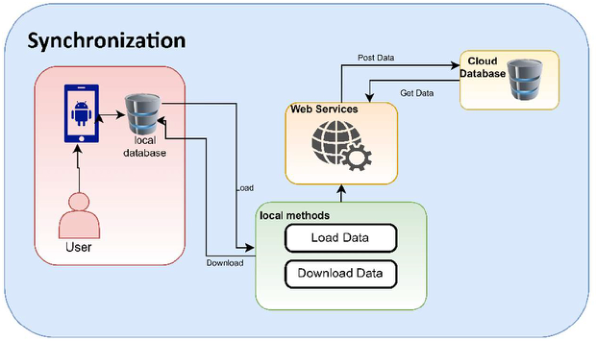
Figure 1: Synchronization method diagram.
However, one of the disadvantages of the local or offline server is the lack of update because if you change the structure of the cloud server loses the data connection and we enter into system failure with poor data stability, in the same way the cloud server does not know of the existence of new data as the local or as mentioned above changed the structure of the base. For this we will proceed to use synchronization procedures or web services which will be developed in django and restframework Python libraries which allow us to develop web APIs. The generation of consumption APIs helps to avoid failures in the convergence and stability of the data, consisting of the same data structure locally as in the cloud. The client can be developed in any language since the consumption of services is multiplatform from where they can be accessed. In the case of C# a database was created, which sends and receives data when an internet connection has been established. At the time of synchronization for the first time the data must be uploaded from the cloud to be able to make use in the client, and after performing the activities in the client, we proceed to upload the data when a connection has been established. To maintain the integrity of the data, a data comparison will be made between the existing data locally and in the cloud, from there the data that is not in the cloud will be uploaded. In the same way, when the data is uploaded to the cloud, the data will be reloaded to the client.
As we can see in Figure 1 the process for uploading and downloading data from the cloud to the local database.
CONCLUSION
With the synchronization procedures will improve the collection of data from devices that have a local database, due to this you can have better data mana- gement remotely thus eliminating the time of loading and passage of data in real time with the online server.
Also making use of local servers facilitates the control of the data that can enter the overall system, also being able to collect data from multiple devices
186 Viscaino-Quito and Serpa-Andrade
at once as the system validates which data exists and which does not exist within the cloud.
Another important point is the update or change of the database structure since the system completely eliminates the data that are locally and updates them with respect to those found in the cloud.
REFERENCES
Berrezueta-Guzman, J., Pau, I., Martín-Ruiz, M.-L., & Máximo-Bocanegra, N.
(2020). Smart-home environment to support homework activities for children. IEEE Access, 8, 160251–160267. Berrezueta-Guzman, J., Pau, I., Martín-Ruiz, M.-L., & Máximo-Bocanegra, N.
(2021). Assessment of a robotic assistant for supporting homework activities of children with ADHD. IEEE Access, 9, 93450-93465. Dolón-Poza, M., Berrezueta-Guzman, J., & Martín-Ruiz, M.-L. (2020). Creation of an intelligent system to support the therapy process in children with ADHD. Conference on Information and Communication Technologies of Ecuador, Farías, J. J. S., Torres, A. J. G., Frías, R. T., Vázquez, J. I. C., & González, L. A. L.
(2018). ESTRATEGIA PARA EL DESPLIEGUE Y SINCRONIZACIÓN DE UN SITIO WEB EN LA NUBE (STRATEGY FOR THE DEPLOYMENT AND THE SYNCHRONIZATION OF A WEBSITE IN THE CLOUD). Pistas Educativas, 40(130). George Reyes, C. E., & Salado Rodríguez, L. I. (2019). Competencias investigativas con el uso de las TIC en estudiantes de doctorado. Apertura (Guadalajara, Jal.), 11(1), 40–55. López Villarreal, L. S. (2020). Aplicación móvil multiplataforma para el manejo
de datos del proyecto de investigación CEPRA proteger a la mujer trabajadora (llankak warmikunata ramachikkuna). López-Pérez, L., Berrezueta-Guzman, J., & Martín-Ruiz, M.-L. (2020). Development of a home accompaniment system providing homework assistance for children with ADHD. Conference on Information and Communication Technologies of Ecuador, Muñoz Mandujano, M., Valerio, J., Serrano, S., & Lievana, A. (2018). Web scraping
para la recopilación de datos meteorológicos. Pinillos, A. A., & Mateo, J. F. (2018). El propósito de los datos: introducción al Data Ethics. Aspectos legales, retos y reflexiones para el desarrollo de la responsabilidad social: memoria académica curso 2017-2018, Pozo-Guzman, L., & Berrezueta-Guzman, J. (2020). IoT as an alternative way
to improve the telemedicine methods against COVID-19 in vulnerable zones. Conference on Information and Communication Technologies of Ecuador, Prada, D. M. P., Barrera, J. D. L., & Beltrán, A. (2019). Guía para la construcción de un software con base de datos sincronizada a partir de un prototipo de software. Ramírez-Hernández, M. A., & Santos-Quiroz, R. A. (2019). Sincronización de
datos en el contexto de procesos terapéuticos de rehabilitación física. Revista de Tecnología Informática, 3, 11–16. Romero-Cañizares, J. F., & Vicente-Galindo, P. (2022). Variational Autoencoders for Assessing Sustainability. Doctoral Symposium on Information and Communica- tion Technologies-DSICT.
LISTED IN THE AHFE DIGITAL BOOKSTORE CATALOGUE
Explore the complete digital volume
Artificial Intelligence and Social Computing
Read this individual research paper free through the original publisher, or explore the full digital proceedings book.
ISBN 978-1-958651-04-9
Explore this ISBN in the AHFE Bookstore ↗Listed in the July 2026 bookstore catalogue; search by ISBN to confirm current availability · Digital book purchase optional