Rodrigo Dominguez, Enrique Calderón, Jorge Bustos (2022). Process Safety in electrolytic green hydrogen production. In: Production Management and Process Control. AHFE Open Access, vol. 36, pp. 185–195. https://doi.org/10.54941/ahfe1001634
The article objective is to analyze the electrolytic process of green hydrogen production from process safety and process safety management (PSM) points of views. The green hydrogen through water electrolysis production of is emerging as one of the main and best alternatives to replace the use of fossil fuels and thus mitigate environmental pollution and its consequences to the planet. For this purpose, the principles of the electrolysis process were established, as well as the different ways to carry it out, among which are: Alkaline electrolysis (AE); Proton exchange membrane (PEM) electrolysis and High-Temperature electrolysis (HTE). Its associated hazards and risks were mentioned, and the Dow Fire and Explosion Index (F&EI) was calculated for the three electrolysis methods, obtaining similar results with each other. In addition, the Canadian Society for Chemical Engineering (CSChE) PSM standard and the main international standards must be applied to electrolytic hydrogen production systems, such as: ISO 31000:2018 ; ISO 15916:2015 and ISO 22734:2019, was observed. Like other fuels, hydrogen processes production must be managed with preventive measures avoid events may have negative consequences to people, structures, and surrounding environment.
Today’s energy economy is mainly based on fossil fuels like hard coal, lignite coal, petroleum oil and natural gas usage, (Roeb et al., 2013). The greenhouse gases increasing into the atmosphere due the continuous fossil fuels bur- ning, pose a serious threat to the global environment and consequent climate change (Hites, 2006; Nikolaidis and Poullikkas, 2016). To reduce the climate change worldwide effects, is necessary a transition from existing fossil fuels to emissions-free or cleaner energies (Rabbie et al. 2021). Hydrogen energy systems appear to be the one of the most effective solutions and can play a significant role in providing better environment and sustainability (Dincer, 2012). There are many valuable properties of hydrogen including viable clean and green energy, a promising alternative fuel to the future and the highest energy content (Najjar, 2013; Wang et al., 2015; Zarei et al., 2021). Hydro- gen is produced by steam reforming of natural gas and other fossil fuels (Kothari et al., 2008), 96% latest estimate (Blanc et al., 2019). Hydrogen produced through renewable energy sources, known as green hydrogen, can
provide clean energy to industry, buildings, and transport areas (Staffell et al., 2019; Wang et. al., 2020; Rabbie et al. 2021). The use of solar energy and wind energy are hydrogen production by water electrolysis sustainable methods with high purity, simple and green process (Wang et al., 2014; Rashid, 2015). In the water electrolysis process, water is dissociated to hydrogen and oxygen under the influence of direct current (Chi and Yu, 2018). A large expansion of electrolytic hydrogen is expected in the coming years: in 2050, 22% of the worldwide total hydrogen production should come from this route (Cornell, 2017; Nicita et al., 2020). Falling costs for renewable energy sources and improving electrolyze technologies could make green hydrogen cost competitive by 2030 (IRENA, 2020; Falcone et al., 2021). Today there are no safety barriers to prevent hydrogen use but is very important to know the hydrogen hazards and risks and its prevention to assure its safe handling (Aprea, 2009). The origin of the term “process safety” is associated with the major process accidents that occurred during the time period between 1960 and 1990 as a result of rapid industrialization and tech- nological movement(Kletz, 1999; Macza,2008; Planas et al., 2014). Process safety is identified as an integral part of process development and manufactu- ring rather than considering it as an “add-on” to the process (Gibson, 1999; Khan et al., 2015). Also, can be defined as a comprehensive, integrated set of management systems that work together to ensure that process hazards are identified, evaluated, and managed appropriately and effectively (Klein and Vaughen, 2018).
The objective of this study is to analyze the green hydrogen through the electrolysis of water production process, in order to establish associated risks and pertinent prevention measures following the principles of process safety, process safety management and international standards.
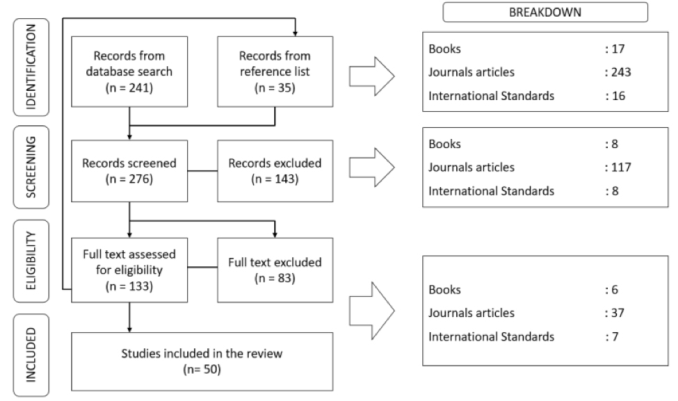
ARTICLE SELECTION AND INCLUSION Articles were identified through several methods (Fig. 1). A Boolean keyw- ord search in Google scholar (n = 180) and Microsoft academic (n = 61) , was performed using the keywords: “process safety”, “process safety mana- gement”, “green hydrogen”, “green hydrogen production”, “electrolytic plant”, “water electrolysis”, “hydrogen safety”, “hydrogen technologies”. The reference lists of the selected articles were reviewed to search for possible new articles. 35 new articles were included using this method.
The 276 abstracts were screened using the following criteria: (1) they must be written after 2000; (2) they must refer to green hydrogen and not another such gray or blue hydrogen; (3) the studies must refer to green hydrogen ele- ctrolytic production , no other process were included (studies dealing with various methods of hydrogen production were also included, only if those studies contemplated the electrolytic method too); (4) the selected studies referring to process safety must refer to electrolytic plants or electrochemi- cal plants in general; (5) the selected studies must belong to journals at least in the first two quartiles (Q1 or Q2); (6) studies belonging to institutional repositories of universities were not accepted and (7) international standards
Process Safety in Electrolytic Green Hydrogen Production 187
Figure 1: Process of article search, screening, and inclusion of studies used in this review.
refers to process safety, hydrogen systems in general or electrolytic produ- ction in particular were accepted. Following these criteria, a total of 143 studies were excluded. The full-text articles were then inspected for eligibi- lity using the same criteria used in the screening procedure, and 83 potential articles were excluded, which resulted in 50 studies being included in the final review.
To define the requirements of humans as a fundamental system compo- nent, it is essential to understand the inherent capacity of user populations and their typical operational environment (Booher, 2003). A description of a population’s capacity incorporates more than the basic anthropometrics or the cognitive capability of the average member of the user population (Chapanis, 1996).
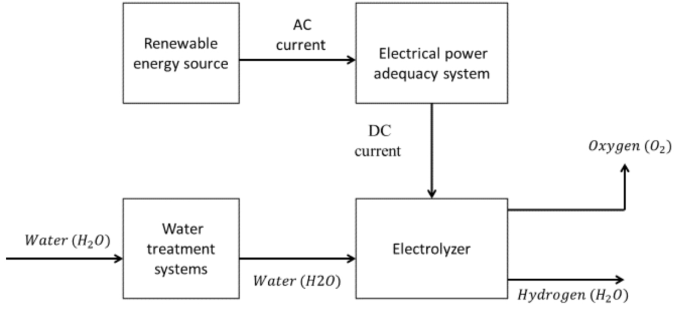
Green Hydrogen Production Through Water Electrolysis Water electrolysis is a mature technology and used for hydrogen production capacities ranging from few cm3/min to thousands m3/h (Barbir, 2005). The electrolysis has several advantages, first of all its operation flexibility and high purity hydrogen produced, a very important requirement to avoid ele- ctrodes catalysts polluting into the fuel cell (Ioroi et al., 2002; Larminie and Dicks, 2013; Fragiacomo and Genovese, 2019). Electrolysis of water produ- ces H2 and O2 gases, is conceptually and practically simple, and requires only two metal electrodes, salt water, and a power supply (Xiang et al., 2016). A water electrolyzer is an electrochemical device that converts electric and thermal energy into chemical energy stored in a fuel (hydrogen) (Ursúa et al., 2012). A diagram of the electrolytic production of hydrogen can be seen in Fig 2. Depending on the electrolytes used, there are three relevant processes for water electrolysis: Alkaline electrolysis (AE); Proton exchange membrane
Figure 2: Green hydrogen electrolytic production process diagram.
(PEM) electrolysis and High-Temperature electrolysis (HTE) (Pitschak and Mergel, 2016).
Electrolyzers are expected to compete with fossil-based hydrogen in 2030 when electricity generated by renewable energy sources becomes cheaper and the European union industry planned to reach 40 GW capacities (Kovaˆc et al., 2021). In the alkaline electrolyzer, water is fed into the cathode, where it is disassociated into hydrogen and hydroxyl ions, which pass through electroly- tic material to the anode, where oxygen is formed (Bicáková and Straka, 2012). The electrolyzer requires demineralized water in order to guarantee a high durability of the module components, to minimize corrosion problems and undesired electrochemical reactions, and to maximize process efficiency (Ursúa et al., 2013).
In PEM cells, conventional liquid electrolytes are replaced by thin (50–250 µm thick) proton-conducting membranes used as solid polymer ele- ctrolyte (Grigoriev et al., 2011). PEM electrolyzers can operate more flexibly than current alkaline technology. PEM technology offers a wider operating range and has a shorter response time (Eichman et al., 2016). One particular complication arises from the fact that conventional PEM membranes allow a significant amount of liquid water to carry across the membrane along with the flow of hydrogen ions, resulting in a steady accumulation of water on the hydrogen generation side (Clarke et al., 2010).
To avoid the formation of explosive gas mixtures, it is necessary to reduce gas cross-permeation (Grigoriev et al., 2009). In the case of HTE process, a solid oxide electrolysis cells were used. Oxide-ion conducting ceramics is used as solid electrolyte and cell separator. Solid oxide electrolysis cells usually operate in the 800 – 1000 °C temperature range (Millet and Grigoriev, 2013). The process basically consists of introducing water steam into the cathode at a high temperature which is reduced to produce hydrogen, and oxide ani- ons are generated and pass through the solid electrolyte to the anode, where they are recombined to form oxygen (Braga et al., 2017). Currently, this type of electrolyzer is in its research and development phase (Bhandari et al., 2014).
Process Safety in Electrolytic Green Hydrogen Production 189
Hazards and Risks Associated With Hydrogen According to the ISO 45001: 2018 standard, hazard is defined as: a source with a potential to cause injury and deterioration of health (ISO, 2018). In accordance with (Najjar, 2013) (1) the combustion properties of hydrogen indicates it isn’t easy to handle; (2) Hydrogen is very light leading leaking problems, also it is highly flammable; (3) Flammability of hydrogen is a function of concentration levels, and it is much greater than other fuels (Mid- dha, 2010; Mirza et al., 2011). It says hydrogen’s high energy content, low ignition energy, fast burning speed, extensive flammability and detonability ranges make it a highly unsafe fuel.
Risk, in contrast, consider the probability and the scale of damage a harmful event will occur (Scheer et al., 2014). Following this definition and accordance with (Rigas and Sklavounos, 2008; Rigas and Amyotte, 2013) the risks associated with hydrogen can be: (1) Physiological (asphyxiation, thermal burns, frostbite, hypothermia, and overpressure injury); (2)Physical (component failures due to low temperature deterioration of mechanical pro- perties, thermal contraction, and hydrogen embrittlement) or (3) Chemical (burning or explosion).
According to (Amyotte and Rigas, 2013) essentially all of the typical pro- cess safety hazard identification techniques have been successfully applied to various sectors of the hydrogen industry, such as: checklist, what-if analy- sis, failure modes and effects analysis, fault tree analysis, and hazard and operability study.
One of these techniques is the Dow Fire and Explosion Index (F&EI).F&EI is the most widely used hazard index calculation (Suardin et al., 2007). For this reason, it decided to calculate FI&EI for three electrolysis processes men- tioned, it was realized using (AIChE, 1994). The values obtained were: AE (101.2); PEM electrolysis (112.8) and HTE (103.5). According with (AIChE, 1994) all these values are classified as an intense degree of danger.
The Concept of Process Safety Management (PSM) Process safety management deals about process hazards identification, under- standing, and control to prevent process-related injuries and incidents (fires, explosions, toxic releases) (Rigas and Amyotte, 2013). PSM was introdu- ced in 1971 by experts in the European Federation of Chemical Engineering, which later evolved the creation of systems and frameworks in the 1980’s (EPSC, 2018; Nwankwo et al., 2020). Various PSM systems have been deve- loped over the years, having their own strengths and drawbacks which of them (Theophilus et al., 2016). PSM systems typically consist of about 10–20 separate, yet intertwined, elements (Amyotte and Lupien, 2017).
According to the U.S. Department of Energy (DOE), the safe continued operation handling and use of hydrogen and its related systems require com- prehensive safety management (DOE, 2007). Therefore, is recommended to apply PSM to the electrolytic production of green hydrogen. Within the dif- ferent existing PSM systems and as it shows (Rigas and Amyotte, 2013), the one described by the Canadian Society for Chemical Engineering (CSChE) is
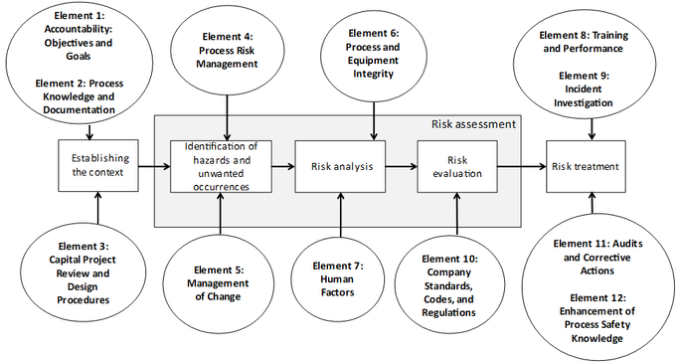
Figure 3: Elements of the CSChE PSM Std. in relation to the ISO31000:2018.
applicable to hydrogen production processes and therefore to the electrolytic process.
There are twelve PSM elements according to the CSChE PSM standard, they are: 1) Accountability objectives and goals; 2) Process knowledge and documentation; 3) Capital project review and design procedures; 4) Process risk management; 5) Management of change; 6) Process and equi- pment integrity; 7) Human factors; 8) Training and performance; 9) Incident investigation; 10) Company standards, codes and regulations; 11) Audits and corrective actions and 12) Enhancement of process safety knowledge (CSChE, 2012).
Is already known the properties of hydrogen cannot be changed but is pos- sible applying preventive and protective nature limiting the release quantity measures also reducing its frequency, decreasing the probability of people, vulnerable objects and structures exposure. Measures shall be based on codes and standards (Pasman and Rogers, 2010).
Within the standards related to process safety of electrolytic green hydro- gen production, it must be considered the ISO 31000:2018 (Risk manage- ment – Guidelines); ISO 15916: 2015 standard (Basic considerations for the safety of hydrogen systems); ISO 22734: 2019. (Hydrogen generators using water electrolysis: industrial, commercial and residential applications).
The standard “Risk management – Guidelines” (ISO 31000:2018) indi- cates the risk management process involves the systematic application of policies, procedures and practices to communication and consultation acti- vities, establishment of the context and evaluation, treatment, monitoring, review, records and reports of risks (ISO, 2018). It can be appreciated how the aforementioned is related to the 12 elements of the CSChE PSM standard as shown in Fig 3.
The standard “Hydrogen generators using water electrolysis – Industrial, commercial and residential applications” (ISO 22734:2019) can be harmo- nized with the 12 elements of the PSM due among the elements the norm standardize one of them is: safety of modular or factory matched hydrogen
Process Safety in Electrolytic Green Hydrogen Production 191
gas generation appliances, herein referred as hydrogen generators, by ele- ctrochemical reactions to electrolyse water to produce hydrogen (ISO, 2019). In section 4.2, e.g., the standard establish the requirements that the process must have regarding its risk management which is related to PSM Element 4 - Process Risk Management.
This standard is applicable to hydrogen generators using ions transport mediums (ISO, 2019): (1) group of aqueous bases; (2) group of aqueous acids; (3)solid polymeric materials with acidic function group additions, such as acid proton exchange membrane (PEM); (4) solid polymeric materials with basic function group additions, such as anion exchange membrane (AEM).
The second section of the standard show the required documents for its application, among these documents there are several international stan- dards which refer to construction, operation, maintenance, and others safety measures related to components of a hydrogen generator using water ele- ctrolysis must have., the standard have refer e.g. the following norms: ISO 13854:2017 (Safety of machinery — Minimum gaps to avoid crushing of parts of the human body); IEC 31010: 2019 (Risk Management: Risk Asses- sment Techniques); ISO 17398 (Safety colors and safety signs- Classifications, performance and durability of safety signs); ISO 16528-1 ( Boilers and pres- sure vessels - Part 1: Performance requirements) among many others. Is easy to see that this is direct related with PSM Element 3 - Capital Project Review and Design Procedures and PSM Element 10 - Company Standards, Codes, and Regulations. The standard also establishes operating conditi- ons requirements (e.g., feed water specifications, hydrogen venting, delivery of hydrogen); Mechanical equipment (e.g., general materials requirements, pressure-bearing components, equipment temperature limits and resistance to heat); Electrical equipment, wiring and ventilation (fire and explosion hazard protection requirements, electrical equipment); Control systems (e.g., safety control circuit, safety components, remote control systems, alarms); Ions transport mediums (electrolyte, membrane) and service personnel pro- tection. All these elements have a direct correlation with the PSM Element 6 - Process and Equipment Integrity; PSM Element 7 - Human Factors. In its fifth section, the standard defines the test methods each new hydrogen generator must comply with. Some of them are: Electrical, Pressure, Lea- kage, Temperature, Environmental, Stability, Vent or Sound level tests. Also defines some routine tests like: Continuity of the protective bonding circuit, Voltage, Functional and Leakage tests. This is also related to PSM Element 6 – Process and Equipment Integrity. The sixth section deals with marking and labeling as Hydrogen generator marking; Marking of components and Warning signs with each other. As in the second section, this is also related to PSM Element 10 - Company Standards, Codes, and Regulations.
The final section consider documentation accompanying the hydrogen generator, as: specific requirements for permanently connected hydrogen generators, indoor installations and built-in hydrogen generator appliances; hydrogen generator operation; and hydrogen generator maintenance, clearly it is related to PSM Element 2—Process Knowledge and Documentation. The standard ‘basic considerations for the safety of hydrogen systems’ (ISO/TR 15916:2015) gives general recommendations to minimize the consequences
of a potential incident (ISO, 2015): Identify and, if possible, separate or eli- minate potential ignition sources, Minimize the quantity of hydrogen that is stored and involved in an operation, Isolate hydrogen from oxidizers, hazar- dous materials, and dangerous equipment, Separate people and facilities from the potential effects of fire, deflagration, or detonation from the failure of hydrogen equipment or storage systems, Elevate hydrogen systems or vent them above other facilities, Prevent hydrogen–oxidizer mixtures from accu- mulating in confined spaces (under the eaves of roofs, in equipment shacks or cabinets, or within equipment covers or cowlings), Minimize personnel exposure by limiting the number of people exposed and the time who per- sonnel are exposed, Use alarms and warning devices (including hydrogen and fire detectors), and a control area around a hydrogen system and finally Use personal protective equipment.
CONCLUSION
The study described the electrolysis process, mentioning its main chara- cteristics and electrolysis methods. The dangers and risks associated with hydrogen must be consider carrying out the electrolysis process were also established.
The F&EI calculation indicates the electrolysis processes mentioned have a similar risk of fire and explosion. But the electrolysis process through PEM present the highest value, due the process in which higest pressures can be reached. Nevertheless, applicating the standards and preventive measures, all processes can be executed safely and efficiently. It was established that the CSChE PSM standard is applicable to any process that involves hydrogen and therefore it is applicable to the electrolytic process. Also have been observed it fit to international standards, such as ISO 31000:2018; ISO 15916:2015 and ISO 22734:2019, which should be applied in the electrolysis process. Like other fuels, the hydrogen processes must be managed with all preven- tive measures in order to avoid events may have negative consequences for people, structures and surrounding environment. In this way the green hydro- gen production through water electrolysis process must be fully aligned with it considering it will be one of the main processes throughout the world to meet the growing demands of renewable energy for the world.
FUTURE WORKS The problems related to water sustainability, together with the water crisis that afflicts the entire world and Chile in particular, opens an interesting topic of study regarding how the electrolytic production of green hydrogen impacts on the availability of this resource in the surrounding communities.
REFERENCES
American Institute of Chemical Engineers (AIChE). (1994). Dow’s fire and explosion index hazard classification guide .7th ed. New York: AIChE. Amyotte, P.R., and C.S. Lupien. 2017. Elements of Process Safety Management. In
Methods in Chemical Process Safety, 1:87–148.
Process Safety in Electrolytic Green Hydrogen Production 193
Amyotte, P.R., and F. Rigas. 2013. Applications of Process Safety Concepts to the Hydrogen Economy. Chemical Engineering Transactions 31: 31–36. Aprea, J.L. 2009. Hydrogen Energy Demonstration Plant in Patagonia: Description
and Safety Issues. International Journal of Hydrogen Energy 34 (10): 4684–91. Barbir, F. 2005. PEM Electrolysis for Production of Hydrogen from Renewable Energy Sources. Solar Energy 78 (5): 661–69. Bhandari, R., C. A. Trudewind, and P. Zapp. 2014. Life Cycle Assessment of Hydro-
gen Production via Electrolysis – a Review. Journal of Cleaner Production 85: 151–63. Biˇcáková, O., and P. Straka. 2012. Production of Hydrogen from Renewable Resources and Its Effectiveness. International Journal of Hydrogen Energy 37 (16): 11563–78. Blanc, P., M. Zafar, F. Di Martino, A. Fargere, J. Carton, and B. Kolodziejczyk. 2019.
New Hydrogen Economy - Hope or Hype?: Innovation Insights Brief. Braga, L.B., M. E. da Silva, T. S. Colombaroli, C. E. Tuna, F. H. Mayworm de Araujo, L. F. Vane, D. T. Pedroso, and J. L. Silveira. 2017. Hydrogen Production Processes, 5–76. Chi, J., and H. Yu. 2018. Water Electrolysis Based on Renewable Energy for
Hydrogen Production. Chinese Journal of Catalysis 39 (3): 390–94. Clarke, R., S. Giddey, and S. Badwal. 2010. Stand-Alone PEM Water Electrolysis System for Fail Safe Operation with a Renewable Energy Source. International Journal of Hydrogen Energy 35 (3): 928–35. Cornell A. 2017. Hydrogen production by electrolysis. In: 1st International confere-
nce on electrolysis, Copenhagen, Denmark, June 12-15. CSChE (Canadian Society for Chemical Engineering). 2012. Process safety management standard .1st ed. Dincer, I. 2012. Green Methods for Hydrogen Production. International Journal of
Hydrogen Energy 37 (2): 1954–71. DOE (Department of energy). 2007. Hydrogen Safety, Technical Plan – Safety; Multi- Year Research, Development and Demonstration Plan, U.S. Department of Energy. Eichman, J., A. Townsend, and M. Melaina. 2016. Economic Assessment of
Hydrogen Technologies Participating in California Electricity Markets. National Renewable Energy Laboratory EPSC (European Process Safety Centre). 2018. European Process Safety Centre – Objectives Falcone, P. M., M. Hiete, and A. Sapio. 2021. Hydrogen Economy and Sustainable
Development Goals: Review and Policy Insights. Green and Sustainable Chemistry 31: 100506. Fragiacomo, P., and M. Genovese. 2019. Modeling and Energy Demand Analysis of a Scalable Green Hydrogen Production System. International Journal of Hydrogen Energy 44 (57): 30237–55. Gibson, N. 1999. Process Safety–A Subject for Scientific Research. Process Safety
and Environmental Protection 77 (3): 149–53. Grigoriev, S.A., P. Millet, S.V. Korobtsev, V.I. Porembskiy, M. Pepic, C. Etievant, C. Puyenchet, and V.N. Fateev. 2009. “Hydrogen Safety Aspects Related to High- Pressure Polymer Electrolyte Membrane Water Electrolysis.”International Journal of Hydrogen Energy 34 (14): 5986–91. Grigoriev, S.A., V.I. Porembskiy, S.V. Korobtsev, V.N. Fateev, F. Auprêtre, and P.
Millet. 2011. High-Pressure PEM Water Electrolysis and Corresponding Safety Issues. International Journal of Hydrogen Energy 36 (3): 2721–28. Hites, R. A. 2006. Persistent Organic Pollutants in the Great Lakes: An Overview.
Ioroi, T., K. Yasuda, Z. Siroma, N. Fujiwara, and Y. Miyazaki. 2002. Thin Film Electrocatalyst Layer for Unitized Regenerative Polymer Electrolyte Fuel Cells. Journal of Power Sources 112 (2): 583–87. IRENA (International Renewable Energy Agency). 2020. Green Hydrogen Cost
Reduction. Scaling up Electrolysers to Meet the 1.5 °C Climate Goal. International Renewable Energy Agency, Abu Dhabi. ISO (International Organization of Standardization). 2015. Basic considerations for the safety of hydrogen systems. ISO/TR 15916. ISO (International Organization of Standardization). 2018. Occupational health and
safety management systems – requirements with guidance for use. ISO 45001 ISO (International Organization of Standardization). 2018. Risk management – Guidelines. ISO 31000. ISO (International Organization of Standardization). 2019. Hydrogen generators
using water electrolysis – Industrial, commercial and residential applications. I Khan, F., S. Rathnayaka, and S. Ahmed. 2015. Methods and Models in Process Safety and Risk Management: Past, Present and Future. Process Safety and Environmental Protection 98: 116–47. Klein, J.A., and B.K. Vaughen. 2017. Process Safety: Key Concepts and Practical
Approaches. CRC Press Kletz, T.A. 1999. The Origins and History of Loss Prevention. Process Safety and Environmental Protection 77 (3): 109–16. Kothari, R., D. Buddhi, and R.L. Sawhney. 2008. Comparison of Environmental
and Economic Aspects of Various Hydrogen Production Methods. Renewable & Sustainable Energy Reviews 12 (2): 553–63. Kovaˇc, A., M. Paranos, and D. Marciuš. 2021. Hydrogen in Energy Transition: A Review. International Journal of Hydrogen Energy 46 (16): 10016–35. Larminie, J., and A. Dicks. 2013. Fuel Cell Systems Explained. 2nd ed. Macza, M., 2008. A Canadian perspective of the history of process safety manage-
ment legislation. Middha P. 2010. Safety and risk analysis studies for hydrogen Applications. Symposium on Loss Prevention and safety Promotion in the process Millet P. and S. Grigoriev. 2013. Water Electrolysis Technologies. In Renewable
Hydrogen Technologies, Purification, Storage, Applications and Safety. Mirza, N. R., S. Degenkolbe, and W. Witt. 2011. Analysis of Hydrogen Incidents to Support Risk Assessment. International Journal of Hydrogen Energy 36 (18): 12068–77. Najjar, Y.S.H. 2013. Hydrogen Safety: The Road toward Green Technology. Inter-
national Journal of Hydrogen Energy 38 (25): 10716–28. Nicita, A., G. Maggio, A.P. Andaloro, and G. Squadrito. 2020. Green Hydrogen as Feedstock: Financial Analysis of a Photovoltaic-Powered Electrolysis Plant. International Journal of Hydrogen Energy 45 (20): 11395–408. Nikolaidis, P., and A. Poullikkas. 2017. A Comparative Overview of Hydrogen
Production Processes. Renewable & Sustainable Energy Reviews. Nwankwo, C.D., S. Theophilus, and A. Arewa. 2020. A Comparative Analysis of Process Safety Management (PSM) Systems in the Process Industry. Journal of Loss Prevention in The Process Industries 66: 104171. Pasman, H. J., and William J. Rogers. 2010. Safety Challenges in View of the
Upcoming Hydrogen Economy: An Overview. Journal of Loss Prevention in The Process Industries 23 (6): 697–704. Pitschak, B., and J. Mergel. 2016. Electrolytic Processes. In Hydrogen and Fuel Cell Technologies and Market Perspective,187–207.
Process Safety in Electrolytic Green Hydrogen Production 195
Planas, E., J. Arnaldos, R.M. Darbra, M. Muñoz, E. Pastor, and J.A. Vílchez. 2014.
Historical Evolution of Process Safety and Major-Accident HazardsPrevention in Spain. Contribution of the Pioneer Joaquim Casal. Journal of Loss Prevention in The Process Industries 28 (11): 109–17. Rabiee, A., A. Keane, and A. Soroudi. 2021. Green Hydrogen: A New Flexibility Source for Security Constrained Scheduling of Power Systems with Renewable Energies. International Journal of Hydrogen Energy Rabiee, A., A. Keane, and A. Soroudi. 2021. Technical Barriers for Harnessing the
Green Hydrogen: A Power System Perspective. Renewable Energy. Rashid, M. D., A. Mesfer, M. K., Naseem, H., and M. Danish. 2015. Hydrogen production by water electrolysis: a review of alkaline water electrolysis, PEM water electrolysis and high temperature water electrolysis. Rigas, F., and P. Amyotte. 2012 . Hydrogen safety. CRC Press. Rigas, F., and P.R. Amyotte. 2013. Myths and Facts about Hydrogen Hazards.
Chemical Engineering Transactions 31: 913–18. Rigas, F., and S. Sklavounos. 2008. Hydrogen Safety. In Hydrogen safety, in Hydrogen Fuel: Production, Transport and Storage, 535 – 568 Roeb, M., N. Monnerie, A. Houaijia, D. Thomey, and C. Sattler. 2013. Solar Ther-
mal Water Splitting. In Renewable Hydrogen Technologies, Purification, Storage, Applications and Safety, 63–86. Scheer, D., C. Benighaus, L. Benighaus, O.Renn, S. Gold, B. Röder, and G. Böl. 2014.
The Distinction between Risk and Hazard: Understanding and Use in Stakeholder Communication. Risk Analysis 34 (7): 1270–85. Staffell, I., D. Scamman, A. Abad, P. Balcombe, P.E. Dodds, P. Ekins, N. Shah, and K. R. Ward. 2019. The Role of Hydrogen and Fuel Cells in the Global Energy System. Energy and Environmental Science 12 (2): 463–91. Suardin, J., M.S. Mannan, and M. El-Halwagi. 2007. The Integration of Dow’s Fire
and Explosion Index (F&EI) into Process Design and Optimization. Journal of Loss Prevention in The Process Industries 20 (1): 79–90. Theophilus, S.C., O.G. Abikoye, A.O. Arewa, A.O. Ifelebuegu, and V. Esenowo.
2016. Application of Analytic Hierarchy Process Ursúa, A., I. S. Martín, E. L. Barrios, and P. Sanchis. 2013. Stand-Alone Operation of an Alkaline Water Electrolyser Fed by Wind and Photovoltaic Systems. International Journal of Hydrogen Energy. Ursúa, A., L. M. Gandia, and P. Sanchis. 2012. Hydrogen Production From Water
Electrolysis: Current Status and Future Trends. Proceedings of the IEEE 100 Wang, M., Z. Wang, X. Gong, and Z. Guo. 2014. The Intensification Technologies to Water Electrolysis for Hydrogen Production. Wang, Q., M. Xue, B. Lin, Z. Lei, and Z. Zhang. 2020. Well-to-Wheel Analysis of
Energy Consumption, Greenhouse Gas and Air Pollutants Emissions of Wang, Z., E. Secnik, and G. F. Naterer. 2015. Hazard Analysis and Safety Assurance for the Integration of Nuclear Reactors. Xiang, C., K.M. Papadantonakis, and N.S. Lewis. 2016. Principles and Implementa-
tions of Electrolysis Systems for Water Splitting. Zarei, E., F. Khan, and M. Yazdi. 2021. A Dynamic Risk Model to Analyze Hydrogen Infrastructure. International Journal of Hydrogen Energy.
LISTED IN THE AHFE DIGITAL BOOKSTORE CATALOGUE
Explore the complete digital volume
Production Management and Process Control
Read this individual research paper free through the original publisher, or explore the full digital proceedings book.
ISBN 978-1-958651-12-4
Explore this ISBN in the AHFE Bookstore ↗Listed in the July 2026 bookstore catalogue; search by ISBN to confirm current availability · Digital book purchase optional