Davide Di Bella, Kiana Kianfar, Alessandra Rinaldi (2022). Design of a devices’ system with tangible interface aimed to an inclusive smart working experience and wellbeing. In: Design for Inclusion. AHFE Open Access, vol. 45, pp. 72–80. https://doi.org/10.54941/ahfe1001871
In Europe, the demographic profile is towards an increasingly aged workforce [1], characterized by a significant aging of the population. The people aged 55 years or more accounted for one fifth of the total workforce, and as one consequence of increasing longevity, must work more years before retirement [2].Aging of the workforce is a growing problem for many developed and developing countries, pushing companies to explore ways to keep older workers employed for a longer period of time and to support them to maintain their work ability and increase their employability. The literature shows that “age related factors should be taken into consideration in daily management, including work arrangements and individual work tasks, so that everybody, regardless of age, feels empowered in reaching their own and corporate goals” [3].At the same rhythm with these challenges related to the ageing workforce, the work itself is undergoing technological upgrading driven by digitization. ICT (Information and Communication Technologies) have radically determined the modification of people's habits and lifestyles, also in the field of work, introducing new methods of working for example the smart working. These evolving work methods required smart workers to acquire new professional skills in a short time and to adapt to new technologies, new work processes and new forms of collaboration. All these changes lead to greater difficulties, especially for aged smart workers, such as: i) lack of physical interactions and the resulting isolation; ii) increased workload and consequently increased stress (always on); iii) difficulties in communication and time management problems; iv) work-life balance and personal life problems. Therefore it emerges the need to design innovative and friendly devices to address the challenges and difficulties mentioned above, facilitating interaction between smart workers, time management and work organization. These innovative devices and systems need to be easy to use and intuitive to learn in order to increase the inclusion of the aging smart workers, reducing the digital divide.Tangible User Interfaces could represent a fertile ground with the greatest potential to tackle these challenges as they give physical form to digital information and computation, and at the same time they facilitate the direct manipulation of bits. Unlike GUIs, where human-machine interaction occurs through the use of a mouse, keyboard or touchpad and is displayed on a screen as interaction’s results, the use of TUIs involves direct interaction with physical objects to which digital information has been associated, within a defined action space.In this context, the challenge is how ICT-embedded solutions, particularly Tangible User Interfaces, can meet the needs of a growing number of ageing smart worker in terms of inclusion, and of social, physical and mental wellbeing to sustain a team spirit, maintain team cohesion by offering sensory user experience and a tactile interaction with digitized work.The general objective of the research project presented in this article is to develop ICT-embedded devices based on TUIs, aimed at aging smart workers, with following objectives:fostering communication and interaction with the digital world through a tactile experience;increasing the organization, motivation, and job satisfaction; promoting work-life balance to increase physical and mental wellbeing. The result consists of a digital devices’ system, that can interact with each other and with users through a dedicated application for mobile. The system allows to improve the smart workers experience and their well-being through:empowerment, with the introduction of a "digital personal coach" who accompanies the worker during the performance of the activities;enhancement of concentration by providing for the performance of only one activity at a time to increase the overall efficiency of the worker;work-life balance improvement, with a better management of the balance between working and private dimensions;communication and collaboration facilitation with other colleagues;reduction of technological abundance through the use of tangible interfaces;exploitation of peripheral interaction to reduce the risk of loss of concentration during activities.1.European Commission - Directorate-General for Economic and Financial Affairs: The 2015 Ageing Report. Underlying Assumptions and Projection Methodologies. European Economy 8-2014 (2014). 2.Giakoumis, D., Votis, K., Altsitsiadis, E., Segkouli, S., Paliokas, I., & Tzovaras, D.: Smart, personalized and adaptive ICT solutions for active, healthy and productive ageing with enhanced workability. In: 12th ACM International Conference on PErvasive Technologies Related to Assistive Environments, pp. 442-447. Association for Computing Machinery, New York (2019).3.Ilmarinen, J. (2012). Promoting active ageing in the workplace. European Agency for Safety and Health at Work.
Aging of the Workforce The world continues to face a sustained and unprecedented change in the age structure of the global population, driven by rising levels of life expecta- ncy and decreasing levels of fertility. As people are living longer, the number of older people in the total population is growing rapidly. According to the World Population Aging 2020 Highlights, “there were 727 million persons aged 65 years or over in 2020. Over the next three decades, the number of older persons worldwide is projected to more than double, reaching over 1.5 billion in 2050. All regions will see an increase in the size of the older population between 2020 and 2050. Globally, the share of the population aged 65 years or over is expected to increase from 9.3 percent in 2020 to around 16.0 percent in 2050” (United Nations, 2019).
The challenge of demographic transformation poses a threat to global economic capacities, in terms of sustainability, not only due to the reduced
Design of a Devices’ System with Tangible Interface 73
participation of the workforce but also to the heavy burden on health and social protection spending. In the document published by Eurostat called Aging Europe, there is talk of an increase in employment of people aged 55 or more from 11.9% to 20.2% between 2004 and 2019 without any interru- ption (Eurostat, 2020). These people aged 55 or over represent a fifth of the total workforce (Eurostat, 2020), and as a result of increasing longevity, they have to work more years before retirement (Giakoumis et al., 2019). Indeed, many EU governments have raised the official retirement age and limited the possibilities for early retirement. This trend translates into a longer exposure of workers to dangers and risks.
Considering the rise in retirement age and the value of older workers, companies are exploring new solutions and scenarios to keep older workers employed for a longer period, supporting them to maintain their workabi- lity and productivity along with a balance between work and personal life. In this context, the World Health Organization (WHO) defines the concept of active aging as “the process of optimizing opportunities for health, par- ticipation, and security in order to enhance the quality of life as people age (…). It allows people to realize their potential for physical, social, and men- tal well-being throughout their life course and to participate in society, while providing them with adequate protection, security and care when they need it” (World Health Organization, 2002). In this definition, human well-being is highlighted at 360 degrees as psychophysical and social well-being.
The Impact of Digital Technologies on Working Methods At the same pace as the challenges related to the aging of the workforce and its effect, work itself is undergoing a technological upgrade driven by digi- talization, the so-called fourth industrial revolution. (Schwab, 2016). ICT technologies have radically determined the modification of people’s habits and lifestyles in the field of work, introducing new working methods, for example, smart working and co-working. The advent of digital technologies is putting companies in front of a potential paradigm shift, characterized by greater interconnection and cooperation between people, information, and the company itself.
According to the analysis carried out by (Llave & Messenger, 2018) on the effects of digitalization on work, addressing its impact on professional health and well-being, with particular attention to working hours, there is a tendency to increase working hours during the week and to extend acti- vities into the evenings and weekends, a phenomenon that is referred to as overworking. In the case of home workers, due to daily family duties, which distract from professional activities, it is more difficult to manage daily wor- king hours. These evolving working methods have required smart workers to quickly acquire new professional skills and adapt to new technologies, new work processes and new forms of collaboration. All these changes lead to greater difficulties, especially for older smart workers, such as: i) lack of physical interactions and consequent isolation; ii) increase in workload and consequent increase in stress (always active); iii) communication difficulties and time management problems; iv) work-life balance problems.
Therefore, emerges the need to design innovative and friendly devices to address the challenges and difficulties mentioned above, facilitating the inte- raction between smart workers, time management and work organization. These innovative devices and systems need to be easy to use and intuitive to learn in order to increase the inclusion of older smart workers by reducing the digital divide. Tangible User Interfaces (TUIs) could be fertile ground with the greatest potential to address these challenges, as they give physical form to digital information and computations, while facilitating direct manipula- tion of bits. Unlike GUIs, where human-machine interaction occurs using a mouse, keyboard or touchpad and is displayed on a screen as a result of the interaction, the use of TUIs involves direct interaction with physical obje- cts to which digital information has been associated, within a defined action space. ICT-embedded solutions that use this type of interface offer a sensory user experience and a tactile interaction with digitalized work, characteristics that allow to improve the smart work experience in terms of inclusion and therefore contribute to the social, physical, and mental well-being of older workers and their active involvement for as long as possible. In fact, work environments need to meet the needs of an increasing number of aging smart workers.
In this scenario, the general objective of the research project presented in this article is to investigate how to foster communication, increase organiza- tion, motivation and job satisfaction and promote work-life balance, with the consequent increase in physical and mental well-being, through the design of ICT-embedded devices based on TUIs, aimed at smart workers in general and the elderly in particular.
METHODOLOGICAL APPROACH Based on the general objective of the research and based on the methodologi- cal approach of human-centered design and design thinking, the project was organized in three phases:
1. Context understanding: definition of user needs, identification of possi- ble obstacles, concerns and desires through the use of cultural probes and market surveys. 2. Ideation: elaboration of design requirements starting from the qualita- tive data obtained, the definition of possible design concepts through the organization of a co-design workshop. 3. Implementation: concept development, prototyping experience, and eva- luation of the effectiveness of the solutions through research through the design approach, definition of the executive project.
This methodology has been used to explore the opportunities offered by integrated ICT in environments, such as ubiquitous computing (Weiser, 1995), to meet the needs of an aging workforce and to promote healthy, active, and intelligent aging. The first phase or phase of understanding the context was dedicated to identifying the real needs of smart workers. In this phase, cultural probes (Gaver et al., 1999) were used together with the use of the most widely used tools of human-centered design, such as structured
Design of a Devices’ System with Tangible Interface 75
surveys, free expert interviews, ethnographic surveys (Tosi, 2020). For the evaluation of cultural probes, 12 users aged between 55 and 65 were invo- lved, selected from different office professions (three public administration employees; three freelancers; two accountants; two back-office employees; one management assistant; one technical employee), considering gender equ- ality. Each participant was given a kit containing a diary, drawing materials and post-it notes to be used independently to document, through narrations and photographs taken with a smartphone, their typical working day, both in the office and in the environment of smart working (Celikoglu et al., 2017).
Using this method, it was possible to collect qualitative and quantitative data on users’ habits, needs, observations and experiences in a less intrusive way and to delve into deeper details about latent concerns and needs. Data obtained through cultural probes were fed into the design process to inspire designers’ innovations through a deeper understanding of users. In parallel with the data collection activity, the team conducted research on the analysis of the state of the art, through a market survey, to understand and interpret the direction and future trends of design.
In the second phase, a co-design workshop was organized within IDEE Lab, aimed at transforming and translating the previously obtained qualita- tive data into design requirements and briefs, and subsequently at defining plausible design concepts. In this phase, based on the design thinking appro- ach (Brown & Katz, 2011), the team identified the opportunities offered by ICT technologies, user needs and related design problems to define the brief and project requirements. Subsequently, various design concepts were explored to identify possible solutions.
In the last phase of the research, the research through design methodology was applied, a practice-based approach that consists in the generation of kno- wledge using design techniques. The effectiveness of the solutions developed was evaluated and refined through prototyping experience (Buchenau & Suri, 2000). Finally, the whole process resulted in the creation of the final project and the prototype for validation.
RESULTS AND DISCUSSION
Identification of Obstacles and Opportunities From the phase of investigation on the needs and from the data collected with cultural probes, mainly concerning obstacles, difficulties, motivating and demotivating factors that influence the workability, employability and well-being of the smart worker, the main challenges faced daily reported by most of the participants are the following:
poor management of time and activities;
weak perception of the importance of periodically taking breaks;
overworking, burnout and stress;
insufficient communication, interaction and socialization in case of remote teamwork and therefore isolation;
inability to keep pace with the development of ever-changing working methods driven by digitalization;
excessive merging of work and private life.
These factors were found to be factors affecting the physical and men- tal well-being and productivity of the worker. In the following steps, the opportunities offered by digital technologies were highlighted and, mainly: a. virtual coach: situation-sensitive systems that provide proactive assista- nce, enabled by the combination of sensors, perception algorithms and mobile computing, in other words “always-attentive individually perso- nalized cognitive aids to monitor a user’s activities and surroundings, detect when intervention may be desirable, and offer prompt assistance, called virtual coach” (Siewiorek et al., 2012). b. tangible user interfaces (TUI) or tangible interactions (Ishii & Ullmer, 1997): interfaces that give physical shape to digital information to enhance collaboration, learning and decision-making through digital technology, while exploiting the human ability to grasp and manipulate physical objects and materials (Ishii, 2008).
Based on these considerations, the research continued with the generation of design ideas, developed through the co-design workshop with the involve- ment of 14 end-users, researchers in design and computer science, and young designers. The design ideas developed led to the definition of the final concept presented below.
Tilt: A System of Smart Devices with Tangible Interface The design direction undertaken has led to the creation of “Tilt”, a system of intelligent devices with a tangible interface, designed for remote elderly wor- kers to facilitate the organization of daily activities, promote conscious time management and provide personal well-being. The project aims to respond to the following challenges that, due to new working methods, the home worker has to face during the working day:
risk of isolation: the lack of direct contact with colleagues can lead to the loss of social relationships and consequently of personal motivation, espe- cially for older users who often do not master the most common means of communication and remote collaboration;
bad time organization: distractions and lack of organization of one’s time risk undermining the productivity of workers;
overworking: since there is often no distinction between work and dome- stic spaces, the risk is that some people find it difficult to complete their tasks by working even more than they should.
All these factors contribute to a decrease in the productivity of older wor- kers, who struggle more in carrying out daily tasks due to a lower ability to respond effectively to the technological overabundance that the working world foresees. Based on these considerations, the design complied with the requirements listed below:
empowerment: for a better organization, a system that includes a “digi- tal personal coach” that guides and accompanies the worker during the management of activities and interaction with technology may be useful;
Design of a Devices’ System with Tangible Interface 77
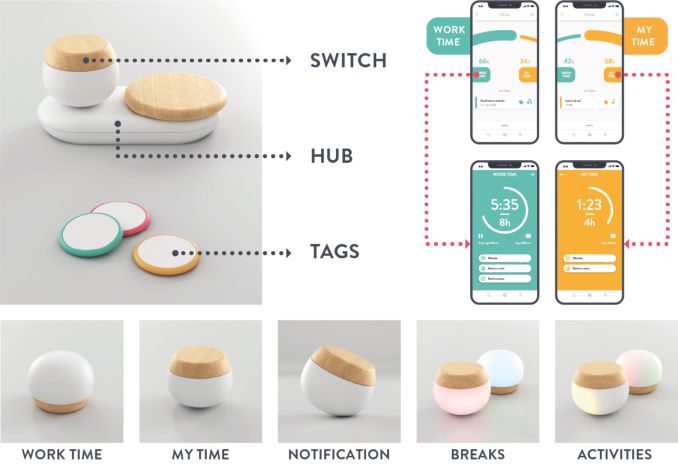
Figure 1: Tilt: a system of tangible interface digital devices.
work-life balance: to achieve a balance between work and private life, it is necessary to dedicate the right amount of time to both dimensions;
communication and collaboration: fostering contact with other colleagues can improve inclusion and make the work experience more enjoyable;
technological abundance: in a society immersed in a digital world it is important to offer everyone the same opportunities for carrying out work activities.
Tilt is the result of the design research activity and consists of a series of digital devices - Switch, Hub and Tags - connected to the Internet and which can interact with each other and with users through a dedicated application (Figure 1). Switch is a portable device that represents the core of the entire system; its main function is the physical and symbolic transition between work and private life. Hub is a fixed device that allows the reading and wri- ting of RFID magnetic tags (Hunt, 2007), as well as offers a wireless charging station for Switch and smartphone. The Tags are disks with a diameter of 5 cm inside which there is a passive RFID tag LF (125-135 kHz) that can be read and written at a distance of 4-5 cm. On their white writable surface, it is possible to annotate a keyword or a phrase, to identify its content. The device system includes a mobile application that allows users to manage work sch- edules, track task completion status, set up contact lists, and monitor their work-life balance.
Tilt provides for the subdivision of daily time into two sub-categories: Work time and My time. The device can be used alternatively in one or the other area depending on the type of activity carried out, and the tran- sition from one mode to the other is managed via Switch. Work time mode is active when Switch is positioned with the wooden part facing down. In this
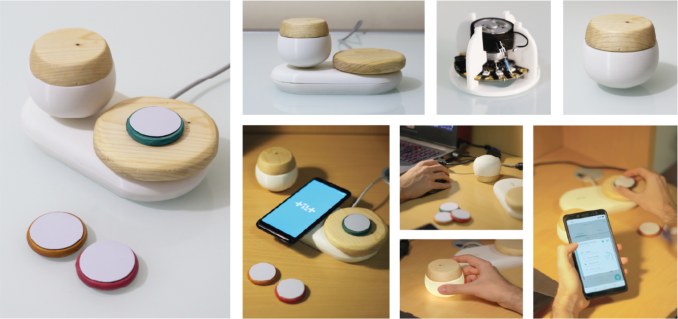
Figure 2: The prototyping phase and evaluation through field tests.
position, the device is more stable, more rigid, and evokes a state of mental concentration useful for carrying out work activities. Reversing the orienta- tion of Switch (the wooden part facing up) enables the My time mode. Now the device is less stable, free to wobble on the desk, prompting users to be less rigid and to devote time to themselves. Switch communicates the cur- rent mode to the smartphone via wi-fi connection and provides visual and movement feedback to the user, taking advantage of peripheral interaction to reduce the elements that can disturb work. Each mode corresponds to a respective profile, configurable via the application, which allows you to limit the use of the smartphone to a specific list of mobile applications, set a maximum daily time for each mode and define the frequency and individual duration of the breaks during work. The application monitors the uptime for each mode and defines the balance between the two sides by displaying two bars which, depending on the current mode, slowly scroll to the opposite side: the goal is to keep the lengths of both bars as equal as possible, an indi- cator of a correct balance between the two modes and of the achievement of a balance between work and private life.
The Hub and the Tags are tools that allow you to interact quickly with the system, avoiding the need to use a smartphone. Each Tag can be associated with an activity or a collaborator: placing a Tag on the RFID reader of the Hub will automatically start the associated activity or, if a collaborator has been associated, a call that will put the two users in audio contact. This system makes it possible to significantly reduce the use of the smartphone and makes communication with other users easier and more immediate. The general objective is to reduce the social distance that exists between smart workers, creating a shared virtual environment in which at any time during working hours it is possible to quickly get in touch with other users, reducing the feeling of isolation and fostering an inclusive smart working experience.
The project was further developed using the prototyping experience, which made it possible to test the effectiveness of the device directly with a field test. In this way, it was possible to define more clearly the mechanisms of use and workflow and, secondly, to verify the degree of user satisfaction. (Figure 2).
Design of a Devices’ System with Tangible Interface 79
CONCLUSION
The integration of information and communication technologies into the sur- rounding environment of daily life in the form of tangible user interfaces and virtual coaches has great potential and relevance to ensure a more inclu- sive smart working experience. The design discipline has a strategic role in bringing the benefits of technology into everyday life with a user-friendly lan- guage, recognizable even for the older age groups. Advances in technology have introduced new paradigms to the business world, confronting workers with new challenges, but at the same time helping support active aging at work. As the aging of the population affects all age groups, it is important to offer the worker intelligent solutions that can improve working conditi- ons and increase physical and mental well-being. Encouraging the use of the tactile dimension can facilitate interaction, making it a more enjoyable and richer experience. The research results contribute to the direction of possible solutions for the design of digital devices to support the healthy and active aging of the office worker. They can improve workability and work manage- ment and help older workers stay longer at work, thanks to their crucial role for companies in terms of human capital.
ACKNOWLEDGEMENT
A heartfelt thanks to Dr. Maurizio Caon, Professor at the University of Applied Sciences and Arts Western Switzerland, for the valuable contribution made to the research and development of the final concept. We also thank the members of the IDEE Lab of the University of Florence for their support of the research and all those who participated in the evaluation of cultural probes and in the co-design workshop.
The article is the result of the joint work of the authors; the particular contribution of each author is the following: Di Bella D. “Results and Discus- sion”; Kianfar K. “Introduction”; Rinaldi A. “Methodological approach” and “Conclusions”.
REFERENCES
Brown, T., & Katz, B. (2011). Change by Design. Journal of Product Innovation Management, 28: 381–383. Buchenau, M. and Suri, J.F. (2000). Experience prototyping, in Proceedings of the
conference on Designing interactive systems processes, practices, methods, and techniques - DIS ‘00. the conference, New York City, New York, United States: ACM Press, pp. 424–433. Celikoglu, O. M., Ogut, S. T., & Krippendorff, K. (2017). How do user stories inspire design? A study of cultural probes, Design Issues, 33(2), pp. 84–98. Eurostat (2020). Ageing Europe: looking at the lives of older people in the EU :
2020 edition. Publications Office. Available from https://data.europa.eu/doi/10. 2785/628105 [accessed 1 March 2021]. Gaver, B., Dunne, T., & Pacenti, E.: (1999). Design: Cultural probes, Interactions, 6(1), pp. 21–29. Giakoumis, D., Votis, K., Altsitsiadis, E., Segkouli, S., Paliokas, I., & Tzovaras,
D. (2019). ‘Smart, personalized and adaptive ICT solutions for active, healthy
and productive ageing with enhanced workability’, in Proceedings of the 12th ACM International Conference on PErvasive Technologies Related to Assistive Environments. PETRA ‘19: The 12th PErvasive Technologies Related to Assistive Environments Conference, Rhodes Greece: ACM, pp. 442–447. Hunt, V. D., Puglia, A., & Puglia, M. (2007). RFID: a guide to radio frequency identification. John Wiley & Sons. Ishii, H. (2008). The tangible user interface and its evolution, Communications of
the ACM, 51(6), pp. 32–36. Ishii, H., & Ullmer, B. (1997). Tangible bits: Towards seamless interfaces between people, bits and atoms, in: Conference on Human Factors in Computing Systems - Proceedings. ACM. pp. 234–241. Llave, O., & Messenger, J. (2017). Working anytime, anywhere: the effects on the
world of work. Luxembourg: Publications Office of the European Union. Poscia, A., Moscato, U., La Milia, D. I., Milovanovic, S., Stojanovic, J., Borghini, A., ... & Magnavita, N. (2016). ‘Workplace health promotion for older workers: a systematic literature review’, BMC Health Services Research, 16(S5), p. 329. Schwab K. (2017). The Fourth Industrial Revolution. Ginevra: Crown. Siewiorek, D., Smailagic, A., & Dey, A. (2012). Architecture and applications of
virtual coaches, Proceedings of the IEEE, 100(8), pp. 2472–2488. Tosi, F. (2020). Design for ergonomics, in Tosi, F., Design for Ergonomics. Cham: Springer International Publishing, pp. 31–45. United Nations, Department of Economic and Social Affairs, Popula- tion Division (2019). World Population Prospects 2019. Available from https://population.un.org/wpp/ [accessed 1 March 2021]. Weiser, M. (1995). The computer for the 21st century: specialized elements of har-
dware and software, connected by wires, radio waves and infrared, will be so ubi- quitous that no one will notice their presence. In: Readings in Human–Computer Interaction, pp. 933–940. World Health Organization (2002). Active ageing: a policy framework. Available from http://apps.who.int/iris/bitstream/handle/10665/67215/WHO_NMH_ NPH_02.8.pdf?sequence=1. [accessed 15 April 2021].
LISTED IN THE AHFE DIGITAL BOOKSTORE CATALOGUE
Explore the complete digital volume
Design for Inclusion
Read this individual research paper free through the original publisher, or explore the full digital proceedings book.
ISBN 978-1-958651-21-6
Explore this ISBN in the AHFE Bookstore ↗Listed in the July 2026 bookstore catalogue; search by ISBN to confirm current availability · Digital book purchase optional