Sara Viviani, Rocco Furferi, Alessandra Rinaldi (2022). The hospitalization experience design using gamification applied to a pediatric 3d scanner for compound fractures. In: Healthcare and Medical Devices. AHFE Open Access, vol. 51, pp. 176–185. https://doi.org/10.54941/ahfe1002114
Physical, social and mental well-being is the basic assumption which allows children to experience hospitalization positively. In this age of medical-scientific progress and technological development on hospital equipment, the designers of instruments for healthcare focus their activities on developing a coherent patient-centered approach which aims to consider the person globally. Currently, the rigors of the humanization of pediatric care are elaborating products which have both technological innovation and effective design specifications on children’s implicit needs and expectations. Mainly, the active, collaborative, and coordinated presence and accessibility of the family and of the pediatric patient in the care setting are unachieved goals in this field. The article presents the research project Oplà, a 3D acquisition system, as a demonstration of how emerging technologies, culture, communication and collaboration can help significantly in mapping out new diversification measures in standard clinical practice, to enhance the assistance services, by adopting a Human-centered approach strengthened by the iterative process of design thinking.
Highly specialized pediatric hospitals are constantly striving to address a clear paradigm shift in the caregiving scenario by supporting the patient- centered approach. Gerteis defines patient-centered care as “an approach that consciously adopts the patient’s perspective” (Gerteis, 1993). Even now, the promotion of tailored diagnostic and therapeutic pathways is a method in constant evolution. These support a new sensibility towards needs and abandon “standardized” care processes (Stewart, 2013). University Hospital Meyer (AOU Meyer), located in Florence (Italy), represents a best practice in pediatric health care. It explores the main critical issues in developmental age medicine, integrating and developing open and transparent care systems that actively work together with all service users (Baratta, 2019). The stra- tegic novelty lies in relating the universality of guidelines and protocols with the individuality and subjectivity of facts. Furthermore, the project concerns
The Hospitalization Experience Design Using Gamification 177
issues of humanization, promotion of sociality and community, and integra- tion of the care environment with the territory and the city. The originality of Meyer’s approach is based on giving a strong therapeutic value to all physical-environmental, social-relational and architectural components that make up the healthcare complex. In this design scenario, the pandemic con- text has prompted the healthcare design community to develop new planning and operational policies of care, to minimize the impact of contagion and optimize the design for the control and prevention of infection. Covid-19 highlighted the lack of efficiency and flexibility of hospital facilities in dealing with rapid epidemiological, social, and environmental changes (Capolongo et al. 2020). In particular, this momentary condition has drastically altered the provision of personal care services. The concept of humanization is con- sidered a highly relevant approach to care in pediatric settings, aimed at ensuring patient access to treatment. According to the models analyzed by Tripodi, to put into effect this concept in healthcare design, it is necessary to include all the parts and actors that constitute the experience, in the work- flow (Tripodi et al. 2017). In the pandemic context, these design principles make it possible to ease the traumas of the disease and the emotional suffe- ring, for both pediatric patients and medical staff, producing benefits in the outcomes of care (Delgado, 2022). Therefore, the present challenge concerns the review, enhancement, and development of a new philosophy of healthcare design, that ensures: (i) a participatory and collaborative systems approach; (ii) innovative services focused on the efficiency of care relationships and staff satisfaction; (iii) the appreciation and evaluation of the needs and capabilities of system stakeholders, and (iv) the adoption of emerging enabling technolo- gies. In parallel, technological innovation has pervaded the healthcare field, increasing its capabilities. The renewed multidisciplinary approach of the sector enables the use of e-health technologies at the service of medical devices and strengthens the contribution of design in solving the challenges of health emergencies. In particular, the definition of e-health and its micro-areas has allowed us to identify m-health (mobile health) as a powerful organizational tool, whose role is decisive in the design of services “still based on the phy- sical relationship between patient and doctor” (Silva et al. 2015). The rapid spread of smartphone applications and their reproducibility have contributed to improve the accessibility and the ability to engage patients in the health- care process. If properly designed and aware of the sensitivity of the users, this healthcare practice can offer patients the opportunity to be an active part of the care pathway, interacting directly with medical staff in full complia- nce with measures to prevent infection (Reina et al. 2021). With the growing sophistication and specialization of medical-hospital equipment, therefore, the role of design – as an innovation driver – is the basis for identifying new solutions to (i) reduce and prevent the trauma of hospitalization in pediatric patients; (ii) encourage the development of an innovative clinical practice that better meet the needs of care and improve the quality of work in high- stress situations. The following research project, carried out within IDEE Lab, aims to make contributions in this direction, investigating psychophysiolo- gical, emotional, and relational factors of the reference users and evaluating new tools to innovate the design of the interaction between medical staff,
environment-product-service systems, and users. The specific objectives aim to examine how research in design can contribute to the formal, functional, and systemic redesign of the medical product “Oplà” - developed within the joint T3ddy laboratory of the University of Florence.
METHODOLOGICAL APPROACH The research is based on the use of a design-oriented strategy characterized by the quest for innovation: design thinking. This process has already been used in various healthcare settings (Altman et al. 2018) and offers an accessible and recognizable approach (Robers et al. 2016). This allows the needs and desires of all stakeholders to be articulated, guiding the development of innovative and traditional care models, and reducing the gap between the advancing level of efficiency and effectiveness diagnostic-therapeutic and the ability to pay attention to the human dimension.
Methods Output: Phase of “Define” The process reveals the interest in interpreting the needs of the medical faci- lity’s inhabitants. Their goal is to innovate both from a technological and sustainable point of view and in line with the parameters of child psych- ology. This renewed attention to the person is translated into elements of furniture, architectural structure, use of colors, lights, use of materials, and artistic installations. All of these components have proven to be decisive in giving a reassuring feeling of recognizability of the hospital paths, spreading warmth and closeness to the patient. Hence, the correlation between the results and the strategic factors of humanized and patient-centered appro- aches to care (Busch et al. 2019, Filippazzi, 2004) suggests (i) encouraging the presence and active involvement of parents in the care relationship; (ii) making the young patient and his reference figure aware of the care to which he will be subjected, ensuring adequate preparation for hospitalization; (iii) ensure ample space for play; (iv) integrate the diagnostic-therapeutic paths with the environment, the territory and the city in which the project will be inserted; (v) promote sociality and community. As Kim (Kim et al. 2017) sta- tes, integrating this methodological approach requires designers to empathize with patients and think creatively. To improve the hospitalization experience the designer is required to focus on defining the emotional and relational component of the product/service system in the interaction with the users, whose positive or negative behavioral responses can drastically change the User Experience (Tosi, 2020). From the early stages of the research activity, the complexity of the product and the usability and humanization require- ments in the care process were clarified. These are essential elements used to define the design brief. The digitization and production process of per- sonalized casts involves order: (i) 3D data collection of patient anatomy; (ii) scan data modeling within CAD software, and (iii) the manufacturing phase. Each category of user holds an important role in the proper functi- oning of the innovative care model, concerning the necessity to perform a high-speed acquisition with sufficient accuracy. From transporting the medi- cal device, explaining the course of treatment, calibrating the cameras, and
The Hospitalization Experience Design Using Gamification 179
developing the model, each action proves the sequentiality and synergy of the healthcare strategy. The task decomposition pointed out the product lacked physical qualities that invite the user to act properly. Specifically, within the scanning area, the patient is expected to correctly position the arm on two supports, opposite each other. These components do not have a high degree of visibility and legibility of their function, requiring a greater attentive effort from the user and support from medical staff. The collaboration between the designers and the doctors of AOU Meyer has provided for hand-wrist- arm district immobilization in a horizontal position and the sensitive area of the wrist has to define an angle between 10 ° and 15 ° with the axis of the forearm. This set of sequential actions is the basic requirement in promo- ting healing, but the touchpoints involved have no sensory inputs to identify their relevance. The low accessibility and the lack of visual recognition of the object’s function, therefore, slow down the operational process. Furthermore, the results suggest the potential of mobile technologies and wireless devices (mHealth) to improve the knowledge of needs, implicit concepts, and basic elements from which to develop a child-friendly solution that also promotes the psycho-physical well-being of caregivers.
Methods Used: Phase of “Empathize” The research project is organized into four phases, to develop the phase of “empathize”: (i) user research; (ii) evaluation of the social, cultural, and technological macro-environmental variables within the healthcare complex under consideration - AOU Meyer; (iii) evaluation of the new method for the acquisition and digitization of the hand/wrist/arm district; and (iv) spe- cification of the design suggestions and considerations. Within the design thinking process, during the “empathize” phase, the planning of essential activities for human-centered design development allowed us to acquire a substantial amount of information, useful for the identification of appropri- ate evaluation methods (Maguire, 2001) for the implementation of the next phase of “define” (Brown, 2008). This approach has prioritized the identifi- cation of needs to understand the expectations of users. In this specific case, different types of users involved were identified, through “identify stakehol- der” and “stakeholder analysis” tools, including pediatric patients, parents or adult reference figures, health care providers, medical personnel, and desi- gners of the mechanical and electronic parts of the medical device. Hence, the profile of users was identified - whose age range includes children aged between 6-10 years old. This led the research team to the knowledge of the physical, emotional, and intellectual needs of the end users. Moving on, the research team evaluated macro-environmental social, cultural, and technolo- gical variables, within the health complex AOU Meyer. In the face of childs’ frailty and sensory vulnerability, the aim was to obtain detailed information on the innovative approach of the hospital context and to identify the relevant factors in their strategic and operational choices. Through a facilitated mee- ting (Maguire, 2001) with members of the team of the joint T3ddy laboratory and the professional studio expert in hospital construction - which designed the new pediatric center in Florence. In parallel to that, the new method for
the acquisition and digitization of the hand/wrist/arm district was evaluated through both structured and unstructured interviews with experts in reverse engineering and additive manufacturing techniques, with the medical staff working with the device and CAD designers. The survey aimed to gain infor- mation about the usability, usefulness, pleasure, comfort, and ease of use of the system for pediatric patients. Several identified users are involved in the development of the three main activities required for the operation of the integrated Oplà system; including pediatric patients, patient families, the nursing/technical staff, medical personnel, and designers of the mechanical and electronic parts of the medical device. This was elicited from the plan- ning of the structured “context-of-use analysis” method, which can provide details about user tasks in the operational context (Maguire, 2001). Through the method “hierarchical task analysis”, the sequence of patient activities, during the interaction with the product, has been analyzed and structured. These activities allowed us to obtain the main critical factors in the fruition of the product, from which two focus group events with experts were stru- ctured (CAD designers, reverse engineering experts, additive manufacturing specialists, biomedical engineers, mechanical engineers specialists in pedia- tric surgery, pediatric plastic surgeons, neurosurgeons, pediatric and plastic cast nurses), aimed at understanding the determinants to be considered in defining and designing the user experience.
RESULTS AND DISCUSSION
The research starts from a prototype of a 3D acquisition system, named Oplà, which presents an alternative practical methodology for the computer-aided design of custom 3D printable casts for the wrist (Buonamici et al. 2020). The prototype is the result of a research project conducted by the T3ddy labora- tory of the University of Florence in collaboration with the Meyer Children’s Hospital in Florence. The design team aimed to explore innovative solutions, regarding the form, function, and design of the system, to outline interventi- ons to diversify the care model related to the treatment of compound fracture of the wrist. The design proposal provides a psychosocial innovation deve- loped through transdisciplinary research, involving psychological, medical, engineering, and design disciplines.
Product Evaluation and Data Analysis The analysis of the new care model, developed through the use of emerging reverse engineering and additive manufacturing techniques, has highlighted the main product criticalities, which are listed below.
Portability Within AOU Meyer, medical rooms are usually shared, and very small, and medical devices have to be moved when it is used. Dialogue with caregivers revealed low levels of physical satisfaction because of the heaviness of the device and the sharp edge geometry of the base support. Therefore, one of the first proposed inputs was to make the product structure more compact, optimized, and manageable, to facilitate transport operations.
The Hospitalization Experience Design Using Gamification 181
Calibration of the Camera Position The complexity of the scanning system architecture comes from the set of constraints that determine the precise positioning of the cameras within the scanning area. Each must maintain the observation angle and the distance from the origin point of the system reference axis unchanged. The variable anthropometric parameters of the length of the district of interest - ranging from the elbow to the tip of the middle finger - made it necessary to move the optical scanners transversely. Another design input arises from the dialogue with researchers, that is the need to develop support that allows medical staff to move scanners without the risk of influencing the final results.
Covering the Scanning Area The development of a light-absorbing and light-filtering covering element is another design aspect that emerged from the dialogue with researchers. The aim is to avoid overlapping or interference within the field of vision.
Accessibility and Usability of the Medical Device to be Used by Pediatric Patients The part of the project with the most uncertainties concerns user-product interaction. Focus groups with reference users highlighted criticalities strictly related to the lack of understanding of the functionality of the product. The anxiety and the feeling of disorientation that emerged during the interaction led patients not to be active and participate. They proved great difficulty in correctly positioning the district of interest, decreasing the efficiency of the operating process, and altering the quality of the scans.
The team’s attention is mostly focused on the last critical issue, for which were developed new scenarios, representation, and a specific intervention strategy. The aim is to make the device intuitive, and capable of dire- cting actions through the elaboration of a solution. The result has symbolic value related to the social and cultural context and integrates strategies that organize basic cognitive processes (Giannini, 2015).
Design Solution The requirement for usability to design communicative products, which acti- vely involve and prepare the patient for the care relationship, led to the translation of the languages, meanings, and contents of AOU Meyer into this project output. The system of values in the reference’s cultural context is read by the patient from the entrance of the hospital until the beginning of therapy and can quickly orient the user in an unknown environment. In this framework, Pinocchio - a famous character from a children’s novel - has been identified as the protagonist of this output, due to the great symbolic value attributed to him by the AOU Meyer; expressed through the recur- rent use of images or artistic representations. This tale is appreciated by the hospital complex because it is a metaphor for the child’s dual nature: the puppet is transformed only after going through many trials that have taught him to control himself and express his most virtuous traits. Starting from the design inputs, the first object of analysis was the component on which
the pediatric patient has to place the palm of his hand. As a contact point that determines the effectiveness of the system, a strategy was discussed and elaborated. It allows the user to visually recognize the object to give it the correct relevance. The proposal envisages the development of an activity that cooperates and works in synergy with the “Oplà” product and the hospital context. It is a narrative driven-game full of visual stimuli that create deci- sive mnestic traces in identifying the gripping element and the whole scanner. This product/service/system is a positive distraction, which reduces possible negative reactions and allows caregivers to safely perform the required exa- minations, structured to (i) actively engage the child through the educational activity of reading; (ii) keep the child’s interest in therapy high; (iii) encourage the presence and involvement of parents; (iv) communicate in total transpa- rency what phases of treatment the patient will undergo and (v) connect to the collective imagination of the hospital context. The system has three elements.
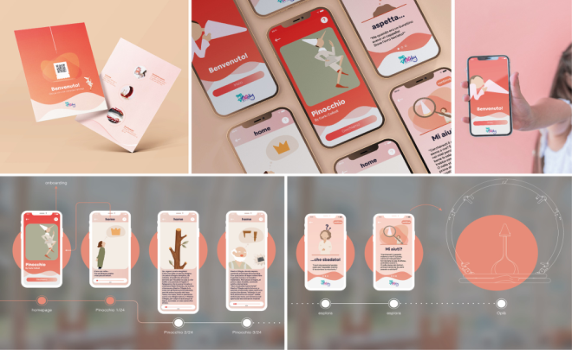
Flyer A5 It communicates to the caregiver of the young patient the phases that make up the system/product and the activities to be carried out schematically, to make him/her an aware protagonist of the care and healing process. On the other cover of the flyer, there is a QR CODE that bridges between offline and online. This hyperlink gives the possibility to create a dialogue with the information, through the activities outlined in the next step. The application for smartphones and tablets. Pinocchio takes on the role of a companion during the treatment process because he is a symbol of the child’s and family’s quest for emancipation during the illness. Using a “vocabulary” familiar to the hospital complex, the platform integrates very well within the context. It is divided into the start-up phase, onboarding, homepage, game, and explo- ration. The first two stages allow the carer to explore: the “Oplà” research project, through a link to the T3ddy page, and the essential activities to be carried out to complete the game. The homepage looks like the cover of a digi- tal book, the story of which is developed on 24 screens, which graphically and descriptively represent the most important passages of the novel, inter- spersed with interactive games. The dual visual communication is designed to strengthen the parent’s collaborative approach and the games are deve- loped to maintain the child’s attention level high. The illustrations consist of a combination of visual stimuli and sensory aspects to create a match- ing between the narrative driven-game and the medical product. Therefore, the child is allowed to translate the shape of the device into a figure that has meaning. The exploration phase leads to the identification and visual recognition of the product, through Pinocchio’s request to search the exami- nation room for a component that has the same structural and constitutive qualities, form, and color as his hat. In the game, Pinocchio explains that he has lost his hat, which is transformed into a symbolic image and asks for help in finding it. This final phase concludes the online experience, to continue with the experiential phase of interaction with the offline product (see Figure 1).
The Hospitalization Experience Design Using Gamification 183
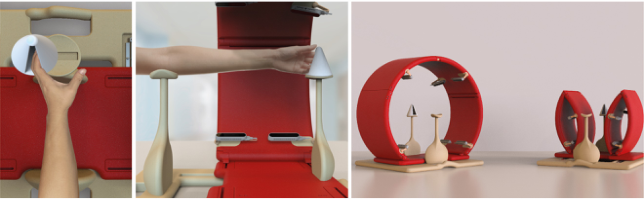
Figure 1: Design solution: redesign of the product-service system “Oplà”.Figure 2: Design solution: redesign of the product-service system “Oplà”.
The Gripping Zone The device has been designed from a formal and functional point of view. The gripping zone, which formally has become Pinocchio’s pointy hat, pro- vides a conceptual model capable of making the device accessible, adding value to the system/product. It is a psychosocial and emotional innovation, close to the needs of well-being, socialization, and humanization of care. The medical device is recognized as an activity of the play experience. Each com- ponent refers to the physical-formal characteristics of the visual frame of the online game activity. The supports for the district of interest extend in hei- ght, assuming a soft, rounded shape at the base, and conclude with a fine, precise cylindrical profile. In other words, they take the form of the easily interpretable figure of Pinocchio. The circular outer structure, on the other hand, has a distinct color luminance value, creating an appropriate contrast to the remaining touchpoints. The supports for calibrating the cameras were defined to move the scanners in longitudinal and transverse directions and were designed in a manner consistent with the physical-formal characteri- stics of the coordinated image of the device. The product has been optimized for transport by redesigning the handle of the base support and studying a closure system that, with a single movement, reduces its size (see Figure 2).
This research and exploration approach uses cognitive processes of perce- ption, memory, and attention. It invites the user to read the product directly and effectively, renewing the element of greatest functional criticality and guaranteeing a high level of usability of the product for the observer.
CONCLUSION
The results highlighted how the engagement of all users in the workflow, working on the improvement of a new methodology of care, can signifi- cantly contribute to make hospitalization a positive experience for small patients. This result demonstrates how the patient-centered approach and the principles of humanized care contribute to enhancing the effectiveness of the operational process of care, reducing the levels of emotional stress. Overall, the research proposes new systems of intuitive interaction with the environment and hospital products, enabled by emerging digital technolo- gies. As a future solution for the pediatric patient and parent engagement, the new scenario presents the use of gamification applied to medical devi- ces and design-oriented strategies and methodologies to re-examine existing pediatric care models.
ACKNOWLEDGMENT
The authors would like to acknowledge the medical staff at Meyer Chil- dren’s Hospital, the team of T3ddy and the professional studio CSPE, and his director Paolo Felli. The article is the result of the joint work of the auth- ors; the contribution of each author is the following: Viviani S. “Results and Discussion” and “Conclusions”; Furferi R. “Introduction and background”; Rinaldi A. “Methodological approach”.
REFERENCES
Altman, M. (2018). Design Thinking in Health Care. Preventing Chronic Disease,
15. Baratta, A.F.L. (2019). Lo spazio e la cura dei bambini: l’approccio del Meyer. Buonamici, F., Furferi, R., Governi, L., Lazzeri, S., McGreevy, K.S., Servi, M., Talanti, E., Uccheddu, F. and Volpe, Y. (2020). A practical methodology for computer-aided design of custom 3D printable casts for wrist fractures. The Visual Computer, 36(2), pp. 375–390. Busch, I.M., Moretti, F., Travaini, G., Wu, A.W. and Rimondini, M. (2019).
Humanization of Care: Key Elements Identified by Patients, Caregivers, and Heal- thcare Providers. A Systematic Review. The Patient - Patient-Centered Outcomes Research, 12(5), pp. 461–474. Capolongo, S., Gola, M., Brambilla, A., Morganti, A., Mosca, E.I. and Barach, P.
(2020). COVID-19 and Healthcare Facilities: a Decalogue of Design Strategies for Resilient Hospitals. Acta Biomedica Atenei Parmensis, 91(9-S), pp. 50–60. Delgado, M.C.M. (2022). COVID-19: A family’s perspective. In: COVID-19 Pandemic. Elsevier, pp. 41–51. Filippazzi, G. (2004). Un ospedale a misura di bambino: esperienze e proposte.
Milano: Franco Angeli.
The Hospitalization Experience Design Using Gamification 185
Gerteis, M., ed. (1993). Through the Patient’s Eyes: Understanding and Promoting Patient-Centered-Care. 1st ed. New York: Jossey-BassTM An Imprint of WILEY. Kim, S.H., Myers, C.G. and Allen, L. (2017). Health Care Providers Can Use Design
Thinking to Improve Patient Experiences. Harvard Business Review, 31 August 2017. Maguire, M. (2001). Methods to support human-centred design. International Journal of Human-Computer Studies, 55(4), pp. 587–634. Reina, R., Ventura, M., Cristofaro, C.L. and Gentile, T.A.R. (2021). Mobile
Application for Healthcare: The Case of COVID-19 in Mobile Apps. puntOorg International Journal, 6(2), pp. 158–195. Roberts, J.P., Fisher, T.R., Trowbridge, M.J. and Bent, C. (2016). A design thinking framework for healthcare management and innovation. Healthcare, 4(1), pp. 11–14. Silva, B.M.C., Rodrigues, J.J.P.C., de la Torre Díez, I., López-Coronado, M. and
Saleem, K. (2015). Mobile-health: A review of current state in 2015. Journal of Biomedical Informatics, 56, pp. 265–272. Stewart, M., Brown, J.B., Weston, W.W., McWhinney, I.R., McWilliam, C.L. and Freeman, T.R.(2013). Patient-Centered Medicine: Transforming the Clinical Method. 3rd ed. CRC Press. Tosi, F. (2020). Design for Ergonomics. Cham: Springer International Publishing:
Imprint: Springer. Tripodi, M., Siano, M.A., Mandato, C., De Anseris, A.G.E., Quitadamo, P., Guercio Nuzio, S., Viggiano, C., Fasolino, F., Bellopede, A., Annunziata, M., Massa, G., Pepe, F.M., De Chiara, M., Siani, P. and Vajro, P. (2017). Humanization of pedia- tric care in the world: focus and review of existing models and measurement tools. Italian Journal of Pediatrics, 43(1), p. 76.
LISTED IN THE AHFE DIGITAL BOOKSTORE CATALOGUE
Explore the complete digital volume
Healthcare and Medical Devices
Read this individual research paper free through the original publisher, or explore the full digital proceedings book.
ISBN 978-1-958651-27-8
Explore this ISBN in the AHFE Bookstore ↗Listed in the July 2026 bookstore catalogue; search by ISBN to confirm current availability · Digital book purchase optional