Jay Kalra, Daniel Markewich, Zoher Rafid-Hamed, Patrick Seitzinger (2022). Enhancing the Quality and Delivery of Healthcare: A Decade Review of Autopsy Data. In: Healthcare and Medical Devices. AHFE Open Access, vol. 51, pp. 91–99. https://doi.org/10.54941/ahfe1002103
1 Department of Pathology and Laboratory Medicine, College of Medicine, University of Saskatchewan, Saskatoon, Canada; Royal University Hospital, Saskatchewan Health Authority, 103 Hospital Drive Saskatoon, Saskatchewan, S7N 0W8, Canada ↗↗↗
2 Royal University Hospital, Saskatchewan Health Authority, 103 Hospital Drive, Saskatoon, Saskatchewan, S7N 0W8, Canada ↗
Quality management is of the utmost importance for providing the best patient care in our healthcare system. Patients rightfully expect the care that they receive to be of sound quality. The medical autopsy has been used as the gold standard of diagnostic medicine and continues to provide insights into strategies for healthcare quality improvement. The discordance and concordance rates between autopsy and clinical diagnoses have been used to identify areas of improvement and provide education opportunities to healthcare professionals. Discordance between autopsy and clinical diagnoses has revealed several areas in which clinicians need to improve their diagnostic skills and implement systemic changes to detect and mitigate diagnostic errors. Unfortunately, the rate of hospital autopsies has declined over the past several decades. The purpose of this study was to expand our previous work and combine the analyses of discordance and concordance between autopsy and clinical diagnoses across a 10-year period from 2002 to 2011 and to assess the role of the medical autopsy as a quality improvement tool in modern healthcare systems. Within our study, the autopsy rate of all in-patient deaths was approximately 6%. Our study indicates that the concordance rate between clinical and autopsy diagnoses was 77.5%, the discordance rate was 19.4%, and 3.1% were inconclusive. The discordance rate varied from as low as 9.7% in 2007 to as high as 27.1% in 2002. These findings suggest that overall, approximately 1 in 5 autopsies revealed discordance between autopsy and clinical diagnoses. This is a significant number of cases for which there exists both quality improvement and educational opportunities, thus, supporting the continued use of autopsy. We suggest these data should be used to encourage residents and physicians to continue using autopsy as an important quality tool to extend our understanding of disease processes. Hospital autopsies are closely associated with quality improvement and better patient care.
The diagnostic process is of vital importance for appropriate medical care (Olsen 2018). Inaccuracies in the diagnostic process lead to significant con- sequences, negatively impacting patient morbidity and mortality (Berner and Graber, 2008; Bunting and Groszkruger 2016). The autopsy has been an essential diagnostic tool for more than 3000 years (Aalten et al. 2006), and it remains the diagnostic golden standard in identifying pathologies and causes of death (Marshall and Milikowski 2017). Additionally, clinicians can use the results of autopsies to improve diagnostic skills and processes (Graber 2005). Unfortunately, the rate of hospital autopsies has declined glo- bally from approximately 60% in the 1960’s to less than 10% in modern medicine (Kalra et al. 2010; Roulson et al. 2005; Scordi-Bello et al. 2010). The decline of the autopsy rates is attributable to a multitude of contributing factors, including fear of medicolegal trouble, limited resources, clinician and
patient hesitancy, lack of minimum autopsy rates for hospital accreditation, and advances in diagnostic imaging modalities (Scordi-Bello et al. 2010; Tavora et al. 2008; Tai et al. 2001).
Discordance rates between clinical and autopsy diagnoses vary conside- rably across studies and across continents. In our previous studies, we have shown the discordance rate between autopsy and clinical diagnoses in the Saskatoon Health Region (SHR) to be 12.7% from 2006 to 2008 (Kalra et al. 2019) and 20.9% from 2002 to 2004 (Kalra et al. 2010). Studies from various countries have reported discordance rates from as low as 9.3% in India (Moorchung et al. 2013) to 19.8% in the USA (Tai et al. 2001) and as high as 48.4% in Jamaica (Gibson et al 2004). Systematic reviews and meta- analyses have revealed several different ranges for discordance rates including 4.1-49.8% (Shojania et al. 2003), 5-15% (Tudela et al. 2017), 10-15% (Schiff et al. 2009) and 10-20% (Graber 2013). The significant variability between the studies can be explained in part by the differences in study populations and contexts associated with each study. The purpose of our study was to combine and analyze over a decade of clinical and autopsy data to iden- tify overall rates and trends of concordance and discordance rates among university and community hospitals in Saskatoon, Saskatchewan, Canada.
METHODS
The rates of discordance and concordance between clinical and autopsy dia- gnoses were determined via a retrospective chart review by three independent researchers on 441 patients who passed away between January 1, 2000 to December 31, 2011, while admitted to one of three hospitals in the SHR including Royal University Hospital (RUH), St. Paul’s Hospital (SPH) and Saskatoon City Hospital (SCH). Inclusion criteria included being over the age of 16 at the time of death and having a clinician or family-requested autopsy performed. The data from the year 2005 was not fully available at the time of analysis and was not included in our study. Other exclusion criteria included medicolegal autopsies, pediatric autopsies, and coroner’s autopsies, as well as any incomplete charts. Data from admission records, discharge summaries, and autopsy reports were analyzed. Discordance was defined as non-agreement between the clinical diagnosis premortem and autopsy fin- dings post-mortem. Concordance was defined as agreement between pre- and post-mortem diagnoses for the cause of death. Occasionally, cases were dee- med to be inconclusive if there were insufficient information to classify the case as either concordant or discordant.
To further understand diagnostic errors, cases of discordance were subclas- sified according to implications of the error. This subclassification was originally introduced by Goldman et al. (1983). Their subclassifications are operationally defined as follows: Class 1 are discrepancies of major diagnoses in which knowledge of the diagnosis would have led to changes in trea- tment and/or management with the potential to prolong survival (Goldman et al. 1983). Class 2 are discrepancies of major diagnoses, but the knowledge of the diagnoses would not have changed survival or patient management (Goldman et al. 1983). Class 3 are discrepancies of minor diagnoses that did
Enhancing the Quality and Delivery of Healthcare: A Decade Review of Autopsy Data 93
not directly relate to the cause of death but were associated with the terminal disease (Goldman et al. 1983). Class 4 are discrepancies of minor diagno- ses that may have had the potential to influence prognosis or eventually contribute to the cause of death and may have epidemiological significance (Goldman et al. 1983). Since its original publication, a 5th classification has been added (Aalten et al. 2006; Veress 1988). Class 5 cases indicate com- plete agreement between autopsy and clinical diagnoses (Aalten et al. 2006; Veress 1988).
RESULTS
After inclusion and exclusion criteria were applied to, a total of 441 cases were eligible for analysis in this study (Figure 1).
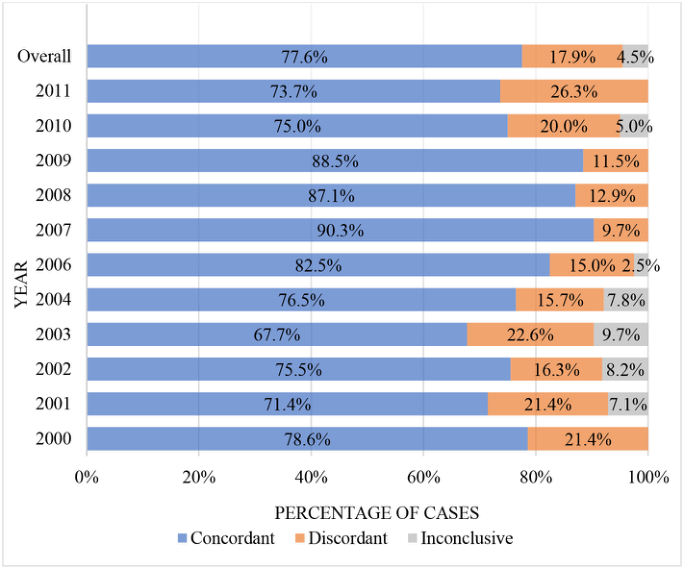
The overall concordance rate between 2000 and 2011 was 77.6% (342/441), whereas the discordance rate was 17.9% (79/441). There were 20 cases (4.5%) for which there was not enough information to classify as either concordant or discordant and were thus labelled inconclusive. The concordance rate in the SHR ranged from 67.7% in 2003 to 90.3% in 2007 (Figure 2).
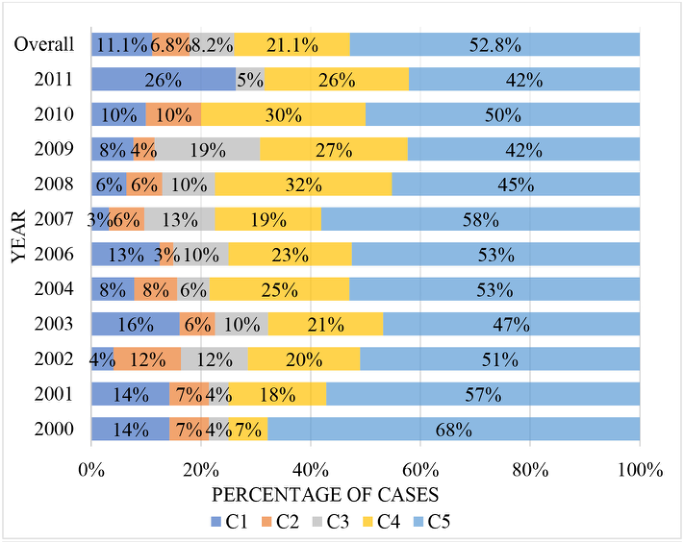
Looking at the subclassification of diagnostic errors in cases of discordance as introduced by Goldman et al. (1983) and modified by Aalten et al. (2006), Class 1 rates ranged from 3% in 2007 to 26% in 2011. Class 2 cases ranged from 0% in 2011 to 12% in 2002. Class 3 cases ranged from 0% in 2010 to 19% in 2009. Class 4 cases ranged from 7% in 2000 to 32% in 2008. Finally, Class 5 cases ranged from 42% in 2011 to 68% in 2000 (Figure 3).
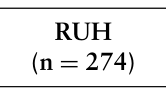
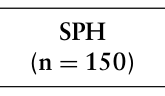
Of the over 13,000 patient-deaths that occurred in the SHR from 2000 to 2011 about 6,061 occurred at SPH (46.2%), 4,654 occurred at RUH (35.5%), and 2,395 at SCH (18.3%). A total of 785 autopsies were per- formed for an autopsy rate of about 6%. With regards to the included cases, 274 autopsies took place at RUH (62.1%), 150 took place at SPH (34.0%), and 17 took place at SCH (3.9%). About 59.4% of cases were male, and 40.6% were female, and the average age at the time of death was 65 ± 15 years. The average length of stay in hospital was 12 ± 21 days. The loca- tion of death within the hospital was also evaluated. The place of death in hospital for 49.9% (224/441) of patients was the Intensive Care Unit (ICU), 36.3% (163/441) on the wards, and 12.0% (54/441) were other locations in the hospital.
The concordance rate ranged from 74.0% at SPH to 94.1% at SCH, while the discordance rate varied from 5.9% at SCH to 23.3% at SPH. Of the inconclusive cases, 16 occurred at RUH and 4 occurred at SPH (Table 1). Utilizing Goldman’s classification system reveals Class 1 errors range from 14% at SPH to 6% at SCH. Similarly, Class 2 errors range from 0% at SCH to 9% at SPH. Class 3 errors ranged from 12% at SCH to 8% at RUH. Class 4 cases ranged from 12% at SCH to 24% at SPH. Class 5 cases ranged from 71% at SCH to 44% at SPH. Overall, the number of minor discrepancies (Class 3 and Class 4) was just over 1.5 times higher than the number of major discrepancies (Class 1 and Class 2) with 29% and 18%, respectively, as shown in Table 1.
Figure 1: Flow chart of the number of hospital admissions, deaths, total autopsies, and eligible cases in SHR from 2000 to 2011.
Figure available in the original PDF paper.
Figure 2: Concordance and discordance rates between clinical and autopsy diagnoses for all hospitals in the SHR from 2000 to 2011.
The cardiovascular and respiratory systems were the most common organ systems involved with the cause of death in our population, with 31.3% and 19.3%, respectively. The cardiovascular and gastrointestinal systems were the most common organ systems involved with discordant cases, accoun- ting for 33% and 20% of discordant cases, respectfully. Relative discordance rates were calculated as the number of discordant cases involving a particular organ system divided by the total number of cases involving that particu- lar organ system. For example, of the 36 gastrointestinal cases, 16 were discordant, resulting in a relative discordance rate of 44.4%. Organ systems with the highest rates of relative discordance included the gastrointestinal system with 44.4% and the hematological system with 33.3%, as shown in Table 2.
Enhancing the Quality and Delivery of Healthcare: A Decade Review of Autopsy Data 95
Figure 3: Classification of the types of discordance between clinical and autopsy dia- gnoses according to the Goldman’s criteria (1983) as modified by Aalten et al. (2006) of hospitals in the SHR from 2000 to 2011 (C1: Class 1, C2: Class 2, C3: Class 3, C4: Class 4, C5: Class 5).Table 1. Classification of the types of discrepancies between clinical and autopsy diagnoses of hospitals in the SHR between 2000 and 2011.
Table available in the original PDF paper.
Classification *Sub- Classification
Equation reproduced from the original PDF.Equation reproduced from the original PDF.Equation reproduced from the original PDF.
*Sub-classification of discordance is presented as a percent of total rates of discordance.
DISCUSSION
The rates of concordance (77.6%) and discordance (17.9%) between clini- cal and autopsy diagnoses in the SHR from 2000 to 2011 are consistent with previously reported data from around the world. The Goldman clas- sification system (Goldman et al. 1983), as modified by Aalten et al. (2006) allowed for more in depth analyses of the type of errors occurring in our
Table 2. Distribution of organ system involved in cause of death among the 441 cases in the SHR from 2000 to 2011.
healthcare system. In 11.1% of discordant cases, the correct diagnosis would have likely changed management and potentially prolonged life. Examples include a case where the patient was clinically treated for a streptococcus infection but autopsy revealed Blastomyces infection. This rate of Class 1 errors, 11.1% is similar to findings is consistent with previously reported rates ranging from 5% (Shojania et al. 2003) to 9.9% (Marshall and Miliko- wski 2017). In the 6.8% of cases that were classified as Class 2 errors there were major discrepancies in the cause of death but due to the nature of the condition, knowledge of the post-mortem diagnosis could not have changed the outcome. For example, one patient who presented with jaundice passed away quickly in hospital, and their clinical cause of death was listed as a combination of hypereosinophilic syndrome and liver failure. However, on autopsy, the patient was found to have extensive metastatic adenocarcinoma of the colon. Due to the extent of the metastatic disease, even if the clinical diagnosis had been accurate, the clinical course could not have been changed. The rate of Class 2 errors found in this study is in keeping with previously reported findings ranging from 6.1% (Fares et al. 2011), to 15% (Tudela et al. 2017). Similarly, the rate of minor errors is in keeping with previous literature including a Class 3 error rate of 8.2% within the previously repor- ted range of 3.6% (Marshall and Milikowski 2017) to 15% (Tudela et al. 2017), a Class 4 error rate of 21.1% within the previously reported range of 16.1% (Aalten et al. 2006) to 32.9% (Marshall and Milikowski 2017). The rate of complete concordance between clinical and autopsy diagnoses Class 5 in this study was 52.8% which is slightly higher than previously reported ranges from 29% (Spiliopoulou et al. 2005) to 57% (Pastores et al. 2007) which may be attributable to certain limitations of the study.
Limited sample sizes on a year-to-year basis were the primary restriction to the depth of analysis and the interpretations of the present study. Exam- ples of this include only 19 eligible cases in 2011 and data from the year 2005 being not fully available at the time of analysis and therefore not inclu- ded. The low autopsy rate during this period, about 6%, limited the data available for interpretation and introduced the potential for selection bias. A study by Shojania et al. (2003) found that lower autopsy rates are associated
Enhancing the Quality and Delivery of Healthcare: A Decade Review of Autopsy Data 97
with higher rates of diagnostic errors. Within the same study, they note that for every 10% increase in the autopsy rate, there was a 12.4% decrease in major medical errors (Shojania et al. 2003). This supports the notion that autopsy remains a critical quality assurance and educational tool (Winters et al. 2012). As the autopsy rate has declined, it seems that more commonly, cases of clinical diagnostic uncertainty involve autopsy investigation (Shoja- nia et al. 2003; Winters et al. 2012), thereby suggesting that the discordance rate could be artificially inflated due to the thought that many of the cases that are selected for autopsy have uncertain diagnoses from the start. Howe- ver, a study by Cameron et al. (1980) found that clinician certainty has little effect on the rate of discordance, noting that the discordance rate among cases where the clinicians were certain about the diagnoses was 12%, whe- reas the rate was 15% for the other levels of certainty (Cameron et al. 1980). They also found that the discordance rate among cases where the clinician would have normally ordered an autopsy was 15% compared to cases where the clinician would not have typically ordered an autopsy which was 14% (Cameron et al. 1980). Therefore, while there is potential for selection bias, its effect on discordance rate may be minimal.
CONCLUSION
Autopsy continues to contribute to clinical knowledge, medical education, and quality assurance initiatives. Autopsy contributes to diagnostic medicine by enhancing accuracy and knowledge of disease (Roulson et al. 2005; De Vlieger et al. 2010) and providing more accurate epidemiological mortality data (Sington and Cottrell 2002). Additionally, it assists clinicians with the calibration of their diagnostic skills via feedback (Graber 2005). As our study shows, the discordance rate across the decade studied remains consistent with the literature suggesting that autopsy continues to bring to light discrepancies despite the global declining autopsy rate and advances in medical diagnostic technology.
REFERENCES
Aalten, C.M., Samson, M.M., and Jansen, P.A.F. (2006), “Diagnostic errors; the need to have autopsies.” Neth. J. Med. 64, 186–190. Berner, E.S., and Graber, M.L. (2008), “Overconfidence as a Cause of Diagnostic
Error in Medicine.” Am. J. Med. 121. Bunting, R.F., and Groszkruger, D.P. (2016), “From To Err Is Human to Improving Diagnosis in Health Care: The risk management perspective.” J. Healthc. Risk Manag. 35, 10–23. Cameron, H.M., McGoogan, E., and Watson, H. (1980), “Necropsy: a yardstick for
clinical diagnoses.” Br. Med. J. 281, 985–988. De Vlieger, G., Mahieu, E., Meersseman, W. (2010), “Clinical review: What is the role for autopsy in the ICU?” Crit. Care. 14, 221. Fares, A.F., Fares, J., Fares, G.F., Cordeiro, J.A., Nakazone, M.A., and Cury, P.M.
(2011), “Clinical and pathological discrepancies and cardiovascular findings in 409 consecutive autopsies.” Arq. Bras. Cardiol. 97, 449–455.
Gibson, T.N., Shirley, S.E., Escoffery, C.T., and Reid, M. (2004), “Discrepancies between clinical and post-mortem diagnoses in Jamaica: A study from the University Hospital of the West Indies. J. Clin. Pathol. 57(9), 980–985. Goldman, L., Sayson, R., Robbins, S., Cohn, L.H., Bettmann, M., and Weisberg, M.
(1983), “The Value of the Autopsy in Three Medical Eras.” N. Engl. J. Med. 308, 1000–1005. Graber, M. (2005), “Diagnostic Errors in Medicine: A Case of Neglect Forum.” Jt.
Comm. J. Qual. Patient Saf. 31, 106–113. Graber, M.L. (2013), “The incidence of diagnostic error in medicine.” BMJ Qual.
Saf. 22, 21–27. Kalra, J., Entwistle, L., Suryavanshi, S., and Chadha, R. (2010), “Quality assessment using concordance and discordance rates in medical findings.” Clin. Gov. An Int. J. 15, 128–133. Kalra, J., Markewich, D. and Seitzinger, P. (2020), “Quality assessment and mana-
gement: An overview of concordance and discordance rates between clinical and autopsy diagnoses.” In: Lightner N., Kalra J. (eds). Advances in Human Factors and Ergonomics in Healthcare and Medical Devices. AHFE 2019. Advances in Intelligent Systems and Computing. Cham: Springer, 857. 45–54. Marshall, H.S., and Milikowski, C. (2017), “Comparison of Clinical Diagnoses and Autopsy Findings: Six-Year Retrospective Study.” Arch. Pathol. Lab. Med. 141, 1262–1266. Moorchung, N., Singh, V., Mishra, A., Patrikar, S., Kakkar, S., and Dutta, V. (2013),
“Is necropsy obsolete - An audit of the clinical autopsy over six decades: A study from Indian sub continent.” Indian J. Pathol. Microbiol. 56, 372. Olson, A.P.J., Graber, M.L., and Singh, H. (2018), “Tracking Progress in Improving Diagnosis: A Framework for Defining Undesirable Diagnostic Events.” J. Gen. Intern. Med. 1–5. Pastores, S.M., Dulu, A., Voigt, L., Raoof, N., Alicea, M., and Halpern, N.A. (2007),
“Premortem clinical diagnoses and post-mortem autopsy findings: discrepancies in critically ill cancer patients.” Crit. Care. 11, 48. Roulson, J., Benbow, E.W., and Hasleton, P.S. (2005), “Discrepancies between clinical and autopsy diagnosis and the value of post mortem histology; a meta-analysis and review.” Histopathology. 47(6), 551–559. Schiff, G.D., Hasan, O., Kim, S., Abrams, R., Cosby, K., Lambert, B.L., Elstein, A.S.,
Hasler, S., Kabongo, M.L., Krosnjar, N., Odwazny, R., Wisniewski, M.F., and McNutt, R.A. (2009), “Diagnostic Error in Medicine.” Arch. Intern. Med. 169, 1881. Scordi-Bello, I.A., Kalb, T.H., and Lento, P.A. (2010), “Clinical setting and extent of premortem evaluation do not predict autopsy discrepancy rates.” Mod. Pathol. 23(9), 1225–1230. Shojania, K.G., Burton, E.C., McDonald, K.M., and Goldman, L. (2003), “Changes
in Rates of Autopsy-Detected Diagnostic Errors Over Time. JAMA. 289, 2849. Sington, J.D., and Cottrell, B.J. (2002), “Analysis of the sensitivity of death certificates in 440 hospital deaths: a comparison with necropsy findings.” J. Clin. Pathol. 55, 499–502 (2002). Spiliopoulou, C., Papadodima, S., Kotakidis, N., and Koutselinis, A. (2005), “Cli-
nical diagnoses and autopsy findings: A retrospective analysis of 252 cases in Greece.” Arch Pathol Lab Med. 129(2), 210–214. Tai, D.Y.H., El-Bilbeisi, H., Tewari, S., Mascha, E.J., Wiedemann, H.P., and Arroliga, A.C. (2001), “A Study of Consecutive Autopsies in a Medical ICU: A Comparison of Clinical Cause of Death and Autopsy Diagnosis.” Chest. 119, 530–536.
Enhancing the Quality and Delivery of Healthcare: A Decade Review of Autopsy Data 99
Tavora, F., Crowder, C.D., Sun, C.-C., and Burke, A.P. (2008), “Discrepancies Between Clinical and Autopsy Diagnoses.” Am. J. Clin. Pathol. 129, 102–109. Tudela, P., Carreres, A., and Ballester, M. (2017), “Diagnostic errors in emergency
departments.” Med. Clínica (English Ed.). 149, 170–175. Veress, B. (1988), “A Retrospective Analysis of Clinical Diagnoses and Autopsy Findings in 3,042 Cases During Two Different Time Periods.” Hum. Pathol. 140–145. Winters, B., Custer, J., Galvagno, S.M., Colantuoni, E., Kapoor, S.G., Lee, H., Goode,
V., Robinson, K., Nakhasi, A., Pronovost, P., and Newman-Toker, D. (2012), “Diagnostic errors in the intensive care unit: a systematic review of autopsy studies.” BMJ Qual. Saf. 21, 894–902.
LISTED IN THE AHFE DIGITAL BOOKSTORE CATALOGUE
Explore the complete digital volume
Healthcare and Medical Devices
Read this individual research paper free through the original publisher, or explore the full digital proceedings book.
ISBN 978-1-958651-27-8
Explore this ISBN in the AHFE Bookstore ↗Listed in the July 2026 bookstore catalogue; search by ISBN to confirm current availability · Digital book purchase optional