Lauren Kennedy-Metz, Roger Dias, Rithy Srey, Geoffrey Rance, Kay Leissner, Suzana Zorca, Alexander Shapeton, Marco Zenati (2022). Human Factors Analysis of Goal-Directed Perfusion in Cardiac Surgery. In: Healthcare and Medical Devices. AHFE Open Access, vol. 51, pp. 220–224. https://doi.org/10.54941/ahfe1002120
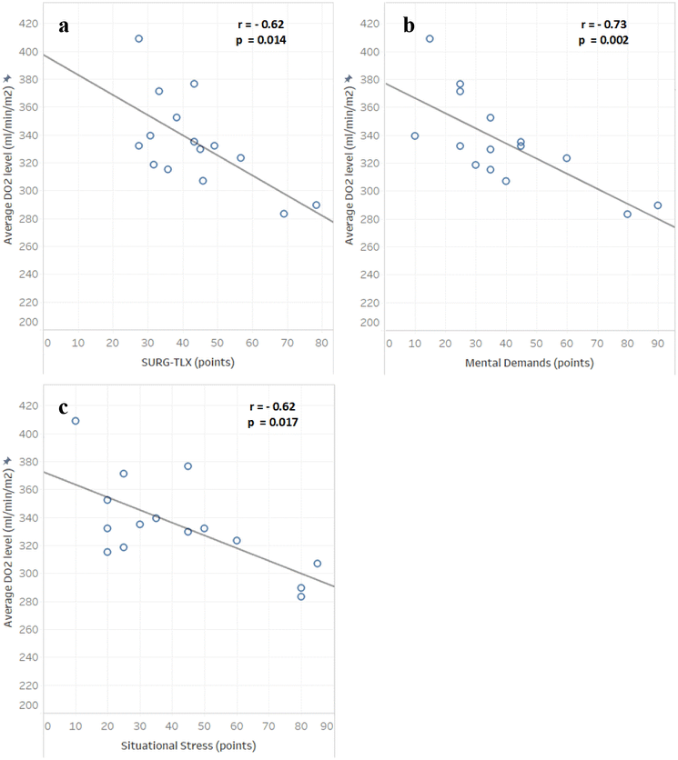
The cardiac surgery operating room (OR) is a complex sociotechnical environment requiring the seamless integration of human-human and human-machine teams. Perfusionists in particular play a critical role in ensuring patient stability by operating the cardiopulmonary bypass (CPB) machine. Goal-directed perfusion (GDP) (oxygen delivery [DO2] ≥ 280 mL/min/m2 during CPB in cardiac surgery) is recommended given the positive results of the Goal-Directed Perfusion Trial (GIFT). However, the additional cognitive burden required by the perfusionist, and associated with the heightened vigilance needed to maintain the GDP threshold, is unknown. The objective of this study was to investigate the relationship between DO2 and perfusionists’ perceived cognitive workload in cardiac surgery.Methods: Experienced perfusionists indicated their perceived cognitive workload immediately after cardiac surgery procedures (N=15) using the validated SURG-TLX index dimensions (mental demands, physical demands, temporal demands, task complexity, situational stress, and distractions). A two-tailed Spearman’s correlation was calculated to investigate the relationship between DO2 and SURG-TLX. IRB approval and informed consent from all participants were obtained.Results: Cases analyzed included 13 coronary artery bypass graft and 2 aortic valve replacement procedures. Patients averaged 66.3 years (SD: 8.3 years) with an average 30-day predicted mortality of 1.03% and 30-day predicted morbidity of 9.36%. Average pump time was 113 minutes (range 77 minutes to 170 minutes). Average body surface area was 2.15 m2 (SD: 0.17 m2).Lower DO2 levels (averaged across the duration of total pump time) were significantly associated with higher overall perceived task load (rs(13) = -0.62, p = 0.014), mental demands (rs(13) = -0.73, p = 0.002), and situational stress (rs(13) = -0.62, p = 0.017) (Figure 1). No significant correlations were detected between average DO2 levels and remaining cognitive workload dimensions.Conclusions: This is the first study to evaluate human factors associated with achieving GDP in cardiac surgery. Self-reported measures indicate an elevation in mental demands and situational stress which correspond to lower DO2 values, supporting further investigation into perfusionists’ cognitive state to avoid episodes of cognitive overload and facilitate maintenance of GDP.
The cardiac surgery operating room (OR) is a complex sociotechnical envi- ronment requiring the seamless integration of human-human and human- machine teams. The cardiopulmonary bypass (CPB) phase of cardiac surgery in particular represents a period of time in which the patient is receiving cardi- opulmonary extracorporeal support, managed by a human operator: the per- fusionist. Perfusionists play a critical role in ensuring patient hemodynamic stability by operating the CPB machine during this time.
Previous work has demonstrated that perfusionists perceive the highest levels of cognitive demands (specifically mental demands, task demands, distractions, and difficulty) during the CPB phase of surgeries. This finding was corroborated by elevated physiological markers of cognitive demand during CPB as well (Lauren R Kennedy-Metz et al., 2020). While others have shown that the processes of initiating and weaning from bypass in particular
Human Factors Analysis of Goal-Directed Perfusion in Cardiac Surgery 221
incur the highest degree of workload, this work also makes it clear that physi- ological and perceptual measures of workload, along with visual dwell times on pump modules and all fluctuate throughout the duration of the CPB run (Merkle et al., 2019).
Goal-directed perfusion (GDP) (oxygen delivery [DO2] ≥280 mL/min/m2 during CPB in cardiac surgery) is a more recent recommended practice given the positive results of the Goal-Directed Perfusion Trial (GIFT) (Ranucci et al., 2018). Evidence from the literature has demonstrated the protective effect of GDP approaches in minimizing morbidity and hospital length of stay (Aya et al., 2013), as well as the occurrence of acute kidney injury (Ranucci et al., 2018). However, the additional cognitive burden required by the per- fusionist as a result of this approach, along with the heightened vigilance needed to maintain the GDP threshold, is unknown.
The objective of this study was to investigate the relationship between ave- rage DO2 levels during CPB and perfusionists’ perceived cognitive workload during cardiac surgery.
METHODS
This research complied with the American Psychological Association Code of Ethics and was approved by the Institutional Review Board at VA Boston Healthcare System and Harvard Medical School (IRB#3296). Informed consent was obtained from all participants, including patients, perfusioni- sts and OR staff. Data were collected during non-emergent aortic valve replacement (AVR) or coronary artery bypass graft (CABG) procedures in the cardiac OR of a tertiary teaching hospital between January 2021 and April 2021.
Experienced perfusionists indicated their perceived cognitive workload immediately after cardiac surgery procedures (N = 15) taking place during this time frame. Participants self-reported their perceptions of cognitive wor- kload over the course of the procedure according to the validated SURG-TLX index dimensions: mental demands, physical demands, temporal demands, task complexity, situational stress, and distractions (Wilson et al., 2011; Lauren R. Kennedy-Metz et al., 2020). A two-tailed Spearman’s correlation was calculated to investigate the relationship between average DO2 levels during CPB and SURG-TLX responses.
RESULTS
Fifteen procedures were analyzed (2 AVR and 13 CABG). Patients averaged 66.3 years old (standard deviation: 8.3 years) with an average STS 30-day predicted risk of mortality of 1.03% and 30-day predicted risk of morbidity of 9.36%. The average pump time over the procedures analyzed was 113 minutes (range: 77 minutes to 170 minutes). The average cross-clamp time was 73 minutes (range: 44 minutes to 123 minutes). The average body sur- face area of the 15 patients involved was 2.15 m2 ± 0.17 (mean ± standard deviation).
Figure 1: Significant negative correlations were observed between average DO2 levels and overall perceived cognitive workload (a), DO2 levels and mental demands (b), and DO2 levels and situational stress (c).
Lower DO2 levels (averaged across the duration of the total pump time) were significantly associated with higher overall perceived cognitive wor- kload (rs(13) = −0.62, p = 0.014), mental demands (rs(13) = −0.73, p = 0.002), and situational stress (rs(13) = −0.62, p = 0.017) (Figure 1). No significant correlations were detected between average DO2 levels and remaining cognitive workload dimensions.
CONCLUSION
This is the first study to evaluate human factors associated with achieving GDP in cardiac surgery. Previous work demonstrating elevated cognitive wor- kload during bypass was conducted without consideration for perfusionists’ DO2 monitoring (Merkle et al., 2019; Lauren R Kennedy-Metz et al., 2020),
Human Factors Analysis of Goal-Directed Perfusion in Cardiac Surgery 223
which the current work expands upon. Self-reported measures of cognitive workload indicate an elevation in overall demands, mental demands, and situational stress which correspond to lower average DO2 values, supporting further investigation into perfusionists’ cognitive state to avoid episodes of overload and simultaneously facilitate maintenance of GDP.
At centers where real-time DO2 monitoring equipment is not available, alternative solutions for maintaining goal-directed perfusion measures are warranted, but care must be taken to avoid incurring excessive demands on perfusionists. Cognitive support, in the form of a quick reference tool for example (Srey et al., 2019), may present an easily approachable solu- tion for maintaining targets while minimizing additional cognitive burden. The incorporation of machine learning models to integrate inputs and pro- vide meaningful recommendations based on sub-optimal DO2 levels has also shown preliminary promise (Dias et al., 2021). Finally, high-fidelity medi- cal simulation may represent realistic and relevant training opportunities in preparation for critical intra-operative events (Merkle et al., 2020).
ACKNOWLEDGMENT
This work was supported by the National Heart, Lung, and Blood Institute of the National Institutes of Health Under Award Number R01HL126896 (PI: Zenati). The content is solely the responsibility of the authors and does not necessarily represent the official views of the National Institutes of Health. No conflicts of interest declared.
REFERENCES
Aya, H. D. et al. (2013) ‘Goal-directed therapy in cardiac surgery: A systematic review and meta-analysis’, British Journal of Anaesthesia. The Author(s), 110(4), pp. 510–517. doi: 10.1093/bja/aet020. Dias, R. D. et al. (2021) ‘Using machine learning to predict perfusionists ’ critical
decision-making during cardiac surgery’, Computer Methods in Biomechanics and Biomedical Engineering: Imaging & Visualization. Taylor & Francis, pp. 1–5. doi: 10.1080/21681163.2021.2002724. Kennedy-Metz, Lauren R et al. (2020) ‘Analysis of Dynamic Changes in Cognitive Workload During Cardiac Surgery Perfusionists ’ Interacti- ons With the Cardiopulmonary Bypass Pump’, Human Factors. doi: 10.1177/0018720820976297. Kennedy-Metz, Lauren R. et al. (2020) ‘Surgery Task Load Index in Cardiac Surgery: Measuring Cognitive Load Among Teams’, Surgical Innovation. doi: 10.1177/1553350620934931. Merkle, F. et al. (2019) ‘Evaluation of attention, perception, and stress levels of
clinical cardiovascular perfusionists during cardiac operations: a pilot study’, Perfusion, 34(7), pp. 544–551. doi: 10.1177/0267659119828563. Merkle, F. et al. (2020) ‘Simulation-based training of critical events during cardiopulmonary bypass: importance of a critical events checklist’, Perfusion (United Kingdom). doi: 10.1177/0267659120937125.
Ranucci, M. et al. (2018) ‘Goal-directed perfusion to reduce acute kidney injury: A randomized trial’, Journal of Thoracic and Cardiovascular Surgery. Elsevier Inc., 156(5), pp. 1918–1927.e2. doi: 10.1016/j.jtcvs.2018.04.045. Srey, R. et al. (2019) ‘A Quick Reference Tool for Goal-Directed Perfusion in Cardiac
Surgery’, The journal of extra-corporeal technology, 51(3), pp. 172–174. Wilson, M. R. et al. (2011) ‘Development and validation of a surgical workload measure: The surgery task load index (SURG-TLX)’, World Journal of Surgery, 35(9), pp. 1961–1969. doi: 10.1007/s00268-011-1141-4.
LISTED IN THE AHFE DIGITAL BOOKSTORE CATALOGUE
Explore the complete digital volume
Healthcare and Medical Devices
Read this individual research paper free through the original publisher, or explore the full digital proceedings book.
ISBN 978-1-958651-27-8
Explore this ISBN in the AHFE Bookstore ↗Listed in the July 2026 bookstore catalogue; search by ISBN to confirm current availability · Digital book purchase optional