Anacleto Correia, Mario Simões-Marques, Pedro Água (2022). Ontologies for emergency management. In: Human Factors and Systems Interaction. AHFE Open Access, vol. 52, pp. 25–31. https://doi.org/10.54941/ahfe1002135
In emergency management (EM), different domain vocabularies are used by distinct specialized actors involved in catastrophes’ response. Ontologies enables information sharing among them. This review of ontologies is an exploratory work aimed at collecting references of already proposed ontologies for the realm of EM; a first step for the proposal of a coherent and integrated architecture for EM ontologies. This work conforms to the PRISMA method and was performed by systematically searching several electronic databases for identifying proposed EM ontologies, published between the period of 1970 to 2021. From a total of 1885 articles identified, 104 articles met the full inclusion criteria for the systematic review. The articles found were classified according to (among other categories) the type of addressed disaster by the ontology, the main focus of the proposed approach, and the methods and techniques adopted. Despite the exploratory nature of this work, the review highlighted underexplored topics, and research gaps, due to the lack of integration of the ontological proposals, which hampers their semantic alignment in a modular architecture of ontologies, amenable of an infrastructure for distributed data sources of the Linked Open Data initiative.
In emergency management (aka as disaster management when the impact of the event is overwhelming to local/regional resources), different domain vocabularies are used by the actors converging to a crisis scenario and con- tributing to tackle the catastrophe with their specialized skills. This situation presents a challenge for an effective and efficient exchange of information given the semantic heterogeneity of data processed by each actor. Therefore, the ability of the different information systems in presence to share and pro- cess data with a common meaning, aka semantic interoperability, is one of the key challenges for the success of emergency response operations. A way to deal with this challenge is using ontologies, giving the more useful data a shared meaning. In fact, this is the aim of ontologies: to provide a rigorous definition of concepts and relationships used by a certain domain, allow- ing them to be machine readable and shareable among related information systems.
The need for an emergency management (EM) intelligent systems’ ontolo- gical architecture, which would tackle the interoperability challenge in crisis management, has been recognised for a while (Correia, Água and Simões- Marques, 2021). This architecture would be the infrastructure to support
the phases of the EM in different scenarios, supporting the cooperation of agencies engaged in disaster relief operations, hence contributing to improve the situational awareness, and, thus, a more effective and efficient decision- making process in the demanding context of complex disaster situations. Such architecture could rely on an integrated hierarchy of ontologies, for- mally conceptualizing the domain terms and establishing relationships among those concepts, contributing for applications integration, allowing the lin- king of data from different sources, related with emergency management. To build the ontological architecture for emergency management, a first step is to know how many and what kind of emergency management ontologies can be adapted, reused, and refactored to be the modules or building blocks of the sough ontological architecture. Therefore, the research question addressed by this work is: What are the already proposed ontologies and their contributions for an ontological architecture for emergency management?
To answer this question, one has to review the ontologies published in recent years to address and fulfil the several requirements of EM. Hence, the outcome of this paper will be a literature review on EM ontologies and incident response together with their intended specificities. The Preferred Reporting Items for Systematic Reviews (PRISMA) method (Liberati et al., 2009) is used as a formal tool and guideline for data collection of the litera- ture review. The chosen data set consists of ontologies published in the last fifty years. The analysed sample includes papers from journals searched on relevant scientific databases and meeting specific query constraints. For the retrieved ontologies we identified the type of emergency management they cover, the used methods and techniques, as well as their contributions for the foreseen EM ontological architecture. Previous published systematic revi- ews on emergency management did not target the scope of the current work since they covered topics such as: (i) social media-based crisis communication (Bukar et al., 2020); (ii) explore the extent to which sharing and reuse of disa- ster management knowledge is in line with Findability, Accessibility, while Interoperability and Reusability recommendations (Mazimwe, Hammouda and Gidudu, 2021); and (iii) investigating the extent to which semantic web is used in disaster management systems (Dirgahayu and Setiaji, 2020).
This paper is structured as follows: the Method section presents the rese- arch questions considered in the references search, followed by the data collection and the analysis processes to extract relevant information; the protocol followed is instantiated in the Results section, including the cho- sen bibliographic repositories, the records inclusion and exclusion criteria, as well as the search and analysis processes for collected papers. The Discussion section highlights the topics in EM ontologies’ with more or less research done, as well as research gaps. Finally, the Conclusion section provides a summary of the research findings and proposals for further work.
METHOD
To follow the systematic review procedures of PRISMA (PRISMA, 2020; Page et al., 2021), a protocol setup was required in advance, detailing the
Ontologies for Emergency Management 27
chosen bibliographic repositories, the inclusion and exclusion criteria for the records, as well as the search and analysis processes of the collected papers.
For attaining relevant EM ontologies references, we selected eleven well- known electronic databases (aka bibliographic repositories): Web of Science, ProQuest, Scopus, IEEE Xplore, Springer Link, Emerald Publishing, Taylor & Francis Group, Wiley Online Library, ACM Digital Library, SciELO, and JSTOR. The protocol also specified the retrieval of only peer-reviewed jour- nal articles, therefore excluding other kind of papers (e.g., book chapters, conference proceedings) or grey literature (e.g., technical reports). Additi- onal constraints included in the retrieval process was to query only works published in English, over the time span 1970 to 2021.
A query string was built with a composition of terms and Boolean opera- tors chosen for find relevant articles by titles, abstracts, or keywords. As part of the string, the disjunction of the terms “emergency”, “disaster”, “catastro- phe”, “calamity”, “accident”, “crisis”, or “urgency” in conjunction with the words “ontology”, or “taxonomy” were included. The wildcard * (meaning one or more characters) concatenated to each term of the string enabled the extension of the search to the derivatives of each term (e.g., disaster* retrieves also terms such as disasters or disastrous). Thus, journals’ articles selected for further analysis were the ones compliant with the search string for the title, abstract, or keywords.
The process of extraction of the records were performed on January, 20 2022. As output, we got a spreadsheet with the following fields for each of the retrieved records: title, abstract, keywords, authors’ names and affiliations, journal name, and year of publication.
Two independent reviewers screened and assessed the records’ titles and abstracts. Subsequently, they consolidated the screening process by applying the eligibility criteria. We included all articles referring to an ontology/taxo- nomy, general or tailored-made, for an overall or specific type of disaster. Consensus among the reviewers’ team, allowed to resolve the disagreements raised by any reviewer regarding the records extracted from the digital repo- sitories. The eligibility criteria excluded articles about ontologies not directly related with emergency management (e.g., safety, security, risk) or approa- ching EM using other techniques besides ontology (e.g., relational schemas, business process models).
We added to the spreadsheet file the bibliographic details of the included studies and the PRISMA checklist essential items (with some extensions). However, we ignored PRISMA’s items from 12 to 27, given the explora- tory nature of the current work. Next, we conducted a pilot test on fifty randomly-selected included papers in order to refine and code the extracted items. Finally, to extract and code the remaining bibliographic records, the abstracts of these included papers were carefully reviewed.
RESULTS
The search on the above-mentioned electronic databases allowed the retri- eval, in total, of 1885 bibliographic records, distributed by the follow- ing accounts: Scopus (450), Web of Science (625), ProQuest (375), IEEE
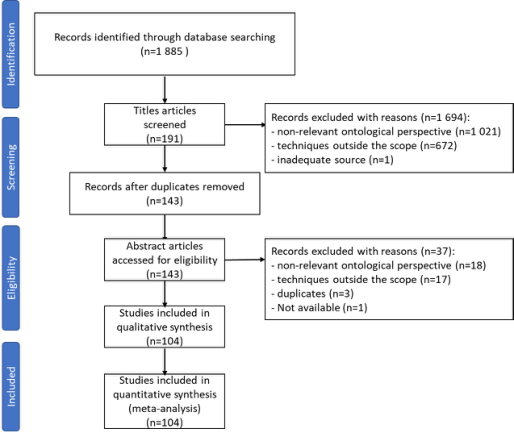
Figure 1: Flow chart of study selection process.
Xplore (67), Springer Link (239), Emerald Publishing (3), Taylor & Francis Group (103), Wiley Online Library (10), ACM Digital Library (1), SciELO (0), and JSTOR (12). From the retrieved records, 1694 (90%) were excluded, after it was ensured, by screening the titles, that they did not meet the eligibi- lity criteria due to the following reasons: 1021 (54%) referred to ontological perspectives outside the scope of emergency management (e.g., autonomous vehicle, infectious disease); 672 (36%) relied on techniques other than buil- ding ontologies (e.g., databases, process models); and one text came from a source which was not a journal article (e.g., book preface). We assessed the remaining 191 (10%) records in more detail based on their abstracts. Of these, we discarded 48 records (25%) since they were duplicates retrieved from different electronic databases. From the remaining 143 records, we ran- domly choose 35% (50) of them for abstract screening and initial coding. The remaining 93 (65%) were subsequently treated. From the 143 records subject to abstract screening, we excluded 18 for not meeting the eligibility criteria, namely due to ontological perspective (17), the use of techniques outside the scope of this work (8), duplicates (3), and texts not available online (1). In the end, the remaining selection included only 104 bibliographic records (6% from the initially retrieved from electronic databases) for the coding process and full reading articles. Figure 1 shows a flowchart of this study selection according to the PRISMA checklist.
After the selection of the 104 relevant articles, they were codified accor- ding to predefined categories: (i) the specific type of disaster addressed by the ontology; (ii) the focus of the approach; (iii) the core methods and tech- niques adopted; (iv) the major findings and contributions claimed; (v) the type of outcome provided and; (vi) whether the solution targeted a specific region. Once the primary data extraction was complete the authors reviewed
Ontologies for Emergency Management 29
the content analysis for each of the extracted studies, with data further cate- gorized and summarized in a table, which is not shown in this article for reasons of space1.
DISCUSSION
Concerning the type of disaster addressed, most of the proposals (69 arti- cles/65% from total) applied to all kind of hazards; followed by others targeting only one kind of disaster: flood (9/8%), health care (5/5%), mete- orological events (3/3%), trail (3/3%), pollution (2/2%), earthquake (2/2%), geological events (2/2%), aviation incidents (2/2%). Only one proposal addressed each one of the following hazards: chemical, railroad, critical infra- structures, hurricanes, fire, water pollution, solid waste, metro, natural or anthropogenic.
Regarding the proposals’ focus, the goals were the comprehension of the situational/emerging knowledge (23/22%), elicitation of the EM domain knowledge (19/18%), interoperability among involved actors (13/12%), joint use of robots/IoT devices (6/6%), understanding of the disaster mecha- nisms (5/5%), data gathering from crowdsourcing (5/5%), study of accident cases (5/5%), hazards risk estimation (5/5%), structure of communication’s alert (3/3%). Facets less considered, with only two proposals (2/2%), were related to scenarios’ definition, requests & responses in the context of a disaster, disaster’s scene visualization, social media coverage, emergency web- sites presentations, emergency plan guidelines, and disasters cascading events. Less frequent, with only one article, were proposals related with agent-based approaches, environmental impact measurement, management of resources’ life cycle, patients’ triage, organizations’ communication and collabora- tion, location definition, geospatial data sharing, uncertainty management, vulnerabilities’ awareness, and mobile solutions usage.
The methods and techniques most applied with EM ontologies were the use of semantic web components (64/59%), machine learning & natural langu- age processing (10/9%), and taxonomies (7/6%). Less mentioned, with only two (2/2%) articles for each topic, were the references to tools for asses- sment, simulation/analysis, collaboration, process model, IoT integration, knowledge graph, hybrid reasoning, data integration. With only one pro- posal (1/1%), were the techniques such as fuzzy description logic, case-based reasoning, rule-based reasoning, correlation, disambiguation, interlocking of institutional worlds, geotagging, and ontologies’ fusion.
The major findings and contributions claimed by the proposals were new models and artifacts (102/95%). Also present, in smaller numbers, are new concepts (2/2%), theory (1/1%) and infrastructure (1/1%). Concerning the type of outcome for emergency management, they are fundamentally on knowledge elicitation, consolidated by ontologies (102/95%), and, with less contribution, assessment tools (3/3%), as well as the contribution for EM domain’s innovation and improvement. Most of the research did not apply to any specific region (104/96%), although some targeted Europe 1Available in https://bit.ly/3IdxAfM
(2/2%), North America, and South America. One could also realize that the last decade (2011–2021) was the most fruitful regarding proposals on EM ontologies, 97 (93%) from a total of 104 found for the last 50 years.
This review acknowledges the intense research on EM ontologies in the last decade. Nevertheless, some topics remain underexplored, specifically the ones that generated less publications by the community, and others that cle- arly constitute research gaps that should be overcome. A recognized gap is the absence of the joint use by actors of Ontologies and Linked Data (Bizer, Heath and Berners-Lee, 2009) for dealing with scattered, and freely availa- ble heterogenous open data, as well as the lack of interoperability among the systems of organizations converging to disasters’ scenes. The different sources and format of data, as well as the disparate vocabularies used on emergency situations make the use ontologies and Linked Open Data a grounded basis for the semantic integration of EM processes. This trend will be supported by the ISO/IEC 21838 (ISO/IEC-JTC1/SC32, 2021) and the Basic Formal Ontology (BFO) (Grenon and Smith, 2004; BFO, 2020), the upper ontology that will be the referential hat of the mid-level ontologies, which, on their turn, will be extended by domain ontologies such as emergency management, towards a semantic alignment of the EM ontological architecture.
CONCLUSION
This work presented a systematic literature review on EM ontologies and inci- dent response and their intended specificities. The PRISMA method was used as a formal tool and guideline for data collection. The analysed dataset was the set of ontologies published in the last fifty years, as papers on journals, found on relevant scientific databases, meeting specific query specifications.
The search on the electronic databases retrieved a total of 1885 bibliogra- phic records. After following a protocol aligned with PRISMA, 104 relevant articles were selected for codification according to the following categories: (i) the specific type of disaster addressed by the ontology; (ii) the focus of the approach; (iii) the core methods and techniques adopted; (iv) the major findings and contributions claimed; (v) the type of outcome provided and; (vi) whether the solution targeted a specific region.
The results showed relevant research on EM ontologies for the last decade. Nevertheless, some topics have little contribution, and others are research gaps to overcome. A recognized gap is the absence of the joint use by actors of Ontologies and Linked Data for dealing with scattered, and heterogenous open data, freely available, as well as the lack interoperability of the systems of organizations converging to disasters’ scenes. This research can be suppor- ted by the ISO/IEC 21838 and the Basic Formal Ontology, the upper ontology that will be the referential hat for the mid-level ontologies, which, on their turn, will be extended by domain ontologies such as emergency management, towards a semantic alignment of the EM ontological architecture. Future research should contribute for modularization and integration of existing or new proposed EM ontologies in order contribute to the EM ontological architecture as infrastructure of the Linked Open Data initiative.
Ontologies for Emergency Management 31
ACKNOWLEDGMENT
The authors would like to acknowledge the Portuguese Navy for funding this work.
REFERENCES
BFO (2020) Basic Formal Ontology. Available at: http://basic-formal-ontology.org/ (Accessed: 15 January 2021). Bizer, C., Heath, T. and Berners-Lee, T. (2009) ‘Linked data - The story so
far’, International Journal on Semantic Web and Information Systems. doi: 10.4018/jswis.2009081901. Bukar, U. A. et al. (2020) ‘Crisis Informatics in the Context of Social Media Crisis Communication: Theoretical Models, Taxonomy, and Open Issues’, IEEE Access, 8, pp. 185842–185869. doi: 10.1109/ACCESS.2020.3030184. Correia, A., Água, P. B. and Simões-Marques, M. (2021) ‘Linked Open Data Sup-
porting Semantic Integration and Collaboration in Disaster Management Cycle’, in Lecture Notes in Networks and Systems, vol 265, pp. 19–27. Dirgahayu, T. and Setiaji, H. (2020) ‘Semantic web in disaster management: a systematic literature review’, in IOP Conference Series: Materials Science and Engineering. IOP Publishing, p. 12043. Grenon, P. and Smith, B. (2004) ‘SNAP and SPAN: Towards dynamic spatial onto-
logy’, Spatial Cognition and Computation. doi: 10.1207/s15427633scc0401_5. ISO/IEC-JTC1/SC32 (2021) ISO/IEC PRF 21838 Information technology — Toplevel ontologies (TLO). Available at: https://www.iso.org/standard/71954.html. Liberati, A. et al. (2009) ‘The PRISMA statement for reporting systematic reviews
and meta-analyses of studies that evaluate health care interventions: Explanation and elaboration’, PLoS Medicine. doi: 10.1371/journal.pmed.1000100. Mazimwe, A., Hammouda, I. and Gidudu, A. (2021) ‘Implementation of FAIR Principles for Ontologies in the Disaster Domain: A Systematic Literature Review’, ISPRS International Journal of Geo-Information. Multidisciplinary Digital Publi- shing Institute, 10(5), p. 324. Page, M. J. et al. (2021) ‘PRISMA 2020 explanation and elaboration: Updated gui-
dance and exemplars for reporting systematic reviews’, The BMJ. BMJ Publishing Group, 372. doi: 10.1136/BMJ.N160. PRISMA (2020) PRISMA - Transparent Reporting of Systematic Reviews and Metaanalyses, Website. Available at: http://www.prisma-statement.org/ (Accessed: 13 February 2022).
LISTED IN THE AHFE DIGITAL BOOKSTORE CATALOGUE
Explore the complete digital volume
Human Factors and Systems Interaction
Read this individual research paper free through the original publisher, or explore the full digital proceedings book.
ISBN 978-1-958651-28-5
Explore this ISBN in the AHFE Bookstore ↗Listed in the July 2026 bookstore catalogue; search by ISBN to confirm current availability · Digital book purchase optional