Yi Zeng (2022). Design and evaluation methodology for cockpit lighting system in civil transport aircraft. In: Human Factors and Systems Interaction. AHFE Open Access, vol. 52, pp. 256–261. https://doi.org/10.54941/ahfe1002163
The cockpit lighting system of civil transport aircraft can create a good visual environment for the flight crew to ensure that the flight crew can accurately and clearly interpret all displayed information under various brightness environments. Reasonable cockpit lighting design needs to follow the necessary design principles to improve the friendliness of the human-machine environment in the cockpit. Simultaneously, the cockpit lighting evaluation is an effective supplementary means for discovering design defects. It can reduce the possibility of the existence or continuation of the development of potential accidents during the flight, and reduce the occurrence of human errors. From the perspective of an engineering designer, this paper puts forward the principles and evaluation methods to be followed in the cockpit lighting design of civil transport aircraft, which can provide certain guidance in the field of civil transport cockpit lighting design.
The cockpit lighting system of civil transport aircraft is an important part of the aircraft lighting system, mainly including the light guide lighting design for the cockpit control panel, the flood lighting design for the overhead con- trol panel area, instrument control panel area and central console area, as well as the partial lighting design required for the flight crew. The design of cockpit lighting system aims to create a good visual environment for the fli- ght crew and ensure that the flight crew can read all displayed information under various brightness environments. Reasonable cockpit lighting design can improve flight crew comfort, prevent glare and misoperation and reduce the possibility of the existence or continued development of behaviors that could potentially lead to an accident during the flight. It may reduce the occurrence of human errors and improve flight safety for the civil transport aircraft. For engineering designers, a reasonable cockpit lighting design needs to follow the necessary design principles and design verification evaluation methods, which can ensure the effective implementation of the design requi- rements of cockpit lighting system, make the man-machine environment in
Design and Evaluation Methodology for Cockpit Lighting System 257
the cockpit more friendly, and can reduce the probability of human error at the design source.
COCKPIT LIGHTING DESIGN PRINCIPLE The design of the cockpit lighting includes light guide plate lighting design, flood lighting design and partial lighting design in the cockpit. There are many factors to be considered in its design, mainly including the require- ments of aircraft ergonomics, the requirements of flight crew’s task scene, the visual, physiological and psychological characteristics of flight crews in the cockpit (Lewin, 1973 and Yang, 2011). At the same time, it also consi- ders the influence of the changes of internal and external lighting conditions in the cockpit. The general design principles of cockpit lighting system are as follows:
a) All instruments, displays, control information and control devices in the cockpit shall be visually readable under any expected light environment conditions. b) Under normal circumstances, cockpit lights shall strive to create a quiet and relaxed lighting environment. If there is a warning, the flight crew can pay attention on it. c) The layout and installation of lighting equipment shall focus on the uni- form distribution of light, minimize the injection of harmful light, and avoid direct glare and various reflective glare. It simultaneously shall ensure the accessibility and maintainability of the lighting equipment. d) The light and color performance of the cockpit lighting system shall be compatible with the performance of the display on the instrument panel area.
In addition to meet the above general design requirements, the cockpit lighting design also needs to put forward specific requirements and principles for the light guide plate lighting, cockpit flood lighting and partial lighting design in order to improve the flight crew comfort and reduce the occurrence of human errors during the flight process.
Design Principle of Light Guide Plate lighting As the basic unit on the control panel, the light guide plate is engraved with letters, numbers, characters, streamlines and marks to indicate the flight crew’s operation. If the lighting design of the light guide plate is not reasona- ble, the flight crew will obtain the obscure information or valid information and will give wrong judgment and operation for the aircraft. Therefore, the following principles should be followed in the design process:
a) The finish color and its optical characteristics should be unified in the cockpit. The brightness should be continuously adjustable and the brightness adjustment range should be consistent. b) The brightness and dimming characteristics of the light guide plate shall match the optical characteristics of the cockpit display to ensure that all information is visible and readable.
258 Yi
c) Unless the lighting equipment in the corresponding area is turned on, the knob with marking line shall be turned on at night. d) The brightness and color characteristics of the illuminated knob, letters, numbers, characters, streamlines and marks on the light guide plate shall meet the optical performance requirements of the cockpit light guide plate lighting.
Design Principle of Cockpit Local Lighting Cockpit local lighting provides lighting environment for the cockpit at night and low ambient light conditions. It includes cockpit flood lighting functi- ons including the emergency lighting function and cockpit partial lighting functions. The recommended design principles are as follows:
a) The lighting equipment in the cockpit shall provide sufficient lighting for the control switch that is not illuminated and the characters without background lighting. It shall guarantee the safe operation for the flight crew. b) The installation of lighting equipment in the cockpit shall match the appearance of structure and interior to avoid direct and indirect glare. c) Emergency lighting is used to illuminate the escape path and shall assist the flight crew to escape under emergency conditions. d) In principle, the cockpit local lighting should be adjustable in brightness. e) The brightness control switch for the cockpit local lighting shall be set independently and installed in positions accessible to the flight crew. f) For the control switch of the cockpit lighting equipment, the control dire- ction of the typical rotation switch used to adjust the brightness should be clockwise to brighten, counterclockwise to dim and can be adjusted to closed.
Other Design Principles for Cockpit Lighting There are also some requirements in the cockpit lighting design that affect the aircraft cockpit lighting performance, which include environmental requi- rements, maintainability requirements, operability and safety requirements. The recommended design principles show as follows:
a) The cockpit lighting equipment with the same function or similar functi- ons and with the same part number shall have good interchangeability. b) Buckle type installation should be adopted for cockpit lighting equipment as far as possible and the equipment can be removed using conventional manual tools. c) The service cover for the lighting equipment must be designed to ensure that the equipment is easily accessible and disassembled if the service cover is opened. d) Error prevention measures shall be considered in the selection of inter- face connector to prevent equipment damage and accidents caused by connection errors during operation and maintenance. e) The demand of environmental conditions to be met for the opera- tion of cockpit lighting equipment shall be determined through RTCA
Design and Evaluation Methodology for Cockpit Lighting System 259
DO-160 and the environmental test shall be verified according to the corresponding test methods. f) The cockpit lighting equipment shall ensure that the heat dissipation of the equipment can be realized through natural cooling within the tempe- rature range specified by the environmental conditions. Make sure that the equipment works in normal condition. g) Equipment with metal structure shall be grounded to ensure the safety of flight crew and maintenance personnel. h) All electrical circuits and pins shall be protected to prevent people or foreign objects from contacting electrical components.
COCKPIT LIGHTING EVALUATION The cockpit lighting evaluation runs throughout the entire process of design, validation and verification of cockpit lighting system. In the preliminary cockpit lighting system design stage, detailed cockpit lighting system design stage, lab test and flight test stage of the cockpit lighting system, diffe- rent types and degrees of evaluation work planning shall be set up. The evaluation method for the cockpit lighting system includes confirmation of requirements, peer review by experts, and evaluation of test verification.
For the confirmation of requirements, it is necessary to evaluate the distribution and undertaking status of requirements from different sources, including performance, operation and customers. The link relationship betw- een these requirements shall be checked one by one to make sure that design requirements are integral and correct. The work object of requirement con- firmation is all requirements of cockpit lighting system. The participants in the requirement confirmation process involve the requirement preparer and the requirement confirmation executor. In principle, the preparer and the executor cannot be the same person.
Peer expert review, mainly in the form of meetings, invites peer experts to inquire and question the confirmed requirements to ensure the rationality and correctness of the design requirements. In principle, at least five qualified experts shall be invited for the peer review. The peer review can be conducted in multiple times.
The test validation evaluation includes laboratory evaluation and on- board evaluation. The scope of evaluation mainly includes cockpit lighting equipment accessibility evaluation and cockpit visual environment evaluation (AI, 2012). The accessibility evaluation of cockpit lighting equipment mainly includes the accessibility of control switches for adjusting the brightness of the light guide plate, the brightness of the lamps and the direction of the lamps. Furthermore, the evaluation work process shall consider night time usage scenarios. Cockpit visual environment evaluation work mainly needs to evaluate the glare in the cockpit, the readability of characters on the con- trol panels and displays, as well as the brightness uniformity of the light guide plate in the cockpit, the lighting range, brightness uniformity and brightness comfort of lamps. The evaluation work process shall take into account both day and night time usage scenarios.
260 Yi
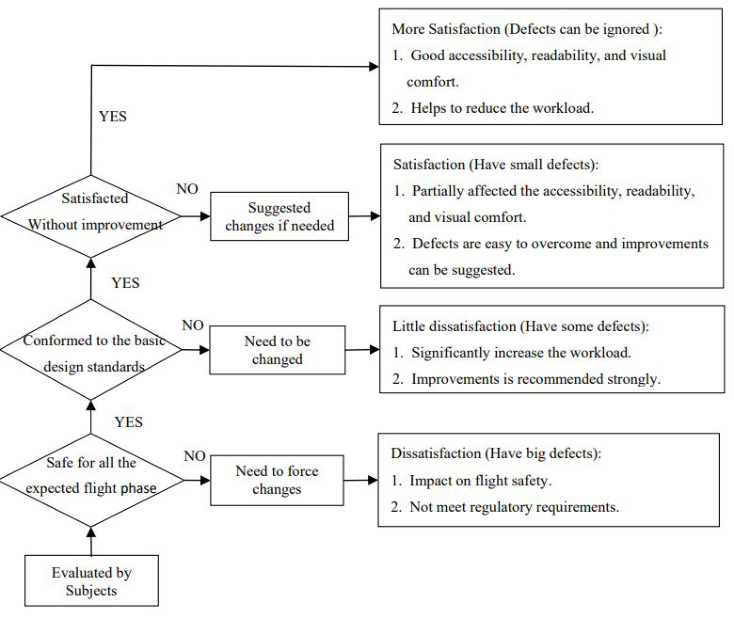
Figure 1: Judgment criteria of the cockpit lighting system evaluation.
In the process of the test validation evaluation, lighting ergonomics experts and flight crews are invited as subjects to conduct the subjective evaluation. The subjects may take at least one group per person and complete at least five groups. During the evaluation, each group is first evaluated in the main pilot seat, and then in the co-pilot seat and observer. After all evaluation items are completed for this group, the next group will be performed and shall finish all the evaluation items too. All groups need to complete these evaluation contents in sequence. The judgment criteria of the test verification evaluation of cockpit lighting system can refer to Figure 1.
CONCLUSION
From the perspective of engineering designers, this paper puts forward the design requirements and evaluation methods of cockpit lighting system of the civil transport aircraft, which can provide a guiding role for the field of cock- pit lighting system design. Through reasonable cockpit lighting design and the use of evaluation methods in each design stage, the occurrence of design defects such as dangerous glare, failure to identify important information in time and easy fatigue can be reduced from the design source. Therefore, the probability of human error in the subsequent flight process can be reduced
Design and Evaluation Methodology for Cockpit Lighting System 261
to ensure that the flight crew can complete tasks accurately, in real time and comfortably and can improve the flight safety of the civil transport aircraft.
REFERENCES
AI L.Y. (2012). “Ergonomics-Apply-Research on Cockpit’s Equipment Arrangement”, Aircraft Design, 32 (1), 78–80. Lewin I. (1973). “Luminaire Design Related to Visibility”, IEEE Transactions on
Industry Applications, 539–544. Yang B. (2011). “Design and visual ergonomics research of civil aircraft cockpit lighting environment”, Master’s thesis of Fudan University, 15–21.
LISTED IN THE AHFE DIGITAL BOOKSTORE CATALOGUE
Explore the complete digital volume
Human Factors and Systems Interaction
Read this individual research paper free through the original publisher, or explore the full digital proceedings book.
ISBN 978-1-958651-28-5
Explore this ISBN in the AHFE Bookstore ↗Listed in the July 2026 bookstore catalogue; search by ISBN to confirm current availability · Digital book purchase optional