Benjamin Nicolai Jensen, Eljane Uys, Laetitia Cook (2022). The Use of Drone Technologies Within the Built Environment of South Africa. In: Human Factors in Robots, Drones and Unmanned Systems. AHFE Open Access, vol. 57, pp. 155–158. https://doi.org/10.54941/ahfe1002323
As the 4th Industrial Revolution technologies continue to recast the practices of multiple industries, there is an opportunity for the South African Built Environment to hop on the bandwagon of this technical evolution. Within the country’s-built environment, the focus of the paper was upon reporting on the feasible symbiotic relationship of the construction industry and drone technology.Based on previous literature with regards to drones in the construction industry of South Africa, it was found that many practitioners were eager to investigate the possible use of drones however the main concern was the cost. Therefore, the question of what legal drone and data processing program could feasibly be incorporated by practising professionals into the different construction stages of development was investigated.To produce evidence, results and derive conclusions on the question; an exploratory study of academic journals and articles along with manufacturer specifications was conducted. First off, the paper motivates that through the versatility of drones and the processing programs abilities many current construction practices can become more efficient. It was found though, through interviews with practising professionals, that the only damper on optimising the versatility of drones in South Africa was the legislation.To guide the results of exploration practising professionals were interviewed to provide a baseline on the current use of drones in South Africa. The interviews revealed that before starting to look at a drone, a processing program or the cost thereof the legislation governing drone usage in South Africa must be understood and complied with. Throughout the paper, the legal requirements have been stated to inform the construction industry of these requirements. To follow this, professional drones and data processing programs available and their cost were tabulated to answer the question. However, it was concluded that a drone cannot be limited to a single stage in a construction project because of its multifaceted functionality. Furthermore, it is dependent on the size of the project and the skill of the pilot to whether a drone is a feasible option for each construction project.Future research may need to be done to further refine the study. Practical research tests to see how drones perform on South African construction sites may provide critical results to elaborate on, and provide additional data. Another aspect to be further researched is the legal cost of a drone in terms of time and money to critically answer whether outsourcing or in house drone services are the future of construction company’s practices.
Drones are a new technology that have the velocity and scope to impact the South African construction industry. Since 2006, drone’s inception into the commercial space, the technology has exponentially developed and adapted to suit multiple industries and applications. Inspections in remote inaccessible areas and agricultural management were the first applications to have drones applied to them (Li & Liu, 2018; Nonami, 2016). Due to these exponential adaptabilities of the technology, there is the opportunity to investigate the adoption of drones into the built environment of South Africa.
Underpinning the economic growth of a developing country is the success of the construction industry. South Africa, a developing coun- try, is aiming to utilize this industry as their stimulant for the Economic Reconstruction and Recovery Plan and Sustainable Infrastructure Deve- lopment Systems initiatives. In order to achieve this the country’s con- struction industry will need to undergo a transformation from traditional methodologies to methods that increase efficiency and productivity of the
workplace (Harinarain & Naicker, 2019; Schwab, 2016). This transforma- tion has backing as it was it was agreed upon by 70% of construction professionals involved in a survey by Harinarain and Naicker with the pinna- cle response being “Drones will impact the construction industry in a positive manner and ensure that the industry will make attempts to be on a par with the rest of the world” (Harinarain & Naicker, 2019; 26).
THE USE OF DRONE TECHNOLOGY IN THE SOUTH AFRICAN BUILT ENVIRONMENT The utilization of UAV (Unmanned Aerial Vehicle) technology in the constru- ction industry is a growing interest amongst professionals. Harinarain and Naicker (2019) highlight the many ranges that are already specifically ado- pted to the construction industry. Aerial photography, surveying, progress reports through visual aids, safety and security monitoring is identified as the most current uses for drones in the South African construction industry.
GPS technologies allow for the drone to follow a set-out route and allows for waypoints to be entered onto the onboard computer system to allow for targeted photo acquisition at different locations on the construction site. (Tatum & Liu, 2017) The high-resolution camera attached to the drone captures overlapping areas of the site and processing software allows for the use of photogrammetry to construct 3D models which depicts height, depth color and texture.
Management and planning, time optimization and construction costs are the main areas which this technology benefits, but most professionals are fairly aware of this since this is usually what intrigues a person in the first place. Upon researching it was discovered that there is very little information available that explains or helps professionals in the construction industry in understanding all the aspects involved with purchasing and using the drone technology and what to do with the captured data.
The study focuses on providing Built Environment practitioners in South Africa with a basic understanding of the legal responsibilities, the essential pilot capabilities and qualifications, the necessary equipment and processing software that they will have to consider. It additionally gives the reader insight into what the technology can be used for and what limitations and risks are involved. From this basis they can better determine the financial feasibility of incorporating UAVs in their projects.
The study aims at answering the following questions:
What is the primary application for UAVs?
How effective are UAVs?
What type of UAV, manufacture name and model, is used?
What type of cameras or imaging technologies are used for the applica- tion?
Which processing platforms and software applications do you use to analyse and produce reports?
What licensing and training requirements did you require to be able to provide UAV services as a professional?
The Use of Drone Technology within the Built Environment of South Africa 157
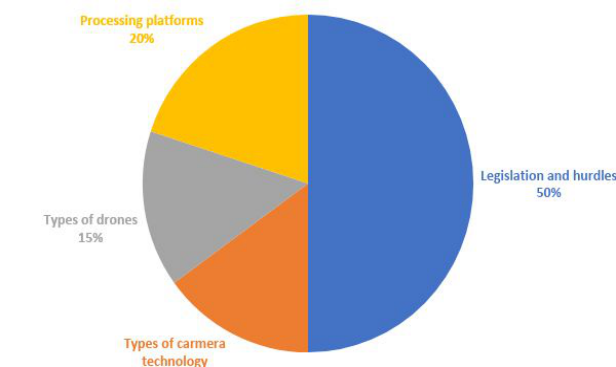
Figure 1: Estimated time distribution of unstructured interviews.
What is the estimated capital cost of purchasing/ utilising UAVs in your practice as a professional?
Data collection during the study involved both an exploratory study into UAV technology and unstructured interviews with current users of this tech- nology in South Africa’s construction industry. The interviews specifically identified legislation around the use of drone technology in South Africa to be as one of the biggest considerations a company or individual will have to consider. Another serious consideration that came up was the actual opera- tion hurdles that pilots face and need to overcome or prepare for to ensure proper data capturing. Figure 1 below gives an indication on the percentage of time interviewees spent on the different aspects of drone usage in the South African construction industry.
With South Africa having strict and comprehensive statutory regulations and construction companies that are cash strapped. The study specifically focuses on determining which drone and associated technology are both lawful and feasible in South Africa.
The study revealed the following price brackets:
Drones and their attributes R27 000 to R475 000 Processing software R4 000 to R 8000 per month
The price for drones and the attributes is ultimately dependent of the num- ber of attributes, quality of the drone and the data capturing quality the sensory and cameras/lasers offer. Processing software prices are also depen- dent on what the user wants to do and the amount of data he/she wishes to process and share.
Licensing and all other legal requirements carry more financial burdens and is estimated at around R100 000 or more. This information strongly
motivates the study’s conclusion to recommend that currently only large pro- ject companies in South Africa will find it financially feasible to implement UAV technology in their projects.
CONCLUSION
The versatility of drones is endless, increased workplace safety, traceable site information from photos and time saving processes, through collaborative data programs, make the legislative hoops and extensive capital outlay minor concerns.
Costs of including drones into the arsenal of practitioners or companies include the legal costs which are not only monetary but costly in terms of the time process to register drones and pilots, the drone itself and subscriptions to the necessary data processing platforms. South Africa, more specifically the construction industry, is financially strapped and so a feasible symbiotic solution of including drones is essential. Practical testing of drones and data processing platforms need to be performed to provide accurate results on performance in live situations and provide prospective users with information to guide the acquisition of this technology.
ACKNOWLEDGMENT
The authors would like to acknowledge Laetitia Cook, the research supervi- sor for her guidance, support and encouragement to complete this article. And, also all the professionals who took the time to explain the applications of drones already existing within South Africa.
REFERENCES
Hanarain, D.N & Naicker, P., 2019. Drone Usage in the Construction Industry. Civil Engineering. July. pp. 24–27. Li, Y. & Liu, C., 2018. Applications of Multirotor drone technologies in Constru-
ction Management. International Journal of Construction Management 19(5). PP. 401–412. Nonami, K. 2016. Drone Technology. Cutting-Edge Drone Business, and Future Prospects. Journal of Robotics and Mechatronics. 28(3)., pp. 262–272. Scwhab, K. 2016. The Fourth Industrial Revolution: What it means, how to respond. Available online at: https://www.weforum.org/agenda/2016/01/the- fourth-industrial-revolution-what-it-means-and-how-to-respond/. Accessed on 13 February 2022. Tatum, M. & Liu, J. 2017. Unmanned Aircraft System Applications in Construction.
Procedia Engineering. Volume 196. PP 167–175.
LISTED IN THE AHFE DIGITAL BOOKSTORE CATALOGUE
Explore the complete digital volume
Human Factors in Robots, Drones and Unmanned Systems
Read this individual research paper free through the original publisher, or explore the full digital proceedings book.
ISBN 978-1-958651-33-9
Explore this ISBN in the AHFE Bookstore ↗Listed in the July 2026 bookstore catalogue; search by ISBN to confirm current availability · Digital book purchase optional