Chenran Li, Jiangtao Du, Haniyeh Mohammadpourkarbasi (2022). A systematic review of investigations into the physical environmental qualities in Chinese elderly care facilities. In: Human Factors in Architecture, Sustainable Urban Planning and Infrastructure. AHFE Open Access, vol. 58, pp. 99–108. https://doi.org/10.54941/ahfe1002339
This systematic review summarized findings from 36 articles on physical environmental qualities in Chinese elderly care facilities, including five topics: 1) assessment methods, 2) physical environmental factors, 3) safety, 4) overall satisfaction and 5) health. There was a lack of effective methods to support both design decision-making and environmental assessment of elderly care facilities by architects and engineers. These studies reviewed can be found with a low potential to develop practical design strategies due to the lack of strong evidence. It is still necessary to carry on investigations into methods/frameworks/strategies to improve environmental qualities in elderly care facilities in China.
The physical environment has been emphasized as one key component of quality of life by World Health Organization (1997). Many studies exposed that there were significant effects of physical environment on the mental and physical health of residents in care facilities (Cohen-Mansfield 2001; Gesler et al. 2004; Janssen 2014). China has become an aging society since 2000 and currently there is an increasing need for elderly care facilities (Han et al. 2020; NBS 2021). Several national regulations have been recently produced in China to support the development and assessment of elderly care facilities (MOCAC 2021; SAMR 2018; MOCAC 2019). However, there is a clear lack of knowledge of how to practically plan and effectively evaluate the physi- cal environment in Chinese care facilities. This paper presented a systematic review of studies of environmental qualities in elderly care facilities in China, with an aim to expose the current situation of design technologies in elderly care facilities and identify the gaps in planning, developing, and managing these facilities.
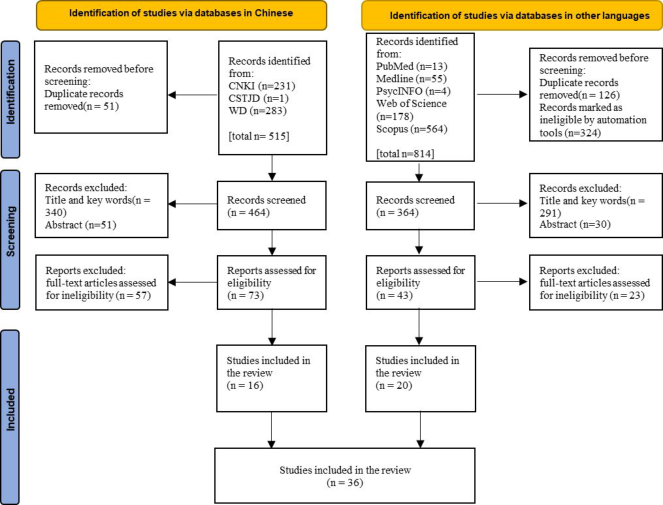
Figure 1: Flow chart of the search process (adapted from Moher et al. 2009; Page et al. 2021).
METHOD AND MATERIALS Design
A systematic review (Figure 1) was implemented according to the Prefer- red Reporting Items for Systematic reviews and Meta-Analyses (PRISMA) (Moher et al. 2009; Page et al. 2021).
SEARCH STRATEGY AND STUDY SELECTION A systematic literature search from 1990 to 2021 was performed in two types of databases: 1) databases in Chinese: China National Knowledge Infrastructure (CNKI), Wanfang Data (WD), China Science and Technology Journal Database (CSTJD), 2) databases in other languages: PubMed, Med- line, PsycINFO, web of science, and Scopus. The search period was chosen because it covers the timespan when methods of assessing environmental quality emerged (Preiser et al. 2015).
A Boolean search strategy was applied based on a combination of the fol- lowing terms (inc. potential synonyms/appropriate free-text): Older people, Senior citizen, Care facility, Nursing home, Elderly care, Physical environ- ment, Environmental design, Health facility environment, China, Asses- sment, Building evaluation, Assessment method. Terms and their synonyms/ free-text were searched by MeSH and PsycINFO.
To be included in the review, papers should focus on Chinese elderly care facilities, older people, and physical environment. Literatures were excluded
A Systematic Review of Investigations into the Physical Environmental Qualities 101
Table 1. Literature inclusion and exclusion criteria.
Table available in the original PDF paper.
Item Inclusion criteria Exclusion criteria Subject Older people Gender: both male and female
Studies out of the built environment, such as nursing, social work, medicine, etc..
Non older population, such as child, middle- aged. Only male or female, etc.. Care facility Residential care, such as staying at home, living in a normal neighborhood, etc.. Domain Built environment, indoor or outdoor environment Practice case studies, such as the design case for a build, landscape, etc..
Scoping Chinese care facilities Care facilities in other countries. Content Physical environmental qualities
if they only focused on other countries’ care facilities or assessment of management systems or nursing care (Table 1).
SEARCH OUTCOMES The title and abstract scan first resulted in 1329 papers that were subject to meeting the inclusion criteria. Duplicates were removed and thus 1152 articles were kept in. After the titles and abstracts have been screened in terms of inclusion and exclusion criteria (Table 1), 116 articles were found to meet the inclusion criteria. With a further full-text evaluation, 36 articles were finally selected for this review.
RESULT
Characteristics of the Included Studies Thirty-six articles were reviewed, which were written in Chinese (n = 16) and English (n = 20). Over half of these studies (n = 19) were published between 2020 and 2021. The included studies used questionnaires, intervi- ews, or physical instruments to assess environmental qualities. The sample size of participant ranged from 44 to 1457. All articles could be categori- zed into five themes: assessment methods (n = 11), physical environmental factors (n = 11), safety (n = 5), satisfaction (n = 7), and health (n = 2).
Assessment Methods Eleven articles described different instruments to assess physical environmen- tal qualities in elderly care facilities (Table 2). The assessment methods varied in aim.
Four studies investigated the assessment instrument translated into Chi- nese, which have been examined in Chinese care facilities as reliable and valid. However, the cultural impact was found clear. Further studies within different cultural contexts would improve the application of one instrument TOPAS (Li et al. 2021). Only one study adopted the newest Chinese national standard to evaluate public and private non-profit nursing homes (Hua et al. 2021).
Table 2. Studies: assessment method.
Table available in the original PDF paper.
Author Instrument Aim Methods Samples Main Findings Li et al. (2021) TOPAS QoL. Survey. N = 285 Reliable and valid. Leung et al. (2004) Self-define QoL. Survey. N = 44 Cultural impact found. Yu et al. (2017) Self-define QoL. Survey. N = 242 Proposed provision of care services. Mu et al. (2021a) Self-define IEQ, QoL. Survey. N = 1457 Significant effect of IEQ. Jia and Wang (2017)
General. Survey. N = 232 Higher qualities in private nursing homes.
Self-define Satisfaction. Survey. N = 100 Correlation between age and environment. Hua et al. (2021) Chinese national standard
- Not clear.
Sun (2020) Self-define POE Observation & survey.
Qi (2019)
QBSE, QSSCC, QSE
Satisfaction. Survey. N = 470 Satisfaction differences in services and facilities. Yao (2020) Self-define POE Observation & survey.
- Lack of elderly friendly facilities. Ke and Li (2015) TESS-NH Validation Survey. - Reliable and valid. Fang et al. (2020) PCQ-P Validation Survey. N = 402 Reliable and valid.
Other studies used self-define instruments to evaluate the quality of life (Leung et al. 2004; Yu et al. 2017; Mu et al. 2021a), satisfaction (Jia and Wang 2017) and conduct the post occupancy evaluation (POE) (Sun 2020; Yao 2020) (Table 2).
Physical Environmental Factors Eleven articles discussed physical environmental factors, such as acoustic, lighting, thermal, and air flow (Table 3).
The indoor environment was the focus of elderly care facilities. Four arti- cles studied the acoustic environment. In terms of indoor thermal comfort, the seasonal factor was critical (Yu et al. 2020; Zheng et al. 2021).
SAFETY Five articles assessed the safety issues in care facilities (Table 4). Four studies investigated factors that result in falls, while one article evaluated the gene- ral safety of care facilities. Main environmental safety factors were found as indoor lighting and mobility services (Jiang et al. 2021; Liu et al. 2018; Yan et al. 2019).
OVERALL SATISFACTION OF CARE FACILITIES Seven studies examined overall satisfaction of environmental qualities in care facilities (Table 5). Two of them focused on the satisfaction of physical envi- ronment (Wang et al. 2015; Yu 2020). Other studies indicated that the
A Systematic Review of Investigations into the Physical Environmental Qualities 103
Table 3. Studies: physical environmental factors.
Table available in the original PDF paper.
Main findings
Author Environmental factors
Methods Space in care home Cui et al. (2020) Acoustic. Measurement & survey.
Common room.
Strong correlation with humidity, weak correlation with temperature. Mu et al. (2021b) Light, acoustic, thermal.
Survey. Indoor. Lighting and acoustic environment were critical; comfortable temperature 20-26°C. Zhan et al. (2021) Light, acoustic, thermal.
Survey. Indoor. High impact of air temperature, low impact of view and lighting. Yu et al. (2020) Thermal. Measurement & survey.
Indoor. Seasonal variations of thermal environment. Xie et al. (2020) Acoustic. Measurement & survey.
Poor acoustic environment.
Care units. Strong preferences for natural sounds; main source of noise was from nursing station. Mu et al. (2021c) Acoustic. Measurement & survey.
Activity hall.
Factors affecting sunlight demand were found.
Yang et al. (2021) Lighting. Measurement & survey.
Common room, bedrooms.
Ni (2021) Air flow. CFD. Outdoor. Shadow wind region area proportion should be decreased. Zheng et al. (2021) Thermal. Measurement & survey.
Indoor. Seasonal differences of operative temperature. Liu (2021)
Thermal. Measurement & survey.
Indoor. Thermal performance variations. Qin (2020) Acoustic. Survey. Common room
Physiological and psychological impact of background sound.
Table 4. Studies: safety.
Table available in the original PDF paper.
Author Risk Samples Environmental factors for the risk Jiang et al. (2021) Fall. N = 739. Inadequate/inappropriate handrails, unsafe floors and poor lighting. Liu (2019) General. N = 600. General facilities. Liu et al. (2018) Fall. N = 87. Unsafe floor, poor lighting, and lack of handrails. Mu et al. (2014) Fall N = 166. General living environment. Yan et al. (2019) Fall N = 278. Air temperature (the most) and lighting (the least).
satisfaction was influenced by facilities and services in normal nursing homes (Zhu 2020; Chen 2010), while health care service, security, and air quality were main factors that influenced satisfaction in a nursing home (Chen 2016).
General. POE. N = 284. Qualities of care home facilities affecting satisfaction. Wan et al. (2019)
General. Survey. - Staffing, facilities, service and environment affecting satisfaction. Wang et al. (2015)
Measurement & survey.
Physical environ- ment.
N = 240. High level of satisfaction with the light environment. Yu et al. (2020) Physical
Survey. N = 309. Biggest impact from thermal environment.
environ- ment.
Zhu (2020) General. Survey. N = 113. Higher satisfaction found in facilities and service. Chen (2010) General. Survey. N = 70. Influenced by facilities, service. Chen (2016) General. Survey. N = 206. Influenced by health care, security, and air quality.
Table 6. Studies: health.
Table available in the original PDF paper.
Author Variables Methods Samples Main findings Jueng et al. (2020) SOC Survey N = 104 Interactive effects between personal and environmental factors on SOC. Leung et al. (2017) QoL Survey - Physical health was influenced by facilities.
Health Only two articles assessed the relationship between physical environmental qualities and residents’ health, including sense of coherence (SOC) and QoL (Table 6). Physical health was significantly influenced by activities of daily living, the number of staff in care homes (Jeung et al. 2020), and facilities, such as accessibility, doors, windows, and signage (Leung et al. 2017).
DISCUSSIONS AND CONCLUSION Several findings can be drawn from the results. 1) There was a lack of Chi- nese literatures of physical environmental qualities in elderly care facilities in China. Most studies focused on environmental assessment methods and physical environmental performance, but not the human-centered environ- mental factors (e.g., safety, health, satisfaction) in care facilities. 2) A total
A Systematic Review of Investigations into the Physical Environmental Qualities 105
of 36 articles were included in this review, which a practical design/asses- sment method cannot be achieved from due to the limitation of available studies (e.g., small sample sizes, no general application, etc.). A key strength of this systematic review was the selected literatures that have included a broad range of environmental factors and can reflect the current situation in China. In addition, the studies in this review covered a wide range of research fields, including medicine, management, and engineering, and environmen- tal design. There are some limitations of this review. First, sample sizes and types of care facility studied were limited. Second, some studies investigated specific locations in China, which cannot be applied to the whole region due to cultural, economic and social differences.
In general, the physical environment qualities in Chinese elderly care faci- lities were not properly investigated, especially for the effective methods to support decision-making at various design stages and environmental asses- sment by architects/designers and building engineers. Even though over half of the studies focused on general assessment methods or physical environ- mental factors, it can be found that they held a low potential to develop design strategies due to clear limitations such as small sizes, poor survey design, etc. Thus, it is necessary to conduct more investigations into methods/framew- orks/strategies for planning and evaluating physical environment in elderly care facilities in China.
ACKNOWLEDGMENT
The authors thank the fund support from China Scholarship Council.
REFERENCES
Chen, F. (2016). Research on the Residential Satisfaction of Aged homes in the Main Districts of Chongqing. Master’s thesis, Chongqing University, Chongqing, China. Chen, Y. (2010). A survey analysis of life satisfaction of elderly people in nursing
homes. China Prac. Med., 29, 262–264. (in Chinese). Cohen-Mansfield, J. (2001). Nonpharmacologic interventions for inappropriate behaviors in dementia: a review, summary, and critique. The American Journal of Geriatric Psychiatry, 9(4), 361–381. Cui, P., Zhang, J., and Li, T. (2021). Research on Acoustic Environment in the Buil-
ding of Nursing Homes Based on Sound Preference of the Elderly People: A Case Study in Harbin, China. Frontiers in psychology, 4546. Fang, J., Yao, J., Huang, W., and Liu, Y. (2020). Reliability and Validity of the Chinese Version of Person-Centered Climate Questionnaire (Patient Version). Nursing Journal of Chinese People’s Liberation Army, 37(6), 16–19. (in Chinese). From Nursing Homes: Evidence from China. REVISTA DE CERCETARE SI INTE-
RVENTIE SOCIALA, 65, 26–35. Gesler, W., Bell, M., Curtis, S., Hubbard, P., and Francis, S. (2004). Therapy by design: evaluating the UK hospital building program. Health and place, 10(2), 117–128. Han, Y., He, Y., Lyu, J., Yu, C., Bian, M. and Lee, L. (2020). Aging in China:
perspectives on public health. Global Health Journal, 4, 11–17.
Hua, J., Cui, M., Geng, G., Yang, W., Xi, Q., and Qian, X. (2021). A crosssectional study using the national standard to examine differences between public and private non-profit nursing homes in China. Japan Journal of Nursing Science, e12435. Janssen, H., Ada, L., Bernhardt, J., McElduff, P., Pollack, M., Nilsson, M., and
Spratt, N. J. (2014). An enriched environment increases activity in stroke patients undergoing rehabilitation in a mixed rehabilitation unit: a pilot non-randomized controlled trial. Disability and Rehabilitation, 36(3), 255–262. Jia, W. and Wang, X. (2017). “Research Review on Evaluation Index for Age-friendly Community-a Case Study of Tianjin City”, Proceedings of the 6th International Conference on Energy and Environmental Protection (ICEEP 2017), Sanya, China. Jiang, Y., Xia, Q., Zhou, P., Jiang, S., Diwan, V. K., and Xu, B. (2021). Environ-
mental hazards increase the fall risk among residents of long-term care facilities: a prospective study in Shanghai, China. Age and ageing, 50(3), 875–881. Jueng, R. N., Tsai, D. C., and Chen, I. J. (2016). Sense of coherence among older adult residents of long-term care facilities in Taiwan: A cross-sectional analysis. PloS one, 11(1), e0146912. Ke, S. & Li, H. (2015). Reliability and validity of the Chinese version of Therapeutic
Environment Screening Survey for Nursing Homes. Journal of Nursing Science, 30(1), 75–79. Leung, K. K., Wu, E. C., Lue, B. H., and Tang, L. Y. (2004). The use of focus groups in evaluating quality of life components among elderly Chinese people. Quality of Life Research, 13(1), 179–190. Leung, M. Y., Famakin, I. O., and Olomolaiye, P. (2017). Effect of facilities mana-
gement components on the quality of life of Chinese elderly in care and attention homes. Facilities. Li, C. P., Lee, S. F., Bergland, Å., and Edvardsson, D. (2021). Psychometric properties of the Chinese version thriving of older people assessment scale. International Journal of Older People Nursing, 16(1), e12346. Liu, C. (2021). Research on Current Situation and Promotion Strategy of Indoor
Thermal Comfort of Senior Care Facilities in Dalian. Master’s thesis, Dalian University of Technology, Dalian, China. Liu, H., Liu, Z., Zhang, Y., Wang, H., Chen, Z., and Gong, Y. (2018). Occurrence of falls, fall cognition and environmental assessment of the elderly in 3 private pension institutions. Chinese Nursing Research, 32(4), 628–630. (in Chinese). Liu, S. (2019). Research on Evaluation of Old and Old Safety of Old-age Aged
Community. Master’s thesis, Northeast Forestry University, Harbin, China. MOCAC (Ministry of Civil Affairs of the People’s Republic of China). (2021). The 14th Five-Year Plan for the Active Response to Population Ageing Project and the Implementation Programme for the Construction of Childcare. The Ministry of Civil Affairs of the People’s Republic of China website: http://xxgk.mca.gov.cn: 8011/gdnps/n164/n167/n184/c15010/attr/104066.pdf MOCAC (Ministry of Civil Affairs of the People’s Republic of China). (2019). Mea-
surement of Customer Satisfaction for Senior Care Organization. Beijing, China. (MZ/T 133-2019) Moher, D., Liberati, A., Tetzlaff, J., Altman, D. G., and Prisma Group. (2009). Preferred reporting items for systematic reviews and meta-analyses: the PRISMA statement. PLoS medicine, 6(7), e1000097. Mu, J., Kang, J., and Wu, Y. (2021c). Acoustic environment of comprehensive activity
spaces in nursing homes: A case study in Harbin, China. Applied Acoustics, 177, 107932.
A Systematic Review of Investigations into the Physical Environmental Qualities 107
Mu, J., Zhang, S., and Kang, J. (2021a). Estimation of the quality of life in housing for the elderly based on a structural equation model. Journal of Housing and the Built Environment, 1–27. Mu, J., Zhang, S., and Wu, Y. (2021b). The Influence of Physical Environ-
mental Factors on Older Adults in Residential Care Facilities in Northeast China. HERD: Health Environments Research and Design Journal, 19375867211 036705. Mu, X., Du, J., Ding, Y., and Wang, Y. (2014). Survey of risk factors of elderly people’s fall in nursing home in Shenyang city. Chinese Nursing Research, 28(7), 2598–2600. (in Chinese). NBS (National Bureau of Statistics). (2021). Tabulation of the 7th population census
of the People’s Republic of China. The National Bureau of Statistic website: http: //www.stats.gov.cn/ztjc/zdtjgz/zgrkpc/dlcrkpc/ Ni, X. (2021). Nursing Home Wind Environment Evaluation in Northern China- A Case Study in Dezhou. In: IOP Conference Series: Earth and Environmental Science (Vol. 728, No. 1, p. 012013). IOP Publishing. Page, M. J., McKenzie, J. E., Bossuyt, P. M., Boutron, I., Hoffmann, T. C., Mul-
row, C. D., ... and Moher, D. (2021). The PRISMA 2020 statement: an updated guideline for reporting systematic reviews. BMJ, 372n71. Preiser, W. F., White, E., and Rabinowitz, H. (2015). Post-Occupancy Evaluation (Routledge Revivals). Routledge. Qi, Y. (2019). Study on the Effect and Countermeasure of the Construction of
Community Elderly Care Centers in the Community--Taking Mianyang City as an Example. Master’s thesis, Southwest University of Science and Technology, Mianyang, China. Qin, Y. (2020). The Influence of the Background Sound Types on the Emotion and Physiological Indicators in the Activity Space of the Elderly Facilities. Master’s thesis, Harbin Institute of Technology, Harbin, China. SAMR (State Administration for Market Regulation). (2018). Classification and
Accreditation for Senior Care Organization. Beijing, China. (GB/T 37276-2018). Sun, T. (2020). Research on the Post-occupancy Evaluation of Community-based Comprehensive Elderly Care Facilities. Master’s thesis, Harbin Institute of Tech- nology, Harbin, China. Wan, G., Shieh, C., Pu, G., Huang, G. (2019). Factors in Residence Satisfaction of
Elderly. Wang, T., Yu, H., Jiao, Y., An, Y., and Yu, Y. (2015). Indoor Environment Investigation and Evaluation of Elderly Care Centers in Shanghai. Building Science, 31(4), 45–49. (in Chinese). World Health Organization. (1997). WHOQOL: Measuring quality of life. Geneva:
WHO/MSA/MNH/PSF/97.4. Switzerland. Xie, H., Zhong, B., and Liu, C. (2020). Sound environment quality in nursing units in Chinese nursing homes: A pilot study. Building Acoustics, 27(4), 283–298. Yan, W., Zhang, X., and Chen, Q. (2019). Fall Efficacy and Its Influencing Factors
among the Elderly in Nursing Homes. Chinese General Practice, 22, 2356–2360. (in Chinese). Yang, H., Guo, B., Shi, Y., Jia, C., Li, X., and Liu, F. (2021). Interior daylight environment of an elderly nursing home in Beijing. Building and Environment, 200, 107915. Yao, J. (2020). Study on the Evaluation of Green Aged-community in China. Master’s
thesis, Dalian University of Technology, Dalian, China.
Yu, J., Hassan, M. T., Bai, Y., An, N., and Tam, V. W. (2020). A pilot study monitoring the thermal comfort of the elderly living in nursing homes in Hefei, China, using wireless sensor networks, site measurements and a survey. Indoor and Built Environment, 29(3), 449–464. Yu, J., Ma, G. and Chen, Y. (2017). Comparison of the Built Environment of Homes
for the Aged in China by Post-occupancy Evaluation. Journal of Architectural Engineering, 23(3), 04017015. Yu, J., Ma, G. and Jiang, X. (2017). Impact of the built environment and care services within rural nursing homes in China on quality of life for elderly residents. Engineering, Construction and Architectural Management. Yu, J., Yu, R., Zhang, Q., Zhang, H. and Kong, Q. (2020). Evaluation Model of
Indoor Environment Quality Satisfaction for Nursing Homes Based on Machine Learning. J. Xi’an Univ. of Arch. and Tech. (Natural Science Edition), 52(4), 597– 593. (in Chinese). Zhan, H., Yu, J., and Yu, R. (2021). Assessment of older adults’ acceptance of IEQ in nursing homes using both subjective and objective methods. Building and Environment, 108063. Zheng, W., Shao, T., Lin, Y., Wang, Y., Dong, C., and Liu, J. (2021). A field study
on seasonal adaptive thermal comfort of the elderly in nursing homes in Xi’an, China. Building and Environment, 108623. Zhu, X. (2020). Current Situation Survey and Countermeasures Research of Elderly Satisfaction with Pension Mode of Combination of Medical Institutions and Maintenance. Smart Health Care, 6(6), 98–99. (in Chinese).
LISTED IN THE AHFE DIGITAL BOOKSTORE CATALOGUE
Explore the complete digital volume
Human Factors in Architecture, Sustainable Urban Planning and Infrastructure
Read this individual research paper free through the original publisher, or explore the full digital proceedings book.
ISBN 978-1-958651-34-6
Explore this ISBN in the AHFE Bookstore ↗Listed in the July 2026 bookstore catalogue; search by ISBN to confirm current availability · Digital book purchase optional