Aisy Luthfianisa Putri, Dessy Laksyana Utami (2022). Posture Analysis of Mass Rapid Transit (MRT) Passengers Using the REBA Method in Jakarta, Indonesia. In: Physical Ergonomics and Human Factors. AHFE Open Access, vol. 63, pp. 220–226. https://doi.org/10.54941/ahfe1002616
Transit-oriented development (TOD) is one of the sustainable urban development concepts in tackling congestion, environmental degradation, and energy efficiency. To realise transit-oriented development, the government issued a transit-oriented development policy at every rapid mass transit (MRT) station in DKI Jakarta. The Mass Rapid Transit train (MRT) Jakarta has dimensions of 20 meters long, 2.9 meters wide and 3.9 meters high. Dominated by metallic blue and grey, the train body is made of stainless steel with an empty weight per train reaching 31 to 35 tons. PT MRT Jakarta provides 16 train series (one series consists of six trains) so that the carrying capacity of one series reaches 1,950 people per series. The train’s interior is equipped with air conditioning, two CCTVs, hand straps, priority seats and a particular wheelchair area. Seats are made of fibre reinforced plastic (FRP) which is fire resistant with a width of 43 cm x 42 cm. This study aims to analyse the passenger posture by the Reba method with the results of measurements obtained in section a, namely 6, section b is 5, and the meeting point between parts a and b is 8. That is, the results of the Reba score have a high level of risk with immediate action needed. From the results of calculations, it is found that the sitting position of the MRT passenger is not ergonomic. Therefore, the authors analysed the posture of the passengers of the Jakarta MRT passenger with the Reba method to provide suggestions for improving posture and seats.
Ergonomics is also concerned with optimisation, efficiency, health, safety and human comfort at work, home, and recreational areas. Ergonomics requires the study of systems in which humans, work facilities, and their environ- ment interact to adapt the work environment to humans. This adjustment is made to prevent the occurrence of occupational diseases. Occupational diseases caused by mismatches between work equipment and humans are musculoskeletal diseases (Restuputri, 2017).
Musculoskeletal complaints are complaints in the skeletal muscles that a person feels, ranging from mild to pain. If the muscles receive static loads repeatedly and for a long time, it can cause complaints in the form of damage
Posture Analysis of Mass Rapid Transit (MRT) Passengers Using the REBA Method 221
to joints, ligaments, and tendons. Musculoskeletal complaints can occur in train passengers who sit too long and seats that do not match their posture. Adjusting the centre to the passenger’s posture can be measured by one method, namely the REBA method (Restuputri, 2017).
Rapid Entire Body Assessment (REBA) is a method in ergonomics used to quickly assess the posture of a worker’s neck, back, arms, wrists and legs. The steps for determining the REBA score are first to calculate the score in table A which consists of the neck (neck), trunk (trunk), and legs (legs). The second step calculates table B, which consists of the upper arm, lower arm and wrist. After obtaining the final scores in tables A and B, they are entered into table C, which determines the category of action (Sari, 2019).
The Jakarta MRT (Mass Rapid Transit) train has dimensions of 20 meters long, 2.9 meters wide and 3.9 meters high. Dominated by metallic blue and grey colours, the train’s body is stainless steel with an empty weight of 31 to 35 tons per train. PT MRT Jakarta provides 16 series of trains (one series consists of six trains) so that the carrying capacity of one series reaches 1,950 people per series. The train’s interior is equipped with air conditioning, two CCTVs, hand straps, priority seats, and a particular area for wheelchairs. The seat material is made of fire-resistant fibre reinforced plastic (FRP) with a width of 43 cm x 42 cm (Wahabi, 2018).
The results of interviews with MRT passengers about MRT seat satisfa- ction said that 6 out of 10 passengers did not feel satisfied because the seats on the MRT were uncomfortable when sitting; there was also no notable dif- ference between priority seats and passenger seats in general. The author also analysed the passenger sitting posture that the REBA score was 5, meaning that the level of risk was moderate with immediate action needed.
Based on the introduction above, the authors conducted research on the Posture Analysis of MRT passengers with the REBA method to see the magni- tude of the risk and provide input to the highest leadership on this MRT train to evaluate and analyse the MRT passenger seats.
RESEARCH METHODOLOGY This study uses a survey method with a cross-sectional approach where data regarding variables will be collected simultaneously (Notoatmodjo, 2019).
According to the REBA method, this research was conducted on Jakarta MRT passengers by analysing the passenger sitting posture. They are also conducting interviews with 10 MRT Jakarta passengers to find passenger satisfaction with the seats on the MRT train.
RESULTS
Observation and data collection regarding the sitting posture of MRT passen- gers using photos of MRT passengers and interviews with MRT passengers conducted on Tuesday, January 7, 2020. The following are the results of the analysis of MRT passengers’ sitting postures and interviews with passengers as follows:
222 Putri and Utami
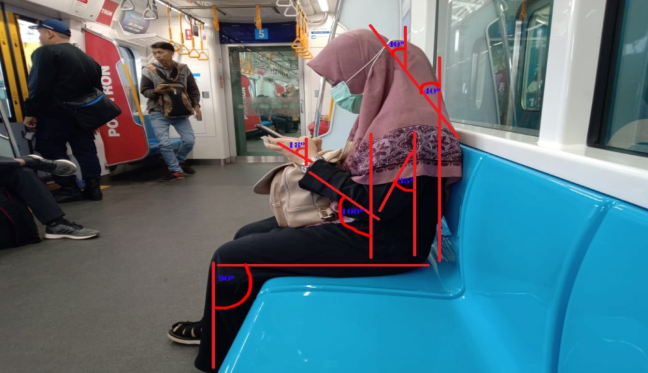
Figure 1: Sitting posture analysis of MRT Jakarta passengers.Table 1. Back movement score.
1. Analysis of MRT Passenger Sitting Posture with REBA Method
Posture analysis of MRT passengers = slightly bent back position with an angle of 400; neck movement bent at an angle of 400, upper arm position 350, forearm position 1000, wrist 180, knee bent at 900 pitch. In the calculation of part, A, which consists of the upper back, neck, and legs are, as follows: a. Back
From Figure 1, it can be seen that the back movement is included in a slightly bent position with an angle of 400, with the REBA score for back action being 3.
b. Neck From Figure 1, it can be seen that the movement of the neck bends at an angle of 400 with the REBA score for the direction of the neck bending being 2.
c. Foot From Figure 1, the sitting position and knees bent at an angle of 900 with a REBA score of 2.
Posture Analysis of Mass Rapid Transit (MRT) Passengers Using the REBA Method 223
Table 2. Neck movement score.
Table available in the original PDF paper.
Movement Score Score Change Tegak / Alamiah > 200 Flexion Extension 1 2 +1 If it rotates or tilts to the side
Table 3. Foot movement score.
Table available in the original PDF paper.
Movement Score Score Change Legs supported, weight evenly distributed, walking or sitting Legs are not endorsed, weight is not evenly distributed / unstable posture 1 2 +1 If the knee is between 30o and 60o flexion +2 if knee > 60o flexion (when not sitting)
The REBA Scores for Table A are as Follows: In The Calculation of Part B, Which Consists of The Upper Arm, Forearm, And Wrist, It Is as Follows:
1) Upper Arm From Figure 1, the angle of movement of the upper arm forward is 350 to the body axis. REBA score is 2 + 1 abducted arm position = 3.
2) Forearm From Figure 1, it can be seen that the angle of movement of the forearm forms an angle of 1000. REBA score is 1
3) Wrist From Figure 1, It Can Be Seen That the Angle of Movement Of The Wrist Forward (Flexion) To The Forearm Is Included In The Movement Of 180. Reba’s Score Is 2.
The Reba Scores for Table B Are as Follows: The Results of The Reba Calculation Are the Meeting Between The Reba A Score Of 5 And The Reba B Score Of 4 Being The Reba C Score
Based On The Results Of The Reba Calculation, It Was Found That The Mrt Passenger Sitting Posture Score Was 5, Meaning That The Level Of Risk Was Moderate And Immediate Action Was Needed.
2. Interview Results with MRT Jakarta Passengers.
The author interviewed 10 MRT Jakarta passengers on Tuesday, 7 January 2020, about passenger satisfaction with MRT Jakarta seats. The author received information that 6 out of 10 passengers were dissatisfied with the MRT Jakarta seats because the seat material was too hard, the seating area for one person was narrow, the seat backers were less com- fortable, and there was no difference between priority seats and passenger seats in general.
Posture Analysis of Mass Rapid Transit (MRT) Passengers Using the REBA Method 225
Table 9. Table of REBA C scores.
Table available in the original PDF paper.
Table C Score B (Score B value + coupling score) Score A (Score form table A + load force score)
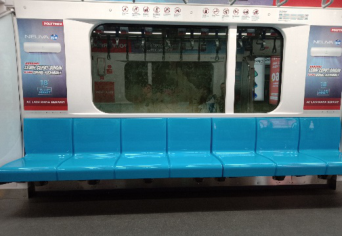
Figure 2: General passenger seats and priority passenger seats.
Based On Figure 2, We Can Conclude That There Is No Difference Betw- een the General Passenger Seat and The Priority Passenger Seat. MRT Jakarta Passengers Expect That in The Future Mrt Jakarta Seats Will Be Given Spe- cial Cushions To Make Them More Comfortable And Given The Difference In Materials Between Priority Seats And General Passenger Seats. So, Mrt Jakarta Will Be Better.
CONCLUSION
Based on the results of the MRT passenger sitting posture analysis, the authors can conclude that:
1. The seating posture of MRT Jakarta passengers has a REBA score of 5, meaning that the risk level is moderate and immediate action is required. 2. MRT Jakarta passengers feel dissatisfied with the seat material, and there is no difference between general passenger seats and priority passenger seats
226 Putri and Utami
ACKNOWLEDGMENT
The authors would like to acknowledge Mass Rapid Transit (MRT) Company Indonesia.
REFERENCES
Anthony, M.B., (2020). Analisis Postur Pekerja Pengelasan Di CV XYZ Dengan Metode Rapid Entire Body Assesment (REBA). JATI UNIK, Vol. 3, No. 2, ISSN: 2597–7946. Astari, A., (2017). Gambaran Postur Kerja Petani Rumput Laut Dengan Metode
REBA Di Pulau Kanalo Dua Kec Pulau Sembilan Kab Sinjai. Skripsi Sarjana Kesehatan Masyarakat, Universitas Islam Negeri Alauddin, Makassar. Azmi, Fitra, dan Suroso, M., (2021), Penerapan Data Antropometri Dalam Perancangan Alat Pengupas Sabut Kelapa Ekonomis, Jurnal Budhiman, M.A., (2015). Analisis Penilaian Tingkat Resiko Ergonomi Pada Pekerja
Konstruksi Proyek Ruko Graha Depok. Skripsi Fakultas Kedokteran dan Ilmu Kesehatan, Universitas Islam Negeri (UIN) Syarif Hidayatullah, Jakarta. Ernita, T., Ervil, R., dan Apriyan. R., (2020). Analisis Penilaian Resiko Gangguan Tubuh Pekerja Pada Pemindahan Buah Kelapa Sawit Dengan Menggunakan Metode REBA. Jurnal Sains dan Teknologi, Vol. 20, No. 1, Juni 2020, ISSN: 2615–2827. Imron, M., (2019). Analisis Tingkat Ergonomi Postur Kerja Karyawan Di Laborato-
rium KCP Pada PT Steelindo Wahana Perkasa Dengan Metode Rapid Upper Limb Assesment (RULA), Rapid Entire Body Assesment (REBA) Dan Ovako Working Posture Analisys (OWAS). JITMI, Vol. 2, No. 2, Oktober 2019, ISSN 2685–6123. Iridiastadi, H., dan Yassierli, (2014). Ergonomi Suatu Pengantar. PT Remaja Rosdakarya, Bandung. Kurnia, F., dan Sobirin, M., (2020). Analisis Tingkat Kualitas Postur Pengemudi
Becak Menggunakan Metode RULA Dan REBA. Jurnal Engine. Vol. 4, No. 1, Mei 2020, ISSN: 2579-7433 Mardiyanto, (2008). Analisa Postur Kerja Menggunakan Metode Rapid Upper Limb Assessment (RULA). Skripsi Sarjana Teknik Industri, Universitas Muhammadi- yah, Surakarta. Notoatmodjo, Soekidjo. (2019). Metode Penelitian Kesehatan. Jakarta: Rineka Cipta Rahmawati, A., dan Utami, D.L., (2020). Analisa Postur Pengendara Motor Untuk
Evaluasi Dimensi Bagian Tempat Duduk Dengan Menggunakan Metode REBA. Jurnal Untuk Masyarakat Sehat (JUKMAS). Vol. 4, No. 01, April 2020, ISSN: 2715–8748. Restuputri, Dian Palupi, M. Lukman dan Wibisono. (2017). Metode REBA Untuk Pencegahan Musculoskeletal Disorder Tenaga Kerja. Jurnal Teknik Industri. Vol 18 (1). ISSN 2527-4112 Sari, Novi Devita dan Irwan Iftadi. (2019). Analisis Postur Kerja Pada Operator Cell
Produk Electricity Meter Dengan Metode RULA dan REBA di PT. XYZ. Prosiding SNST Fakultas Teknik Universitas Wahid Hasyim. ISBN 978-602-52386-1-1 Supriyanto., (2011). Perancangan Postur Kerja Pada Pekerja Bagian Pencucian Dan Penggilingan Kedelai Dengan Pendekatan Rapid Entire Body Assessment (REBA) Untuk Mengurangi Risiko Musculoskeletal Disorders (MSDs). Skripsi Sarjana Teknik Industri, Universitas Sebelas Maret, Surakarta. Wahabi, Bahri, Ferry Munaf, dan Fadli Kurnia. (2018). Analisis Struktur Stasiun
MRT (Mass Rapid Transit) Blok M Terhadap Ketahanan Gempa. Jurnal Infras. Vol 4 (2): 105-112
LISTED IN THE AHFE DIGITAL BOOKSTORE CATALOGUE
Explore the complete digital volume
Physical Ergonomics and Human Factors
Read this individual research paper free through the original publisher, or explore the full digital proceedings book.
ISBN 978-1-958651-39-1
Explore this ISBN in the AHFE Bookstore ↗Listed in the July 2026 bookstore catalogue; search by ISBN to confirm current availability · Digital book purchase optional