Yiyang Chen, Zhanxun Dong, Zhang Xingqiang (2022). Effect of Different Intervention Methods on Recovery of Exercise-Induced Muscle Fatigue. In: Physical Ergonomics and Human Factors. AHFE Open Access, vol. 63, pp. 103–107. https://doi.org/10.54941/ahfe1002602
The aim of this study is to study the effects and differences of different recovery methods such as passive break (PB), active break (AB), and vibration break (VB) on muscle performance recovery after muscle fatigue. The biceps brachii (BBM), which is prone to fatigue during exercise, was taken as the object to study. 10 healthy males were recruited to conduct the experiment. After the experiment, One-Way Repeated Measures ANOVA was used to compare the difference of muscle performance index (MVC, RMS, MF) between groups (PB, AB, VB) at different time points (pre-fatigue, post-fatigue, and post-recovery). JASA method was also used to analyze the muscle recovery effect. Results show 1-minute AB is more effective for muscle fatigue recovery between exercise sets than 1-minute VB after effects.
Exercise has considerable physical and mental health benefits, but excessive exercise may cause physical fatigue. Especially muscle fatigue after continu- ous muscle contraction, which will reduce subsequent sports performance and cause muscle injuries. Therefore, if effective recovery methods can be used in a limited time after muscle fatigue, sports performance will be enhanced again and possible sports injuries will be also reduced.
In the past, fatigue recovery has mostly been passive rest, which is simple and least restrictive, but the recovery effect is less advantageous compared to another active rest. For example, previous studies have found that performing mild centripetal contractions in the presence of muscle injury can increase blood flow fivefold, accelerate oxygen delivery to damaged muscles (Robergs et al. 1997), and accelerate the elimination of tissue fluid accumulation in swollen muscles (Mohr, Akers and Wessman, 1987), thus enhancing recovery efficiency (Clemente et al. 1991), but the effect of active recovery may vary depending on the approach and lasting time (Zhang, Wang and Ye, 2014), so the results are inconclusive.
The recent emergence of vibration relaxation can bring similar effects like active recovery without active muscle contraction, such as increased local
blood flow (Menéndez, 2015), and improved strength performance (Zhang et al. 2014), which are better for muscle fatigue recovery.
Therefore, the aim of this study is to study the effects and differences of different recovery methods such as passive break (PB), active break (AB), and vibration break (VB) on muscle performance recovery after muscle fatigue. The biceps brachii (BBM), which is prone to fatigue during exercise, was taken as the object to study.
MATERIALS AND METHODS
Participants Ten healthy male college students (non-athletic majors or athletic students) were recruited in accordance with the following inclusion criteria: (1) No muscular or skeletal injuries to the upper limbs within the last six months, (2) Not using medications for muscle relaxation within the last six months, (3) No cardiovascular disease, hypertension or related visceral disease and acceptable for maximal exercise testing.
Procedures Ten subjects took part in the experiment three times every other week. No caf- feine, creatine, branched-chain amino acids or alcohol should be consumed prior to the test; no other strenuous upper limbs exercise or muscle damage or soreness should be involved in the week of the test; each measurement should be taken at the same time of the day and the test should be done indo- ors (room temperature approximately 23°C); no subject should have a cold or fever on the day of the test.
The same muscle fatigue exercises performed each week are the same, but 3 recovery methods (PB, AB and VB) are used respectively during these three weeks. The specific process of the experiment is as follows:
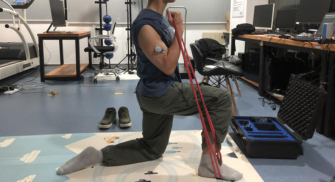
1. Movement familiarization phase. Repeated centripetal and centrifugal contractions of the elbow joint in flexion at an angular velocity of 45°/s for 10 times. 2. Pre-fatigue measurement phase (see Figure 1). Maximum Voluntary Con- traction (MVC) and Surface Electromyography (sEMG) were measured sequentially to avoid the influence of mechanical properties on muscle performance testing. 3. Muscle fatigue phase (see Figure 1). The isometric exercise was perfor- med using an elastic rope as a device, and the non-dominant elbow joint was flexed at an angular velocity of 45°/s with repeated centripetal and centrifugal maximal contraction movements, ranging from 30 to 120° (0° with the elbow fully extended) until the last three consecutive muscle per- formance decreases to 50% MVC, which means muscle fatigue (Wojtys, Wylie and Huston, 1996), and isometric exercise was stopped. 4. In the post-fatigue measurement phase, sEMG was measured immediately. 5. Recovery stage. PB method: Sit with arms relaxed for 1minute; AB method: Stretch, shake, and press the tired muscles for 1minute to relax;
Effect of Different Intervention Methods on Recovery of Exercise-Induced Muscle Fatigue 105
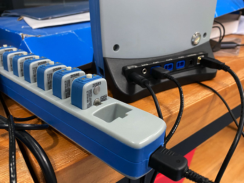
Figure 1: Pre-fatigue measurement phase (left) and Muscle fatigue phase (right).Figure 2: Noraxon Ultium EMG system (left) and Noraxon MR3 software (right).
VB method: Vibrate fatigued muscles by vibration with a fascial gun for 1 minute. 6. Post-fatigue measurement phase. Measure sEMG during 5 minutes immediately after 1 minute of intervention. 7. Perform another recovery method experiment after 7 days until complete recovery.
Measurements and Analysis In this study, Noraxon Ultium wireless EMG system (see Figure 2) was used to acquire the signals of muscle activities. Noraxon MR3 (see Figure 2) was used to record and analyze the EMG data.
RESULTS
After the experiment, One-Way Repeated Measures ANOVA was used to compare the difference of muscle performance index (MVC, RMS, MF) betw- een groups (PB, AB, VB) at different time points (pre-fatigue, post-fatigue, and post-recovery). JASA method (Luttmann et al. 1996) was also used to analyze the muscle recovery effect, the regression coefficients of RMS and MF were calculated. The results of the analysis are as follows:
1. The median frequency (MF) of the muscles after the VB, AB, PB method show a significant increase, and the RMS show a significant reduction. The mean value of MF after AB method intervention was higher than the mean value of MF after VB method intervention. 2. The mean value of RMS after AB method intervention was lower (p<0.05) than the mean value of RMS after VB method intervention
Table 1. The mean value of RMS in 5 minutes after different methods.
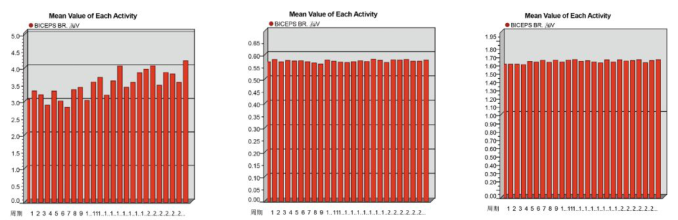
Figure 3: The mean value of RMS in 5 minutes after different methods of Subject No.10.
(see Table 1). Figure 3 excerpts the diagrams which show the mean value of RMS in 5 minutes after different methods of subject No.10.
CONCLUSIONS AND FUTURE WORK In this paper, we have shown that PB method, AB method and VB method are all effective for muscle fatigue recovery under the conditions of this expe- riment according to JASA analysis. Besides, 1-minute AB is more effective for muscle fatigue recovery than 1-minute VB, which means when taking 1- minute rest between exercise sets, the effect of AB is better than VB. This is comparable to previous result (Fuller et al. 2015) which suggests that vibra- tion is no more effective than the standard prescription of stretching and massage for promoting recovery of muscle strength. In comparison to previ- ous study, our experiment has two principal advantages. First, we used sEMG and JASA methods as analyzing method instead of analyzing the concentrati- ons of serum biomarkers to avoid invasiveness to the subjects’ bodies. Second, the muscle fatigue induction method and the rest intervention method we used are closer to the real fitness habits of Chinese people. By conducting this experiment, we hope to provide references and suggestions for improving exercise performance and reducing injuries after muscle fatigue.
Effect of Different Intervention Methods on Recovery of Exercise-Induced Muscle Fatigue 107
The present study conducted relatively simple experiments in a short period of time to produce the results. In our future work, subsequent experi- ments could expand the sample quantity, be more rigorous in the control of the stimuli and add subjective ratings.
REFERENCES
Clemente, F.R., Matulionis, D.H., Barron, K.W. and Currier, D.P. (1991). Effect of Motor Neuromuscular Electrical Stimulation on Microvascular Perfusion of Stimulated Rat Skeletal Muscle. Physical Therapy, 71(5), pp. 397–404. Fuller, J., Thomson, R., Howe, P. and Buckley, J. (2015). Vibration Therapy Is No
More Effective Than the Standard Practice of Massage and Stretching for Promo- ting Recovery From Muscle Damage After Eccentric Exercise. Clinical Journal of Sport Medicine, 25(4), pp. 332–337. Luttmann, A., J¯ager, M., Sökeland, J. and Laurig, W. (1996). Electromyographical study on surgeons in urology. II. Determination of muscular fatigue. Ergonomics, 39(2), pp. 298–313. Menéndez, H., Martín-Hernández, J., Ferrero, C., Figueroa, A., Herrero, A.J. and
Marín, P.J. (2015). Influence of isolated or simultaneous application of electrom- yostimulation and vibration on leg blood flow. European Journal of Applied Physiology, 115(8), pp. 1747–1755. Mohr, T., Akers, T.K. and Wessman, H.C. (1987). Effect of High Voltage Stimulation on Blood Flow in the Rat Hind Limb. Physical Therapy, 67(4), pp. 526–533. Robergs, R.A., Icenogle, M.V., Hudson, T.L. and Greene, E.R. (1997). Temporal
inhomogeneity in brachial artery blood flow during forearm exercise. Medicine & Science in Sports & Exercise, 29(8), pp. 1021–1027. Wojtys, E.M., Wylie, B.B. and Huston, L.J. (1996). The Effects of Muscle Fatigue on Neuromuscular Function and Anterior Tibial Translation in Healthy Knees. The American Journal of Sports Medicine, 24(5), pp. 615–621. Zhang, F., Wang, C.S. and Ye, Z.Q. (2014). An Experimental Study Comparing the
Effect of Different Stretching Mode on Hamstrings Flexibility. Journal of Tianjin University of Sport, 29(1), pp. 61–65. Zhang, F., Wang, C.S., Yuan, Y., Zhu, J., Gu, S., Seyed, R.S. and Gholam, R.Z.
(2014). Effects of Whole Body Vibration at Different Knee Flexion Angles and g Values on Lower Limbs. Journal of Beijing Sport University, 37(11), pp. 86–91.
LISTED IN THE AHFE DIGITAL BOOKSTORE CATALOGUE
Explore the complete digital volume
Physical Ergonomics and Human Factors
Read this individual research paper free through the original publisher, or explore the full digital proceedings book.
ISBN 978-1-958651-39-1
Explore this ISBN in the AHFE Bookstore ↗Listed in the July 2026 bookstore catalogue; search by ISBN to confirm current availability · Digital book purchase optional