Yinan Zhao, Zhanxun Dong, Gang Liu, Xiaozhang Dong, Suiping Hu (2024). Strategic Enhancement of C-UAS through Advanced Human-Computer Collaborative Command and Control Mechanism. In: Human Factors in Design, Engineering, and Computing. AHFE Open Access, vol. 159, pp. 700–710. https://doi.org/10.54941/ahfe1005637
The command and control of unmanned aircraft systems (UASs) faces challenges such as multiple and heterogeneous sources of intelligence information, high operational agility requirements, complex and diverse threat patterns. The structures of traditional command information systems are difficult to effectively address these challenges, highlighting the urgency for innovative approaches. The efficacy of counter-UAS operations hinges upon the capability of combat systems to swiftly process intelligence, identify dynamic situational changes, and deploy operational resources in an accurate and efficient manner. However, traditional human-centric command paradigms fall short in meeting evolving demands, underscoring the necessity for new methodologies to address the escalating UAV threat.In response to these imperatives, this paper proposes an intelligent strategy model tailored for C-UAS command and control, emphasizing human-computer collaborative decision-making. Rooted in the OODA loop theory and informed by the characteristics of informatized, networked, and intelligent systems, this model aims to fulfill the imperatives of security, accuracy, and timeliness inherent in C-UAS. It designs a comprehensive framework structured around the counter operational process, dividing the task into four stages: multidimensional intelligence comprehensive situational awareness, spatiotemporal target locating, human-computer collaborative decision-making, and coordinated actions among equipment.This model provides a design framework based on the C-UAS application process, dividing the task into four stages. (1)Multidimensional intelligence comprehensive situation awareness. The fusion processing of multi-dimensional and multi-source information data forms a comprehensive and unified human-computer situational awareness capability. (2)Spatiotemporal target locating. Detection and identification of intelligence information to achieve accurate positioning and stable tracking of threat targets. (3)Human-computer collaborative decision-making. Division of labor and cooperation between humans and machines to improve decision-making efficiency, accuracy, and flexible adaptability. (4)Effectors coordinated actions. Rapid formation of a kill chain according to mission instructions, while possessing the ability to quickly switch kill chains.In order to verify the effectiveness of the proposed human-computer collaboration model, practical applications were conducted within an integrated C-UAS command and control system featuring diverse and heterogeneous equipment. The system was meticulously designed to address real-world operational exigencies through the implementation of cutting-edge methodologies, including multi-sensor autonomous collaboration, multi-target tracking optimization, and human-computer collaborative decision-making and evaluation. Field exercises were conducted in three typical operational scenarios: (1)Close-Range Surprise Raid of UAV assaults, (2)Drone Swarm Saturation Attacks from Multi-Direction, (3)Coordinated strikes by multiple UAVs. The system successfully detected and intercepted all incoming threats within the specified time, thereby demonstrating its autonomous operational capabilities in authentic battlefield environments.The outcomes of these experiments unequivocally affirm the capability of the human-computer collaborative system to detect suspicious targets, discern threat dynamics, assist commanders in decision-making, and orchestrate weapon systems for interception missions expediently and accurately. Moreover, the system demonstrates exceptional adaptability in swiftly responding to emergent threats and effectively engaging multiple targets from various directions.In conclusion, this research advocates an intelligent command and control strategy model underscored by human-computer collaboration, heralding a promising trajectory for enhancing the efficacy of C-UAS in modern warfare domains. By guiding the development and improvement of integrated C-UAS, this model is expected to strengthen defenses against the evolving UAV threat landscape while optimizing command efficiency in human-computer systems.
In recent years, the threat posed by unmanned aircraft systems (UASs) has escalated significantly. Particularly in contexts such as terrorist attacks, critical infrastructure protection, and urban low-altitude defense, UASs have demonstrated profound implications for future battlefield tactics and strategies (Wang et al., 2021). To deal with these threats, counter-UAS technology has rapidly advanced, including protective equipment, defense systems, and command and control technologies (Zhang & Zhang, 2018). This paper focuses on the domain of counter-UAS command and control technology, exploring innovative command and control architectures to significantly enhance the effectiveness of counter-UAS measures based on the existing mainstream anti-drone equipment.
Strategic Enhancement of C-UAS through Advanced Human-Computer 701
Based on the analysis of practical defense cases and application scenarios, legacy command and control structures of counter-drone systems face four primary challenges:
1) Challenge of Detection and Tracking Drone targets, typically characterized as low-altitude, slow-speed, and small (LSS), present significant challenges for continuous detection and tracking when operating at low and ultra-low altitudes. The complex electromagnetic environment at these altitudes complicates sensor performance. Drones can easily hide in sensor blind spots created by geographical obstructions. Additionally, due to their size and flight patterns, drones can be easily mistaken for common low-altitude birds or mixed up with balloons and kites.
2) Challenge of Handling Complex Attack Modes Current systems struggle to simultaneously handle multi-directional and multi-target drone threats. Swarm attacks can oversaturate interception channels of existing defense systems. Therefore, an integrated system capable of deploying various defensive effectors is required to intercept multi- directional and multi-wave targets (Ma & Xiaoxuan, 2020).
3) Challenge of Operational Agility and Rapid Decision-Making The high demand for operational agility and the shortening of defense time windows make rapid decision-making challenging. This increases the pressure on the response time of counter-drone systems, necessitating improved command efficiency and faster reaction times.
4) Challenge of Sustained Operational Readiness Continuous high-intensity operation under threat conditions can lead to operator fatigue. Enhancing the system’s automation and unattended operation capabilities is essential to maintain effective and sustained operational readiness.
The efficacy of C-UAS operations depends on the system’s ability to quickly process intelligence, recognize dynamic situational changes, and deploy combat resources accurately and efficiently. However, the traditional human- centric command and decision-making paradigm is inadequate for meeting these evolving needs. The application of smart technologies has become crucial in C-UAS systems, shifting from a traditional “strong control” model to a “strong decision-making, weak control” approach (Ma et al., 2020). This allows commanders to accomplish tasks with simple operations, while the system taking over decision-making duties from the users. By integrating theories of human-computer collaboration, existing C-UAS command and control systems are being upgraded, redefining the collaborative relationship between humans and computers in the C-UAS mission environment.
This paper proposes a customized intelligent strategy model for C-UAS command and control. Based on the OODA loop theory and incorporating the characteristics of informational, networked, and intelligent systems,
the model emphasizes human-computer collaborative decision-making capabilities (Chen et al., 2021), aiming to meet the safety, accuracy, and timeliness requirements of C-UAS. A comprehensive framework is designed around the operational process, with tasks assigned between humans and computers, to achieve efficient handling and high safety at the same time.
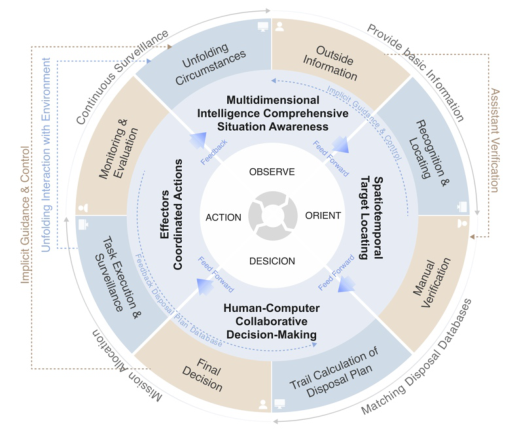
HCI Collaborative Command & Control Framework for C-UAS In C-UAS missions, human-computer collaboration plays a crucial role. Within the classic OODA loop (Observe, Orient, Decide, Act), each phase relies on human intervention. By leveraging insights from the field of Human- Computer Interaction (HCI), traditional command systems are optimized to incorporate more advanced automated systems into each stage of the OODA loop (Liu et al., 2020). This enables an effective partnership between humans and computers to perform command and control tasks efficiently, thereby closing the OODA loop and establishing a trustworthy human-computer collaborative decision-making mechanism.
Figure 1: HCI collaborative command & control framework for C-UAS.
The optimized command & control strategy model provides a design framework based on the C-UAS application process (see Figure 1). (1) Multidimensional intelligence comprehensive situation awareness. The fusion processing of multi-dimensional and multi-source information data forms a comprehensive and unified human-machine situational awareness capability. (2) Spatiotemporal target locating. Detection and identification of intelligence information to achieve accurate positioning and stable tracking of threat targets. (3) Human-machine collaborative decision-making. Division of labour and cooperation between humans and machines to improve decision-making efficiency, accuracy, and flexible adaptability. (4) Effectors
Strategic Enhancement of C-UAS through Advanced Human-Computer 703
coordinated actions. Rapid formation of a kill chain according to mission instructions, while possessing the ability to quickly develop kill chains.
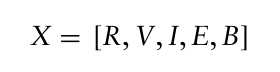
(1) Multidimensional intelligence comprehensive situation awareness In the multidimensional intelligence comprehensive situation awareness phase of C-UAS operations, the primary challenge addressed is the detection of targets. Tailored to meet the demands of C-UAS detection, the system utilizes a multidimensional sensor array to continuously perceive and monitor UAV information. This array includes radar (R), visible detection (V), infrared detection (I), electronic detection (E), and acoustic detection (B), collecting environmental data and information on potential threats. Human-computer collaboration in this stage is pivotal as machines autonomously guide each other, automatically process, and integrate information from various dimensions. This integration facilitates rapid extraction of intelligence, which is then presented to human operators in an intuitive format, forming a comprehensive basis for situational awareness (Yang et al., 2022).
To ensure the quality and consistency of the data, all sensor data are compiled into a multidimensional vector:
Equation reproduced from the original PDF.
The Isolation Forest algorithm is employed to detect and eliminate anomalies within the data. After a consistency check, the dataset is further optimized:
Equation reproduced from the original PDF.
Subsequently, by applying Kalman filter techniques, challenges associated with the extraction and fusion of multi-sensor data are addressed, enhancing the spatiotemporal correlation of the information, and improving data usability and accuracy (Peng et al., 2020). The resulting fused dataset, Xfused, allows the system to extract key intelligence efficiently and accurately, significantly enhancing the response capabilities to UAV threats and providing a reliable foundation for decision support.
(2) Spatiotemporal target locating During the spatiotemporal target locating phase, the primary challenge addressed is the parsing and recognition of information. The system analyzes and understands the observed data to identify and predict potential threats, achieving a comprehensive perception of the current environmental situation. In the human-computer collaborative system, machines autonomously detect target types, assist in analyzing data patterns, and predict potential UAV behaviours and strategies. Human operators, leveraging their experience and intuition, conduct in-depth interpretations, validate the machine’s analytical outcomes, and clarify complex or ambiguous situations.
The YOLO model is used to realize drone target detection and recognition, and combined with target candidate track (TCT) for tracking and positioning (Unlu et al., 2019). On this basis, this paper adopts an Integrated Threat
Detection and Tracking (ITDT) model, which utilizes real-time multi-sensor data and historical records to analyze and predict target behaviours. Utilizing Long Short-Term Memory (LSTM) networks, it processes motion trajectories and behavioural patterns, enabling effective prediction and classification of such behaviours. The ITDT model comprises four main modules: target localization and classification, multi-target tracking, behaviour analysis, and mission classification. These modules transform the input vector Xcombined into the output vector Ytask, which includes comprehensive information such as location, classification, and threat level:
Ytask = fITDT
Xcombined
This model leverages deep learning architectures and algorithms to effectively extract key information from large datasets. It also enables effective monitoring and rapid response to UAV activities, significantly enhancing adaptability to complex environments and the capability to handle potential threats.
(3) Human-machine collaborative decision-making During the human-computer collaborative decision-making phase, an integrated analysis of observed and oriented information is conducted to select the most appropriate countermeasures, involving the formulation of tactics and the selection of weapon systems. The system rapidly simulates and evaluates different response strategies through algorithms, providing recommended options and their predictive outcomes for a clear and concise situational presentation to the user (Zhang et al., 2022). Additionally, the system utilizes AI technology to learn from previous models to offer decision support that aligns more closely with the commander’s considerations, while the human commander is responsible for the final decision, making choices based on tactical knowledge and battlefield conditions. To counter decision fatigue and cognitive biases, decision-support tools are designed to simplify the decision-making process.
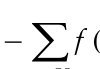
A Deep Q-Network (DQN) model is established to optimize the decision- making process:
Q (s, a) ←Q (s, a) + α
R (s, a) + γ max
s′, a′
−Q (s, a)
a′ Q
where s represents the current state, a is the action taken, s′ is the new state after the action, and a′ are possible actions in the new state. Q (s, a) represents the utility value of the current state and action pair. The learning rate α adjusts the speed at which new information updates old information, R (s, a) is the immediate reward, and the discount factor γ balances the importance of immediate rewards against future rewards.
Predictive models and algorithms provide support for decision-making, where the system generates decision options based on predictive models, analyzing the consequences of multiple potential plans to address the complexities and variabilities of the battlefield environment. Further assessment of plans Si obtained from the DQN model is conducted using
Strategic Enhancement of C-UAS through Advanced Human-Computer 705
a random forest model, which integrates learning outcomes from multiple decision trees to provide decision support. The final decision output, Decision, is determined by a majority voting method:
Decision = mode
Tree1 (Si) , Tree2 (Si) , . . . , Treen (Si) The commander selects a decision option based on comprehensive evaluation results, simplifying the decision process and the information analysis process to enhance decision efficiency and human comprehension, while returning decision-making responsibility to humans to ensure system safety. The system continues to adjust the recommendation algorithm through a decision feedback mechanism, based on the operator’s feedback and subsequent results.
(4) Effectors coordinated actions During the effector coordinated actions phase, the system executes specific countermeasures based on the decision outcomes, such as launching interference signals or physical interceptions. The collaborative system can automatically control devices like electronic jamming systems or high-power laser systems, or coordinate multiple weapons to execute tasks, while still maintaining human operator control over critical actions. The system provides real-time feedback on the results of actions, allowing operators to quickly adjust or repeat the previous OODA loop. The user interface ensures that execution of commands is both intuitive and precise, and is easily manageable by human operators in emergency situations, providing essential manual control options.
An integrated heterogeneous equipment networking technology model is established to ensure seamless collaboration among different defense systems according to battlefield requirements (Chien et al., 2019). Task scheduling problems are solved through integer linear programming to optimize the system allocation of various tasks: X
X
min
cijxij Subject to
Equation reproduced from the original PDF.
i∈N,j∈D
i∈N
Here, D is the set of tasks determined by the Decision, cij represents the cost of system i performing task j, and N is the set of all available defense systems.
The network flow model optimizes the flow and allocation of resources:
X max f (u, v) (u,v)∈E
Subject to X
Equation reproduced from the original PDF.
f (u, v) ≤c (u, v) , v∈V
v∈V
In this model, f (u, v) represents the flow of resources from node u to node v, c (u, v) is the maximum capacity of that flow, E is the set of edges, and V is the set of nodes.
The system employs a user-friendly interface to provide real-time feedback on actions, allowing operators to adjust strategies based on the latest data. All decision results and related data are logged in a historical database, ensuring comprehensive record-keeping. The system also conducts ongoing monitoring of key operational areas, integrating real-time sensor data from these areas to update and provide feedback promptly, ensuring timely adjustments and optimization of defense measures. This continuous monitoring and data feedback effectively close the OODA loop, enabling the system to learn and adapt continually, thus enhancing overall defense capabilities and safeguarding critical assets and personnel.
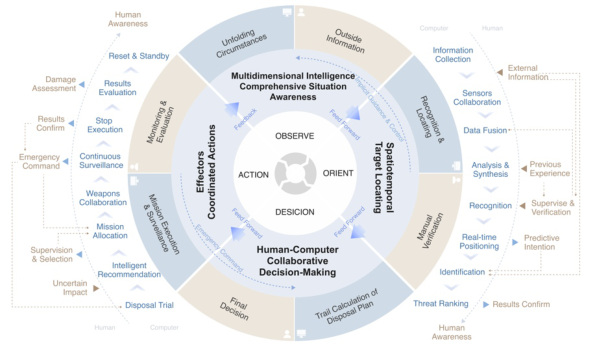
Figure 2: Application of human-computer collaborative command and control strategy in the operational workflow of C-UAS missions.
To validate the effectiveness of the proposed human-computer collaboration model, the author implemented it in a diversified and heterogeneous C-UAS command and control system (see Figure 2) and conducted practical exercises in a specific region to simulate real UAV attack-defense scenarios. The experiment targeted three threat scenarios that existing C-UAS systems generally struggle to address effectively, creating three test environments: (1) Close-Range Surprise Raid to test the system’s capability to handle sudden close-range single-target attacks. (2) Drone Swarm Saturation Attacks from Multi-Direction to assess the system’s rapid response capability against multi-directional and multi-target threats. (3) Coordinated strikes by multiple UAVs relying on inertial navigation to evaluate the system’s ability to accurately handle continuous complex intentions and coordinated attacks by multiple UAV types.
The purpose of the experiment was to test whether the C-UAS command and control system, optimized through the human-computer collaboration model, could accurately command subordinate detection sensors to timely discover and identify UAV targets, and control subordinate weapons to carry out interception and countermeasures. During the tests, the system’s detection
Strategic Enhancement of C-UAS through Advanced Human-Computer 707
time, detection accuracy, decision response speed, and defensive effectiveness were recorded to assess the system’s usability, timeliness, and flexibility.
Result & Discussion In the three tests, the system successfully coordinated sensors such as radar, photoelectric, and radio frequency (RF) detection devices, and was able to integrate these to generate high-precision target trace information. It effectively directed multiple types of weapons such as RF interference, GNSS spoofing, high-power lasers (HPL), micro-missiles, and intercepting drones to carry out interception strikes. The system successfully detected and intercepted all 17 flights. The experiments thoroughly validated the C-UAS system developed based on human-computer collaboration concepts from various aspects including system response speed, collaborative detection capability, multi-target handling, and complex intention response capabilities. The results of the experiments are summarized in Table 1.
Table 1. Summary of experiment results.
Table available in the original PDF paper.
Metric Test 1 Results Test 2 Results Test 3 Results Initial detection time 5s 13s 12s Initial detection distance 2.85km 2.5km 2.7km Time to identify target 15s 19s 22s Distance at target identification 2.5km 2.2km 2.5km Number of targets 2 12 3 Tracking precision <3m <3.6m <3m Frequency band information Available Available Available Countermeasures RF Jamming RF Jamming, Laser, Interceptor Drones
Jamming, GNSS Spoofing, Laser, Interceptor Drones Total handling time 42s 131s 211s
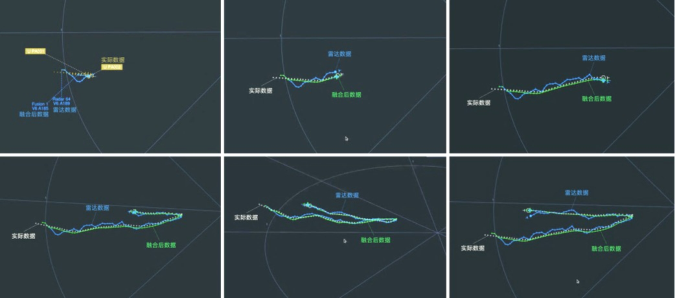
Close-Range Surprise Raid The system detected the initial target direction within 5 seconds of takeoff at 1.85 km, stabilized target tracking within 8 seconds with a tracking precision of no more than 3 meters, identified the target within 15 seconds at 2.5 km, made command decisions within 2 seconds, and intercepted the target within 30 seconds through electronic interference, culminating in the target’s fall within 35 seconds from takeoff. During this testing process, the ability of the human-computer collaboration system to integrate data from multiple sensor sources was also evaluated. The integrated data, compared to that from individual sensors, more closely approximated actual data and significantly improved localization accuracy (see Figure 3). This integration exemplifies the advanced capabilities of the human-computer collaborative system in enhancing the accuracy and reliability of sensor data through sophisticated data fusion techniques.
Figure 3: Comparison of data fusion results from the human-computer collaborative system with data from a single sensor (radar).
Swarm Saturation Attacks From Multi-Direction The system detected anomalies from the first batch of targets within 4 seconds of their takeoff, identified the targets after 13 seconds at 2.5 km, recognized the targets within 7 seconds at 2.2 km, and confirmed them as multi-cluster targets from three directions after 26 seconds, making disposal decisions for each direction. This included an on-the-fly adjustment of one decision plan, ultimately successful in intercepting all 12 targets from all directions within a total duration of 131 seconds, with detection precision not exceeding 3.6 meters.
Coordinated Multi-Type UAV Strike Relying on Inertial Navigation The system detected anomalies 12 seconds after the initial target launch, identified the target at 4 km after 27 seconds as a small rotor UAV, issued a decision command at 31 seconds, successfully trapped the first batch of targets at 89 seconds, and detected two additional batches of targets, fixed- wing and rotor UAVs, at 110 seconds. It took 14 seconds and 17 seconds to identify each, 8 seconds to make disposal decisions for each batch, and 57 seconds and 101 seconds to intercept, respectively. The total scenario involved intercepting three batches of targets, with a tracking precision not exceeding 3 meters and a total handling time of 211 seconds.
Table 2. Human-machine task distribution throughout the testing process.
Table available in the original PDF paper.
Time Interval Task System Functions Commander Functions
Generation of Disposal Plans and Recommendations Re-evaluation of Recommendations
Human-Machine Collaborative Decision-Making 173-181s Emergency Decision Making
Effectors Coordinated Actions
Manual Intervention, Secondary Decision-making
137-211s Execution of Disposal
Command Issuance, Equipment Control
Monitoring & Confirmation
CONCLUSION
In the context of increasingly complex UAV threats and advancements in intelligent technologies, this study emphasizes human-computer collaboration. It develops an innovative C-UAS intelligent command and control strategy model based on the C4ISR architecture and the OODA loop. This model integrates analyses of collaborative protection needs and the creation of algorithms for detection and decision-making, aiming to enhance the efficiency and reliability of command and control systems.
The effectiveness of the model was demonstrated through three distinct C-UAS field exercises, which assessed the system’s response efficiency and operational effectiveness. These exercises further validated the role of innovative strategies in human-computer collaborative command and control for advancing C-UAS missions. The model is designed to improve defenses against evolving drone threats and optimize command efficiency within human-machine systems.
Looking ahead, the model framework is expected to precisely delineate human-computer tasks across various phases of C-UAS operations and dynamically adjust the balance of information sharing between humans and machines. It seeks to adapt to the influence of artificial intelligence on traditional command and control paradigms, providing new theoretical insights into these systems.
REFERENCES
Chen L., Li F., Feng Q., & Chen Y. (2021). Combat Timeliness Analysis of Air Defense System-of-Systems Based on OODA-A Loop. Journal of Command and Control, 7(4), 383–388.
Chien, W.-C., Lai, C.-F., Hossain, M. S., & Muhammad, G. (2019). Heterogeneous Space and Terrestrial Integrated Networks for IoT: Architecture and Challenges. IEEE Network, 33(1), 15–21. https://doi.org/10.1109/MNET.2018.1800182 Liu G., Chen C., Zhao Y., Sun Y., & Yan Y. (2020). Human-computer Interaction
Design Process of Command and Control System. Packaging Engineering, 41(14), 85–91. https://doi.org/10.19554/j.cnki.1001-3563.2020.14.012 Ma, C., Zhao, D., & Xin, H. (2020). Human-machine interaction interface design of intelligent equipment based on user experience. Computer Integrated Manufacturing Systems, 26(10), 2650–2660. https://doi.org/10.13196/j.cims .2020.10.005 Ma, W., & Xiaoxuan, C. (2020). Research on Development of Anti-UAV Technology.
Aero Weaponry, 27(6), 19–24. Peng, J., Zhang, P., Zheng, L., & Tan, J. (2020). UAV Positioning Based on Multi- Sensor Fusion. IEEE Access, 8, 34455–34467. https://doi.org/10.1109/ACCESS .2020.2974285 Unlu, E., Zenou, E., Riviere, N., & Dupouy, P.-E. (2019). Deep learning-based
strategies for the detection and tracking of drones using several cameras. IPSJ Transactions on Computer Vision and Applications, 11(1), 7. https://doi.org/10. 1186/s41074-019-0059-x Wang, J., Liu, Y., & Song, H. (2021). Counter-Unmanned Aircraft System (s) (C- UAS): State of the Art, Challenges, and Future Trends. IEEE Aerospace and Electronic Systems Magazine, 36(3), 4–29. https://doi.org/10.1109/MAES.2020. 3015537 Yang, C., Zhu, Y., & Chen, Y. (2022). A Review of Human–Machine Cooperation
in the Robotics Domain. IEEE Transactions on Human-Machine Systems, 52(1), 12–25. https://doi.org/10.1109/THMS.2021.3131684 Zhang D., Wang M., & Tang S. (2022). Autonomous Decision-making Technology for Task-oriented UAVSwarm. Journal of Command and Control, 8(4), 365–377. Zhang, J., & Zhang, K. (2018). A Survey on Anti-UAV Technology and its Future
Trend. Advances in Aeronautical Science and Engineering, 9(1), 1–8. https://doi. org/10.16615/j.cnki.1674-8190.2018.01.001
LISTED IN THE AHFE DIGITAL BOOKSTORE CATALOGUE
Explore the complete digital volume
Human Factors in Design, Engineering, and Computing
Read this individual research paper free through the original publisher, or explore the full digital proceedings book.
ISBN 978-1-964867-35-9
Explore this ISBN in the AHFE Bookstore ↗Listed in the July 2026 bookstore catalogue; search by ISBN to confirm current availability · Digital book purchase optional