Ieva Puke, Anda Batraga, Jelena Salkovska, Henrijs Kalkis (2022). Specific Marketing Capabilities for Improved Export Performance in Young Firms. In: Social and Occupational Ergonomics. AHFE Open Access, vol. 65, pp. 23–31. https://doi.org/10.54941/ahfe1002655
The key challenge for young firms in export markets is to find the market opportunity and to develop an appropriate value proposition. The aim of this study is to identify the specific marketing capabilities that support the process of internationalization in young firms and to develop the model that links marketing capabilities to the export performance. The research model was tested within young exporting firm sample in Latvia. Quantitative data was analysed using factor analysis and structural equation modelling with PLS-SEM. This study identifies a unique set of marketing capabilities that enhance the export performance. Strategic marketing capabilities that have a positive effect on export performance are 1) customer engagement (the largest effect), 2) partner linking, 3) market sensing, 4) new product development and 5) strategic creativity capabilities. Firms need to develop cultural marketing capabilities - agility, proactivity, adaptiveness and openness to experiments in the export marketing process. This type of behaviour, particularly proactivity and openness to experiments, has a positive effect on export results and enhances the level of strategic marketing capabilities. The research model can be used by export firm managers and owners to improve the export performance and by government export promotion program leaders to develop and substantiate support tools and activities.
During internationalization, young firms face uncertain market environment and handle liabilities of newness (Stinchcombe, 1965), smallness (Aldrich and Auster, 1986), foreignness (Zaheer, 1995) and outsidership (Johanson and Vahlne, 2009). The key challenge is to identify the market opportunity and develop the appropriate value proposition. What is the role of marketing in the internationalization process? Firms need to expand their knowledge, interact with the market, and validate value proposition. When firms enter new international markets, their marketing strategies may change significan- tly under the influence of market factors (Zahra, 2005). While knowledge is accumulated and partnerships created, new objectives can emerge during exporting (Sarasvathy, 2001). According to Resource Based Theory, firms can overcome liabilities by developing unique resources and capabilities. Thus, a
young exporter needs specific marketing capabilities which foster learning about the markets, help building relationships with export partners, and engaging customers in the value proposition creation process.
SPECIFIC MARKETING CAPABILITIES FOR YOUNG EXPORTING FIRMS Marketing capabilities manifest in integrative processes designed to apply the collective knowledge, skills, and resources of the firm to the market-related needs of the business, enabling the business to add value to its goods and services, adapt to market changes and stand against competitive rivalry (Day, 1994), (Vorhies, 1998). Marketing capabilities can be classified as strategic, specialized and cultural ones (Puke, 2021). Further out, strategic and cul- tural marketing capabilities that are included in the research model will be described and 7 hypotheses will be put forward.
Market sensing capability. The market sensing capability refers to a firm’s ability to learn about its customers, competitors, distribution channel pla- yers and the wider market environment in which it operates (Day, 1994). Understanding and sensing the market helps a firm anticipate future market developments and discover new opportunities based on information obtained from the firm’s business ecosystem (Mu, 2015). Market sensing capabi- lity makes it possible to understand market changes and opportunities in complex, unpredictable and volatile market conditions before they are fully materialized (Day, 2011), (Mu and Benedetto, 2011), thus it reduces the uncertainty of the external environment, and can positively affect innovation and performance (Braslina et al., 2021), (Salkovska et al. 2019).
H1 Market Sensing Capability has a Positive Effect on Export Performance in Young Firms Customer engagement capability is characterized by close communication and joint problem solving, as well as coordinating activities (Day, 1994). An appropriate customer engagement can be developed by demonstrating a fair treatment, genuine care and sincerity towards customers (Mu, 2015). If the customers are satisfied with the benefits of the firm’s offer, they tend to identify with the values represented by the firm, feeling connected affiliation and grateful attitude, which increases customer loyalty and positive feedback (Mu, 2015), (Sander, Sloka and Kalkis, 2019), (Sander, Sloka and Kalkis, 2021). Such behaviour of customers and the firm is also a characteristic of co-creation, where the customers actively participate in the development of new products (Claro and Claro, 2010).
H2 Customer Engagement Capability has a Positive Effect on Export Performance in Young Firms Partner linking capability refers to the firm’s ability to build and maintain networks, communicate with partners and leverage partner resources and capabilities to create value (Claro and Claro, 2010), (Mu, 2015), (Mu and Benedetto, 2011), (Walter, Auer and Ritter, 2006). It empowers the firm with access to in-depth and specialized skills, resources, and market and customer knowledge needed in value creation process for the customers.
Specific Marketing Capabilities for Improved Export Performance in Young Firms 25
H3 Partner Linking Capability has a Positive Effect on Export Performa- nce in Young Firms New product development capability is considered to be a cross-functional capability of a firm, as it combines both marketing and production and rese- arch functions (Day, 1994). For new exporters, the ability to develop and quickly bring new products to the market is vital.
H4 New Product Development Capability has a Positive Effect on Export Performance in Young Firms Strategic Creativity capability is the ability to differentiate firms’ products in the market among competitors, to differentiate offers for different market segments, as well as to develop creative marketing strategies (Chen, 2012), (Lisboa, Skarmeas and Lages, 2011). For young international firms it is par- ticularly important when moving from the early-stage adopting customer segment to the mass market (Weerawardena, Mort andLiesch, 2019).
H5 Strategic Creativity Capability has a Positive Effect on Export Perfor- mance in Young Firms Export cultural marketing capabilities: adaptive, proactive, agile, expe- rimentation. According to marketing capability classification [20], cultural marketing capabilities reflect ‘how’ the firm behaves and reacts when con- fronted with market challenges. Young firms need to adopt adaptive, proa- ctive, agile behaviour in the international market and use experimentation in the marketing process. Agility creates timely and adequate response to customer and market expectations and helps to balance the negative impact of liabilities (Asseraf, Lages and Shoham, 2018). Proactive firm behaviour is able to initiate market disruption and achieve superior performance by out- competing their rivals, proactive market-oriented organizations are capable of influencing customers’ perceptions by their own decisions and behaviours (Kachouie, Mavondo and Sands, 2018). Adaptive behaviour helps the firm to coordinate, recombine, and allocate resources in order to meet the different requirements of foreign markets (Lu et al. 2010).
H6 Export Cultural Marketing Capability (Adaptive, Proactive, Agile and Open to Experiments) has a Positive Effect on a) Export Performance in Young Firms, b) Other Marketing Capabilities Market turbulence reflects the changing nature of customer expectations and behaviour. It is an external environment factor that can moderate conne- ction between marketing capabilities and export performance (Jaworski and Kohli, 1993). Firms acting in turbulent markets have greater need for mar- keting capabilities that allow to understand market trends, customer needs and predict changes in their behaviour, comparing to firms that operate in a stable market environment.
H7 Market Turbulence Positively Moderates the Influence of Strategic Marketing Capabilities on Export Performance
METHODOLOGY
Research approach. The tasks of this study are to identify specific marketing capabilities and to examine the effects of specific marketing capabilities on
export performance. In doing so, the authors have developed marketing capa- bility constructs, adapted existing measures and developed the model that links marketing capabilities to the export performance, using mixed method research approach in two stages. In the first stage, an exploratory research has been conducted using in-depth semi-structured interviews with exporting firm owners and managers to gain better understanding of specific marketing capabilities used during internationalization process. In the second stage tele- phone surveys of young exporting firms have been conducted to examine the effect of marketing capabilities on export performance.
Data collection and sampling frame. For in-depth interviews SMEs in Latvia from manufacturing and service industries, with active exporting expe- rience over the period of 2 to 10 years have been chosen. Overall, interviews with representatives from 15 firms have been conducted, 30 hours of inte- rview recordings have been obtained, transcribed on 300 pages, triangulated with secondary data. The findings from this research are incorporated into the research model constructs and measurements. In the second phase of data collection in year 2020, a survey based on computer assisted teleph- one interviewing method (CATI) was carried out in a representative sample of exporting SMEs in Latvia, with at least 10 000-euro export sales in the last reference year, for the firm age from 2 to 10 years, yearly overall turnover from 10 000 euro to 50-million-euro, number of employees from 1 to 249, operating in manufacturing or service industry. After verification, interviews with 204 firms responded to the criteria.
Measurement. Marketing capability measurement scales have been ado- pted from previous empirical research, where it was possible (Asseraf, Lages and Shoham, 2018), (Atuahene-Gima, 2005), (Mu, 2015), (Claro and Claro, 2010), (Kachouie, Mavondo and Sands,2018), (Lu et al. 2010), (Mu and Benedetto, 2011), (Weerawardena, 2003), (Weerawardena, Mort and Liesch, 2019), (White, Conant and Echambadi, 2003). Firm export performance has been operationalized as a multidimensional construct (Vorhies, Harker and Rao, 1999), (Katsikeas, Leonidou, L. and Morgan, 2000), including financial (export sales and export sales growth) and nonfinancial performance (firm image awareness and new customer acquisition) indicators and it has been measured with one-year lag from capabilities (Peteraf, 1993). Market turbu- lence scale reflects the inconsistent nature of customer expectations (Jaworski and Kohli, 1993). Control factors have been related to firm size, experience, location, industry, respondent position in the firm.
Analysis and results. To test the hypotheses, structural equation model- ling PLS-SEM with software Smart PLS 3.0 has been used. After testing first model, factor analysis with Principal Axis factoring has been performed to improve discriminant validity of latent variables. The new model has been created with 7 latent variables according to proposed hypothesis and the factor structure. The model has been tested with 5,000 bootstrapping sam- ples. SRMR measure did not exceed the threshold of 0.8 and according to PLS analysis guidelines (Henseler, Ringle and Sarstedt, 2015), is a good model fit indicator (Table 1). All internal validity indicators exceeded threshold value 0.7 (Cronbach’ s alpha) and average variance extracted) exceeded 0.5.
Specific Marketing Capabilities for Improved Export Performance in Young Firms 27
Table 1. Model fit.
Table available in the original PDF paper.
SRMR Confidence interval 2.5% 97.5% Saturated model 0.062 0.060 0.066 Estimated model 0.065 0.070 0.076
Figure 1: Measurement model.
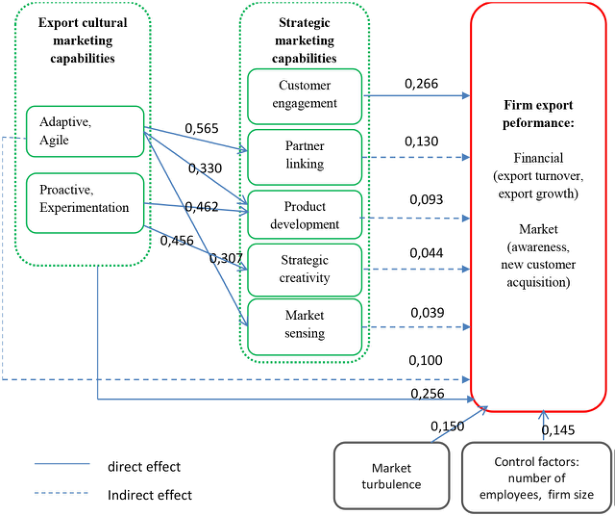
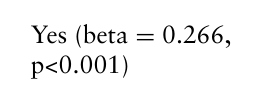
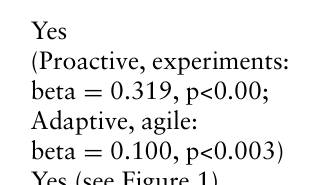
Figure 1 represents the measurement model with paths and coefficients. All coefficients are significant. Customer engagement capability has the lar- gest direct effect on export performance (0.266), followed by Export cultural marketing capability: proactive, experiments (direct effect = 0.256, total effect = 0.319). Other capabilities have indirect and smaller effects on export performance. The most significant from latent variables is Export cultural marketing capability: proactive, experiments; if this capability would incre- ase by 1, export performance would improve by 0.319 given that other conditions remain the same.
As hypothesized, Export cultural capabilities contribute to the level of stra- tegic marketing capabilities in the firm. Adaptive and agile Export cultural capability on Partner linking capability presents the largest effect. Increasing adaptive and agile capability indicators by 1, Partner linking capability will increase by 0.565, Strategic creativity capability will increase by 0.330 and Market sensing capability will increase by 0.307. In turn, increasing proactive and open to experiments capability indicators by 1, the greatest increase will be in Product development capability (0.462) and Strategic creativity (0.456).
Table 2. Hypothesis conclusions.
Table available in the original PDF paper.
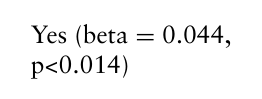
Hypotheses Finding Conclusion Yes (beta = 0.039, p<0.05) Supported H1 Market sensing capability has a positive effect on export performance
Supported
Equation reproduced from the original PDF.
H2 Customer engagement capability has a positive effect on export performance
Supported
Equation reproduced from the original PDF.
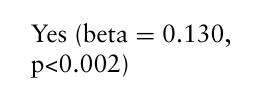
H3 Partner linking capability has a positive effect on export performance
Supported
Equation reproduced from the original PDF.
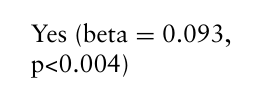
H4 New product development capability has a positive effect on export performance
Supported
Equation reproduced from the original PDF.
H5 Strategic creativity capability has a positive effect on export performance
Supported
Equation reproduced from the original PDF.
H6b Export cultural marketing capability (adaptive, proactive, agile and open to experiments) has a positive effect on export performance
Yes (see Figure 1) Supported
H6a Export cultural marketing capability (adaptive, proactive, agile and open to experiments) has a positive effect on strategic marketing capabilities
No: not significant Not supported
H7 Market turbulence positively moderates the influence of strategic marketing capabilities on export performance.
*Betas represent coefficients of direct and indirect effects combined.
In this study, 7 hypotheses predicting the influence of marketing capabili- ties on export performance and the effect of cultural marketing capabilities to strategic marketing capabilities have been tested. The summary of hypoth- esis is represented in Table 2. Hypothesis 1,2,3,4,5,6a and 6b are supported, but hypothesis 7 is not supported, as moderating effect of market turbulence has not been found.
Among control factors proved to be significant, there are indicators repre- senting firm size: the number of employees and turnover, total effect on export performance is 0,145. Market turbulence did not create modera- ting effect, but proved to have significant direct effect (0.150) on export performance.
CONCLUSION AND DISCUSSION The results of the research reveal that Cultural marketing capability is an influential factor in the firm internationalization process. Strategic marketing
Specific Marketing Capabilities for Improved Export Performance in Young Firms 29
capabilities should be developed within the culture of agility, experiments, proactivity and adaptive behaviour in export marketing processes. Further- more, proactive firm behaviour and openness to experiments can directly improve export performance in young firms when they can exploit market opportunities that are not covered by larger and more mature firms.
Specific marketing capabilities that support value proposition develo- pment and validation can help achieve better export performance in young firms. Customer engagement capability that helps to develop very close rela- tionships and involves customers in the product development and testing process is particularly important.
Partner linking capability is enhanced by agile and adaptive behaviour, and young firms that can effectively orchestrate and manage partner netw- orks, are able to exploit the partner resources to create value for customers. It is essential for young firms, as they lack their own resources and it is a way to overcome liabilities of newness and foreignness. Ultimately successful relations with customers and within partner network will increase the firm image and awareness in the export markets. This study approves the promi- nent role of marketing during internationalization process and identifies the unique marketing capabilities that enhance the export performance.
REFERENCES
Aldrich, H., Auster, E. R.. (1986) Even Dwarfs Started Small: Liabilities of Age and Size and Their Strategic Implications. Research in Organizational Behavior, pp. 165–198 Asseraf, Y., Lages, L.F., Shoham, A. (2019) Assessing the Drivers and Impact of Inter-
national Marketing Agility. International Marketing Review, 35, 2, pp. 289–315 Atuahene-Gima, K. (2005) Resolving the Capability–Rigidity Paradox in New Product Innovation. Journal of Marketing, 69 (4), pp. 61–83 Braslina, L., Batraga, A., Legzdina, A., Salkovska, J., Kalkis, H., Skiltere, D.,
Braslins, G., Sakti¸na, D (2021). Factors and Barriers of Implementing Early Warning, Support and Second Chance Support Systems for SMEs in the Bal- tic States. International Conference on Applied Human Factors and Ergonomics, pp. 25–32 Chen, J. (2012) The Synergistic Effects of IT-Enabled Resources on Organizational Capabilities and Firm Performance. Information and Management, 49(3-4), pp. 142–150 Claro, D. P., Claro, P. B. O. (2010) Collaborative Buyer–Supplier Relationsh-
ips and Downstream Information in Marketing Channels. Industrial Marketing Management, 39(2), pp. 221–228 Day, G. S. (1994) The Capabilities of Market-Driven Organizations. Journal of Marketing, 58(4), pp. 37–52 Day, G. S. (2011) Closing the Marketing Capabilities Gap. Journal of Marke-
ting, 75(4), pp. 183–195 Hagen, B., Zucchella, A., Ghauri, P. N. (2019) From Fragile to Agile: Marketing as a Key Driver of Entrepreneurial Internationalization. International Marketing Review, 36(2), pp. 260–288 Henseler, J., Ringle, C. M., Sarstedt, M. (2015) A New Criterion for Assessing Discri-
minant Validity in Variance-Based Structural Equation Modeling. Journal of the Academy of Marketing Science, 43(1) pp. 115–135,
Jaworski, B. J., Kohli, A. K. (1993) Market Orientation: Antecedents and Consequences. Journal of Marketing, 57(3), pp. 53–70 Johanson, J., Vahlne, J. E. (2009) The Uppsala Internationalization Process Model
Revisited: from Liability of Foreignness to Liability of Outsidership. Journal of International Business Studies, 40(9), pp. 1411–1431 Kachouie, R., Mavondo, F., Sands, S. (2018) Dynamic Marketing Capabilities View on Creating Market Change. European Journal of Marketing, 52(5), pp. 1007– 1036 Katsikeas, C. S., Leonidou, L. C., Morgan, N. A. (2000) Firm-Level Export Perfor-
mance Assessment: Review, Evaluation and Development. Journal of the Academy of Marketing Science, 28(4), pp. 493–511 Lisboa, A., Skarmeas, D., Lages, C. (2011) Entrepreneurial Orientation, Exploitative and Explorative Capabilities, and Performance Outcomes in Export Markets: a Resource-Based Approach. Industrial Marketing Management, 40 (8), pp. 1274– 1284 Lu, Y., Zhou, L., Bruton, G., Li, W. (2010) Capabilities as a Mediator Linking Resou-
rces and the International Performance of Entrepreneurial Firms in an Emerging Economy. Journal of International Business Studies, 41(3), pp. 419–436 Mu, J. (2015) Marketing Capability, Organizational Adaptation and New Product Development Performance. Industrial Marketing Management, 49, pp.151–166 Mu, J., Di Benedetto, A. (2011) Networking Capability and New Product Develo-
pment. IEEE Transactions on Engineering Management, 59(1), pp. 4–19 Peteraf, M. A. (1993) The Cornerstones of Competitive Advantage: a Resource-Based View. Strategic Management Journal, 14(3), pp. 179–191 Puke I. (2021) Marketing Capabilities Classification. Proceedings of the 13th
International Scientific Conference: New Challenges in Economic and Business Development – 2021: Post-Crisis Economy, University of Latvia, pp. 317–329 Salkovska, J., Batraga, A., Braslina, L., Skiltere, D., Braslins, G., Kalkis, H., Legzdina, A.(2019) Four Conceptual Perspectives of Innovation Components. International Conference on Applied Human Factors and Ergonomics, pp. 72–82 Sander, T., Sloka, B., Kalkis, H. (2019) Benefits of Employees Social Network Sites
Profiles for Job Applicants. International Conference on Applied Human Factors and Ergonomics, pp. 219–231 Sander, T., Sloka, B., Kalkis, H. (2021) Personal Gains from Materials in Social Networks. International Conference on Applied Human Factors and Ergonomics, pp. 19–24 Sarasvathy, S. D. (2001) Causation and Effectuation: Toward a Theoretical Shift
From Economic Inevitability To Entrepreneurial Contingency. Academy of Mana- gement Review, 26(2), pp. 243–263 Stinchcombe, A. L. (1965) Organizations and Social Structure in Handbook of Organizations, 44(2), pp. 142–193 Vorhies, D. W. (1998) An Investigation of the Factors Leading to the Development
of Marketing Capabilities and Organizational Effectiveness. Journal of Strategic Marketing, 6(1), pp. 3–23 Vorhies, D. W., Harker, M., Rao, C. P. (1999) The Capabilities and Performance Advantages of Market-Driven Firms. European Journal of Marketing, 33(11/12), pp. 1171–1202, Walter, A., Auer, M., Ritter, T. (2006) The Impact of Network Capabilities and Entre-
preneurial Orientation on University Spin-Off Performance. Journal of Business Venturing, 21(4), pp. 541–567
Specific Marketing Capabilities for Improved Export Performance in Young Firms 31
Weerawardena, J. (2003) The Role of Marketing Capability in Innovation-Based Competitive Strategy. Journal of Strategic Marketing, 11(1), pp. 15–35 Weerawardena, J., Mort, G. S., Liesch, P. W. (2019) Capabilities Development
and Deployment Activities in Born Global B-to-B Firms for Early Entry into International Markets. Industrial Marketing Management, 78, pp. 122–136 White, J. C., Conant, J. S., Echambadi, R. (2003) Marketing Strategy Development Styles, Implementation Capability, and Firm Performance: Investigating the Curvilinear Impact of Multiple Strategy-Making Styles. Marketing Letters, 14(2), pp. 111–124 Zaheer, S. (1995) Overcoming the Liability of Foreignness. Academy of Management
Journal, 38(2), pp. 341–363 Zahra, S. A. (2005) A Theory of International New Ventures: A Decade of Research. Journal of International Business Studies, 36(1), pp. 20–28
LISTED IN THE AHFE DIGITAL BOOKSTORE CATALOGUE
Explore the complete digital volume
Social and Occupational Ergonomics
Read this individual research paper free through the original publisher, or explore the full digital proceedings book.
ISBN 978-1-958651-41-4
Explore this ISBN in the AHFE Bookstore ↗Listed in the July 2026 bookstore catalogue; search by ISBN to confirm current availability · Digital book purchase optional