Marco Santórum, Mayra Carrion Toro, David Morales Martinez, Patricia Acosta Vargas, Verónica Maldonado-garcés, Gloria Acosta-vargas, Manuel Ayala-chauvin, Esteban Ortiz-prado, Mario González-rodríguez (2023). User Centered Design of a Digital Platform for Therapeutic Education and Respiratory Rehabilitation in Patients with Post-COVID-19. In: Human Interaction & Emerging Technologies (IHIET 2023): Artificial Intelligence & Future Applications. AHFE Open Access, vol. 111, pp. 62–70. https://doi.org/10.54941/ahfe1004010
The World Health Organization (WHO) reports that the coronavirus disease 2019 (COVID-19) has been identified in over 617 million people. Most people who develop COVID-19 fully recover, but approximately 10%-20% of people experience a variety of mid and long-term effects after they recover from their initial illness. These mid and long-term effects are collectively known as post-COVID-19 conditions.COVID-19 sequelae may vary from mild in terms of fatigue and body aches to severe forms requiring long-term oxygen therapy and lung transplantation due to lung fibrosis leading to significant impairment in quality of health.Post-COVID-19 functional impairment can limit the ability of the individual to perform activities of daily living. Information and communication technologies (ICTs) could be an excellent strategy to target those individuals' physical and functional recovery and social reintegration through pulmonary rehabilitation. Telerehabilitation is a branch of telemedicine in which ICTs are used to provide remote rehabilitation activities directly. The goal of this study is to present the design, through a User-centered design approach, of a Telerehabilitation platform that includes therapeutic education exercises for the respiratory rehabilitation of people who have suffered from COVID-19 or any other respiratory disease. The research team designed a digital platform that includes therapeutic education exercises for the respiratory rehabilitation of people who have suffered from COVID-19 or any other respiratory disease. The result is an accessible digital platform that provides therapeutic education to users according to their age through remote respiratory self-rehabilitation sessions.User-centered design (UCD) is an iterative design process in which designers focus on the users and their needs in each phase of the design process. In the construction of our proposal we used an iterative design process in which designers and users are actively involved in artifacts. Our approach called iPlus, is a methodology for designing software with an educational purpose. The iPlus design approach is flexible and offers a design approach integrated with other agile methods. The design process begins by defining the problem according to its specific needs and defining the expected learning outcomes. iPlus offers a phase for the ascertainment of consensual requirements through the participation of experts and users. iPlus gives the participants options for active and creative involvement; it proposes a participatory approach in which designers and users focus on the user's requirements in each phase of the educational software design process.Finally, the methodology and the resulting platform will improve people's quality of life.
The COVID-19 pandemic has affected millions of people worldwide. Accor- ding to the World Health Organization (WHO), over 758 million confirmed cases of COVID-19 have been reported globally (WHO, 2023). While most people who contract the virus recover fully, approximately 10-20% experie- nce mid and long-term effects known as post-COVID-19 conditions or long COVID. These conditions can range from mild symptoms to severe forms that require long-term oxygen therapy and lung transplantation due to lung fibrosis, which can significantly impair quality of life.
Post-COVID-19 functional impairment can limit an individual’s ability to perform daily activities, leading to decreased quality of life. Information and communication technologies (ICTs) can play an important role in targeting physical and functional recovery, as well as social reintegration, through pul- monary rehabilitation. Telerehabilitation is a branch of telemedicine that uses ICTs to provide remote rehabilitation activities directly.
The aim of this study is to present the design of a Telerehabilitation platform for respiratory rehabilitation of people who have suffered from COVID-19 or any other respiratory disease, through a User-centered design approach. The research team designed a digital platform that includes the- rapeutic education exercises for respiratory rehabilitation. The result is an accessible digital platform that provides therapeutic education to users according to their age through remote respiratory self-rehabilitation sessions.
In developing our proposal, we followed a User-centered design (UCD) process, which focuses on meeting the needs of users in each phase of the design process. Our approach is based on the iPlus methodology (Carrión- Toro et al., 2020), which was specifically created for developing educational software, such as the virtual reality serious game for recreational therapy presented in (Carrión et al., 2019).
The iPlus methodology offers an integrated approach to design that can be used in conjunction with other agile methods. It begins by defining the pro- blem and intended learning outcomes, and includes a phase for determining requirements with input from both experts and users. iPlus encourages active and creative participation from all participants and emphasizes a participa- tory approach where both designers and users focus on user requirements in each phase of the educational software design process. Finally, the meth- odology and the resulting platform will contribute to improving the quality of life of individuals who have suffered from respiratory diseases, including COVID-19.
The present paper is structured as follows. In the second section, we review the related works on post-COVID-19 conditions, respiratory rehabi- litation, and telerehabilitation. Section three describes the methodology used to design the telerehabilitation platform. Section four presents the results of the platform’s design, including its features and capabilities. In section five, we present the conclusions.
BACKGROUND KNOWLEDGE AND RELATED WORKS Recent studies suggest that telerehabilitation can significantly improve the quality of care for post-COVID-19 patients, as well as those suffering from
long COVID-19. Telerehabilitation, which involves using telecommunica- tion technologies like videoconferencing or audioconferencing, is a promising approach to delivering remote rehabilitation services (Alexander, 2022). Digital physiotherapy interventions have shown potential in managing these patients, leading to improvements in their functional capacity and overall quality of life. Additionally, this method can overcome geographical barriers and improve access to rehabilitation services for patients living in remote or underserved areas, those with limited mobility, or those requiring ongoing rehabilitation services.
The COVID-19 pandemic has increased the demand for rehabilitation services, particularly for patients recovering from the virus. Studies have shown that telerehabilitation can improve respiratory function, strength, and mobility in COVID-19 patients, and it has been found effective in managing post-COVID-19 symptoms such as fatigue, muscle weakness, and difficulty breathing (Vieira et al., 2022).
The study presented in (Albahrouh and Buabbas, 2021) demonstrated the willingness of physiatrists to include telerehabilitation in Kuwait, a develo- ping country. The study concluded that most physiotherapists were willing to use telerehabilitation but lacked adequate on-the-job support and guidance and needed continuing education programs. However, some of those impe- diments have been studied for the development of rehabilitation applications such as “RespiraConNosotros” (Bermejo-Gil et al., 2021), this application was created to guide users in performing rehabilitation exercises, and also facilitates contact between the patient and the physiotherapist by chat or video call to help patients. In this way the researchers developed a sim- ple, viable and safe alternative for the improvement and maintenance of the respiratory capacity and functionality of the patient affected by COVID-19.
In the same way, the article by (de Sire et al., 2022) examines the effe- ctiveness of rehabilitation programs in reducing fatigue in patients who had recovered from COVID-19. Nine studies were included in the systema- tic review and meta-analysis, and the findings revealed that rehabilitation programs comprising aerobic exercise, resistance training, and/or breathing exercises significantly reduced fatigue in post-COVID-19 patients. The study emphasizes the significance of incorporating rehabilitation as a part of the management strategy for post-COVID-19 patients to enhance their quality of life and reduce the burden of symptoms like fatigue, breathless or pain.
The study conducted by (Estebanez-Pérez, Pastora-Bernal and Martín- Valero, 2022) titled “The Effectiveness of a Four-Week Digital Physiotherapy Intervention to Improve Functional Capacity and Adherence to Interven- tion in Patients with Long COVID-19” aimed to evaluate the effectiveness of a digital physiotherapy intervention in improving functional capacity and adherence to intervention in patients with long COVID-19. The study invo- lved 25 participants who received a four-week intervention comprising of respiratory exercises, endurance training, and stretching for three sessions per week. The findings indicated that the digital physiotherapy intervention was effective in improving functional capacity and adherence to exercise pro- grams in patients with long COVID-19. The study emphasizes the potential of digital physiotherapy interventions in managing long COVID-19 patients to improve their functional capacity and overall quality of life. Nevertheless,
User Centered Design of a Digital Platform 65
further research is needed to validate these findings and establish the optimal type and duration of digital physiotherapy intervention for long COVID-19 patients.
Finally, (Le Toullec et al., 2022) aimed to examine the perceptions of French physiotherapists regarding tele-education during the COVID-19 pan- demic. The study, based on interviews with 23 French physiotherapists, revealed that tele-education was viewed as a valuable tool for maintaining patient care and continuing professional development during the pande- mic. Similarly, the study of 143 physiotherapy students presented in (Tello et al., 2021) found that more than half of the students, 58%, agreed that ICT-mediated professional training activities were conducive to meaningful learning.
Telerehabilitation has emerged as a promising method to provide rehabili- tation services remotely, especially in the wake of the COVID-19 pandemic. The proposed development of a digital platform for post-COVID-19 respira- tory rehabilitation is an innovative solution that aims to address the emerging needs created by the pandemic. While previous efforts have been made to aid the rehabilitation of patients with COVID-19, the creation of a plat- form that enables patients to conduct their therapy remotely, while being monitored and supervised by healthcare professionals, presents a unique and highly relevant solution in today’s context. The platform caters to the require- ments and demands of post-COVID-19 patients, offering a safe and accessible alternative to traditional rehabilitation treatments.
METHOD AND THE CASE STUDY Design of a Digital Platform for Therapeutic Education and Respiratory Rehabilitation
A respiratory rehabilitation platform is a digital tool or software that pro- vides respiratory exercises and monitoring for individuals with respiratory diseases or conditions. These platforms typically offer a range of respiratory exercises, including breathing exercises, coughing techniques, and airway cle- arance techniques, as well as monitoring tools to track progress and provide feedback.
The objective of this project is to develop a digital platform that offers remote respiratory rehabilitation services to patients and therapeutic educa- tion to users. Our platform will record and store data from different exercises and provide audiovisual material for therapeutic education. It will also faci- litate the management of organizations, medical specialists, and patients, helping in the preparation of rehabilitation plans assigned to each patient and supervised by medical specialists, as well as generating progress reports.
Requirement Phase In the requirements phase, a digital platform was analyzed and defined in collaboration with representatives from higher education institutions who provided their expertise in rehabilitation. An expert in rehabilitation thera- pies was interviewed to precisely define the requirements, and collaborative work was conducted and recorded on a Padlet for active and collaborative
Table 1. Requirements elicited for the respiratory platform.
Table available in the original PDF paper.
Some elicited functional requirements Some elicited non-functional requirements
The system must be a Progressive Web App (PWA) to optimize resource usage and allow for offline use.
The system should provide informative error messages that are user-oriented.
The system must have a responsive design to ensure proper display on multiple devices.
The system’s interfaces should be designed with colors that align with the tool’s purpose.
The system must be secure and encrypt user information stored in the databases.
The system must be freely accessible on the internet without any cost.
The system must allow user registration.
The system must request users to accept an informed consent to inform the user about the platform’s policies.
The system will allow users to access audiovisual material for their self-rehabilitation.
The system must record the physical state before and after each of the exercises to know the progress in the rehabilitation process.
The system will allow the creation of new exercises and rehabilitation plans to support the patient’s rehabilitation process.
The system will allow the configuration of evaluation metrics in order to customize the method of patient evaluation.
The system will allow users to generate reports to learn about their progress in self-rehabilitation.
The system will incorporate a dashboard to show the user’s progress in rehabilitation in a didactic way.
participation. Ideas were analyzed and classified into functional and non- functional requirements, resulting in a clear and precise set of requirements that defined the project’s scope and allowed for the visualization of use cases in the digital platform’s interfaces. Following this, the ideas were fine-tuned and verified with users to ultimately derive the functional and non-functional requirements outlined in Table 1.
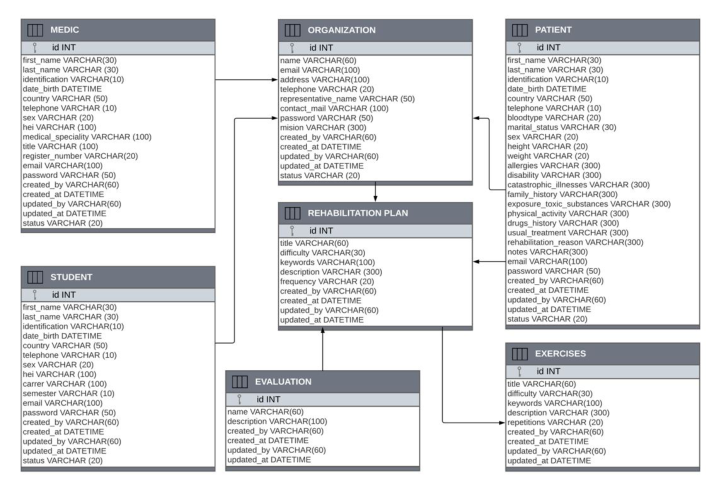
Architectural Design and Data Model The architectural design of the PARR system (Accessible Platform for Respi- ratory Rehabilitation) is based on a data model that defines the structure and relationships between the various types of data stored in the platform. Figure 1 presents an extract from the data model of the system, which inclu- des tables to manage information about organizations, patients, medics, evaluations, exercises, and other elements. Each table contains the necessary fields to store the data in the corresponding database.
The data model extract represents the relationship between the users (pati- ents, medics and students) of an organization. This organization manages
User Centered Design of a Digital Platform 67
Figure 1: Data model extract.
the users and will submit rehabilitation plans. In addition, the rehabilita- tion plans group various exercises and their evaluation to store data on the physical states and progress of the patient.
Module Design The module design of the platform specifies the subsystems that constitute the system.
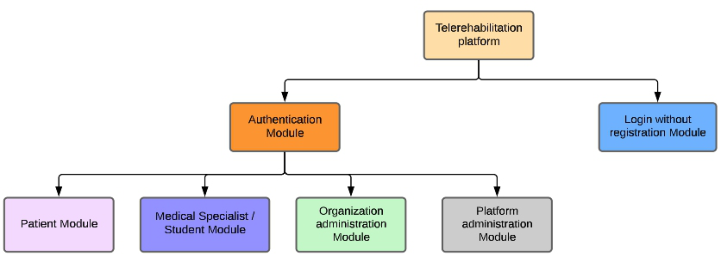
Figure 2 presents the modular structure of the PARR platform. It is composed of two modules:
1. The authentication module is utilized by registered users of the system and facilitates tracking of their interaction with the platform and reha- bilitation exercises. The module is further divided into four components: the platform administration module, the organization administration module, the medical specialist module, and the registered patient module. 2. The login without registration module, on the other hand, grants access to rehabilitation exercises for users without requiring registration or authentication with the platform. In this case, the user’s interaction with the system will not be recorded.
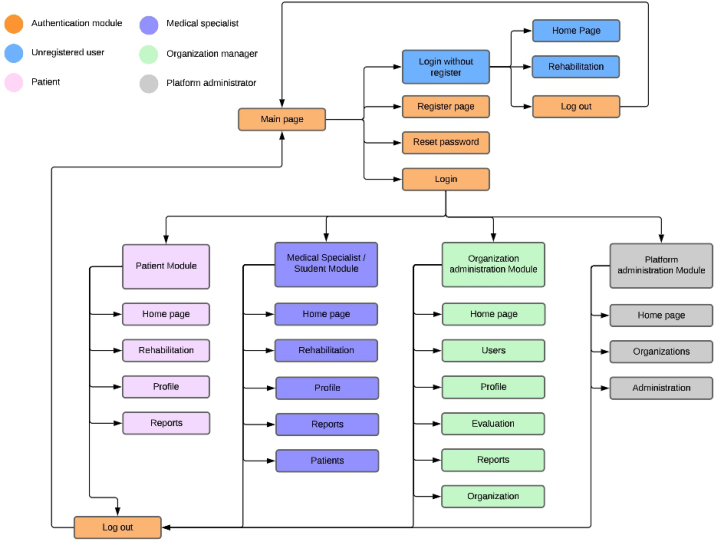
Navigation Model The navigation model illustrates the paths available for users to interact with the platform. As shown in Figure 3, the proposed navigation model for the PARR platform is organized by different colours, which correspond to the actions that users can perform based on their assigned roles. Please refer to Figure 3 for a visual representation of the navigation model.
Figure 2: Modular structure of the platform.Figure 3: Navigation model of the platform.
As can be seen in Figure 3, an unregistered user can access few functiona- lities of the platform; on the other hand, the registered patient can visualize his profile and generate progress reports. The medical specialist can create rehabilitation and exercise plans, as well as supervise the patients assigned to him, in order to accompany them during their rehabilitation process.
Organization administrators can manage their organization’s users (pati- ents and medical specialists), as well as configure the evaluation metrics of the rehabilitation plans, and visualize reports on the progress of their orga- nization’s users. Finally, platform administrators can manage organizations and access platform settings.
User Centered Design of a Digital Platform 69
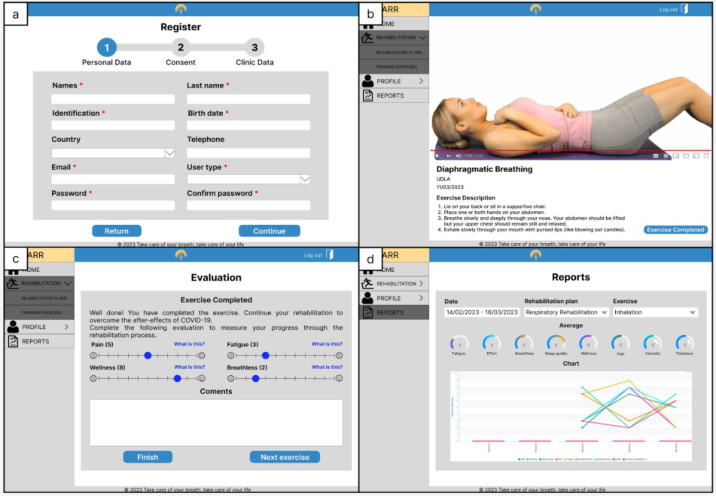
User Interface Design User interface design is critical in determining how users interact with the system. In this case, we aim to keep the interfaces simple and efficient, ensu- ring that they meet the user’s objectives. In Figure 4 we will provide detailed designs of the system interfaces.
Figure 4 presents the designs of the system interfaces. Figure 4a pre- sents the user registration interface to the system, incorporating a multi-step component to guide the user in the registration. Figure 4b presents the rehabi- litation exercise visualization interface that includes a description on how to perform the exercise and a button to access the exercise evaluation Figure 4c, where the patient will record his or her physical condition and comments on the exercise. Finally, Figure 4d presents the report that the patient can view, filtering the indicators according to the date, the rehabilitation plan, or a specific exercise. The design of these interfaces satisfies the requirements identified during the collaborative and User-centered process.
Figure 4: Designs of the system interfaces.
CONCLUSION
In conclusion, the user-centered design process for the development of a digital platform for therapeutic education and respiratory rehabilitation in patients with post-COVID-19 has been a crucial factor in ensuring its success. Through the elicitation of functional and non-functional requirements, the creation of an architectural design, module design, and navigation model, as well as the development of a user interface design, the platform has been tai- lored to meet the specific needs and goals of its intended users. This approach
has also facilitated the incorporation of gamification elements and the use of rating scales, which have been shown to improve user engagement and pro- gress monitoring. Overall, the user-centered design process has allowed for the creation of a platform that is not only functional and efficient but also user-friendly, providing patients with a valuable tool for their recovery and rehabilitation.
ACKNOWLEDGMENT
The authors would like to thank the “Corporación Ecuatoriana para el Desar- rollo de la Investigación y Academia – CEDIA”for the support of this research work, through the I+D+I-XVII-2022-27 program, especially for the funding of the project: “Plataforma digital para educación terapéutica accesible hacia las necesidades de rehabilitación respiratoria”.
REFERENCES
Albahrouh, S. I. and Buabbas, A. J. (2021) ‘Physiotherapists’ perceptions of and willingness to use telerehabilitation in Kuwait during the COVID-19 pande- mic’, BMC Medical Informatics and Decision Making, 21(1), pp. 1–13. doi: 10.1186/s12911-021-01478-x. Alexander, M. (2022) ‘Chapter 1 - Introduction’, in Telerehabilitation: Principles and
Practice. Elsevier, pp. 1–3. doi: 10.1016/B978-0-323-82486-6.00001–0. Bermejo-Gil, B. M. et al. (2021) ‘Respiraconnosotros: A viable home-based telerehabilitation system for respiratory patients’, Sensors, 21(10), pp. 1–19. doi: 10.3390/s21103318. Carrión-Toro, M. et al. (2020) ‘iPlus a user-centered methodology for seri-
ous games design’, Applied Sciences (Switzerland), 10(24), pp. 1–33. doi: 10.3390/app10249007. Carrión, M. et al. (2019) ‘Developing a virtual reality serious game to recreational therapy using iPlus Methodology’, in 13th international conference on e-learning and games. Cali, Colombia, p. 6. Estebanez-Pérez, M. J., Pastora-Bernal, J. M. and Martín-Valero, R. (2022) ‘The
Effectiveness of a Four-Week Digital Physiotherapy Intervention to Improve Functional Capacity and Adherence to Intervention in Patients with Long COVID- 19’, International Journal of Environmental Research and Public Health, 19(15). doi: 10.3390/ijerph19159566. de Sire, A. et al. (2022) ‘Impact of Rehabilitation on Fatigue in Post-COVID-19 Patients: A Systematic Review and Meta-Analysis’, Applied Sciences (Switzerland), 12(17). doi: 10.3390/app12178593. Tello, N. C. et al. (2021) ‘Usefulness of virtuality in physiotherapy professional pra-
ctices in the context of the COVID - 19 pandemic’, Retos, 43(July), pp. 185–191. doi: 10.47197/retos.v43i0.87875. Le Toullec, E. et al. (2022) ‘Influence of the COVID19 health crisis on the perception of tele-education in the French physiotherapist population, a qualitative study’, Kinesitherapie, 22(248–249), pp. 6–13. doi: 10.1016/j.kine.2021.09.011. Vieira, A. G. da S. et al. (2022) ‘Telerehabilitation improves physical function
and reduces dyspnoea in people with COVID-19 and post-COVID-19 condi- tions: a systematic review’, Journal of Physiotherapy, 68(2), pp. 90–98. doi: 10.1016/j.jphys.2022.03.011. WHO (2023) Weekly Epidemiology Update on Covid-19. Marzo 2023.
Read this individual research paper free through the original publisher, or explore the full digital proceedings book.
ISBN 978-1-958651-87-2
Explore this ISBN in the AHFE Bookstore ↗Listed in the July 2026 bookstore catalogue; search by ISBN to confirm current availability · Digital book purchase optional