Patricia Acosta-Vargas, Gloria Acosta-Vargas, Mayra Carrión, Marco Santórum, Manuel Ayala-chauvin, Esteban Ortiz Prado, Verónica-Gabriela Maldonado-Garcés, Wilmer Esparza, Camila Madera, Mario Gonzalez (2023). Advancing Web Accessibility: Evaluating and Analyzing an Educational Platform for Respiratory Therapies. In: Human-Centered Design and User Experience. AHFE Open Access, vol. 114, pp. 692–705. https://doi.org/10.54941/ahfe1004290
1 Intelligent and Interactive Systems Lab (SI2Lab), Facultad de Ingeniería y Ciencias Aplicadas, Universidad de Las Américas, Vía a Nayón, Quito, Ecuador ↗
This article presents the design and evaluation of an accessible digital respiratory rehabilitation therapeutic education platform. Its primary goal is to promote inclusive technologies for individuals with respiratory needs. The platform was developed with adherence to the Web Content Accessibility Guidelines (WCAG) 2.1, ensuring practical usage up to level AA for people with disabilities or functional limitations. A multidisciplinary team of healthcare professionals, web developers, and accessibility experts collaborated on the project. The design process incorporated considerations such as content organization, color contrast, descriptive labels, screen reader compatibility, and keyboard navigation. The results demonstrated a high level of accessibility, emphasizing the platform's effectiveness in providing accessible educational resources for respiratory rehabilitation. This research underscores the significance of web accessibility in supporting individuals with respiratory needs throughout their therapeutic journey and discusses future improvements and research avenues.
Respiratory therapeutic education is fundamental in treating and rehabili- tating individuals with respiratory needs. Providing these individuals with information, resources, and support is essential to improve their quality of life and promote autonomy in managing their lung health (Ryan & Deci, 2022). In the current digital era, online platforms offer a unique opportunity
Advancing Web Accessibility: Evaluating and Analyzing an Educational Platform 693
to provide convenient and personalized access to therapeutic education (Simpson et al., 2021).
However, to ensure that these platforms are truly inclusive and accessible, it is crucial to address the challenges of web accessibility (Acosta-Vargas et al., 2020), (Acosta-Vargas et al., 2021). People with disabilities or functional limitations may encounter significant barriers when accessing information and services online, limiting their participation and benefiting from respira- tory therapeutic education (Patricia Acosta-Vargas et al., 2022). Therefore, it is essential to design and evaluate accessible digital platforms that meet the needs of this diverse group of users.
In this article, we present the design and evaluation of an accessible digital platform for respiratory therapeutic education to promote inclusive technolo- gies for individuals with respiratory needs. The platform focused on web accessibility guidelines, following internationally recognized standards such as the Web Content Accessibility Guidelines (WCAG 2.1)(World Wide Web Consortium, 2018) by the World Wide Web Consortium (W3C). These guide- lines provide detailed guidance on how to make websites accessible to people with disabilities.
To ensure the effectiveness and usability of the platform, a multidisci- plinary team was formed, including healthcare professionals, web developers, and accessibility experts (Salvador-Ullauri et al., 2020). Key aspects were considered during the design process: content organization, color contrast, descriptive labels, screen reader compatibility, and keyboard navigation. These considerations ensure the platform is accessible to individuals with visual, auditory, or motor disabilities.
The accessibility of the platform was analyzed using automated evalu- ation tools (Patricia Acosta-Vargas et al., 2022) and manual review. The results demonstrated high usability and user satisfaction, highlighting the importance of web accessibility in respiratory therapeutic education.
This study contributes to inclusive technology by presenting an acces- sible digital platform designed explicitly for respiratory therapeutic edu- cation. The findings underscore the need to consider web accessibility (Perez Medina et al., 2019) as an integral part of technology development for healthcare, especially in respiratory therapies. Furthermore, poten- tial improvements and future research directions are discussed to advance inclusive and accessible respiratory therapeutic education further.
The remainder of the article is organized as follows: Section 2 provides an in-depth exploration of the context and previous research related to the topic. Section 3 describes the methodology employed in this study, includ- ing the approach used and the specific case study conducted. Section 4 presents the analysis and provides a comprehensive discussion of the results. Finally, Section 5 summarizes the conclusions drawn from this research and highlights possible avenues for future work in this area.
BACKGROUND AND RELATED WORK Respiratory therapy education is crucial in treating and rehabilitating people with respiratory needs. It aims to equip patients with the knowledge and
skills to manage their respiratory conditions effectively (Gu et al., 2022). Traditionally, educational interventions have been delivered through face-to- face sessions. However, with the rapid advancement of digital technologies, online platforms have emerged as a promising avenue for delivering accessible and personalized therapeutic education (Santórum et al., 2023).
In recent years, much attention has been paid to web accessibility to ensure equal access to information and services for people with disabilities. The Web Content Accessibility Guidelines (WCAG 2.1)(World Wide Web Consor- tium, 2018), developed by the World Wide Web Consortium (W3C), provide comprehensive standards and guidelines for creating accessible web content. These guidelines address various aspects of accessibility, such as visual, hear- ing, and motor impairments, and have become a reference for web developers and designers worldwide.
Several studies have highlighted the importance of web accessibility in healthcare settings (Patricia Acosta-Vargas et al., 2022), (Pettersson et al., 2023), including therapeutic interventions. Access to accurate and timely information is critical for self-management and adherence to treatment plans for individuals with respiratory needs. However, existing digital platforms often fall short of meeting the accessibility needs of this specific population (Frennert et al., 2023). Barriers such as poor color contrast, lack of alternative text for images, and complex navigation systems can impede the effective use of educational resources, particularly for individuals with visual impairments or motor disabilities (Acosta-Vargas et al., 2018).
Efforts have been made to address these challenges and develop acces- sible platforms for therapeutic education in various healthcare domains. For instance, researchers have explored screen reader compatibility, alter- native text descriptions for multimedia content, and keyboard navigation enhancements to improve accessibility in e-learning platforms for individuals with disabilities (Acosta et al., 2020). Additionally, studies have exam- ined the impact of accessible web design on user satisfaction and engage- ment, highlighting the positive outcomes of incorporating inclusive design principles.
Despite these advancements, research is still needed, specifically focused on the intersection of respiratory therapeutic education and web accessibil- ity. Limited literature explores the design and evaluation of accessible digital platforms tailored to individuals with respiratory conditions’ unique needs (Mancuso et al., 2019). This study aims to bridge this gap by presenting the design and evaluation of a dedicated platform that adheres to web accessi- bility guidelines and provides inclusive therapeutic education for respiratory rehabilitation.
By leveraging the existing knowledge of web accessibility and incorpo- rating user-centered design principles, this research aims to contribute to the advancement of inclusive technologies for individuals with respiratory needs. The findings of this study can inform the development of future accessible platforms in the field of respiratory therapeutic education, ultimately improv- ing access to information and enhancing the overall quality of care for this population.
Advancing Web Accessibility: Evaluating and Analyzing an Educational Platform 695
METHOD AND CASE STUDY Case Study
The case study was conducted on the Accessible Platform for Respiratory Therapies (PAR), a project to develop a web-based system for remote mon- itoring of respiratory therapy exercises in patients with mild to moderate Chronic Obstructive Pulmonary Disease (COPD). In this case, the evaluation focused on ten web pages of the platform, including those related to patient management and rehabilitation. These pages encompassed functionalities such as 1) Patient features, which involved patient profile management and reporting, and 2) Rehabilitation features, which included the rehabilitation plan and tracking of therapeutic programs.
Method
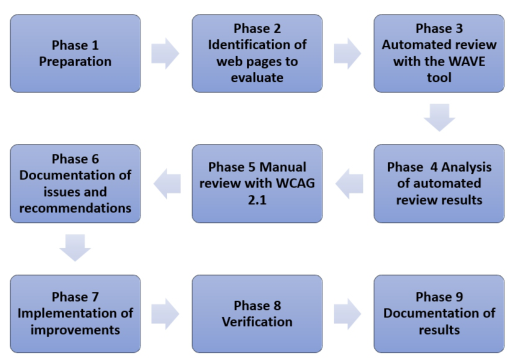
In this study, a modified version of WCAG-EM 1.0 and the Web Content Accessibility Guidelines (WCAG) 2.1 are utilized. The proposed approach involves a combined evaluation method incorporating the WAVE (Web Accessibility Evaluation tool) previously used by the authors and a manual review (Patricia Acosta-Vargas et al., 2022). The objective is to attain the AA level of accessibility, as defined by accessibility experts. This evaluation method has nine distinct phases (see Fig. 1).
Figure 1: Combined approach to accessibility assessment.
Phase 1 Preparation: In this phase, criteria based on WCAG 2.1 are estab- lished, and accessibility goals for the evaluation are defined. The evaluation objectives performed by web accessibility experts on the respiratory therapy platform include assessing compliance with web accessibility standards and identifying accessibility barriers.
It also includes reviewing accessibility in navigation, assessing compat- ibility with assistive technologies, assessing alternate text and multimedia accessibility, reviewing color contrast and visual design, assessing keyboard
accessibility, identifying areas for improvement and providing recommenda- tions, and ensuring compliance with legal and ethical requirements.
These objectives will ensure the platform is accessible and inclusive for people with respiratory therapy needs, facilitating their equitable access and use of resources and services.
Phase 2 Identification of web pages to evaluate: Patient web pages in the platform that will be evaluated for accessibility are selected. In this phase, we evaluated the platform’s patient web pages. The selection process involved choosing the pages most commonly used by patients to provide therapeutic education and support for people with respiratory needs.
These web pages were carefully selected to represent a cross-section of dif- ferent aspects of the platform, including patient management, rehabilitation plans, educational resources, and interactive features.
By focusing on these essential pages, the evaluation can assess the acces- sibility of the platform’s most relevant and impactful sections. This process ensures that the evaluation process is effective and meaningful in improving the overall accessibility of the respiratory therapy platform. Table 1 contains the page identifier, name, and description.
Table 1. Respiratory therapies platform web pages from the patient’s perspective.
Table available in the original PDF paper.
ID Web page Description W01 Home The patient menu main page displays the options menu, providing quick access to different functionalities and relevant sections. W02 Perfil The patient’s profile is defined and configured, including personal information and relevant medical data. W03 Reporte This page contains reports allowing us to generate and access reports on the patient’s progress and performance in respiratory therapies. W04 Planes Available exercise plans show the different respiratory therapy exercise plans available for patients to select and follow according to their needs and abilities. W05 PlanPaciente Patient Assigned Exercises display the specific exercises assigned to the patient as part of the personalized respiratory therapy plan. W06 Difficulty Difficulty selecting an exercise includes considering potential challenges or difficulties the patient may face in selecting an exercise, such as clarity of instructions or understanding of breathing techniques. W07 Categoria The respiratory therapy exercise plan category contains the plans according to the specific therapeutic category or approach, facilitating appropriate search and selection. W08 Tecnica1 Active Cycling Breathing Technique Exercise one contains a specific activity designed to improve respiratory function and strengthen respiratory muscles. W09 Tecnica2 Exercise with active cycle two breathing technique includes another specific activity to improve lung capacity and respiratory endurance. W10 EvalEjercicio Evaluation of the patient’s assigned exercise plan contains review and evaluation of the assigned exercise plan to monitor progress and adapt therapies as needed.
Advancing Web Accessibility: Evaluating and Analyzing an Educational Platform 697
Phase 3 Automated review with WAVE tool: The WAVE (WebAIM, 2023) performs an automated review of the selected web pages. This tool identifies potential accessibility issues such as missing tags, improper heading struc- tures, or color contrast problems. In this phase, WAVE is utilized to conduct an automated review of the selected web pages.
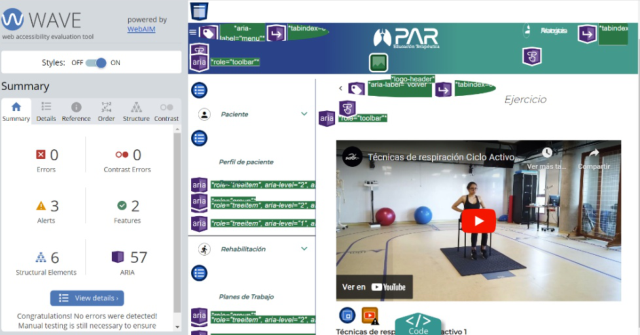
WAVE scans the pages and identifies potential accessibility issues that may hinder users with disabilities. It detects problems such as missing tags, improper heading structures, and color contrast issues that can impact the usability and accessibility of the platform (see Fig. 2).
By leveraging the WAVE, the evaluation process becomes more efficient and systematic, enabling the identification of crucial accessibility concerns that need to be addressed to ensure an inclusive user experience. The find- ings from the automated review serve as a valuable starting point for further accessibility improvements.
Figure 2: Shows the errors detected with WAVE on one of the selected pages.
Phase 4 Analysis of automated review results: The results obtained through the WAVE are analyzed, and potential accessibility issues that need to be addressed are identified. In this phase, the results obtained from the auto- matic review with WAVE are carefully analyzed. Identified accessibility issues are reviewed, ranked, and prioritized based on their severity and impact on the user experience.
The analysis helps to understand the specific areas where improvements are needed to increase the accessibility of the platform. Accessibility experts review each issue and determine the most effective strategies and solutions to address them. Table 2 presents the results obtained from the automated review.
Phase 5 Manual review with WCAG 2.1: In this phase, web accessibil- ity experts conduct a manual review of the selected web pages, adhering to the guidelines and criteria outlined in WCAG 2.1. They meticulously exam- ine various aspects, including providing alternative text for images to ensure accessibility for visually impaired users. Keyboard navigation is assessed to
ensure seamless interaction for individuals who rely on keyboards instead of mice. Compatibility with screen readers is evaluated, ensuring that the con- tent is appropriately conveyed to users with visual impairments. Through this detailed manual review, the experts identify accessibility gaps and provide recommendations for improving the platform’s compliance with WCAG 2.1.
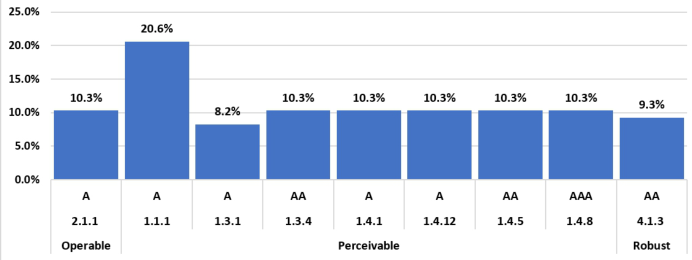
Table 3 shows the ID assigned to each type of barrier identified in the manual review, along with the corresponding accessibility principle, success criterion, and accessibility level. In addition, the total acceptability value is provided, where 10 indicates the highest level of accessibility, and zero indi- cates non-compliance. The complete data of the evaluation performed by the accessibility experts are available in the Mendeley repository (Patricia Acosta-Vargas, 2023).
Table 3. Violations of standards and guidelines.
Table available in the original PDF paper.
ID Barrier Principle Success criteria Level Total G01 Accessible keyboard Operable 2.1.1 A 10 G02 Easy-to-read font Perceivable 1.1.1 A 10 G03 Text alternatives Perceivable 1.1.1 A 10 G04 Sensory characteristics Perceivable 1.3.1 A 8 G05 Adjusting the display settings Perceivable 1.3.4 AA 10 G06 Color configuration Perceivable 1.4.1 A 10 G07 Well-spaced elements Perceivable 1.4.12 A 10 G08 Images as sharp as possible Perceivable 1.4.5 AA 10 G09 Visual presentation Perceivable 1.4.8 AAA 10 G10 Consistent navigation Robust 4.1.3 AA 9
Phase 6 Documentation of issues and recommendations: All identified accessibility issues during the automated and manual review and correspond- ing recommendations for addressing them are recorded. In this phase, all accessibility problems detected during the automatic and manual review are documented. Each problem is described in detail, including its nature, location, and potential impact on user accessibility.
Advancing Web Accessibility: Evaluating and Analyzing an Educational Platform 699
In addition, corresponding recommendations for resolving these problems are thoroughly documented. These recommendations provide practical steps to improve accessibility and ensure compliance with accessibility standards and guidelines. They may include suggestions for code modifications, design adjustments, or content revisions to improve usability and inclusion of people with disabilities.
Documentation serves multiple purposes. First, it provides a comprehen- sive record of identified accessibility issues, which helps track and monitor progress throughout the accessibility improvement process.
It also provides a valuable resource for developers, designers, and stake- holders implementing recommended changes. Documented issues and rec- ommendations reference future updates and maintenance tasks, allowing continuous accessibility improvements.
By systematically recording accessibility issues and corresponding rec- ommendations, this phase ensures that evaluation results are properly documented.
Phase 7 Implementation of improvements: Necessary modifications are made to the patient web pages of the platform to address accessibility issues and comply with the standards set by WCAG 2.1. During this phase, the focus is on implementing the recommended improvements to solve the accessibility problems detected in the platform’s patient web pages. This phase involves making the necessary modifications to ensure compliance with the standards established by WCAG 2.1.
The first step is to prioritize accessibility issues based on their severity and impact on the user experience. The development and design teams collabo- rate to implement the necessary changes, including updating code, adjusting design elements, or reorganizing content.
Web developers work to fix technical issues, such as correcting missing or incorrect tags, improving keyboard navigation, optimizing color con- trast, and improving compatibility with assistive technologies. Designers can refine the visual layout, typography, and use of graphics to improve overall accessibility and readability.
Throughout the implementation process, extensive testing is performed to verify the effectiveness of enhancements, and our study included manual testing by accessibility experts.
Phase 8 Verification: A final verification is conducted to ensure that the implemented improvements have resolved the accessibility issues identified in the previous phases. In this phase, a final verification process is carried out to ensure that the implemented improvements have effectively solved the accessibility problems detected in the previous phases. This verification aims to validate that the platform reaches the AA level of accessibility and meets the standards established by WCAG 2.1.
The verification process includes testing patient web pages to assess their accessibility and usability. Accessibility experts perform manual inspections, reviewing each previously identified problem to verify that it has been satisfactorily resolved. They also perform functional tests to ensure the implemented improvements have not introduced new barriers or problems.
Any accessibility or usability issues during the verification phase are doc- umented for refinement. Iterative testing and modifications can be made to address these issues until the desired level of accessibility is achieved.
Upon completing this final verification, the platform can safely be acces- sible and inclusive for people with respiratory therapy needs. It ensures that the improvements are implemented.
Phase 9 Documentation of results: The results of the accessibility evalua- tion, including identified issues, implemented improvements, and any other relevant findings, are documented for future reference and monitoring. Dur- ing this phase, the focus is on documenting the results of the accessibility evaluation conducted throughout the previous phases. This documentation includes screenshots of the evaluated pages and serves as a comprehen- sive record of the evaluation process and its results for future reference, monitoring, and continuous improvement.
The results include a detailed account of the accessibility issues identified and their impact on the user experience. Each issue is described along with the improvements implemented, providing a clear picture of the steps taken to improve accessibility.
In addition, any other relevant findings, observations, or insights gained during the evaluation process are documented. This process may include user feedback, suggestions for future improvements, or lessons learned that can inform future development and accessibility efforts.
Documentation is a valuable resource for the project team, stakeholders, and accessibility experts involved in developing and maintaining the plat- form. It helps track progress in addressing accessibility issues over time and provides a basis for ongoing accessibility monitoring and evaluation.
RESULTS AND DISCUSSION
Accessibility Evaluation Results The accessibility evaluation of the accessible digital platform for respiratory therapies yielded valuable results regarding its compliance with accessibil- ity standards and guidelines. The evaluation encompassed a comprehensive review of the patient web pages using automated and manual evaluation methods. The Mendeley Data repository contains the data record and analysis dataset (Patricia Acosta-Vargas, 2023).
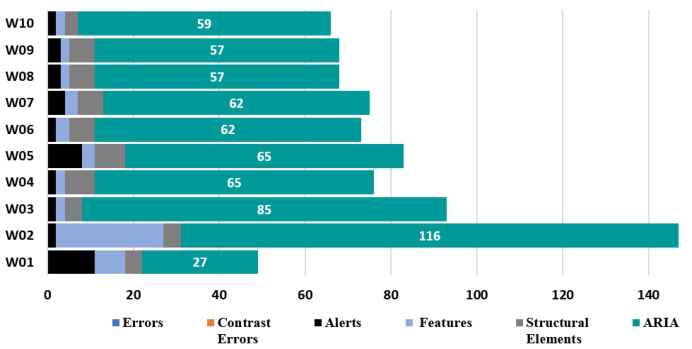
Automated Review Results The automated review with the WAVE tool identified several potential acces- sibility issues on the platform. These included missing labels, inadequate heading structures, and color contrast issues (see Fig. 3).
The automated review provided an initial understanding of the platform’s accessibility strengths and weaknesses. The problems were corrected to AA level of accessibility. Significant progress has been observed in solving serious and contrast errors, which are absent during the automatic evaluation. In addition, a compliance level of 95.1% has been achieved in alerts, 93.6% in characteristics, and 93.4% in structural elements.
Advancing Web Accessibility: Evaluating and Analyzing an Educational Platform 701
Figure 3: Results detected with WAVE.
Manual Review Results The manual review, conducted following the WCAG 2.1 guidelines, revealed other accessibility issues. The experts examined elements such as alternative text for images, keyboard navigation, and screen reader compatibility. This in-depth analysis provided valuable information on the accessibility performance of the platform from a human perspective (see Fig. 4).
A thorough review of compliance with accessibility barriers was per- formed, assigning a value of one (1) if compliant and zero (0) if not. Errors related to the AA level of accessibility remain within the established acceptable limits (see Fig. 4).
All errors associated with the comprehensibility principle, as well as other relevant principles, have been corrected. For more detailed information on the analysis performed, access the Mendeley Data (Patricia Acosta-Vargas, 2023) open repository, where the complete data and results are available.
Figure 4: Results of the manual review.
Improvements Implemented Based on the identified accessibility issues, improvements were implemented to enhance the platform’s accessibility. These modifications encompassed technical adjustments, design refinements, and content enhancements. Issues were systematically addressed, ensuring compliance with WCAG 2.1.
Based on the accessibility issues identified, a full set of improvements have been implemented to achieve AA-level accessibility of the platform. These improvements covered various aspects, including technical adjustments, design refinements, and content improvements.
They made technical adjustments to address missing or incorrect tags, ensuring proper markup and structure to improve accessibility. Design refine- ments focused on optimizing color contrast, improving readability, and improving visual clarity to accommodate users with varying visual abilities.
Implemented content enhancements to provide alt text for images, ensur- ing visually impaired users can access meaningful descriptions. Throughout the implementation process, strict adherence to the WCAG 2.1 was followed, ensuring that the platform complies with the established accessibility guide- lines. Each issue identified was systematically addressed, verified, and tested to ensure the desired level of accessibility was achieved.
The improvements implemented collectively contribute to a more inclu- sive and accessible platform, allowing people with respiratory therapy needs to access educational resources and engage effectively with the platform’s features and functionality.
DISCUSSION
The results of the accessibility evaluation emphasize the importance of utiliz- ing both automated and manual evaluation methods to assess the accessibility of the platform comprehensively. Automated tools provide a quick initial overview of potential issues, but manual review is essential for gaining a more nuanced understanding of the user experience and identifying specific accessibility barriers.
The implemented improvements demonstrate the platform’s commitment to inclusivity and accessibility. By addressing the identified issues, the platform now offers a more accessible environment for individuals with respiratory therapy needs. The modifications, including technical adjust- ments, design refinements, and content enhancements, contribute to a more user-friendly and inclusive experience.
However, it is crucial to acknowledge that accessibility is an ongoing process. Continuous monitoring and improvement are necessary to ensure the platform remains accessible as technology evolves and new accessibil- ity challenges emerge. Incorporating user feedback and considering evolving accessibility guidelines are vital components of this iterative process. Further research and enhancements should be pursued to tackle emerging challenges and ensure a seamless user experience for all individuals, regardless of their abilities.
This evaluation highlights the significant role of web accessibility in res- piratory therapy education. The accessibility improvements implemented in
Advancing Web Accessibility: Evaluating and Analyzing an Educational Platform 703
the platform contribute to enhancing user engagement and autonomy. By providing accessible educational resources and ensuring inclusivity, the plat- form supports individuals with respiratory therapy needs in managing their health effectively.
The positive impact of inclusive technologies on user engagement and autonomy cannot be overstated. Accessible digital platforms empower indi- viduals by giving them equal access to information, resources, and opportu- nities for education and self-management. By removing accessibility barriers, the platform facilitates individuals’ active participation and involvement in their respiratory therapy journey.
Thus, this evaluation underscores the importance of web accessibility in respiratory therapy education. Combining automated and manual evaluation methods and continuous monitoring and improvement create an inclusive and accessible environment. It is crucial to recognize that accessibility is an ongoing effort that requires constant commitment, research, and adaptation to ensure equal access and opportunity for all users. By prioritizing accessibil- ity, digital platforms can be vital to empower people with respiratory therapy needs and promote their autonomy and well-being.
CONCLUSION, LIMITATIONS, AND FUTURE WORK Based on the experiment, it is evident that fully automated methods can- not accurately measure website accessibility. Compliance criteria require validation through human judgment. While automated tools are use- ful for quick evaluations and identifying common accessibility errors, they do not comprehensively assess a website’s accessibility. Despite its higher cost, manual evaluation remains necessary to ensure a thorough examination.
Ensuring equal access to information for all individuals without discrim- ination is paramount. Demonstrating awareness and application of web accessibility principles not only showcases social responsibility but also enhances the corporate image of organizations.
Future work will explore new methods, techniques, and strategies to eval- uate and improve web accessibility in therapeutic education platforms for respiratory therapies. It is essential to continuously evolve and adapt evalua- tion approaches to address emerging challenges and ensure a more inclusive online educational experience for individuals with respiratory therapy needs.
Additionally, raising awareness among web developers and designers about the importance of incorporating WCAG 2.1 guidelines throughout the application development process is recommended. By integrating accessibility principles from the outset, accessible and inclusive platforms can be cre- ated, promoting equal opportunities for individuals with respiratory therapy needs.
It is important to acknowledge the limitations of this study; the evaluation focused on a specific accessible digital platform for respiratory therapies, and the findings may not be directly applicable to other contexts or platforms. Further research must explore and address accessibility challenges in different therapeutic education settings.
Finally, fully automated methods alone are insufficient for evaluating web- site accessibility. Although more resource-intensive, manual evaluation is necessary to ensure a comprehensive assessment. Creating accessible plat- forms and raising awareness among web developers and designers are crucial to achieving web accessibility. Future work should continue to explore inno- vative evaluation methods and strategies, adapting to evolving accessibility guidelines and striving for inclusivity in therapeutic education platforms for respiratory therapies.
ACKNOWLEDGMENTS
The authors would like to thank the “Corporación Ecuatoriana para el Desar- rollo de la Investigación y Academia – CEDIA”for the support of this research work, through the I+D+I-XVII-2022-27 program, especially for the funding of the project: “Plataforma digital para educación terapéutica accesible hacia las necesidades de rehabilitación respiratoria”.
REFERENCES
Acosta-Vargas, G., Acosta-Vargas, P., Jadán-Guerrero, J., Salvador-Ullauri, L., & Gonzalez, M. (2021). Improvement of Accessibility in Medical and Healthcare Websites (N. I. L. (ed.); Vol. 265, pp. 266–273). Springer Science and Business Media Deutschland GmbH. https://doi.org/10.1007/978-3-030-79816-1_33 Acosta-Vargas, P, Hidalgo, P., Acosta-Vargas, G., Salvador-Acosta, B., Salvador-
Ullauri, L., & Gonzalez, M. (2020). Designing an Accessible Website for Palliative Care Services: Vol. 1193 CCIS (B.-T. M., Z. V. M., T.-C. P., M. L. S., P. V. G., & D. B. (eds.); pp. 371–383). Springer. https://doi.org/10.1007/978-3-030-42517-3_28 Acosta-Vargas, P, Rybarczyk, Y., Perez, J., Gonzalez, M., Jimenes, K., Leconte, L., & Esparza, D. (2018). Towards Web Accessibility in Telerehabilitation Platforms. https://doi.org/10.1109/ETCM.2018.8580272 Acosta-Vargas, Patricia. (2023). (Dataset) Evaluation Assessment in Accessible Plat-
form for Respiratory Therapies (PAR). Mendeley Data, V1. https://doi.org/10. 17632/z394pp7vvh.1 Acosta-Vargas, Patricia, Novillo-Villegas, S., Salvador-Acosta, B., Calvopina, M., Kyriakidis, N., Ortiz-Prado, E., & Salvador-Ullauri, L. (2022). Accessibility Anal- ysis of Worldwide COVID-19-Related Information Portals. International Journal of Environmental Research and Public Health 2022, Vol. 19, Page 12102, 19(19), 12102. https://doi.org/10.3390/IJERPH191912102 Acosta, T., Acosta-Vargas, P., Zambrano-Miranda, J., & Lujan-Mora, S. (2020).
Web Accessibility Evaluation of Videos Published on YouTube by Worldwide Top- Ranking Universities. IEEE Access, 8, 110994–111011. https://doi.org/10.1109/ ACCESS.2020.3002175 Frennert, S., Erlingsdóttir, G., Muhic, M., Rydenfält, C., Milos Nymberg, V., & Ekman, B. (2023). ‘It increases my ability to influence my ways of working’: A qualitative study on digitally mediated patient management in primary healthcare. Scandinavian Journal of Caring Sciences, 37(1), 88–105. Gu, Y., Xi, S., Jin, B., Guo, H., Yang, J., Liu, X., Wu, X., Zhang, L., & Li, G.
(2022). The Role of the Respiratory Therapy Team in the Treatment of Patients With Acquired Immunodeficiency Syndrome Complicated With Pneumocystis Pneumonia Undergoing Mechanical Ventilation. Frontiers in Public Health, 10, 799159.
Advancing Web Accessibility: Evaluating and Analyzing an Educational Platform 705
Mancuso, C. A., Wentzel, C. H., Kersten, S. M., & Kelly, B. T. (2019). Patients’ Expectations of Hip Preservation Surgery: A Survey Study. Arthroscopy - Journal of Arthroscopic and Related Surgery, 35(6), 1809–1816. https://doi.org/10.1016/ j.arthro.2019.01.028 Perez Medina, J. L., Gonzalez, M., Pilco, H. M., Beatriz Jimenes Vargas, K., Acosta-
Vargas, P., Sanchez-Gordon, S., Calle-Jimenez, T., Esparza, D., & Rybarczyk, Y. (2019). Usability study of a web-based platform for home motor rehabilitation. IEEE Access, 7, 7932–7947. https://doi.org/10.1109/ACCESS.2018.2889257 Pettersson, L., Johansson, S., Demmelmaier, I., & Gustavsson, C. (2023). Disability digital divide: survey of accessibility of eHealth services as perceived by people with and without impairment. BMC Public Health, 23(1), 1–13. Ryan, R. M., & Deci, E. L. (2022). Self-determination theory. In Encyclopedia of
quality of life and well-being research (pp. 1–7). Springer. https://doi.org/10.1007/ 978-3-319-69909-7_2630-2 Salvador-Ullauri, L., Acosta-Vargas, P., & Luján-Mora, S. (2020). Web-Based Serious Games and Accessibility: A Systematic Literature Review. Applied Sciences, 10(21), 7859. https://doi.org/10.3390/app10217859 Santórum, M., Carrión-Toro, M., Morales-Martínez, D., Maldonado-Garcés, V.,
Araujo, E., & Acosta-Vargas, P. (2023). An Accessible Serious Game-Based Platform for Process Learning of People with Intellectual Disabilities. Applied Sciences, 13(13), 7748. Simpson, S., Richardson, L., Pietrabissa, G., Castelnuovo, G., & Reid, C. (2021).
Videotherapy and therapeutic alliance in the age of COVID-19. Clinical Psychol- ogy & Psychotherapy, 28(2), 409–421. WebAIM. (2023). WAVE Web Accessibility Evaluation Tool. https://wave.webaim.
org/ World Wide Web Consortium. (2018). Web Content Accessibility Guidelines (WCAG) 2.1. https://www.w3.org/TR/WCAG21/
LISTED IN THE AHFE DIGITAL BOOKSTORE CATALOGUE
Explore the complete digital volume
Human-Centered Design and User Experience
Read this individual research paper free through the original publisher, or explore the full digital proceedings book.
ISBN 978-1-958651-90-2
Explore this ISBN in the AHFE Bookstore ↗Listed in the July 2026 bookstore catalogue; search by ISBN to confirm current availability · Digital book purchase optional