Benjamin Schwarz, Mourad Zoubir, Jan Heidinger, Marthe Gruner, Hans-christian Jetter, Thomas Franke (2023). Investigating Challenges in Decision Support Systems for Energy-Efficient Ship Operation: A Transdisciplinary Design Research Approach. In: Human-Centered Design and User Experience. AHFE Open Access, vol. 114, pp. 610–625. https://doi.org/10.54941/ahfe1004281
To increase energy-efficiency and reduce CO2e emissions in maritime shipping, Decision-Support Systems (DSS) can be leveraged. Specifically, in regard to reducing the greatest contributor to consumption, propulsion (IMO, 2021), by assisting seafarers in route planning, and timely and efficient re-planning, as well as general monitoring of ship’s energy dynamics. However, the successful integration and acceptance of these systems into the seafarer’s workflow pose significant challenges, such as goal conflicts, e.g. with safety or with the financial interests of different stakeholders, which require a deep understanding of interactions onboard and onshore.This paper reflects on our implementation of a transdisciplinary design research approach for developing novel, human-centered AI-based tools for energy-efficient ship operations. Of our concurrent studies, we describe selected forms of inquiry that together resulted in a holistic understanding of the application domain, target audience, and typical tasks as well as an interactive prototype of a decision support system for energy-efficient ship navigation.The research activities reported are based on human factors research concerning energy-efficient ship operations and focus on research through design in the sense of Jonas (2015) in the field of DSS for CO2e emission mitigation in navigation and ship operation, and the formative evaluation of a DSS prototype in a ship simulator environment (N = 22). By viewing these research activities through the lens of design research, more specifically the theoretical foundation of MAPS (Jonas et al., 2010), we systematically describe and discuss their individual contributions. MAPS specifically operationalized design research as “Matching Analysis, Projection and Synthesis”, enabling integrative, systematic research processes across boundaries of disciplinary bodies of knowledge, domains and actors.As a primary contribution, we reflect on our lessons learned to identify generalizable challenges for similar future projects of the maritime ergonomics community. These include (1) context-sensitive integration of navigational and operational data; (2) calibration of users’ expectations of the system’s capabilities; and related to this (3) increasing transparency of how the DSS retrieves and processes data, and of how confident it is in its suggestions. By considering key human factors, such as workload, autonomy and biases (e.g., automation bias) on the basis of our system, we demonstrate how these challenges can be addressed. As a secondary contribution, we also share our resulting designs as examples of how AI-based decision support for optimizing energy efficiency can be visually and functionally integrated into onboard ship operation and navigation.REFERENCESIMO, 2021. Fourth IMO GHG Study 2020. International Maritime Organization, London, UK.Jonas, W., 2015. Research through design is more than just a new form of disseminating design outcomes. Constructivist Foundations 11, 32–36.Jonas, W., Chow, R., Bredies, K., Vent, K., 2010. Far beyond dualisms in methodology – an integrative design research medium “MAPS.”
To lower CO2e emissions in shipping, Decision-Support Systems (DSS) can help by aiding energy-efficient route planning, monitoring and timely re- planning. Yet, integrating and gaining acceptance of these systems among sea- farers is challenging. Especially, when artificial intelligence (AI) is employed to analyze and consolidate data for e.g., route optimization and vessel perfor- mance. Addressing concerns about trust, transparency, and decision authority
becomes vital to ensure the effective uptake of AI-based decision-support systems in maritime operations.
This paper aims to present initial findings from a transdisciplinary research project focusing on the design of DSS at the intersection of shipping, human factors, and CO2e emission mitigation aboard trade ships from a design research perspective. It involved collaboration among experts from hydro- dynamics, geospatial data, nautical qualification, human factors, design, and engineering and was part of a larger research effort with 13 differ- ent academic and industrial partners. The overarching goal was to develop comprehensive technologies for ship energy management, integrated into an onboard DSS, enabling a holistic view on emission reduction throughout ship operations. Our subproject required an integrative approach, enabling convergent parallel knowledge production in the research areas of decision support system design and human factors for energy-efficient ship operations.
To present our contributions, we first discuss (1) background and related work. After a (2) short overview of our research, as viewed through a design research lens, we continue with (3) an overview of design-related research and conclude with (4) a report on the formative prototype evaluation.
Background and Related Work: Design Considerations for On-Board Decision Support Systems in EEO/CO2e Mitigation Shipping significantly contributes to global carbon emissions, comprising 3% in 2018, with an expected 50% rise by 2050 without specific interventions (International Maritime Organization (IMO) 2021). Escalating energy costs, constituting up to 70% of a ship’s expenses, compel the industry to seek fuel consumption reduction for economic and environmental benefits. Address- ing environmental concerns, IMO introduced regulations such as MARPOL Annex VI (IMO, 2011) and the Ship Energy Efficiency Carbon Intensity Indi- cator (CII) to enhance sustainability and meet climate goals (IMO, 2018). Despite these efforts, shipping emissions reduction remains elusive, leading to “energy efficiency gaps” between actual and optimal energy usage (e.g., Johnson and Andersson, 2016). Addressing these gaps, proposed operational measures for ship crews (e.g., Balcombe et al., 2019) encounter obstacles, like safety concerns (Ballou, 2013) highlighting the role of ship’s crews decision- making in this complex and uncertain context of ship operation. A promising approach to overcome these challenges involves technical systems that assist and consider the needs of seafarers. While this has been analyzed through a sociotechnical lens (Man et al., 2018), there remains untapped potential in investigating specific design implications and best practices.
Challenge 1: Addressing Key Human Factors Recent maritime human factors research points out that onboard DSS should accompany goal conflicts (cf. Hansen et al., 2020), e.g., by high- lighting how each EEO decision weighs in the balance. Furthermore, to support seafarers, DSS need to keep workload and uncertainty at a min- imum (cf. Poulsen and Sampson, 2019). This could be supported by automation, but this may conflict with already constrained feelings of autonomy (Viktorelius, 2020).
Despite design process industry standards’ (cf. ISO 9241–210 2019) promise of integrated and concrete solutions to address these issues effectively and early guidelines (IMO, 2019), the design space is far from being suffi- ciently defined (Mallam and Nordby, 2018 in Nordby et al., 2019). Especially concerning visualizations and interaction design related to energy-efficiency, most concepts currently originate within the maritime software industry, iso- lated from academic investigation and constrained by adverse technological and economic considerations. While being important and timely contribu- tions, they often lack rigorous and independent evaluation of their fitness to support decision-making processes as well as theoretical grounding (e.g., in human factors research). Simultaneously, design research is lacking grounded advice on interface design guidelines not only for EEO DSS, but ship bridge equipment in general. A notable exception is the OpenBridge Design System (Nordby et al., 2019), aiming for cross-vendor interface design standards by offering an open-source component library among research projects con- cerned with suitable bridge layouts and hardware to mitigate safety issues in multi-vendor bridge systems.
RESEARCH DESIGN Given the complexity of the domain, context of use, and research gaps, our research design encompassed multiple concurrent transdisciplinary research and design activities. Working in a fragmented setting with multiple subpro- jects, disciplines, external partners and many domains of knowledge in an innovation-centered project, where, up to the technology itself, all parts are simultaneously being conceived of while human factors research still takes place, requires such an distributed, open approach. And while transdisci- plinary research (cf. Bergmann et al., 2012) would seem an ideal candidate, its direct implementation across a vast network of institutions and even external partners did not seem feasible. Instead, an individual, role-based approach was taken to loosely couple the domains of engineering psychology, design research and media informatics.
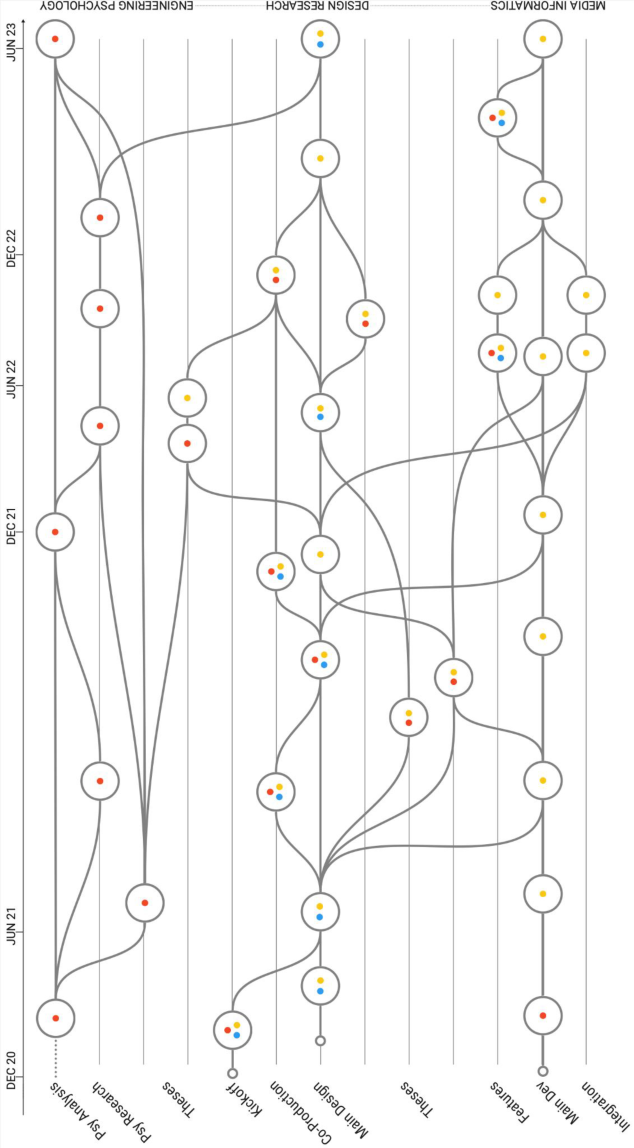
The general research design, as viewed from the perspective of design research, can be described using the theoretical underpinnings of MAPS (Jonas et al., 2010). MAPS specifically operationalized design research as “Matching Analysis, Projection and Synthesis”, enabling integrative, systematic research processes across boundaries of disciplinary bodies of knowledge, domains, and actors by way of distinguishing between epis- temological domains of knowing (“the true”, “the ideal”, “the real”; cf. Nelson and Stolterman, 2012) and making explicit their composition and operationalization in a given project. As design should be contribut- ing to this project in a more opportunity-seeking than problem-solving (Chow, 2009) way due to the many unknowns in this ongoing tech- nological innovation process (cf. “Wicked Problems”; Glanville, 2012), a convergent-parallel research design was chosen, starting with a projective co- production phase alongside in-depth human factors research (see Figure 1). This research design provided the opportunity of employing design activi- ties as simultaneously producing knowledge about the context (i.e., through stakeholder involvement in co-production settings) ex ante (cf. Karl Weick’s
DSS for Energy-Efficient Ship Operation 613
sensemaking manager; Boland, 2004 in Chow, 2009). Later, the project was transitioned into topic-focused intelligence–design–choice hypercycles (cf. Herbert Simon’s rational man; ibid.) with nested research, analysis, syn- thesis, realization phases.
Viewed through this lens, the engineering-psychological research con- ducted can be described as contributing to research and analysis phases, both on macro level (“the true”), as well as informing the individual sub-cycles of projection and synthesis. It included literature reviews with quantitative and qualitative analysis methods, cognitive work analysis, hierarchical task anal- ysis, as well as empirical evaluations of these with experts and the user group (e.g., via multiple online surveys of seafarers) — all of which will be covered in greater detail in forthcoming papers.
The discipline of media informatics was involved akin to design in all phases, but with a strong emphasis on the realization phase. One focus was the development of a prototype, which could be used for evaluative feedback as well as a demonstrator in the wider project context.
Research Through Design Through Research: Decision Support Systems for CO2e Mitigation in Navigation and Ship Operation Reviewing literature relating research and design in the realm of human- machine or human-computer interaction (HMI/HCI) can lead to the impression that design and research are headed into opposite directions (cf. Zimmerman and Forlizzi, 2014). Instead, research through design encom- passes a more holistic, integrated view of design and research activities (cf. Jonas, 2015). Similarly, in our project, design is one of the parallel converging research strands and involved in all macro and micro cycles of knowledge production (Jonas et al., 2010). As one direct result, the order of research activities is not strictly bound to analysis (“the true”) first, then projection (“the ideal”), and synthesis (“the real”), paving the way for design as opportunity seeking (Chow, 2009).
The research conducted making use of explorative design artifacts or explicitly relating to UI elements, referred to design-related methods and the- ory as depicted in Table 1. The results of this simultaneously theory-guided and (design) practice-led research will be presented by way of association with a recurrent theme.
Design Consideration 1: Eco Score. In the explorative design phase preced- ing formal analysis, a KPI later dubbed Eco Score became a central element in various representations. The initially still hypothetical KPI was quickly adopted by researchers and designers as the core feedback mechanism pro- vided by the system to seafarers about the sustainability of their current, future, or historical ship operations. Even while the specifics of its definition, calculation, or units of measurement were still unclear, it became a shared concept and inspired many different forms of visual representations for sup- porting decision making and planning. In subsequent research and analysis of available literature, industry standards and expert interviews, existing KPIs like the Carbon Intensity Indicator (CII) soon revealed a central deficiency
Figure 1: Abstracted view of key research strands and milestones along project time- line, demonstrating broad patterns of interconnections and their relation to MAPS macro phases — analysis (red dot), projection (blue), and synthesis (yellow).
DSS for Energy-Efficient Ship Operation 615
in terms of meaningfulness for actual CO2e emission mitigation and serv- ing as Eco Score: The missing relation to actual cargo being transported in a journey (cf. Wang et al., 2021), which leads to an under-reporting of related CO2e of a given cargo load. Additional market analysis showed that some recent maritime shipping industry services even go as far as including the distance traveled during (and emissions caused by) ballast runs associ- ated with the chartered journey in the CO2e emission balance (cf. Shipnext BV, 2023). While the detailed construction of this KPI will be part of subse- quent research, the inclusion of an Eco Score or similar performance indicator related to actual CO2e emission mitigation throughout onboard systems and maybe even in communication with third parties becomes a central recommendation.
Challenge 2: Context-Sensitive Integration of Navigational and Opera- tional Data In accordance with research highlighting the necessity and crucial fac- tors for the integrative display of energy-efficient metrics (Viktorelius, 2020), we identify the context-sensitive design of an integrated view on navigational and operational parameters related to EEO/CO2e emission mitigation as a key challenge for the design of Energy-Efficiency-DSS. Additionally, a hierarchical task analysis (HTA; cf. e.g., Stanton, 2006) and cognitive work analysis (cf. e.g., Stanton et al., 2017) should accompany the design phase.
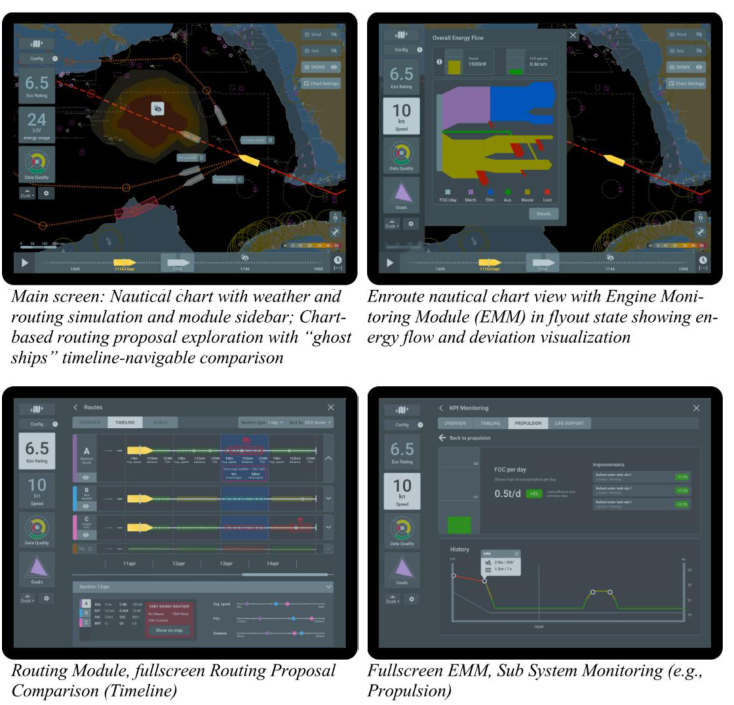
Design Consideration 2: Integrated Navigational and Operational View. In the hierarchical system aboard ships, master, first officer and chief engi- neer are the main actors involved in EEO and CO2e mitigation en-route. In a subproject involving autonomous research, analysis, projection, and synthesis phases accompanied by evaluative research, key factors of the inte- grative display of energy-efficient metrics (Viktorelius, 2020) were explored by applying explainable AI (XAI; Gunning et al., 2019) and human-centered AI (HCAI; Shneiderman, 2020) design principles. The result is an integration of navigational and operational KPIs and metrics for a single source of truth and efficient communication between all actors. Key elements of the design proposal are depicted in Figure 2.
Design Consideration 3: Decision Support Instead of Decision Automa- tion. Striking the right balance in support systems is a critical factor not only for system acceptance, but also safety (Parasuraman and Manzey, 2010). Human factors research here provides a starting point for considering what types and levels of automation should be implemented in a particular system. A prominent framework suggests a four-stage model of human–automation interaction (Parasuraman et al., 2000). Key elements of a system design, showing characteristics of 1) high levels of automation in both information acquisition and analysis, but a 2) low automation level in decision selec- tion and by way of proxy to e.g., the on board ECDIS, 3) user-selectable automation level in action implementation, are shown in Figure 2. The design consists of 1) providing users with multiple routing alternatives, each anno- tated with key metrics in adaptive levels of detail (e.g., Routing Cards vs.
Routing Comparison Timeline view, in addition to the “ghost ships” map- based display), 2) user-defined sorting options, 3) drill-down type interaction with routing proposals, allowing decision selection on each level and 4) route editing for peak user autonomy. Notably, key aspects of this design were conceived of in parallel to (and in ignorance of) human factors research by letting (continued on p. 7) the design be guided by the value autonomy ex ante (projection / “the ideal”), which was later discussed and rationalized ex post in the transdisciplinary analysis phase, refined, and finally evaluated in the simulator study (synthesis / “the real”).
Design Consideration 4: Goal-Oriented Decision Support. The key, cross- dependent parameters with the biggest influence on CO2e emissions for a given cargo travel are requested time of arrival (RTA), fuel-oil consumption (FOC) and the related carbon intensity in relation to crew and cargo safety. While the latter fall within the definite responsibility of the master, the other factors are often points of external influence (e.g., charter contracts, shipyard standards). With the shared goal of CO2e emission mitigation, striking the right balance also becomes a matter of information visualization on board. A design-driven prototype involved the use of 1) a timeline view allowing direct comparison of routing segments integrating safety with energy-efficiency and emission mitigation parameters, 2) presence of all three information cate- gories even in the most condensed form as routing cards and 3) a relation to the Eco Score KPI throughout the system via color codes in its most reduced form. The prototype was further developed in a co-production pro- cess with future users. To reflect the goal of maintaining autonomy and enable integration of the ship crew’s experience and tacit knowledge, the recommendations were complemented by 4) a route edit mode. Adjacent research explored the framing effect’s influence on slow steaming decisions by conducting an experiment, testing the impact of ecologically-focused versus financially-related indices for comparison. The evaluation outcomes revealed notably greater personal motivation when ecological parameters were pre- sented, potentially due to enhanced goal alignment: individual crew salaries are commonly decoupled from financial gains/losses. Consequently, in the design proposal, this finding prompted the exclusion of financial KPIs from consideration.
Design Consideration 5: Autonomous Decision Support System. Regard- ing the integration into onboard systems and workflows, an early design- driven decision was the implementation as an additional system. For one, this allowed for staying capable of acting despite incomplete requirements, an issue especially vital for agile project settings, most recently investigated in-depth in the context of startups (Medeiros et al., 2018). Secondly, seeing this system as an addition to the on-board device ecosystem respects maritime standards in terms of standardized workflows in a closed device ecosystem while simultaneously allowing for the involvement of multiple stakeholders and remote computational systems with decisions related to EEO or CO2e emission mitigation. The current proposal makes use of commercial off-the- shelf hardware in form of a tablet, allowing for multi-modal interaction types (e.g., fixed mounting in a frame, tabletop computing, mobile settings), multi- modal input like touch input (e.g., for quickly selecting elements), pen input
(e.g., for route waypoint editing) and additional input devices (e.g., track- ball as used in combination with fixed mounted displays and keyboards as a main input in digital ship bridge systems). While not being related to for- mal software requirements ex ante, this seemingly arbitrary and pre-emptive design decision allowed for early prototyping instead of paralysis by analy- sis and could later be rationalized ex post by on-board workflow analysis (cf. Zoubir et al., 2023b).
Figure 2: Design proposal showing characteristics of a DSS with automated infor- mation acquisition, but manual decision, allowing adaptation. Shown here: key components of an integrated view on navigational and operational parameters related to EEO/CO2e emission mitigation.
Design Consideration 6: Transdisciplinary Work and Participatory Design. When designing for a challenging, complex domain such as seafaring, under- standing user needs and involving them in the design process are fundamen- tal principles of user-centered design. However, achieving meaningful user involvement can be difficult, as it may require closer collaboration and regu- lar engagement with user groups, which is particularly challenging given the nature of this work, which involves long periods at sea. To address this issue,
DSS for Energy-Efficient Ship Operation 619
we integrated a maritime student into our working group and design process, creating an environment for participatory design (Simonsen and Robertson, 2012). In addition to user involvement and the integration of analysis, we learned that close collaboration with the development team is particularly important in the context of this project. This collaboration serves three pur- poses: first, it assesses the feasibility of ideas within the context of the project, ensuring practicality and implementation potential; second, it creates oppor- tunities for bottom-up ideas to emerge from the development team, fostering a collaborative environment; third, it reduces the time needed for the han- dover process from design to development. Incorporating transdisciplinary work (Bergmann et al., 2012) and participatory design has proven fruitful, despite its time-consuming and challenging nature. Bringing together peo- ple with different backgrounds and expertise can lead to unique insights and innovative solutions.
Outlook: Upcoming/current research activities include 1) design-driven development of KPIs and their integration into a DSS, 2) Dedicated route and engine monitoring views allowing for en-route comparison of prog- nosed versus actual metrics and 3) a data quality module enhancing system transparency and explainability of the algorithms’ routing proposals. The lit- erature review on human factors revealed at least three topics of interest for further review of the design proposals and new directions for design inquiry: 1) Seafarers’ motivation for EEO (Banks et al., 2014), 2) Challenges in rela- tion to automation (Viktorelius et al., 2021) and 3) Energy-efficiency-related collaborative learning (Man et al., 2018).
FORMATIVE PROTOTYPE EVALUATION IN A SIMULATOR ENVIRONMENT A formative evaluation was conducted as part of a larger study within the MariData project in a ship’s bridge simulator. Participants (N = 22) were recruited via university mailing lists and had to be at least in an advanced phase of studies (i.e., after completing orientation exams). Not all partici- pants were students, and all had spent months at sea (M = 24.1, Mdn = 18, SD = 27.7), and had previously planned a number of routes, either in the classroom (M = 16.5, Mdn = 10, SD = 17.5) or on duty (M = 54.5, Mdn = 3, SD = 212.3).
Each participant was asked to plan three routes (Edinburgh–Bergen, Dover–Gothenburg, Dover–Bordeaux) with the least amount of fuel con- sumption possible: 1) in a control condition using OpenSeaMaps (OSM), 2) using the DSS and 3) using DSS while concurrently navigating a ship. Par- ticipants had access to all navigation tools typically located on the bridge including an ECDIS with Electronic Navigation Charts (ENCs) and received a print-out of NAVTEX weather information.
In the control condition, OSM served as a control system with some overlap with the DSS, but lacking automation features. Only eight partic- ipants had used OSM previously. Weather and sea state were manipulated to enable three distinct route suggestions during DSS-conditions: “Best Fuel-Oil-Consumption”, “Best Weather” and “Fastest”. These suggestions
were balanced and realistic, as determined through pre-testing involving experienced nautical officers.
During the third condition, we asked officers to navigate a medium-sized oil tanker from Dover to a nearby traffic separation scheme. So that this represented a typical-yet-challenging situation onboard, we increased the dif- ficulty by lowering visibility via fog to 6 nautical miles and positioning nearby ships strategically to necessitate evasion in line with COLREGs (IMO, 1972). This evasion was timed to be completed after 10 minutes, whereafter partici- pants were then tasked with the route planning via DSS, while still monitoring their surroundings and maintaining the course.
After completing all three routes, we interviewed participants following a semi-structured guideline. After recounting their decision-making in the third condition, we asked participants sets of questions eliciting positive and negative feedback. Interviewers were instructed to repeat the question until participants no longer had anything to add. Results were summarized narratively.
RESULTS
Responses to the questions: “Was there anything in the system that hindered you? / “Which features would you change or improve?” and “Was there anything in the system that supported you? / “Which features would you keep or expand upon?” were clustered thematically; only the top four clusters are reported here.
Map, Waypoints and Routes: Recommendations included enhancing route clarity (e.g., wider lines for routes, course numbers for route differentiation). Participants suggested on-the-fly adjustments to waypoints and speed, with immediate fuel consumption updates. The ability to manually plan the beginning and end parts of a route (i.e., areas typically requiring specific waypoints), while delegating larger sections (e.g., passages) to the DSS was also desired.
Route Comparison: Participants appreciated the clear overview of route options and associated advantages and the ability to compare parameters in one screen. The selection screen was easy to interpret and key to decision- making, while on-map-visualization of routes aided comparison. The “ghost ships” feature, representing virtual vessel clones on alternative routes over time, enhanced comprehensibility, and comparison ability. Together, this reportedly enabled them to analyze fuel consumption in depth—the main task goal.
Interface and Usability: Some participants suggested simplifying the system by making detailed information and functions optional to prevent over- whelming users. Conversely, some characterized the DSS as minimalist, highlighting its swift route creation and simplicity, particularly in high-stress scenarios. Yet, one seasoned seafarer strongly opposed route planning simpli- fication, arguing that automation would be especially dangerous to inexperi- enced users who would not understand the gravity of routing decisions. On a positive note, some praised touch and zoom functions reminiscent of smart- phone interfaces, as well as the UI design and interactive map. Tablet device
DSS for Energy-Efficient Ship Operation 621
mobility was also lauded, with anecdotal mentions of using smartphone weather apps during duty. Lastly, participants recommended implementing voice commands to divert visual attention elsewhere—a suggestion possibly influenced by the concurrent navigation task.
Transparency: There was a call for the system to be more transparent about the data it uses, its source and the way it was processed. The version of the DSS used here did not declare any sources at all, and sometimes displayed hard-coded values, i.e., data which was manually input by the development team to enhance perceived realism in this test setting.
Challenge 3: Increasing Transparency in Data Quality and Processing Steps Related to System-Generated Recommendations Backed by the results of our evaluation, we emphasize the call for explainability and algorithmic transparency in decision support systems (cf. Gunning et al., 2019; Shneiderman, 2020). To strengthen crew’s auton- omy (Zoubir et al., 2023a) and mitigate biases (Parasuraman and Manzey, 2010), we identify explainable and transparent information presentation as key challenges for onboard DSS.
DISCUSSION
The interview results suggest implications for DSS in general and for the route planning system in particular:
1) Achieving a balance between simplicity and user effort is crucial. DSSs hold potential to enhance performance for users with limited experience or knowledge—a concept evident in the medical field (e.g., Eysenbach, 2000). However, they also introduce automation bias, leading to unwarranted adher- ence to DSS suggestions (Parasuraman and Manzey, 2010). The maritime sector has explored automation bias in relation to situation awareness (Chan et al., 2022), with ship groundings possibly caused by overreliance on auto- mated systems. Attentional factors play a key role in this bias, especially when users stop searching for confirmatory evidence (Parasuraman and Manzey, 2010). This highlights the value of a verification process post-route planning, e.g., via subsequent validation via ECDIS and/or guided system handover/review—candidates for future design iterations. Furthermore, users may benefit from well-calibrated expectations of the system’s capabilities.
Challenge 4: Mitigation of Biases In concert with increasing transparency to strengthen crew’s perceived autonomy in EE decision-making (Zoubir et al., 2023a), we identify the mitigation of e.g., automation bias (Chan et al., 2022) as a key chal- lenge for any onboard nautical DSS. How this manifests in the design is manifold; the transdisciplinary development of design proposals with domain experts from engineering psychology, nautical and ship operations, software development and design proved as most beneficial.
2) To manage user expectations of the DSS’s capabilities, transparency in data retrieval and processing, as well as the system’s confidence in its suggestions, could be enhanced. Achieving this transparency, aligning with
trust calibration principles (cf. Hoff and Bashir, 2015), could involve calcu- lating a confidence score and providing explanations (Zhang et al., 2020). For instance, in weather forecasts, alongside model/provider details, a pre- dictability index and generation time could combine to form a confidence score. Likewise, highlighting nautical key factors considered during rout- ing (e.g., under-keel-clearance, swell, wave direction) could enhance trans- parency. The effectiveness of these features could be evaluated using tools like the Subjective Information Processing Awareness scale (Schrills and Franke, 2023). 3) The potential of automation to aid seafarers should be further researched to understand how it might impact their sense of autonomy: Not all seafarers feel that they have influence on energy-efficient operations onboard, despite being motivated to contribute (Zoubir et al., 2023a)— introducing a DSS prescribing routes could exacerbate this diminished feeling of autonomy. Incorporating the recommendations on route adjustability (e.g., via existing design features not yet in the prototype) may address this concern while enhancing integration into navigators’ workflows (cf. Zoubir et al., 2023b). Utilizing tools like the Psychological Basic Need Satisfaction in Tech- nology Usage scale (Moradbakhti et al., 2022) could explore how features impact the satisfaction of these needs.
These results offer valuable directions for improving the current DSS and informing maritime DSS development. However, a study limitation is the participant sample, primarily consisting of early-career nautical students with basic sea experience. This composition might not fully account for the perspectives of more experienced or older seafarers.
CONCLUSION
In this study, we have utilized a transdisciplinary design research approach to create human-centered AI-based tools for energy-efficient ship operations (EEO). Through concurrent research activities, we have gained a holistic understanding of the application domain, culminating in the creation of an interactive prototype for an onboard decision support system (DSS). Our work highlights key lessons learned, addressing challenges like data inte- gration, user expectations, and system transparency, all crucial within the maritime ergonomics context. Based on our design proposal, we demonstrate how these challenges can be addressed by considering key human factors, such as workload, autonomy and biases (e.g., automation bias). In summary, our research underscores the effectiveness of this approach, contributing insights to maritime ergonomics and illustrating effective integration of AI-based DSS into onboard EEO tools.
ACKNOWLEDGMENT
This research has been funded by the Federal Ministry for Economic Affairs and Climate Action of Germany in the project MariData.HEI (Maritime Research Programme, grant number 03SX528H).
This article has benefited from the contributions of our team of research assistants, especially C. Rock, T. Hemmies, S. Peper, N. Beiler and H. Ritter,
DSS for Energy-Efficient Ship Operation 623
as well as of our thesis students, especially L. Heptner, C. Mache, J. Claußen, and N. Grot.
AUTHOR CONTRIBUTIONS Benjamin Schwarz: Conceptualization, Methodology, Investigation, Formal Analysis of Research Through Design section, Writing (original draft, review and editing). Mourad Zoubir: Conceptualization, Methodology, Investiga- tion, Formal Analysis of Prototype Evaluation section, Writing (original draft, review and editing). Marthe Gruner: Methodology of Prototype Evaluation section. Jan Heidinger: Software, Writing (review and edit- ing) of Research Through Design section. Hans-Christian Jetter: Writing (review and editing), Project Administration, Supervision. Thomas Franke: Funding acquisition, Project Administration, Writing (review and editing), Supervision.
REFERENCES
Balcombe, P., Brierley, J., Lewis, C., Skatvedt, L., Speirs, J., Hawkes, A., Staffell, I., 2019. How to decarbonise international shipping: Options for fuels, technologies and policies. Energy Conversion and Management 182, 72–88. https://doi.org/10.1016/J. ENCONMAN.2018.12.080 Ballou, P. J., 2013. Ship Energy Efficiency Management Requires a Total Solu-
tion Approach. Marine Technology Society Journal 47, 83–95. https://doi.org/ 10.4031/MTSJ.47.1.5 Banks, C., Turan, O., Incecik, A., Lazakis, I., Lu, R., 2014. Seafarers’ Current Awareness, Knowledge, Motivation and Ideas towards Low Carbon-Energy Efficient Operations. Journal of Shipping and Ocean Engineering 4, 93–109. Bergmann, M., Jahn, T., Knobloch, T., Krohn, W., Pohl, C., Schramm, E., 2012.
Methods for transdisciplinary research: A primer for practice. Chan, J. P., Norman, R., Pazouki, K., Golightly, D., 2022. Autonomous maritime operations and the influence of situational awareness within maritime navigation. WMU J Marit Affairs 21, 121–140. https://doi.org/10.1007/s13437-022-00264-4 Chow, R., 2009. Projection before Analysis. Design Principles and Practices: An
International Journal—Annual Review 3, 341. https://doi.org/10.18848/1833- 1874/CGP/v03i01/37603 Eysenbach, G., 2000. Consumer health informatics. BMJ 320, 1713–1716.
https://doi.org/10.1136/bmj.320.7251.1713 Glanville, R., 2012. A (Cybernetic) Musing: Wicked Problems. CHK 19, 165–175. Gunning, D., Stefik, M., Choi, J., Miller, T., Stumpf, S., Yang, G.-Z., 2019. XAI— Explainable artificial intelligence. Sci. Robot. 4, eaay7120. https://doi.org/10. 1126/scirobotics.aay7120 Hansen, E. K., Rasmussen, H. B., Lützen, M., 2020. Making shipping more carbon-
friendly? Exploring ship energy efficiency management plans in legislation and practice. Energy Research & Social Science 65, 101459. https://doi.org/10.1016/ j.erss.2020.101459 Hoff, K. A., Bashir, M., 2015. Trust in automation: Integrating empirical evidence on factors that influence trust. Human Factors 57, 407–434. https://doi.org/10. 1177/0018720814547570 IMO, 2021. Fourth IMO GHG Study 2020. International Maritime Organization,
London, U.K.
IMO, 2019. Guidelines for the Standardization of User Interface Design for Navigation Equipment. IMO, 2018. Initial IMO Strategy on Reduction of GHG Emissions from Ships. IMO, 2011. MARPOL Annex VI, Amendment 19. IMO, 1972. Convention on the International Regulations for Preventing Collisions
at Sea. ISO, 2019. Ergonomics of human-system interaction — Part 210: Human-centred design for interactive systems. Johnson, H., Andersson, K., 2016. Barriers to energy efficiency in shipping. WMU
Journal of Maritime Affairs 15, 79–96. https://doi.org/10.1007/s13437-014- 0071-z Jonas, W., 2015. Research through design is more than just a new form of disseminating design outcomes. Constructivist Foundations 11, 32–36. Jonas, W., Chow, R., Bredies, K., Vent, K., 2010. Far beyond dualisms in
methodology – an integrative design research medium “MAPS.” Man, Y., Lundh, M., MacKinnon, S., 2018. Maritime Energy Efficiency in a Sociotechnical System: A Collaborative Learning Synergy via Mediating Tech- nologies. TransNav 12, 239–250. https://doi.org/10.12716/1001.12.02.03 Medeiros, J., Vasconcelos, A., Silva, C., Goulão, M., 2018. Quality of software
requirements specification in agile projects: A cross-case analysis of six compa- nies. Journal of Systems and Software 142, 171–194. https://doi.org/10.1016/j.js s.2018.04.064 Moradbakhti, L., Leichtmann, B., Mara, M., 2022. Development and Validation of a Basic Psychological Needs Scale for Technology Use. https://doi.org/10.31219/ osf.io/4eabq Nelson, H. G., Stolterman, E., 2012. The Design Way, second edition: Intentional
Change in an Unpredictable World. MIT Press. Nordby, K., Gernez, E., Mallam, S., 2019. OpenBridge: Designing for Consistency Across User Interfaces in Multi-Vendor Ship Bridges, in: Proceedings of Ergoship 2019. Presented at the Ergoship, Western Norway University of Applied Sciences, Haugesund, pp. 60–68. Parasuraman, R., Manzey, D. H., 2010. Complacency and Bias in Human Use of
Automation: An Attentional Integration. Hum Factors 52, 381–410. https://doi. org/10.1177/0018720810376055 Parasuraman, R., Sheridan, T. B., Wickens, C. D., 2000. A model for types and levels of human interaction with automation. IEEE Trans. Syst., Man, Cybern. A 30, 286–297. https://doi.org/10.1109/3468.844354 Poulsen, R. T., Sampson, H., 2019. ‘Swinging on the anchor’: The difficulties in
achieving greenhouse gas abatement in shipping via virtual arrival. Transportation Research Part D: Transport and Environment 73, 230–244. https://doi.org/10. 1016/j.trd.2019.07.007 Schrills, T., Franke, T., 2023. How do Users Experience Traceability of AI Systems?
trustworthy. International Journal of Human–Computer Interaction 36, 495–504. https://doi.org/10.1080/10447318.2020.1741118
DSS for Energy-Efficient Ship Operation 625
Simonsen, J., Robertson, T. (Eds.), 2012. Routledge International Handbook of Participatory Design. Routledge. https://doi.org/10.4324/9780203108543 Stanton, N. A., 2006. Hierarchical task analysis: Developments, applications, and
extensions. Applied Ergonomics, Special Issue: Fundamental Reviews 37, 55–79. https://doi.org/10.1016/j.apergo.2005.06.003 Stanton, N. A., Salmon, P. M., Walker, G. H., Jenkins, D. P., 2017. Cognitive Work Analysis: Applications, Extensions and Future Directions. CRC Press. Viktorelius, M., 2020. Adoption and use of energy-monitoring technology in ship
officers’ communities of practice. Cognition, Technology & Work 22, 459–471. https://doi.org/10.1007/s10111-019-00578-z Viktorelius, M., MacKinnon, S. N., Lundh, M., 2021. Automation and the imbrication of human and material agency: A sociomaterial perspective. International Journal of Human-Computer Studies 145, 102538. https://doi.org/10.1016/j.ijhc s.2020.102538 Wang, S., Psaraftis, H. N., Qi, J., 2021. Paradox of international maritime organiza-
tion’s carbon intensity indicator. Communications in Transportation Research 1, 100005. https://doi.org/10.1016/j.commtr.2021.100005 Zhang, Y., Liao, Q. V., Bellamy, R. K. E., 2020. Effect of confidence and explanation on accuracy and trust calibration in AI-assisted decision making, in: Proceedings of the 2020 Conference on Fairness, Accountability, and Transparency, FAT* ‘20. Association for Computing Machinery, New York, NY, USA, pp. 295–305. https://doi.org/10.1145/3351095.3372852 Zimmerman, J., Forlizzi, J., 2014. Research Through Design in HCI, in: Olson,
J. S., Kellogg, W. A. (Eds.), Ways of Knowing in HCI. Springer, New York, NY, pp. 167–189. https://doi.org/10.1007/978-1-4939-0378-8_8 Zoubir, M., Gruner, M., Franke, T., 2023a. “We go fast - It’s their fuel”: Understanding energy efficiency operations on ships and marine vessels. Energy Research & Social Science 97, 102992. https://doi.org/10.1016/j.erss.2023.102992 Zoubir, M., Gruner, M., Heidinger, J., Schwarz, B., Franke, T., 2023b. Hierarchical
Task Analysis of Energy-Efficient Route Planning.
LISTED IN THE AHFE DIGITAL BOOKSTORE CATALOGUE
Explore the complete digital volume
Human-Centered Design and User Experience
Read this individual research paper free through the original publisher, or explore the full digital proceedings book.
ISBN 978-1-958651-90-2
Explore this ISBN in the AHFE Bookstore ↗Listed in the July 2026 bookstore catalogue; search by ISBN to confirm current availability · Digital book purchase optional