Mathieu Brideau-duquette, Sara Saint Pierre Côté, James Pfaus, Patrice Renaud (2024). First Probe into Frontal EEG Dynamic Cross-Entropy associated with Virtual Sexual Content. In: Intelligent Human Systems Integration (IHSI 2024): Integrating People and Intelligent Systems. AHFE Open Access, vol. 119, pp. 110–119. https://doi.org/10.54941/ahfe1004474
1 Université de Montréal, Montréal, QC H2V 2S9, Canada; Institut national de psychiatrie légale Philippe-Pinel, Laboratoire d’immersion forensique, Montréal, QC, H1C 1H1, Canada; Université du Québec en Outaouais, Centre de recherche et d’innovation en cybersécurité et société, Gatineau, QC J9A 1L8, Canada ↗
2 Institut national de psychiatrie légale Philippe-Pinel, Laboratoire d’immersion forensique, Montréal, QC, H1C 1H1, Canada; École de technologie supérieure, Montréal, QC H3C 1P7, Canada ↗
4 Institut national de psychiatrie légale Philippe-Pinel, Laboratoire d’immersion forensique, Montréal, QC, H1C 1H1, Canada; Charles University, Prague, 18200, Czechia; Université du Québec en Outaouais, Centre de recherche et d’innovation en cybersécurité et société, Gatineau, QC J9A 1L8, Canada ↗
This study investigates the brain's response to virtual sexual content using EEG dynamic cross-entropy and physiological measures of arousal. It aims to elucidate the neural underpinnings of “sexual presence”—a state of arousal influenced by personal predispositions and technological affordances. The research integrates concepts of sexual affordances within embodied cognitive processes, suggesting that the brain optimizes responses to minimize free energy when processing sexual cues. The findings show that sexual avatars trigger specific arousal and attention, evidenced by physiological arousal responses. Notably, frontal cross-entropy in the low alpha band decreased during exposure to sexual content, suggesting a more streamlined frontal information transfer during arousal. The results contribute to understanding how virtual environments can induce sexual presence, indicating that sexual affordances in virtual settings significantly influence cognitive engagement and neural efficiency. The study's outcomes have implications in the understanding of human-machine interactions with virtual content mobilizing sexual cognition.
The cybersexual domain is rapidly advancing with the advent of immersive virtual reality (VR) technologies, attracting significant interest from the Gen- eration Z demographic (Market Research Engine, 2023; Pornhub, 2022). This trend suggests potentially profound changes in human-machine interac- tions, raising concerns and considerations in public health and cybersecurity.
The concept of “sexual presence” is at the core of understanding these peculiar man-machine interactions, a phenomenon that transcends individ- ual differences and is influenced by enactivist and Gibsonian foundations (Brideau-Duquette and Renaud, 2023; Gibson, 1979; Renaud et al., 2014).
First Probe Into Frontal EEG Dynamic Cross-Entropy Associated With Virtual Sexual Content 111
The definition of sexual presence refers to a psychophysiological state of sex- ual arousal that includes a subjective erotic perception (Renaud et al., 2014). This perception is shaped by the interplay of individual psychobiological predispositions, idiosyncratic past experiences, and the sexual affordances offered by a mediating technology. The concept of sexual presence is not limited by factors such as age, sex, sexual orientation, personal experiences, or cultural background of the individual. It is implied whenever any “sex- ual” event or process occurs, spanning a range of technological settings from written text to VR immersions.
NEURODYNAMICS OF SEXUAL AFFORDANCES The concept of affordance is especially helpful here to understand how an organism actively extracts perceptual invariance for a perception to remain constant even as sensory inputs change in the optic flow (Buccella, 2021; Renaud et al., 2010; Warren and Fajen, 2004). For a situation to maintain its sexual quality for an individual, the individual’s experience or behavior must align with invariances emerging from interaction with a sexual object or event with which it is dynamically coupled. The detection and interaction with these affordances, facilitated by technology, contribute significantly to the feeling of sexual presence, enhancing the immersion and the psychologi- cal experience of the individual involved. In this sense, the concept of sexual affordance, according to Renaud and colleagues (2008; 2011), refers to objects, events, and environments that resonate with sexual behaviors, which include seduction, approach behaviors, and sexual arousal itself. This reso- nance implies an organism’s tendency to follow the path of least resistance, favoring approaches that require minimal rationalization (Brideau-Duquette and Renaud, 2023) or, in Karl Friston’s theoretical perspective, minimizing free energy to process adaptively the context, sexual or otherwise (free energy principle, FEP; Bruineberg and Rietveld, 2014; Friston, 2022; Linson et al., 2018). Furthermore, according to Joffily and Coricelli (2013), emotional valence, or the emotional value of a state, is linked to changes in free energy over time. Positive valence is associated with a decrease in free energy, whereas negative valence is related to an increase. The rate at which free energy changes can be context-sensitive and depend on current beliefs, meaning that an agent might experience a temporary increase in free energy as part of an adaptive response to unexpected or novel stimuli or when being in an exploratory mode.
Frontal electroencephalography (EEG) activity, such as frontal alpha asym- metry (FAA) and frontal beta have been suggested as an indicator of state approach or avoidance motivation (e.g., Tomarken et al., 1992) and motor inhibition success (e.g., Wagner et al., 2018), respectively. Further building on the notion of approach motivation, particularly in response to sexual stim- uli, Prause and colleagues (2014) found that relatively higher alpha power in the left hemisphere is indicative of sexually motivated states. Moreover, they reported that coherence between hemispheric frontal alpha (left and right) with sexual arousal was stronger for mental than physical arousal (all self- reported). A study by Renaud et al. (2019), which involved exposing 41 male
participants to both synthetic and non-synthetic 2D pornographic material, yielded similar results. Of note, said results are somewhat counter to the approach-avoidance interpretation of FAA, as they would suggest an “avoid- ance” response. This could be due to differences in the length of the exposure to the emotional stimuli, with the studies by Prause and Renaud involving longer sequences than most studies investigating emotional FAA. This could also suggest the approach – avoid – conflict interpretation of FAA (Gable and colleagues, 2018) is warranted, where the “conflict” in these studies was between sexual arousal and its “inappropriate” context (i.e., the experimen- tal setting). In any case, EEG frontal activity in a sexual situation requires further inquiry to elucidate its role, beyond asymmetry considerations.
According to Walter Freeman’s neurodynamics (Freeman, 2000; Kozma, 2007), frontal alpha asymmetry in EEG signals might also be seen as a manifestation of the global dynamic state of the brain, influenced by non- linear interactions among brain areas, attractors guiding these interactions, and entropy reflecting the complexity and adaptability of these states. This implies that motivational states of approach or avoidance emerge at the meso- scopic level (brain activity and structures at the level of local circuits or networks of neurons) from the intrinsic properties of brain dynamics, not merely linear reactions to external stimuli.
RESEARCH QUESTIONS AND HYPOTHESES The cognitive process of recognizing and responding to sexual cues, which we refer to as “embodied sexual cognition,” either leads to or occurs along- side what we call sexual presence. This cognition is a result of an interactive engagement between a person and a technological content that is sexually relevant. The brain processes this content by identifying key patterns and fea- tures that signify sexual opportunities. These cues, or “sexual affordances,” are in tune with brain activity that adjusts to the simulated environment, resulting in a reduction of “free energy”—a term used to describe how the brain minimizes uncertainty during arousal and focused attention.
The present study had two research goals: 1) To understand the impact of sexual content within virtual environments on brain dynamics, specifically at the frontal levels and for alpha and beta frequency ranges, and what this indicates about the underlying cognitive processes activated during sexual arousal; and 2) To explore the relationship between the experience of sexual presence within virtual settings and physiological measures of sexual arousal, including the erectile responses measured by penile plethysmography and the perceptual-motor patterns tracked by gaze dynamics. Three hypotheses were tested: 1) Avatars with sexual characteristics will elicit stronger neural and physiological responses indicative of sexual arousal and attention, compared to neutral avatars; 2) The extraction of visual cues from the sexual scene will be specific to the sexual attributes of the avatars; and 3) Positive emo- tional valence associated with virtual sexual experiences will correspond with a decrease in free energy as expressed by measures of EEG dynamic cross- entropy, reflecting an attunement of sexual arousal and attention within the simulated context.
First Probe Into Frontal EEG Dynamic Cross-Entropy Associated With Virtual Sexual Content 113
MATERIALS AND METHODS
Participants and Experimental Protocol Recruitment was conducted via social media postings, paper pamphlets, email lists, and word-to-mouth. This study was part of a larger research project (see Saint-Pierre Côté et al., 2023). Here, eleven male cisgender participants are considered (mean age = 26.1, SD = 8.80). In a nutshell, participants had to create a nude personalised avatar (opposite sex) and envi- ronment that would optimize their sexual interest. Participants were then exposed (in VR), to all configurations of avatars and environments, involv- ing the personalized avatar and environment, as well as a standard (i.e., the same for all same-sex participants) avatar and environment; all participants were also exposed to an android-like avatar.
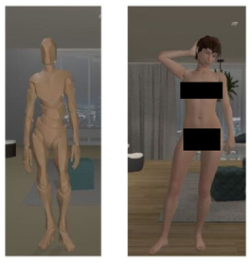
The eleven participants were retained as the order of presentation of these various sequences had in common: to involve an initial immersion with the android (i.e., the neutral scenario, NS), followed by the personalized avatar in the standard room (i.e., the sexual scenario, SS). This same sequencing dims potential effects related to novelty, habituation, or a difference in environ- ments. Both SS and NS featured a bedroom in the digital setting and, though the furniture placement remained consistent, asset detail and realism were toned down in the MS environment to fit with the android avatar’s level of detail and realism. For this specific study, data relates to equivalent, position and behaviour-wise, 30 second moments from each immersion, where the vir- tual character moved around while facing the participant. Figure 1 showcases the appearance of the android-like and standard avatar (note that the human- like avatar was the personalized one, and so differed across participant). The study was sanctioned by the ethical boards tied to the authors’ respective institutions. Participants were financially compensated (70$ CAN).
Figure 1: Appearance of the android-like (left) and realistic sexually alluring (right) avatars.
Animation and Immersion Software and Hardware We created a digital avatar customization tool in Unity (Version 2018.4.4, Unity Software Inc.), providing users with fifteen features to adjust avatars easily and intuitively from the Genesis 8 collection. Options included drop- down menus and sliders for detailed adjustments, with the ability to switch
between facial or full-body views and rotate the avatar for a comprehensive view. These customized avatars were then used in a sexual scenario, animated with motion capture technology using a female collaborator’s movements. For a neutral scenario, we used the “Y Bot” humanoid robot from Mix- amo, animated with pre-set motion sequences to replicate the custom avatar’s movements. The digital environments were constructed and rendered using the Unity game engine (Version 2020.3.36, Unity Software Inc.). Lighting conditions in the virtual environments was arranged so that the mean lumi- nous intensity was the same globally (average of all pixels) and for the four quadrants of the visual field, for all environments.
Experiments took place in a lab located at École de Technologie supérieure in Montréal, QC Canada. The utilized computer had an 8GB Nvidia GeForce RTX 3080 graphics card (Micro-Star International in Chungho, Taiwan), paired with an Intel Core i7-10700K CPU and 32 GB RAM. The HTC Vive Pro Eye Head-Mounted Display (HMD) (High Tech Computer Corporation in Taoyuan City, Taiwan) for immersion purposes.
Physiological Measurements Penile tumescence was gauged using penile plethysmography (PPG). This technique involves running a gentle electrical current through a stretchy rub- ber band filled with mercury, which wraps around the mid-shaft of the penis. Penile engorgement causes the band to expand, leading to shifts in the mer- cury level and electrical conductivity. After calibration, these variations are converted into units that depict changes in circumference, represented in mil- limetres (mm). The PPG data was captured with DataPac and processed using the PrefTest Professional Suite software (Version 11.3.0.20; all from Limestone Technologies).
Eye movement data were collected using the headset, aided by the software development kit (SDK) named SRanipal from HTC Corporation. SRanipal provides a range of functionalities for tracking eye movements and recording time-sensitive data. Data sampling was at 90 Hz. The accuracy of the eye- tracking system integrated into the HTC Vive Pro Eye HMD ranges between 0.5 and 1.1 degrees. EEG readings were taken with a cap fitted with 32 active electrodes, based on the 10–20 system (Acticap, Brain Vision). The EEG signal under- went amplification in real-time using Brain Vision’s ActiChamp amplifier and was captured using Brain Vision’s MOVE and Recorder software (Version 1.20.0401). The real-time reference point was established at Cz. Sampling rate was 500 Hz and was immediately subjected to filtering, which incorpo- rated a low-pass filter set at 1.59 Hz, a high-pass filter set at 70 Hz, and a 60 Hz notch filter for north American ambient electrical wiring.
Data Processing and Analyses The EEG data were processed using the Analyzer 2.1 (Brain Vision), where noisy channels were identified and excluded during visual inspections. An ocular independent component analysis (ICA) employing the mean slope algorithm, specific condition datasets, and the Infomax and sum of squared
First Probe Into Frontal EEG Dynamic Cross-Entropy Associated With Virtual Sexual Content 115
correlations methods from Analyzer was then conducted to remove com- ponents largely composed of vertical and (when applicable) horizontal eye- movement EEG artifacts. Data was re-referenced to the average of mastoids. The 30 seconds segments for the eleven participants were devoid of other types of artifacts, and so were otherwise unaltered.
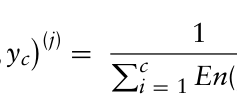
Dynamic Cross-Entropy (DCE) is a measure that assesses the regularity and complexity across multiple time series, particularly within different fre- quency bands (Aur and Villa-Rodriguez, 2017). It contrasts with standard entropy measures by evaluating the joint complexity of multiple signals, as opposed to a single one. DCE utilizes entropic measures like Sample Entropy (SampEn) on each signal after band-pass filtering to isolate frequencies of interest. The combined entropy measures are then averaged to compute the DCE, reflecting the collective regularity or complexity. This makes DCE par- ticularly useful in examining the synchronization of activities across multiple channels, such as in EEG data, where it provides insight into the spatial distribution and synchrony of neural activities. The choice of parameters in the entropy calculation influences the sensitivity of DCE to detect these regularities across the time series (see Aur and Villa-Rodriguez, 2017). Here an m value of 2 and a r value of 3.57 were used for all DCE analyses. All DCE computations involved homemade scripts that followed Aur and Vila- Rodriguez’ (2017) approach, the scripts largely running in Python (Version 3.10.0, Python Software Foundation) and using libraries therein. The calculation of DCE followed Equation 1, and involves several steps: 1) Each signal is band-pass-filtered to isolate a specific frequency bands; 2) for each filtered signal, complexity entropy measures (here, SampEn), are com- puted for the data segments; 3) after computing the mean DCE for all data segments, the value is normalized using the min-max method, that is, the scal- ing the computed DCE values relative to the minimum and maximum DCE values obtained across all segments and signals. Computed DCE values were for frequencies alpha (8 – 13 Hz), beta (13 – 30 Hz), and related sub-bands (low alpha, 8 – 10,5 Hz; high alpha, 10,5 – 13 Hz; low beta, 13 – 20 Hz; high beta, 20 - 30 Hz).
DCE
y1, y2 . . . , yc
Equation reproduced from the original PDF.
i = 1 En(yi)(j) (1) Equation 1: Mean DCE calculation, where: yi, an individual signal (i.e., time series); En(yi), the entropy measure (here, SampEn) for a given yi; c, the number of signals considered together.
In all cases, DCE values were computed using frontal electrodes Fp1, Fp2, F3, F4, F7 and F8 (i.e., c = 6). The average DCE values for each experimental condition were used as the dependent variable in the statistical analyses.
A single PPG score was computed for each condition, where the mm value at the start of the 30 sec condition was subtracted from the maximal mm value across said 30 sec. The higher the score, the greater the penile response during the condition relative to its start.
The Gaze Radial Angular Deviation (GRAD) was defined by the angle between two vectors: the first originating from the eye’s center leading to
a collider on the area of interest, acting as a virtual measurement point (VMP), and the second indicating the standardized eye direction from SrAni- pal (Renaud et al., 2008; Saint-Pierre-Côté et al., 2023). VMPs were installed at face, breast and genital levels of both virtual characters. The direction and dispersion of visual search patterns were evaluated by calculating the GRAD coefficient of variation (CV; GRADCV), where CV is a standardized measure of dispersion of a probability distribution or frequency distribution (SD/AVG).
Statistical Analyses Data were analysed using a repeated-measures multivariate analysis of vari- ance (MANOVA) contrasting the two, NS and SS, conditions. More specif- ically, Pillai’s trace was first used to assess the impact of the two avatar conditions on the set of dependent variables, indicating whether there was a significant overall effect. Individual ANOVAs were used to compare the means between the two conditions for each dependent measure. Effect size estimates were made using partial η2.
As the number of participants is small, multiple repeated-measures MANOVAS were computed this way, which always involved the dependant variables: PPG, GRADCV, and a pair of two mean DCE values for varying frequency bands. In all cases, the following ANOVAs were statistically signif- icant DCE-wise only for low alpha; here, we report its MANOVA with low beta only, per: 1) space considerations, 2) and low beta is otherwise a credi- ble target for fluctuations in frontal beta in the context of motor inhibition (Wagner et al., 2018), this, a reasonable expectation when one is confronted with alluring and immersive sexual stimuli (i.e., warranting interactivity).
RESULTS
The multivariate omnibus Pillai trace revealed a significant effect of the SS condition on the combined dependent variables (F(5, 5) = 8.93, p = .011, partial η2 = .856), suggesting that the choice of avatar (android vs. sexual) had a significant multivariate impact on the dependent measures (i.e., PPG, GRADCV, low alpha and low beta).
PPG significantly differed between the NS and the SS, with means of 1.27 (SD = 0.74) and 9.81 (SD = 5.99), respectively. Similarly, GRADCV exhib- ited a significant change with the NS condition showing a mean of 0.64 (SD = 0.19) and the SS condition a mean of 0.49 (SD = 0.08), indicating a more uniform and concentrated information processing for the sexually alluring avatar. Univariate tests confirmed the effects of avatars on both PPG (F(1, 9) = 18.4, p = .002, partial η2 = .671) and GRADCV (F(1, 9) = 6.35, p = .033, partial η2 = .414).
Mean DCE low alpha values differed between the NS condition (mean DCE = 12.8, SD = 1.35) and SS condition (mean DCE = 11.1, SD = 1.35; F(1, 9) = 17.3, p = .002). However, for mean low beta DCE, no significant effect was observed between NS and SS, with DCE means of 12.4 (SD = 0.99) and 12.2 (SD = 0.97), respectively.
First Probe Into Frontal EEG Dynamic Cross-Entropy Associated With Virtual Sexual Content 117
DISCUSSION AND CONCLUSION The present study contributes to the existing body of research on sexual arousal within virtual environments, showing that sexual avatars can indeed induce heightened physiological sexual arousal, as evidenced by PPG. This response is consistent with past research (Renaud et al., 2010; Renaud et al., 2011; Marschall-Lévesque et al., 2018), suggesting that sexual stimuli in a cybersexual context engage cognitive resources uniquely, potentially leading to more focused attention and perceptual-cognitive processing. This height- ened sexual arousal is accompanied by, or preceded by, a perceptual-cognitive processing that appears specific to the extraction of visual information akin to Gibsonian affordances (Gibson, 1979; Renaud et al., 2008, 2010). These sex- ual affordances are actualized through the active analysis of simulated sexual content and what it affords in terms of behavioral and adaptive potential.
In terms of nonlinear neurodynamics, the relatively lower dynamic cross- entropy found in the frontal low alpha band for the SS condition could imply that the brain’s activity at this site is less chaotic and more predictable when participants are viewing the sexual avatar, compared to the neutral one. This would mean that sexual content engages cognitive resources in a way that leads to a more synchronized and orderly oscillations in the alpha range between hemispheres, reflecting a more focused and coherent state of neural processing specific to sexually aroused attention. However, the beta band’s invariance in dynamic cross-entropy—tied to alert cognitive engagement and motor planning—indicates a lack of responsiveness to the avatar’s sexual con- tent, suggesting that the heightened attention does not extend to the specific anticipatory or decision-making processes often associated with beta oscilla- tions. This lessened chaotic state might indicate an organism’s posture that minimize cognitive demand, consistent with the neurological model posited by Karl Friston, which hypothesizes that the brain strives to adaptively con- serve metabolic resources by reducing free energy, thereby optimizing its response to environmental stimuli, sexual or otherwise, in accordance with the FEP (Bruineberg and Rietveld, 2014; Friston, 2022; Linson et al., 2018). This also suggests that synchrony in brain oscillations between individu- als in a sexual circumstance may facilitate sexual interaction by enhancing predictability, as it facilitates other intimate or social interactions between individuals (Pfaus et al., 2023).
In conclusion, sexual presence, sexual affordances, and the non-linear enactive dynamics of embodied sexual cognitions are intricately intercon- nected in the realm of human-machine interactions. Sexual presence is not merely a state but a dynamic process that emerges from the interaction of an individual’s psychobiological predispositions and the sexual affordances provided by the technology (Brideau-Duquette and Renaud, 2023). These affordances are actualized within a technological framework, prompting a series of cognitive and affective responses that embody the non-linear enac- tive dynamics of sexual cognition as they would in a non-synthetic real environment. The importance of understanding these interactions is under- scored by the rapid advancement of generative AI and extended reality. As these technologies become more sophisticated, they have the potential to
create increasingly convincing and immersive virtual experiences. The impli- cations of such advancements are far-reaching and could affect not only individual psychology and behaviour but also societal norms and security.
ACKNOWLEDGMENT
The authors would like to acknowledge their funding partners: the Canadian Social Sciences and Humanities Research Council, the Canadian Institutes of Health Research, and the Fonds de Recherche du Québec.
REFERENCES
Aur, D., & Vila-Rodriguez, F. (2017). Dynamic cross-entropy. Journal of Neuroscience Methods, 275, 10–18. https://www.elsevier.com/locate/jneumeth Brideau-Duquette, M., & Renaud, P. (2023). Sexual Presence: A Brief Introduction.
In Encyclopedia of Sexual Psychology and Behavior. Springer Nature. (Accepted) Bruineberg, J., & Rietveld, E. (2014). Self-organization, free energy minimization, and optimal grip on a field of affordances. Frontiers in Human Neuroscience, 8, Article 599. https://doi.org/10.3389/fnhum.2014.00599 Buccella, A. (2021). The problem of perceptual invariance. Synthese, 199(5-6),
13883–13905. Freeman, W. J. (2000). How brains make up their minds. Columbia University Press. Friston, K. (2022). Affordance and Active Inference. In Z. Djebbara (Ed.), Affordances in Everyday Life (pp. 352–367). Springer Nature Switzerland AG. https: //doi.org/10.1007/978-3-031-08629-8_20 Gable, P. A., Neal, L. B., & Threadgill, A. H. (2018). Regulatory behavior and frontal
activity: Considering the role of revised-BIS in relative right frontal asymmetry. Psychophysiology, 55(1), e12910. Gibson, J. J. (1979). The ecological approach to visual perception. Houghton Mifflin and Company. Joffily, M., & Coricelli, G. (2013). Emotional valence and the free-energy principle.
PLoS computational biology, 9(6), e1003094. Kozma, R. (2007). Neurodynamics of intentional behavior generation. In R.
Kozma & L. Perlovsky (Eds.), Neurodynamics of cognition and consciousness (pp. 131–161). Springer. Linson, A., Clark, A., Ramamoorthy, S., & Friston, K. (2018). The active inference approach to ecological perception: General information dynamics for natural and artificial embodied cognition. Frontiers in Robotics and AI, 5, Article 21. https://doi.org/10.3389/frobt.2018.00021 Market Research Engine. (2023). Virtual-and-augmented-reality market. https://www.marketresearchengine.com/virtual-and-augmented-reality-market Marschall-Lévesque, S., Rouleau, J.-L., & Renaud, P. (2018). Increasing valid profiles
in phallometric assessment of sex offenders with child victims: Combining the strengths of audio stimuli and synthetic characters. Archives of Sexual Behavior, 47(2), 417–428. https://doi.org/10.1007/s10508-017-1053-y Pfaus, J. G., Safron A., & Zakreski, E. (2023). From distal to proximal to interactive: behavioral and brain synchrony during attraction, courtship, and sexual interac- tion -- implications for clinical assessments of relationship style and quality. Sexual Medicine Reviews, 11(4), 312–322. Pornhub. (2022). 2022 year in review. https://www.pornhub.com/insights/2022-ye
ar-in-review
First Probe Into Frontal EEG Dynamic Cross-Entropy Associated With Virtual Sexual Content 119
Prause, N., C. Staley, & V. Roberts. (2014). Frontal alpha asymmetry and sexually motivated states. Psychophysiology, 51(3), 226–235. Renaud, P., Chartier, S., & Albert, G. (2008). Embedded: The dynamics of extract-
ing perceptual visual invariants. In S. J. Guastello, M. Koopmans, & D. Pincus (Eds.), Chaos and complexity in psychology: The theory of nonlinear dynami- cal systems (pp.177–205). Cambridge University Press. https://doi.org/10.1017/ CBO9781139058544.007 Renaud, P., Fontanessi, L., & Benbouriche, M. (2014). Sexual presence as a dimorphic phenomenon. In International Society for Presence Research 2014 (pp. 167–172). Renaud, P., Goyette, M., Chartier, S., Zhornitski, S., Trottier, D., Rouleau, J. L.,... &
Bouchard, S. (2010). Sexual affordances, perceptual-motor invariance extraction and intentional nonlinear dynamics: Sexually deviant and non-deviant patterns in male subjects. Nonlinear Dynamics, Psychology, and Life Sciences, 14(4), 463. Renaud, P., Neveu, S., et al. (2019). Sexual Presence: A qEEG Analysis of Sexual Arousal to Synthetic Pornography. International Journal of Telepresence. https://ijtelepresence.org/1-3/. Saint-Pierre Côté, S., Brideau-Duquette, M., Labbé D., & Renaud, P. (2023). Unrav-
eling Sexual Presence in Virtual Reality: A Psychophysiological Exploration. In IEEE Virtual Reality Conference Proceedings, Orlando, Florida, March 2024. Tomarken, A. J., et al. (1992). Individual differences in anterior brain asymmetry and fundamental dimensions of emotion. Journal of Personality and Social Psychology, 62(4), 676. Wagner, J., Wessel, J. R., Ghahremani, A., & Aron, A. R. (2018). Establishing a right
frontal beta signature for stopping action in scalp EEG: Implications for testing inhibitory control in other task contexts. Journal of cognitive neuroscience, 30(1), 107–118. Warren, W. H., & Fajen, B. R. (2004). From optic flow to laws of control. In L. M.
Vaina, S. A. Beardsley, & S. Rushton (Eds.), Optic flow and beyond (pp. 307–337). Springer. https://doi.org/10.1007/978-1-4020-2092-6_14
LISTED IN THE AHFE DIGITAL BOOKSTORE CATALOGUE
Explore the complete digital volume
Intelligent Human Systems Integration (IHSI 2024): Integrating People and Intelligent Systems
Read this individual research paper free through the original publisher, or explore the full digital proceedings book.
ISBN 978-1-958651-95-7
Explore this ISBN in the AHFE Bookstore ↗Listed in the July 2026 bookstore catalogue; search by ISBN to confirm current availability · Digital book purchase optional