Shuai Ding, Beibei Sun (2024). Computational Aesthetics-based Model Evaluation Method for Industrial Robots. In: Intelligent Human Systems Integration (IHSI 2024): Integrating People and Intelligent Systems. AHFE Open Access, vol. 119, pp. 361–371. https://doi.org/10.54941/ahfe1004500
Based on existing research on the development of an evaluation system for industrial robot modeling and beauty assessment, this paper proposes a method to evaluate the aesthetic appeal of industrial robot models. The method initially establishes a set of beauty indices based on the morphological characteristics of industrial robots and computational aesthetics theory. Subsequently, hierarchical analysis is employed to determine the weights assigned to each index, enabling the calculation of a comprehensive evaluation value for industrial robot modeling that can be ranked accordingly. Finally, subjective questionnaire evaluations are conducted in order to experimentally compare and verify the feasibility and accuracy of this method. The results demonstrate that by utilizing hierarchical analysis and computational aesthetics, it is possible to accurately and objectively assess the beauty of industrial robots, thereby providing a novel approach for evaluating their aesthetic qualities.
Industrial robots play a pivotal role in the equipment manufacturing industry, significantly enhancing production efficiency and product quality, thereby bolstering the international competitiveness of these products. This is evident in the recognition given to industrial robots at the State-owned Assets Super- vision and Administration Commission meeting, highlighting their crucial role at the national level. Currently, designers primarily focus on precision, material strength, force distribution, and other scientific and technological factors. However, the aesthetic aspect of industrial robots has been largely overlooked, with limited exploration of their artistic function in their design. The form and aesthetic evaluation of industrial robots hold both theoretical and practical significance. Consequently, the aesthetic design and evaluation of industrial robots have emerged as prominent areas of research in the field of robot design.
In the field of industrial robot modeling design, Wang Peiwen intro- duced finite element analysis in the design of mechanical structures into the process of optimizing industrial robot modeling (Peiwen, 2018). This
method was implemented to enhance the design of industrial robot mor- phology and improve the theoretical rationality of structural design in mod- eling. Based on the theory of perceptual engineering, Xuejie Wang utilized eye tracking technology to investigate the relationship between perceptual imagery vocabulary and the modeling of industrial robots (Xuejie, 2016). Wang extracted elements from this relationship to be used in the design of 6-degree-of-freedom and 7-degree-of-freedom industrial robots, which fulfill the perceptual requirements of users. Bu Dingyi incorporated design elements from ancient military armor to create a modern industrial robot shape that embodies sturdiness, strength, technology and aesthetics (Yiding, 2016).
Birkhoff was the first scholar to propose quantifying the aesthetic index. He pioneered the mathematical model of macroscopic aesthetics, express- ing the “Aesthetic measure” as the ratio of “Order” and “Complexity,” i.e., M = O/C. This laid the theoretical foundation of computational aesthetics (Birkhoff, 1933). Hu Ningfeng proposed a morphological evaluation method that enhances the CRITIC-TOPSIS and aesthetics computation (Ningfeng, 2023). This method determines the weight of the indexes using the CRITIC method, thereby improving the weight of the aesthetics evaluation results and enhancing the objectivity and accuracy of the beauty evaluation results. Zhou Lei proposed a method for evaluating interface design aesthetics based on the limitations of current research on aesthetics and aesthetic compu- tation (Lei, 2023). This method combines perceptual engineering, systems engineering, psychophysics and other disciplines. Based on the principles of visual attention and processing characteristics, Jin Yutong proposed an eval- uation method for assessing the aesthetics of information interface layouts (Yutong, 2020). This method is based on cognitive characteristics and aims to enhance the rationality of information interface layouts and the objectivity of evaluation results.
Based on research on the design and modelling of industrial robots, this paper proposes a method for evaluating industrial robot models using com- putational aesthetics. Firstly, the morphological aesthetic evaluation system for industrial robots is constructed based on the structural and morpho- logical elements of industrial robots. This system calculates and ranks the comprehensive aesthetic evaluation value of industrial robot samples. Sec- ondly, the method of subjective evaluation is used to create a beauty ranking table for industrial robots based on subjective criteria. Finally, the ranking of the schemes derived from the objective beauty calculation is analyzed and compared with the results of the subjective questionnaire research, thereby verifying the feasibility of the method.
INDUSTRIAL ROBOT BEAUTY METRICS Industrial product styling is influenced by various factors such as structure, function, and the usage environment. Zhou Aimin proposed an aesthetic comprehensive evaluation model based on the principles of formal aesthetics and cognitive psychology, from the perspective of system evolution (Aimin, 2018). The modeling of modern industrial robots is mainly influenced by their function and the distribution of internal mechanical components.
Research on Computational Aesthetics-Based Model Evaluation Method 363
Divided by the functional dimension, industrial robots have various branch functions, including palletizing, welding, and assembling (Tianmiao, 2014). These functions primarily determine the external dimensions and weight of industrial robots. On the other hand, internal mechanical components such as motors, wiring harnesses, and control boards mainly determine the shape profile of industrial robots. The shape of industrial robots can be divided into eight morphological elements, from bottom to top: base, con- trol panel, wiring harness, adapter, big arm, adapter arm, small arm, and wrist (Huabing, 2013). After analyzing and comparing them, we have identi- fied the five elements that have a greater influence on the shape of industrial robots: base, adapter, big arm, adapter arm and small arm.
The contour line of the side-view projection of the industrial robot is “Z”. Taking into account the site layout conditions, the lateral length of the base is generally shorter, while the big arm is longer. Considering the center of gravity factor, the small arm is generally thinner. Since the side view angle can provide an intuitive sense of the stability of the industrial robot’s shape, the arrangement of the side components is particularly important. After con- ducting user interviews and focusing on the visual aspects of industrial robots, the designers combined the theory of morphological aesthetics with elements such as balance, Center of gravity stability, simplicity, sense of regularity, wholeness, and denseness. These elements were chosen as the quantitative system for calculating the morphological aesthetics of industrial robots. The relevant indexes and formulas for calculating aesthetics are as follows (Ngod, 2003).
Balance Balance can be divided into three indicators: coordination, balance and sym- metry, which are primarily influenced by the distribution of screen design elements in the axisymmetric direction or center symmetry. Balance is calcu- lated by comparing the difference between the overall weights of components on both sides of the horizontal and vertical symmetry axes.
The arrangement of the functional components of an industrial robot has an impact on its balance. Therefore, achieving balance involves distributing the components in a way that allows for an equilibrium state. The formula for balance is as follows: B = VAR (WL + WR) + (WT, WD)
WL−WR max(|WL|,|WR|)
Equations and mathematical formulas are available in the original paper PDF.
WT−WB max(|WT|,|WB|)
2 (1)
aij · dij
VAR (·) is the variance function;Wj is the distribution of the center of gravity for an orientation.W = P nij = 1/
; “i” denotes the element to be cloth; j ∈
L, R, T, D
, denote the left, right, up and down orientation of the interface to be fabricated, respectively; “a, i, j” denote the area of the element
364 Ding and Sun
to be fabricated “i” in azimuth j; dij denotes the distance between the center of the area of element i to be fabricated and the center of the interface in orientation j; nj is the number of elements in each orientation of the interface to be fabricated.
Center of Gravity Stability Center of gravity stability is a measure of how far the center of gravity of a morphological element has shifted from the center of gravity of the smallest outer rectangle of the contour line; the smaller the shift, the more stable the psychological perception.
Industrial robots are typically large in size and are highly prone to instabil- ity due to their structurally extended functionality. Therefore, the form profile of industrial robots needs to possess specific stabilizing characteristics. The formula for center of gravity stability is as follows:
CDMy
Pn
EN is the stability of the center of gravity, ENx and ENy are the stability of the center of gravity in the x-axis and y-axis directions, respectively. ai is the area of structural element i; and xi is the x-coordinate of the center of gravity of structural element i, and xc is the x-coordinate of the center of gravity of the smallest outer rectangle of the product contour line. bf is the width of the smallest external rectangle of the overall shape of the industrial robot.
Simplicity Simplicity refers to the level of simplification and alignment of the layout of screen elements, which is a crucial factor in determining how well the elements of the screen work together.
The overall design of industrial robots and the relationship between their structural elements should be consistent with the human visual requirements for simplicity. The simplicity of the industrial robot’s overall shape can give the user the impression that the equipment is efficient and easy to main- tain. The definition of simplicity is not limited to the number of visual elements. Having too many structural components will make the industrial robot look complex and chaotic, while having too few structural components will make the structure of the industrial robot too simple, thus affecting its performance. Therefore, the simplicity of industrial robots needs to strike a balance between meeting functional requirements and avoiding redundancy. The simplicity formula is as follows: SM = 3 nv + nh + n (3)
nv and nh represent the number of alignment points for the coordinates of the elements in the horizontal and vertical directions. “n” represents the number of elements in the whole interface.
Research on Computational Aesthetics-Based Model Evaluation Method 365
Sense of Regularity Regularity refers to the degree of consistency between the elements of an industrial robot’s components. A sense of regularity in modelling allows the user to quickly identify the function of each component of the industrial robot and improves the efficiency of its use. The formula is as follows:
RMalignment
RMspacing
2 ∈[0, 1]
nv, nh, ns represent the number of alignment points in the horizontal and vertical directions. It also represents the number of starting points at different distances between rows and columns respectively. Meanwhile, n represents the number of elements in the entire interface layout.
Integrity “integrity” refers to a system goal composed of intrinsically linked localities. Unity is a measure of the compactness of the layout of the structural ele- ments of an industrial robot. The higher the degree of unity, the lower the complexity of the form, making it easier to identify and more coordinated. The formula is:
UM is the degree of unity, and am is the area of the smallest outer rectangle of the group of structural component elements, and aq is the area of contour line form.
Density Density is a measure of proportional beauty, indicating the compactness between each design element in the interface. The density index of the target interface can be obtained by calculating the difference between the density of the target interface and the density of the optimal interface.
Density is a measure of how much of the area within the contour of an industrial robot is occupied by morphological structural elements. The larger the area covered, the more crowded it appears. Conversely, the smaller the area, the more hollow it appears. Additionally, the closer the final calculation is to 50%, the more appropriate the density is. The formula for density is as follows:
i ai aframe
∈[0, 1] (6)
1 −2 Pn
ai is the area of a single structural element and af is the total screen area, and n is the number of elements in the interface.
366 Ding and Sun
COMPREHENSIVE BEAUTY CALCULATION The Analytic Hierarchy Process (AHP) was used to calculate the weight of each factor in beauty imagery. Firstly, the experts assess the relative impor- tance of the two beauty imagery factors by assigning values from 1 to 9, then calculate the maximum eigenvalue of the judgment matrix and evaluate the consistency of the matrix. If the consistency is satisfactory, the matrix is stan- dardized to determine the weight of each beauty imagery factor. Otherwise, the values are reassigned.
Let the judgment matrix C = [cij] n × n be obtained by using 1 to 9 assign- ments. Calculate the eigenvectors of each column of C and normalize the eigenvectors to w = {w1, w2,..wn} T, and there are w1 + w2 + ... + wn = 1. Taking the largest eigenvalue of the matrix C as γmax, then: C × w = γmax × w (7)
Using the square root method, the elements in C are processed to derive the importance vector w, which is calculated as:
wi (9)
A matrix consistency test is performed to determine whether the consis- tency of the matrix is acceptable. The consistency ratio is: C.R. = C.I./R.I. (10)
C.I.=(γmax-n)/(n-1). R.I. is the average random consistency index, the value of which is given in the literature (Wang, 2010). Make the importance degree of each beauty imagery be obtained as wi, then the comprehensive beauty imagery value of the human-machine interface morphological element layout is:
INSTANCE VALIDATION Evaluation of Industrial Robot Aesthetics
Through data review and online collection, six samples of industrial robots were collected in the preliminary stage. After generalization, classification, and analysis, six representative samples were selected based on their morpho- logical features (the six aesthetics computation indexes mentioned above). The industrial robots underwent morphology semantics extraction and sim- plified processing, which will facilitate the measurement and computation of the aesthetics indexes in the later stage. The results are presented in Table 1.
Research on Computational Aesthetics-Based Model Evaluation Method 367
Table 1. Simplified industrial robot model.
Table available in the original PDF paper.
Number Model 2D Graph
Option 1
Option 2
Option 3
Option 4
Option 5
Option 6
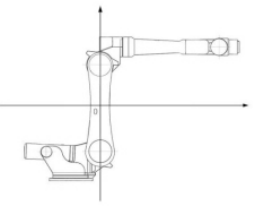
A 2D parametric measurement coordinate system is established using the left view perspective of the industrial robot, as depicted in Figure 1. The origin of the two-dimensional coordinate system is located at the geomet- ric center of the industrial robot arm. Using two-dimensional plane software, Figma, we mapped the coordinates of each structural component onto the coordinate system and obtained the length and width values. These values were then used in the calculation of beauty indexes, as shown in Table 2.
According to equations (1) to (6), the values of balance, center of gravity stability, simplicity, integrity, sense of regularity and denseness of each scheme are calculated respectively, and the corresponding data are obtained as shown in Table 2.
368 Ding and Sun
Figure 1: Establishment of 2D coordinate system for industrial robots.Table 2. Simplified industrial robot model.
Five industrial design experts were organized to calculate the weights of the aesthetic imagery indicators for the morphological elements of indus- trial robots using equations (7) to (10). The weights for each indicator were obtained and are presented in Table 3.
Table 3. Weights of industrial robot aesthetics indicators.
Table available in the original PDF paper.
Metrics Balance Center of Gravity Stability Simplicity Weights 0.137 0.167 0.332 Metrics Integrity Sense of Regularity Intensity Weights 0.225 0.077 0.062
According to formula (11), the aesthetic imagery values of the layout scheme of the morphological elements of industrial robots are obtained as Table 4:
Table 4. Aesthetic values of layout schemes for industrial robot morphological elements.
Research on Computational Aesthetics-Based Model Evaluation Method 369
Comparison of the above calculations shows that the beauty values of the options are: Option 2 < Option 1 < Option 6 < Option 4 < Option 5 < Option 3. Option 3 is the preferred option.
Validation and Discussion of Results In order to verify the accuracy of the aesthetics calculation formula, the per- ceptual imagery evaluation method is used for verification (Shuzhi, 2017). To ensure the accuracy and reliability of the perceptual vocabulary source, as well as to accurately capture the user’s aesthetic experience of the industrial robot view, the following specific steps are taken.
Imagery Vocabulary Selection and Evaluation Matrix Acquisition Firstly, we obtained 30 words related to industrial robots’ sensual imagery through the official website of industrial robots, academic papers, and other relevant information. Then, we selected 6 pairs of representative sensual words with similar meanings based on the six beauty indicators chosen by the beauty index system. These pairs are shown in Table V. Finally, we created a questionnaire using a Likert scale, which combined the words of sensual imagery and sample pictures. This allowed us to construct an evaluation matrix for assessing the beauty of the morphology view of indus- trial robots. Finally, the Likert scale was used to create a questionnaire with sample pictures in order to construct an evaluation matrix for assess- ing the aesthetic appeal of the industrial robot’s physical appearance. In order to ensure the research results are authoritative and representative, a panel of experts consisting of 20 students as well as 5 senior design teachers.
Table 5. Aesthetic values of layout schemes for industrial robot morphological elements.
Table available in the original PDF paper.
Norm Imagery Vocabulary Balance Balanced - Imbalanced Center of gravity stability Stable - Wobbly Simplicity Simple - Redundant Norm Imagery vocabulary Sense of Regularity Orderly - Arbitrary Integrity Simple - Complex Density Dense - Loose
Evaluation Process A total of 25 questionnaires were distributed. The six dimensional indicators of beauty calculation were scored separately using a Likert scale, with each dimension rated from 1 to 7. After collecting the questionnaires, the mean score for each beauty indicator was calculated. The final composite scores for each program are presented in Table 6.
370 Ding and Sun
Table 6. Composite score of subjective evaluation of industrial robots.
Discussion of Results Comparing the numerical ranking calculated by the aesthetics evaluation method with the ranking of scores obtained from the subjective evalua- tion questionnaire, it can be observed that they are consistent. Therefore, the aesthetics evaluation method can effectively reflect the user’s perception of the aesthetics of the industrial robot modeling. Furthermore, it is more scientifically and accurately compared to the subjective evaluation.
CONCLUSION
Aiming to address the issues of subjectivity and arbitrariness in evaluating the aesthetic appeal of current industrial robot designs, this paper iden- tifies six beauty indicators: balance, center of gravity stability, simplicity, regularity, integrity and density. The weight values for these indicators are determined using the hierarchical analysis method, resulting in the develop- ment of a comprehensive beauty evaluation model for assessing the visual appeal of industrial robots. Twenty-five Likert scale questionnaires were col- lected and analyzed to subjectively evaluate the industrial robot scheme. The results were then compared and verified with the beauty evaluation model. The findings demonstrated that the beauty evaluation model is advantageous in assisting designers in selecting the industrial robot styling design scheme. This research holds practical significance. In this paper, we studied the aes- thetics of the side layout of industrial robots. However, the overall aesthetics of industrial robots should also consider factors such as color and material, in addition to the model elements. Therefore, the next step in our research is to comprehensively evaluate these factors for aesthetics.
REFERENCES
C. Ngod, L. S. Teo, J. G. Byne, (2003) “Modelling interface aesthetics”, in: Information Sciences, pp. 25–46. G. Birkhoff, (1933) “Aesthetic Measure”, Kessinger Publishing, Montana USA. H. Ningfeng, W. Weixing, Z. Ning, (2023) “Numerical Control Machine Tool Shape
Evaluation Method Based on improved CRITIC TOPSIS and Computational Aesthetics”, in: Mechanical design and research, pp. 170–175. J. Yutong, L. Jian, P. Weijie, (2020) “Based on visual attention mechanism virtual interface layout optimization”, in: Computer engineering and design, pp. 763–769. Peiwen, (2018) “Modeling Design and Simulation Analysis of Palletizing Robot”,
Nanjing University of Aeronautics and Astronautics, Nanjing.
Research on Computational Aesthetics-Based Model Evaluation Method 371
W. Tianmiao, T. Yong, (2014) “Status Quo and Industrialization Development Strategy of Industrial Robot Technology in China”, in: Chinese Journal of Mechanical Engineering, pp. 1–13. W. Wang, S. H. Yu, J. J. Chu, (2010) “Evaluation of interior environment design of
aircraft passenger cabin based on fuzzy-AHP”, in: Aeronautical Manufacturing Gechnology, pp. 80–84. W. Xuejie, X. Wangqun, (2016) “Research on Modeling Design of Industrial robot based on Perceptual image”, pp. 117–12. Y. Shuzhi, G. Hongni, W. Wei, (2017) “Multi-image evaluation of Human-machine
Interface based on Kansei Engineering”, in: Chinese Journal of Engineering Design, pp. 523–529. Z. Aimin, S. Jianning, Y. Shutian, (2018) “A nonlinear Information Dynamics Model for Comprehensive Evaluation of product Morphological Aesthetics”, in: Chinese Journal of Mechanical Engineering, pp. 150–159. Z. Huabing, Z. Juan, (2013) “Kinematics Analysis and Simulation of Industrial
Robot Based on ADAMS”, in: Machine Design & Manufacture, pp. 204–206. Z. Lei, X. Chengqi, X. Wencheng, (2023) “Beauty Evaluation Method of interface Element layout Design”, in: Journal of Computer-Aided Design and Graphics, pp. 758–766.
LISTED IN THE AHFE DIGITAL BOOKSTORE CATALOGUE
Explore the complete digital volume
Intelligent Human Systems Integration (IHSI 2024): Integrating People and Intelligent Systems
Read this individual research paper free through the original publisher, or explore the full digital proceedings book.
ISBN 978-1-958651-95-7
Explore this ISBN in the AHFE Bookstore ↗Listed in the July 2026 bookstore catalogue; search by ISBN to confirm current availability · Digital book purchase optional