Ang Yang, Beibei Sun (2023). Fire Risk Assessment in Universities Based on Fault Tree Analysis and Bayesian Network. In: Intelligent Human Systems Integration (IHSI 2023): Integrating People and Intelligent Systems. AHFE Open Access, vol. 69, pp. 274–284. https://doi.org/10.54941/ahfe1002846
In order to scientifically and accurately analyze the fire hazards existing in colleges and universities, and put forward feasible suggestions for eliminating hidden dangers, a fire risk assessment method based on Fault tree analysis and Bayesian network is proposed.Firstly, the Fault tree of the large loss caused by the fire in the university premises is constructed, and then the Fault tree is transformed into a Bayesian network model. In this method, the failure risk of the fire protection system can be obtained by forward reasoning according to the probability of the basic events in the fire, and finally, the reliability of the fire protection system of the whole university is analyzed.At the same time, combined with the reverse diagnosis and reasoning technology of Bayesian network, according to the known or assumed state of leaf nodes, the posterior probability and probability importance degree of each root node can be reversed to check the weak links in the fire protection system. In the conclusion, suggestions and rectification strategies are put forward for the fire protection system in colleges and universities.This paper proposes a method that combines fault tree analysis with Bayesian network and applies it to fire risk assessment in colleges and universities. Based on the fire protection big data, the software Genie3.0 is used to construct a Bayesian network model of fire risk in universities, and an example analysis of fire risk assessment is carried out by taking a university in Nanjing as an example, which not only analyzes the reliability of the entire system, but also It also uses the bidirectional reasoning ability of Bayesian network to analyze the weak link performance of the system, which improves the model's description ability and inference computing ability. It is proved that the FTA-BN method has application potential in the field of fire risk assessment.
Major fire accidents happened frequently in colleges and universities, cau- sing great losses to the life and property safety of teachers and students. The university areas has the typical characteristics of large density of personnel, combustible materials, electrical appliances and large power load, which has a large fire hazard. The causes of college fire accidents are not only complex and diverse, but also the composition of fire protection system. It is difficult to get a reliable assessment of fire risk by using traditional analytical methods.
Fire Risk Assessment in Universities Based on Fault Tree Analysis and Bayesian Network 275
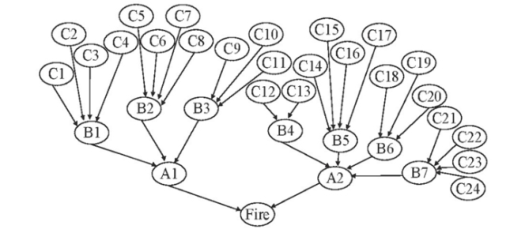
Figure 1: Illustration of Bayesian Networks.
Among the qualitative methods, Fault Tree Analysis (FTA) is a commonly used safety engineering decision-making method, also known as fault tree analysis. Its manifestation is a special directed logic tree. The fault tree analy- sis adopts the deductive analysis method, starting from the specific accident or fault to be analysed (i.e., the top event). The analysis is carried out layer by layer until all the underlying causes of the accident (i.e. the underlying events) are identified. Accident tree analysis can not only directly and clearly show all kinds of basic events that cause accidents, but also clearly show the nature and mechanism of accidents. It is widely used in safety evaluation, reliability analysis, accident investigation and other fields.
Bayesian Network (BN) is a directed acyclic graph, which is composed of nodes representing variables and directed edges connecting these nodes. Nodes represent random variables, and the directed edges between nodes represent the mutual relationship between nodes. The parent node points to its child node, and the strength of the relationship is expressed by conditional probability. If there is no parent node, the information is expressed by prior probability. The Bayesian network also has the characteristics of bidirectio- nal derivation. The posterior probability of the root node can be obtained according to the result, and the cause can be deduced from the result. Baye- sian network analysis is applicable to the expression and analysis of uncertain and probabilistic events, and can be inferred from incomplete, inaccurate or uncertain knowledge or information. It is very suitable for the analysis of fire and firefighting complex system.
Xu Jianqiang et al. (2019) introduced Bayesian network analysis method into the quantitative fire risk assessment and proposed a fire dynamic risk assessment model based on Bayesian networks. Zhang Lining et al. (2015) analysed the uncertainty and characteristics of fire occurrence in high-rise civil buildings, and studied the comprehensive assessment model suitable for fire risk assessment of high-rise civil buildings. Zhang Qiang et al. (2016) built a fire shaft analysis model based on Bayesian network. How to further ensure the BN risk assessment method of science and rationality, to ensure the assessment results accurate, effective and objective, is the current BN fire risk assessment method of the main research direction.
Bayesian networks based on conditional probability are more suitable for fault analysis and judgment of complex systems. BN and FTA are very simi- lar in terms of reasoning mechanism, system state description, expressions
276 Ang and Sun
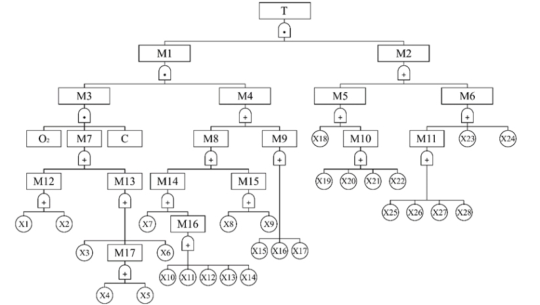
Figure 2: University Area Fire Risk Accident Tree.
form and so on (Ma et al, 2021). Compared with FTA, BN has the ability to describe event polymorphism and the uncertainty of fault logic relationship. However, the construction of Bayesian network structure depends on the pro- fessional knowledge of domain experts, which is the biggest constraint in the application process of Bayesian network (Gong et al, 2009). Therefore, the construction of Bayesian network based on the fault tree analysis is an effe- ctive and effective method, which has been widely used in the field of fault diagnosis. Zheng et al. (2019) built BN based on the established fault tree and developed a comprehensive fault diagnosis system.
Inspired by the above research, this paper adopts the scheme of transfor- ming accident tree model to Bayesian network, and applies it to the field of fire risk assessment for the first time, and proposes a fire risk assessment method in colleges and universities based on FTA and BN.
University Fire Risk Accident Tree For the whole fire accident system, the top event usually causes great conse- quences for college fire accident. The most important thing to be considered in college fire accidents is the life safety of teachers and students. Therefore, it focuses on the analysis of fire occurrence and ineffective personnel evacua- tion. For the direct cause of these two factors, it is defined as the intermediate event of the system, and then the intermediate event is decomposed into the bottom event that can’t be divided and preferably recorded with data.
In the fire risk accident tree, logic gate and gate indicate that only when all the events of the previous step occur will the output events of the next step be led to. For example, the occurrence of fire and insufficient evacuation together lead to heavy losses in fire accidents. Logic gate or gate indicates that any event will lead to the occurrence of the next level of events. For example, open fire source and electrical fire source can constitute the ignition source of fire, and connect events with appropriate logic gate. The university fire risk accident tree is built based on the above rules, as shown in Figure 2. Table 1 shows the relationship between symbols and events in the accident tree.
The example data in this paper comes from the routine inspection data of a university in the fire management system. The unit will carry out routine
Fire Risk Assessment in Universities Based on Fault Tree Analysis and Bayesian Network 277
Table 1. Incident tree event mapping table.
Table available in the original PDF paper.
Code Name Code Name T College fire causes heavy damage X6 High power electrical breakdown circuit M1 Expansion of fire X7 Students can’t use fire-fighting facilities M2 Unfavorable evacuation X8 Fire extinguishing effect of fire brigade was ineffective M3 Outbreak of fire X9 fire brigade was late in arriving M4 Fire was not effectively contained
X10 Fire extinguishing equipment failure M5 Evacuation capacity is insufficient X12 Insufficient fire supply
X11 The layout of fire-fighting facilities is unreasonable M6 Building evacuation capacity is insufficient X14 Self-alarm system failed M7 Source of ignition X13 Self-injection system failed M8 Poor fire extinguishing ability of buildings
M9 Building fire resistance is poor X15 Structure of the building is not reasonable M10 System management is not in place
X16 Fire resistance of the building is not enough M11 Building structure is not reasonable
X17 Unreasonable division of fire protection zones M12 Open flame source X18 Fire drill is not in place M13 Electric ignition source X19 Personnel safety awareness is weak M14 Not in time to save themselves X20 Lack of management and coordination ability M15 Ineffective fire brigade X21 Enforcement of fire regulations is not in place M16 Failure of fire service X22 Emergency plan is not in place M17 Line fire X23 Excessive personnel density X1 Cigarette and common sources of ignition
X24 Building smoke exhaust system failed X2 Use an open flame X25 No evacuation instructions or unclear X3 lightning strike X26 The number of safety exits is less X4 Aging of line X27 Distance to safety is too long X5 short circuit X28 Evacuation path is too narrow
inspection on the fire-fighting facilities, self-spraying system, alarm system, fire access and other items in the unit. If it is qualified, it is considered to be up to the standard. If it is not up to the standard, both inspection timeout and missed inspection are considered as not up to the standard. That is, the basic event is invalid in the system. For basic events that do not appear in the inspection items, such as abstract events such as inadequate implementa- tion of fire control regulations and indifference of fire control awareness, the probability is determined by literature review and hierarchical tomographic
278 Ang and Sun
method. Fire risk fault tree in colleges and universities can clearly reflect the cause of system failure, but it can only reason the fault tree itself in a top- down order, and the reasoning efficiency is not high (Hu L, 2020). Therefore, it is necessary to transform the accident tree to Bayesian network.
Bayesian Network A. Transformation of accident tree to Bayesian network
As for the accident tree model and Bayesian network, both have their limi- tations when applied. Compared with other reliability evaluation methods such as accident tree analysis, Bayesian network has the ability to pro- cess uncertain information and its unique bidirectional reasoning mechanism (Guo J, 2019).
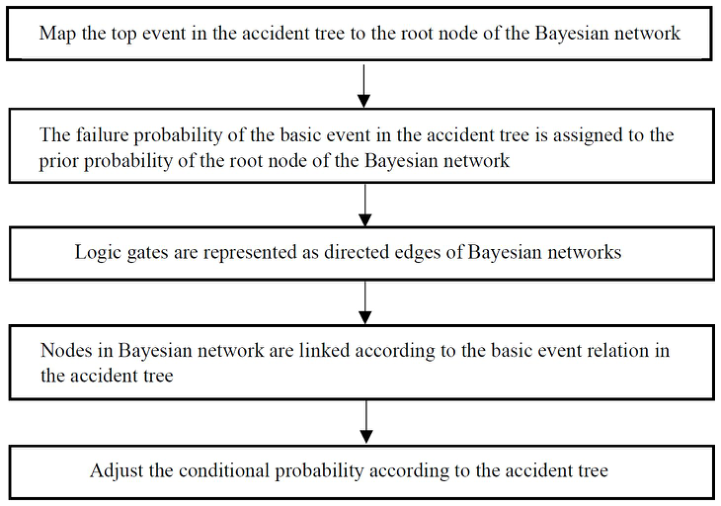
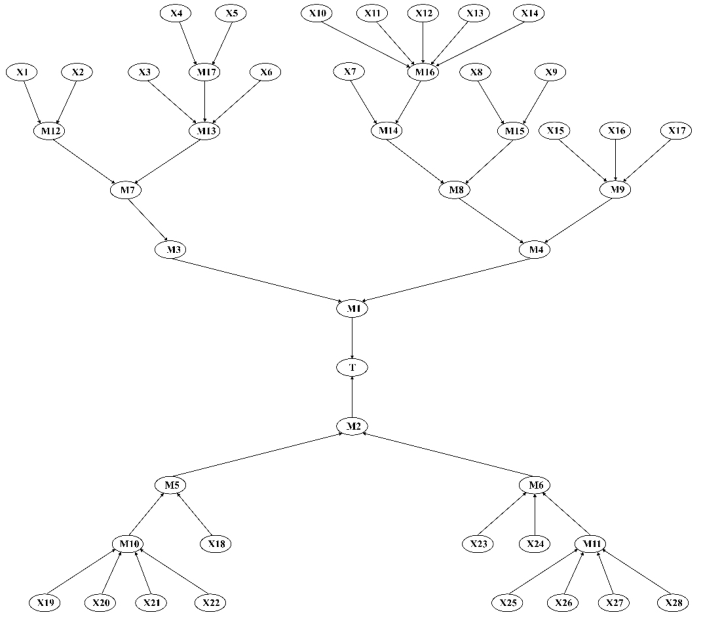
The transformation process from FTA to BN is shown in Figure 3. The structure of the accident tree model corresponds to that of the Bayesian netw- ork. The bottom event of the accident tree corresponds to the root node of the system failure Bayesian network. The connections between the risk events of the accident tree correspond to the edges between the Bayesian network nodes. The construction of Bayesian network on the basis of accident tree can effectively reduce the construction difficulty of Bayesian network, and the combination of fault tree can improve the description ability of Bayesian network model (Bingyu You, 2019).
B. Establishment and reliability analysis of Bayesian network for fire risk in colleges and universities According to the above steps to establish the university fire risk Bayesian network, the network is constructed by GENIE3.0 software. The Bayesian network for college fire risk assessment is shown in Figure 4. The names of university fire risk Bayesian network nodes are shown in Table 2.
The state of the root node in Bayesian network has uncertainty, but it has no parent node, so conditional probability cannot be used to describe the state probability of the root node. In Bayesian statistical inference, prior probability is used to express the state confidence of the root node. According to the above, the failure probability of each bottom event in the accident tree is assigned to the corresponding root node in the fire risk Bayesian network. The prior probability to becoming the root node. The results are shown in Table 3.
The conditional probability distribution of the middle nodes of the Baye- sian network also has an important effect on the final result of the network. In FTA-BN method, the conditional probability distribution is determined according to the corresponding logical relation between events. That is, edges in the network correspond to logical gate meanings in the accident tree. For example, in the conditional probability distribution of a Bayesian network or gate, where x1, x2, and x3 are the inputs of the OR gate, and x4 is the output, the conditional probability distribution of the Bayesian network is as follows.
Equation reproduced from the original PDF.
Fire Risk Assessment in Universities Based on Fault Tree Analysis and Bayesian Network 279
Figure 3: Step of transformation of FTA-BN.
If y1, y2 and y3 are the inputs of and gate, and y4 is the output, the conditi- onal probability distribution of their corresponding Bayesian networks is as follows.
P(y4 = 1|y1 = 1, y2 = 1, y3 = 1) = 1, P(y4 = 1| else) = 0 (2) Through the prior probability and conditional probability distribution of the corresponding nodes on the Bayesian network of fire risk, we can calculate the probability of major fire accident, namely the reliability of the whole system. The probability of system failure top event T is calculated by the following formula.
Equation reproduced from the original PDF.
In Formula (3), the major loss caused by fire in colleges and universities is the top event T; Fi is the intermediate event and the bottom event of the system; fi represents the occurrence of risk event Fi; n is the number of nodes in the Bayesian network of system failure.
According to the calculation, the possibility of major losses caused by fire in this university is 5.609%, and according to the probability of system failure, the reliability of this university fire control system is about 94.391%.
Equation reproduced from the original PDF.
280 Ang and Sun
Figure 4: Bayesian Fire Networks in Colleges and universities.
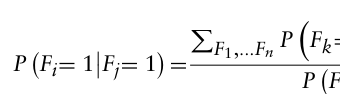
C. Diagnosis and analysis of causes of college fire based on Bayesian network According to the above, Bayesian network has the characteristics of bidi- rectional reasoning. By analysing from the root node upwards, the influence degree of risk events on system operation can be analysed, and the occurrence probability of other event nodes in the system can be calculated, namely the posterior probability of risk events. The calculation formula is as follows:
Equation reproduced from the original PDF.
(1 ≤k ≤n, k̸ = i, j) (5) P Fj= 1 In Formula (5), Fi is the intermediate event and the bottom event of the system, fi indicates whether the risk event Fi occurs, and n is the number of nodes in the system failure Bayesian network.
In Bayesian networks, both upward reasoning and downward diagnosis can be made by using the known information of nodes. Therefore, compared with only using fault tree analysis, the transformed system failure Bayesian network has more flexible and effective analysis ability (Runfeng Cao, et al, 2022). The concept of probability importance is introduced. The contribution degree of the minimum cut set to the occurrence of the top event is called the significance degree. In the established system failure
Fire Risk Assessment in Universities Based on Fault Tree Analysis and Bayesian Network 281
Table 2. Name of a Bayesian network node.
Table available in the original PDF paper.
Code Name Code Name T College fire causes heavy damage X6 High power electrical breakdown circuit M1 Expansion of fire X7 Students can’t use fire-fighting facilities M2 Unfavorable evacuation X8 Fire extinguishing effect of fire brigade was ineffective M3 Outbreak of fire X9 fire brigade was late in arriving M4 Fire was not effectively contained
X10 Fire extinguishing equipment failure M5 Evacuation capacity is insufficient X12 Insufficient fire supply
X11 The layout of fire-fighting facilities is unreasonable M6 Building evacuation capacity is insufficient X14 Self-alarm system failed M7 Source of ignition X13 Self-injection system failed M8 Poor fire extinguishing ability of buildings
M9 Building fire resistance is poor X15 Structure of the building is not reasonable M10 System management is not in place
X16 Fire resistance of the building is not enough M11 Building structure is not reasonable
X17 Unreasonable division of fire protection zones M12 Open flame source X18 Fire drill is not in place M13 Electric ignition source X19 Personnel safety awareness is weak M14 Not in time to save themselves X20 Lack of management and coordination ability M15 Ineffective fire brigade X21 Enforcement of fire regulations is not in place M16 Failure of fire service X22 Emergency plan is not in place M17 Line fire X23 Excessive personnel density X1 Cigarette and common sources of ignition
X24 Building smoke exhaust system failed X2 Use an open flame X25 No evacuation instructions or unclear X3 lightning strike X26 The number of safety exits is less X4 Aging of line X27 Distance to safety is too long X5 short circuit X28 Evacuation path is too narrow Bayesian network, the state value of each node is two-state. Probabilistic significance degree is one of the importance degree, which can reflect the change degree of system failure caused by the change of factor state. In Baye- sian networks, risk events with greater probability importance have greater impact on system reliability. Therefore, it is necessary to focus on prevention and optimization. The probability importance calculation formula of the root node of Bayesian network is.
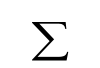
IPr
Equation reproduced from the original PDF.
282 Ang and Sun
Table 3. Bayesian network root node prior probability table.
i (yi) is the difference between the top event probability value when yi node takes 1 and the top event probability value when yi node take 0. A posteriori probability and probability importance of 28 root nodes are calculated, and the data list will be obtained, as shown in Table 4.
Table 4 shows the ranking results of a posteriori probability and probabi- lity importance of basic events, so as to compare the impact of basic events on the whole system in fire, so as to effectively prevent and optimize weak links.
Among the results, X6, X8, X18, X19 and X23 are ranked at the top, indi- cating that the breakdown circuit of high-power electrical appliances, weak fire awareness, large population density, poor fire extinguishing effect of fire brigade and inadequate emergency plan preparation are the main causes of college fire. This suggests that colleges and universities should strengthen student management and avoid using high-power electrical appliances in dor- mitories and other areas with a huge power load. We should strengthen the training of teachers and students, strengthen the fire awareness, and prepare the fire emergency plan, so that we can be ready when the fire comes. Col- leges and universities should also make reasonable plans to reduce the staff density. The fire brigade also strengthened the fire drill of the university area to enhance the fire extinguishing effect. In addition, for evacuation-related events such as X23, X24, X25, X26, X27, X28, the posterior probability ranks the bottom, but the probability importance ranks the top, indicating that evacuation is an indispensable factor in controlling the consequences of fire. In the planning of colleges and universities, the design of evacuation mode should be fully considered. Arrange reasonable and convenient eva- cuation channels, eye-catching evacuation prompts. Can greatly control and reduce fire damage.
CONCLUSION
(1) This paper presents a method of combining accident tree analysis with Bayesian network and applying it to fire risk assessment in colleges and universities. Based on the big data of fire protection, this paper uses Genie3.0 software to build the Bayesian network model of college fire risk, and takes a university in Nanjing as an example to carry out
Fire Risk Assessment in Universities Based on Fault Tree Analysis and Bayesian Network 283
Table 4. Ranking table of posterior probability and probability importance of root nodes in Bayesian networks.
the example analysis of fire risk assessment. It is proved that FTA-BN method has potential application in the field of fire risk assessment. (2) Bayesian network can deduce the conditional probability of occurrence of each node when the failure probability of risk events is known, which can reflect the possibility of system failure under a specific environment, and conduct quantitative analysis of the whole system. The compreh- ensive use of FTA and BN analysis methods can make use of strengths and avoid weaknesses, improve the system analysis ability, and quickly diagnose and analyse the fault problems of complex systems. It makes up for the disadvantages of FTA in complex system calculation. This method also makes use of prior knowledge and does not require high data quantity and quality. (3) Due to the lack of historical accident data of some risk events and some abstract events that are difficult to quantify, the prior probability is obtained by fuzzy comprehensive evaluation method based on expert evaluation, which does not completely avoid the influence of human
284 Ang and Sun
subjectivity on the objectivity of the system. The follow-up work can be conducted on the basis of collecting historical accident data, building different analysis models for different accident scenarios, and proposing effective and reliable coping strategies.
REFERENCES
Aiyou Wu, Shiliang Shi, Conglu Wang. 2009. Urban fire risk analysis based on accident tree method and triangular fuzzy theory [J], China Safety Science Journal, 2009, 19(07):31–36. Bingyu You, Fumian Lian, Xianghai Meng. 2019. Cause analysis of mountain expres-
sway accidents based on fault tree Bayesian network [J]. Traffic Information and Safety, 2019, 37(04): 44–51. Fenton N, Neil M. 2018. Risk assessment and decision analysis with Bayesian networks [M]. Crc Press, 2018. Guo J, Feng T, Timmermans H J P. 2019. Time-varying dependencies among mobility
decisions and key life course events: An application of dynamic Bayesian deci- sion networks [J]. Transportation research part A: policy and practice, 2019, 130: 82–92. Hu L, Kang R, Pan X, et al. 2020. Uncertainty expression and propagation in the risk assessment of uncertain random system [J]. IEEE Systems Journal, 2020, 15(2): 1604–1615. Jianchuan Ma, YinBao Zhong, Lang Lang, Jingjing Xiao, Qing Wang, et al. 2021.
Intelligent fault diagnosis of ventilator based on fault tree and Bayesian network [J]. Chinese Journal of Medical Physics, 2021.38(09):1129–1135. Jianqiang Xu, Xiaoyong Liu, Yanfei Su, Qiansheng Huang. 2019. Research on building fire dynamic risk assessment method based on Bayesian network [J]. China Safety production science and technology, 2019, 15(02): 138 -144. Kelly D.L, Smith C.L. Bayesian inference in probabilistic risk assessment—the current
state of the art [J]. Reliability Engineering & System Safety, 2009, 94(2): 628–643. Lining Zhang, Qi Zhang, Jing An, Lihua Zhang. 2015. Study on Comprehensive fire risk Assessment System of high-rise civil building [J]. Journal of Safety and Environment, 2015, 15(05):20–24. Qiang Zhang, Rong Qiu, Yong Jiang. 2016. Research on Parameter uncertainty of
vertical shaft neutral surface model based on Bayesian method [J]. Fire Science, 2016, 25(03):148–157. Runfeng Cao, Ruixian Liu, Jing Liu. 2022. Reliability analysis of road transport system of hazardous Chemical tank Transporter based on fault tree and Baye- sian network [J]. Journal of Shandong University (Science Edition), 2022, 57(01): 20–29. Wilson A.G, Huzurbazar A.V. 2007. Bayesian networks for multilevel system
reliability [J]. Reliability Engineering & System Safety, 2007, 92(10): 1413–1420. Xueming Shu, Jun Yan, Jun Hu, Jinjin Wu, Boyu Deng. 2020. Building fire risk assessment model based on Bayesian network [J]. Journal of Tsinghua University (Natural Science), 2020, 60(04): 321–327. Yishan Gong, Yuanyuan Gao. 2009. Fault diagnosis model based on fault tree and
Bayesian network [J]. Journal of Shenyang University of Technology, 2009, 31 (04): 454–457. Zheng Y, Zhao F, Wang Z. 2019. Fault diagnosis system of bridge crane equipment based on fault tree and Bayesian network [J]. The International Journal of Advanced Manufacturing Technology, 2019, 105(9): 3605–3618.
LISTED IN THE AHFE DIGITAL BOOKSTORE CATALOGUE
Explore the complete digital volume
Intelligent Human Systems Integration (IHSI 2023): Integrating People and Intelligent Systems
Read this individual research paper free through the original publisher, or explore the full digital proceedings book.
ISBN 978-1-958651-45-2
Explore this ISBN in the AHFE Bookstore ↗Listed in the July 2026 bookstore catalogue; search by ISBN to confirm current availability · Digital book purchase optional