Yu Xin Jiang, Xun Chen, Xu Li (2024). Factors influencing the use of shared stroller rentals in scenic spots—an extension based on the UTAUT model. In: Intelligent Human Systems Integration (IHSI 2024): Integrating People and Intelligent Systems. AHFE Open Access, vol. 119, pp. 429–436. https://doi.org/10.54941/ahfe1004507
Purpose: With the rise of parent-child travel, the trend of sharing economy has given birth to shared strollers. This emerging field aims to ease the burden on parents. However, although many shared stroller brands have emerged on the market, this sharing model is similar to other sharing forms and also faces a series of development challenges. In previous studies, users' awareness and acceptance of shared strollers for rent in scenic spots have not been studied in depth. Therefore, the purpose of this study is to deeply explore the factors that affect users' willingness to use shared stroller rentals to promote the improvement of shared service quality.Methods: We adopt UTAUT (Unified Theory of Technology Acceptance and Usage Model) as a theoretical framework to explain user adoption behavior. First, we issued questionnaires to analyze users' usage behavior, and then introduced the internal variables in the UTAUT model, including performance expectations, effort expectations, social influence and convenience conditions, into the context of shared stroller rental. We then conducted in-depth scenario interviews to further observe users’ actual behaviors and understand their potential needs. By analyzing the actual behavior of users, we further refine the secondary variables related to internal variables, such as observability, trialability, compatibility, complexity, etc., aiming to quantify the impact of these internal variables on user intentions.By mapping the user decision-making process, the functional requirements of users at different stages are clarified. To assess the priority of feature points, we used a 5-point scale questionnaire among people aged 22 to 50 years with children. The specific items related to secondary variables in the questionnaire reflect the impact of different factors such as performance expectations, effort expectations, social influence, and convenience conditions on users' willingness to use shared stroller rentals.Research results: Performance expectations, convenience conditions and satisfaction have the most significant positive impact on adoption intention, followed by social influence. Perceived risk and expected effort showed significant negative effects. Based on the survey results, we made recommendations for improvements to the existing shared stroller service. These research results provide solid theoretical support and empirical data for understanding the adoption process of shared stroller rental services, and also provide useful reference for the development and promotion of similar services.Significance: Users' attention to shared strollers plays an important role in the development of shared service-related industrial chains. Based on these results, we summarized the shortcomings of shared stroller brand design and put forward suggestions to improve users' willingness to use them, provide theoretical reference for the design of such products, and provide management suggestions for stakeholders.
With the popularization of domestic mobile Internet and the improvement of the driving force for the development of the sharing economy, the wave of the sharing economy has begun to shift to the parent-child consumption market, following adult consumption areas such as shared bicycles and shared cars. Affected by factors such as consumption upgrades, the new generation of parents is increasingly paying more and more attention to the growth of their offspring. Many new “parents” are willing to do their best to provide better material and spiritual conditions for their children, and the number of parent- child trips has also increased. Although shared strollers seem to meet the needs, they also keep parents away from them due to safety, hygiene and difficulty in returning them. This is contrary to the “shared strollers” concept advocated by brands such as Panda Walker, Bubble Rabbit and Pollen. Faced with this emerging business model, whether users are willing to participate has become a top priority for whether this model can develop and grow.
INTRODUCING UTAUT TO ANALYZE THE INFLUENCING FACTORSTHAT AFFECT USERS’ USE OF SHARED STROLLERS IN SCENIC SPOTS Shared stroller rental has just emerged in China, and its related research is limited to the imagination and design of shared strollers from the perspec- tive of strollers or operating brands. Research on shared stroller rentals in
the academic field often starts from certain perspectives, and these studies revolve around user experience, product design and related service design. Qiuyu Lu and others analyzed the target customers of shared strollers from the perspective of user groups; Bei Liu and others designed a shared stroller service system in scenic spots with the aim of solving existing inconveniences and improving user experience; Xuechen Wu optimized the stroller sharing service model using business model innovation and modularization; Cailian Wang and others conducted innovative design research on stroller products based on scenario-based thinking; However, research on user engagement from the perspective of consumer is very scarce, and there are relatively few studies on user behavioural intentions and actual behaviours. Therefore, this article will use the Unified Theory of Acceptance and Use of Technology (UTAUT) to conduct an empirical study on the participation behaviour of shared stroller rental users, in order to find the core influencing factors that affect users’ participation in shared stroller rental and provide reference for the development of the emerging field of shared stroller rental service.
This project selected theme parks, zoo and botanical gardens, cultural vil- lages as main research scenarios. In these scenic spots, shared stroller rental services can be used as a convenient way to travel, helping tourists better explore various attractions and activities in the scenic spots. Shared strollers in this scenario are usually light and easy to carry. In order to facilitate the use of tourists of all ages, strollers usually have simple controls and operation methods. Shared strollers in some scenic spots also provide equipped services, such as tour guide explanation and scenario maps, etc.
The project distributed questionnaires to investigate users’ usage behaviour, and set up qualitative open-ended questions and semi-structured questions to collect users’ opinions on the expectations of shared stroller rental services.
This project sorted out the 109 returned questionnaires to extract useful information about user needs, opinions and suggestions. The information extracted from the questionnaires was related to the four variables of the UTAUT model (performance expectations, effort expectations, social influ- ence and convenience conditions). Try to gain a deep understanding of how users perceive these variables and how this is expressed in their expectations and opinions.
UTAUT AS A SUPPORTIVE FRAMEWORK FOR ANALYSIS AND DESIGN The applicability of the UTAUT model in scenic spot scenarios can enhance the understanding of user adoption behaviour motivations and influencing factors. The application of this model facilitates in-depth research on the adoption of shared stroller rental services and provides a powerful theoretical framework to explain users’ decisions and behaviours.
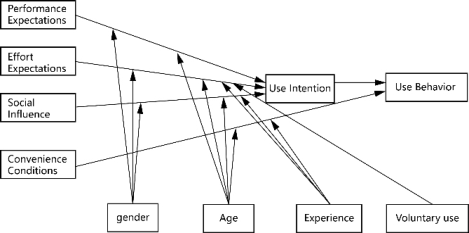
Performance Expectations Visitors to scenic spots usually pursue a pleasant tour experience, and shared stroller rentals can increase the convenience and flexibility of tours. Expected
Factors Influencing the Use of Shared Stroller Rentals in Scenic Spots 431
performance factors are highly relevant to this goal, as tourists expect this innovative service to provide a high level of experience. Performance expec- tations are defined as the performance and effects they expect from the service when using it in the scenic spot. This includes:
Figure 1: UTAUT model proposed by Venkatesh.
Convenience: Tourists expect shared stroller rental services to provide a convenient rental process, reduce waiting time and improve the efficiency of their tours.
Pleasure: The service usage process is expected to increase the pleasure of visiting, for example, by providing a comfortable vehicle and a pleasant travel experience.
Reliability: It is expected that the shared stroller rental service can provide reliable services at various rental sites in the scenic area to ensure the quality and availability of the vehicles.
Adaptability: Tourists may expect this service to adapt to different scenic environment and travel needs, such as mountainous, urban or coastal scenic spots. This includes shared strollers used in scenic spots that can adapt to the terrain of the scenic spot and the tour routes of the scenic spot, which can improve the user’s efficiency and travel experience.
Effort Expectations The effort factor involves the ease of the use of shared stroller rental services. If the usage process is simple and clear, visitors will be more likely to use it because they don’t have to put in as much effort. In this study, effort expec- tation is defined as the level of effort required by tourists when using shared stroller rental services, including:
Complexity of the registration and rental process: Do tourists think the registration, rental, and return processes are simple and require additional time and effort?
Skills and knowledge requirements: Whether visitors need special skills or knowledge to use the shared stroller rental service, such as operating a mobile app or knowing the location of the rental car station.
Social Influence The effort factor involves the ease of use of shared stroller rental services. If the usage process is simple and clear, visitors will be more likely to use it
because they don’t have to put in as much effort. In this study, effort expec- tation is defined as the level of effort required by tourists when using shared stroller rental services, including: Complexity of the registration and rental process: Do tourists think the registration, rental, and return processes are simple and require additional time and effort?
Skills and knowledge requirements: Whether visitors need special skills or knowledge to use the shared stroller rental service, such as operating a mobile app or knowing the location of the rental car station.
Convenience Conditions Equipment convenience factors are also important in a scenic area environ- ment, as tourists want to rent and return vehicles quickly and conveniently within the scenic area to make the most of their visit time. This study defines convenience conditions as whether tourists think it is convenient to use shared stroller rental services, including:
Distribution of rental sites: Do tourists find the distribution of rental sites convenient in the scenic area, and whether there are enough rental sites to choose from.
Convenience of the rental and return process: Do tourists find the rental and return process easy to understand and operate?
Vehicle availability: Whether visitors feel there are enough vehicles avail- able for rental to meet their needs.
Since shared strollers are an emerging business model, it is believed that the factors influencing the use of strollers are less affected by experience, but their use is also affected by the transfer of thinking from other sharing models. Compared with other shared products, shared stroller rental services involve more stages of use. Users need to understand the rules and operat- ing methods of the shared stroller rental platform, including complex steps such as unfolding and folding the vehicle, safe disinfection, and returning the vehicle at a designated location.
Then 3–4 users were selected for in-depth scene interviews to understand the users’ actual experiences and needs. By actually observing how users use shared strollers in scenic scenes, the actual behaviours, preferences and inter- actions of users are captured. During on-site interviews, actively interact with users to understand their needs and opinions, and identify potential prob- lems such as difficulties, concerns or dissatisfaction that users may encounter during use through behaviour.
The project summarized the information to draw user portraits of several representative figures.
This project will introduce a user named Xiaoying, who represents users who have used shared strollers in scenic spots. Basic characteristics: 29 years old, female, bachelor’s degree, has 2 children, living in the city. Xiaoying loves traveling and outdoor activities, and often goes to different scenic spots and natural parks on weekends or during vacations. She realized that a stroller with a baby or young child might not be portable when roaming in the scenic area, so she tried to learn about the shared stroller rental service in the scenic
Factors Influencing the Use of Shared Stroller Rentals in Scenic Spots 433
area. She has used this service many times, and the shared stroller allows her to travel Easy to move around the scenic area and make it easier for children to fall asleep or rest.
The project introduce another user named Xisha, who represents users who have never used shared strollers. Basic characteristics: 33 years old, female, with a bachelor’s degree and a daughter. Xisha is keen on traveling and exploring different scenic spots and cultures. Although she enjoys trav- eling with her daughter, she has never used a shared stroller rental service in scenic spots, instead relying on the shared stroller she brings with her. Some factors lead to Xisha never using the shared stroller service in the scenic area, including: She usually brings her own stroller to provide sufficient comfort and convenience to meet her daughter’s needs. On the other hand, she may be more inclined to use her own stroller because she is more familiar with it and feels that it provides adequate safety and portability.
Based on the interview data, key behaviours and opinions were sum- marized. During the scene interviews, this project found that the actual behaviours were consistent with the questionnaire survey data. Performance expectations, convenience conditions, and effort expectations positively affect users’ use. Among users with high education levels, they use shared stroller services earlier than users with low education levels. Gender factors have no significant impact on shared stroller rentals.
Utilizing the five stages outlined in the innovation diffusion theory, the project conducted a comprehensive analysis of the factors influencing users’ willingness to utilize shared strollers in scenic spots. This involved mapping out the user journey, testing specific key factors accepted and rejected by users, and seeking to theoretically elucidate the correlation mechanisms influ- encing the willingness to rent shared strollers in scenic spots. Additionally, a questionnaire was employed to gain further insights into users’ character- istics, needs, preferences, and feedback, aiming to identify suggestions for enhancing the current products or services.
Performance expectations have an impact at all stages of the user jour- ney. Effort expectations have a greater impact in the early stages of the user journey (awareness, interest, and evaluation stages). Social influence has a greater impact in the user awareness stage. Convenience conditions are more important in our user journey. Each stage has an impact.
Based on the four variables of the UTAUT model, the function points are defined based on the demand points in different processes of user decision- making, as shown in the table.
CONCLUSION
In the following survey, the project established an importance judgment scale and asked them questions about their attitudes, expectations, needs and usage habits towards the shared stroller rental service in the form of a questionnaire. The question items used Li Ke In the form of a special 5-level scale, each item is composed of a set of statements, and each question is composed of 5 items: “strongly disagree”, “disagree”, “generally”, “agree” and “strongly agree” to understand which features are more important to users.
Table 1. Definition of function points in the user decision-making phase.
Table available in the original PDF paper.
Stage Number Function Point Conscious CS1 Provide detailed service introduction and guide, including service content, car models, leasing process, etc CS2 Provide safety information about stroller seats and vehicles CS3 Provide a clear pricing strategy including fee structure etc. Interest IT1 Offer multiple pricing options, such as hourly, daily, or membership packages IT2 Provides a user-friendly booking interface that allows users to easily select dates, times and vehicles IT3 Displays available stroller models and specifications, including child seat types and ages. IT4 Provides a user rating and feedback system that allows users to share their rental experiences and read reviews. Assessment AS1 Provides price comparison tools to help users find the most affordable rental options. AS2 Send a booking confirmation email or text message with rental details, and send reminder notifications to ensure users don’t miss out on a rental. AS3 Provide standardized safety equipment and child seats and ensure they are thoroughly cleaned and inspected before each rental. Experience EX1 Provides online map navigation, vehicle location and fast car pick-up and return processes. EX2 Customer support is available around the clock, including phone, online chat, and email support. EX3 Regularly inspect and maintain all safety equipment to ensure its quality and cleanliness. Adoptions AD1 Provide a regular vehicle maintenance program to ensure vehicles are in good working order. AD2 Introduce new car models and improved features to stay competitive and attract users. AD3 Offer membership programs, points rewards and promotions to reward loyal users. AD4 Collect user feedback and respond proactively to gradually improve service quality.
This project collected 389 questionnaires. After clearing out the abnormal data, this project found that performance expectations, convenience condi- tions, effort expectations, and social conditions positively affect users’ usage, while perceived risk negatively affects users’ usage. However, the influence of age factor is not significant. The influence of gender factor on usage is reflected in the choice of stroller style. Female groups are more inclined to choose lightweight styles. Create a priority matrix to rank user needs in order of importance and urgency.
Must Have: These function points are crucial, the basic requirements of the product, and crucial to the user experience.
Should Have: These function points are very important to improve user experience, but they may be difficult to implement.
Could Have: These feature points have a certain value, but are not as urgent as the first two categories and can be implemented in subsequent versions.
Factors Influencing the Use of Shared Stroller Rentals in Scenic Spots 435
Table 2. Function point definition and priority.
Table available in the original PDF paper.
Number Content priority Importance Difficulty must have 5 2 CS1 Provide detailed service introduction and guide
Must Have 5 3
IT2 Provides user-friendly booking interface Must Have 5 3 CS3 Provide a clear pricing strategy Must Have 5 2 EX3 Provide safety equipment and seat cleaning and inspections Should Have 4 3 EX1 Provide online map navigation Should Have 4 3 CS2 Provide safety information about seats and vehicles
Should Have 4 3
IT1 Provide explicit billing methods Should Have 4 2 IT4 Provide user evaluation and feedback system Could Have 3 3 EV2 Send booking confirmation email or text message
Won’t Have 2 4
EX2 Provide customer support Could Have 3 3 EV1 Provides price comparison tools Could Have 3 4 AD1 Provide regular vehicle maintenance plans Could Have 3 3 AD2 Introducing new models and improved features Won’t Have 2 4 AD3 Provide membership programs and points rewards
Won’t Have 2 3
AD4 Collect user feedback and respond proactively
Won’t Have: These feature points are not necessary for the current version of the product and can be considered for implementation in future versions.
Aligning with the priorities, the design of this project emphasizes delivering a comprehensive service introduction, creating a user-friendly booking inter- face, implementing a transparent pricing strategy, and ensuring meticulous cleaning and inspection of safety equipment and seats. The optimized shared stroller design puts user experience at the forefront of the design, aiming to ensure that the user interface, interactions and workflows seamlessly support the highest priority functions.
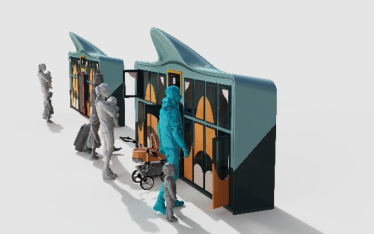
Figure 2: Lease use and return scenarios.
ACKNOWLEDGMENT
The author would like to thank Li Xu for her kind guidance.
REFERENCES
Carrol, J.M. (2000) “Five reasons for scenario-based design”, Interacting With Computers, Volume 13, No. 1, pp. 43–60. Hamari, J., Sjöklint, M., Ukkonen, A. (2016) “The sharing economy: Why peo-
ple participate in collaborative consumption”, Journal of the Association for Information Science and Technology, Volume 67, No. 9, pp. 2047–2059. Hu, F.Y., Li, Y. (2021) “Research on the Status Quo and Development of Chinese Stroller Industry”, China Bicycle, No. 4, pp. 76–78. Huang, G.Q., Chen, X. (2017) “A Study on the Intention of Bike-Sharing Usage
Based on Context Awareness Theory and UTAUT Model”, Consumer Economics, Volume 33, No. 3, pp. 62–68, 16. Jiang, L., Lu, Q.Y., Yang, G., Li, R.R. (2018) “Explore the target customers of “Yue Tong” shared children’s car”, Modern Business, No. 21, pp. 164–165. Liu, J.P., Li, Y. (2019) “Application of Green Design Concept in Product Design of
Buggy”, Chinese Bicycle, No. 6, pp. 77–81. Liu, K. (2019). Research on the Business Model of Shared (rental) strollers (Master’s thesis). Shenzhen: Shenzhen University. Liu, Y.W. (2019). Research on sustainable use design of baby stroller based on sharing
concept (Master’s thesis). Guangzhou: Guangdong University of Technology. Mcneal, J.U., Ji, M.F. (1999) “Chinese children as consumers: an analysis of their new product information sources”, Journal of Consumer Marketing, Volume 16, No. 4, pp. 345–365. Mcneal, J.U., Yeh, C.H. (1997) “Development of consumer behavior patterns among
Chinese children”, Journal of Consumer Marketing, Volume 14, No. 1, pp. 45–59. Ren, G.P., Liu, Y.W., Yu, D.J., Chen, Z.J. (2018) “Sustainable Use Strategies of Baby Carrier under the Shared Concept”, Packaging Engineering, Volume 39, No. 16, pp. 178–183. Stimson, T. (2010). What’s Yours is Mine. London: Pan Macmillan. Wang, C.L., Yu, X.Y., Hu, H. (2021) “Research on innovative design of stroller based
on scenario thinking”, Design, Volume 34, No. 9, pp. 128–131. Wu, F.T., Huang, S.H., Yin, B.Y. (2018) “Scenario-based Service: New Thinking of the Design of Learning Service”, Research on Audio-Visual Education, Volume 39, No. 12, pp. 63–69. Wu, X.C. (2019) “Research on innovative design of business model for sharing baby
strollers”, Design, Volume 32, No. 19, pp. 113–115. Yu, L. (2020) “Design of parking management system for shared stroller based on RFID”, in: MATEC Web of Conferences, Sanya, China.
LISTED IN THE AHFE DIGITAL BOOKSTORE CATALOGUE
Explore the complete digital volume
Intelligent Human Systems Integration (IHSI 2024): Integrating People and Intelligent Systems
Read this individual research paper free through the original publisher, or explore the full digital proceedings book.
ISBN 978-1-958651-95-7
Explore this ISBN in the AHFE Bookstore ↗Listed in the July 2026 bookstore catalogue; search by ISBN to confirm current availability · Digital book purchase optional