Yangyang Pan, Yuanli Yu, Izzy Yi Jian, Yu Liu, Sky Tiantian Lo, Shuyi Cheng (2024). Revitalizing Urban Village Environments through Digital Twin Technology: A Case Study of Nantou Ancient Town. In: Accessibility, Assistive Technology and Digital Environments. AHFE Open Access, vol. 121, pp. 180–190. https://doi.org/10.54941/ahfe1004626
The rapid advancement of the digital age has significantly expanded the potential applications of digital twin technology. However, urban villages, characterized by low socio-economic status and limited access to digital twin technology. Additionally, Prior studies often overlook structural factors like inadequate planning and infrastructure, hindering efforts to improve urban village living conditions.Consequently, this study aims to investigate the implementation of digital twin technology to enhance the environment of urban villages and address issues such as outdated infrastructure and inadequate living conditions.The purpose of this study is to create a virtual model of an urban village (Nantou Ancient Town) using digital twin technology (Unreal Engine). The model will use 3D geospatial and data visualization to visually present the living conditions of urban villages, including buildings, population density, water supply and green space. The aim is to provide practical insights for enhancing the overall environment and improving living conditions in urban villages through targeted infrastructure improvements and environmental upgrades.Therefore, this research is of significant importance in improving the environment of urban villages and providing more opportunities for accessing digital technology. Furthermore, it highlights the potential of utilizing digital technology to enhance living conditions in urban villages, based on the premise of promoting balanced development of basic infrastructure in urban villages, and it also strengthens community inclusivity and sustainable development in urban villages.In conclusion, this research has promising prospects in advancing the field of digital improvement of living environments by exploring the widespread application of digital twin technology like the Unreal Engine, especially in areas where digital technologies are lacking, and addressing existing research gaps. By uncovering the potential of these technologies, this study has the possibility to enhance the well-being of urban village residents through the utilization of technology, drive innovation, and shape the future of digital living environments.
Revitalizing Urban Village Environments Through Digital Twin Technology 181
INTRODUCTION
Research Background Since its emergence in the 1970s, digital technology has experienced remark- able growth and has profoundly transformed business operations (Rosen- zweig & Roth, 2007). The digital age has ushered in a wave of technological advancements that hold the potential to revolutionize multiple aspects of our lives. Industries are witnessing a significant surge in the production of digital goods and services (Ren et al., 2022).
Digital twin technology has gained attention for its ability to create vir- tual replicas of physical entities, enabling real-time monitoring, analysis, and optimization. While initially used in engineering, its application in urban contexts has emerged recently (Batty, 2018). Urban digital twins are living models of physical systems that adapt to changes in the city using real-time sensor data. They allow for simulations and predictive modeling, enabling decision-makers to explore different scenarios and assess their impact before implementing them in reality (Kaur et al., 2020).
Digital twin technology holds immense promise in addressing the complex challenges urban areas face, particularly urban villages. Urban village land belongs to the villagers, the same as in the rural system (Lai et al., 2014). Thus, urban villages are not under the jurisdiction of the urban administra- tion system, it is impossible to effectively enforce development control and urban planning laws, which leads to loopholes (Hao et al., 2011). In the absence of formal regulations and planning, the construction and mainte- nance of urban villages are on the basis of self-help. They are not driven to maintain buildings, enhance infrastructure, or enhance the environment. Furthermore, poverty, congestion, and social issues including crime, fire dan- gers, public health, and disputes are frequently linked to urban villages. At the urban scale, the unevenness of the urban development process results in diverse characteristics among different urban villages. These different aspects form a dynamic matrix of forces. The vulnerable position of rural communi- ties in times of upscaling of services and digitalization ( LaRose et al., 2007), therefore, the application of digital technology in urban villages, aimed at improving the environmental conditions within them, can have a significant impact on the overall development of the city, greatly shaping the urban land- scape and the housing market across the entire city, and fostering a more inclusive society.
Research Objectives Recognizing the potential of digital twin technology to address these issues, this study aims to investigate its implementation in enhancing the environ- ment of urban villages and improving living conditions. Specifically, the study focuses on creating a virtual model of Nantou Ancient Town, an urban vil- lage, using the powerful digital twin technology framework of the Unreal Engine. By utilizing 3D geospatial data and data visualization techniques, the virtual model will provide a visual representation of the living conditions in urban villages, including buildings, population density, water supply, and green spaces.
The main objective of this study is that, using the virtual model created by the digital twin, policymakers, urban planners and community stakehold- ers will be able to identify areas that need to be improved and formulate strategies to address the existing challenges in order to enhance the over- all environment of the urban villages and improve their living conditions. In addition, the study highlights the potential of digital twins in bridging the dig- ital divide by providing urban village residents with opportunities to access and benefit from digital technologies.
Significance This research is important for advancing the field of digital improvements in living environments, especially in areas where digital technologies are lack- ing. There is great potential in improving living conditions in urban villages by exploring wider applications of digital twins, particularly in the use of dig- ital twins such as the Unreal Engine. It fills an existing research gap, drives innovation and shapes the future of digital living environments, and paves the way for innovative solutions to improve the well-being of people living in urban villages. In addition, this study highlights the urgent need to promote balanced infrastructure development in urban villages, foster community inclusiveness and achieve sustainable growth.
LITERATURE REVIEW
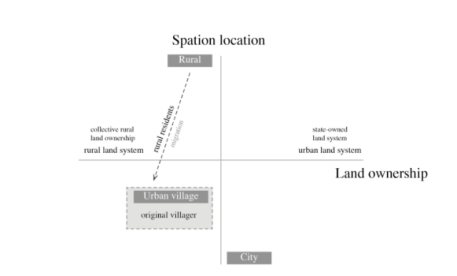
Definition The Formations of Urban Villages As rural industrialization and urban expansion continue at a rapid pace, rural farmland has undergone significant transformation, resulting in the widespread emergence of urban villages in these areas (Zhang, 2011). A considerable amount of agricultural land was converted into urban areas, depriving people of their primary source of income. In order to generate income, people either expanded their existing residences or constructed new ones on jointly owned land. Eventually, these traditional villages evolved into what is now known as “urban villages”(Lai & Tang, 2016) (see Figure 1 for details).
Figure 1: Quadrant relationship of urban village formation.
Revitalizing Urban Village Environments Through Digital Twin Technology 183
Digital Twins The progress of technology, particularly the Internet of Things (IoT), has made it feasible to create digital replicas of real-world environments (Angelakis et al., 2016). This concept aligns closely with the definition of “digital twins” (DT), which refers to digital representations or copies of physical objects based on their data. DT enables public, private, and civil society stakeholders in smart cities to: track the behavior of the actual city and monitor its evolution; plan and develop projects by observing in advance the impact of their implementation on its “twin”; predict any issues and take corrective measures to prevent critical problems. In the architecture, engineering, and construction (AEC) industry, digital twins are recognized as a means to connect teams from various stakeholders and enhance collaboration among them. Consequently, digital technologies have the potential to facilitate public participation while collecting inspection data (Deckert et al., 2020).
Previous Studies Previous studies have highlighted the significance of digital twins in urban planning. In a case study conducted in Zurich, various urban elements were transformed into 3D spatial data and models, regularly updated, and pro- vided advantages in virtual environments. (Schrotter & Hürzeler, 2020). Another case study in Hallberg has the ability to address the complexity of urban environments by allowing for the visualization of intricate relation- ships and processes within urban systems, modeling probable results and effects, and accounting for the many needs and demands of the community through collaborative and participatory planning (Dembski, et al., 2020). These examples illustrate the digital twin implies the continuous enrichment of the 3D spatial data inventory, in addition to the modeling and description of the data, but also the life cycle management of the individual components as well as the entire data inventory.
Transfer to Current Research Based on the above research, the main objective of this study is to utilise the potential of the digital twin technology to construct a 3D model of an urban village, to facilitate the planning process and to promote a balanced develop- ment of infrastructures in order to improve the living environment and access to more digital resources. The presence of residents’ self-built structures poses a challenge to the planning process due to the lack of effective state over- sight. To address this issue, a data-driven digital twin (Charitonidou, 2022) has been adopted to reflect the current state of the environment in urban villages, enabling real-time feedback and facilitating collaborative improve- ment and decision-making. Through scenario analysis, this study will assess the potential impacts of various development strategies on inclusiveness and livability indicators, ultimately improving the inclusiveness and livability of urban village planning.
METHODOLOGY
This research takes a public perspective and adopts a mixed-method approach, using the restoration of Nantou Ancient Town as a case study. Building upon existing relevant research, we utilize digital twin technology to establish a 3D model of Nantou Ancient Town and visualize it in virtual reality. This supports the planning and design process by providing an accu- rate representation of the current state and suggesting feasible optimization recommendations for subsequent implementation. Additionally, a Participant Survey is conducted to validate the potential positive impact of the digital twin model on urban planning, particularly in the context of urban villages, through interviews with participants.
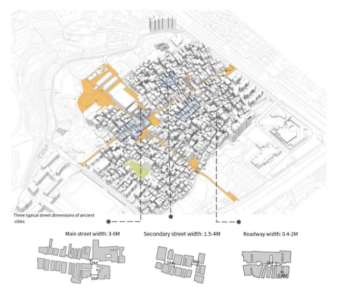
Nantou Ancient City Overview of Nantou Ancient City Shenzhen Nantou Ancient City is an urbanized village with rich historical and cultural resources, so it is selected as a case study.Nantou Ancient City (Xinan Andent City) is situated in the north of Shennan Avenue of Nanshan District and south of Zhongshan Park in Shenzhen (Mi, 2019). The longest point is roughly 420 meters from north to south, and the widest point is roughly 460 meters from east to west. It covers roughly 14.5 hectares in total. The Ming Dynasty’s “Six Verticals and One Horizontal” pattern is essentially followed by Nantou Ancient City. Inside, there are over a thousand buildings with a 50% building density. The majority of the structures are contemporary homes in settlements that have become more urbanized, housing over 30,000 people (Gu et al., 2023).
The scope of the evaluation study after the update is focused on the resi- dential areas and commercial districts within the ancient town. The selection of representative scenarios is done in the form of nodes, which include the updated street block areas and the non-updated residential areas of urban vil- lages. Based on the street dimensions of the ancient town region, we believe that selecting nodes as representative locations can be extrapolated to other plots with similar attributes, as illustrated in the accompanying diagram (Figure 2).
Figure 2: Nantou ancient town street scale (Urban Planning & Design Institute of Shenzhen, 2021).
Revitalizing Urban Village Environments Through Digital Twin Technology 185
Analyzing the Conflicts and Requirements of the Main and Multipublic Stakeholders For residents, a pleasant living and community environment is their main demand for neighbourhood improvement. As the transformation and opti- misation of the urban village environment involves complex interests and property rights relationships, problems such as rising rents, population relo- cation, and the destruction of the original social network often arise during the transformation process, and the government often fails to adequately safeguard the real interests of the residents (Gu et al., 2023). For tourists, the original cultural experience and residential environment are the main demands for visiting the regeneration areas. For businesses, the environment of the neighbourhood also affects the costs and revenues of daily operations.
3D Urban Village Model City digital twins leverage geospatial data and information to construct a detailed and immersive 3D model of the urban landscape. This model incor- porates crucial elements like digital elevation models (DEM) and digital building models provided by local authorities. When developing a 3D rep- resentation of Nantou Ancient Town, the model takes the form of a hybrid composition, seamlessly integrating less detailed and highly intricate sections of the community, encompassing both residential and commercial areas. The level of detail within the model is carefully calibrated, with a focus on the selected review area, where precise and accurate information regarding the anticipated environmental impacts on the community is essential.
The implementation of digital twin technology offers a holistic and com- prehensive solution for urban development. Creating a digital twin model of Nantou Ancient Town, it unlocks the potential to simulate and analyze the consequences of various improvement measures. These measures can span a wide range of domains, including infrastructure upgrades, environmental conservation initiatives, and advancements in community management prac- tices. Digital twin technology empowers decision-makers and urban planners to gain a deeper understanding of the underlying challenges and opportuni- ties present in Nantou Ancient Town. Armed with this knowledge, they can devise effective and targeted solutions to enhance the overall quality of resi- dential living conditions and foster a thriving commercial environment within Nantou Ancient Town.
Interview In order to assess the practicality and level of satisfaction among resi- dents regarding the use of digital twins in urban villages, a semi-structured interview approach is employed. Different sets of questions are designed for various stakeholders, including residents, business owners, and tourists. Finally, these questions were designed to assess the usefulness of digital twins in an urban village setting and participants were asked to rate their responses on a polar scale, making judgements about the attributes of the two opposing pairs.
The interviews included five scenarios: A. Introduction: Researchers introduced basic information to interviewees, including the background, objectives, team, and estimated duration of this research. B. Warm-up questions: To understand the basic personal information of the interviewees. C. Questions about the current situation of Nantou Ancient Town: To understand why they live/travel/travel in Nantou Ancient Town. D. Emotional questions: To understand their own psychology and their views on Nantou Ancient Town and the prospect of transformation. E. Overall questions: To understand the respondents’ personal evaluations and expectations on the application of digital twins in the renovation and renewal of Nantou Ancient Town.
There were several core questions in each scene that were asked first. Then several “Why” questions were asked to extend the conversation and dig into details according to each participant’s answers.
RESULTS
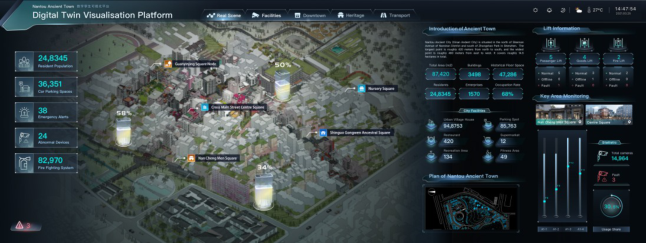
Nantou ancient Town due to its long history and many ancient buildings, some public supporting services are aging and dilapidated, and the water supply, power supply and drainage systems may need effective monitoring and maintenance and upgrading. The “urban village” has a very complex demographic structure and a large transient population, which also makes security management very difficult. Through the visualisation of urban build- ings, the physical structure of Nantou’s old city is simulated and reproduced, and seamlessly integrated with the city’s various business systems. Capture key information and comprehensive situation of the city, and realise deep correlation and fusion display of cross information. It helps users to deeply grasp the real-time dynamics of Nantou Old Town in terms of safety mon- itoring, resource system optimisation, facility failure statistics and analysis, spatial planning, urban operation and facility utilisation. Through the visual- isation tool based on 3D modelling to realise the data visualisation building 3D model display, users can interact with the urban building model with just a click of the mouse. And based on the dynamic display, analysis and man- agement of large screen data, comprehensive, accurate and transparent visual monitoring platform as illustrated in the diagram (Figure 3).
Digital Twins Visualisation Platform of Nantou Ancient Town In the two-dimensional panels on both sides of the smart city, the real-time status monitoring of asset information, fault management and other real- time conditions in all corners of the ancient city of Nantou is displayed. The massive multi-range static data is presented concisely and clearly, accelerating the full deployment of resources by users. Further, refine the granularity of the work, improve the city’s asset monitoring, facilities management, inspection and operation and maintenance, energy consumption, security accuracy, etc. to help reduce the operating costs of the ancient city of Nantou, planned resource planning and energy savings.
Revitalizing Urban Village Environments Through Digital Twin Technology 187
Figure 3: Digital twins visualization platform of Nantou ancient town.
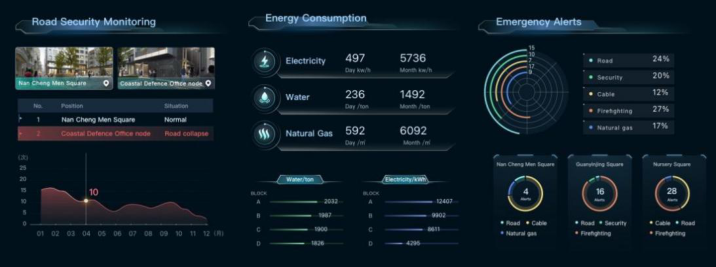
Users only need to view the three-dimensional overview map of the city to know the operating conditions of the park’s water, electricity, roads and other infrastructure equipment. Through information technology, the chem- ical park is endowed with an intelligent brain, which can keenly perceive potential risks, efficiently implement management objectives, and carry out intelligent monitoring, early warning and governance. It gives the urban area the wisdom of sustainable development of safety and environmental protection (Figure 4).
Figure 4: Digital twins visualization platform of Nantou ancient town.
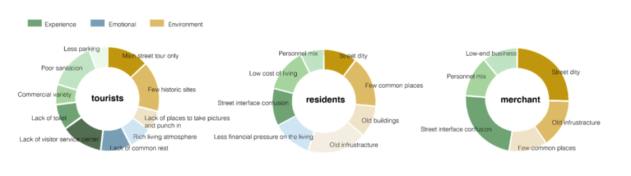
Participant Survey To gain a deeper understanding of the implementation of digital twins in urban villages, specifically focusing on Nantou Ancient Town, a qualita- tive approach was adopted. This approach aimed to delve into individual perspectives, encompassing changes in emotions, the factors influencing these changes, and their resulting impacts. The factors contributing to the applica- tion of digital twins in urban villages can be categorized into three aspects: “environment,” “emotion,” and “experience.”
Under the “environment” aspect, factors such as the participant’s back- ground, occupation, gender, and age are taken into account. The “emotional” aspect considers the participants’ expectations, feelings, and goals regarding the urban village environment. Lastly, the “experience” aspect encompasses
the participants’ acceptance and expectations of modern technologies, specif- ically digital twins. The qualitative approach allows for a comprehensive exploration of these aspects, providing valuable insights into the applica- tion of digital twins in urban villages and their implications on individuals (Figure 5).
Figure 5: Conclusion of interviewee.
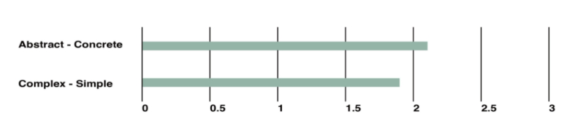
We utilized a polarity distribution to capture participants’ perceptions of the digital twin model of Nantou Ancient Town. Participants were able to make judgments on two pairs of opposite attributes. These pairs are as follows: Abstract - Concrete Complex - Simple The scale range for each pair was from -3.00 to +3.00. The average val- ues were calculated based on the data for each indicator. Overall, the urban digital twin model of Nantou Ancient Town received relatively positive eval- uations (Figure 6). It was perceived as concrete (+2.14) and simple (+1.89). Therefore, based on this data, the virtual model appears to be a useful tool in the urban planning process.
Figure 6: Perceptions of the digital twin model.
However, this conclusion needs to be further examined for several rea- sons. Firstly, this was a small and non-representative sample. Different social groups may have different perspectives on this new tool. Secondly, we only understand the viewpoints of the participants. There is a possibility of biased opinions based on the diverse personal backgrounds of the participants, and we are unaware of the actual effectiveness of these models in real-life conditions.
Revitalizing Urban Village Environments Through Digital Twin Technology 189
CONCLUSION
Digital twins are an emerging technology in smart city research and discus- sions (Hämäläinen, 2021). The actual implementation of 3D city modeling has shown that concrete and realistic simulations of urban development enhance the quality of public debates and strengthen learning and knowledge- based decision-making among heterogeneous urban stakeholders. Establish- ing a visual display and reliable data infrastructure form the foundation for creating a digital twin platform, enabling decision-making related to urban planning.
This study encompasses relatively limited practical experiences of digital twins in urban environments, specifically focusing on their application in the renewal and transformation of urban villages. We embarked on intro- ducing the development of urban digital twin prototypes involving different models, methods, analyses, and simulations. It summarizes our efforts in the development of digital twins for urban planning, representing a novel tool in the field. We employed various technologies and methods, such as 3D modeling, mathematical street network modeling using graph theory, street simulations, modeling of people’s movement patterns, static activity data, and qualitative data regarding people’s perceptions to configure the urban digital twin. Model validation and consolidation were conducted through interviews and surveys involving participants from different backgrounds and identities, enabling us to assess the significance of our approach. Overall, the perception and evaluation of the urban digital twin model of Nantou Ancient Town were highly positive and encouraging. It was regarded as concrete and simple. The use of digital twins as a communication tool has significant potential for improving the urban planning process. By better visualizing complex information in the urban planning process, experts and non-experts can interact more effectively. However, further in-depth social science research is needed to draw more effective conclusions in real-life situations.
This information allows us to adjust the urban digital twin according to the needs of citizens, providing easily understandable models for increasingly complex cities. Establishing a visual display that presents complex “invisible” visualizations of urban 3D data and simulations represents the real world and presents different future variants or plans. However, as inherent to its nature, the urban digital twin does not encompass all information from the physical world and real-life experiences. The goal is to achieve similarity to the real world at a sufficiently accurate level of detail to address complex issues. Therefore, digital twin technology still needs to evolve for its use in urban planning, making digital solutions more cost-effective and sustainable.
REFERENCES
Angelakis, V. (ed.) (2017) Designing, developing, and facilitating smart cities : urban design to IoT solutions. Cham, Switzerland: Springer. Batty, M. (2018) Digital twins. Environment and planning. B, Urban analytics and
city science. [Online] 45 (5), 817–820.
Charitonidou, M. (2022) Urban scale digital twins in data-driven society: Challenging digital universalism in urban planning decision-making. International journal of architectural computing. [Online] 20 (2), 238–253. Deckert, A. et al. (2020) ‘Chapter 9 - Digital tools in stakeholder participation for
the German Energy Transition. Can digital tools improve participation and its outcome?’, in The Role of Public Participation in Energy Transitions. [Online]. Elsevier Inc. pp. 161–177. Dembski, F. et al. (2020) Urban Digital Twins for Smart Cities and Citizens: The Case Study of Herrenberg, Germany. Sustainability (Basel, Switzerland). [Online] 12 (6), 2307. Gu, S. et al. (2023) Post-Renewal Evaluation of an Urbanized Village with Cultural
Resources Based on Multi Public Satisfaction: A Case Study of Nantou Ancient City in Shenzhen. Land (Basel). [Online] 12 (1), 211. Hämäläinen, M. (2021) Urban development with dynamic digital twins in Helsinki city. IET smart cities. [Online] 3 (4), 201–210. Hao, P. et al. (2011) The development and redevelopment of urban villages in
Shenzhen. Habitat international. [Online] 35 (2), 214–224. Kaur, M. J., Mishra, V. P., & Maheshwari, P. (2020). The convergence of digital twin, IoT, and machine learning: transforming data into action. Digital twin technologies and smart cities, 3–17. Lai, Y. & Tang, B. (2016) Institutional barriers to redevelopment of urban villages in
China: A transaction cost perspective. Land use policy. [Online] 58482–490. Lai, Y. et al. (2014) Industrial land development in urban villages in China: A property rights perspective. Habitat international. [Online] 41185–194. LaRose, R. et al. (2007) Closing the rural broadband gap: Promoting adoption of the
Internet in rural America. Telecommunications policy. [Online] 31 (6), 359–373. Mi, R. (2019) Analysis of Methods of Conserving Cultural Heritage in Ancient Cities: A Case Study of Nantou Ancient City in Shenzhen, Guangdong, China. Journal of landscape research. [Online] 11 (4), 125–127. Ren, S. et al. (2022) The emerging driving force of inclusive green growth: Does
digital economy agglomeration work? Business strategy and the environment. [Online] 31 (4), 1656–1678. Rosenzweig, E. D. & Roth, A. V. (2007) B2B seller competence: Construct development and measurement using a supply chain strategy lens. Journal of operations management. [Online] 25 (6), 1311–1331. Schrotter, G. & Hürzeler, C. (2020) The Digital Twin of the City of Zurich for Urban
Planning. Journal of photogrammetry, remote sensing and geoinformation science. [Online] 88 (1), 99–112.
LISTED IN THE AHFE DIGITAL BOOKSTORE CATALOGUE
Explore the complete digital volume
Accessibility, Assistive Technology and Digital Environments
Read this individual research paper free through the original publisher, or explore the full digital proceedings book.
ISBN 978-1-958651-97-1
Explore this ISBN in the AHFE Bookstore ↗Listed in the July 2026 bookstore catalogue; search by ISBN to confirm current availability · Digital book purchase optional