Ziyi Yang, Zhiqiang Fu, Chen Li (2025). A Human-Centered Design Approach: Research on Urban Memory Perception and Preservation Intentions in Urban Villages. In: Human Factors in Design, Engineering, and Computing. AHFE Open Access, vol. 199, pp. 451–461. https://doi.org/10.54941/ahfe1006857
Urban villages represent a unique product of China's urban spatial transformation, bearing the social memories and cultural imprints of specific historical periods. During current renewal and redevelopment processes, urban memories often face risks of dissolution, leading to cultural fragmentation and spatial homogenization.Analysis of urban village data in Hohhot reveals that effectively identifying and preserving memory resources within these communities remains an unresolved challenge. This study focuses on the Shi la men geng urban village in Hohhot, Inner Mongolia, China. Guided by a human-centered design philosophy, it constructs an evaluation system for urban memory cognition. Data collection methods include questionnaires and in-depth interviews, with quantitative analysis conducted using a multiple logistic regression model. Centered on the dual dimensions of “material variables—intangible variables,” the study systematically extracted memory elements and characteristics of urban villages. It constructed a multi-level memory perception influence factor system encompassing two primary variables, 23 secondary variables, and 92 tertiary variables. This framework comprehensively reveals the diverse factors affecting memory perception in Hohhot's urban villages and provides an in-depth analysis of preferences regarding the perception and transmission of memory elements. The findings analyzed urban memory elements in village-in-the-city areas and identified their cognitive and transmission preferences. Results indicate that villagers exhibit significantly higher cognitive awareness of intangible memory elements (e.g., village naming, cultural customs) than tangible ones (e.g., building materials, structural forms). Middle-aged and elderly groups demonstrate stronger recognition of cultural customs, while higher-educated groups show greater attention to material carriers.Based on these findings, the study proposes strategies including differentiated transmission of historical and cultural information, and the integration and recreation of material carrier memory elements. These aim to achieve effective preservation and revitalization of urban memory during urban renewal, maintain the continuity and uniqueness of urban memory, and fully leverage the cultural value and social functions of urban villages.
Urban villages Urban villages represent a distinct spatial category within the urban landscape. Their emergence stems from the government’s expropriation of rural farmland during rapid urbanization, resulting in original rural homesteads becoming encircled by urban development zones. These areas exhibit profound complexity in function, institutional frameworks, and spatial form, and have long been regarded as challenging areas for urban governance and image-shaping.
In the early stages,In the early stages, due to the poor living conditions, inadequate road access, and outdated infrastructure in urban villages, their renewal primarily relied on a “demolish and rebuild” approach. However, such transformations disrupted the original spatial structure, severed historical continuity, and led to homogenized development. As a result, numerous spaces imbued with local memories were sacrificed, gradually plunging the city into a crisis of amnesia. As urbanization enters a phase of high-quality development, cities—as physical entities—bear rich and profound historical imprints from their formation and evolution. Urban villages, serving as crucial physical spaces from the 1990s to the early 21st century, hold significant value for research and preservation.
TheCurrently, Hohhot has initiated pilot projects for urban village renewal through diversified approaches tailored to local conditions, driving the transformation toward systematization and sustainability. Against this backdrop, this paper focuses on Shilamengeng, the oldest and largest existing urban village in Hohhot, Inner Mongolia, China. Guided by a people-centered design philosophy, it synthesizes elements of urban memory through field investigations and literature analysis, establishing a cognitive evaluation system for urban memory. By examining cognitive differences and preservation preferences regarding memory elements across diverse groups, the study integrates residents’ lived experiences and cultural identities into the renewal logic. It explores mechanisms for their organizational reconstruction within urban villages and reflects on renewal practices from an urban memory perspective. Building on this foundation, strategies for sustaining and enhancing urban memory are proposed, aiming to provide reference for revitalizing and reusing urban village spaces.
METHODS
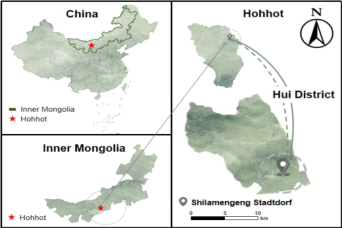
Research Subjects Shilamengeng Village is located in Huimin District, Hohhot City, Inner Mongolia, China (Figure 1). Its establishment dates back to the Ming Dynasty (1625), making it over four centuries old. The village name originates from the Mongolian language, meaning “yellow sand area.” It represents a typical urban village formed during modern urban expansion and embodies the overlapping evolution of agricultural civilization, industrialization, and modern urbanization. As Hohhot’s largest extant urban village, it preserves complex social, economic, institutional, and spatial memories, making it highly complex and valuable for research. While most
A Human-Centered Design Approach: Research on Urban Memory Perception 453
residents have relocated, the village’s buildings and layout remain intact, creating a state of “suspension.” This offers opportunities to document and evaluate its spatial and cultural value, serving as a prime case study for observing how urban villages sustain historical memory during renewal.
Figure 1: Location map.
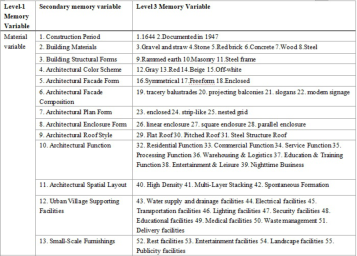
Questionnaire Design The study employed methods such as questionnaires and in-depth interviews to collect data, identifying the constituent elements of Shilamengeng’s urban village memory. Based on their attributes, these elements were primarily categorized into two aspects: physical carrier spaces and intangible carrier spaces. This framework served as the foundation for designing the questionnaire used to survey residents. These memory components comprise two parts: Firstly, material memory variables, which refer to memory carriers formed and evoked by individuals through specific physical objects, spaces, or sensory media (such as architecture, landscapes, etc.). The second is intangible memory variables, which are memory variables constituted and transmitted by spiritual or sociocultural factors such as language and customs, independent of specific material carriers. Therefore, the components of urban memory covered in the questionnaire are divided into “material carriers” and “information carriers,” consisting of 2 primary variables, 23 secondary variables, and 92 tertiary variables (Figure 2).
Figure 2: Memory variable constituent elements.
Research Process A total of 250 survey questionnaires were distributed to urban village residents and city dwellers, yielding 240 valid responses. Respondents primarily comprised original residents of Shilameng Village (including both local residents and those relocated due to redevelopment), architecture- related scholars, and surrounding community members. Their attributes included gender, age, occupation, and duration of stay.
Data Processing This study employed SPSS 27.0 for data analysis. Statistical analysis was conducted on the awareness rate of primary variables and residents’ willingness to pass on traditions through questionnaires. Based on this, chi- square tests were used to identify attributes of high-impact populations. Given the non-continuous nature of these factors, a multiple logistic regression model was introduced to further analyze the chi-square-identified factors and determine the final attribute elements. Finally, based on questionnaire responses regarding tertiary variables among populations related to these elements, specific memory content was dissected to clarify the factors influencing respondents’ recollection.
RESEARCH FINDINGS Results of Descriptive Statistical Analysis
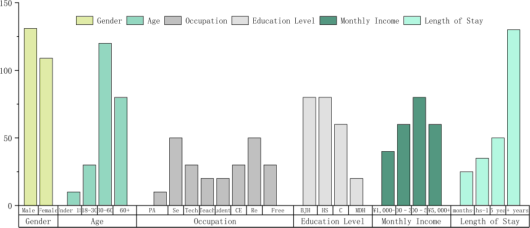
Based on the results of the returned questionnaires, the following table (Figure 3) shows that a total of 240 respondents participated in this survey. The gender distribution among respondents was relatively balanced. The age structure was dominated by middle-aged and elderly individuals. Occupation distribution was relatively dispersed, with private entrepreneurs and retirees accounting for over 40%. Educational attainment was generally low, with 67% holding junior high school diplomas or below, or high school diplomas. Monthly income levels were fairly balanced. Regarding length of stay, over half of the respondents had resided in the study area for five years or more (54.2%).
Figure 3: Population characteristics map.
A Human-Centered Design Approach: Research on Urban Memory Perception 455
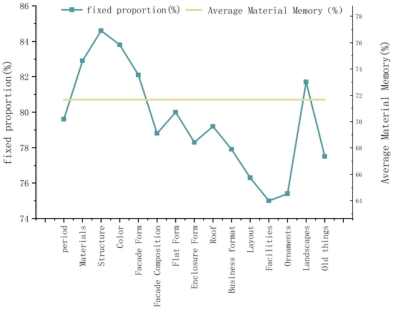
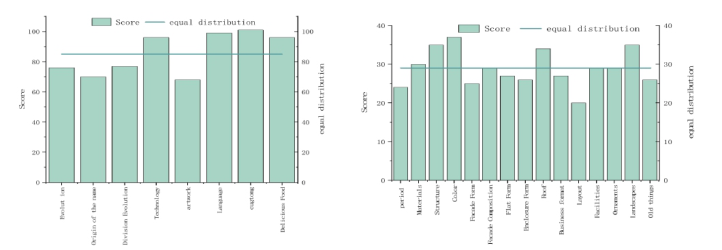
Overall, the recognition rate for intangible cultural heritage (73.59%) exceeded that for tangible cultural heritage (71.66%). Tangible memories centered on visual elements such as building materials, structures, and colors, indicating respondents’ heightened awareness of their everyday surroundings. In contrast, intangible spatial memories predominantly involved cultural aspects like language, customs, and cuisine, reflecting stronger emotional identification (Figure 4).
Figure 4: Level of recognition of material and non-material memories.
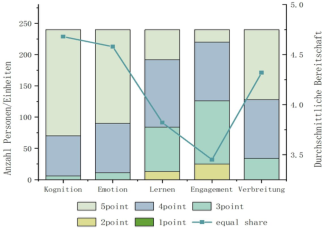
Regarding willingness to preserve heritage, the questionnaire employed a Likert scale to measure participants’ cognition, emotions, and behaviors (learning, participation, dissemination) concerning Shilamengcheng Village. Scores ranging from 1 to 5 represented, respectively: strongly unwilling, unwilling, neutral, willing, and strongly willing. Survey results showed average scores for these five dimensions were 4.68, 4.58, 3.82, 3.45, and 4.32 (Figure 5). The data indicates that respondents generally hold positive attitudes toward preserving Shilameng’s heritage, yet their actual willingness to actively learn and participate remains relatively low. This suggests that recognition of heritage preservation among relevant groups has not yet translated into actionable commitment. This may be linked to pre-renewal demolition compensation policies, which prioritized material compensation over action-oriented approaches to preserving local memory and cultural heritage during the renewal process.
Memory and Cognitive Analysis Based on the data processing outlined above, we first employed a chi- square test. In this study, memory content was categorized into material and non-material elements, with demographic characteristics such as age and educational attainment serving as categorical variables. The chi-square test aims to examine whether significant differences exist in the distribution of perceptions regarding these two memory elements across different groups. It determines whether such differences stem from group effects or sampling errors, thereby revealing the influence of demographic characteristics on
perceptions of urban village memory elements. A larger χ2 value indicates a stronger association between demographic attributes and memory elements. A p-value < 0.05 confirms the validity of the χ2 data.
Figure 5: Analysis of inheritance intentions.
The chi-square test revealed (Table 1) that age is a significant common factor influencing both material (χ2 = 16.45) and non-material (χ2 = 12.88) memory content. At the material memory level, educational attainment (χ2 = 13.72) and dwell time (χ2 = 9.87) exerted significant effects. At the non-material memory level, dwell time (χ2 = 14.95) and occupation (χ2 = 16.34) showed significant correlations.
Table 1: Chi-square test results.
Table available in the original PDF paper.
Material Memory Element Intangible Memory Elements x2 p x2 p
Age 16.45 0.002 12.88 <0.001 Education Level 13.72 0.001 8.45 0.207 Length of Stay 9.87 <0.001 14.95 0.002 Occupation 11.23 0.508 16.34 0.03 Monthly Income 7.89 0.246 6.92 0.328 Gender 1.95 0.377 0.87 0.647 To clarify the factors influencing respondents’ perceptions of memory elements in urban villages, this study analyzed demographic characteristics (such as age, gender, and duration of residence) as independent variables, with “memory elements” (both tangible and intangible) serving as the dependent variable. The formula is:
P = eβ0 + β1X1 + β2X2 + ··· + βpXp 1 + eβ0 + β1X1 + β2X2 + ··· + βpXp According to chi-square test data, respondents’ age, occupation, educational attainment, and duration of residence all influence their perception of memory elements. A regression analysis model for cognitive preferences was constructed. A positive B value indicates a higher probability of association compared to the control group, while a negative B value indicates a lower probability. p<.001 signifies significant correlation.
A Human-Centered Design Approach: Research on Urban Memory Perception 457
(1) Perception of Material Elements The results of the multiple logistic regression analysis for material elements are presented in Table 2. Regarding age, the B values for the under-30 group were all negative (p<0.001), indicating a lower cognitive correlation with material memory compared to the control group. The B values for the 31–60 age group were positive (p = 0.083), indicating a moderate level of correlation. Regarding educational attainment, both the high school and college education groups exhibited negative B values (p = 0.838, p = 0.160), reflecting lower correlations. In contrast, the master’s degree and above group showed positive B values (p<0.001), demonstrating a significant correlation. Regarding duration of residence, residents living for five years or longer exhibited positive B values (p<0.001), indicating higher correlation. In contrast, while short-term residents showed positive B values (p = 0.069, 0.916), the correlation was not significant, suggesting relatively vague cognitive content.
Table 2: Multivariate logistic regression analysis of material elements.
Table available in the original PDF paper.
Variable B P Age 60 or above (for comparison) 0–18 –2.120 <.001 18–30 –.868 <.001 31–60 .322 .083
Educational attainment Junior High School (for comparison) High School –.042 .838 University –.308 .160 Master’s degree or higher 1.253 <.001 Length of stay Less than six months (for comparison) Six months to a year .069 .853 One to five years .916 .004 Five years or more 1.768 <.001
(2) Memory Recognition of Non-material Elements The results of the multiple logistic regression analysis for non-material elements are presented in Table 3. Regarding age, the B value for the 18–30 age group was negative (p = 0.003), indicating a lower cognitive correlation. For the 31–60 and 60+ age groups, the B values were positive (p<.001), indicating a higher cognitive correlation. Regarding occupation, all occupational categories showed negative B values, with p-values <0.001 for both public administration and teaching groups. The individual private sector (control group) emerged as the core factor influencing non-material elements. Regarding tenure, B values were positive for both 6 months to 1 year and 1 to 5 years (p = 0.041, 0.003), indicating moderate correlation. For 5 years and above, B values were positive (p<.001), showing higher cognitive correlation in this group.
Table 3: Multivariate logistic regression analysis of non-material elements.
Table available in the original PDF paper.
Variable B P Age 0–18 (for comparison) 8–30 –1.482 .003 31–60 1.172 <.001 60 and above .969 <.001
Occupation Individual (control group) staff member –.830 .004 Administrative –2.054 <.001 Teachers –1.099 <.001 Retirees –.405 .109 Students –.773 .007 Professionals –.719 .010 Freelancers –.719 .010 Length of stay Less than six months (for comparison) Six months to a year .693 .041 One to five years .961 .003 Five years or more 1.854 <.001
RESULTS AND DISCUSSION
Results
According to the results of the multiple logistic regression analysis, different demographic characteristics exhibit significant differences in their perception of urban village memory elements. Overall, middle-aged and elderly residents, those who have lived in the area for over five years, and individuals with higher education levels demonstrate higher correlations in the model, with their perceptions being more representative and explanatory. Summarizing the three-tiered memory elements identified among these respondent groups reveals that they exhibit higher recognition of material memory elements—such as building materials and structural colors—as well as non-material memory elements—including craftsmanship, cultural customs, and local delicacies (Figure 6).
Figure 6: Material-nonmaterial memory element scores.
A Human-Centered Design Approach: Research on Urban Memory Perception 459
Analysis of Memory Elements (1) Material Memory Elements
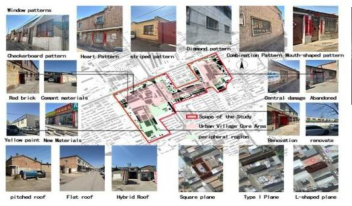
The Shilamengeng village features highly recognizable material memory elements (Figure 7). Architecturally, most buildings are brick-concrete structures with predominantly gabled or flat roofs. Building quality exhibits a progressive distribution, gradually improving from the village core toward the periphery. Most aged structures in the village center suffer from disrepair, with deteriorated walls, roofs, and load-bearing components, resulting in overall poor quality. In contrast, newly constructed or expanded buildings in the periphery exhibit higher quality. Regarding building materials and colors, traditional structures in the core area predominantly use red bricks, sandstone, and rice straw, with a few additions painted in beige. Newer peripheral buildings often employ modern materials like cement and metal alloys, featuring exterior walls in neutral tones such as gray and off- white to harmonize with contemporary urban color schemes. In detail design, security grilles stand out as the most distinctive feature, appearing in diverse forms like strip bars or heart-shaped ornamental grilles that blend security with decoration. In contrast, peripheral buildings incorporate modern elements like contemporary window frames and LED light strips into their facades to meet contemporary functional demands, reflecting modernity and commercial orientation.
Cultural customs are not only remnants of traditional culture but also the driving force behind cultural identity and residents’ sense of participation and belonging. Urban villages preserve the traditional “familiar society” structure, where many festive customs and life-cycle rituals persist. Before the Spring Festival, the village management office (referred to by Hohhot residents as the “brigade”) organizes the slaughter of cattle and sheep, distributing the meat according to household size. On New Year’s Eve, the brigade gathers villagers for fireworks displays and bonfires. During the 14th, 15th, and 16th days of the first lunar month, activities include land boat lantern parades, Yangko dancing, Nine-Turn dances, and stilt performances (Figure 7). Weddings and funerals also follow strict village protocols. For instance, wedding mornings feature village-prepared rice cakes, while funerals require the Brigade to select the most senior villager to lead the procession, with mandatory participation from all residents. These
rituals, conducted in traditional ways, foster a strong “human network” culture. The village also organizes numerous collective activities. After the autumn harvest, the village committee arranges for villagers to watch traditional opera performances. A stage is erected in the village to present classic Shanxi operas like “Beating the Golden Branch” and “Golden Water Bridge,” celebrating the year’s bounty. Traditional language and culinary culture play vital roles in these customs and festivals. Residents of urban villages frequently use the local dialect in daily interactions, fostering a sense of community intimacy. During festivals, food becomes a vital social glue: from steamed buns with brick tea at dawn, to stewed vegetables and bone soup at noon, to dumplings in the evening. This continuous culinary practice carries the emotional bonds and collective memories of neighborhood exchanges and alley gatherings.
Strategy
1. Differentiated transmission of historical information requires diverse stakeholders to participate in shaping urban memory. Given the complex demographic composition of Shilameng’s urban village residents, tailored cultural transmission pathways must be developed based on group-specific characteristics. For middle-aged and elderly groups, strengthen their role as primary transmitters should be strengthened through oral history collection and old photograph management, enhancing their sense of social responsibility and identity. For younger generations, diverse communication and experiential methods shuold be employed—such as multi-platform media campaigns and AR interactive experiences—to elevate their level of memory retention. At the professional and educational levels, adopt tiered dissemination strategies: for academic communities, promote systematic and scholarly research through supplements to the Shilameng Village Chronicles and fieldwork; For ordinary citizens and tourists, design experiential routes through intuitive methods like “memory corners” and displays of vintage artifacts, transforming daily experiences into conduits for cultural transmission. At the community governance level, establish a multi-stakeholder participatory mechanism for co-governance to achieve the recreation and sharing of memories, thereby fostering the sustained inheritance and dynamic renewal of urban village culture. 2. Integrating and reconstructing memory elements, then applying them to urban village renewal designs, is essential for effectively preserving and transmitting memories. Based on public recognition levels, the questionnaire results were categorized into “high-recognition elements” and “low-recognition elements,” each requiring distinct integration and reproduction strategies. For instance, high-memory tangible elements like red bricks and gray tiles can be used as base materials blended with concrete and tempered glass. Facade forms may abstractly extract details to perpetuate historical symbols. High-memory intangible elements such as customs and cuisine can be redesigned as decorative motifs applied to facades, paving, or alley walls, or transformed into landscape features
A Human-Centered Design Approach: Research on Urban Memory Perception 461
to evoke collective memory. For elements lacking explicit expression and thus under-recognized, oral history documentation and digital archiving systematize fragmented information. Multimedia displays enhance their visibility, establishing multidimensional connections with public perception to sustain and revitalize cultural memory.
CONCLUSION
This study uses the Shilamengeng Urban Village in Hohhot as a case study to construct a systematic cognitive framework for urban memory. Through empirical analysis, it reveals the cognitive preferences for tangible and intangible memory elements across different groups. Based on these findings, differentiated strategies for cultural preservation and spatial renewal are proposed, offering new insights for urban village revitalization practices.
REFERENCES
Fu, Y. (2022). Research on the continuation of urban memory of third-line industrial heritage in Mianyang region [Master’s thesis, Dalian University of Technology]. CNKI. https://doi.org/10.26991/d.cnki.gdllu.2022.000576 Li, J. Y. (2020). Revitalization study of the Typhoon Shelter Area in Baytou
Ancient Town, Yangzhou from a place memory perspective [Master’s thesis, Dalian University of Technology]. CNKI. https://doi.org/10.26991/d.cnki.gdllu .2020.000203 Li, W., & Buren. (2013). Integrated planning and countermeasures for urban village redevelopment in Hohhot. Inner Mongolia Science and Economy, (7), 6–7. Xie, X. (2020). Research on problems and countermeasures in urban village
transformation. Building Materials Development Orientation, 18(24), 15–16. Yang, J. L. (2022). Research on urban village renewal strategies in Suzhou under the concept of symbiosis [Master’s thesis, Suzhou University of Science and Technology]. CNKI. https://doi.org/10.27748/d.cnki.gszkj.2022.000006
LISTED IN THE AHFE DIGITAL BOOKSTORE CATALOGUE
Explore the complete digital volume
Human Factors in Design, Engineering, and Computing
Read this individual research paper free through the original publisher, or explore the full digital proceedings book.
ISBN 978-1-964867-75-5
Explore this ISBN in the AHFE Bookstore ↗Listed in the July 2026 bookstore catalogue; search by ISBN to confirm current availability · Digital book purchase optional