Xin Tian, Nan Li, Chen Li (2025). Intelligent renewal method of productive landscape based on the inheritance of Inner Mongolia grassland food culture. In: Human Factors in Design, Engineering, and Computing. AHFE Open Access, vol. 199, pp. 413–424. https://doi.org/10.54941/ahfe1006853
Productive landscape refers to a sustainable landscape system formed by combining material output and spatial creation based on agricultural, forestry, animal husbandry, fishing and other production activities. China has a vast territory, significant climate differences between the north and south, and regional integration of food and culture. In Inner Mongolia, a typical representative of northern China, the productive landscape presents unique historical and regional characteristics: on the one hand, the nomadic tradition has shaped the landscape form centered on grassland animal husbandry and dairy product processing; On the other hand, the introduction of farming and gathering activities has enriched the types of dietary landscapes such as grains, fruits, and vegetables. As a carrier of productive landscapes, the inheritance of food culture carries important functions of food supply, national memory, and cultural continuity as a result of the interaction between human long-term food practice and natural environment. Diversified productive landscapes not only support the survival system of regional society, but also have irreplaceable value in ethnic cultural identity and intangible heritage protection. However, current research still relies mainly on qualitative records, with insufficient identification and quantitative analysis of its elements, which hinders the scientific protection and reuse of it. To solve this problem, this article adopts deep learning methods to automatically identify and classify the productive landscapes of typical grassland food culture inheritance background. Based on the ResNet50 model in the PyTorch framework, an image dataset covering landscape types such as pastures, farmland, forest gardens, and fishing grounds is constructed, and preprocessed through size standardization, normalization, and data augmentation. The model is trained with the support of transfer learning and its performance is validated through multiple metrics. The research results indicate that this method can efficiently identify the core elements of food culture in productive landscapes in complex natural environments, significantly improving classification accuracy and stability. Its application value lies in providing a reliable technical path for the digital archiving, dynamic monitoring, and scientific management of food in productive landscapes, aiming to promote the protection, rational utilization, and cultural value transformation of food landscapes, thereby supporting rural revitalization and regional sustainable development.
As the product of the interaction between human long-term production practice and natural environment, productive landscape is not only an important basis for material supply, but also a spatial carrier for cultural inheritance and social development (Ramón et al., 2024). It usually takes agriculture, forestry, animal husbandry and fishery as its core, and forms a complex landscape system with economic, ecological and cultural values by combining material output with space creation (Araujo et al., 2023).
In China’s vast geographical pattern, the differences in natural geographical conditions and cultural traditions between the north and the south have formed diverse productive landscapes and food culture systems. Among them, Inner Mongolia, as a typical representative of the north, displays unique grassland culture and food landscape characteristics. On the one hand, the nomadic tradition has shaped the landscape form centered on grassland animal husbandry and dairy processing, making pastures, livestock fences and dairy processing sites typical elements; on the other hand, the gradual introduction of farming and gathering activities has expanded landscape types such as grain planting and fruit and vegetable gathering. This diverse landscape not only supports the survival system of the regional society, but also carries national memory and cultural identity (Cheng & Chen, 2025). In this process, grassland food culture has become an important link connecting people and land and maintaining ethnic emotions (Colace et al., 2025).
However, existing research on productive landscapes and food culture heritage is still mainly based on historical analysis and qualitative description, relying more on literature, oral accounts or field observations to record landscape forms and their cultural significance (Zhang et al., 2025). Although this method can reveal the spiritual value of food culture, it lacks systematic quantitative methods and intelligent tools in terms of element identification, spatial distribution and dynamic evolution (Waqas et al., 2025). Especially in the complex and changing natural environment of grasslands, relying solely on human experience is no longer enough to meet the needs of rapid, accurate and sustainable management (Harisanty et al., 2024).
Based on grassland production patterns and intangible cultural characteristics, dietary production landscapes can be roughly divided into three categories and twenty-four subcategories, covering typical aspects related to dairy products, meat and grains. For example, dairy products include milking, cow grazing, milk source collection, yogurt making, milk tofu drying, milk tea making, and utensils such as yogurt buckets, milk pots, and wooden blenders; meat products involve animal husbandry and slaughtering, festival sheep slaughtering, air-dried meat, hand-pulled meat, barbecue techniques, and matching knives, wooden bowls, copper pots, etc.; cereals include the planting and harvesting of wheat, millet, and buckwheat, as well as stone grinding, rice milling, steaming and cooking, and food categories and utensils such as oat noodles, steamed buns, multi-grain porridge, and steamers (Misra et al., 2020). This classification system
Intelligent Renewal Method of Productive Landscape Based on the Inheritance 415
provides a clear cultural context and analytical framework for research (Min, 2025).
With the rapid development of artificial intelligence and deep learning technologies, methods based on image recognition and data modeling have gradually been applied to fields such as agricultural monitoring, ecological protection, and cultural heritage digitization. Convolutional neural networks (CNNs) are capable of automatically extracting multi-level features from large-scale image data, enabling efficient capture of core elements. They have also achieved remarkable results in tasks such as crop classification, landscape element recognition, and cultural landscape perception through transfer learning and model optimization (Corbacho, 2025). Drawing on these experiences, introducing deep learning methods into productive landscape identification in the context of grassland food culture is not only a technical supplement to traditional research methods, but also provides new possibilities for promoting the integration of culture and technology.
DATA SOURCE The data acquisition of this study follows the principles of “multi-source integration, cultural orientation, and dynamic supplementation”, and strives to cover the main productive landscape types in the context of grassland food culture. The study collected more than 10,000 raw image data, which, after cleaning and screening, ultimately formed a high-quality dataset covering 8,458 samples. In terms of acquisition methods, field research is the core channel for data collection. The research team collected a large number of images in typical places such as pastoral areas, farmlands, fisheries and forests by combining drone aerial photography with ground photography. Aerial images show macro-spatial forms such as pasture distribution, farmland pattern and river and lake landscape, while ground-based photography captures micro- elements related to food culture, such as cows grazing, herders milking, the use of yogurt buckets, grain harvesting and drying, etc. These images preserve the natural features of the productive landscape while intuitively reflecting the daily practices of grassland food culture.
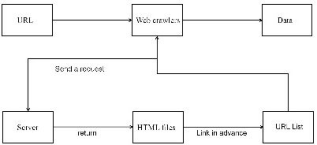
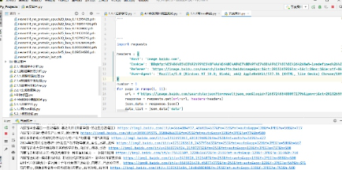
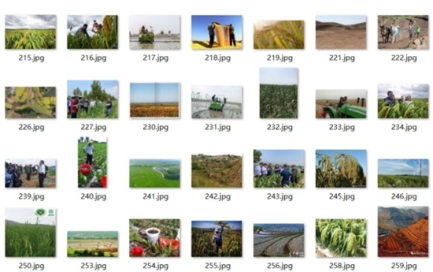
At the same time, web crawlers provide important support for dataset expansion. By setting keywords such as “grassland food culture,” “dairy processing,” “pasture landscape,” and “wheat harvest,” the research team used Python programming to build an automated crawler, systematically obtaining large-scale image and text resources from search engines, social media, news platforms, government agricultural websites, tourism websites, and local forums (see Figure 1). During operation, the crawler program automatically completes web page requests, parsing, and storage, forming a batch image acquisition process (see Figure 2). The acquired image samples cover multi-dimensional elements such as pastoralists’ eating scenes, traditional tableware, crop planting and harvesting processes, fishing and hunting activities, etc. (see Figure 3), which enhances the model’s ability to learn food culture symbols. Compared with traditional manual collection, Python crawlers are highly customizable and rapidly scalable, and can
be seamlessly connected with databases and machine learning platforms, thereby achieving an upgrade from data acquisition to intelligent processing.
Furthermore, documentary and archival resources further enriched the historical dimension of the dataset. The research team consulted local chronicles, agricultural archives, ethnographic images, and museum materials, collecting a large number of historical images related to food, such as ancient dairy processing utensils, food exchange scenes at pastoral markets, and dining spaces at family tables. This data not only supplemented the training model to identify landscapes and artifacts from different historical periods, but also laid an important foundation for the digital preservation of grassland food culture.
The final 8,458 sample data covers a variety of landscapes such as pastoral areas, farmlands, fisheries and forest gardens. They condense core cultural
Intelligent Renewal Method of Productive Landscape Based on the Inheritance 417
elements such as dairy processing, grain farming, traditional fishing and eating utensils, providing solid support for the subsequent training of deep learning models and the inheritance research of grassland food culture.
CLASSIFICATION OF GRASSLAND FOOD CULTURE CHARACTERISTICS In the study of productive landscapes, if the division is based solely on natural elements and production activities, it is often difficult to fully reflect the unique food culture of grassland areas. To this end, this paper, guided by intangible cultural characteristics, combined field research and literature review, has constructed a classification system for grassland foodscapes(see table 1). This system follows the logical framework of “production scene - processing process - food category or utensils,” dividing grassland foodscapes into three main categories: dairy products, meat, and grains. Each of these categories is further subdivided into different subcategories, allowing cultural characteristics to be more clearly expressed and presented during image recognition.
First of all, the dairy food landscape is the most representative category in grassland culture. Its production scenes include cow grazing and milk source collection, and the processing process covers yogurt making, milk tofu drying and milk tea brewing. Food categories and utensils include wooden yogurt buckets, milk pots and wooden stirrers. Yogurt making and drinking is not only a daily dietary practice, but also an important part of family life and social activities in pastoral areas, highlighting the life and sharing nature of food culture.
Table 1: Dietary production landscape framework.
Table available in the original PDF paper.
#2 Process #3 Eating Utensils
Major Categories #1 Production Scenario Dairy Dietary Landscape Milking, cow grazing, milk collection
Yogurt making, milk tofu drying, and milk tea making
Stone grinding, rice milling, steaming and cooking
Planting and harvesting of crops such as wheat, millet, and buckwheat
Oatmeal noodles, steamed buns, multi-grain porridge; related utensils
Secondly, the meat-eating landscape shows the daily diet and festival rituals of the grassland people. Production scenes include animal husbandry
and slaughter, particularly the sheep slaughter common during festivals. Processing involves air-dried meat, hand-pulled meat, and grassland barbecue techniques. Food items and utensils primarily include knives, wooden bowls, copper pots, and banquet utensils. This landscape not only reflects the production characteristics of grassland animal husbandry but also embodies the cultural significance of food in social interactions and ritual activities.
Again, the grain diet landscape reflects the introduction and continuation of farming culture in grassland areas. Its production scenes include the planting and harvesting of wheat, millet and buckwheat, and the processing process covers stone grinding, rice milling and steaming techniques. The food categories and utensils mainly include oat noodles, steamed buns, multi-grain porridge and matching steamers and grinding troughs. This type of landscape demonstrates the intersection and integration of agricultural civilization and nomadic civilization, enriching the diversity of grassland food culture.
Through the above classification system, the grassland food landscape is not only systematically presented at the material level, but also highlighted at the intangible cultural level. It provides a clear labeling basis for image recognition models, enabling deep learning to better capture the characteristic elements of food culture. At the same time, this classification system also lays a theoretical foundation for the digital archiving and inheritance research of grassland food culture, and provides solid support for subsequent data preprocessing and model training.
MODEL TRAINING After successfully building a productive landscape image classification model based on transfer learning, we officially entered the model training phase. In this stage, the Pytorch deep learning framework is used to carry out training based on pre-processed productive landscape image data.
The training data used is data that has undergone a series of preprocessing processes such as image scaling and cropping, standardization, crawling, and screening, totaling 8,458 images. This data, collected through crawlers, comprehensively covers a wide range of productive landscape images in central Inner Mongolia. This rich data provides the model with diverse learning samples, helping it to more comprehensively learn the characteristics of different productive landscapes.
During the model training process, the stochastic gradient descent (SGD) optimizer is selected, and the cross-entropy loss function is used as the loss function. This loss function can more accurately measure the difference between the model prediction results and the true labels. In order to effectively evaluate the generalization ability of the model, the dataset is divided into a training set and a validation set. The training set is used to learn the model, and the validation set is used to evaluate the generalization ability of the model during the training process.
During training, the number of training rounds is set to 50. In each round of training, the training set data is input into the model in batches, and the data size of each batch is set to 32 images. The model performs forward propagation based on the input data, calculates the prediction results, and
Intelligent Renewal Method of Productive Landscape Based on the Inheritance 419
then calculates the loss value between the prediction results and the true label through the loss function. Next, the back-propagation algorithm is used to calculate the gradient, and the optimizer updates the model parameters according to the gradient to reduce the loss value.
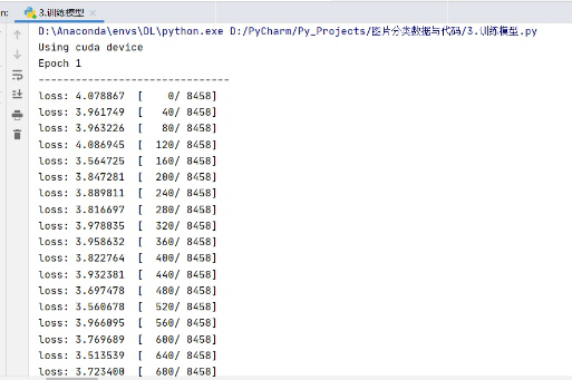
After each round of training, the model is evaluated using the validation set, and the accuracy and loss value of the validation set are recorded. By closely observing the changes in the indicators of the validation set, we can determine whether the model is overfitting or underfitting. If the accuracy of the validation set stops improving while the accuracy of the training set continues to increase, this may indicate that the model is overfitting. At this point, you can consider stopping training early or adjusting the model parameters (see Figure 4).
Figure 4: Model training.
Multiple rounds of training and optimization help the model learn the data characteristics more fully. Through multiple rounds of training and optimization in this study, the model can gradually learn the characteristics of different productive landscape images, thereby improving the accuracy and generalization ability of productive landscape image recognition. Finally, we obtained a model that can effectively identify pictures of food production landscapes in Inner Mongolia.
EXPERIMENTAL RESULTS AND ANALYSIS Experimental Environment
The experiments in this study were conducted on a high-performance workstation. The hardware configuration included an Intel Core i7-9750H processor, an NVIDIA GTX 1660 Ti (6GB of video memory) discrete graphics card, 32GB of RAM, and a 1TB SSD, providing stable support for the storage and computation of large-scale image data. The software environment
ran on Windows 10, using CUDA 10 as the GPU parallel computing platform, Python 3.9 as the programming language, and PyTorch 1.2.0 as the deep learning framework. This hardware and software environment not only ensured the efficiency and stability of the model training and validation process, but also provided a solid foundation for the repeatability and scalability of subsequent experiments. Furthermore, this configuration fully met the computing performance requirements of the grassland dietary landscape identification task, laying a solid foundation for the practical application of the model.
Experimental Results After completing data preprocessing and model building, this study conducted experiments on training and validation sets, recording trends in accuracy and loss. The results showed that without using a pretrained model, validation set accuracy remained at approximately 50%, with poor loss convergence and limited model performance. However, by loading pretrained ResNet-50 weights and combining staged fine-tuning with a dropout strategy, model performance significantly improved, reaching a peak validation set accuracy of nearly 90%, with loss gradually converging to near 0, demonstrating strong classification and generalization capabilities. Input untrained test images into the trained model, run it, and output the recognition results.
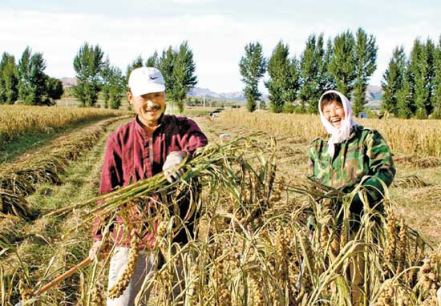
Figure 5: Test image (farmers harvesting wheat in a planting cooperative in Aohan, Inner Mongolia).Figure 6: Output of productive landscape identification results.
Intelligent Renewal Method of Productive Landscape Based on the Inheritance 421
Figure 7: Test image (Farmers in Xilamuren Town, Damao Banner, Baotou City, Inner Mongolia Autonomous Region, using yogurt buckets to make yogurt).Figure 8: Output of productive landscape identification results.
Images of untrained Inner Mongolian farmers harvesting wheat in the fields (see Figure 5) and images of Inner Mongolian herders using wooden yogurt bucket tools (see Figure 7) were used for recognition tests, and accurate results consistent with the classification of productive landscapes were obtained: “Typical grassland-agriculture-wheat productive landscape” (see Figure 6) and “Traditional diet-production tools-wooden yogurt bucket productive landscape” (see Figure 8).
Further analysis of the classification results showed that the model performed best in identifying dairy dietary landscapes, especially in scenarios such as yogurt making and yogurt bucket identification, where it could stably capture key features; the recognition accuracy of meat dietary landscapes was second, with certain misjudgments occurring under conditions of insufficient lighting or partial occlusion; the recognition of grain dietary landscapes was relatively weak, mainly due to the complex background and numerous interference factors.
Overall, the recognition accuracy of the three categories remained at a high level, proving the applicability and effectiveness of the model under complex natural conditions.
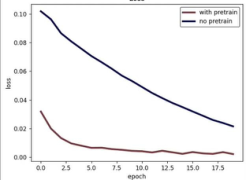
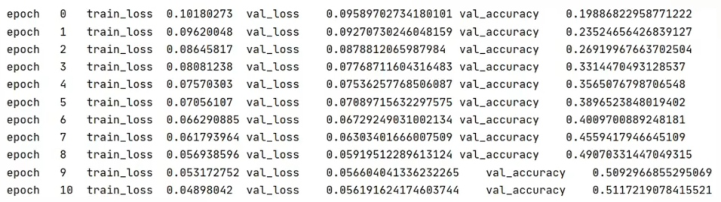
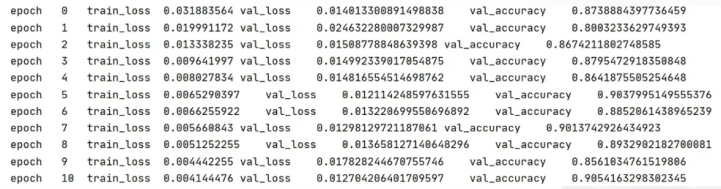
During the specific training process, the model records the Train Loss, Valid Loss, Train Acc, and Valid Acc of each iteration through log files, and plots the accuracy and loss curves of the training set and validation set (see Figures 9, 10, and 11). The comparison results show that the accuracy of the blue curve (not using the PyTorch-based productive landscape intelligence method) on the test set remains around 50%, while the red curve (using the PyTorch-based productive landscape intelligence method) significantly increases to about 90%, and the loss value of the test set
decreases rapidly and stabilizes. It can be seen that the PyTorch-based productive landscape intelligent method and Dropout play an important role in improving model accuracy and suppressing overfitting, making the productive landscape recognition model constructed in this paper under the background of grassland food culture have good accuracy and robustness.
Figure 9: Comparison of the loss curve (left) and accuracy curve (right) before and after the PyTorch-based productive landscape intelligence method.Figure 10: Loss and accuracy data before using the PyTorch-based productive landscape intelligence method.Figure 11: Loss and Accuracy data after using the PyTorch-based productive landscape intelligence method.
In summary, the experimental results not only verified the effectiveness of the proposed method, but also provided practical technical support for the digital protection and cultural inheritance of grassland food landscapes.
CONCLUSION
This paper, focusing on the culinary heritage of the Inner Mongolian grasslands, proposes a deep learning-based image recognition method for the
Intelligent Renewal Method of Productive Landscape Based on the Inheritance 423
digital preservation and intelligent identification of productive landscapes. By combining field research with web crawling, the study constructed a grassland dietary landscape dataset encompassing three categories: dairy products, meat, and grains. Furthermore, the method employed the PyTorch framework, employing a ResNet-50 residual network with staged fine-tuning and dropout strategies to develop an image recognition model suitable for grassland dietary culture scenarios. Experimental results show that the model can effectively identify typical food culture elements in complex natural environments, especially in the identification of dairy landscapes, verifying the feasibility and effectiveness of the method.
This study not only provides a technical path for the digital archiving and intelligent classification of grassland food culture landscapes, but also provides support for the dynamic monitoring of productive landscapes and the protection and inheritance of intangible cultural heritage. It is of great significance for promoting rural revitalization and regional sustainable development. However, the research still faces challenges such as limited data size and insufficient model validation. Future work could improve the model’s universality and adaptability by expanding data sources, introducing multimodal information, and exploring more advanced network structures. With further research, this method is expected to be further promoted and applied in fields such as smart tourism, cultural communication, and public services.
ACKNOWLEDGMENT
The authors would like to thank the Ministry of Education for its general research project on humanities and social sciences “Investigation and research on the productive landscape heritage of beautiful villages in Inner Mongolia” (Grant No. 24YJA760062), the Inner Mongolia Natural Science Foundation “Research on digital protection of information and real-scene interaction mode of productive landscape heritage in rural Inner Mongolia”(Grant No. 2024LHMS05030), the Inner Mongolia Autonomous Region Key R&D and achievement transformation plan project “Seeing the beauty of productive landscape in the countryside: Development of AR rural virtual tourism products” (Grant No. 2022YFDZ0017), and the Architecture College, Inner Mongolia University of Technology, Inner Mongolia Key Laboratory of Grassland Human Settl ement System and Low-Carbon Construction Technology, Key Laboratory of Green Building at Universities of Inner Mongolia Autonomous Region, Engineering Technology and Research Center for Green Buildings of Inner Mongolia, “Construction system and key technologies of grassland human settlement environment” (Grant No. YLXKZX-NGD-004).
REFERENCES
Araujo, Sara Oleiro, et al. (2023). Machine learning applications in agriculture: Current trends, challenges, and future perspectives. Agronomy 13.12. p. 2976. Cheng, Y., & Chen, W. (2025). Cultural Perception of Tourism Heritage Landscapes
via Multi-Label Deep Learning: A Study of Jingdezhen, the Porcelain Capital. Land, 14(3). p. 559.
Chinchilla Corbacho C. (2025). Multimodal Retrieval-Augmented AI for Heritage Landscape Analysis[C]//International Conference on Disruptive Technologies, Tech Ethics and Artificial Intelligence. Cham: Springer Nature Switzerland. pp. 317–322. Colace, Francesco, et al. (2025)“New AI challenges for cultural heritage protection:
A general overview.” Journal of Cultural Heritage 75. pp. 168–193. Espinel, Ramón, et al. (2024). Artificial intelligence in agricultural mapping: A review. Agriculture 14.7. p. 1071. Harisanty, Dessy, et al. (2024) “Cultural heritage preservation in the digital age,
harnessing artificial intelligence for the future: A bibliometric analysis.” Digital Library Perspectives 40.4. pp. 609–630. Min, W. (2025). A scientometric review of cultural heritage management and sustainable development through evolutionary perspectives.npj Heritage Science, 13. p. 215. Misra, Nandan Nitish, et al. (2020) “IoT, big data, and artificial intelligence in agriculture and food industry.” IEEE Internet of things Journal 9.9. pp. 6305–6324. Waqas, Muhammad, et al. (2025) “Applications of machine learning and deep
learning in agriculture: A comprehensive review.” Green Technologies and Sustainability. p. 100199. Zhang, J., et al. (2025). Toward sustainable and differentiated protection of cultural heritage illustrated by a multisensory analysis of Suzhou and Kyoto using deep learning. npj Heritage Science, 13. p. 287.
LISTED IN THE AHFE DIGITAL BOOKSTORE CATALOGUE
Explore the complete digital volume
Human Factors in Design, Engineering, and Computing
Read this individual research paper free through the original publisher, or explore the full digital proceedings book.
ISBN 978-1-964867-75-5
Explore this ISBN in the AHFE Bookstore ↗Listed in the July 2026 bookstore catalogue; search by ISBN to confirm current availability · Digital book purchase optional