Mayyadah Fahmi Hussein, Sara Durzi (2026). Reviving Heritage Through AI: Adaptive Interior Reuse of Abandoned Cinemas in Amman. In: Intelligent Human Systems Integration (IHSI 2026): Disruptive and Innovative Technologies. AHFE Open Access, vol. 200, pp. 937–947. https://doi.org/10.54941/ahfe1007217
This paper discusses how artificial intelligence (AI) can be used to make interior design more sustainable in the reuse of old heritage cinemas in Amman, Jordan. In this study three cases will be discussed, Cinema Raghadan, Cinema Al Khayyam, and Cinema Al Hussein due to their cultural connection and current state of neglect. To address the growing need to be creative and sustainable in conserving heritage, this paper will adopt a qualitative case study approach that will be organized into three stages: descriptive recording of the current state, analytical evaluation of the heritage value and reuse opportunities, and experimental implementation of the AI tools. This study examines AI generated visualizations, ChatGPT, ReRender, and ReRoom, to learn about the possible effects on design choices, adapting to the environment, and cultural importance. These results show that AI can serve to develop concepts faster, engage communities more actively, and reuse situations that are sensitive to heritage. Limitations involve those related to tool capability and absence of feedback in the form of stakeholders in this preliminary exploratory process. The study shows that artificial intelligence can facilitate sustainable and culture-based reuse of heritage buildings in urban Jordan.
Amman has a rich cultural heritage but it is still struggling to maintain its historical buildings and adjust to the demands of the modern urban development (Seiseh et al., 2024), (Amro et al., 2023). Adaptive reuse, in its turn, has turned out to be an environmentally conscious approach that can help strike a balance between the need to preserve heritage material and the modernity of the city, which will assist in preserving the cultural identity of Jordan and assist in rehabilitating the traditional areas (Al- Adayleh, Abu Ghanimeh & Abu-Ghazzeh, 2021), (Mehan, 2025). Artificial intelligence (AI) has become a new opportunity in this area in recent years, as it allows the designer to visualize various scenarios, assess the physical properties of aging buildings, and suggest environmentally friendly materials and interior designs (Abuarkub et al., 2024), (Li et al., 2025). These AI-enhanced practices can greatly enhance decision making in adaptive reuse projects, that is, heritage values are not lost; hence the modern functional and sustainability objectives are achieved (Li et al., 2025).
938 Hussein and Durzi
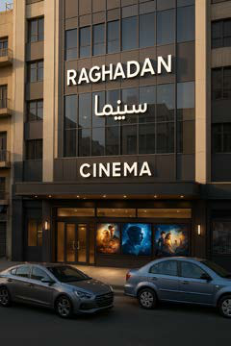
One example of such problems is Cinema Raghadan that was once an active cultural center but now is in a state of deterioration, aged interiors and less people visit the cinema, which represent the general trends in entertainment consumption in the region. Considering that most heritage sites in Amman are facing the same issues of deterioration as the restoration of traditional buildings is expensive and difficult, the combination of AI tools with adaptive reuse is a potential yet underestimated practice in supporting sustainable interior redesign and in improving the engagement of the local community.
LITERATURE REVIEW Adaptive reuse has emerged as a major theme of conservation efforts and sustainable development in heritage conservation where old buildings can still maintain their cultural use whilst serving modern purposes. Since cities face the challenge of preserving both urban development and identity, the adaptive reuse presents a contextual and environmentally friendly alternative to demolition. At the same time, the technological progress (especially artificial intelligence (AI)) is changing the methods of analysing, visualizing, and conceptualizing reuse projects. This review establishes adaptive reuse in the context of its theoretical discussion, analyses how it is used in Amman, and how AI can be used to assist in culturally responsive reuse.
Adaptive Reuse Adaptive reuse has been acknowledged to have a positive impact on the environment due to the reduction of the demolition waste, the restriction of the material usage, and the maintenance of the embedded cultural stories (Akyol, 2024). In addition to environmental sustainability, it promotes social and economic value in that it strengthens urban vitality and collective memory. Nevertheless, there are still obstacles especially in the fields of economic viability, regulations and functional compatibility. Scholars underscore the fact that the strategies of reuse should not violate the physical context and heritage value to avoid the cultural mismatch and identity loss (Amro et al., 2023).
Adaptive Reuse in Amman Adaptive reuse in Amman is directly connected with the problem of identity, urban transformation, and community involvement. As Amro et al. (2023) show, cultural continuity and social value can be increased with the help of culturally sensitive conservation, such as the reutilization of the Al-Nabulsi House in Irbid. One of the most notable examples in the region is the conversion of the Shnanah Family House into the Farouq Yaghmour Office, which preserved the original architectural nature and adapted it to fit the functions of a modern office, thus increasing its cultural, functional, and socioeconomic value (Al-Adayleh, Abu Ghanimeh & Abu-Ghazzeh, 2021). Contrastingly, Shawash (n.d.) argues that there are contradictions in Al-Balad in which official heritage discourses are incompatible with the local understandings of the region as a business district. Such disconnection indicates there is a lack of community involvement as well as institutional control in heritage representation which tends to undermine community attachment and engagement.
Reviving Heritage Through AI 939
Artificial Intelligence and Adaptive Reuse The introduction of AI to the adaptive reuse presents more predictive and data- driven designs. AI tools are used to simulate energy, assess structure, perform functional analysis, and digitize documentation of heritage, and aid in the discovery of a sustainable reuse opportunity and mitigate subjectivity in the initial design phases (Akyol, 2024). Machine learning, generative design, and digital twins are technologies that allow quick experimenting with various reuse opportunities and solutions that are contextually relevant (Li et al., 2025). Along with these benefits, there is a need to be wary of relying on AI-generated outputs. According to Akyol (2024), the issue of technological efficiency and cultural sensitivity is crucial, because without understanding the context, AI systems can entirely ignore the value of intangible heritage. The adaptive reuse in Amman requires the reconciliation between the official heritage discourses and lived experience and place-based identity. Although AI can be used to improve visualization and performance analysis, it must be a supporting tool, not a prescribing one. The ethical application, interdisciplinary partnership, and cultural sensitivity are needed in a bid to make the AI-assisted adaptive reuse to enhance a stronger environmental sustainability, social cohesion and cultural continuity.
METHODOLOGY The study is a qualitative case study with an analytical-experimental descriptive approach to understand how artificial intelligence could aid the adaptive reuse of heritage buildings in Amman using sustainable interior redesign. The methodology is structured in three major steps, descriptive, analytical, and experimental, and it is topped by a supporting validation methodology that aims at enhancing credibility and reliability of results.
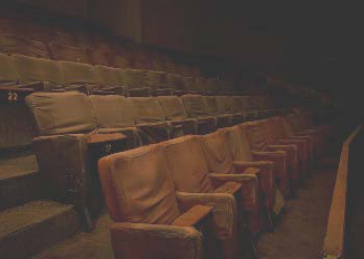
Case Study In the context of the city of Amman, there are three heritage cinemas that were chosen based on their cultural value, availability, and good adaptive reuse potential in the context of the current urban renewal plans. Cinema Raghadan, which was a successful cultural landmark in the area surrounding the Hashemite Square, is now in poor condition but still has symbolic and spatial richness.
Figure 1: Cinema Raghadan façade and interior current state
940 Hussein and Durzi
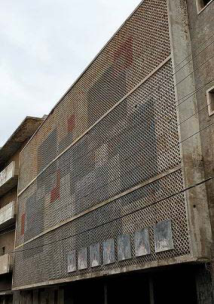
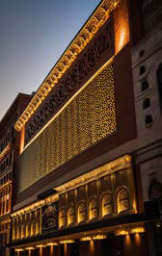
Cinema Al-Khayyam is a comparable heritage site in Al-Balad that is also under-documented and architecturally important.
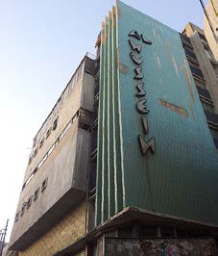
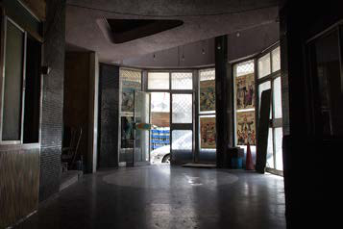
Figure 2: Cinema Al-khayyam façade and interior current state Cinema Al-Hussein is included as a third case study because it has a great historical importance, it is situated at the center of downtown Amman, and its architectural nature is a feature of the cinematic culture in the city in the middle of the 20th century. Even though some of these features have been modified throughout the years, Cinema Al- Hussein still retains essential aspects of its facade and interior space that qualify it as adaptable.Figure 3: Cinema Al-Hussein façade and interior current state The selection of these cinemas is due to their architectural and social stories that capture the urban identity of Amman and provide realistic chances to revitalize them.
Descriptive Phase: Site Documentation In this phase, a record of the current situation of the cinemas is made in order to determine their heritage value. It documents physical decay, architectural character, space arrangement and city environment in the form of field photographs, observations and environmental notes. This type of documentation is typical of traditional Jordanian heritage studies and is the foundation of adaptive reuse.
Reviving Heritage Through AI 941 Analytical Phase: Heritage significance and reuse potential The analytical stage analyzes the historical, architectural, cultural and functional value of each cinema based on the symbolic value, spatial flexibility, structural integrity and urban integration. The identification of the right strategies of reuse is informed by precedent projects in Jordan, as in the Al-Nabulsi House and the Farouq Yaghmour Office.
Experimental Phase: AI-Driven Design Exploration This step uses AI to apply conceptual reuse cases. ChatGPT is applied to visualize the redesigns of the interior and exterior of Cinema Raghadan and Cinema Al-Hussein using site images and culturally prompted design, whereas ReRoom and ReRender are applied to Cinema Al-Khayyam. The following visualizations dwell upon materials and lighting, signage, cultural incorporation, and space redesign transformation, which exemplifies the use of AI to facilitate sustainable and context-responsive interior redesign.
RELIABILITY AND VALIDATION SUPPORTING METHODOLOGY The research is reliable because methodological triangulation is observed, which incorporates on-site records, AI-based design output, and the literature and case studies related to heritage reuse in Jordan. This mixed methodology offers a multidimensional view of the chosen cinemas and minimizes the use of one source of data. The interviews with architects, interior designers, heritage conservation professionals, and AI experts took the form of semi-structured interviews to determine the cultural correctness, relevance of sustainability, and practical reliability of the AI-generated proposals to be interpreted within the existing professional and cultural paradigms. The validation was also provided by systematic comparison of the real situation of the cinemas and the design scenarios developed by AI basing on the structural feasibility, the heritage preservation, functional flexibility, cultural authenticity and sustainability potential. The chosen visualizations were also introduced to local stakeholders, such as the community members, the business owners, and the cultural practitioners, to analyze the social acceptance and cultural resonance. Besides, the design proposals were evaluated based on the sustainability criteria which included passive lighting and ventilation, selection of environmentally responsible materials, life-cycle impact and compliance with the principles of UNESCO Historic Urban Landscape (HUL). Immediate variations were experimented to determine the predictability and stability of AI outputs and the effect of the inputs of the designers to ensure that the findings are contextual, reliable, and consistent with the goals of sustainable adaptive reuse in Amman.
942 Hussein and Durzi
RESULTS
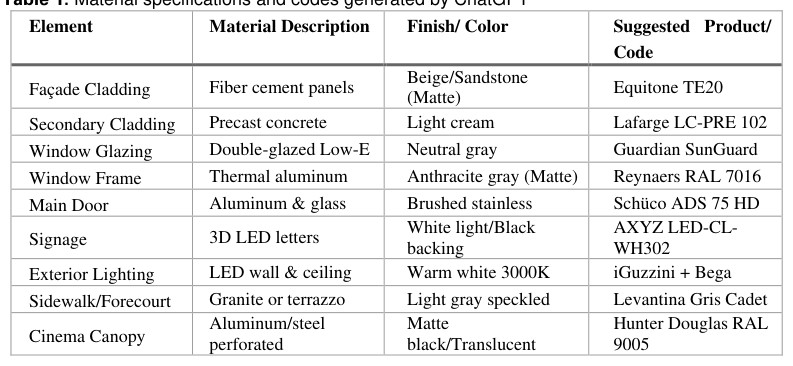
Benefits and Problems of implementing AI in Sustainable Interior Redesign. The analysis of the case study demonstrated that AI tools are beneficial in creating the sustainable interior redesign options of the abandoned heritage cinemas in Amman in the following ways: Advantages The results show that artificial intelligence can be used to have obvious benefits during the initial phases of interior redesign of Amman heritage cinemas due to the ability to quickly create and compare numerous interior design options and color schemes based on the spatial, aesthetic, and functional aspects. The visualizations created by AI often suggested environmental-friendly solutions, including natural materials, passive lighting ideas, and energy-conscious finishes, in the adaptive reuse project to help achieve sustainability goals. Under heritage-specific prompts, the outputs also had visual reference to the cultural identity of Amman, which strengthens continuity of cultural values but does not undermine the original heritage values. Besides expediting the conceptual exploration, AI served as a cheap design support software by proposing initial design conditions and material prescriptions before the technical development went in-depth; Table 1 below shows some of the selected AI-generated material and facade specifications generated at the experimental design stage.
Table 1. Material specifications and codes generated by ChatGPT Element Material Description Finish/ Color Suggested Product/ Code
Challenges The AI-generated outputs were found to have a number of limitations, such as structural lack of accuracy, whereby most of the proposals did not take into account the real construction constraints and thus were not practical in historic buildings.
Reviving Heritage Through AI 943
Figure 7: Cinema Al-Hussein lobby current state (left) and Chatgpt attempt to redesign Cinema Al-Hussein Lobby by integrating Roman aesthetics (right).
The designs were also prone to generalized or exaggerated aesthetics resulting to the creation of globalized forms that did not reveal the heritage of Jordan unless they were informed by cultural prompts.
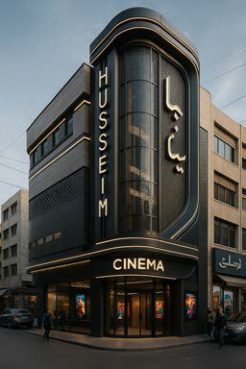
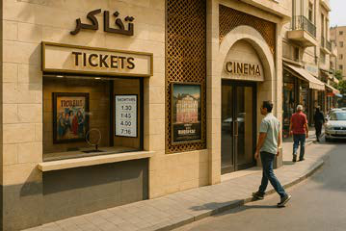
Figure 8: ChatGPT attempt to redesign Cinema Al-Hussein façade Moreover, AI proved to be less reliable in heritage-sensitive areas, sometimes misunderstanding or changing the historical details, and the overall cultural validity of the findings is strongly dependent on the experience of the user and the quality of the prompts used.Figure 9: ChatGPT was asked to add a hint of culture in designing one of the cinemas' ticket window
944 Hussein and Durzi
How AI-Generated Visualizations Can Be used to make design decisions The visualizations designed to support Cinema Raghadan served to explain the intent of design by bringing abstract programmatic concepts like transforming the cinema into a cultural hub into concrete visual situations that expressed space potentials. They also facilitated the comparison of various reuse possibilities at the initial stage of designing, where designers could compare various layouts, functions, and circulation patterns.
Figure 10: Cinema lobby area layout redesign options The imagery of AI was used to support co-design and social participation through the availability of visual content that can be circulated among decision-makers and stakeholders to enable feedback and discourse. Cultural integration was put to test by applying visualizations with Ammani motives and could enable the designers to evaluate the ability of heritage identity to be conveyed or redefined in the new interior environments. Altogether, AI- generated images played the role of decision-support tool, decreasing the ambiguity of the design, and allowing the stakeholders to choose the directions of the design according to functional performance and cultural attractiveness.
AI Tools as aids to Adaptive Reuse of Heritage Buildings in Amman.
The descriptive, analytical and experimental phases proved that the use of AI tools can be a meaningful support of the adaptive reuse, especially through more effective documentation and interpretation of existing conditions. The data gathered in the descriptive phase in the form of photographs and spatial information formed the basis that could be further elaborated by AI to produce site-specific design solutions. Visual exploration and analytical evaluation with the assistance of AI was used to locate reuse functions, which were consistent with heritage values, including cultural centers, creative studios, and exhibition spaces.
Reviving Heritage Through AI 945
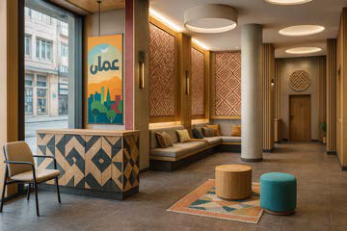
Figure 11: Two design options for Cinema Raghadan façade Simultaneously, the visual scenes that linked the past and the future maintained the volumetric identity of the cinemas and suggested new applications in line with the objectives of developing the city of Amman.Figure 13: Facade proposal for Cinema Al-Khayyam using ReRender (left) and Interior design proposal for Cinema Al-Khayyam with a cultural touch (right).
AI helped enhance sustainability through experimenting with natural materials, passive lighting solutions, and ecological interior design solutions that contribute to the goals of adaptive reuse. It also shortened the conceptual phase especially with abandoned buildings with minimal documentation enabling designers to experiment with the possible future without invasive interventions.
In general, the results indicate that AI can become a trigger of the process of the renaissance of heritage buildings, creating culturally knowledgeable and sustainable-focused design visions.
946 Hussein and Durzi
DISCUSSION This study presents to the domain of artificial intelligence in heritage conservation, an unexplored issue of adaptive reuse of historic buildings with high social value in Amman in terms of cinema buildings. In contrast to the majority of AI-based heritage research at architectural or urban scales, this study is carried out at the scale that is culturally relevant. The results confirm the previous work stating that AI can increase the pace of the initial adaptive reuse design phase by allowing quick scenario exploration and effective conceptual visualization (Akyol, 2024). In addition to energy- related uses (Li et al., 2025), AI is also helpful in the interpretation of cultural heritage and visualization of reuse in the visualization of historic film theatres. Adaptive reuse literature in Jordan focuses on the authenticity and cultural sustainability, noting that cultural meaning and relevance to community should be preserved (Amro et al., 2023; Al-Adayleh, Abu Ghanimeh and Abu-Ghazzeh, 2021). AI-based visualization can be used to support these values and enhance community engagement, which is considered missing, according to Shawash (n.d.). Since the historic cinemas are a large-scale and symbolic object with significant value, the findings support that AI-assisted conceptual design can be used to facilitate the design decision-making process and communication, as long as AI plays the role of a support system within the established conservation frameworks (Akyol, 2024; Li et al., 2025).
CONCLUSION The article confirms that AI has the potential to facilitate the adaptive reuse of the heritage buildings in Amman with the help of sustainable interior design and maintenance of cultural identity. Assisted visualization and material suggestions with the help of AI enhance preliminary design choices and stakeholder engagement, which indicates the possibility of restoring such historic locations as Cinema Raghadan. Even though the application of AI in Jordanian heritage projects is still insufficient, the results indicate the potential of AI use in the future in case of professional training, ethical frameworks, institutional cooperation, and digital infrastructure, and AI can be presented as a supplementary tool to traditional expertise.
ACKNOWLEDGMENT
The authors express their appreciation to the University of Petra, including the Faculty of Architecture and Design and the Interior Design Department, for their continued support and assistance throughout the development of this research.
REFERENCES
Abuarkub, M., Awad, J., Chohan, A. & Noori, F. (2024). Revitalization in the age of artificial intelligence: adaptive architectural conservation strategies for courtyard houses in Palestine. Journal of Design and Built Environment, 24(2), 99–125. Akyol, G. (2024). Adaptive reuse of abandoned industrial buildings with the help of
artificial intelligence. Prometheus, 7, 48–51. Al-Adayleh, M.Z., Abu Ghanimeh, A.M. & Abu-Ghazzeh, T.M. (2021). Heritage architecture in Amman: adaptive reuse of a heritage building (Farouq Yaghmour
Reviving Heritage Through AI 947 Office). Jordanian Journal of Arts, 14(2), 251–260. https://doi.org/10.47016/14.2.7 Amro, D.K., Sukkar, A., Yahia, M.W. & Abukeshek, M.K. (2023). Evaluating the
cultural sustainability of the adaptive reuse of Al-Nabulsi traditional house into a cultural center in Irbid, Jordan. Sustainability, 15(17), 13198. https://doi.org/10.3390/su151713198 Li, Y., Chen, H., Yu, P. & Yang, L. (2025). A review of artificial intelligence applications in architectural design: energy-saving renovations and adaptive building envelopes. Energies, 18(4), 918. https://doi.org/10.3390/en18040918 Mehan, A. (2025). Adaptive reuse as a catalyst for post-2030 urban sustainability:
rethinking industrial heritage beyond the SDGs. Discover Sustainability, 6(1), 1–21. https://doi.org/10.1007/s43621-024-00178-3 Seiseh, R., Abu Alhassan, Y., Mohamed, A.H., Alsoukhni, N.F., Almashwkhi, M.A. & Al Sekhaneh, W. (2024). Spatial development plan of heritage building strategic investment of adaptive reuse: Samad Village (Jordan) vs AlUla (Saudi Arabia). International Journal of Conservation Science, 15(3), 1229–1242. Shawash, J. (n.d). Al-Balad as a place of heritage: problematising the conceptualisation
of heritage in the context of the Arab Muslim Middle East. PhD thesis. London: University College London.
LISTED IN THE AHFE DIGITAL BOOKSTORE CATALOGUE
Explore the complete digital volume
Intelligent Human Systems Integration (IHSI 2026): Disruptive and Innovative Technologies
Read this individual research paper free through the original publisher, or explore the full digital proceedings book.
ISBN 978-1-964867-76-2
Explore this ISBN in the AHFE Bookstore ↗Listed in the July 2026 bookstore catalogue; search by ISBN to confirm current availability · Digital book purchase optional