Hanbing Li, Feichen Wu, Chunheng Ho (2024). Exploring the Impact of Packaging Information on Consumer Purchase Decision. In: Human Factors in Communication of Design. AHFE Open Access, vol. 136, pp. 127–137. https://doi.org/10.54941/ahfe1004975
This study uses verbal protocol analysis to delve into how packaging information impacts consumer purchase decision. The focus is on health supplements, chosen due to their minimal susceptibility to variations in packaging aesthetics, materials, and product differences. Participants were asked to think aloud while selecting from multiple products with similar ingredients. This method provided a dynamic perspective on their processes of acquiring packaging information and consumer purchase decisions. The collected verbal protocol data underwent two coding phases. The first phase followed the EKB model, encompassing stages such as problem recognition, information search, alternative evaluation, and purchase decision. The post-purchase evaluation from the EKB model was excluded as the focus is on information search and purchase decision. The second phase involved categorizing packaging information elements based on literature. Combining the findings from the two phases, the study concludes that text, style, color, and graphics collectively influence product selection and purchase decisions. By understanding and leveraging the impact of packaging information on consumer behavior, designers can formulate packaging strategies that capture consumer attention and guide them through the purchase decision-making process, ultimately resulting in a positive post-purchase experience.
As product variety increases with economic and technological growth, pack- aging becomes a key factor in consumer purchase decisions. The decision- making process involves stages like problem recognition, information search, alternative evaluation, and purchase decision. Salem (2018) found that pack- aging design significantly impacts these decisions by stimulating sensory perceptions. Visual elements of packaging, such as color, shape, imagery, and typography, captivate attention and convey brand narratives, fostering an emotional connection that influences purchase willingness. In competi- tive retail environments, innovative and appealing packaging can differen- tiate products and prompt purchase decisions, making understanding the psychological effects of packaging crucial for effective marketing strategies.
Research on packaging’s influence on consumer purchase decisions varies in classifying packaging elements and their impact. Some studies focus on graphic visual elements, categorizing design features into elements like color, shape, imagery, lines and layout, materials, and technology (Wang et al., 2023). Others consider informational elements, such as the information pro- vided and the language used (Salem, 2018). For instance, one study identified 14 categories of health food packaging information using card sorting tech- niques (Chiou & Chiu, 2017). Another grouped graphics and text as visual design elements, summarizing them into eight critical components (Yen & Lin, 2010).
The extent to which packaging elements influence purchase decisions dif- fers across studies. Most agree that color, text, and graphics have the most pronounced impact (Wang et al., 2023). Some research suggests imagery is the most crucial influencing factor, with materials and technology having negligi- ble effects (Ahmad et al., 2012). Others found a positive correlation between packaging color and the front style of packaging with consumer purchase decisions (Abdullah et al., 2013). In terms of understanding food packaging content, ‘text’ as a communicative design element is often superior to other design elements, the order of superiority is usually: text > shape > graphics > color (Chou & Wang, 2007). This divergence in research highlights the need for more consensus in the field.
These divergences suggest that future research further explores the rela- tive importance of different packaging elements. Additionally, understanding how to effectively integrate these elements could lead to a better under- standing of how packaging design influences consumer psychology and the purchase decision process. It is noteworthy that packaging, as an informa- tion attribute, is closely related to brand benefits (Yen & Lin, 2010) and purchase intentions (Alvarez-González et al., 2023). The unique design of products through logos, graphics, imagery, and messages plays a mediating role in information transmission, facilitating communication between brand owners and consumers. Thus, this study will focus on the information trans- mission attributes of packaging, considering elements that can be perceived visually by consumers as part of the packaging information, thereby provid- ing a more comprehensive and refined classification framework to holisti- cally understand the impact of packaging elements on consumer purchase decisions.
Furthermore, previous research in this field has predominantly employed quantitative studies utilizing survey questionnaires alongside qualitative methods, such as focus group discussions and interviews. However, these methodologies, relying on experiential and long-term memory, offer limited understanding of the purchase decision-making process and fail to ascertain the cognitive processes internal to consumers that give rise to purchase deci- sions. Thus, this research study employs a method known as concurrent verbal protocol analysis, a technique that has been proven to be effective in understanding consumer purchase decisions. This method was first pro- posed by Ericsson and Simon (1980), who suggested that verbal reports can serve as evidence of thought processes. The choice of this method is based on two primary reasons. Firstly, concurrent verbalization, which is obtained
Exploring the Impact of Packaging Information on Consumer Purchase Decision 129
simultaneously with the thought process, is more accurate than retrospec- tive verbalization, which is obtained after the event. This accuracy has been demonstrated in various studies, showing that concurrent verbalization is effective in capturing a range of task-related thoughts, thereby providing direct insights into cognitive processes during the task. Secondly, during task completion, participants report cognitive process information in verbal form while thinking aloud. The cognitive load generated during task-oriented verbal reporting is negligible, and concurrent think-aloud protocols do not alter the thought process (Karpf, 1973). Therefore, it is essential to con- duct concurrent verbal protocol studies. Compared to retrospective methods, they more accurately reflect the actual consumer purchase decision-making process.
There is a growing body of survey and interview research studies that explore the motivations and barriers of packaging on consumer purchase decisions. Despite this, the literature lacks consensus on identifying the differ- ent factors influencing these decisions. To address this gap, this study adopts a qualitative approach using verbal protocol analysis and think-aloud tech- niques. The goal is to delve into the internal cognitive processes involved in consumer purchase decisions. This method allows for a comprehensive exploration of individuals’ thoughts, emotions, and behaviors. It uncovers the underlying motivations, visual perceptions, and cognitive processes that influence behavior, thus contributing to the existing literature in a meaningful way.
METHOD
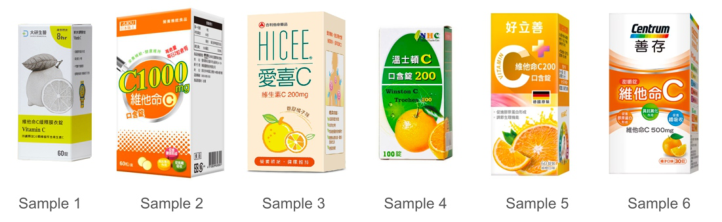
Experimental Sample In recent years, the consumer base for dietary supplements has been expand- ing globally, leading to an increased demand for dietary supplement pack- aging design. Furthermore, dietary supplement products typically feature rectangular packaging predominantly made of paper, resulting in minimal packaging shape and material variation. Dietary supplements with simi- lar positioning often share similar ingredients, and the purchasing process is less influenced by the product’s sensory attributes, such as smell and taste. Additionally, dietary supplement packaging emphasizes its function of information transmission. Due to regulatory restrictions, marketers use graphics, colors, and product names in packaging design to subtly suggest various health benefits, influencing consumer purchase behavior (Chen & Kao, 2011). Therefore, dietary supplement packaging was chosen as the experimental sample for this study. Products containing only ‘Vitamin C’ as indicated in the nutritional labeling were selected from Watsons, the largest pharmacy chain in Taiwan. To minimize differences in packaging shape and content, products in the form of effervescent tablets, powders, capsules, jellies, and other formats were excluded, focusing only on tablet forms. More- over, products targeted at specific user groups, such as children or the elderly, were also excluded. A total of six packaging samples were ultimately selected as shown in Figure 1.
Figure 1: The experimental packaging samples used in this study.
Participants This study targeted consumers who had previously consumed or purchased dietary supplements, focusing on a female demographic, as they represent the largest consumer group in the dietary supplements market. A total of eight women from Taiwan participated in this study. Their ages ranged from 23 to 30 years, with an average age of 27.13. Among the respondents, 50% were employed, while the remaining 50% were students. Half of the partici- pants held a bachelor’s degree, with the other half comprising master’s degree students.
Procedure This empirical study is based on the process of consumer product selec- tion, revealing the current state of product packaging information and its actual impact on consumers purchase decisions in Taiwan. Therefore, the pri- mary method of this research involved collecting data through think-aloud to ensure the capture of the cognitive process behind consumer purchase decisions. The experiment was conducted in a private room and lasted approximately 20 minutes. It commenced with the researcher explaining the experimental procedure and informing the participants of the recording requirements. Upon agreement, participants began the experiment. A warm- up session using a missionaries and cannibals game preceded the experiment to familiarize participants with think-aloud. In the main experiment, partic- ipants were asked to select one product among the provided samples. They were also asked to observe the sample packaging and think-aloud simul- taneously; the experiment concluded when a participant verbally indicated their selection of a particular sample. A brief interview was arranged post- experiment to minimize the influence of long-term memory and experience on think-aloud reflections. It covered basic information about the partici- pants, past purchasing experiences, and factors influencing their purchasing decisions.
Encoding The verbal protocol captured during the think-aloud sessions was transcribed verbatim and coded using ATLAS.ti. This experiment employed two coding systems. The first coding system was based on the Engel-Kollat-Blackwell
Exploring the Impact of Packaging Information on Consumer Purchase Decision 131
(EKB) model, which aims to delve into the various stages of the purchase decision-making process and their influencing factors. Engel et al. (1968) posit that consumer behavior begins with need identification, which is then fulfilled through a decision-making process, proposing five stages of pur- chasing decisions: (1) Problem Recognition, (2) Information Search, (3) Alternative Evaluation, (4) Purchase Decision, (5) Post-Purchase Evaluation.
The second coding system categorized packaging information into three main types: color, graphics, and text, based on a synthesis of the litera- ture. This categorization was informed by grounded theory methodology applied to verbal data from in-depth interviews with 11 packaging design- ers with over ten years of experience (Yen & Lin, 2010), where logotypes and explanatory text are collectively referred to as text.
Combing these two coding systems can explore the relationship between packaging information and consumer purchase decisions. Coding outcomes may vary depending on the coder’s interpretation of the verbal protocols and understanding of the coding systems. To enhance the objectivity of coding, this study utilized a dual-coding approach by single coder. To prevent interfer- ence from the first coding task influencing the second, this study spaced the two coding tasks two weeks apart. The results of the two coding tasks should concur; if not, the coder should re-examine the protocols for arbitration and modify the coding scheme if necessary.
RESULTS
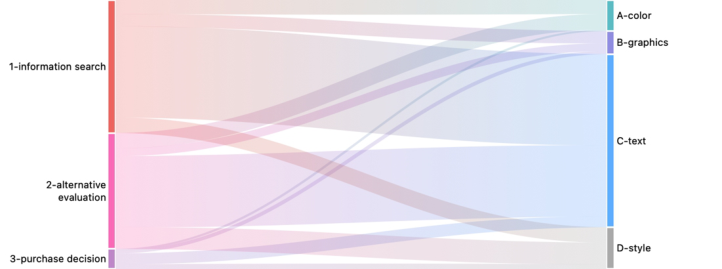
Coding Results Since the experimental task began with a known need and concluded with a purchase decision, it did not involve the ‘Problem Recognition’ and ‘Post- Purchase Evaluation’ stages of the EKB model. Consequently, the coding results only included the ‘Information Search,’ ‘Alternative Evaluation,’ and ‘Purchase Decision’ stages. During the coding process of the packaging infor- mation system, it was observed that seven out of the eight participants mentioned the overall style of the packaging design from the information search stage, which influenced the purchase decision outcomes of the three participants. Therefore, an additional coding category, ‘Overall Style,’ was incorporated. The relationship between System 1 (EKB model) and System 2 (Packaging Information) is illustrated in Figure 2. The volume of packaging information involved in the consumer purchase decision process is dimin- ishing, with all four categories of packaging information being considered at each stage. Text was the most referred to in all stages of the purchase decision process, followed by overall style, color, and graphics. As there was little vari- ation in the mention of packaging information thoughts in the verbal data of the participants during the information search stage, the following discussion will specifically address the ‘Alternative Evaluation’ and ‘Purchase Decision’ stages.
Figure 2: The relationship between EKB model and packaging information.
Purchase Decision-Making Process During the alternative evaluation stage of the purchase decision-making pro- cess, participants compare the advantages and disadvantages of products to arrive at a filtered result. The screening process is influenced by positive and negative impacts generated by the four categories of packaging information, which this study has collated based on the frequency of participant men- tions (summarized in Table 1). Within the text factors, explanatory text and content related to ingredients were mentioned by the highest number of par- ticipants. The quantity of explanatory text is essential, but the quality of the content should also be helpful to participants. A high ingredient content and a larger quantity can give participants a sense of good value for money. Additionally, they focus on the proportion of the main ingredients, the health- iness of the ingredients, and the presence of any personally contraindicated substances. Moreover, textual information regarding consumption methods, brand, origin, certifications, and insurance positively impacts participants, while complex preservation methods can be perceived as troublesome.
Table 1. Text factors.
Table available in the original PDF paper.
Factors Effect Number of Mentions
Positive 3
Volume of explanatory text information Positive 4 High content of ingredients (meets daily needs) Positive 4 Helpful explanatory text (meets personal needs, provides information unknown in daily life, professional) Positive 2 The ingredient composition aligns with personal requirements
Consumption method matches personal preference Positive 2 High brand recognition Positive 2 Imported product Positive 2 Large content quantity Positive 1 Certified and insured Positive 1 The preservation method more complex than other products Negative 1
Exploring the Impact of Packaging Information on Consumer Purchase Decision 133
The overall style of packaging design emerged as the second most evalu- ated factor (Table 2). The younger female Taiwanese participants generally favored a simplistic and cute style (Sample 3). The others, around the age of 30, may prefer styles that are more professional and innovative (Sample 1). Half of the participants disliked designs that appeared outdated or lacked distinctiveness (Sample 4 and 6), and styles that were overly bold could also have a negative impact (Sample 6).
Table 2. Overall style factors.
Table available in the original PDF paper.
Factors Effect Number of Mentions Simplicity Positive 4 Attractiveness Positive 2 Cuteness Positive 2 Freshness Positive 1 Subdued and Stable Positive 1 Innovative Positive 1 Professional Positive 1 Plain, Lacking Distinctiveness Negative 4 High Contrast Negative 1
In terms of color factors, as shown in Table 3, a majority of the young female Taiwanese participants tested preferred lighter and non-glaring pri- mary hues (Sample 3 and 5). Half of the participants did not appreciate the design of black and white lemons (Sample 1), eliciting comments such as it reminds them of ‘the kind of packaging that warns you smoking is harm- ful (Participant 3)’, ‘suggests insufficient cost (Participant 4)’, ‘seems like it is made for the visually impaired (Participant 5)’, and ‘feels very strange (Partici- pant 6)’, all of which potentially reduce the willingness to purchase. However, some individuals found the black-and-white design novel. Additionally, many participants expressed a desire for the packaging color scheme to correspond with the product contents; orange and yellow hues evoked associations with vitamin C from oranges and lemons, while green did not (Sample 4).
Image color does not match the content Negative 4 Color does not match product content (flavor)
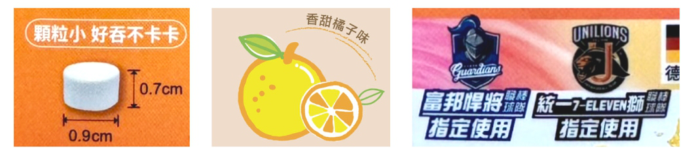
Graphics were the least utilized factor by participants during the alterna- tive evaluation stage (Table 4). As can be seen in Figure 3, three participants mentioned their desire for illustrations that depict the size of the contents (Sample 5). One participant favored cute accompanying illustrations (Sam- ple 3). Notably, the influence of packaging elements is not unidirectional;
for instance, a ‘spokesperson’ can positively affect those who are recep- tive, while for others, it may lead directly to the exclusion of the product (Sample 5).
Table 4. Graphic factors.
Table available in the original PDF paper.
Factors Effect Number of Mentions Describe content dimensions Positive 3 Cute illustrations Positive 1 Have a spokesperson Positive 2 Negative 1
Figure 3: Graphic factors in the sample (from left: illustrations of content size, cute accompanying illustrations, spokesperson).
Purchase Decision Results The purchase decisions of the participants were collated based on the exper- imental samples they ultimately chose to buy and the final factors that led to their decisions. As can be seen in Table 5, among the eight participants, six concentrated their choices on Samples 1 and 5; however, their reasons varied and were not limited to a single factor. In the final purchasing deci- sion, the most prevalent influencing factor was still text, which included descriptions of the contents, brand, certifications, and ingredient require- ments. Next was overall style, encompassing design styles that match the consumer group. For instance, ‘If it is for elderly people, it would be more like Sample 6 or Sample 2. Sample 3 seems to be for kids. If it is for myself, I would choose Sample 5 (Participant 3).’ Participants inferred the suitability of the product for themselves through the overall style of packaging design. Others preferred styles that were innovative, professional, or simple and cute. In terms of graphics, a spokesperson was a partial factor in the purchase decisions of two participants. Participant 5 evaluated alternatives based on the content of ingredients; when the content was the same, the reasonable use of color led to her final purchase decision. Moreover, it is noteworthy that although participants had a positive attitude towards depicting content dimensions during the alternative evaluation stage, what they remembered during the purchasing decision was explanatory text like ‘Easy to swal- low without getting stuck.’ Catchy slogans are likely more memorable for consumers.
Exploring the Impact of Packaging Information on Consumer Purchase Decision 135
Table 5. Purchase decision outcomes.
Table available in the original PDF paper.
Factors Subject
Purchased Sample
Packaging Information
1
5 Text Describe content dimensions 4, 7 Certified 7 Graphics Have a spokesperson 4, 7 Style Fresh, akin to its age-specific positioning 3 1 Text High brand awareness 6, 8 The ingredient composition aligns with personal requirements
5
Style Innovative and Professional 8 2 Color The colors of the image are congruent with its content
3 Style Simple and cute 2
DISCUSSION
Discussion of Findings This study used verbal protocol analysis to explore the impact of packaging information on consumer purchase decisions. Findings indicate that con- sumers’ product selection is influenced by their preferences for text, style, color, and graphics in packaging design. Text was found to be the most sig- nificant factor, with its volume and content playing a crucial role. This may be due to the fact that these texts bring a sense of value, which is important in consumer decision-making process. The study also revealed specific pref- erences among the surveyed female Taiwanese population aged 23-30, who favored simplistic, cute styles and comfortable, light color schemes. How- ever, incongruence between color designs and product contents or imagery was perceived negatively, highlighting the importance of acquiring deeper insights into the preferences of target consumers. The study concludes that text, style, color, and graphics collectively influence product selection and purchase decisions.
Theoretical Implications In previous studies, the classification of packaging elements has centered on two main categories: graphic visual elements and informational elements. This study enhances the categorization of visual elements in packaging design by adding overall style, identified through verbal protocol analysis. It reveals that overall style significantly impacts purchasing decisions and serves as a vital conduit for information transmission, alongside text, color, and graph- ics. This may be due to the difference in cognitive modes between general consumers and packaging designers (Chou & Wang, 2007). Consumers may tend to perceive the overall first rather than directly seeing the specific design content (Baxter, 1995). This difference needs to be obtained by objective research on the cognitive process of consumer purchase decision-making, and supplement the questionnaire or interview outline designed by packaging design experts.
The study also addresses a research gap by exploring the cognitive process of consumer purchase decisions using concurrent verbal protocol analysis. It uncovers that the decision process is iterative, with consumers’ thoughts oscillating between information search and alternative evaluation stages. Par- ticipants begin evaluating upon receiving partial information and initiate a new round of evaluation upon realizing new information. The volume of information may affect the number of cycles, it may also be affected by the consumer’s familiarity with the product category. Multiple visual elements of packaging design, including text, style, color, and graphics, influence purchasing decisions by transmitting information to consumers simultaneously.
Lastly, unlike previous research that employed the think-aloud method for online platforms, this study focuses on actual retail packages, replicating the offline shopping experience. This approach allows participants to read the information on all sides of the packages, providing a more authentic shopping scenario. Thus, this study’s contribution lies in its application of this method- ology within the context of offline shopping environments, supplementing the existing literature.
Practical Implications This study highlights text and overall style as key factors in packaging design that influence consumer purchasing decisions. These elements effec- tively communicate product advantages and capture consumer attention. For instance, explanatory text such as ‘Easy to swallow without getting stuck.’ that is easy for consumers to remember. The professional and innovative style of Sample 1, the simple and cute style of Sample 3, or the refreshing style of Sample 5 similar to the age positioning may be affected by the preferences of the target consumer group.
Secondly, the study also reveals that packaging information plays a bidirec- tional role. Participants exhibited varied attitudes towards packaging design, with preferences ranging from simplicity to more detailed information. In this study, especially the spokesperson of Sample 5. The design should be tailored based on the product’s characteristics to achieve a balanced effect.
Furthermore, poor design, especially discrepancies between color and graphic content, such as the black and white lemon in Sample 1 and the green Vitamin C packaging design in Sample 4, can negatively impact purchasing decisions.
Lastly, packaging design should cater to the targeted user demographic. In this study, younger female Taiwanese consumers favored a simplistic, cute and innovative style (Sample 1, 3 and 5). However, a lack of distinctive prod- uct features could reduce their attraction (Sample 4 and 6). The results of this study should not be generalized to other demographics such as men, the elderly, or infants and toddlers.
Limitations and Further Research The participants in this study were selected from the young female demo- graphic, which does not represent all consumer groups. Therefore, future
Exploring the Impact of Packaging Information on Consumer Purchase Decision 137
research could broaden the scope of the study population to make the research in this field more comprehensive and to deduce the packaging information preferences of different consumer groups.
This study explored the impact of packaging information classification on consumer purchasing decisions. However, consumer purchasing behavior is influenced not only by the content of the packaging information itself but also by factors such as typography and line types. Additionally, the arrangement of information on the packaging also affects consumers’ visual perception. Incorporating these elements into subsequent research could render the study more complete.
REFERENCES
Abdullah, M., Kalam, A., & Akterujjaman, S. M. (2013). Packaging Factors Determining Consumer Buying Decision. International Journal of Humanities and Management Sciences, 1(5). Ahmad, N., Billoo, M., & Lakhan, A. A. (2012). Effect of Product Packaging in
Consumer Buying Decision. Journal of Business Strategies, 6(2), pp. 1–10. Alvarez-González, P., Dopico-Parada, A., & López-Miguens, M. J. (2023). What do consumers care about when purchasing experiential packaging?. British Food Journal. Baxter, M. (1995). Product design: CRC press. Chiou, F. Y., & Chiu, M. H. P. (2017). Investigating How Female Consumers Orga-
nize and Sort Health Food Package Information: A Card Sorting Perspective. Journal of Library and Information Studies, 15(2), pp. 135–170. Chou, M. C., & Wang, W. Y. (2007). Differences between Designers and Consumers in Comprehending Communication Designs for Food Packaging. Journal of Design, 12(4), pp. 21–42. Chen, M. L., & Kao, H. C. (2011). The Preliminary Study on Visual Design
of Domestic Dietary Supplement. The Journal Of Commercial Design, 15, pp. 215–234. Engel, J. F., Kollat, D. T., & Blackwell, R. D. (1968). Consumer Behavior. Holt, Rinehart &Winston. Ericsson, K. A., & Simon, H. A. (1980). Verbal reports as data. Psychological Review,
87(3), pp. 215–251. Karpf, D. A. (1973). Thinking aloud in human discrimination learning (Doctoral dissertation, State University of New York at Stony Brook, 1972). Dissertation Abstracts International, 33, 6111B (University Microfilms No. 73–13, 625). Salem, M. Z. (2018). Effects of perfume packaging on Basque female consumers
purchase decision in Spain. Management Decision, 56(8), pp. 1748–1768. Wang, H. Y., Ab Gani, M. A. A., & Liu, C. (2023). Impact of Snack Food Packaging Design Characteristics on Consumer Purchase Decisions. Sage Open, 13(2). Yen, J., & Lin, S. Y. (2010). A Discussion of the Variables of Packaging Design That
Affect Brand Equity. Journal of Design, 15(1), pp. 71–91.
LISTED IN THE AHFE DIGITAL BOOKSTORE CATALOGUE
Explore the complete digital volume
Human Factors in Communication of Design
Read this individual research paper free through the original publisher, or explore the full digital proceedings book.
ISBN 978-1-964867-12-0
Explore this ISBN in the AHFE Bookstore ↗Listed in the July 2026 bookstore catalogue; search by ISBN to confirm current availability · Digital book purchase optional