Amic Ho (2024). Unravelling the Aesthetics and Emotion: Exploring the Artistic Value of AI-Generated Artworks. In: Human Interaction and Emerging Technologies (IHIET 2024). AHFE Open Access, vol. 157, pp. 260–270. https://doi.org/10.54941/ahfe1005485
The debut of AI art, a new cultural realm, has given rise to discussions about its artistry and aesthetic value. On the other hand, since the new path of the art-creational movement does not allow applying traditional components of creativity to evaluate the creative and aesthetic value, art coming from AI creates new difficulties concerning its evaluation. What are the pillars of the art genre – composition, technique, visual phenomena – no longer look the same? New tools are required to give a scientifically sound assessment of the esprit and visual components of AI art. How do we assess emotions driven by works from AI? They may show the extent of faithfulness to the traditional genre due to the same or diverse components from conventional art. This paper tries to compose and define the base on which an assessment of emotions driven by such works is to be done. When the artist agrees, AI uses machine learning algorithms, and the experience is always learning.
The emergence of artificial intelligence has introduced a novel mode of artistic expression known as AI art, which prompts investigations into its creative essence and aesthetic worth. The evaluative analysis of creative and aesthetic value in AI-generating works becomes challenging due to the uniqueness of its development stages. The current criteria for assessing art such as the composition, technique, and visual appeal may need a form of revision to analyse the artistic creativeness of the artworks created through artificial intelligence. A comprehensive understanding of the creative and aesthetic value depicted by art in the traditional realms provides a framework that necessitates the development of new criteria. The real question is whether the artworks made through artificial intelligence can elicit emotional feelings similar to those experienced in traditional art forms. The importance of emotions in artistic performances is the creation of emotional connections and the development of further choices. The identification of possibility of artificial intelligence replicating or developing more engaging emotions than traditional art can be identified based on analysing the emotional reaction in
Unravelling the Aesthetics and Emotion: Exploring the Artistic Value 261
AI-generated art. The collection of data from any persons interacting with AI-generated artworks, through the use of both qualitative and quantitative methods such as surveys and aesthetic standard compilation will enable the real potential of the artwork. This research will support the identification and analysis of emotional feelings in AI-generated art and enable the field to analyse the possible differences between traditional forms of artworks that generate emotional feelings. Both the possible commonalities and differences between AI-generated artworks are determined.
AI-GENERATED ART AND ITS RISE AS A NEW FORM OF ARTISTIC EXPRESSION The advent of a new kind of art, AI art, prompted debates on its creativity and artistic value. The novelty of creativity and aesthetic value assessment in works of AI generation is associated with the evolutionary instability of the species. To evaluate the alien subtlety in AI works, one needs a new system that includes criteria and assessment tools. This system may retain the traditional parameters – such as composition, drawing and visual appeal – because creation is always creation. The ability of an alien to cause feeling is a sensation – human from aliens – extraterrestrial. The importance of these feelings can be as a means of relationship and as a uniqueness of both interacting parties. A study of how people “perceive” more creative and specific works in the form of a picture. However, to do this, one needs an idea of how AI art will attract people. One can evaluate revelation through the same commission; focus depends on the criterion. We can get a view of the replication or deviation of the emotions for old ones from AI visual art. To do this, I collect data from people who interact with AI works of art. Data collection is through both qualitative and quantitative research methods, including question and answer response and aesthetic analysis. The purpose of this research is to identify and study the feelings of A in exposure to AI work and enable a comparative investigation of the feelings that old get from them. This comparative criterion can be the same for acceptance and incompatibility in feeling.
CHALLENGES IN EVALUATING CREATIVE AND AESTHETIC VALUE IN AI ART The assessment of creative and aesthetic value in AI art is a complex phenomenon, demanding the discussion of ethical, social, and artistic implications. The recent debate on the creativity and beauty of AI was sparked by the artwork that is generated by AI (Liu, 2023). While others claim that AI-created art has aesthetic efficacy (Ullrich & Trump, 2022), the investigation of things like computer-generated art using conventional assessment techniques is insufficient to understand and appreciate them, respectively. Ethical implications, the creative procedure, aesthetics, and audience acceptance are also explored when AI is utilised in art (Ho, 2024b). Finally, there is evidence indicating that comparing human and AI-made
262 Ho
art improves human creativity (Hwang, 2022), which could inflate the worth of human labour (Horton et al., 2023). The study conducted by Bellaiche et al. (2023) demonstrates that people generally have a negative tendency towards artworks created by artificial intelligence. This discovery implies that the participation of humans in the creative process has a positive effect on the assessment of art, indicating that AI may not entirely replace human creativity. The advancement of AI technology presents both advantages and difficulties in the development, encounter, and recognition of art (Lyu et al., 2021). Moreover, as it demonstrated, AI can provide new perspectives on aesthetic, personality, and social components of cultural creation, which are less focused on the commodity side of cultural production and intellectual property (L’Yi & Gehlenborg, 2022). In addition, the evaluation of AI art assumes creating computational aesthetic judgment to motivate artists and graphic designers, which would be able to argue that the automatic generation of art is relevant. The evaluation, purchasing intention, and collecting intention commerce of the artwork can also be evidenced in the personality of the creator (Zhang et al., 2023), who can be human or artificial. The identity of the creator changes the perception of art, hence this factor is important for the evaluation of creative and aesthetic value (Gu & Li, 2021). As a result, ethical, social, and artistic implications should be taken into during the creative and aesthetic evaluation of AI art. Therefore, as the role of AI in creative production increases, new conditions and values emerge, which necessitates a more detailed and full evaluation of AI art on creative and aesthetic grounds.
NECESSITY FOR A NOVEL FRAMEWORK TO ASSESS AI-GENERATED ARTWORKS A recent study argues that there is a need for a new framework to assess AI-generated artworks. The study acknowledges that the existing assessment methods are complex, but fails to address the inherent prejudice against computer-generated art. Therefore, the study suggests that the bias identification paradigm should be included in the review process (Hosseini, Resnik & Holmes, 2023). However, this work also raises the question of difference and whether the recognition of whether art is done by AI if it belongs to the same cultural spectrum has an incidence on perception. Moreover, a recent analysis with division handling and a prospective study on AI and art explains the need to develop an ethical frame and a collaborative paradigm to evaluate the AI art influence on preference and action intention sighting productivity framework which is also related to the creator’s identity (Chamberlain et al., 2018; Gangadharbatla, 2021). A need for a broad aesthetic analysis (Bellaiche et al., 2023) regarding various AI types of generation is also highlighted in a work involving AI-generated dances and image-to-text (Darda, Carre & Cross, 2022). AI-created paintings and experiments based on measuring the cognitive aspect of audience perception of art style transference. The work states that a cue framework measuring
Unravelling the Aesthetics and Emotion: Exploring the Artistic Value 263
would not be enough to analyse how people perceive and experience AI art and that a new framework should be developed.
CONVENTIONAL CRITERIA USED FOR ASSESSING TRADITIONAL ART AND THE NEED FOR REVISION In the past years, traditional art metrics have come under scrutiny. With AI-generated art gaining momentum, there has been a call to reconsider what these criteria mean, specifically in the context of art that is created by artificial intelligence. Studies have uncovered biases against computer- generated art, arguing that a framework that accounts for these biases - and knowledge about AI-attribution impact on artwork evaluation – is necessary and urgent. The previous review and forward-looking evaluation of AI and art underscores the need for the establishment of ethical guidelines coupled with a further exploration of collaborative practices in the evaluation of AI-based art. The work on how human expertise and AI-created artefacts could come together also emphasises the necessity for a framework that also considers the identity of the creator. Furthermore, A previous piece of work seems to suggest that a framework that captures the nuances of the audience reception and experience in AI art will be able to pick up on the effects of audience expertise on the evaluation of artwork that was generated through style transfer by machine learning. The examination of paintings produced by a ‘text-to-image system’ (Darda, Carre & Cross, 2022) as well as the squid game and the poet’s game previously discussed, suggests the need for a framework that enables us to contemplate models of viewer engagement and aesthetic responses across various AI-art domains. The works in the existing literature call for a novel framework to evaluate AI-generated artworks that can consider biases, AI attribution knowledge, ethical considerations, creator identity, and audience perception, should be comprehensive enough to account for various forms of AI-generated art and comprehensive enough to capture the complexities of human-AI coproducing these works.
EXPLORATION OF EMOTIONAL RESPONSES TO ART AND ITS IMPORTANCE IN CREATIVE EXPERIENCES The subject of emotional responses to art is vast and diverse. Ho (Ho, 2024a) has recently suggested that emotional responses are primarily responsible for positive emotions in response to art. At the same time, other studies (Menninghaus et al., 2019) prove the significance of the negative emotional dimensions to the aesthetic experience. Furthermore, emotions are affected by many cognitive evaluations that prompt the emotional experience and expression due to the work or portrayal, highlighting the connection between cognition and emotions responding to art (Miu et al., 2016; Schindler et al., 2017). Several other studies have also indicated the differences between art forms on the grounds of what emotional responses they may evoke (Menninghaus et al., 2019). Imitation of these emotions is also consistent with the distancing-embracing model (Pelowski et al., 2020).
264 Ho
Various scholarships have also examined the factors influencing positive emotions in response to music and painting (Silvia, 2012), highlighting the differences between various art forms. In addition, cognitive appraisals have also been found to impact one’s interest in visual arts (Ho, 2014), suggesting that cognitive processes are also responsible for the emergence of aesthetic emotions. Finally, the proposed research has inspired the formulation that emotional responsiveness to art is diverse, spanning many dimensions of emotions, cognitive evaluations, and responsivity. Thus, to thoroughly understand the emotional part of creativity, it is essential to acknowledge the vast number of emotional responses to art. Different levels of exposure to these factors explain new emotions. Furthermore, Ho’s (2014) finding reveals that there are also some cognitive assessments which determine one’s interest in visual arts. Therefore, cognition is another important factor in determining the roots of aesthetic production. Hence, in seeking to acquire a more comprehensive view of emotional development, it is essential to take into account the varied and multidetermined nature of emotional responses to art.
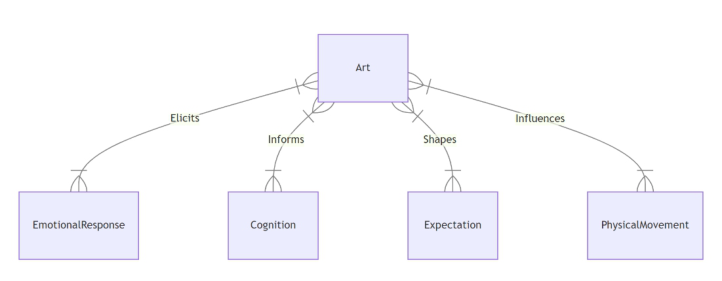
Figure 1: Entity relationship diagram to explain the interplay between art, emotional responses, cognition, expectations, and physical movement.
RESEARCH METHODS Research Study Emotional Engagement With AI-Generated Art vs. Traditional Art
This study aimed to contrast emotional engagement in two types of art forms -- AI-generated art and traditional art. It provides an understanding of the emotional responses each evokes and how each type affects people’s feelings – both at the individual level and as a whole society. We will use a combination of qualitative (through the SAM self-assessment matrix) (Chen, Chang & Liang, 2019). and quantitative approaches (questionnaire) to get at people’s feelings about AI-generated art and traditional artworks. Surveys will be used for collecting quantitative data on emotions while qualitative
Unravelling the Aesthetics and Emotion: Exploring the Artistic Value 265
methods such as interviews and participant observation yield deep insight into what participants experienced. A wide variety of artworks from both sources were chosen to give as complete an analysis as possible. The study uncovered differences and similarities in emotional engagement between AI- generated art and traditional art through the SAM self-assessment matrix. It means to provide a more complete understanding of the different ways in which AI-generated art induces emotional connection or engagement compared to traditional art. This knowledge will also help build up a picture of how AI-generated art affects an individual’s emotional experience and the transformation that can be expected to occur to emotion within that context of art.
Participants For both research studies, the participants should meet the following criteria. Participants must be at least 18 years old and possess the ability to give informed permission. Additionally, they should have a sophisticated understanding of art and emotional experiences. They would be randomly invited through the online platform’s computer art discussion groups. Participants with broad, cultural, educational, and artistic backgrounds ought to be involved to capture diverse perspectives and experiences. To that end, professionals, amateur artists, and those with no artistic background shall be represented. To fulfil this existential objective, it is necessary to include people who have varying levels of artistic experience. The minimum technology literacy to ensure that subjects will be able to interact with AI-generated art without hesitation and assist them put things in perspective.
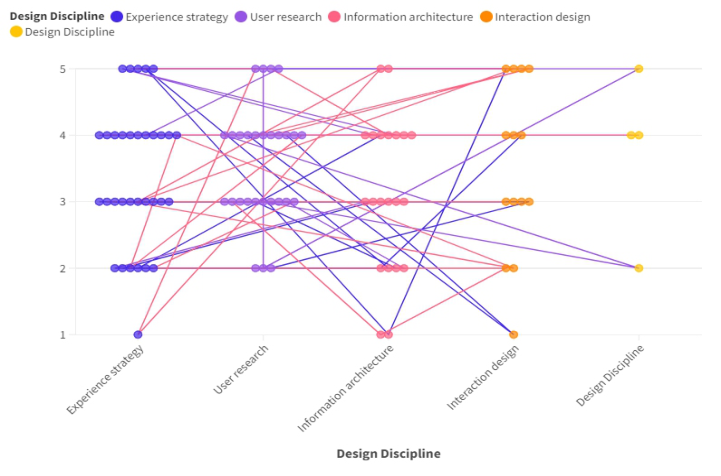
FINDINGS A comprehensive examination of descriptive analysis depicts a slightly higher mean for all dimensions from traditional art as compared to AI art. Regarding emotional engagement, descriptive analysis revealed that the mean was 4.5 standard deviation in Figure 2. The highest mean for subjective preferences was 6.3 and the lowest for perceived emotional impact and artistic appeal have means of 4.2 and 6.1, respectively. However, participants reported a connection of 4.1, a total emotional impact of 6.4, and a mean of 4.2. On the other hand, all the mean scores of subjective parameters of AI art were slightly lower than the mean scores of traditional art. The emotional engagement mean was 4.2, subjectiveness was 5.8, and the perceived impact values were 3.9 with the 5.6 artistic appeal and a connection of 3.9 and an overall emotional value of 6.2. Significantly, a comparative analysis using a paired t-test revealed no substantial variations in the average values between the two categories. Irrespective of slightly different standard means, the dataset’s overall trend suggests a similar emotional response towards traditional and AI-generated artwork. Further analysis through the cluster can differentiate participants providing differing emotional engagement patterns to AI art and traditional art. Such analyses will provide
266 Ho
more insights into the complex emotional experiences among different participants.
Figure 2: The impact of emotional design on communication effectiveness through different design disciplines.
DISCUSSION
Advancement in Understanding the Emotional Impact of AI-Generated Art The emotional dimension of AI-generated art has also been at the centre of recent research. For example, studies on the affective responses to computer- generated art have also been done because of how creative acts, which have always been valued highly since they were believed to be unique to human beings, can be valued when they are produced by a machine (Chamberlain et al., 2018). Hence, employing features inspired by psychology and art theory for affective picture classification can significantly aid in conducting an affective analysis of images, specifically in identifying the ability of images to evoke emotions in humans (Machajdik & Hanbury, 2010). Recent research also provided the impact of AI-generated art concerning the upcoming era of artificial intelligence AI and how it will affect normal societal norms and aesthetics (Rodgers et al., 2023). Others include the evidence on the psychological effect of AI awareness on employee depression, showing that changes in AI technology result in different emotions in employee practices (Chen et al., 2024). In addition, AI art is increasingly
Unravelling the Aesthetics and Emotion: Exploring the Artistic Value 267
interesting on its own accord, since it represents humans creating devices that can create images never seen before, researchers citing how the real picture only can be made because of emotional outcomes (Chatterjee, 2022). McGuirt et al. discuss how AI works in images and everyone is very sure about the picture taken as the image, but they found that there is emotion every time used AI-generated image. They also documented how the AI attribution knowledge affected the evaluation of artwork that humans produce, suggesting there are emotions that humans bring in creating images that machines cannot attain (Gangadharbatla, 2022). The finding meant to show how AI was associated with the social-relational moral standing that suggests the normative debates on robot rights (Lima et al., 2021). Further, there were investigations into the emotional actions of AI service measures as there were twelve studies that examined emotions arising from AI service measures, and explained how the emotions can be divided into three categories (Bagozzi et al., 2022). These reviews suggest there were various emotional and cognitive processes included in the recent research on the emotional dimension of AI-generated art.
Facilitation of a Comparative Analysis of Emotional Experiences Between AI-Generated Artworks and Traditional Art The ability to conduct a comparative analysis of the emotional experience related to AI-generated artworks and traditional art is contingent on the understanding and consideration of multiple factors and perspectives. The nature of emotional responses to art is multi-faceted and complex, conditioned by numerous psychological, social, and cultural factors. The respective references present several factors affecting the emotional experience related to AI-generated art and traditional art that enable a reasonable comparison. Thus, the reflection based on the SAM self- assessment matrix and the factorial related to the aesthetic judgment, identified via the feedback from the participants, enlightened the underlying biases towards AI artworks and the challenges of identifying them properly in blind comparison. It is particularly relevant in light of the unique forms and patterns of emotional response identified for AI art. Additionally, the work of Cotter et al. (2023) provides valuable information about the emotional experience and flourishing during the visitation of art museums, thus accentuating the diverse patterns of emotional response to traditional art. The study conducted by Gangadharbatla et al. (2021) played a crucial role in the present evaluation by examining how awareness of AI attribution affects the assessment of artwork across individuals from different age groups, specifically Gen Z and Millennials. Finally, the study of Yusa et al. (2022) comprehensively analysed the concept of AI-generated art in all its dimensions. Thus, combining these references enables the comparative analysis of multiple factors, such as biases, attribution knowledge, and the specifics of emotional responses to both forms of art.
268 Ho
Recommendations for Future Research in the Field of AI Art and Emotions Given the above references from the data, AI art and emotions may be focused in several key directions. For example, such work as Suhaimi et al. (2020) could be supplemented if innovative methods such as EEG-based emotion recognition able to capture an individual’s emotional responses to AI-generated art were developed; this would make it clear how an individual works with his emotions and help to form emotionally intelligent AI systems. Also, it could be the investigation of the emotional consequences of human-AI interaction in various spheres from the provision of services and marketing to entertainment and recreation use of leisure time (Huang & Rust, 2018). One more future research might be the development of emotion profiling tools using psychological lexicons, artificial intelligence and network science to investigate not only the emotional states but also the emotional content and effect of AI-generated content (Hua et al., 2024). Another possible research question might be whether people prefer human- or AI-created artwork in the whole creative field (Bellaiche et al., 2023) would give insights into how people evaluate creativity and what they feel about evaluating AI-generated art. All these research studies provide insights into the emotional effect of AI-generated art per se and on third-party areas such as man-machine interaction, personal emotional health and AI technology implementation.
CONCLUSION
The implications of the assessment of artistic and aesthetic value in AI- generated artworks refer to how art is understood and evaluated. Aesthetic response to computer generated art: A weak link to art history background (Chamberlain et al., 2018) refers to how art educational background provides a reliable source of variance in aesthetic judgments” This part of the references helps to understand the variety of factors that determine the assessment for aesthetic value. For instance, the difference in art educational backgrounds appears to provide a reliable source of variance in aesthetic value judgment. On the other hand, the influence of national identity on art evaluation was explored in the art appreciation heuristic (Mastandrea et al.. 2021), adding national identity as a new one. This study captures the different heuristics of appreciation to use in the assessment of artistic value (Gangadharbatla, 2022). Based on the results of interaction influences between the factors addressed, the findings reflect on the implications of AI-generated art in the industry.
REFERENCES
Bagozzi, Richard P., Michael K. Brady, and Ming-Hui Huang. (2022). AI service and emotion. Journal of Service Research Volume 25, No. 4. Cetinic, Eva, and James She. (2022). Understanding and creating art with AI: Review
and outlook, ACM Transactions on Multimedia Computing, Communications, and Applications, Volume 18, No. 2. Chamberlain, Rebecca, Mullin, Caitlin, Scheerlinck, Bram Wagemans, Johan (2018).
Putting the art in artificial: Aesthetic responses to computer-generated art, Psychology of Aesthetics, Creativity, and the Arts, Volume 12, No. 2.
Unravelling the Aesthetics and Emotion: Exploring the Artistic Value 269
Chatterjee, Anjan. (2022). Art in an age of artificial intelligence, Frontiers in Psychology, Volume 13, 1024449. Chen, J. M., Chang, P. C., & Liang, K. W. (2019, December). Speech emotion
recognition based on joint self-assessment manikins and emotion labels, In 2019 IEEE International Symposium on Multimedia (ISM). IEEE, pp. 327–3273. Chen, Jing., Yuan, Dongfeng, Dong, Ruotong, Cai, Jingyi, Ai, Zhongzhu, & Zhou, Shanshan (2024). Artificial intelligence significantly facilitates development in the mental health of college students: A bibliometric analysis. Frontiers in Psychology Volume 15, 1375294. Cotter, K., Rodriguez-Boerwinkle, R., Silver, S., Hardy, M., Putney, H., Crone, D., &
Pawelski, J. (2023). “Emotional Experiences and Flourishing During Art Museum Visits: A Latent Class Analysis”, in Emotions And Flourishing In Art Museums, pp. 1–27. Darda, Kohinoor, Marion Carre, and Emily Cross. (2023). Value attributed to textbased archives generated by artificial intelligence, Royal Society Open Science Volume 10, No. 2. Gangadharbatla, Harsha. (2022). The role of AI attribution knowledge in the
evaluation of artwork, Empirical Studies of the Arts Volume 40, No. 2. Gu, Li, and Yong Li. (2022). Who made the paintings: Artists or artificial intelligence? The effects of identity on liking and purchase intention, Frontiers in Psychology Volume 13. Ho, Amic G. (2014). The New Relationship between Emotion and the Design Process
for Designers. Archives of Design Research Volume 27, No. 2. Ho, Amic G. (2024a). Developing strategies for junior designers to manage the design and emotions. New Design Idea Volume 8, No. 1. Ho, Amic G. (2024b). “Exploration of the Emotion-Adaptive Engine in the
Computer-aided Design Process.” In: Chan, S. W. (Ed). Routledge Encyclopedia of Technology and the Humanities. Routledge. Horton Jr, C. Blaine, Michael W. White, and Sheena S. Iyengar. (2023). Bias against AI art can enhance perceptions of human creativity. Scientific Reports Volume 13, No. 1, 19001. Hosseini, Mohammad, David B. Resnik, and Kristi Holmes. (2023). The ethics of
disclosing the use of artificial intelligence tools in writing scholarly manuscripts, Research Ethics Volume 19, No. 4. Hua, Y., Niu, S., Cai, J., Chilton, L. B., Heuer, H., & Wohn, D. Y. (2024).
“Generative AI in User-Generated Content”, In CHI Conference on Human Factors in Computing Systems (CHI EA ‘24), May 11–16, 2024, Honolulu, HI, USA. ACM, New York, NY, USA. Huang, Ming-Hui, and Roland T. Rust. (2018). “Artificial intelligence in service”, Journal of Service Research Volume 21, No. 2. Hwang, A. H. C. (2022, April). “Too late to be creative? AI-empowered tools in
creative processes”, In CHI Conference on Human Factors in Computing Systems Extended Abstracts, pp. 1–9. Lima, Gabriel, Zhunis, Assem, Manovich, Lev, & Cha, Meeyoung (2021). On the social-relational moral standing of AI: An empirical study using AI-generated art, Frontiers in Robotics and AI Volume 8, 719944. Liu, Xiaojia, Chen, Xi, Huang, Yan, Wang, Weihong, Zhang, Mingkan, & Jin, Yang
(2023). Landscape Aesthetic Value of Waterfront Green Space Based on Space– Psychology–Behavior Dimension: A Case Study along Qiantang River (Hangzhou Section), International Journal of Environmental Research and Public Health Volume 20, No. 4.
270 Ho
Lucas Bellaiche, Rohin Shahi, Martin Harry Turpin, Anya Ragnhildstveit, Shawn Sprockett, Nathaniel Barr, Alexander Christensen & Paul Seli (2023). Humans versus AI: whether and why we prefer human-created compared to AI-created artwork, Cognitive Research: Principles and Implications, Volume 8, No. 1. L’Yi, Sehi, & Gehlenborg, Nils (2022). Multi-view design patterns and responsive
visualization for genomics data, IEEE Transactions on Visualization and Computer Graphics Volume 29, No. 1. Lyu, Yanru, Wang, Xinxin, Lin, Rungtai, & Wu, Jun. (2022). Communication in human–AI co-creation: Perceptual analysis of paintings generated by text-to- image system, Applied Sciences Volume 12, No. 22. Machajdik, J., & Hanbury, A. (2010, October). “Affective image classification using
features inspired by psychology and art theory”, In Proceedings of the 18th ACM international conference on Multimedia (pp. 83–92). Mastandrea, S., Wagoner, J. A., & Hogg, M. A. (2021). “Liking for abstract and representational art: National identity as an art appreciation heuristic”, Psychology of Aesthetics, Creativity, and the Arts Volume 15, No. 2. Menninghaus, Winfried, Wagner, Valentin, Wassiliwizky, Eugen, Schindler, Ines,
Hanich, Julian, Jacobsen, Thomas, & Koelsch, Stefan (2019). What are aesthetic emotions?, Psychological Review Volume 126, No. 2. Miu, Andrei C., Simina Pi¸tur, & Aurora Szentágotai-T˘atar. (2016). “Aesthetic emotions across arts: A comparison between painting and music”, Frontiers in Psychology Volume 6. Pelowski, Mattrew, Specker, Eva, Gerger, Gernot, Leder, Helmut, & Weingarden,
Lauren S. (2020). Do you feel like I do? A study of spontaneous and deliberate emotion sharing and understanding between artists and perceivers of installation art, Psychology of Aesthetics, Creativity, and the Arts Volume 14, No. 3. Rodgers, Waymong, Murray, James M., Stefanidis, Abraham, Degbey, William Y., & Tarba, Shlomo Y. (2023). An artificial intelligence algorithmic approach to ethical decision-making in human resource management processes, Human Resource Management Review Volume 33, No. 1. Schindler, Manuel, Maihöfner, Christian, Bolwerk, Anne, & Lang, Frieder R. (2017).
Does participation in art classes influence performance on two different cognitive tasks?, Aging & Mental Health Volume 21, No. 4. Silvia, Paul J. (2012). Human emotions and aesthetic experience, in: Aesthetic Science: Connecting Minds, Brain And Experience, Arthur P. Shimamura, Stephen E. Palmer, (Ed.). pp. 250–275. Suhaimi, Nazmi Sofian, James Mountstephens, and Jason Teo. (2020). EEG-based
emotion recognition: A state-of-the-art review of current trends and opportunities, Computational Intelligence and Neuroscience, 2020. Ullrich, Martin, and Sebastian Trump. (2023). Sonic Collaborations between Humans, Non-human Animals and Artificial Intelligences: Contemporary and Future Aesthetics in more-than-human worlds Organised Sound Volume 28, No. 1. Yusa, I., Yu Yu, and Tetiana Sovhyra. (2022). Reflections on the Use of Artificial
Intelligence: Works Of Art. Journal of Aesthetics, Design, and Art Management Volume 2, No. 2. Zhang, Y., Tang, F., Dong, W., Le, T. N. H., Xu, C., & Lee, T. Y. (2023). Portrait Map Art Generation by Asymmetric Image-to-Image translation Leonardo Volume 56, No. 1.
LISTED IN THE AHFE DIGITAL BOOKSTORE CATALOGUE
Explore the complete digital volume
Human Interaction and Emerging Technologies (IHIET 2024)
Read this individual research paper free through the original publisher, or explore the full digital proceedings book.
ISBN 978-1-964867-33-5
Explore this ISBN in the AHFE Bookstore ↗Listed in the July 2026 bookstore catalogue; search by ISBN to confirm current availability · Digital book purchase optional