Amic Ho (2025). Enhancing Creativity in Design Education through Emotional Engagement: A Study on Junior Designers. In: Human Interaction and Emerging Technologies (IHIET 2025). AHFE Open Access, vol. 197, pp. 566–580. https://doi.org/10.54941/ahfe1006752
Emotional Design Principles are increasingly incorporated into the curriculum for junior design students, recognised as essential for fostering innovation and enhancing user-centred solutions. This study identifies a pathway to address the misalignment between the plurality of art and junior designers in the design course. The study employs a mixed-methods approach, utilising action research, surveys, and focus groups to evaluate the impact of emotional design on students' creativity, empathy, and decision-making. Throughout three terms, workshops will present concepts associated with emotional design via hands-on projects that promote experiential learning and collaboration among participants. The assessment of alterations in the understanding and implementation of emotional design principles will be conducted statistically using a pre-and post-workshop questionnaire. Focus group talks will be used to gather qualitative data on students' experiences and perspectives. Preliminary findings indicate that incorporating emotional design into the students' learning environment may enhance creativity and sympathetic comprehension. Participants are expected to gain a deeper understanding of the impact of their emotional connections on their design work and user-centred solutions. This research aims to construct a theoretical formal model of emotional design principles in creative curricula, taking into account the significant influence of cultural settings on students' perceptions of emotional design. These findings will assist educators in determining which strategies might improve design education by enhancing the emotional engagement of younger designers, thereby better equipping them to navigate the complexities of the developing world. To achieve this, it is essential to train not just technically adept designers but also those with cultural sensitivity and emotional intelligence, emphasising the significance of emotion in innovation and user experience.
Emotional design in design education has received more attention in recent years, which is characteristic of the increasingly recognised importance of emotion in user experience and creativity. Design education of the past has
Enhancing Creativity in Design Education Through Emotional Engagement 567
focused on technical skills and aesthetics while ignoring attachment and empathy towards the user. It follows that as the design industry continues to promote user-centred and emotionally connected design outcomes, it becomes imperative that the new breed of designers can relate to, elicit, and respond to user emotions in their processes. Theoretical frameworks such as Norman’s three levels of emotional design—visceral, behavioural, and reflective—provide a robust basis for understanding how design artefacts elicit emotional responses; however, their systematic application in educational settings remains insufficiently explored and emphasised. Current research has established that emotional engagement is a crucial element of the user experience; however, there remains a deficiency in the application of these fundamental concepts during the initial stages of the design process in design education, particularly among junior designers transitioning from artistic pluralism to user-centred innovation.
This research is motivated by the disparity between the pluralistic character of art education and the expectation for junior designers in modern design courses to strategically and artistically assert claims of authenticity in their work. Many students entering design schools possess an art-oriented background and encounter courses that require them to think more creatively, cultivate more empathy, and concentrate on user-centric concerns. This gap may result in dissonance, causing students to neglect emotional design principles in their work, leading to technically focused solutions that fail to resonate with the sentiments of constituents. Bridging this gap is crucial for enhancing the creative potential of emerging designers and for maintaining the relevance of design education within a rapidly evolving professional landscape. This project carefully analyses empirical information about the relationship among emotion, creativity, empathy, and decision-making, using a formal methodology to include emotional design concepts in junior design curricula. It aims to cultivate students capable of tackling the intricate challenges encountered by designers via a synthesis of technical, cultural, and expressive considerations.
This research aims to bridge the gap in the literature by situating its findings within emotional design theory, user-centred innovation, and educational practice, therefore addressing the field’s requirements. The meticulous research design, uniform participant enrolment, and proactive workshop intervention are anticipated to substantially enhance the utilisation of emotional involvement to foster creativity, empathy development, and cross-cultural comprehension among junior designers. This project aims to enhance awareness of practice as a fundamental aspect of education and to foster the development of a technically and emotionally coherent educational framework in Design, enabling emerging designers to navigate the difficulties of an uncertain creative economy.
LITERATURE REVIEW
Emotional Design Principles: Foundations and Frameworks The resurgence of emotional design as a crucial aspect of contemporary design discourse in the digital era evidences a shift from an emphasis
568 Ho
on usability and utility to a more profound comprehension of the user’s experience. This transition recognises that design transcends just technological requirements or aesthetic considerations; it is inherently human, serving as a conduit for intricate emotional messages that influence user experiences, actions, and memories (Ho, 2024). Affective design aims to use design methodologies, including emotional design, to evoke desire and enhance user happiness, thus fostering loyalty. Norman (2004)’s idea of the three tiers of emotional design—visceral, behavioural, and reflective— constitutes the most durable foundation of theoretical comprehension and practical application among both scholars and practitioners. Norman’s approach encompasses the many ethical dimensions of emotional reactions to design, offering a systematic framework for engineers and designers to evaluate the entire spectrum of user experience.
Norman’s Three Levels of Emotional Design Norman’s Model posits those emotional responses to design manifest at three interconnected levels: visceral, behavioural, and reflective. All these levels are associated with various facets of user engagement with a product or system.
This pertains to the visceral level, which denotes the immediate and instinctive response to the aesthetics and feel of design. This pertains to the domain of aesthetics: colour, form, texture, and visual harmony. Intrinsic design has been shown to enhance usability, whereas visceral design is said to impact initial preference on a visceral level. The contours of the iPhone and the visuals of Airbnb (Voloshchuk, Glinka & Sats, 2023) exemplify the efficacy of sensory design in creating a striking first impression. Individuals must possess fascination and curiosity for a subject before desiring more knowledge about it.
The regulation pertains not just to superficiality, but to significance and the possibility of evasion. The consumer experiences emotional validation through the product’s effective performance, which facilitates their desired activities. An effective product fulfils its promise in an acceptable, proficient, and enjoyable way. The user-friendly nature of Google’s search interface (Oliveira & Teixeira Lopes, 2023) and the unobtrusive recommendation system, like that of Facebook, that supports Netflix (Neglur & PS, 2024) exemplify the use of behavioural design. Emotional design at the apex of the pyramid is intricately linked to user-centred design since it requires an understanding of the user’s characteristics, requirements, behaviours, and contextual use.
The reflecting layer encompasses the meanings, values, and emotional importance that a user associates with a product after a period of usage. Reflective design pertains to identity, self-perception, and recollection (Ivanova & Bondarenko, 2022); it is the framework through which we interpret events, establish attachments, and integrate objects into our identity. The manifestation of reflecting design is shown by the branding success of Nike’s ‘Just Do It’ (Singh, Tripathi & Kumar, 2023) and the capacity of items to evoke nostalgia or pride. This phase is essential for fostering advocacy and enduring allegiance by transforming the ordinary into significant symbols.
Enhancing Creativity in Design Education Through Emotional Engagement 569
Norman’s thesis emphasises that the first, second, and third levels are interconnected systems that contribute to and rely on the whole of the user’s experience with a product. Therefore, a good design must include all three dimensions: attention, usefulness, and emotional value.
Emotional Engagement in User-Centred Design Integrating emotional design concepts into user-centred design (UCD) (Goel, Tanwar & Sharma, 2022) signifies a significant transformation in the approach used by designers. While traditional User-centred Design emphasises usability, accessibility, and efficiency, the contemporary approach recognises that emotive involvement is crucial for creating significant and lasting experiences. Affective engagement (Ho, 2024b). refers to a design’s capacity to evoke good feelings such as fun, trust, community, accomplishment, and pleasure, while mitigating negative emotions like bewilderment and irritation.
Incorporating emotional engagement into User-centred Design requires a profound comprehension of consumers’ psychological and emotional requirements (Karim, Ilyas, Umar, Tajibu & Junaidi, 2023). Designers must also consider how items might evoke joy, surprise, comfort, or a sense of community belonging. Airbnb fosters trust and a sense of belonging via narrative, personalisation, social proof, and micro-interactions (Machado, 2021), such as the enjoyable screen shake when entering a password on Apple devices—which culminate in delightful moments, memorable experiences, and satisfied customers. User pleasure is not a secondary concern; it is, in fact, a fundamental need for sustained engagement.
Emotional engagement has several benefits. Research indicates that emotionally intelligent websites may enhance conversion rates by more than 40%, reduce bounce rates, and foster enduring favourable brand connections. Positive emotions encourage buyers to investigate product features, return for the product, and share their ownership with others, thus enhancing the product’s influence. Negative encounters stemming from inadequate usability or failed expectations (Zhang, Liang & Wu, 2024) might exacerbate emotions of mistrust. Emotional design, therefore, emerges as a competitive advantage in the marketplace and a means of retaining customers.
Emotional Design and Innovation Emotional designs not only enhance user experience but also stimulate creativity (Calavia, Blanco & Casas, 2021). This method of emotion-driven innovation is based on recent research indicating that leveraging insights from positive emotions may lead to the creation of innovative product ideas that transcend mere functionality. This strategy enables product designers to contemplate the significance and ethical implications of emotions, facilitating the creation of products that more accurately embody consumers’ ambitions and self-concept. The potential for innovation stemming from emotions is fundamentally collaborative and reflexive, encompassing a process in which teams articulate and contemplate their emotional insights, which
570 Ho
subsequently serve as causal drivers to enhance the ideation process and stimulate systemic strategic thinking. Diverse psychological theories (Rachmad, 2022), such as Maslow’s hierarchy of needs, cognitive appraisal theory (Anuyah, Badillo-Urquiola & Metoyer, 2023), and behavioural economics (Bryan, Tipton & Yeager, 2021), endorse the amalgamation of an emotional design methodology with innovation methods. These theories highlight internal motivation, social norms, and the structuring of incentives as critical determinants of emotional and behavioural responses. By using these lessons, designers may create experiences that fulfil functional needs while engaging, inspiring, and empowering consumers.
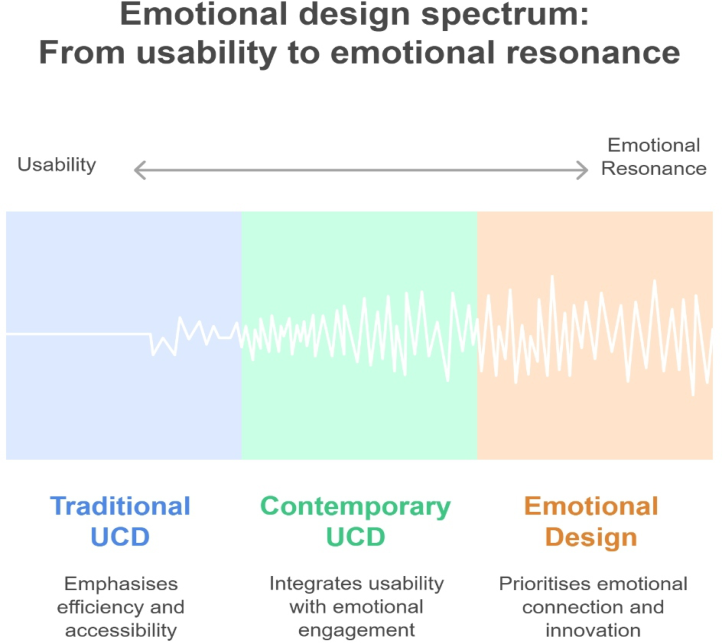
Figure 1: The figure illustrates the emotional design spectrum from usability to emotional resonance.
The Lasting Impact of Emotional Design The research indicates that emotional design is a complex entity, theoretically robust and experimentally validated. Norman’s three levels of design provide pragmatic and conceptual assistance for anyone engaged in creating things that are not only user-friendly and aesthetically pleasing (Han, Forbes & Schaefer, 2021) but also satisfying and memorable. The significance of emotional involvement in human-centred design (Lyon, Aung, Bruzios &
Enhancing Creativity in Design Education Through Emotional Engagement 571
Munson, 2024). Innovation is becoming essential for competitive advantage (Bridger & Gannaway, 2024), loyalty, and meaningful experiences. As digital goods and services proliferate and permeate daily lives, the need for emotional design will undoubtedly grow, necessitating designers to effectively balance the three factors discussed while striving for more gratifying user experiences.
RESEARCH PROCEDURE Participant Recruitment
The participant recruitment for this research was meticulously designed to provide a representative and ethical sample of junior designers in first and second-level undergraduate design programs. The first phase was formulating a comprehensive recruiting strategy following the established ethical rules for research involving human volunteers. Selection criteria were formulated to include students already enrolled in design courses during their junior year, often referred to as the first- and second-year levels of study. For participants, all the participants conducted the study regardless of gender, race, and experience in the emotive design, enabling the collection of diverse opinions and backgrounds.
Participants’ details were passed from academic departments to the course coordinator, who had access to student email lists from the learning management system. The particulars of the study, its objectives, methods and potential ethical implications were shared through e-mail invites, digital flyers, and brief in-class presentations. Recruiting language clarified that participation was voluntary (re: people could withdraw at any time) and that confidence and data protection were maintained. Students who expressed interest were told to call the researchers right away and tell them that they wanted to be involved. An information letter and a consent form were provided to students who indicated they were interested. Written consent was obtained from all patients.
A total of 38 individuals were recruited successfully for the pre-workshop stage. Attempts were made to get a response proportionally consistent with the student population by age, college, gender, and course of study. The recruiting process was meticulously monitored, and any concerns that emerged, such as poor response rates or attrition, were promptly handled with requisite adjustments implemented in advance to guarantee the sample conformed to the specified criteria. No incentives were provided beyond the inherent educational value of the seminars to reduce coercion and guarantee voluntary participation.
Participant Recruitment The study employed a mixed-methods research method, combining both the quantitative and qualitative data collection methods to support the complex and multilayered aspects of creativity and emotional engagement in design education. This methodological pluralism was warranted because of the explorative nature of the study, which intended to not only quantify changes
572 Ho
in knowledge and attitudes but also to get a grip on the lived experiences and subtle perceptions of participants. The use of a mixed-methodology promoted triangulation to validate the results in qualitative and quantitative studies.
The first part (quantitative) consisted of a structured questionnaire before and after the workshops. These questionnaires were designed author- specifically, with a reference to previous literature, validated questionnaires, and with piloting carried out amongst a group of students to ensure understanding and relevance. Both surveys contained closed as well as Likert-scale questions that were intended to capture respondents’ baseline knowledge of emotional design; their attitudes toward the role that emotion plays in creativity; self-reported empathy; and self-perceived ability to practice principles of emotional design. The post-workshop questionnaire was the same as the pre-workshop instrument but also included questions about satisfaction with the workshop, the perception of changes in knowledge and skills, and intentions for future use.
The qualitative aspect of the study involved conducting focus group discussions with a purposive sub-sample of six respondents that was targeted for the conclusion of the workshops. The focus groups aimed to capture detailed and in-depth narratives of participants’ experiences, obstacles they encountered, and what they derived from the intervention. A semi-structured interview guide, including how emotional design affects creativity, the role of empathy in the design process, cultural context and ideas for how to develop the workshop, was used. The conversations were audio-recorded with participants’ permission and then transcribed for analysis.
As well as surveys and focus groups, the workshops provided one of the spaces for action research with the research team co-facilitating and observing the learning process. This participatory and iterative method enabled continual reflection as to the suitability and refinement of the workshop activities for participants’ feedback and developing requirements. The action research was suitable in this regard since it tended to contribute to transformative learning, as well as the ongoing process of improving and developing design education.
Research Design The overall research design was quasi-experimental, including both pre- test/post-test assessments and qualitative analysis. This design was selected because it allows for the measurement of change within the same sample and facilitates the exploration of the underlying processes and mechanisms. The workshops, which constituted the primary intervention, were executed throughout three academic terms and included several organised activities that highlighted the concepts and practices of emotional design. Each workshop session maintained an equilibrium between theoretical inputs and practical exercises, whereby participants engaged with concepts and experiences via experimentation, collaboration in pairs, group activities, or reflective pauses. The training was grounded on established emotional
Enhancing Creativity in Design Education Through Emotional Engagement 573
design theories and tailored to the specific requirements and interests of this participant group, as indicated in the pre-workshop survey.
The data gathering followed a well-established timeline. The online pre- workshop survey was sent one week before the first workshop session to gather baseline data. The workshop sessions included in-person seminars, during which the research team recorded attendance and participant engagement. An online survey was sent within one week after the last workshop session to prompt participants to reflect on their experiences were recent experiences. The groups were scheduled to take place within two weeks after the program to facilitate further discourse around the emergent themes and insights.
Data management procedures addressed the integrity and security of all acquired data. Responses to the surveys were anonymised and stored on secure, password-protected servers accessible only by the study team. The focus group transcripts were transcribed and anonymised before analysis by removing any identifiable information. This research obtained clearance from the institutional review board and was conducted in compliance with the ethical criteria set by the responsible committee on human experimentation.
Data Analysis Descriptive (means and percentages) and inferential (chi-square and t) statistics were used to analyse the quantitative data collected from the pre- and post-workshop surveys to detect changes in participants’ knowledge, attitudes, and self-efficacy. The paired-sample t-test was used to test for statistical significance of differences observed in pre- and post-intervention measures and associations between demographic variables and the outcomes of interest were explored through frequency distributions and cross- tabulation. The reliability of the survey tools was measured by Cronbach’s alpha, and missing variables were imputed using suitable methods.
Thematic analysis was conducted on the qualitative data from focus groups, underpinned by Braun and Clarke’s approach to six-phase analysis. The transcripts were read and re-read to gain familiarity, and initial codes were developed inductively from the data. These codes were then grouped into higher-order categories, and these higher-order categories were further discussed and refined with the research team to enhance the coherence and authenticity of the themes. Thematic analysis revealed clustering and fresh constructs, contributing to a rich portrayal of individuals’ experiences and the environment characterising their emotional design involvement.
RESEARCH FINDINGS Baseline Attitudes and Understanding: Insights From Pre-Workshop Feedback
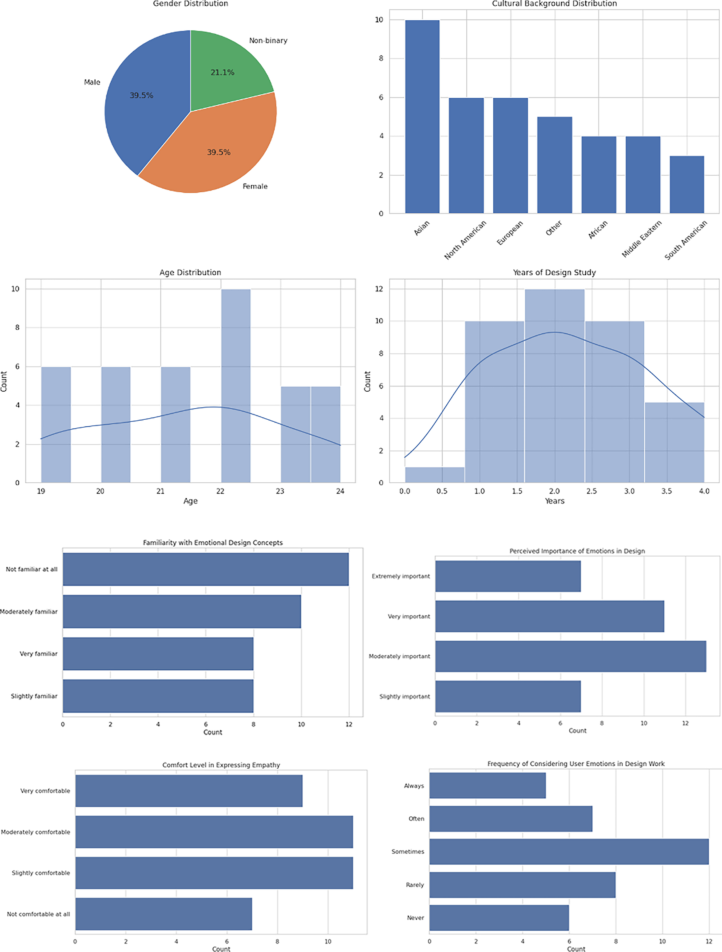
The pre-workshop survey validated a cohort of young designers with diverse backgrounds, previous design education, and knowledge of emotional design concepts (Figure 2). Participants ranged in age from 18 to 25 and represented diverse gender and socio-cultural backgrounds. The majority attended design
574 Ho
school for around 1–3 years; however, a handful were at the beginning or conclusion of their undergraduate studies. This diversity created a conducive environment for exploring the connection between emotional involvement and creativity in design education.
Figure 2: The participants’ feedback as captured in the pre-workshop (n = 38).
During the study of the pre-workshop replies, we observed a significant disparity in the first comprehension of emotional design. A limited number
Enhancing Creativity in Design Education Through Emotional Engagement 575
of participants said that they were ‘extremely acquainted’ with emotional design ideas; the majority reported being ‘somewhat familiar’ or ‘not familiar at all’. Fewer than 40% have previously used emotional design concepts in their work, mostly within branding or user experience initiatives. Individuals with more experience often said that they focused only on user emotions or aesthetics, rather than using a formal emotional design methodology. This unfamiliarity was subsequently seen in the reported comfort with empathy in design, ranging from ‘not comfortable at all’ to ‘extremely comfortable’, with most participants positioned at both extremes and a few in the centre.
Despite the little knowledge and uncertainty on the significance of emotions in design, there is a strong consensus on the importance of including emotions in their work when surveyed. The majority of participants classified emotion as ‘moderately’ to ‘very’ significant in design; nevertheless, the actual implementation of this value exhibited considerable inconsistency. Numerous examples occurred where participants sometimes or ‘rarely’ considered user emotions in their designs, indicating a discernible gap between theoretical knowledge and practical application. Participants exhibited optimism about their expectations from the workshops: applicable skills, enhanced creative potential, and a deeper understanding of user-centred design. Interests include understanding empathy techniques, cultural disparities in emotional design, and the recognition of emotional stimuli.
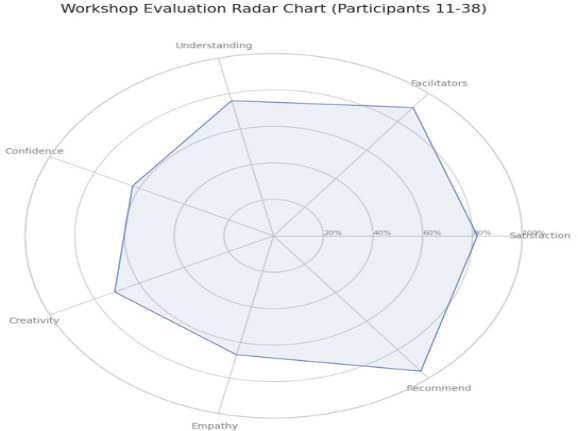
Transformative Learning: Post-Workshop Reflections The post-workshop survey data also showed that participants’ perceptions, knowledge and self-efficacy for emotional design changed significantly (Figure 3). The workshop was well received, with more than 80% of respondents indicating that they were either ‘satisfied’ or ‘very satisfied’ with their participation in it. Practical work and discussions within the groups were repeatedly among the best parts of the workshop, highlighting the efficient use of hands-on and interactive learning. Participants attributed the dynamic and productive learning environment to the helpful expertise of the facilitators.
One of the most dramatic changes was the participants’ knowledge and use of the emotional design principles. More than three respondents stated that their knowledge had increased ‘significantly’ or ‘extremely’ and were ‘very’ or ‘extremely confident’ in applying these principles to their design. Qualitative results indicated that students had already adopted emotional mapping and empathy mapping more systematically in their projects, and a number stated these tools had changed the way they think about user-centred design. As one participant said, ‘I now begin projects asking ‘how will users feel’ as opposed to ‘what do they need’, a clear move away from functionalist thinking, towards the importance of emotional impact.
The workshops also greatly affected the pool of participants’ creative thinking and empathic capacity. For more than 70% of them, the creative spark has improved ‘significantly’ (43%) or ‘extremely’ (30%), and a similar percentage joined in stating they have been able to empathise with users better. Participants expressed increased confidence in THEIR new and fresh
576 Ho
ideas AND their new and fresh experimentations. Empathy exercises, in particular, were highlighted as drivers of that shift in mindset, with one participant explaining: ‘The empathy mapping exercises showed me how important it is to step into users’ shoes. This increased empathy also led to more user-centred and emotionally sensitive design solutions, indicating that participants considered emotions more in their decision-making.
Enhancing Creativity in Design Education Through Emotional Engagement 577
Figure 3: Quantitative summary of participants’ feedback as captured in the post- workshop survey feedback table (n = 38).
Contact and experiential learning are central to these positive results. Most participants found the collaborative nature of the workshops to be ‘very valuable’ or ‘extremely valuable’, and 85% agreed or strongly agreed that this experiential learning approach deepened their understanding of emotional design. Participants mentioned the benefit of learning from peers, fostering a multiple-perspective attitude, and hands-on experience to discover practical applications to theoretical knowledge. These results indicate that emotional engagement is best developed through active, hands-on learning tasks, which reflect the collaborative nature of the professional design process.
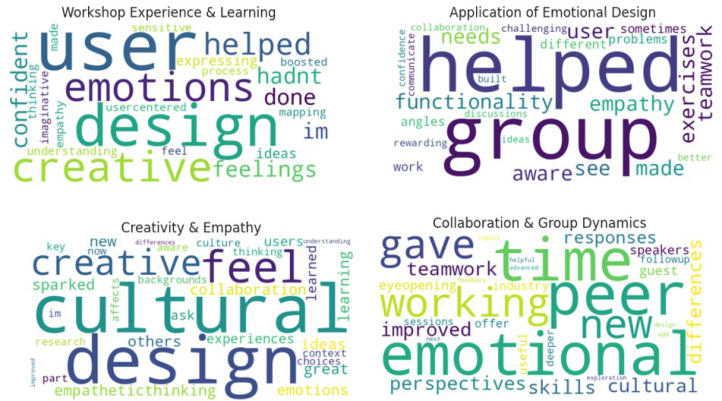
Deepening Understanding: Focus Group Insight The in-depth input from the focus groups gave us a qualitative understanding of the lived experiences of participants and of the subtlety of the impact of workshops on their learning and practice (Figure 4). All six focus group participants found the workshops engaging and effective and commended the balance between theory and practice was particularly popular. Activities and discussions that were physical and group experiences were particularly noted with this group as useful learning methods, allowing staff to consolidate abstract concepts and apply them in practice.
One theme that emerged repeatedly in the focus group feedback was the catalytic impact of emotional design toolkits like emotional mapping and empathy mapping. Respondents mentioned that the tools had transformed their design process from one focused on function to one focused on the emotions and experiences of the user. Multiple participants presented specific evidence of incorporating emotional design principles into recent projects
578 Ho
and reported that using such approaches resulted in higher-quality work and favourable responses from peers and teachers.
The focus groups also highlighted the relationship among creativity, empathy, and cultural setting. They reported being more creative and attuned to client emotions, and staff described mapping exercises as especially powerful for that reason. The process of collaboration was perceived to be both challenging and rewarding, with working in groups providing the opportunity for the exchange of ideas and communication skills development. Crucially, all participants stated that they had developed a greater understanding of how their cultural backgrounds influence their emotional responses to design, and several said they had gained a greater perspective on the importance of considering cultural context when conducting user research and making design decisions.
Proposed future workshops focused on greater exploration and wider dissemination. Attendees wanted to see additional real-world cases, cross- cultural design challenges and peer feedback. There was also interest in covering more advanced topics in emotional design and in increasing the length of workshops to delve deeper into the material.
Figure 4: Focus group participant feedback (n = 6).
Synthesis and Implications The combined results from the pre-workshop, post-workshop, and focus group data provide a compelling case for emotional involvement in design education as a possible catalyst for change. The program effectively encouraged younger designers to connect their academic knowledge with the practical application of emotional approaches, enhancing creativity, empathy, and cultural awareness. The results underscore the importance of experiential, co-creative learning opportunities and the need to cultivate future designers capable of creating emotionally resonant, culturally suitable
Enhancing Creativity in Design Education Through Emotional Engagement 579
products. These discoveries have significant implications for future design curricula, which must include emotional involvement as a fundamental aspect of creative education in an increasingly complicated and linked world.
CONCLUSION
This study has shown that incorporating emotional design concepts into junior design education may alter some students concealed pathological emotions, hence enhancing creativity, empathy, and user-centred design decision-making. Employing a meticulously designed mixed-methods approach, the study elucidated the quantifiable transformations in participant comprehension and the specific lived experiences that informed these alterations. Results indicate that, previous to the intervention, most junior designers had a superficial comprehension of emotional design and struggled to translate their academic knowledge into practical application. Workshop participants should possess a greater conceptual understanding of emotional design frameworks, including Norman’s three levels of design, and have expressed enhanced confidence and competence in applying these concepts to future professional endeavours. The workshop’s social and tactile characteristics were notably successful in promoting risk-taking and empathy-driven involvement, with subsequent focus groups underscoring the significance of cultural context in shaping emotional reactions to design. This study aims to enhance the discourse on design education by demonstrating that emotional connection is not only secondary but an essential component of creativity and consumer happiness. This research offers a framework for the systematic integration of emotional design into the curriculum, guiding educators who want to cultivate designers with technical competencies, emotional intelligence, and cultural sensitivity. Future research could enhance these interventions by examining their long-term effects, assessing their efficacy across diverse educational and cultural contexts, and exploring the impact of emerging technologies and digital methodologies (e.g., artificial intelligence, virtual reality) on fostering emotional engagement. The findings of this study confirm the critical importance of emotion in creative learning and highlight the need for practical-oriented education to equip individuals for the difficulties of today’s global landscape.
ACKNOWLEDGMENT
The author would like to thank all the participants involved in this research study.
REFERENCES
Anuyah, O., Badillo-Urquiola, K., & Metoyer, R. (2023, April). Characterising the technology needs of vulnerable populations for participation in research and design by adopting Maslow’s hierarchy of needs. In Proceedings of the 2023 CHI Conference on Human Factors in Computing Systems (pp. 1–20). Bridger, E., & Gannaway, B. (2024). Employee experience by design: How to create
an effective EX for competitive advantage. Kogan Page Publishers.
580 Ho
Bryan, C. J., Tipton, E., & Yeager, D. S. (2021). Behavioural science is unlikely to change the world without a heterogeneity revolution. Nature human behaviour, 5(8), 980–989. Calavia, M. B., Blanco, T., & Casas, R. (2021). Fostering creativity as a problem-solving competence through design: Think-Create-Learn, a tool for teachers. Thinking skills and creativity, 39, 100761. Goel, G., Tanwar, P., & Sharma, S. (2022, January). UI-UX design using user-
centred design (UCD) method. In 2022 International Conference on Computer Communication and Informatics (ICCCI) (pp. 1–8). IEEE. Han, J., Forbes, H., & Schaefer, D. (2021). An exploration of how creativity, functionality, and aesthetics are related in design. Research in Engineering Design, 32(3), 289–307. Ho, A. (2024b). Understanding Typical Emotions in the Design Process. Convergences-Journal of Research and Arts Education, 17(34), 25–39. Ho, A. G. (2024a). Developing strategies for junior designers to manage their design
and emotions. New Design Ideas, 8(1), 5–32. Ivanova, O., & Bondarenko, A. (2022). The Impact of Negative Personality Memories on the Features of Self-Perception. Visnyk of VN Karazin Kharkiv National University. Series Psychology, (72), 15–25. Karim, K., Ilyas, G. B., Umar, Z. A., Tajibu, M. J., & Junaidi, J. (2023). Consumers’
awareness and loyalty in Indonesia banking sector: Does emotional bonding effect matters? Journal of Islamic Marketing, 14(10), 2668–2686. Lyon, A. R., Aung, T., Bruzios, K. E., & Munson, S. (2024). Human-centered design to enhance implementation and impact in health. Annual Review of Public Health, 46. Machado, S. C. S. (2021). Co-designing a User Experience Toolkit for Senior Online
Communities: A Proposal for the Mione. Online Community (Master’s thesis, Universidade de Aveiro (Portugal)). Neglur, I. S., & PS, R. (2024). Keeping viewers hooked: Netflix’s innovative strategies for reducing churn. Journal of Information Technology Teaching Cases, 20438869241296895. Norman, D. A. (2004). Introduction to this special section on beauty, goodness, and
usability. Human–Computer Interaction, 19(4), 311–318. Oliveira, B., & Teixeira Lopes, C. (2023, March). The evolution of web search user interfaces-an archaeological analysis of google search engine result pages. In Proceedings of the 2023 conference on human information interaction and retrieval (pp. 55–68). Rachmad, Y. E. (2022). Diversity Acceptance Theory. Singh, A., Tripathi, N., & Kumar, G. (2023). Influence of Celebrity Endorsements
and Emotional Branding on the Historical Trajectory of Nike’s “Just Do It” Campaign: A Comprehensive Analysis of the Campaign. Voloshchuk, I., Glinka, N., & Sats, L. (2023). The linguistic status of ideation in startup discourse. Zhang, R. W., Liang, X., & Wu, S. H. (2024). When chatbots fail: Exploring user
coping following a chatbots-induced service failure. Information technology & people, 37(8), 175–195.
LISTED IN THE AHFE DIGITAL BOOKSTORE CATALOGUE
Explore the complete digital volume
Human Interaction and Emerging Technologies (IHIET 2025)
Read this individual research paper free through the original publisher, or explore the full digital proceedings book.
ISBN 978-1-964867-73-1
Explore this ISBN in the AHFE Bookstore ↗Listed in the July 2026 bookstore catalogue; search by ISBN to confirm current availability · Digital book purchase optional