Suma Mwaitenda, Innocent Musonda (2024). Technological and Engineering Solutions for the Prevention and Reduction of Hand Arm Vibration Syndrome in Construction Industry. In: Human Factors in Design, Engineering, and Computing. AHFE Open Access, vol. 159, pp. 1530–1542. https://doi.org/10.54941/ahfe1005721
1 Building Economics Department - Ardhi University, Tanzania; Construction Management Working on Health and Safety, University of Johannesburg, South Africa ↗
2 Sustainable Built Infrastructure and Digitalisation, Centre for Applied Research & Innovation in the Built Environment (CARINBE), Faculty of Engineering & the Built Environment, University of Johannesburg, South Africa ↗
Prolonged exposure to hand arm vibration (HAV) can lead to hand arm vibration syndrome (HAVS), which poses serious health risks for workers (Lache & Luculescu, 2008). This paper employs a five-stage scoping review to explore technological and engineering solutions to mitigate HAV exposure in the construction sector. Key strategies identified include process modifications, reducing continuous vibration exposure, training programs to promote best practices, and using personal protective equipment such as anti-vibration gloves. Additionally, substituting low-vibration tools is recommended as an effective measure to decrease HAV exposure. The findings indicate that engineering solutions can significantly reduce the health impacts of HAV. The paper calls for further research, especially in developing regions like Africa, to evaluate HAVS prevalence in construction and to adapt control measures to local conditions. Overall, this study provides essential insights into preventing HAV, highlighting the need for global attention to this occupational health issue in the construction industry. S
Hand Arm Vibration (HAV) is a significant health risk in industries such as construction and mining, leading to Hand-arm vibration syndrome (HAVS), which encompasses vascular and neurological disorders (Lewkowski et al., 2021; Lache & Luculescu, 2008). Factors influencing severity include vibration frequency, magnitude, and exposure duration (Coggins et al., 2010). Symptoms range from numbness to reduced grip strength (Edwards et al., 2020). Despite awareness, prevention is often obstructed by worker behavior (Leduc et al.).
Technological and Engineering Solutions to Prevention and Reduction 1531
LITERATURE REVIEW
Hand Arm Vibration Syndrome (HAVS) is an occupational disorder resulting from prolonged exposure to hand-arm vibrations, leading to symptoms like pain and reduced grip strength (Lai et al., 2019). Despite its impact, HAVS is often undervalued in construction due to compliance challenges and individual health factors (Edwards and Holt, 2005; Weir and Lander, 2005). The industry faces significant risks from tools such as power planners and pneumatic breakers, with up to 50% of U.S. workers potentially affected (Edwards et al., 2020). Effective prevention strategies include using low- vibration tools, planning, education, and strong regulations (Nachmias and Nachmias, 1996).
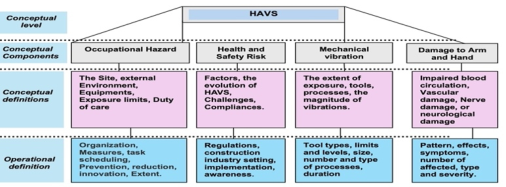
Figure 1: Hand arm vibration syndrome (HAVS) as a concept outlines HAVS through conceptual definitions and operational definitions (Nachmias & Nachmias, 1996).
METHODS
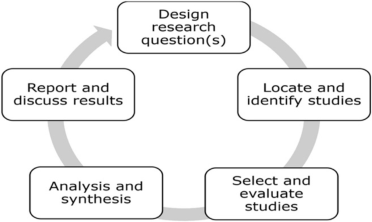
A scoping review analysed the literature on technological and engineering solutions for preventing HAVS from 1990 to 2023, focusing on the under researched construction sector in developing nations (Botti et al., 2020). The review methodology, effective in identifying existing studies and trends (Thorley et al., 2019; Osobajo et al., 2020), involved five stages: formulating questions, locating studies, selecting and evaluating them, and reporting results. This approach benefits construction engineering and management (CEM) research, aiding data synthesis and future direction suggestions (Aarseth et al., 2017; Badi and Murtagh, 2019; Dixit et al., 2019).
Figure 2: Scoping review process (Denyer and Tranfield, 2009) as quoted (Osobajo et al., 2020).
1532 Mwaitenda and Musonda
The Five Stages of a Scoping Review Stage 1: Formulation of Research Questions What trends and research focus areas exist regarding HAVS in the construction industry, what is the current understanding of technological solutions for prevention and reduction, and what potential future directions can be anticipated in this field?
Stage 2: Locate and Identify Relevant Studies A literature search using Scopus and Web of Science was conducted for construction and engineering domains, ensuring efficient article selection (Akomea Frimpong et al., 2022; Zhang et al., 2016).
Consistent HAVS-related keywords were applied across both databases. In the Scopus, it read: ‘TITLE-ABS-KEY (hand AND arm AND vibration AND vibration AND syndrome OR vibration OR syndrome AND construction AND industry OR construction AND workers)’. On the Web of Science, the keywords included: ‘Hand AND arm AND vibration AND vibration AND (syndrome OR vibration) AND (construction OR "construction industry") AND workers.
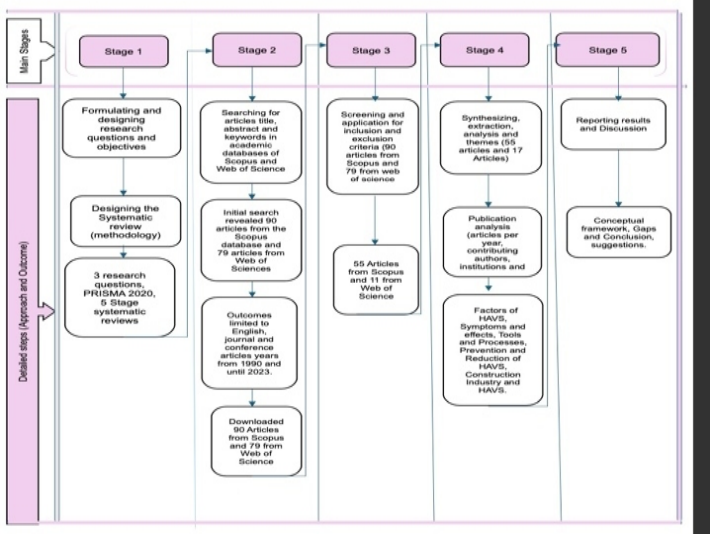
The initial, unfiltered outcome of the search revealed 159 documents (90 in Scopus and 79 in the Web of Science). The search period was unrestricted until 2023. The final outcome was subjected to several inclusions and exclusion criteria, as discussed in stage 3.
Stage 3: Selecting and Evaluating Studies The selection process involved scanning 159 retrieved articles based on titles, abstracts, and methodologies and applying specific inclusion and exclusion criteria (Figure 3). Criteria included language, source type, and document type, leading to removing duplicates and filtering down to 72 relevant documents (55 from Scopus and 11 from Web of Science). Articles must be published in recognized journals and adequately cover Hand-Arm Vibration Syndrome (HAVS). Ultimately, 66 articles met the criteria for inclusion in this systematic literature review.
Table 1. Inclusion and exclusion criteria for Stage 2 of study identification (Author).
Table available in the original PDF paper.
Criteria Inclusion Exclusion Rationale Academic database Scopus & Web of Science Other than Scopus & Web of Science
Published journal articles, book chapters, conference papers, postgraduate research and grey areas.
N/A
Publication status
Published articles in official sources.
Unpublished articles
(Continued)
Technological and Engineering Solutions to Prevention and Reduction 1533
Table 1. Continued Criteria Inclusion Exclusion Rationale
Table available in the original PDF paper.
Year of publication
Articles published from 1990 to 2023. Articles published before 1990.
Those denied by authors.
To widen the scope.
30 years gap in old & latest. Access type Access to full text, abstract & articles shared by authors.
N/A
Language Articles published in English language.
Articles in Language other Research area Research from exposure to vibration.
Research not on vibrating tools
To exclude other vibration types. Country of origin
Global/ Africa N/A There is not much research on HAVS in Africa. Country of use.
Africa N/A To inspire local context
Stage 4: Analysis and Synthesis Figures 2 and 3 show that only 66 studies were worthy of analysis. Beyond quality, the reviewed articles were evaluated for reliability (Denyer and Tranfield, 2009) and relevance to this study.
Figure 3: Flowchart presentation of the methodological approach used.
1534 Mwaitenda and Musonda
Stage 5: Reporting and Discussion of Results Reporting findings on this scoping review on HAVS focuses on revealing what the scoping review research on HAVS has shown in what has been researched, furthering the landscape, global trend, and direction of research, and discussing its implications.
RESULTS AND DISCUSSION
Type of Material and Source
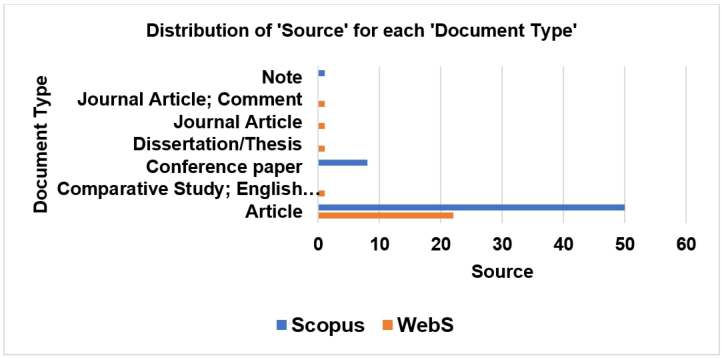
Figure 4 demonstrates that 69.4% of HAVS searches came from SCOPUS and 30.6% from Web of Science. Articles and journal articles from Scopus or Web of Science dominated, followed by conference papers. The percentage of dissertation/thesis notes was insignificant. This suggests that the construction sector lacks HAVS-related journal articles, conference papers, dissertations, and theses. Two important research databases have few construction industry HAVS papers. Article and journal articles are synonymous.
Figure 4: Source and type of materials on HAVS identified in the searches.
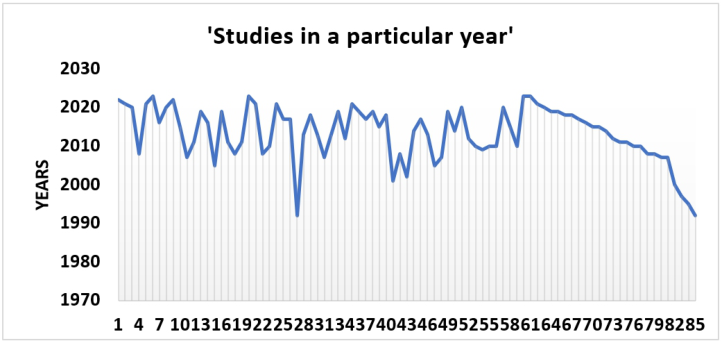
Range of Years of Publication From 1990 to the present, Figure 5 shows that HAVS publications in the construction industry were inconsistent, with some years between 1992 and 2010 lacking publications. From 2010 to 2023, publications occurred every other year, an improvement over the previous ten years. This shows a shift in HAVS research in the construction industry, a notable trend.
Technological and Engineering Solutions to Prevention and Reduction 1535
Figure 5: Year range of studies searched and reviewed.
The analysis reveals that most articles are published in Environmental Health, Medicine, and Ergonomics, lacking representation from construction and engineering disciplines. Notably, no African journals are included, raising questions about the significance of citations and authorship (Figure 5; Table 2).
Construction Industry HAVS Research Trends HAVS Terminologies Hand-Arm Vibration: Hand-arm vibration affects workers using vibrating tools, necessitating understanding its impact on construction (Edwards et al., 2020). Hand-Arm Vibration: Syndrome Prolonged hand vibration from tools causes hand-arm vibration syndrome (HAVS), leading to neurological issues, vascular disorders, and pain (Clemm et al., 2022; Lai et al., 2019).
Factors of HAVS Extended exposure to hand-arm vibrations (HAV) can lead to health issues, but not all exposures result in adverse effects. Key factors influencing symptoms include vibration magnitude, duration, frequency, grip strength, and specific hand areas exposed (Leduc et al., 2016; Bodley et al., 2015). Effective occupational health programs face challenges like scheduling conflicts and multiple contractors, complicating safety messaging (Leduc et al., 2016; Bodley et al., 2015). HAVS symptoms develop gradually, often delaying medical help due to provider unawareness (Leduc et al., 2016; Edwards and Holt, 2007). External factors like posture and individual susceptibility also impact HAVS risk (Nawayseh & AlBaiti, 2023).
Construction Tools Causing HAVS Handheld vibrating tools are common in construction, with variations in size, weight, and frequency affecting their use. Key factors include vibration impulsiveness, direction, exposure intermittence, work methods, contact
1536 Mwaitenda and Musonda
force, and operator posture (Park et al., 2018). Most studies identified specific hand-held tools as significant vibration sources.
Table 2. Construction tools causing HAV.
Table available in the original PDF paper.
Tool Type Studies Machines Studies
32
15, 40,16, 23 & 24, 25, 26, 32, Forklift, Mini Dagger, Damper, Dumper Ride on Lawnmower Single & Double cab pick-up, Tractor, Excavator driving), Excavator (tracking), Chipping machine, Excavator (breaking).
Power tool, Concrete breakers, Grinders, Impact drills, Powered cutters, Chain saws, Jackhammer, Electric Hammer Drill, Impact wrenches, Plate vibrator, Compactor, Power trowel, Power trowel propeller, Pneumatic Hammer, Demolition Hammer, cutting table, Ram, Circular Saw, Drill, Vibrator.
Source: Author compilation
(Tan et al., 2019)[15], (Su et al., 2016) [16], (Jain A. R. Tony et al., 2021) [23], (Johnson, B., et al., 2017) [24], (Antonucci et al., 2017) [25], (Brismar Ekenvall, 1992) [26], (Clemm et al., 2020) [32], (Palmer, et al., 2001).
Manufacturers provide vibration data indicating levels and exposure limits influenced by national regulations. While tool design should prioritize vibration reduction, studies highlight the necessity of enhancing workplace conditions to further minimize exposure levels.
Construction Trades and Processes The construction industry poses significant HAV exposure risks, particularly from activities like demolition and carpentry (Edwards and Holt, 2007). However, there is a lack of categorization among trades and construction phases regarding exposure levels, which is crucial for effective prevention and control.
Symptoms and Effects of Exposure to Vibration
Table 3. Summary of symptoms and effects of HAVS.
Table available in the original PDF paper.
Symptoms Effects Body Experience Studies HAVS Vascular Vasospasm (Vibration White Finger -VWH) 02, 12, 05, 13 Tingling, numbness and dullness of the fingers in cold.
Tingling, reduced sense of touch, sensitivity to temperature 28, 36
Muscular Muscular weakness, Fatigue,
Pain in the upper extremities, impaired grip strength, osteoarthritis.
Source: Author
Technological and Engineering Solutions to Prevention and Reduction 1537
(Leduc et al., 2016) [02], (Edwards et al., 2020)[05], (Bodley et al., 2015) [12], (Edwards and Holt, 2007) [13], (Park et al., 2018) [28], (Rempel et al., 2017a) [36]. Common HAVS symptoms include loss of sensation, tingling, and numbness in hands (Park et al., 2018), as shown in Table 5. Long-term exposure leads to reduced grip strength and task difficulties.
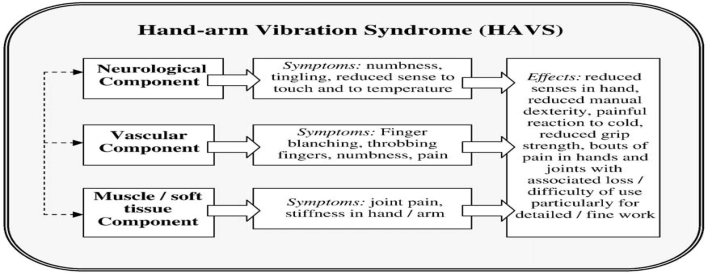
Figure 6: Principal features of HAVS medical groupings. Adopted from (Edwards and Holt, 2010a).
Diagnosing HAVS is challenging and costly, leading to limited research interest. Symptoms manifest slowly, complicating prevention and treatment, often resulting in irreversible conditions (Table 5; Figure 6).
How Has the Research on HAVS Been Done, and the Main Areas Research on Hand Arm Vibration Syndrome in the construction industry emphasizes exposure assessment, particularly with tools like hammer drills, but lacks effective prevention strategies. Methodologically, studies have relied on estimation and experimental approaches, yet challenges in quantifying vibrations persist. Medical examinations are infrequent due to constraints, with surveys often guiding experiments. The literature reveals limitations in data collection methods and sample sizes, particularly concerning equipment and climatic conditions, which affect generalizability. Furthermore, there is limited research on the impact of smoking, with a predominant focus on Europe and North America, while studies from Asian and African countries are scarce. This raises concerns about HAVS awareness among African construction workers and emerging markets. While safety is prioritized, the insufficient focus on employee wellness regarding HAVS highlights the need for comprehensive research and awareness initiatives to protect worker health in the construction sector.
1538 Mwaitenda and Musonda
Table 4. Proposed engineering and technological solution from studies.
Table available in the original PDF paper.
Study Focus Engineering and Technological Solution Prevalence of HAVS. (Lewkowski et al., 2021) Estimation, Concludes on Proposing engineering controls as the starting point for exposure reduction strategies. HAV exposures (De Silva and Wijewardana, 2021) Exposure measurement, vibration tool specific and task specific in reducing HAV transmitted while enhancing manual dexterity and grip strength. HAV workers exposure level. (Edwards et al., 2020) Probability, Proposition of innovation to reduce vibration Evaluation of Hand Arm Vibration levels. (Forouharmajd et al., 2011)
Measurement and prediction of Vibration “Pneurop Cagi Test Code” – Insertion of Hand vibration meter Vibration Reduction (Jain A. R. Tony et al., 2021). Design & Fabrication Design to Reduction of Vibration discomfort. Vibration absorptions (Johnson et al., 2017). Design and fabrication of attachment to Reduction of harmful vibrations. Operator grip relief. (Antonucci et al., 2017) Reduction of tools weight to reduce of muscle activity during lifting. Vibration extent (Brismar T, Ekenvall L., 1992) Bit wearing to measure vibration extent. Exposure reduction. (Mikhaltchouk and Forsman, 2021)
Tools selection - standardized laboratory protocol for Exposure reduction. Vibration exposure assessment. (Gibb et al., 2015) Calibrating Tools and Weightings and metrics to reduce vibrations. Vibration measurement. (Bast-Pettersen et al., 2017) Micro accelerator modelling for vibration reduction Handle vibration and productivity (Rwamamara and Simonsson, 2012)
Robotic test bench force of application for Vibration reduction. Health risk reduction. (Rempel and Barr, 2015)
Pneumatic rig development for high risk Vibration reduction. Vibration evaluation. (Coggins et al., 2010) Real time Vibration measurement. Vibration reduction/ control (Paul S. et al., 1997) Vibration Source oriented solution.
Self-compacting concrete
Work environment sustainability (Rwamamara and Simonsson, 2012)
The Current Knowledge With Regard to Mitigating and Reducing HAVS in the Construction Industry The construction industry faces significant Hand-Arm Vibration Syndrome (HAVS) risks, particularly among workers exposed to vibrations from various tools and machinery. In 2019, over 1.6 million U.S. workers, including cement masons and electricians, were affected, leading to a rise in musculoskeletal disorders (U.S. BLS, 2019; Botti et al., 2020; Rwamamara and Simonsson, 2012). This issue is particularly pronounced in developing African nations, where monitoring and research on HAVS are inadequate despite the industry’s substantial workforce and financial investment. Implementing preventive measures is crucial to mitigate HAVS. Strategies include modifying processes to reduce vibration exposure, enhancing awareness through training programs, and utilizing low-vibration tools (Lewis et al., 2023; Bodley et al., 2015; Rempel et al., 2019). Anti-vibration gloves can also help, depending on their type and usage conditions (Clemm et al., 2022). However, existing prevention strategies often lack coherence,
Technological and Engineering Solutions to Prevention and Reduction 1539
focusing narrowly on specific tools rather than a comprehensive approach. Future research should prioritize assessing HAVS prevalence in developing regions and adapting control measures accordingly (Bast-Pettersen et al., 2017). Improved data collection and understanding of site organization are essential for enhancing safety and minimizing exposure levels (Edwards et al., 2020).
CONCLUSION
Hand-Arm Vibration Syndrome (HAVS) is prevalent in the construction industry, with over 50% of workers affected, yet research is lacking, particularly in tropical regions (Su et al., 2013b). Most studies focus on the medical aspects of mining and forestry, neglecting construction workers, especially in developing countries like Africa. Current literature lacks a cohesive prevention framework, primarily addressing symptomatology and exposure limits. Preventive measures like vibration gloves exist, but task alterations face managerial challenges. High-cost calibrated equipment is rarely recommended. Further research is essential to understand HAVS in developing countries and to tailor control measures to local contexts (Bast-Pettersen et al., 2017).
ACKNOWLEDGMENT
Centre for Applied Research and Innovation in the Built Environment (CARINBE) Department of Construction Management and Quantity Surveying, Faculty of Engineering and the Built Environment, University of Johannesburg
REFERENCES
Azmir, N. A., Ghazali, M. I., Yahya, M. N. & Ali, M. H. 2016. Hand-arm vibration disorder among grass-cutter workers in Malaysia. Int J Occup Saf Ergon, 22, 433–8. Bast-Pettersen, R., Nordby, K. C., Wastensson, G. & Aarhus, L. 2021. Tremor
measurements in a 22-year cohort study of workers exposed to hand-held vibrating tools. Int Arch Occup Environ Health, 94, 1049–1059. Bast-Pettersen, R., Ulvestad, B., Faerden, K., Clemm, T. A., Olsen, R., Ellingsen, D.
G. & Nordby, K. C. 2017. Tremor and hand-arm vibration syndrome (HAVS) in road maintenance workers. Int Arch Occup Environ Health, 90, 93–106. Bodley, T., Nurmohamed, S., Holness, D. L., House, R. & Thompson, A. M. 2015.
Health-care barriers for workers with HAVS in Ontario, Canada. Occup Med (Lond), 65, 154–6. Botti, L., Martin, B., Barr, A., Kapellusch, J., Mora, C. & Rempel, D. 2020. R2: Drilling into concrete: Effect of feed force on handle vibration and productivity. International Journal of Industrial Ergonomics, 80. Budd, D. & Holness, D. L. 2018. Raising awareness of hand-arm vibration syndrome
(HAVS) using posters. Work, 61, 3–10. Burstrom, L., Jarvholm, B., Nilsson, T. & Wahlstrom, J. 2010. White fingers, cold environment, and vibration–exposure among Swedish construction workers. Scand J Work Environ Health, 36, 509–13.
1540 Mwaitenda and Musonda
Chadefaux, D., Goggins, K., Cazzaniga, C., Marzaroli, P., Marelli, S., Katz, R., Eger, T. & Tarabini, M. 2020. Development of a two-dimensional dynamic model of the foot-ankle system exposed to vibration. J Biomech, 99, 109547. Cherniack, M., Brammer, A. J., Lundstrom, R., Meyer, J. D., Morse, T. F., Neely,
G., Nilsson, T., Peterson, D., Toppila, E. & Warren, N. 2007. The Hand- Arm Vibration International Consortium (HAVIC): prospective studies on the relationship between power tool exposure and health effects. J Occup Environ Med, 49, 289–301. Clemm, T., Faerden, K., Ulvestad, B., Lunde, L. K. & Nordby, K. C. 2020.
Dose-response relationship between hand-arm vibration exposure and vibrotactile thresholds among roadworkers. Occup Environ Med, 77, 188–193. Clemm, T., Lunde, L. K., Ulvestad, B., Faerden, K. & Nordby, K. C. 2022. Exposureresponse relationship between hand-arm vibration exposure and vibrotactile thresholds among rock drill operators: a 4-year cohort study. Occup Environ Med, 79, 775–81. Coenen, P., Formanoy, M., Douwes, M., Bosch, T. & De Kraker, H. 2014. Validity Coggins, M. A., Van Lente, E., Mccallig, M., Paddan, G. & Moore, K. 2010.
Evaluation of hand-arm and whole-body vibrations in construction and property management. Ann Occup Hyg, 54, 904–14. De Silva, G. H. M. J. S. & Wijewardana, T. R. S. T. 2021. Preliminary results of hand arm vibration (HAV) exposures of chipping hammer operators in tropical weather: Analysis of exposures and protective gloves. International Journal of Industrial Ergonomics, 86. Edwards, D. J. & Holt, G. D. 2007. Construction hand tools: vibration emissions
from alternative inserts. Building Research & Information, 35, 329–342. Edwards, D. J., Rillie, I., Chileshe, N., Lai, J., Hosseini, M. R. & Thwala, W. D.
2020. A field survey of hand–arm vibration exposure in the UK utilities sector. Engineering, Construction and Architectural Management, 27, 2179–2198. Fisk, K., Nordander, C. & Ek, A. 2023. Hand-arm vibration: Swedish carpenters’ perceptions of health and safety management. Occup Med (Lond), 73, 85–90. Gibb, A., Cook, S., Nyateka, N., Bust, P., Jones, W. & Finneran, A. 2015. Wearable
simulations for ill-health conditions in construction. Proceedings of the Institution of Civil Engineers - Civil Engineering, 168, 51–56. Gomathi, K., Senthilkumar, A., Shankar, S., Thangavel, S. & Priya, R. M. 2014.
Hand arm vibration measurement using micro-accelerometer in different brick structures. Smart Structures and Systems, 13, 959–974. Jain A. R. Tony, B., Alphin, M. S. & Venkatesh, V. 2021. Influence of Vibroisolator Attachment for a Jackhammer to Reduce Vibration Discomfort. Trends in Mechanical and Biomedical Design. Jang, J. Y., Kim, S., Park, S. K., Roh, J., Lee, T. Y. & Youn, J. T. 2002. Quantitative
exposure assessment for shipyard workers exposed to hand-transmitted vibration from a variety of vibration tools. AIHA J (Fairfax, Va), 63, 305–10. Johnson, B., Otieno, W. & Campbell-Kyureghyan, N. 2017. Influence of Jackhammer Weight on Grip Pressure, Muscle Activity, and Hand–Arm Vibration of the Operator. IISE Transactions on Occupational Ergonomics and Human Factors, 5, 12–22. Kao, D. S., Yan, J. G., Zhang, L. L., Kaplan, R. E., Riley, D. A. & Matloub, H. S.
2008. Serological tests for diagnosis and staging of hand-arm vibration syndrome (HAVS). Hand (N Y), 3, 129-34.
Technological and Engineering Solutions to Prevention and Reduction 1541
López-Alonso, M., Pacheco-Torres, R., Martínez-Aires, M. D. & Ordoñez-García, J.
2013. Comparative analysis of exposure limit values of vibrating hand-held tools. International Journal of Industrial Ergonomics, 43, 218–224. Leduc, M., House, R., Eger, T., Thompson, A., Holness, L., Oliver, M. & Eger, T.
2016. Health and safety training and prevention of hand-arm vibration syndrome through education. Occupational Ergonomics, 13, 45–51. Lewis, C., Wahlstrom, J., Mukka, S., Liv, P., Jarvholm, B. & Jackson, J. A. 2023.
Surgery for subacromial impingement syndrome and occupational biomechanical risk factors in a 16-year prospective study among male construction workers. Scand J Work Environ Health, 49, 156–163. Lewkowski, K., Ytterstad, E., Pugliese, M. J., Mccausland, K., Heyworth, J. S., Li, I. W., Pettersson, H., Williams, W. & Fritschi, L. 2021. Exposure to Hand-Arm Vibration in the Australian Workforce. Ann Work Expo Health, 65, 659–667. Mcdowell, T. W., Warren, C., Welcome, D. E. & Dong, R. G. 2012. Laboratory
and field measurements and evaluations of vibration at the handles of riveting hammers. Ann Occup Hyg, 56, 911–24. Mousavi Kordmiri, S. H., Aliabadi, M., Golmohammadi, R., Bovenzi, M. & Farhadian, M. 2023. Combined Effects of Noise and Hand-transmitted Vibration on Workers’ Muscle and Mental Fatigues in a Simulated Construction Operation. Med Lav, 114, e2023021. Nachmias, C. F., and Nachmias, D. (1996). Research Methods in the Social Sciences,
5th Edition. London: Arnold. Palmer, K. T., Griffin, M. J., Bendall, H., Pannett, B., & Coggon, D. (2000). Prevalence and Pattern of Occupational Exposure to Hand Transmitted Vibration in Great Britain: Findings from a National Survey. Occupational and Environmental Medicine, 57(4), 218–228. https://www.jstor.org/stable/27731292 Palmer, K. T., Griffin, M. J., Syddall, H., Pannett, B., Cooper, C., & Coggon, D. (2001). Risk of hand-arm vibration syndrome according to occupation and sources of exposure to hand-transmitted vibration: A national survey. American Journal of Industrial Medicine, 39(4), 389–396. https://doi.org/10.1002/ajim.1029. Rempel, D. & Barr, A. 2015. A Universal Rig for Supporting Large Hammer Drills: Reduced Injury Risk and Improved Productivity. Saf Sci, 78, 20–24. Rempel, D., Antonucci, A., Barr, A. & Martin, B. 2017a. Construction Ergonomics:
Concrete Bit Wear Increases Handle Vibration and Drilling Time. Proceedings of the Human Factors and Ergonomics Society Annual Meeting, 61, 969–972. Rempel, D., Barr, A. & Antonucci, A. 2017b. A New Test Bench System for Hammer Drills: Validation for Handle Vibration. Int J Ind Ergon, 62, 17–20. Rwamamara, R. & Simonsson, P. 2012. Self-Compacting Concrete Use for Construction Work Environment Sustainability. Journal of Civil Engineering and Management, 18, 724–734. Rwamamara, Romuald & Simonsson, Peter. HEALTH AND SAFETY IN CONCRETE CASTING PROCESSES. Lulea
University of Technology, 971 87 Lulea
, Sweden, 2029. S. Lache and M. C. Luculescu, “Developing reliable hand-arm models for reducing
vibration exposure levels,” 2008 IEEE International Conference on Automation, Quality and Testing, Robotics, Cluj-Napoca, Romania, 2008, pp. 168–173, DOI: 10.1109/AQTR.2008.4588728.
1542 Mwaitenda and Musonda
Su, A. T., Maeda, S., Fukumoto, J., Darus, A., Hoe, V. C., Miyai, N., Isahak, M., Takemura, S., Bulgiba, A., Yoshimasu, K. & Miyashita, K. 2013b. Dose-response relationship between hand-transmitted vibration and hand-arm vibration syndrome in a tropical environment. Occup Environ Med, 70, 498–504. Tan, W. H., Lim, E. A. & Ong, K. S. 2019. Analysis of Vibration Level for a Power
Tool Using Neural Network. International Journal of Automotive and Mechanical Engineering, 16, 7121–7132.
LISTED IN THE AHFE DIGITAL BOOKSTORE CATALOGUE
Explore the complete digital volume
Human Factors in Design, Engineering, and Computing
Read this individual research paper free through the original publisher, or explore the full digital proceedings book.
ISBN 978-1-964867-35-9
Explore this ISBN in the AHFE Bookstore ↗Listed in the July 2026 bookstore catalogue; search by ISBN to confirm current availability · Digital book purchase optional