Yueru Chen, Yun Lam Daniel Lo, Xinghan Xiao, Weinan Li, Luolin Zhang, Fang Le, Fang Cong, Stephen Jia Wang (2024). Designing a Human-Robot Collaboration System to reduce Work Fatigue in Redistributing Dockless Sharing Bikes. In: Human Factors in Design, Engineering, and Computing. AHFE Open Access, vol. 159, pp. 772–782. https://doi.org/10.54941/ahfe1005644
Dockless bike-sharing systems in China have enhanced user convenience but face challenges like vandalism and improper parking. Despite advancements in bike collection technologies, manual labor remains essential in the redistribution process, often leading to worker fatigue and safety concerns. This study explores solutions to reduce work-related fatigue for bike collectors using a human-robot collaboration (HRC) system. In our proposed system, workers assess bike conditions and position them for a robotic arm to handle lifting and placement. The system aims to minimize physical strain and improve worker experience. We conducted simulations with healthy adults to test the system's effectiveness. Physical fatigue was measured through heart rate monitoring, and mental fatigue was assessed using the Multidimensional Fatigue Inventory. Participants were divided into two groups: one with nominal technological assistance and one without. Professional bike distributors evaluated the system's performance by observing task recordings and completing structured surveys. Our findings show that the HRC system significantly reduces physical and mental fatigue among participants. The system's potential to enhance bike redistribution efficiency and improve worker safety is promising. Future work will focus on integrating advanced robotics, intelligent software, and smart scheduling for real-world deployment and broader logistics applications.
Dockless bike-sharing systems have become integral to urban transportation in China, providing a flexible and user-friendly alternative to traditional docked systems (Chen, Lierop and Ettema, 2020). These systems facilitate convenient short-distance travel for both residents and visitors by allowing bikes to be rented and parked virtually anywhere. However, this convenience has led to challenges, including vandalism and chaotic parking patterns. Areas such as transportation hubs, residential neighborhoods, and commercial districts often become oversaturated with parked bikes, complicating access for other users and necessitating daily redistribution efforts.
Designing a Human-Robot Collaboration System to Reduce Work Fatigue 773
Redistributing these bikes imposes a significant physical and mental burden on workers tasked with collecting and redistributing them. This study addresses the dual challenge of physical and mental fatigue among bike redistributors and explores the potential of human-robot collaboration (HRC) systems to alleviate these issues. Our proposed system leverages human-in-the-loop technology to optimize bike redistribution processes. By combining human oversight with robotic assistance, we aim to reduce the physical strain and mental stress on workers, thereby enhancing their overall work experience.
Moreover, our system’s integration has broader implications for urban efficiency. By streamlining the bike redistribution process, the system not only improves worker well-being but also contributes to the operational efficiency of the entire bike-sharing network. This has the potential to enhance urban mobility and ensure a more balanced distribution of shared bikes across the city.
RELATED WORK
Based on our literature review, the research is finding a more efficient mode to collect free-floating bikes, while human manual gathering is still unavoidable in the system (He and Wang, 2023). Faulty bikes are another issue within the current redistribution process, over 63% of respondents always see the broken or wrongly parked shared bikes on the street (Sun, 2018). It significantly shows that this occupation will still have its demand and unique role in the near future, in collecting and identifying normal bikes and faulty bikes.
Manual material handling tasks expose workers to stresses on their musculoskeletal and cardiovascular systems (Dempsey, 1998). Muscles will become fatigued faster for the frequent lifting tasks (Kim and Chung, 1995). Kim and Chung (1995) also proposed reducing both weight of the load and frequency of lifting would reduce the problems of low-back disorders. From the news reports and our interviews, those bike redistributors collect many heavy bikes every day, which are repetitive, high-frequency heavy lifting tasks. There is limited research investigating this issue and ways to reduce their weight load and frequency during their bike redistribution process.
Researchers have focused extensively on the use of human-robot collaboration (HRC) systems to alleviate human fatigue in the workplace. For instance, Liu et al. (2023) developed an HRC system based on force feedback, muscle EMG signals, and motion intention, which can help heritage restoration workers perform repetitive, high-precision tasks more easily and efficiently. Peternel et al. (2017) proposed an HRC framework that adjusts robot behavior based on human fatigue. Lorenzini et al. (2019) built an HRC system for the real-world scenario of manual spray painting in manufacturing. When joint fatigue surpasses a set threshold, the robot guides the worker into a more ergonomic position to prevent further fatigue buildup.
These studies demonstrate that HRC systems can effectively mitigate human fatigue in repetitive tasks, providing valuable insights and inspiration
for our own investigation. This leads us to our research question: Can the HRC system we design help bike redistributors reduce their fatigue?
UNDERSTANDING BIKE REDISTRIBUTORS To better understand the work states of bike re-distributors, we have conducted a questionnaire to 18 male bike re-distributors aged 20–32 from a traffic management company in Fujian China. The questionnaire contains 8 questions and takes an average of 5 minutes to complete, which probed the bike re-distributors’ workload, workflow, and work situations where they feel tired. The results showed 13 out of 18 bike re-distributors find lifting up the bike is the most exhausting step (see Table 1). According to the 18 bike redistributors’ response, they have to lift 130–200 bikes per day, while each bike weighs around 20kg, they have to lift 2.6-4 metric tons per day (see Table 1).
Table 1. Interview data from 18 bike re-distributors.
Table available in the original PDF paper.
No. The Number of Bikes Lifted by the Interviewee Per Day
The Most Exhausting Part of the Whole Process 1 About 180 The placement of the bike after loading it onto the truck 2 About 130 Lifting up the bike 3 About 150 None 4 About 150 Lifting up the bike 5 About 180 Lifting up the bike 6 About 200 Pushing the bike in front of or near the truck 7 About 180 Pushing the bike in front of or near the truck 8 About 200 Lifting up the bike 9 About 150 Lifting up the bike 10 About 230 Lifting up the bike 11 About 150 Lifting up the bike 12 About 150 Lifting up the bike 13 About 180 None 14 About 180 Lifting up the bike 15 About 150 Lifting up the bike 16 About 130 Lifting up the bike 17 About 180 Lifting up the bike 18 About 180 Lifting up the bike
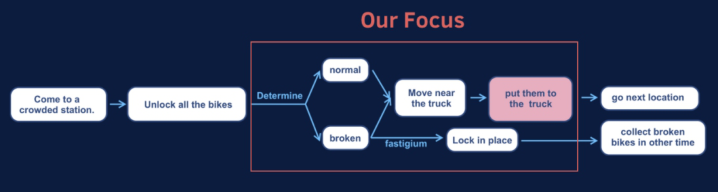
From the interview, we mapped out the current typical workflow as follows, and we typically focus on the process of lifting up the bike (see Figure 1).
Designing a Human-Robot Collaboration System to Reduce Work Fatigue 775
Figure 1:
PROPOSED SYSTEM DESIGN Based on the results of our investigation, we have realized that the most exhausting stage in the entire workflow for bike re-distributors is lifting up the bike. Therefore, we have redesigned a human-machine collaborative system, where a robotic arm will provide substantial assistance during the bike lifting process. The system completes the operation and maintenance of urban shared bicycles through the following 5 steps:
Step 1: Initially, the bicycle redistribution system uses integrated GPS tracking to monitor the distribution of shared bicycles in real time. The system employs algorithms to analyze the data, identifying bicycles that need to be redistributed. It then plans the most efficient routes for the workers based on geographic location information and real-time traffic conditions.
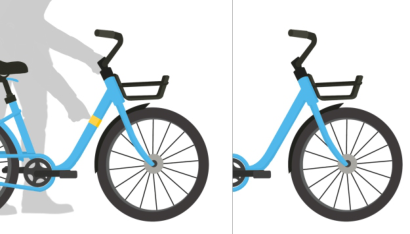
Step 2: Guided by the system, workers arrive at the designated locations. They then push the bicycles out from the sidewalks and conduct a preliminary inspection by observation and handling, carefully checking the brakes, tire pressure, and the condition of the locks. The experience of the workers is crucial in this process, as those with more experience can perform these tasks better. If any issues are found, workers will attach specialized labels with different colors and patterns to the bicycles, making them easily identifiable by the robotic arm later (see Figure 2).
Figure 2: Tag the broken bike.
Step 3: Workers push the bicycles in front of the robotic arm, where cameras mounted on the vehicle scan the bicycles’ labels and structural features to precisely locate the gripping points. These coordinates are sent
in real-time to the robotic arm’s control system. The robotic arm uses custom fixtures to ensure stability during the gripping and lifting process (see Figure 3).
Figure 3: Worker push the bike in front of the robotic arm.
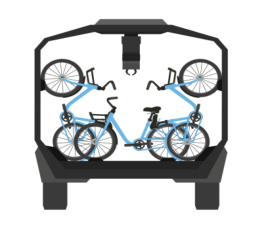
Step 4: The robotic arm sorts and places the bicycles inside the vehicle compartment. We have proposed a layout for the interior: the robotic arm is mounted on tracks on the ceiling of the compartment, allowing it to shuttle and retrieve any bicycle within. The bicycles are arranged in a crisscross pattern to maximise space utilisation while preventing entanglement. Inside the compartment, there are separate areas for normal and broken bicycles. If the broken bicycle area is full, the robotic arm can remove all the broken bicycles when heading to the repair point. Conversely, if the normal bicycle area is full and there is space in the broken bicycle slot, normal bicycles can be placed there to improve efficiency, and vice versa. Upon reaching the centralised bicycle placement point, the robotic arm removes the normal bicycles from the compartment and places them on the ground behind the vehicle, where workers take them and place them in designated roadside bicycle spots (see Figure 4).
Figure 4: Bike placement.
Designing a Human-Robot Collaboration System to Reduce Work Fatigue 777
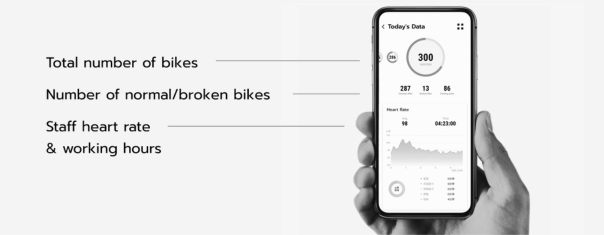
Step 5: The system automatically counts the number of normal and broken bicycles and updates the data of the bicycles that have been transported. This data is synchronised in real time with the central management system for further analysis and decision support. Additionally, the system records the work efficiency of the workers and the transportation status of the bicycles to optimize future operations. The system audits and archives completed tasks for subsequent inquiries and analysis (see Figure 5).
Figure 5: Counts system.
METHODOLOGY
In the previous chapter, we detailed the design of our HRC system for bike redistribution. This chapter focuses on the experimental design aimed at evaluating whether our system can significantly reduce the fatigue experienced by bike redistributors. According to Smets et al. (1995), fatigue is typically categorized into two distinct types: physical fatigue, which refers to the bodily sensations of tiredness such as feeling weak, and mental fatigue, which involves cognitive symptoms like difficulty concentrating. In the workplace, mental fatigue has been found to predict an increased risk of errors (McCormick et al., 2012). Therefore, our study also aimed to investigate whether the HRC system would lead to changes in the mental fatigue levels experienced by bike redistributors.
Participants We recruited three male participants aged between 23 and 33 years to simulate the demographic profile of typical bike redistributors. These participants, students from the Hong Kong Polytechnic University, were healthy and well-rested prior to the study.
Experimental Setup The experiment took place in an outdoor open space equipped with a platform simulating the height of a bike redistribution truck. This setting aimed to replicate real-world conditions.
Procedure Participants were divided into two conditions: 1) With nominal technological assistance, where they transported 20 bicycles over a 20-meter distance without lifting them onto the platform manually. 2) Without nominal technological assistance, where they manually lifted the bicycles onto the platform after transporting them over the same distance. Each condition was separated by adequate rest to ensure participants’ fatigue levels were not influenced by prior tasks.
Data Analysis To assess physical fatigue, we monitored participants’ heart rates using Huawei smart watches. The heart rate data was cleaned and analyzed to compare the mean and maximum values between the two conditions. We employed methods from Sani et al. (2020) to analyze the heart rate signals, which are indicative of physical fatigue levels.
For mental fatigue assessment, we used the Multidimensional Fatigue Inventory (MFI) developed by Shahid et al. (2011). This version of the MFI includes 20 items, each rated on a 1–5 Likert scale, assessing five dimensions of fatigue: General Fatigue, Physical Fatigue, Reduced Activity, Reduced Motivation, and Mental Fatigue. Each dimension consists of four items, making a total possible score of 20 for each dimension. Items 1, 3, 4, 7, 8, 11, 12, 13, 15, and 20 are scored positively, meaning higher scores indicate higher levels of fatigue, while the other items are scored negatively, meaning higher scores indicate lower levels of fatigue. After completing each task, participants rated their fatigue levels for each item. We calculated the total score for each participant on each of the five fatigue dimensions and then computed the mean scores across the three participants for a comprehensive analysis of mental fatigue under both conditions (with and without nominal technological assistance).
Descriptive statistics was applied to evaluate differences in heart rates and MFI scores between the two conditions.
EVALUATION This part presents the results of our experiment and evaluates the effectiveness of the HRC system in reducing fatigue experienced by bike redistributors.
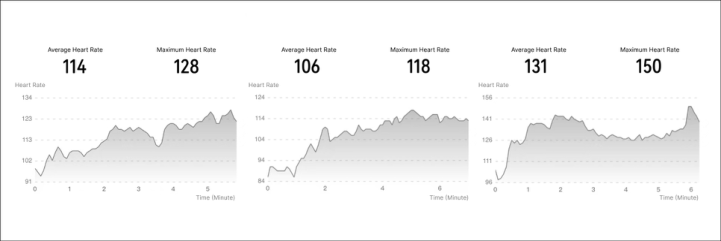
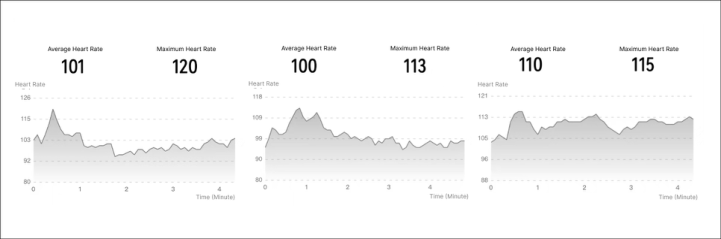
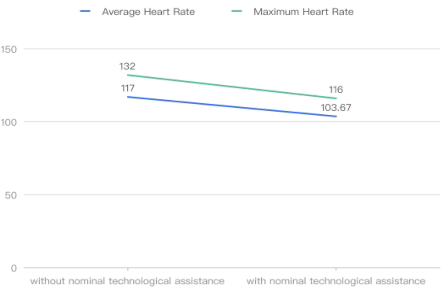
Physical Fatigue The heart rate data revealed that participants using the HRC system maintained a steadier heart rate compared to those without assistance. Figures 6 and 7 illustrate these trends, with significant differences in heart rates observed between the two conditions. This supports our hypothesis that the HRC system effectively reduces physical fatigue. The average mean and maximum heart rates, summarized in Figure 8, further highlight the lower physical strain experienced with the system.
Designing a Human-Robot Collaboration System to Reduce Work Fatigue 779
Figure 6: Heart rate profiles of the participants without nominal technological assistance.Figure 7: Heart rate profiles of the participants with nominal technological assistance.Figure 8: Changes in heart rate.
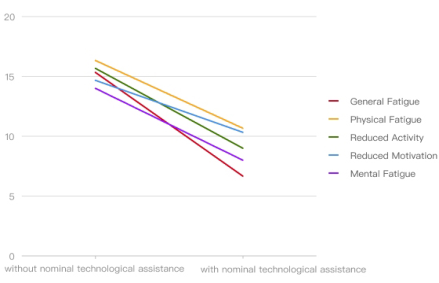
Mental Fatigue MFI scores indicated a reduction in self-reported fatigue levels across all dimensions for participants using the HRC system. Tables 2 and 3, along with Figure 9, show that the most significant decrease was in general fatigue, suggesting that the system also alleviates mental fatigue. Qualitative feedback from professional bike redistributors, who reviewed a demo of the system, corroborated these findings. They expressed that the HRC system
would substantially decrease their workload and fatigue levels in practical applications.
Table 2. The average scores of the participants without nominal technological assistance.
Table available in the original PDF paper.
Different Dimensions The Average Score General fatigue 15.33 Physical fatigue 16.33 Reduced activity 15.67 Reduced motivation 14.67 Reduced motivation 14
Table 3. The average scores of the participants with nominal technological assistance.
Table available in the original PDF paper.
Different Dimensions The Average Score General fatigue 6.67 Physical fatigue 10.67 Reduced activity 9 Reduced motivation 10.33 Reduced Motivation 8
Figure 9: Changes in MFI.
Implications The results demonstrate that our HRC system significantly reduces both physical and mental fatigue, thereby enhancing the well-being and productivity of bike redistributors. This improvement could lead to better operational efficiency and job satisfaction within the bike-sharing industry. The holistic benefits of the HRC system suggest its potential for broader applications in other labour-intensive tasks.
Designing a Human-Robot Collaboration System to Reduce Work Fatigue 781
DISCUSSION AND LIMITATION The current study tested the efficacy of the HRC system in reducing worker fatigue during steps 2–4 of the task. The bike redistributors exhibited a significant reduction in both mental fatigue and physical fatigue. Overall, the integration of machinery with human labour shows potential for sustained refinement and enhanced work experience. Notably, this approach also simultaneously mitigates visible safety hazards through robotic assistance. Our research provides the first empirical evidence demonstrating the crucial role that HRC systems can play in the shared bike redistribution process, contributing to the health and well-being of workers. This study offers inspiration for the widespread industrial application of HRC systems in the future.
However, steps 1 and 5 were only demonstrated to the workers through video and were not subjected to qualitative or quantitative analysis. Future research should include these initial and final steps in the experimental investigation. Additionally, the current study had a relatively small sample size, and increasing the number of participants in future experiments would enhance the statistical power and generalizability of the findings.
CONCLUSION AND FUTURE WORK In our human-robot collaboration system, the cooperation between human workers and the robotic arm is highly integrated. They collaborate closely, with each focusing on their respective expertise - the workers discerning the quality of shared bicycles, while the robotic arm lifts and positions them. This novel HRC system effectively reduces physical fatigue for workers and delegates the most hazardous tasks to the robotic arm, ensuring worker safety. By implementing a HRC system, the integration of the robotic arm enhances the user experience for bike distributors, reducing physical fatigue. With better performance, it reduced the time and chance of accidents happening.
In the future, the system could be optimized by: 1) Advancing automation in bike collection, utilizing real-time cloud data for smart scheduling. 2) Meticulously designing the truck’s interior layout to accommodate more bikes efficiently. 3) Engineering the gripper mechanism for stable and reliable bike transportation. These enhancements would maximize the overall functionality and effectiveness of the HRC system.
ACKNOWLEDGMENT
This research was funded by the Hong Kong Polytechnic University’s Research Centre for Future (Caring) Mobility (P/ID: P0042701); and the University’s Strategic Importance Project (P/ID: P0036851). The authors would like to express their sincere gratitude to the University’s Master of Design, Intelligent Systems Design (ISD) Programme for providing the experimental equipment and facilities to conduct this research. The authors also wish to thank all the individuals who participated in the questionnaires and interviews that were integral to this study.
REFERENCES
Chen, Z., van Lierop, D. and Ettema, D. (2020). Dockless bike-sharing systems: what are the implications? Transport Reviews, 40(3), pp. 333–353. Dempsey, P. G. (1998). A critical review of biomechanical, epidemiological,
physiological and psychophysical criteria for designing manual materials handling tasks. Ergonomics, 41(1), pp. 73–88. He, X. and Wang, Q. (2023). A location-routing model for free-floating shared bike collection considering manual gathering and truck transportation. Socio- economic planning sciences, 88, pp. 101667–101667. Kim, S. H. and Chung, M. K. (1995). Rapid Communication Effects of posture,
weight and frequency on trunk muscular activity and fatigue during repetitive lifting tasks. Ergonomics, 38(5), pp. 853–863. Liu, L., Yang, S., Wang, Y., Ma, Z., Fang, L., Long, Y. and Stephen Jia Wang (2023). Robotic Systems in Heritage Protection: An Anti-Fatigue Human-Robot Collaboration Exploration for Heritage Painting and Calligraphy Restoration. McCormick, F., Kadzielski, J., Landrigan, C. P., Evans, B., Herndon, J. H. and
Rubash, H. E. (2012). Surgeon Fatigue. Archives of Surgery, 147(5). Peternel, L., Tsagarakis, N., Caldwell, D. and Ajoudani, A. (2017). Robot adaptation to human physical fatigue in human–robot co-manipulation. Autonomous Robots, 42(5), pp. 1011–1021. Sani, Z., Darbandy, M., Rostamnezhad, M., Hussain, S., Khosravi, A. and
Nahavandi, S. (2020). A new approach to detect the physical fatigue utilizing heart rate signals. Research in Cardiovascular Medicine, 9(1), p.23. Shahid, A., Wilkinson, K., Marcu, S. and Shapiro, C. M. (2011). Multidimensional Fatigue Inventory (MFI). STOP, THAT and One Hundred Other Sleep Scales, pp. 241–243. Smets, E. M. A., Garssen, B., Bonke, B. and De Haes, J. C. J. M. (1995).
The multidimensional Fatigue Inventory (MFI) psychometric qualities of an instrument to assess fatigue. Journal of Psychosomatic Research, 39(3), pp. 315–325. Sun, Y. (2018). Sharing and Riding: How the Dockless Bike Sharing Scheme in China Shapes the City. Urban Science, 2(3), p. 68.
LISTED IN THE AHFE DIGITAL BOOKSTORE CATALOGUE
Explore the complete digital volume
Human Factors in Design, Engineering, and Computing
Read this individual research paper free through the original publisher, or explore the full digital proceedings book.
ISBN 978-1-964867-35-9
Explore this ISBN in the AHFE Bookstore ↗Listed in the July 2026 bookstore catalogue; search by ISBN to confirm current availability · Digital book purchase optional