Jurji Filieri, Gabriele Goretti, Benedetta Terenzi (2025). Integrating Design processes and Intelligent systems within supply chain digitalization, Two case studies in Made in Italy manufacturing. In: Intelligent Human Systems Integration (IHSI 2025): Integrating People and Intelligent Systems. AHFE Open Access, vol. 160, pp. 738–749. https://doi.org/10.54941/ahfe1005880
The concept of "Made in Italy" refers to the production of goods in Italy, characterized by a strong association with quality, craftsmanship, and Italian design. In recent years, digitalization has played a crucial role in the evolution of this sector, becoming essential for maintaining international competitiveness and influencing various aspects, as highlighted in the Confindustria Report ‘Digitalization and Innovation in the Italian Manufacturing Sector’ and the European Commission’s Joint Research Centre’s study ‘The impact of digital transformation on Italian manufacturing SMEs’. The integration of intelligent systems into design and manufacturing processes is revolutionizing the industry, promoting greater efficiency, flexibility, and product customization. The National Industry 4.0 Plan, promoted by the Ministry of Economic Development, aims to transform the Italian manufacturing sector through digitalization along four main lines: i) Innovative investments, ii) Skills, iii) Enabling infrastructures, iv) Public support. The plan seeks to enhance the competitiveness of Italian companies in international markets and create an innovation ecosystem. The adoption of technologies such as Industry 4.0, the Internet of Things (IoT), blockchain, Big Data Analytics and integration with additive manufacturing systems has enabled Italian companies to improve product efficiency, quality, and sustainability, while also allowing continuous monitoring and real-time adaptation of production (Goretti et al., 2020; Galli, 2021; Terenzi & Benelli, 2021; Bianchi, 2022; Lombardi & Rinaldi, 2023; Terenzi & Goretti, 2024). Furthermore, the use of artificial intelligence (AI), machine learning, and cyber-physical systems facilitates advanced automation and optimization of design and production processes, reducing time and costs.Simultaneously, the integration of digital archives with manufacturing taxonomies is crucial for organizing and analyzing information in the industrial sector. Digital archives enable the cataloging and management of vast amounts of data related to production processes, materials, and finished products, facilitating traceability and the management of corporate knowledge (Smith & Johnson, 2021; Brown, 2022; Keller, 2023; Wang & Gao, 2022; Zhang & Tao, 2023).The case studies presented demonstrate how these transformations disruptively impact creative processes and design thinking methodologies, bridging the gap between design expertise and production processes. The research introduces a first case study that integrates digital modeling and robotic processes in high-craftsmanship furniture production. A second case study documents the design of a parametric sustainable packaging system through the exploitation of constrained generative AI and product digitization tools. We can thus assert that the digital transition requires significant investments and continuous training of human capital, both in production and in design processes. The research, through the presented case studies, aims to define emerging processes and skills required by Italian high-craftsmanship production districts, which can be developed trans-disciplinarily between historical manufacturing and design knowledge and advanced technologies. By highlighting challenges and opportunities, it is possible to underscore that, while there are positive signs in the adoption of digital technologies, many companies, particularly SMEs, struggle to keep pace with these changes. The main barriers include a lack of digital skills and high investment costs.
MADE IN ITALY AND DIGITALIZATION PROCESSES “Made in Italy” means the production of goods within Italy, distinguished by a strong association with high quality, artisanal craftsmanship, and italian design. In recent years, digitalization has played an increasingly pivotal role in the evolution of this sector, becoming indispensable for maintaining international competitiveness and influencing various dimensions of production (Goretti, 2023).
As highlighted in the Confindustria Report ‘Digitalization and Innovation in the Italian Manufacturing Sector’ and the OECD 2021 study ‘The impact of digital transformation on Italian manufacturing SMEs’, the
Integrating Design Processes and Intelligent Systems Within Supply Chain Digitalization 739
integration of intelligent systems into design and manufacturing processes is revolutionizing the industry, promoting greater efficiency, flexibility, and product customization. The National Industry 4.0 Plan, promoted by the Ministry of Economic Development (2020), aims to transform the Italian manufacturing sector through digitalization along four main lines: i) Innovative investments, ii) Skills, iii) Enabling infrastructures, iv) Public support. The plan seeks to enhance the competitiveness of Italian companies in international markets and create an innovation ecosystem. The adoption of technologies such as Industry 4.0, the Internet of Things (IoT), blockchain, Big Data Analytics and integration with additive manufacturing systems has enabled Italian companies to improve product efficiency, quality, and sustainability, while also allowing continuous monitoring and real-time adaptation of production (Goretti et al., 2020; Rossini et al., 2021; Terenzi & Benelli, 2021; Bianchi et al., 2022; Fiorino & Ladu, 2023; Terenzi & Goretti, 2024). Furthermore, the use of artificial intelligence (AI), machine learning, and cyber-physical systems facilitates advanced automation and optimization of design and production processes, reducing time and costs.
The structure of Italy’s manufacturing districts is based on networks of numerous independent small and medium-sized enterprises (SMEs), each one specialized in specific tasks. The most prevalent form of business relationship among these firms is subcontracting. Production coordination is managed by a leading SME, which oversees design, product engineering, and logistical operations. Since the late 1990s, the term “cluster” has been introduced, following Porter’s definition (Porter, 1998), to describe these economic and territorial organizational structures.
With the launch of the Lisbon Strategy in 2000, the European Commission initiated a shift from an industrial to a post-industrial or knowledge-based economy, aimed at enhancing the competitiveness of European businesses. Varaldo (2006) identifies key factors in defining the knowledge-based economy: the growing importance of knowledge and intangible assets within the Global Value Chain (GVC), along with the exchange of information, expertise, and services.
In light of the new challenges that the production sector is called upon to manage and which affects the entire process, from conception to production to the end of the product’s life, this research seeks to explore organizational and operational models for a “renewed” Made in Italy concept, which combines the intrinsic values of high craftsmanship with technological innovation. In summary, while craftsmanship embodies the artistic skills and intangible values associated with production (Fuchs et al., 2015), the convergence of this expertise with contemporary innovation gives rise to what Goretti (2017) terms “advanced craftsmanship.”
We can thus assert that the digital transition requires significant investments and continuous training of human capital, both in production and in design processes. The research, through the presented case studies, aims to define emerging processes and skills required by Italian high-craftsmanship production districts, which can be developed trans- disciplinarily between historical manufacturing and design knowledge and advanced technologies.
DIGITALIZATION IN MANUFACTURING: EFFECTS ON SUPPLY-CHAIN AND PRODUCTION MANAGEMENT The SME Instrument under the EU Horizon 2020 program targeted innovative small and medium-sized enterprises (SMEs), offering strategic support for development and internationalization. This initiative has enabled significant transformations within manufacturing districts, fostering a new technological paradigm in production and cluster organization.
The ongoing digital transformation of Italian furniture manufacturing networks integrates key distinctive features of Italian industrial districts, including:
1. The development of technological innovation in production processes, facilitated by technology transfers from other sectors (e.g., automotive, fashion); 2. The preservation of craftsmanship values within the technological innovation of supply chains; 3. Innovations in logistics, including advancements in production planning, time-to-market efficiency, materials procurement, and traceability (Fry et al., 2017).
However, according to the 2020 Digital Infrastructure Index published by Ernst & Young, the digital landscape in Italy remains uneven. One contributing factor is the “miniaturization” of the Italian production system, which has hindered widespread adoption of digital infrastructure. The Index evaluates the degree of digital infrastructure adoption and efficiency across 107 Italian provinces. Additionally, the OECD’s Skills Outlook 2021 reported a low diffusion of technological skills in Italy, placing the country among the lowest-ranked in Europe in terms of digital skills, market exposure, and policies promoting skill development. In fact, although there are positive trends in the adoption of digital technologies, many companies— especially small and medium-sized enterprises (SMEs)—struggle to keep pace with these advancements. The primary obstacles include a shortage of digital skills and the high costs associated with technological investment. Therefore, it can be concluded that the digital transition necessitates substantial investments and continuous training of human capital in both production and design processes.
Conversely, it is noteworthy that in 2020, a significant majority of SMEs acknowledged the critical importance of adopting digital tools to address market challenges, particularly in response to the COVID-19 pandemic. More than 40% of SMEs allocated over 10% of their budgets toward digitization initiatives, while 50% dedicated more than 30%. This demonstrates a clear acceleration in digital transformation efforts among SMEs, aimed at enhancing resource efficiency, reducing production costs, and increasing work flexibility (EU, SME Annual Report 2021).
Moreover, studies indicate a strong association between resilience— achieved through the incorporation of new digital technologies—and social capital. Locational choices create a “proximity premium,” promoting a
Integrating Design Processes and Intelligent Systems Within Supply Chain Digitalization 741
growth-survival-maturity framework for SME resilience. This highlights the importance of clusters, revealing an interplay between entrepreneurial activities and decisions related to planning, networking, learning, and the adoption of new technologies (Herbane, 2019).
The integration of intelligent systems into design and manufacturing processes is transforming the industry, fostering greater efficiency, flexibility, and product customization. The National Industry 4.0 Plan, spearheaded by the Ministry of Economic Development, aims to revolutionize the Italian manufacturing sector through digitalization across four key areas: (i) innovative investments, (ii) skills development, (iii) enabling infrastructures, and (iv) public support. This plan seeks to bolster the competitiveness of Italian companies in international markets while cultivating an innovation ecosystem. The adoption of technologies such as Industry 4.0, the Internet of Things (IoT), blockchain, Big Data analytics, and integration with additive manufacturing systems has enabled Italian companies to enhance product efficiency, quality, and sustainability. These technologies also support continuous monitoring and real-time adaptation of production processes (Goretti et al., 2020; Rossini et al., 2021; Terenzi & Benelli, 2021; Bianchi et al., 2022; Fiorino & Ladu, 2023; Goretti & Terenzi, 2024). Additionally, the use of artificial intelligence (AI), machine learning, and cyber-physical systems facilitates advanced automation and optimization of design and production processes, leading to reduced time and costs.
Simultaneously, the integration of digital archives with manufacturing taxonomies is crucial for organizing and analyzing industrial information. Digital archives enable the cataloging and management of vast datasets related to production processes, materials, and finishedproducts, improving traceability and corporate knowledge management Johnson et al., 2022; Rowles & Brown (2017); Möhring et al. (2023); Wang et al., 2025; Zheng & Doyle (2023). These digital implementation aims at developing following strengths:
Developing a digital archive to create a taxonomy of craftsmanship integrated into industrial processes.
Implementing 3D scanning technologies to facilitate reverse engineering of classic craftsmanship and new design artifacts (Goretti et al., 2022).
Introducing digital management platform to Product Lifecycle Management (PLM) (Goretti et al., 2022).
Improving time-to-market and responsiveness to market demands.
Coordinating company departments and suppliers more effectively.
Figure 1-2: Parametric modelling for craftsmanship, machine-based works and assembly management (source: Baldi, Florence).
Within this framework, the italian model of the industrial district proves to be functional and strategic in order to engage a level of competitive digitalisation that is in line with the standards of manufacturing quality already appreciated. In this sense, the issue of the technological training of a new productive class, capable of controlling and managing the new instruments of production and design within the value construction chain of goods, also becomes central.
Universities, research and development units, vocational training centres and schools for technological education become an integral part of industrial districts and can play a decisive role in stimulating a renewal and propulsion action for the economic revival of territories and for the improvement of production conditions. While the effects of increasing digitisation in the fields of industrial production, on the one hand, lead to direct effects, so to speak, downstream of the production processes themselves, on the other hand, they also alter the frame of reference to which the training system must effectively correspond, requiring new competences and skills.
In the context of a sustainable upgrading programme of Made in Italy, the conscious management of areas of proximity between university and industry (such as applied research hubs, business incubators, collegial dialogue and/or cross advisory boards), in which new forms of production are created, therefore prove to be as essential as the construction of synergetic relations of supply, processing and/or transformation of raw materials.
TECHNOLOGY INNOVATION IN MANUFACTURING BASED ON DIGITALIZATION PROCESSES The case studies presented illustrate how these transformations have a disruptive impact on creative processes and design thinking methodologies, effectively bridging the gap between design expertise and production processes. We focus on SMEs that have successfully undertaken digital transitions through Industry 4.0 management software and hardware,
Integrating Design Processes and Intelligent Systems Within Supply Chain Digitalization 743
adopting “smart” production management without compromising the value of high-quality craftsmanship.
ROBOTICS INTEGRATION IN FURNITURE MANUFACTURING The research presents a case study that integrates digital modeling and robotic processes into high-craftsmanship furniture production. In 2016, the Tuscany Region launched a strategic project aimed at redesigning the product development and organizational structure of the Quarrata manufacturing cluster. This initiative sought to foster innovation in design, production, and internationalization, focusing on seven key furniture production chains with the following objectives:
Design management innovation: Engaging specialized researchers in design management, product development, and marketing to promote an innovation-driven shift in entrepreneurial practices. The project included visiting programs and workshops to enhance this transition.
Training new human resources: Providing education and practical experience through joint industry-academia laboratories, fostering a new generation of skilled professionals.
Development of pilot capsule collections: Creating pilot collections for each of the seven production chains, showcasing the integration of artisanal craftsmanship with advanced technologies.
The project also highlighted notable case studies that exemplify the fusion of artisanal skills with cutting-edge technology. One such case is the supply chain led by Artigiangomma, a key company in the Quarrata district (Tuscany), specializing in upholstery and component assembly for sofa systems. Artigiangomma manufactures its own polyurethane foam and padding, maintaining a strong artisanal identity while developing a complex supply chain over time.
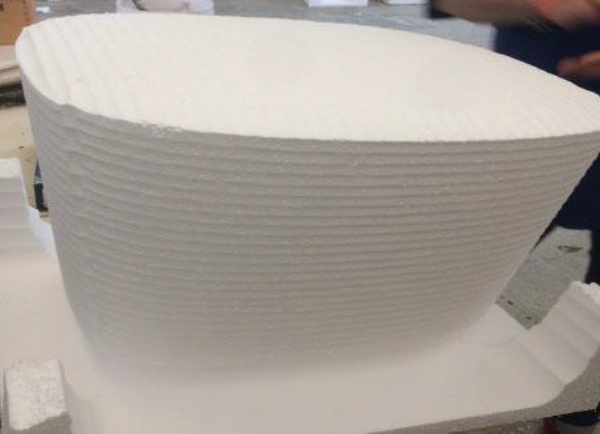
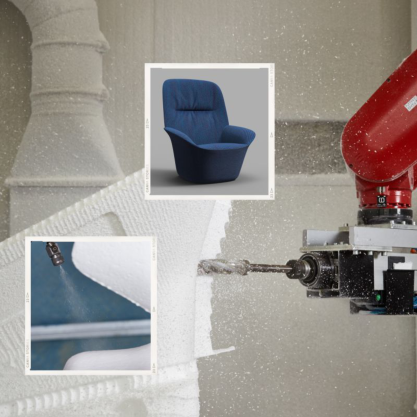
Within this production cluster, Superevo stands out for its innovative approach to working with polystyrene blocks, following contemporary design trends. These blocks are spray-coated with polimex1 foam using CNC machines and robotic systems. This advanced process allows the creation of lightweight products with complex shapes, unachievable through traditional methods. Superevo utilizes 3D modeling to define the shape, followed by CAD-CAM software for post-processing, which translates design files into the robot’s programming language. Artisans then collaborate with the robotic systems to finalize the product.
At the end of its lifecycle, the product can be disassembled into its individual components, which can be separately recycled and reintroduced into the production process, in line with the principles of a circular economy.
The supply chain also includes companies that adhere to traditional artisanal practices, such as custom upholstery solutions and handcrafted carpentry, creating a rich blend of innovation and craftsmanship.
1Polimex is a type of composite material that consists of a polimer matrix reinforced with fibers of other additives, which enhance its mechanical properties (Polimex Group).
The supply chain and in particular the company Superevo presented a significant grow in between 2017 and 2024. Today the company offers manufacturing servisice for independent designers and international design brands.
Figure 3: Polimex works through robots at superevo (photo: Gabriele Goretti).Figure 4: Polimex works through robots at superevo (source: Superevo).
Integrating Design Processes and Intelligent Systems Within Supply Chain Digitalization 745
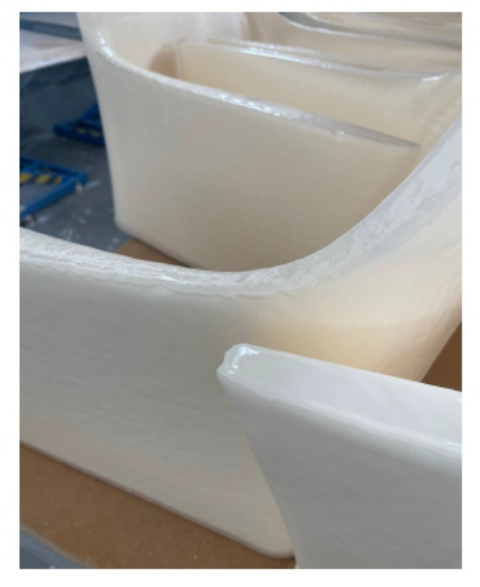
Figure 5: Funrniture design in polimex (photo: Gabriele Goretti).
PARAMETRIC SOFTWARE AND ARTIFICIAL INTELLIGENCE INTEGRATION IN PACKAGING DESIGN AND MANUFACTURING A second case study documents the design of a parametric sustainable packaging system through the exploitation of constrained generative AI and product digitization tools.
The project refers to a packaging system developed by the ORIGAMI research group of the University of Tuscia, under the scientific coordination of Dr. Jurji Filieri, as part of a call for projects promoted by the multinational Emec Pumps. The challenge focused on the development of innovative packaging solutions, with a strong sustainable imprint, aimed at providing highly flexible product protection solutions, suitable for goods with different material and dimensional characteristics.
In 2022, the company signed a memorandum of agreement with the company Lazio Innova, an in-house company of the Lazio Region dedicated to innovation, credit and economic development for companies as provided for by Regional Law No. 10/2013, and aimed at promoting business networks and local excellence. The objective of the agreement is to promote applied research in the cardboard packaging sector, aimed at exploiting automated packaging technologies for single-material boxes with a flexible configuration, based on cutting and folding planar surfaces. In the immediately following phase, the partnership was extended to research
groups on a national scale, through an initial selection of project proposals and a preliminary assessment of the technical and economic feasibility characteristics of each project by a group of experts and stakeholders involved in various ways in the processing and production process (customer, raw material suppliers, plant manufacturers, client cluster).
The university research group formed part of the shortlist that was involved until the end of the discussion process. Through a design-driven approach, the multidisciplinary ORIGAMI group, composed by product designers, engineers, graphic designers and supply chain experts, elaborated the design of an elastic cardboard spacing frame, placed at the base of the packaging system, thanks to the development of a mathematical algorithm. On the one hand, this one turned out to be capable of interpolating container (normalised to the main logistics and transport standards) and content geometries for the automated definition of cutting dimensions and bending angles, on the other hand of offering a variable level of rigidity commensurate with the material characteristics of the product being carried in.
The experience described configured a potential test-board for the upgrading of the manufacturing knowledge heritage of the sector (in the case study related to packaging), through the involvement of strategic players such as educational institutions (universities) and support agencies for access to innovation and research in SMEs.
In addition to the project outcome, which led to the creation of a university spin-off and the filing of patents related to the solution developed, the experience conducted brought out two radical qualities, already present in the Italian district tradition:
the relational dimension, whereby it appears fundamental to activate privileged channels of interlocution between operators sharing territorial, cultural, interest or knowledge clusters
the opportunity to promote actions of wide horizontal involvement of actors in the proto-project phase, adopting non-deterministic thinking models, also based on lateral thinking. In the text ‘Six Thinking Hats’ (De Bono, 1990), the psychologist describes at least six alternative and different thinking positions from which to frame the same issue, highlighting how wide-ranging and transversal the preliminary analysis of each issue and consequently its solution can be. This preliminary interpretative variability certainly influences choices and decisions within a direct decision-making process, such as a project, but even more so it determines ‘augmented’ conditions for the intuitive reworking of available information, i.e., an optimal context for the development and growth of knowledge.
CONCLUSION
This research, through the analysis of selected case studies, aims to identify the emerging digitalization processes in Italian high-craftsmanship production districts, alongside related technological advancements in production within this evolving ecosystem. These processes can be cultivated
Integrating Design Processes and Intelligent Systems Within Supply Chain Digitalization 747
through a transdisciplinary approach that bridges traditional manufacturing and design expertise with advanced technologies.
The emerging scenarios explored in this research foster new skills within SME clusters, focusing on the following key areas:
The resilience of companies in response to economic crises.
The integration of advanced technologies into traditional craftsmanship, not as a substitute for the human values of artisanship, but as a means to enhance them through digital tools.
Moreover, as demonstrated through the analyzed case studies:
The potential of digital technologies and advanced machinery is increasingly evident.
The introduction of these innovative tools offers new possibilities and strengths, not only in production but also in design processes. These advancements allow design departments to explore a wider range of solutions. Indeed, the examples presented suggest a proactive integration and synergy between advanced manufacturing processes and design thinking, enabling firms to enter new market domains and develop novel design repertoires.
ACKNOWLEDGMENT
This contribution is the result of a joint reflection of the authors. Nevertheless, the introductory paragraph and ‘Made in Italy and Digitalization Processes’ have to be attributed to Benedetta Terenzi, ‘Digitalization in Manufacturing. Effects on Supply-Chain and Production Management’ to Gabriele Goretti, Benedetta Terenzi and Jurji Filieri, ‘Technolgy Innovation in Manufacturing based on Digitalization processes’ and ‘Robotics Integration in Furniture Manufacturing’ to Gabriele Goretti and ‘Parametric Saftware and Artificial Intelligence Integration in Packaging Design and Manufacturing’ to Jurji Filieri.
REFERENCES
Bianchi, G., Testa, F., Tessitore, S., & Iraldo, F. (2022). How to Embed Environmental Sustainability: The Role of Dynamic Capabilities and Managerial Approaches in a Life Cycle Management Perspective. Business Strategy and the Environment, 31, pp. 312–325. https://doi.org/10.1002/bse.2889 Confindustria Relazione Attività 2024-25. Retrieved from https://public.confind
ustria.it/repository/2025/05/27084124/CONFINDUSTRIA_RelazioneAttivita_ 2024_2025.pdf (report updated). Ernst & Young (2020). Digital Infrastructure Index. Retreived from https://www.italynextgeneration.eu/wp-content/uploads/2021/01/ey_digita- infrastructure-index_dic2020.pdf. European Commission - SME Instrument under the EU Horizon 2020. Retreived from https://cordis.europa.eu/programme/id/H2020_EIC-SMEInst-2018-2020. European Union (2021) - SME Annual Report. Retrieved from https: //www.clustercollaboration.eu/knowledge-sharing/publications/document-li brary/annual-report-european-smes-2021. De Bono, E. (1990). Six Thinking Hats, Penguin.
Fiorino, N. and Ladu, M. G. (2023). Trasformazione Digitale, Qualità dei Governi e Produttività nelle Regioni Europe. Economia Italiana. https://dx.doi.org/10. 57621/EI2023-02-S-05 Fuchs, C., Schreier, M., and Van Osselaer, S. M. (2015). The handmade effect: What’s
love got to do with it? Journal of marketing, 79(2), 98–110. Goretti, G. (2017). Advanced craftmanship. Maestria avanzata. Percorsi di progetto tra innovazione e tradizione artigianale nei sistemi manifatturieri toscani. Aracne. Goretti, G. (2023). Design e artigianalità avanzata. Il progetto Crafting Europe.
Percorsi esplorativi di co–design tra designer e artigiani supportati dalle tecnologie digitali. Roma, Aracne. Goretti, G. and Terenzi, B. (2024). Innovation Processes of Ceramic Product. Colors and Surface Modelling Systems, In be-tween artisanship and digital technologies. AND Journal, vol. 43, No. 1, pp. 78–89, Retrieved from https://www.andarchite ttura.it/index.php/and/article/view/636 Goretti, G., Tufarelli, M. and Qian Xiaobo (2022). Digital Archive for High-
End Craftsmanship Processes. Comparing Reseaech Paths in Italy and China. AGATHÓN – International Journal of Architecture, Art and Design, No. 12, pp. 262–269. https://doi.org/10.19229/2464-9309/12232022 Herbane, B. (2019). Rethinking organizational resilience and strategic renewal in SMEs. Entrepreneurship & Regional Development, 31(5–6), 476–495. Johnson, P. C., Laurell, C., Ots, and Sandström, C. (2022). Digital innovation and the
effects of artificial intelligence on firms’ research and development–Automation or augmentation, exploration or exploitation? Technological Forecasting and Social Change, Volume 179, pp. 1–12, https://doi.org/10.1016/j.techfore.2022.121636 Möhring, M., Keller, B., Schmidt, R., Sandkuhl, K., and Zimmermann, A.
(2023). Digitalization and enterprise architecture management: a perspective on benefits and challenges, SN Business & Economics, ISSN 2662-9399, Springer International, Publishing, Cham, Vol. 3, Iss. 2, https://doi.org/10.1007/s43546- 023-00426-3 Ministero dello Sviluppo Economico - Piano Nazionale Industria 4.0 - Italian Ministry of Economic Development - National Industry 4.0 Plan. Retrieved from https://www.mimit.gov.it/images/stories/documenti/guida_industria_40.pdf. OECD (2021), The Digital Transformation of SMEs, OECD Studies on SMEs
and Entrepreneurship, OECD Publishing, Paris, https://doi.org/10.1787/bd b9256a-en. OECD Skills Outlook 2023, retreived from https://www.oecd.org/education/oecd-sk ills-outlook-e11c1c2d-en.htm. Porter, M. E. (1998). Clusters and the New Economics of Competition. Harvard
Business Review. Rossini, M., Cifone, F. D., Kassem, B., Costa, F. and Portioli-Staudacher, A. (2021).
Journal of Manufacturing Technology Management 32(9), pp. 239–259, doi: https://doi.org/10.1108/JMTM-12-2020-0467. Rowles, D., and Brown, T. (2017). Building Digital Culture: A Practical Guide to Successful Digital Transformation, Kogan Page Publishers. Terenzi, B., and Benelli, E. (2021) Second Life In Sustainable Fashion Design. Il
contributo del Made in Italy. In book: A new Life for Landscape, Architecture and Design, pp. 224–244, Palermo University Press Collana Editoriale Project | Essays and Researches https://doi.org/10.19229/978-88-5509-291-3/6132021 Varaldo, R. (2006). Il nuovo modello competitivo e aziendale dei didtretti industriali.
Economia e Politica Industriale vol. 2006(1), FrancoAngeli.
Integrating Design Processes and Intelligent Systems Within Supply Chain Digitalization 749
Wang, L., Gao, R. X. Wang, L., Gao, R. X., Krüger, J., and Váncza, J. (2025). Humancentric assembly in smart factories, CIRP Annals, 74 (2), pp. 789–815, https: //doi.org/10.1016/j.cirp.2025.04.058 Zhang, Y., and Doyle, T. (2023). Integrating intention-based systems in human-
robot interaction: A scoping review of sensors, algorithms, and trust. Frontiers in Robotics and AI, 10. https://doi.org/10.3389/frobt.2023.1233328
LISTED IN THE AHFE DIGITAL BOOKSTORE CATALOGUE
Explore the complete digital volume
Intelligent Human Systems Integration (IHSI 2025): Integrating People and Intelligent Systems
Read this individual research paper free through the original publisher, or explore the full digital proceedings book.
ISBN 978-1-964867-36-6
Explore this ISBN in the AHFE Bookstore ↗Listed in the July 2026 bookstore catalogue; search by ISBN to confirm current availability · Digital book purchase optional