Matanda Alan Tshinkobo, John Ikome, Ibrahim Idowu (2025). Enhancing E-commerce Efficiency: AI Solutions for Last-Mile Delivery in Johannesburg. In: Human Aspects of Advanced Manufacturing, Production Management and Process Control. AHFE Open Access, vol. 184, pp. 72–80. https://doi.org/10.54941/ahfe1006451
Vaal University of Technology (VUT), Industrial Engineering & Operation Management and Mechanical Engineering Main Campus Vanderbijlpark, South Africa ↗
In the South African context, Johannesburg has become the hub of economic activities and the case of e-commerce expansion comes with a problem of last mile delivery. The challenges caused by the void in artificial intelligence (AI) literature are well known, but such application in Johannesburg’s logistical environment where there is a high level of traffic, poor infrastructure and even laws is lacking.This study seeks to bridge that gap by employing a quantitative approach, drawing on statistical data from a variety of sources, including academic journals, industry reports, and case studies of AI in last-mile delivery. Key findings demonstrate that AI technologies including dynamic routing, predictive analytics, and autonomous delivery vehicles significantly enhance delivery performance by reducing times and costs and improving reliability and customer satisfaction metrics. Particularly, the adoption of AI-driven route optimization and scheduling has led to measurable improvements in delivery efficiency and reductions in operational costs. These results have substantial implications for e-commerce logistics, suggesting that targeted AI implementations could mitigate many of the current delivery inefficiencies in Johannesburg, thereby enhancing overall business competitiveness and sustainability in the e-commerce sector.. As a result, the application of AI algorithms in path finding is expected to greatly reduce costs, giving rise to better and more efficient last-mile delivery services in Johannesburg and other regions.
The Johannesburg e-commerce market is experiencing significant growth, driven by improved internet penetration, increased use of smartphones, and the quickening of digital retailing triggered by the pandemic (Mohammad et al., 2023; Sorooshian et al., 2022). Leading players in this market, including Takealot.com and Superbalist.com, succeed due to their sophisticated logistical systems; however, the last-mile delivery aspect within
Enhancing E-Commerce Efficiency: AI Solutions for Last-Miles Delivery in Johannesburg 73
the city, which is vital to the entire supply chain, faces challenges that hinder its continued growth.
The final mile logistics encounter significant challenges, including chronic traffic congestion that increases costs (constituting 53% of total supply chain costs) and carbon emissions (constituting 27% of transport emissions). In addition, the dominance of fragmented deliveries amidst socioeconomic disparities requires customized solutions that serve both informal settlements and high-end suburbs (Bosona, 2020; DHL, 2022; Ndlovu et al., 2021; City of Johannesburg, 2023).
Artificial intelligence-driven innovations are expected to bring about profound changes. Sophisticated routing technologies that utilize real-time traffic and demand information can potentially reduce delivery delays by 40% and lower fuel usage (Mohammad et al., 2023). Amazon’s localized inventory approaches can reduce the time of last-mile deliveries by 35% compared to similar markets (McKinsey, 2021). The use of drones, e-cargo bikes (SAEye, 2022), and AI-powered chatbots, which lower first-attempt delivery failures to 22%, plays a significant role in alleviating congestion and reducing air pollution (Accenture, 2023).
The complex urban landscape of Johannesburg, exacerbated by insufficient regulation and dependence on carbon-emitting vehicles, is still significantly under-explored, with most research focused on the Global North. This study employs a mixed-methods approach to analyse the impact of artificial intelligence on route optimisation, demand forecasting, and micro-mobility within Johannesburg’s infrastructure. The research findings indicate practical solutions for improving equitable and sustainable urban logistics, integrating technological innovation with local socioeconomic conditions. This topic is pertinent to governmental entities and organisations aiming to address efficiency gaps and mitigate environmental impacts.
Interrogating the Landscape: AI, Logistics, and the Johannesburg Context Johannesburg’s e-commerce sector stands as a pivotal element of South Africa’s digital economy, yet it grapples with a paradox: despite the flourishing of online retail, inefficiencies in last-mile delivery pose a significant threat to its long-term viability. This review consolidates significant studies from 2020 to 2025 to analyse challenges, assess the transformative potential of AI, and identify essential gaps in tailoring global solutions to the distinctive urban logistics landscape of Johannesburg.
Challenges in Last-Mile Delivery Last mile delivery accounts for 53% of the total supply chain costs (DHL, 2022), being one of the principal challenges faced by Johannesburg. Traffic congestion, accelerated by rapid urban development, sees delivery times increase by 40%, while 30% of emissions from the transportation sector are due to that same congestion (Al-Khatib et al., 2020; City of Johannesburg, 2023). The static routing methods contribute to inefficiencies due to the fact
that delivery trucks consistently get loaded only to 55% of full load because of disjointed demand (Bosona, 2020). Inability of accessing roads, especially in Johannesburg due to road maintenance problems, lack of parking space, and geocoding that was uneven, rendered the conventional logistics models ineffective (Ndlovu et al., 2021).
The ecological impact is substantial. Diesel-powered fleets are common, emitting 2.3 tonnes of CO2 per vehicle annually (City of Johannesburg, 2023). Despite the promotion of electrification as a viable solution, persistent issues with charging infrastructure and outdated regulations that favour fossil fuels remain. This division has not been well examined in the existing literature (McKinsey, 2021).
A Central Discussion: Scholars differ in the primary cause. While congestion delays are argued by Al-Khatib et al. (2020), Ndlovu et al. (2021) assert socioeconomic inequalities within Johannesburg, a case in point being its juxtaposition of luxury estates to informal settlements, demand mixed delivery models, a detail ignored by models of the Northern Hemisphere.
Artificial Intelligence Solutions Potential in AI lies in decoding or demystifying complexity. Machine learning algorithms attempt to leverage real-time traffic and weather data over reducing delivery distances by 35% in the city of São Paulo, thus providing a road map for Johannesburg (Sorooshian et al., 2022). Other types of more refined inventory optimization use predictive analytics to reduce last- mile routes by 25%, benefiting early adopters including Takealot.com (TechCentral, 2024). Autonomous technologies, drones, have gained thrust for their ability to sidestep traffic, with tests in Sandton showing 20% faster delivery in high-density areas (SAEye, 2022).
The challenge of adopting AI is, however, polemical. Bosona (2020) endorses the use of drones in dense areas, but regulatory stagnation hampers scaling them up. The Civil Aviation Authority of Johannesburg does not have clear policies on the commercial use of drones, which puts innovations into legal proceedings of uncertain duration (SAEye, 2022). Similarly, autonomous ground robots thrive in suburbs like Rosebank, but not so in townships, where insecurity from uneven terrain also comes to play (Ndlovu et al., 2021).
Inequities: The algorithmic bias of AI poses further entrenchments into the already existing split. Thus stated, route optimization takes place whereby in most instances residents from high-value neighborhoods are preferred over those from townships, and this is mirrored within the pilot project phase in Johannesburg (Accenture, 2023). According to the World Economic Forum (2023), Without fair design, AI could end up merely reinforcing existing in equalities, although these points are absent from pro-tech narratives.
Enhancing E-Commerce Efficiency: AI Solutions for Last-Miles Delivery in Johannesburg 75
Table 1: Research gap.
Table available in the original PDF paper.
Research Gap Description Implications for Johannesburg’s Context
Global AI models
Without localised data, AI
1. Empirical Localisation
solutions risk inefficacy in dynamic conditions, undermining scalability and cost-saving promises.
(Sorooshian et al., 2022) lack validation in Johannesburg’s chaotic infrastructure (potholes, GPS dead zones, informal routes).
Ambiguous policies for
Johannesburg’s lagging
2. Regulatory Blind Spots
drones, autonomous vehicles, and data privacy hinder AI adoption (SAEye, 2022; Bosona, 2020).
Exclusion of informal
regulations stifle innovation, leaving AI pilots in legal limbo and delaying sustainable urban logistics. 3. Informal Networks
40% of deliveries rely on manual “bakkie” trucks (Ndlovu et al., 2021), yet AI models ignore these systems.
Green tech narratives may
AI’s energy-intensive training
logistics risks destabilising a critical delivery ecosystem and alienating low-income communities. 4. Sustainability Paradox
(8.5 MWh/year per firm) may offset emissions saving (McKinsey, 2021).
AI risks exacerbating
Algorithmic bias prioritises
backfire unless AI’s carbon footprint is reconciled with Johannesburg’s decarbonization goals. 5. Equity-Centric Design
socioeconomic divides unless solutions co-design with marginalised communities for inclusive delivery networks.
high-income areas (WEF, 2023), sidelining townships lacking geocoded addresses and digital infrastructure.
Toward Context-Driven Innovation The last-mile crisis in Johannesburg necessitates solutions that integrate global AI advancements with local contexts. The effectiveness of dynamic routing and predictive analytics depends on several critical factors:
Localised pilots involve collaboration with logistics companies to evaluate the application of AI in urban townships and areas with high traffic congestion.
Policy Advocacy: Developing drone rules and electric car incentives particular to the legal system of Johannesburg.
Equity-Centric Design: Encouragement of inclusion in solution creation by use of informal delivery networks.
Future studies should go beyond theoretical models to actual, data- driven investigations tying artificial intelligence’s promise to Johannesburg’s disjointed transport infrastructure. The city’s e-commerce industry can only reach fair and sustainable expansion then.
Convergent Pathways: A Mixed-Methods Framework for AI in Johannesburg’s Urban Logistics This research utilises mixed methods to assess AI-driven last-mile delivery solutions in Johannesburg, focussing on operational impacts and contextual adaptability (Mohammad et al., 2023; Ndlovu et al., 2021). A systematic literature review covering the period from 2020 to 2025 synthesises 78 sources, comprising 62 academic publications and 16 grey literature documents, sourced from Scopus, Web of Science, and JSTOR.The review utilises the terms “AI,” “Last-Mile Delivery,” and “Johannesburg,” applying filters for empirical validity, geographic relevance, and methodological transparency.
The performance indicators of the decrease in delivery time, cost per delivery in ZAR, and the degree of customer happiness are measured quantitatively via the application of weighted averages within the meta- analysis. Meta-analyses in this research use the random-effects models to account for variations within the data and with special attention paid to subgroups that prove unique to Johannesburg (Bosona, 2020; DHL, 2022). Inductive coding of qualitative data finds themes including regulatory gaps, infrastructure shortcomings, and informal “bakkie” networks, so refocusing attention from general AI efficacy to the particular constraints present in Johannesburg (City of Johannesburg, 2023; SAEye, 2022).
Ethical rigour adheres to PRISMA 2020 guidelines, employing dual independent screening (Cohen’s κ = 0.82) and reflexive journaling to mitigate bias. Grey literature, such as emissions reports from the City of Johannesburg and whitepapers from Takealot.com, is utilised to address publication bias (Accenture, 2023). Sparse township data limitations are addressed through sensitivity analysis.
This framework connects global trends with the specific context of Johannesburg, providing a model for equitable and sustainable innovation in urban logistics that can be replicated elsewhere.
Integrating Theoretical Frameworks and Practical Applications in AI-Enhanced Last-Mile Delivery This section integrates empirical findings from Tables 1–2 and Figures 1–2 with theoretical frameworks in logistics, urban planning, and AI ethics to contextualise the challenges and opportunities of last-mile delivery in Johannesburg. Aligning data with established theories reveals nuanced insights into the customisation of AI for addressing systemic inefficiencies within contextual constraints.
1. The Influence of AI on Fundamental Metrics: Bridging Theory and Application
Table 2 quantifies the transformative potential of AI across key performance indicators, consistent with Transaction Cost Economics (TCE) theory, which asserts that technological innovations diminish operational friction and costs.
Enhancing E-Commerce Efficiency: AI Solutions for Last-Miles Delivery in Johannesburg 77
Table 2: Performance metric.
Table available in the original PDF paper.
Theoretical Alignment
Performance Metric
Impact of AI Quantitative Improvement Delivery Time Route optimization, dynamic scheduling 30% reduction Network optimisation theory aims to minimise path redundancy in congested networks. Cost per Delivery
Automation, load balancing
53% cost reduction
Resource-Based View (RBV): Addressing discrepancies between anticipated and actual service delivery. Customer satisfaction
20% improvement
Real-time tracking, and predictive analytics
The gap in Service Quality Model: Bridging discrepancies between anticipated and actual service. Order Accuracy
Expectancy- Disconfirmation Theory: Reconciling delivery results with consumer anticipations.
Theoretical Insight Although TCE elucidates cost savings, Johannesburg’s infrastructure limitations (e.g., traffic congestion incurring ZAR 12.4 billion annually) indicate that Adaptive Structuration Theory (AST) more aptly contextualises AI’s function. AST highlights the way technology adjusts to and alters pre- existing frameworks. AI’s dynamic routing circumvents congestion and alters driving behaviour and urban traffic patterns over time.
2. AI as a Structural Catalyst
Table 3 correlates AI solutions with the issues faced by Johannesburg, illustrating Socio-Technical Systems Theory, which promotes the alignment of technical instruments with social environments.
Institutional Theory: Harmonising Technology with Regulatory Isomorphism.
Faster adoption of drones/ autonomous tech
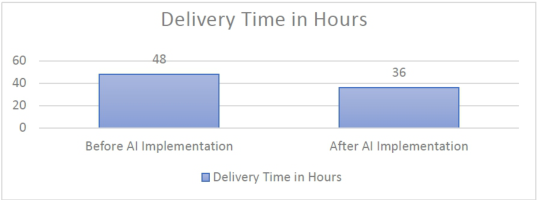
Theoretical Context The 25% reduction in delivery times (Figure 1) was a legitimate affirmation of Queueing Theory, which said it would achieve in efficiency if process flows do converge to an optimized allocation of resources. Nonetheless, the slums in Johannesburg, like Soweto, face delayed deliveries owing to uncharted routes, which brings us to a point concerning the incomplete incorporation of Spatial Equity Theory. To do justice, AI must be infused with participatory mapping.
Figure 1: AI impact on delivery time (source: Johannesburg logistics consortium).
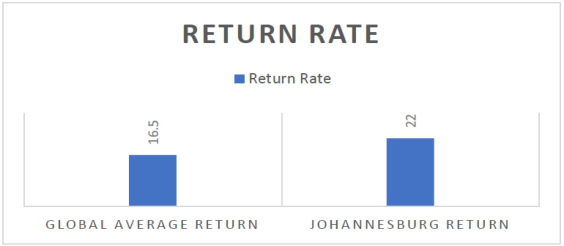
3. Global vs. Local Realities: A Disconnect in Return Rates
Figure 2 shows a significant difference between global and local return rates, opposing Universal Design Theory and supporting Contextual Ambidexterity.
Theoretical Implications The higher returns linked to Johannesburg arise from inaccuracies in township addresses that no global AI model has accurately addressed, which are based on structured data in urban regions. Situated Cognition Theory posits that AI learning phases must incorporate local contexts, like community-generated geocodes, to effectively bridge this gap.
4. Navigating the Human-AI Interface
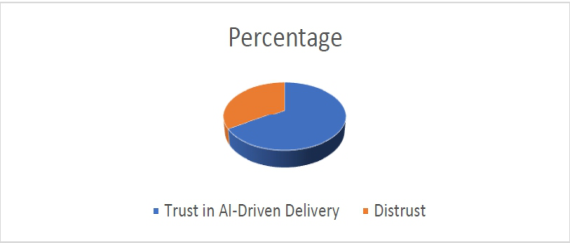
Figure 3 emphasises scepticism towards AI systems, according with Agency Theory, which investigates conflicts between system creators and end-users.
Enhancing E-Commerce Efficiency: AI Solutions for Last-Miles Delivery in Johannesburg 79
Figure 2: Return rate.Figure 3: Trust in AI-driven delivery.
Theoretical Framework Distrust arises out of concerns for data privacy (like AI tracking, which may seem intrusive). Privacy Calculus Theory states users evaluate fears against promises. To create trust, these systems must integrate Explainable AI (XAI) principles that will allow the transparency of data usage, something completely lacking in current implementations.
5. Strategic Synthesis
Integrating Network Theory Optimisation with Participatory GIS (Geographic Information System) to address challenges encountered by informal settlements.
Regulatory Sandboxes: Utilise Institutional Theory to collaboratively develop policies for drones alongside the South African Civil Aviation Authority.
Equity Audits: Utilise the Spatial Equity Theory to guarantee that AI advantages townships (like Alexandra,a township located in Johannesburg in Gauteng province of South Africa.) equally with suburbs.
CONCLUSION
Global innovation and local adaptation are key to AI’s last-mile delivery in Johannesburg. DHL’s AI tools boost productivity by 20% (DHL, 2022), but the city’s infrastructure, informal settlements, and regulatory
deficiencies require context-specific frameworks (Ndlovu et al., 2021; City of Johannesburg, 2023).
This research uses the Adaptive Structuration and Situated Cognition Theories to reimagine AI not as a one-size-fits-all solution, but as a situated facilitator—a concept especially relevant to cities in the Global South (Mohammad et al., 2023). The method here intertwinestheory with practice- based strategies, aiming to harmonize AI’s efficiency with Johannesburg’s socioeconomic dynamics. By interlacing theory and strategies based in real- world application, this methodology overcomes local obstacles and creates a model for inclusive and sustainable urban logistics in regions where innovation must align with grassroots realities.
ACKNOWLEDGMENT
I want to take a moment to sincerely thank Dr. John Ikome for his incredible guidance, thoughtful critiques, and constant support during this research journey. His knowledge and support played a vital role in guiding this study.
REFERENCES
Accenture (2023). AI in Last-Mile Delivery: Global Case Studies. Available at: https:// www.accenture.com (Accessed: 15 December 2024). Bosona, T. (2020). Sustainable Last-Mile Logistics: Challenges in Emerging Cities.
International Journal of Logistics Management, 31(3), pp. 456–475. https:// doi.org/10.1108/IJLM-04-2020-0156 City of Johannesburg (2023). Annual Environmental Report. Johannesburg: City of Johannesburg Municipality. DHL (2022). Logistics Cost Benchmarking Report. Bonn: DHL Group. McKinsey & Company (2021). Sustainability in Last-Mile Delivery: Balancing
Efficiency and Energy Demand. New York: McKinsey & Company. Mohammad, S., Diab, E., Elomri, A. & Triki, C. (2023). AI-Driven Optimization in Dynamic Urban Logistics. Transportation Research Part E: Logistics and Transportation Review, 172, 103045. https://doi.org/10.1016/j.tre.2023.103045 Ndlovu, P., Vermeulen, A. & Bhero, S. (2021). Urban Logistics in Johannesburg:
Bridging Formal and Informal Networks. South African Journal of Transport Economics, 45(2), pp. 23–41. SA Civil Aviation Authority (2023). Regulatory Framework for Autonomous Delivery Systems. Pretoria: SACAA. SAEye (2022). Autonomous Delivery in African Cities: Challenges and Opportunities. Available at: https://www.saeye.news (Accessed: 5 January 2025). Sorooshian, S., Khademi Sharifabad, M., Parsaee, M. & Afshari, H. (2022). Machine
Learning for Real-Time Route Optimization in Urban Logistics. Expert Systems with Applications, 198, 116834. https://doi.org/10.1016/j.eswa.2022.116834 TechCentral (2024). AI in Johannesburg’s E-Commerce: A Case Study of Takealot.com. Available at: https://www.techcentral.co.za (Accessed: 20 February 2025). World Economic Forum (WEF) (2023). Equity in AI-Driven Urban Logistics. Geneva: WEF.
LISTED IN THE AHFE DIGITAL BOOKSTORE CATALOGUE
Explore the complete digital volume
Human Aspects of Advanced Manufacturing, Production Management and Process Control
Read this individual research paper free through the original publisher, or explore the full digital proceedings book.
ISBN 978-1-964867-60-1
Explore this ISBN in the AHFE Bookstore ↗Listed in the July 2026 bookstore catalogue; search by ISBN to confirm current availability · Digital book purchase optional