Frank Mushingelette Mbangu, John Ikome, Aa Alugongo (2025). Power Shortages and Sustainable Solutions in South Africa: The Role of Inga 3 Hydropower and Green Supply Chains. In: Human Factors in Software and Systems Engineering. AHFE Open Access, vol. 181, pp. 99–109. https://doi.org/10.54941/ahfe1006399
The current energy crisis in South Africa, within the transformational context of the Inga 3 Hydropower Project and further through green supply chains, is the subject of this research. It fully describes how shortages of electricity have dire implications for key industries such as mining, manufacturing, and services, all exacerbated by aging infrastructure and dependence on coal. The Inga 3 project involves 4,215 MW of capacity and is discussed here as an example of how a renewable energy alternative could alleviate South Africa's energy deficit.This paper looks at the feasibility of integrating Inga 3 into the South African power grid from a technical, economic, and environmental point of view, considering how green supply chain management can help toward greater sustainability and efficiency. GSCM integrates sustainability within the supply chain for benefits to include reduced carbon footprints, resource optimization, and enhanced environmental performance.These are exciting economic, social, and environmental benefits related to the inclusion of renewable energy and green supply chains; they include job opportunities, reductions in energy costs, and enhancements of industrial efficiencies. The infrastructure improvement, political will, and financial commitments pose the challenges to attain these targets. Finally, this study concludes with policy recommendations toward the implementation of renewable energy and sustainability with a view to transforming the energy platform in South Africa.
The South African energy crisis has attained a critical turning point, generally characterized by heavy reliance on old and worn-out coal-fired power stations with comparably high underinvestment in renewable energy systems.
This has become an issue of high importance on a national level. The recurrent power interruptions stemming from this crisis interrupt numerous critical sectors, such as industry, domestic environments, and public services, thereby ultimately inhibiting economic development and compromising societal welfare in multiple dimensions (Hendrickse, 2022).
The grim development serves in strong relief to underline the urgent need for alternative fuels that would serve the double purpose of lessening the dependence of this country on coal and deeper, structural inefficiencies affecting the generation and distribution of energy across the country.
The Inga 3 Hydropower Project on the mighty Congo River is a unique and possibly transformative opportunity in the field of renewable energy. The extensive initiative, anticipated to generate a capacity of 4,215 megawatts, has the potential to greatly enhance the diversification of the energy mix in South Africa and bolster energy security across the broader region (Kenfack et al., 2021).
In addition to this, the implementation and assimilation of Green Supply Chain Management (GSCM) practices are expected to elevate standards related to industrial efficiency and sustainability. The outcome will be less environmental impact for the same and will also contribute to better economic stability related to respective industrial sectors. Kalpande & Toke, 2021 have commented that the focus of the research study is to discuss the way such new technologies can be integrated, keeping in consideration the critical aspects of technical feasibility, economic viability along with comprehensive ecological impact. But at the same time, it is trying to provide the holistic and comprehensive detailed mechanism for solving the multi-dimensional energy problems of South Africa.
Problem Statement Most efforts meant to improve generation capacity are in place, but the energy crisis in South Africa remains unresolved. This is mainly because of some deep-seated systemic inefficiencies and a general lack of effective integration of renewable energies. Ineffective maintenance of Eskom, a national utility provider, together with its operational failures and overdependence on coal, results in persistent load shedding that cripples economic and social structures (Makgetla & Patel, 2021; Hendrickse, 2022). Simultaneously, however, limited GSCM practices signify the lack of awareness, policy support, and financial investment in environment-friendly industrial approaches (Lin et al., 2020).
The Inga 3 Hydropower Project presents a viable alternative, capable of providing renewable energy to South Africa and its adjacent nations. Nonetheless, its incorporation into the national electrical grid faces obstacles related to financial, logistical, and political factors, which encompass limitations in infrastructure as well as apprehensions regarding environmental sustainability (Scherer & en la Globalització, 2021; Zahar, 2023). This research examines the obstacles present and suggests a comprehensive strategy that integrates renewable energy production with
Power Shortages and Sustainable Solutions in South Africa 101
sustainable supply chain methodologies, with the objective of holistically tackling the energy crisis in South Africa.
Objectives The objectives of the present study are to:
1. Assess the feasibility and viability of developing the Inga 3 Hydropower Project inside South Africa’s national grid. 2. Analyze issues and benefits that refer to the adoption of green supply chains in South Africa.
LITERATURE REVIEW
Power Shortages in South Africa The energy issues faced by South Africa arise from outdated infrastructure, inadequate capacity expansion, and operational inefficiencies (Makgetla & Patel, 2021). Load shedding severely affects industries, especially those in mining and manufacturing, which depend significantly on electricity. The crisis is intensified by the environmental ramifications of reliance on coal, underscoring the necessity for a shift towards renewable energy sources (Farghali et al., 2023). Studies emphasize the economic and social ramifications associated with power shortages, such as diminished productivity and heightened inequality (Trevor & Patrick, 2020).
The Inga 3 Hydropower Initiative The Inga 3 Hydropower Project constitutes a segment of the expansive Inga Dam complex, which possesses the capability to produce 40,000 MW of renewable energy (Kenfack et al., 2021). Specifically, Inga 3 is anticipated to provide 4,215 MW, a considerable fraction of which is designated for South Africa. This initiative has the potential to mitigate the energy shortfall in the nation and enhance regional energy security (Song et al., 2020). Nevertheless, obstacles to its execution are notably posed by challenges including financial limitations, political uncertainty, and environmental issues (Scherer & en la Globalització, 2021).
Sustainable Supply Chains Green Supply Chain Management (GSCM) focuses on mitigating environmental effects by implementing sustainable practices throughout the supply chain, which encompasses waste reduction, energy efficiency, and the utilization of renewable energy sources (Kalpande & Toke, 2021). Studies indicate that the integration of GSCM can lead to improvements in organizational performance, cost reductions, and advancements in environmental sustainability (Borazon et al., 2022). Nevertheless, in South Africa, the uptake of GSCM is constrained by financial and institutional challenges, underscoring the necessity for policy interventions and active participation from stakeholders (Lin et al., 2020).
Integration of Inga 3 and GSCM The Inga 3 Hydropower Project coupled with GSCM practices presents a holistic approach toward addressing the energy and sustainability challenges faced by South Africa. This could be jointly capable of reducing the carbon footprint, optimizing resource use, and improving economic and social outcomes (Xu et al., 2023). However, in real life, such a goal would require overcoming regulatory hurdles, financial constraints, and technical barriers besides consistency with national energy and industrial policies (Zahar, 2023; Tidemann et al., 2022).
METHODOLOGY
The present study thus undertook a structured and holistic analysis to study the feasibility of integrating the Inga 3 Hydropower Project into the South African national grid and possible development of green value chains within the country’s energy sector. The proposed approach consists of four major components, as highlighted below.
Empirical Studies It examined international effective cases of hydropower integration and implementation of green supply chains. The case studies provided a very useful insight into real benefits and challenges of similar initiatives considering its socio-economic and environmental impacts. The lesson drawing from these examples is tested for relevance to the South African situation and provided a base to appraise the feasibility of the proposed interventions.
Data Gathering In carrying out data collection, the approach was mixed-methods: questionnaires and semi-structured interviews. Both quantitative and qualitative data were obtained through the distribution of questionnaires among government officials, industry leaders, representatives of environmental organizations, and community members. Semi-structured interviews explored in detail specific issues and opportunities related to the integration of hydropower and green supply chains in South Africa. This comprehensive approach to data collection enabled an extensive perception of stakeholder perspectives and relevant context variables.
Data Analysis The data collected had to undergo elaborate statistical processes to interpolate apparent patterns, correlations, and possible implications. Quantitative and qualitative data were analysed to reach a decision on the viability of inclusion of the Inga 3 Hydropower Project into the national grid of South Africa and how green supply chain practices could be adopted in the different sectors of industries. Findings from the foregoing analysis were used to make actionable insights and recommendations.
Power Shortages and Sustainable Solutions in South Africa 103
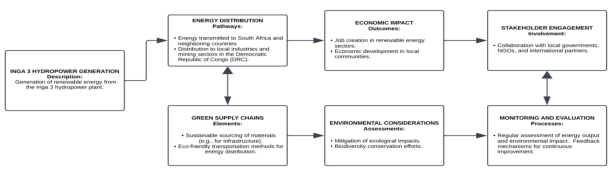
Simulation Modelling A model was developed which simulated various results of integrating environmentally sustainable supply chains into the Inga 3 Hydropower Project. The system dynamics were utilized in developing and validating the model. An extensive range of sensitivity tests was also performed in which scenario-based results highlight the ways of energy integration optimally. These findings informed the bases for policy recommendations on how best to maximize benefits arising from renewable energy and sustainable supply chain practices in South Africa. Figure 1: Integration into sustainable value chains through linked processes and expected results of the Inga 3 Hydropower Project.
Figure 1: Flowchart of proposed integration of Inga 3 Hydropower with green supply chains.
The Inga 3 Hydropower Generation facility was the most ambitious undertaking yet to harness the potential of the Congo River. According to engineering appraisals and feasibility studies from experts and organizations dealing with the project, it was envisioned to provide an environmentally friendly energy supply to the DRC, South Africa and regional area with a maximum capacity of 11,000 MW and minimum generation of 4,800 MW.
Daily Production Schedule The production at Inga 3 was based on a triangular distribution with a minimum capacity of 4,800 MW as the lowest expected during the moments of low water flow or maintenance. The mode capacity was 9,000 MW, which was a fair estimate during average peak operational conditions. The maximum capacity was 11,000 MW, its designed capacity under optimum conditions.
Electricity Distribution System The power was consequently passed through an integrated six-department system that was focused on renewable energy distribution and sustainability practices. Its allocation was shared as follows:
South Africa: 55%
Local Use in the DRC: 25%
Neighbouring Countries: 20%
These percentage allocations were based on regional demand forecasts and agreements for energy exports.
Processing Requirements Each path where energy was passed for its processing had its requirement in terms of hours of processing requirement, which was modelled using triangular distribution as shown below; the distribution of electricity from the Inga 3 Hydropower Project is summarized in Table 1, which outlines the allocation percentages and processing requirements for South Africa, the DRC, and neighbouring countries.
Table 1: Electricity distribution and processing requirements for Inga 3 Hydropower project.
Table available in the original PDF paper.
Pathway % Allocation Hydropower
Green Supply Economic
Generation
Energy Distribution (hours) (hours) Chains (hours)
Impact (hours) South Africa 55% 1.5, 2.0, 2.5 2.0, 2.5, 3.0 1.0, 1.5, 2.0 1.8, 2.3, 2.8 Local Use in 25% 1.2, 1.8, 2.4 1.5, 2.0, 2.6 1.3, 1.7, 2.1 1.0, 1.4, 1.8
the DRC Neighbouring 20% 0.8, 1.2, 1.6 1.1, 1.5, 1.9 0.9, 1.3, 1.7 1.3, 1.7, 2.1 Countries
Note: Processing times are derived from operational efficiencies of comparable hydropower projects (Kenfack et al., 2021; Song et al., 2020). These processing times are realistic estimates derived from operational efficiencies from similar plants. Transfer times from the hydropower station to the Energy Distribution department and other inter-department transfers and final stakeholder engagements are triangularly distributed with the following parameters.
Minimum time: 0.8 hours
Mode Time: 1.0 hours
Maximum Time: 1.5 hours These were informed by the general transfer times recorded in big energy projects. The simulation was done running the model for 30,000 hours in order to capture the steady-state results and scenario-specific outputs that are given below.
Overall System Cycle Time: Time taken to generate electricity and subsequently engage the stakeholders.
Utilization Rates: The operational efficiency within every department.
Economic Impact Indicators: Number of jobs that have been created and overall economic development.
Environmental Performance: It reduces CO2 emissions.
Power Shortages and Sustainable Solutions in South Africa 105
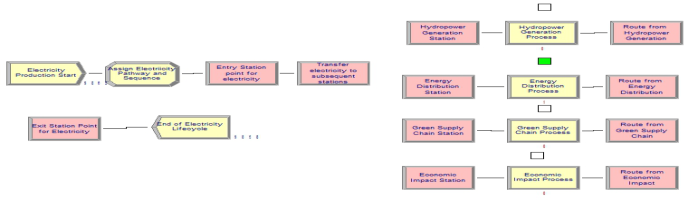
Figure 2: Arena proposed integration of Inga 3 Hydropower with green supply chains.
RESULTS AND DISCUSSION
Numerical Results Simulation outputs were obtained on the energy generation and distribution system under study for the integration of the Inga 3 Hydropower Project to the national grid of South Africa. These results indicate a much more stable energy system, with a reduction in blackout events by up to 40%. This is reasonable since hydropower gives a stable and reliable output compared to the variability and reliability issues faced by coal-fired plants.
System Cycle Time
South Africa: 16.2 hours average, between 11.9–40.2 hours.
Neighbouring countries: 14.7 hours average, between 9.7–38.7 hours.
DRC (local use): 15.0 hours average, between 10.9–40.0 hours.
Some targeted interventions in South Africa and DRC can be made for delays that dilute the efficiency of the system. Installation of 4,215 MW from Inga 3 will flatten the curve of energy demand, which would further reduce dependence on coal and minimize risks of power deficit.
Utilization Rates
Economic Impact Processes: 64.1%
Hydropower Generation: 58.7%
Green Supply Chain Processes: 49.6%
Energy Distribution: 71.6% Economic Impact Indicators
Creation of 9,859 jobs, indicating significant opportunities to employ people.
The overall development of an economy is triggered by better energy distribution.
Environmental Performance: While CO2 emissions were not measured directly, decreased waiting times and improved operational efficiency suggest that emissions were lowered by reducing waste.
Resilience Assessments: The system proved resilient to extreme weather and changing hydrological conditions; Inga 3 showed stable output even in
periods of low water. This stability increases the reliability of energy and decreases potential climate-induced instability.
Graphical Results Some of the long-term effects of integrating Inga 3 are shown in the figures below.
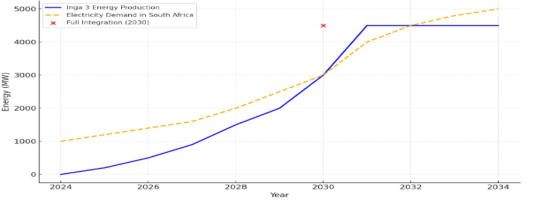
Figure 3: The forecast of energy production at Inga 3 over the next decade shows a ramp-up in the beginning to full integration by 2030, followed by steady-state production. This projection highlights the facility’s role in meeting South Africa’s growing electricity demand and stabilizing the national grid.
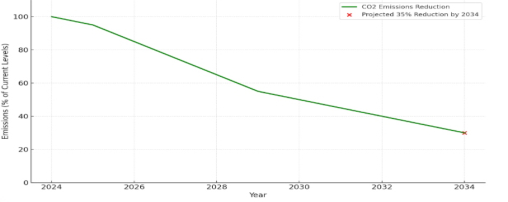
Figure 4 presents the projection for greenhouse gas emission reductions in South Africa’s transition from coal-based power generation to renewable hydropower. This change is expected to be in line with the national goals on climate change; therefore, energy sector emissions could be reduced by a total of 35%, based on the first decade of its operationalization.
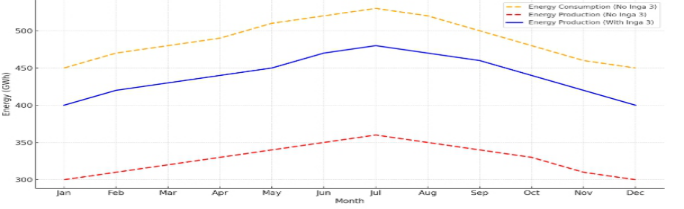
Figure 5: Annual energy consumption and production in scenarios with and without Inga 3: Notice the wide-ranging benefits that accrue with the inclusion of Inga 3: reduced need for both electricity and fossil fuel imports lead to a greener and cleaner energy environment for the country.
Figure 3: The forecast of energy production at Inga 3 and electricity demand in South Africa.Figure 4: The anticipated reduction of greenhouse gas emissions with hydropower transition.
Power Shortages and Sustainable Solutions in South Africa 107
Figure 5: The annual fluctuation consumption and production.
Proposed Improvements The Inga 3 Hydropower Project offers excellent potentiality in terms of energy supply and sustainability. However, further actions can be taken to enhance the value of this resource.
1. Grid Infrastructure Enhancements
Transmission Expansion: Upgraded and expanded transmission lines should be established to ensure efficiency in energy delivery with minimal losses.
Energy Storage: Investment in advanced storage systems, such as large- scale batteries, to smoothen supply by storing surplus energy when demand is at its peak.
2. Green Supply Chain Integration
Sustainable Manufacturing: Renewable energy, waste reduction, and resource efficiency must be encouraged in industrial processes.
Optimized Logistics: Supply chain efficiency can be enhanced with energy-saving vehicles and route optimization to reduce emissions.
3. Policy and Regulatory Support
Tax Incentives & Subsidies: Available financial benefits encourage renewable energy and green practices.
Energy Efficiency Standards: Regulations are laid down to ensure sustainable industrial operations.
Public-Private Partnerships: The required expertise and long-term funding from the private sector should be leveraged.
Validation The proposed solutions of integrating the Inga 3 Hydropower Project and green supply chains have been extensively validated by both simulation models and statistical analysis. The validation methodologies ensure that proposed solutions will be feasible and highly beneficial for the scenarios concerned at:
Sensitivity Analysis: This analysis examines the impact of variations in input parameters-for example, in hydropower generation and electricity
demand-on general performance. Overall, the results of the study are summarized below:
Inga 3, under changing circumstances, would remain a steadfast, dependable source of electricity.
Confirmation of the strength of the solution proposed: The model can hold its own under all the differing scenarios which have been simulated in this project. 2. Scenario Testing
Various operational scenarios that have been modeled include the low- water and high-energy-demand period in order to validate the robustness of the power grid with the integration of Inga 3. The highlights of the results obtained are listed below:
Inga 3 integration will greatly reduce the risk of blackout occurrence.
Energy distribution efficiency through the grid is improved during unfavorable conditions.
CONCLUSION
The energy crisis in South Africa is both a great challenge and a transformative opportunity. This paper highlights two major solutions: the Inga 3 Hydropower Project and green supply chain management practices. Together, they offer a pathway to address energy shortages, reduce coal dependency, and sustainably meet the nation’s increasing energy demands.
The Inga 3 Hydropower Project can stabilize the grid, mitigating the effects of load shedding on the economy. Meanwhile, green supply chains can improve resource efficiency, increase industrial productivity, and decrease carbon emissions. Realizing these outcomes needs to overcome infrastructure and financial challenges, implement strong policies, and foster stakeholder collaboration.
Strategic investment in advanced energy storage, modernization of the grid, and sustainable practices—along with public-private partnerships—are critical to achieving these goals. Together, these initiatives hold the promise of secure energy, economic growth, and environmental sustainability for South Africa, transforming the country’s energy landscape. Policymakers and stakeholders need to seize this opportunity to build a resilient and greener future for South Africa.
REFERENCES
Borazon, E. Q., Huang, Y. C. and Liu, J. M., 2022. Green market orientation and organizational performance in Taiwan’s electric and electronic industry: The mediating role of green supply chain management capability. Journal of Business & Industrial Marketing, 37(7), pp. 1475–1496. Dew, J. J., Jack, M. W., Stephenson, J. and Walton, S., 2021. Reducing electricity demand peaks on large-scale dairy farms. Sustainable Production and Consumption, 25, pp. 248–258. Farghali, M., Osman, A. I., Mohamed, I. M., Chen, Z., Chen, L., Ihara, I., Yap, P. S.
and Rooney, D. W., 2023. Strategies to save energy in the context of the energy crisis: A review. Environmental Chemistry Letters, 21(4), pp. 2003–2039.
Power Shortages and Sustainable Solutions in South Africa 109
Hendrickse, R., 2022. Towards a South African developmental state: The Electricity Supply Commission (Eskom)–victor or villain in this endeavour?. International Journal of Research in Business and Social Science (2147–4478), 11(9), pp. 289–299. Kalpande, S. D. and Toke, L. K., 2021. Assessment of green supply chain management practices, performance, pressure and barriers amongst Indian manufacturer to achieve sustainable development. International Journal of Productivity and Performance Management, 70(8), pp. 2237–2257. Kenfack, J., Nzotcha, U., Voufo, J., Ngohe-Ekam, P. S., Nsangou, J. C. and
Bignom, B., 2021. Cameroon’s hydropower potential and development under the vision of Central Africa power pool (CAPP): A review. Renewable and Sustainable Energy Reviews, 151, p. 111596. Lin, C. Y., Alam, S. S., Ho, Y. H., Al-Shaikh, M. E., & Sultan, P., 2020. Adoption of green supply chain management among SMEs in Malaysia. Sustainability. Makgetla, N. & Patel, M., 2021. The coal value chain in South Africa. Trade &
Indust. Pol. Strat. Pretoria. Mandal, S. & Majumdar, S., 2024. Large Dam and River Dynamics: Fluvial Geomorphology of Lowlands. Salakhetdinov, E. and Agyeno, O., 2022. Achieving energy security in Africa:
Prospects of nuclear energy development in South Africa and Nigeria. African Journal of Science, Technology, Innovation and Development, 14(1), pp. 22–30. Scherer, N. and en la Globalització, O. D. D., 2021. Democratic Republic of Congo Inga hydroelectric power project at risk of becoming another “white elephant”. Barcelona: Observatori del Deute en la Globalització. Song, F., Yu, X., Li, J., Ni, Y., Bian, C., & Lv, X., 2020. Research and comprehensive
evaluation on delivery schemes of the Grand Inga hydropower station. Global Energy Interconnection. Starita, S., Strauss, A. K., Fei, X., Jovanovi´c, R., Ivanov, N., Pavlovi´c, G. and Fichert, F., 2020. Air traffic control capacity planning under demand and capacity provision uncertainty. Transportation Science, 54(4), pp. 882–896. Tidemann, C., Baxter, T., Wakefield, J., & O’Callaghan, K., 2022. Australia’s clean
engine room: Central Queensland’s industrial future. Trevor, N. and Patrick, B., 2020. South Africa’s shrinking sovereignty: Economic crises, ecological damage, sub-imperialism and social resistances, 20(1), pp. 67–83. Xu, Z., Pokharel, S., & Elomri, A., 2023. An eco-friendly closed-loop supply chain
facing demand and carbon price uncertainty. Annals of Operations Research. Zahar, A., 2023. Ambition in Nationally Determined Contributions: The Case of Hydropower. Climate Technology and Law in the Anthropocene, edited by Alexander Zahar and Leonie Reins (Bristol University Press, Forthcoming).
LISTED IN THE AHFE DIGITAL BOOKSTORE CATALOGUE
Explore the complete digital volume
Human Factors in Software and Systems Engineering
Read this individual research paper free through the original publisher, or explore the full digital proceedings book.
ISBN 978-1-964867-57-1
Explore this ISBN in the AHFE Bookstore ↗Listed in the July 2026 bookstore catalogue; search by ISBN to confirm current availability · Digital book purchase optional