Ana Paula Ferreira Martins Pignaton, Fabio Viana Majdalani De Melo, Pedro Francisco Alvarenga Larrama, Marlen Oliva (2025). Safe Production Laboratory: the positive impact of human factors learning journeys on organizational culture. In: Safety Management and Human Factors. AHFE Open Access, vol. 189, pp. 201–210. https://doi.org/10.54941/ahfe1006586
The VUCA/BANI world in which we live post-pandemic presents a series of challenges for organizations, which, in order to maintain their sustainability, must be able to learn, develop new knowledge, as well as adopt it in practice, learn to perform new tasks, in addition to continuing (or transforming) the old ones, more quickly and effectively according to Garvin (1998). In this context, industrial safety presents the great challenge of continuously evolving in risk management and consequently reducing occupational accidents. According to Daniellou (2010), occupational safety has changed, and the reinforcement of formalisms does not lead to a reduction in failures. To advance in this direction, experts concluded that it is necessary to direct efforts to the understanding of human activity, with the integration between human and organizational factors of security. This work consists of applied research, of exploratory nature whose data were approached in a qualitative and quantitative way, in the format of a case study with field research. The Safe Production Laboratory Project was created with the objective of promoting organizational learning to co-build a safer and more efficient work environment with people and for people. To this end, a series of learning journeys were developed, appropriate to the context of the organization, with an approach focused on concepts such as HOP – Human and Organizational Development, Andragogy, Human and Organizational Factors, among others. The results of the project showed positive impacts on the organizational culture, with significant improvements in the perception of workers on various aspects, which were also reflected in the frequency rate of incidents. The implementation of the Safe Production Laboratory was important for the promotion of organizational learning and the strengthening of occupational safety in the organization. To sustain and accelerate the progress made, stakeholder commitment to the application of learnings and program continuity is essential.
The post-pandemic VUCA (Volatility, Uncertainty, Complexity and Ambiguity)/BANI (Brittle, Anxious, Non-Linear, Incomprehensible) world presents a series of challenges for organizations, which, to maintain their sustainability, must be able to learn, develop new knowledge, as well as adopt it in practice, learn to perform new tasks, in addition to continuing
(or transforming) old ones, more quickly and effectively in line with Garvin (1998). In this context, industrial safety presents the great challenge of continuously evolving in risk management and consequently reducing occupational accidents.
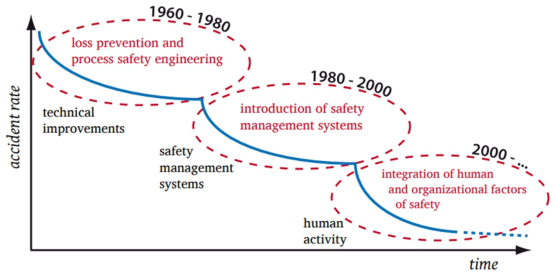
According to Daniellou (2010), in recent decades, successive approaches to security are marked by three phases. Initially (1960/1970), the prevention of process accidents was based on a technical conception, focusing on the quality and integrity of the facilities. Between 80 and 2000, formalism stood out, with global policies and safety management systems. These technical and organizational actions have made possible, in certain sectors, a continuous reduction in accidents related to the process. But, in many companies, this improvement marks a plateau, and the reinforcement of formalisms does not lead to a reduction in failures. Thus, from the 2000s onwards, experts concluded that to move forward, it is necessary to direct efforts towards understanding human activity, with the integration between human and organizational factors of security.
This work consists of applied research, of exploratory nature whose data were approached in a qualitative and quantitative way, in the format of a case study with field research. The Safe Production Laboratory Project was created with the objective of promoting organizational learning to co-build a safer and more efficient work environment with people and for people. To this end, a series of learning journeys were developed, appropriate to the context of the organization, with an approach focused on concepts such as HOP – Human and Organizational Development, Andragogy, Human and Organizational Factors, among others.
LEARNING AND ORGANIZATIONAL CULTURE Organizational culture is the set of habits and beliefs, established by norms, values, attitudes and expectations, shared by all members of the organization. It refers to the system of meanings shared by all members and that distinguishes an organization from others, according to Chiavenato (2010).
The culture of an organization is considered a critical element in companies, which intensely influences the behaviour of its members, the relationships they establish with each other, the way they make decisions and their priorities at work (Kotter and Heskett, 2011). Some researchers suggest that the culture of an organization may be related to the way knowledge is produced and managed in companies, which would constitute a powerful sustainable competitive advantage (Cardoso and Machado, 2008; Jackson et al., 2003). In this context, the so-called culture of continuous learning (Miller, 1996; Tracey, Tannenbaum and Kavanagh, 1995) would be an essential element in the structures of meaning of organizations that differentiate themselves by their capacity for innovation, quality and competitiveness.
Learning in the organizational environment is discussed by several authors. Miller (1996) understands that organizational learning is defined as the acquisition of knowledge by willing individuals and groups, aiming at its application in decision-making and in various activities, to influence people
Safe Production Laboratory: The Positive Impact of Human Factors Learning Journeys 203
to perform actions considered important for the organization. Hence the notion of continuous organizational learning. Tracey et al. (1995) says that continuous learning cultures are those characterized by shared perceptions that learning is central to activities and in all dimensions of work. Cavazzote et al. (2015) investigated variations in the culture of continuous learning in companies with different capital structures, also analysing their implications on the attitudes and behaviours of their employees. The results of this study showed a positive association between the emphasis on continuous learning in the culture of companies and the attitudes of employees towards growth opportunities in organizations, being greater in companies where there is greater emphasis on learning. In this way, some ideas exposed by Dubin (1990) and Schein (2009) were confirmed that in environments where continuous learning is a strong element in the organizational culture, more development opportunities also seem to be promoted, and performance and engagement at work tend to be higher.
Human Factors in Occupational Safety Human factors, in fact, and in the context of occupational safety, is a dynamic set of factors that interact with each other, mixing individual, organizational, technological, and environmental elements, in addition to others that may arise (FRANCA, 2020). For ICAO (2003), the concept of Human Factor refers to the study of human capacities and limitations offered by the workplace. It is the study of human interaction in their work and life situations: between people and the machines and equipment used, the written and verbal procedures, the rules that must be followed, the environmental conditions around them and the interactions with other people. All these aspects can influence behaviour at work in ways that can affect health and safety.
According to Daniellou (2010), companies have long developed measures focused on the continuous improvement of the reliability of facilities and safety management systems to mitigate industrial risks. While there has been undeniable progress, safety outcomes seem to have reached a threshold that, to be crossed, needs to take human and organizational factors more seriously, as shown in Figure 1.
Figure 1: Successive approaches to industrial safety (Daniellou, 2010).
To integrate human and organizational factors into industrial safety policies and practices, it is necessary to rely on new knowledge that opens to the humanities and social sciences (ergonomics, psychology, sociology...), linking them to concrete operational issues (Daniellou et al., 2010). In this context, the so-called “New Vision of Safety” emerged, a movement composed of several researchers, which gained momentum after the major disasters that occurred in the 80s, and which produced theories that today form the foundations of the “science of occupational safety”, according to Gomes (2022), who also cites five of these main theories:
1. High Reliability Organisations (HRO). 2. Resilience Engineering (RE). 3. Safety II (SII). 4. Safety Differently (SD). 5. Human and Organizational Performance (HOP).
THE SAFE PRODUCTION LABORATORY The Safe Production Laboratory Project was created with the objective of promoting organizational learning to co-build a safer and more efficient work environment with people and for people. To this end, a series of learning journeys were developed, appropriate to the context of the organization, with an approach focused on the concepts of the New Vision of Safety, Andragogy, Active Care, Psychological Safety, among others.
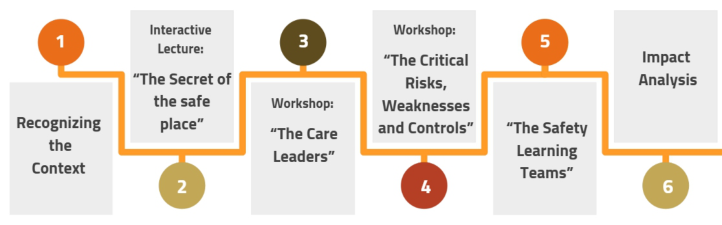
The project was carried out in 2023 and 2024 in a gold mine located in Honduras, Central America, with approximately 300 employees of its own. The project was divided into 6 phases, as shown in Figure 2.
Figure 2: Project phases (Pignaton, 2025).
Phase 1 was dedicated to recognizing the context of the organization, with on-site technical visits, information collection and structured interviews with workers.
Phase 2 included the execution of the interactive lecture “The Secret of the Safe Place”, whose purpose was to present the concepts that support the project, as well as to inspire and motivate workers to commit to a transformative organizational culture, where there was an integration of occupational safety with production. 7 lectures were held with a total of 160 hours x person trained.
Safe Production Laboratory: The Positive Impact of Human Factors Learning Journeys 205
In the 3rd phase, the Care Leaders Workshop took place, whose main objective was to train leaders (formal and informal) to practice active care to strengthen psychological safety in the workplace. There was a deepening of the concepts presented in the previous phase, as well as the knowledge and practice of other topics such as Empathy, Active Listening, NVC – Nonviolent Communication. 04 workshops were held, with a total of 420 hours x people trained.
The 4th phase had a greater emphasis on technique and had as its main element the “Critical Risks, Weaknesses and Controls Workshop”, where risk management concepts, the identification of weaknesses and system controls, as well as the application of the “Bowtie” tool were reinforced. This step also benefited from greater interaction between leadership and operation. 9 workshops were held with a total of 390 hours x people trained. In the 5th phase there was another advance in the learning experience, when the activities were carried out in the field, in the presence of the learning facilitator, tactical and operational leadership and the operation. This stage was called Safety Learning Teams, and its main objective was to reduce the distance between real work and imagined work (Safety II). For this, the ATR tool - Analysis of Real Work, developed specifically for this activity, was applied. ATR, when well applied, is an exercise that stimulates knowledge of activities exactly as they are performed, empathy, constructive dialogue, co-construction of problem solving, reduction of power distance and workers’ engagement with occupational safety and, consequently, the continuous improvement of processes. 5 ATRs were carried out in various activities and operational areas, totalling 60 hours x people trained.
The 6th and final phase aimed to analyse the impacts of the project, with the application of structured interviews, compilation of the data collected and preparation of the final report. The questionnaires used in the interviews contained 25 questions with the objective of assessing the perception of workers about the organizational culture (with a focus on occupational safety) and were applied in an online format through the Google Forms platform. The survey was carried out with the project’s target audience, that is, the unit’s own employees, which are approximately 345 people. In the first sample, 82 responses were collected and in the second 106 responses, meeting the criteria of representativeness according to Cochran (1977) and Krejcie and Morgan (1970).
All phases of the project were based on active learning methodologies, which had balanced doses of theory and practice, with content taught in a light and fun way that led participants to think, feel and act for the co- creation of a reality where work safety is seen as an inseparable part of production processes.
RESULTS AND DISCUSSION
Evaluating the results of projects related to human behaviour is not an easy task, as the direct and indirect impacts are not always measurable. In the Safe Production Laboratory, the strategy adopted for the evaluation of results was through structured interviews with the participants before and after the
execution of the project. The questionnaires used for the interviews contained 25 The data collected were critically analysed, generating statistics that allowed us to observe a significant evolution in several aspects. In addition to the interviews, the indicators of occupational safety management in the unit were also considered. The following graphs demonstrate the main results of the project.
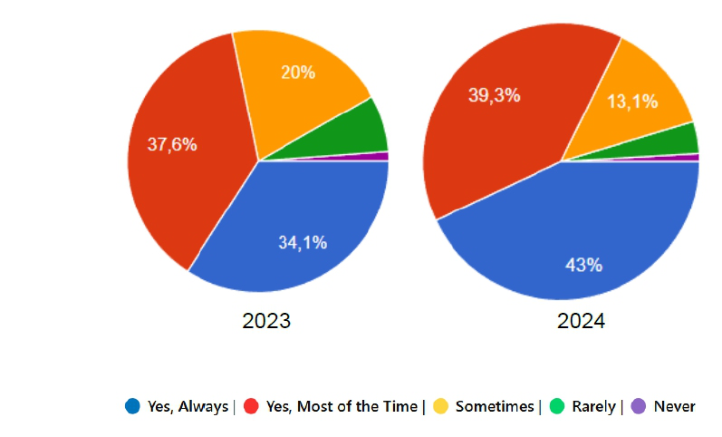
I - Do the organization’s leaders (supervisors, coordinators and managers) demonstrate genuine concern for the well-being of workers?
Figure 3: Level of perception that leaders demonstrate a genuine concern for the well-being of workers (Pignaton, 2025).
There was an increase of about 11% in the perception that leaders demonstrate genuine concern for workers’ well-being, always and most of the time.
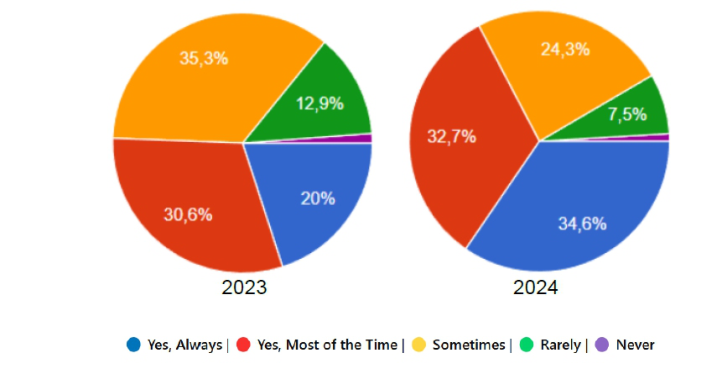
II - Do you think workers feel part of the decision-making process related to occupational safety?
There was a 17% increase in the perception that workers feel part of the safety-related decision-making process, always and in most cases.
Safe Production Laboratory: The Positive Impact of Human Factors Learning Journeys 207
Figure 4: Perception that leaders demonstrate a genuine concern for the well-being of workers (Pignaton, 2025).
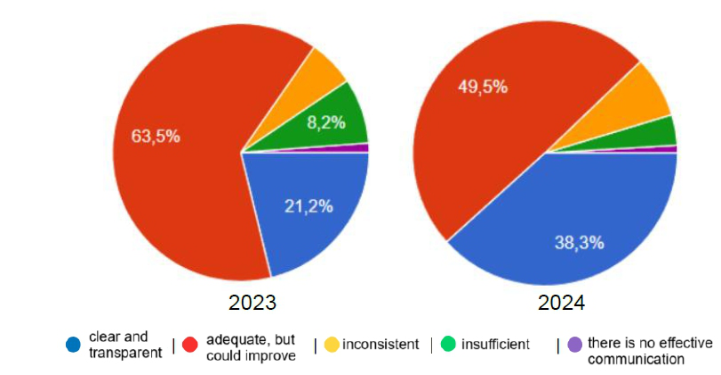
III - How is communication related to occupational safety (risks, near misses, accidents, etc.) in the company?
There was a 17% increase in the perception that safety communication is clear and transparent.
Figure 5: Perception that workers feel part of the safety-related decision-making process (Pignaton, 2025).
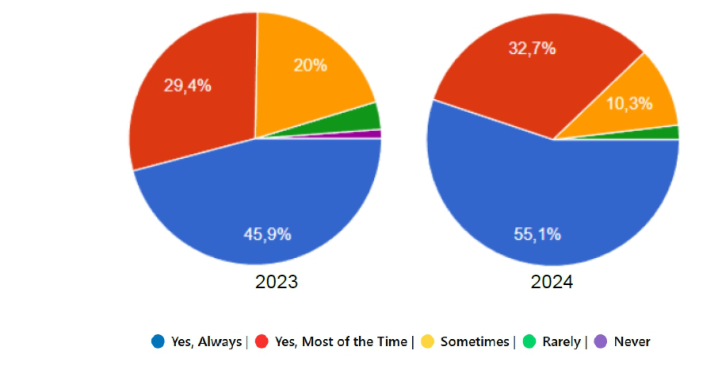
IV - Are employees motivated to report risks or unsafe situations in the organization?
There was a 12.5% increase in the perception that employees are encouraged to talk about risks or unsafe situations in the company.
Figure 6: Perception that employees are encouraged to report risks or unsafe situations (Pignaton, 2025).
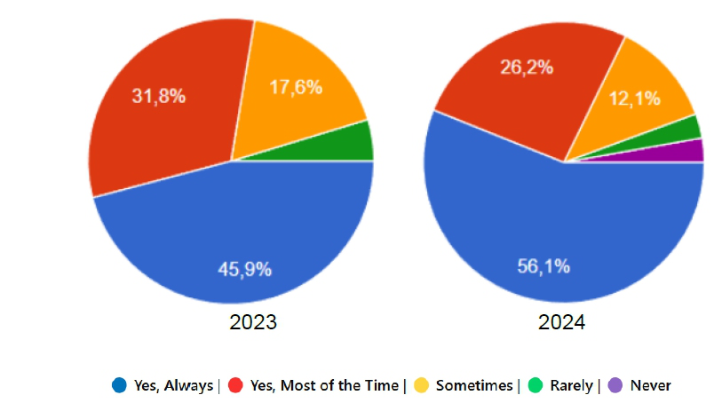
V - How do you feel about expressing safety concerns in the work environment? Do you think you can do it without fear of reprisals?
There was a 10% increase in the perception that one feels can always express security concerns without fear of retaliation.
Figure 7: Perception that employees can express safety concerns in the work environment without fear of reprisals (Pignaton, 2025).
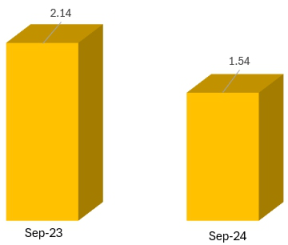
VI - The Incident Frequency Rate (IFR) The incident frequency rate showed a reduction of 28% compared to the previous year.
Safe Production Laboratory: The Positive Impact of Human Factors Learning Journeys 209
Figure 8: The Incident Frequency Rate (IFR) (adapted from Minosa, 2025).
In addition to these results, it is interesting to note that the average satisfaction rate of the participants with the project was 98%, and this data was also obtained from the application of questionnaires to evaluate the activities. This index shows that the learning journeys made sense to them, adding learning that contributes to the co-construction of a safer production.
CONCLUSION
The implementation of the Safe Production Laboratory, together with the other work carried out by the organization, was important for the promotion of organizational learning and the strengthening of occupational safety. The results of the interviews indicate a possible evolution in the maturity of the organizational culture, with significant improvements in people’s perception of the aspects evaluated. While progress is evident, there are challenges that need to be addressed.
To sustain and accelerate the progress achieved, it is essential for stakeholders to commit to the successive application of learning, especially those related to risk and people management, as well as the continuity of organizational learning programs.
ACKNOWLEDGMENT
The authors would like to thank the board of directors of Aura Minerals for believing in and supporting the project, as well as the entire leadership and operation of the Minerales do Occidente Unit (HN), who actively participated in the entire process.
REFERENCES
Cardoso, Olinda N. P.; MACHADO, Rosa T. M. Gestão do conhecimento usando data mining: estudo de caso na Universidade Federal de Lavras. Rev. Adm. Pública, Rio de Janeiro, vol. 42, no. 3, pp. 495–528, 2008. Cavazotte, F. S. C. N., Moreno Jr., V. A., & Turano, L. M. (2015). Cultura de
aprendizagem contínua, atitudes e desempenho no trabalho: uma comparação entre empresas do setor público e privado. Revista de Administração Pública, 49(6), 1555–1578. https://doi.org/10.1590/0034-7612136534
Chiavenato, I. Comportamento organizacional: a dinâmica do sucesso das organizações. 2a ed. Rio de Janeiro: Elsevier, 2010 Gestão de pessoas: O novo papel dos recursos humanos nas organizações. 3a ed. Rio de Janeiro: Elsevier, 2010. Dubin, Samuel S. Maintaining competence through updating. In: WILLIS, Sherry L.; DUBIN, Samuel S. (Ed.). Maintaining professional competence. San Francisco: Jossey-Bass, 1990. pp. 9–43. Cochran, W. G. (1977) Sampling Techniques. 3rd Edition, John Wiley & Sons,
New York. Daniellou, F., Simard, M. e Boissières, I. (2010). Fatores Humanos e Organizacionais da Segurança Industrial: um estado da arte. Traduzido do original Facteurs Humains et Organisationnels de la Sécurité Industrielle por Rocha, R., Lima, F. e Duarte, F. Número 2013–07 dos Cadernos da Segurança Industrial, ICSI, Toulouse, França (ISNN 2100-3874). Disponível no link: http://www.icsi-eu.org. Franca, Josué. O que são Fatores Humanos? In book: https://revistapreven.org/
04/2020/edicao-8/o-que-sao-fatores-humanos/ pp. 15 abril, 2020. Edição 8. Publisher: Revista Preven. Garvin, D. A. et al. Aprender a aprender. HSM Management, vol. 2, no. 9, pp. 58–64, jul./ago. 1998. Gomes, Paulo C. Menezes, Gilval S. Ribeiro, Hugo L. P. Nova visão de segurança
no trabalho: um olhar brasileiro / Paulo Cesar Gomes, Gilval de Sousa Menezes e Hugo Leonardo Pereira Ribeiro. – São Paulo: Editora Nelpa, 2022. International Civil Aviation Organization (ICAO). Human Factors Guidelines for Aircraft Maintenance Manual (Doc 9824). Montreal, Canadá: ICAO, 2003. Disponível em: < http://www.icao.int/ANB/humanfactors/ Documents.html> Acesso em: fevereiro 2005. Kotter, John P.; Heskett, James L. Corporate culture and performance. Nova York:
Free Press, 2011. Krejcie, R. V., & Morgan, D. W. (1970). Determining sample size for research activities. Educational and Psychological Measurement, 30(3), 607–610. Miller, Danny A. A preliminary typology of organizational learning: Synthesizing the
literature. Strategic Management Journal, vol. 22, no. 3, pp. 484–505, 1996. Minosa, Minerales de Occidente. Tasa de Frecuencia de incidentes. La Unión (HN),
2025. Schein, Edgar H. Cultura organizacional e liderança. São Paulo: Atlas, 2009. Tracey, J. Bruce et al. Applying trained skills on the job: The importance of the work environment. Journal of Applied Psychology, vol. 80, no. 2, pp. 239–252, 1995.
LISTED IN THE AHFE DIGITAL BOOKSTORE CATALOGUE
Explore the complete digital volume
Safety Management and Human Factors
Read this individual research paper free through the original publisher, or explore the full digital proceedings book.
ISBN 978-1-964867-65-6
Explore this ISBN in the AHFE Bookstore ↗Listed in the July 2026 bookstore catalogue; search by ISBN to confirm current availability · Digital book purchase optional