Peter Szawranskyj, Avishek Choudhury (2025). Pilot Training Modalities in Aviation: A Systematic Review of Their Impact on Safety. In: Human Factors in Design, Engineering, and Computing. AHFE Open Access, vol. 199, pp. 1420–1431. https://doi.org/10.54941/ahfe1006954
Aviation safety remains a global concern, with human error a leading cause of incidents and accidents. This systematic review synthesizes findings from 22 studies (2015–2024) on the impact of pilot training, organized into six themes: simulation-based training, scenario- and task-based training, organizational and academic programs, checklist-, workshop-, and paper-based methods, safety culture and fatigue management, and cognitive adaptation to technology. Simulation and scenario-based training improved situational awareness, hazard recognition, and decision-making under stress. Organizational and academic programs, particularly those embedded in Safety Management Systems, strengthened safety climate and proactive risk management. Checklist and workshop approaches effectively addressed hazardous attitudes and reinforced procedural discipline, while safety culture and fatigue management interventions targeted systemic risks and resilience. Training for cognitive adaptation supported older pilots in transitioning to advanced cockpit technologies. Most studies focused on commercial aviation, with limited evidence from other sectors and few evaluations of long-term outcomes. Future research should integrate these modalities and assess their sustained impact on safety performance.
Aviation has long been a critical area of concern due to the high fatality rates associated with accidents (Barroso & Muñoz-Marrón, 2023). These accidents usually arise from human-induced errors (Barroso & Muñoz- Marrón, 2023; Mathavara & Ramachandran, 2022). These human- induced errors include communication breakdowns, flawed decision-making, inadequate situational awareness, and fatigue (Lázaro et al., 2024).
Training plays a crucial role in reducing human-induced errors (Kang- Seok et al., 2014). Airline pilots undergo specialized training designed to teach them how to endure pressure and make sound judgment calls during challenging times (Kang-Seok et al., 2014). As stated by Lázaro et al. (2024), pilot training can be administered using various methods, including the use of high-fidelity simulators, workshops on techniques, scenario- based training, on-the-job training in actual aircraft, or as components within organizational structures such as Safety Management Systems (SMS).
Pilot Training Modalities in Aviation: A Systematic Review 1421
Each modality presents its unique benefits. However, despite advancements in pilot training, aviation incidents and accidents continue to occur. Recent incidents and accidents at major airports in Toronto, Canada; Washington, D.C.; Chicago Midway, IL; and Philadelphia, PA (The Associated Press, 2025; The U.S. Sun, 2025) are stark reminders that serious incidents and accidents remain a pressing concern. This persistent occurrence of incidents and accidents suggests that current training improvements have not fully mitigated operational risks. As a result, there is an urgent imperative for the aviation industry to re-evaluate how pilot training is delivered and to scrutinize the limitations of existing approaches that may be contributing to these unresolved safety issues. The continued occurrence of such events underscores the need to question whether the training pilots receive truly matches the complexity of the challenges they face in real-world operations.
The role of training in aviation safety must be reviewed and strengthened to ensure that its intended benefits are fully realized. This study systematically reviews the contribution of training to aviation safety. The guiding question for this investigation is: How do different pilot training programs and interventions impact aviation safety outcomes?
METHODS
This systematic review follows the Preferred Reporting Items for Systematic Reviews and Meta-Analyses (PRISMA) guidelines. A literature search was conducted in September 2024 using the PubMed, ProQuest, Scopus, and IEEE Xplore databases, focusing on publications from the past decade (January 2015 to January 2024). Below are the search terms that were used: “safety behavior”, “aviation accidents”, “pilot training”, “aviation training”. Peer-reviewed articles examining the impact of training on safety were analyzed. Two independent reviewers screened the titles and abstracts of all search results to assess the eligibility of each article for inclusion. After removing duplicate entries, the full-text articles of the remaining publications were retrieved for further evaluation. Any inconsistencies regarding article selection were settled through dialogue and mutual agreement between the reviewers. A standardized data abstraction form developed in Microsoft Excel 2020 (Microsoft Corporation, Redmond, WA, USA) was employed for this review. Key information extracted from each eligible article included the following: author names, year of publication, country of origin, methodology, type of training, study participants, data sources, type of aircraft studied, study instruments, impact of training, intervention methods, and critical findings.
RESULTS
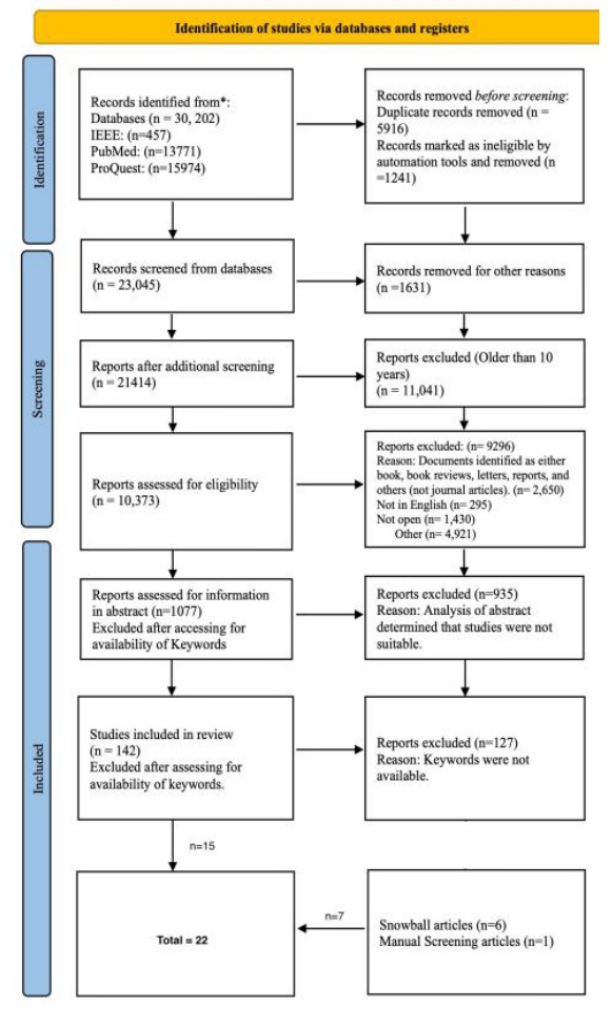
Twenty-two relevant studies out of 30,202 records were identified and reviewed. Figure 1 illustrates the selection process. Ten studies focused on commercial aviation, five on general aviation, four on civil aviation, two on military aviation, and one on collegiate/academic flight training. Geographically, twelve studies were conducted in the United States, while the
1422 Szawranskyj and Choudhury
remaining were based in the United Kingdom (three studies), and one study each in Poland, Canada, Australia, Ireland, France, the Netherlands, and one global study. In terms of participant populations, eighteen studies involved pilots (commercial, military, or general aviation), two targeted flight students, one focused on flight instructors, and one involved aviation staff. Regarding survey instruments, eight studies used standardized or validated tools, six studies used ad-hoc survey instruments, and eight studies did not report using any formal or ad-hoc instrument. Additionally, fifteen studies reported participant sample sizes, ranging from 18 to 585 individuals, while seven studies did not disclose sample size. These variations in study design, survey methodology, and sample reporting underscore the heterogeneity across the literature and limit the generalizability and comparability of findings in aviation human factors research. Based on the training modality and focus areas, the 22 studies can be logically grouped into the following six distinct themes: Simulation-Based Training: Simulation-based training was the most prevalent, featured in eight studies. Lewkowicz and Biernacki (2020) showed that ground-based simulation improved pilots’ recognition of spatial disorientation and enhanced safety responses in degraded visual conditions. Clewley and Nixon (2022) used simulator-based sessions to improve pilot recognition of safety events, advocating for enhanced scenario realism. Li, Nichanian et al. (2023) highlighted the need for recurrent simulation-based training to mitigate post-pandemic challenges like proficiency decay and SOP non-compliance. Dehais et al. (2017) employed high-fidelity full-flight simulators and eye-tracking to reveal attention misallocation and visual tunneling during go-arounds, recommending focused training on monitoring behaviors. Pennings et al. (2020) analyzed simulator-based training in Dutch military aviation, showing that increased SD training exposure improved situational awareness and led to more informed curriculum design. Li, Zhang et al. (2023) evaluated the resilience-oriented QCT simulation program and found it improved pilots’ stress management and memory categorization. Barroso and Muñoz-Marrón (2023) analyzed ground-based simulator data from global aviation and linked human error to organizational training deficiencies, prompting CRM reforms. Blickensderfer et al. (2015) used paper-based simulation with pre- and post-tests to improve severe weather decision-making and reduce overreliance on cockpit automation.
Scenario-Based and Task-Based Training: Scenario- and task-based training were used in four studies. Mendonca et al. (2018) implemented scenario- based modules targeting hazard perception, aeronautical decision-making (ADM), and risk mitigation. Although pilots showed greater hazard awareness, their application of ADM principles remained inconsistent. Darvishi-Bayazi et al. (2023) combined task-based modules with neurocognitive workload measures, demonstrating that aligning task difficulty with exertion levels improved training outcomes. Sumwalt et al. (2015), in a comprehensive literature synthesis, emphasized the importance of scenario-based simulation to counteract cockpit issues like complacency, automation overreliance, and attention blindness. Clewley and Nixon (2019) implemented concept-based training informed by Categorization Theory,
Pilot Training Modalities in Aviation: A Systematic Review 1423
finding that structured exposure to event types under stress enhanced crisis decision-making.
Figure 1: PRISMA diagram.
Organizational and Academic Training Programs: Organizational and academic training programs were the focus of four studies. Byrnes et al. (2022) evaluated a Safety Management System (SMS)-based training
1424 Szawranskyj and Choudhury
program, noting improvements in post-pandemic fatigue risk management and stress resilience. Adjekum et al. (2015) studied collegiate flight training, identifying the influence of age, culture, and organizational pressure on safety reporting behavior. The authors recommended embedding safety values, feedback loops, and trust-building in early training. Ahmed and Scott (2021) advocated for integrating non-technical skills such as emotional intelligence, communication, and hierarchical flattening into both simulated and real- world training environments, guided by frameworks like SHELL. Cahill et al. (2020) examined the impact of an anonymous online survey-based training intervention and found that even experienced commercial pilots benefit from enhanced post-training safety awareness, supporting the use of continuous learning tools in airline operations.
Checklist, Workshop, and Paper-Based Methods: Three studies utilized checklist-, workshop-, or paper-based methods to address cognitive and behavioral dimensions of training. Hyde (2017) evaluated checklist compliance using self-assessment tools and found that training improved pilots’ confidence-risk calibration and procedural adherence. Scharf and Cross (2019) delivered workshop training to identify and address hazardous attitudes, showing that targeted interventions could reshape risk orientation and self-confidence. Boyd (2017) reviewed general aviation training related to weather decision-making and found that pilots lacked adequate avoidance behaviors, pointing to deficiencies in thunderstorm-related ADM modules.
Safety Culture and Fatigue Management: Two studies focused on safety culture and fatigue management strategies. Lin et al. (2024) examined resilience and cognitive-emotional regulation in relation to safety culture and advocated for improved fatigue training and dynamic rostering. Chan and Li (2022) studied the impact of training on cross-role organizational safety perceptions and recommended role-specific interventions to harmonize understanding across departments.
Technology Transition and Cognitive Adaptation: Lastly, Kolmos (2019) examined the impact of cockpit technology transition training, especially for older pilots. The study highlighted age-related cognitive adaptation challenges and emphasized the need for tailored training to support older aviators in adjusting to advanced flight systems, bridging generational gaps in technology assimilation.
Table 1 outlines the 22 selected articles.
Table 1: Evidentiary table.
Table available in the original PDF paper.
Study Human Factors Training Modality Findings Lewkowicz and Bierneacki (2020) Simulation-based SD training SD training improved pilot recognition of disorientation.
Spatial disorientation; cognitive awareness in degraded visual environments
Continued
Pilot Training Modalities in Aviation: A Systematic Review 1425
Table 1: Continued Study Human Factors Training Modality Findings
SD training exposure correlated with higher awareness.
Analysis of accident-related procedural and training out- comes.
Pennings et al. (2020) Spatial disorientation, perceptual illusions, crew coordination, and task saturation Darvishi-Bayazi et al. (2023) Cognitive workload, physiological arousal, and effort regulation Task-based training Neurocognitive metrics can optimize training workload. Li, Zhang et al. (2023)
Resilience training (QCT program)
Event recognition accuracy, memory categorization of incidents
Checklist for training (Self-assessment)
QCT training improved stress management and resilience. Hyde (2017) Checklist compliance; self-assessment High-fidelity full-flight simulator training with realistic scenarios
Reinforcement of checklist adherence through training. Dehais et al. (2017) Visual tunneling, attention overload, automation misallocation, and monitoring failures
Insufficient monitoring and attention during go-arounds require targeted training on attention allocation and cross-checking. Ahmed and Scott (2021)
Simulated and real-world aviation training environments
Stress, fatigue, communication failures, emotional intelligence, hierarchy, and situational awareness
Training should incorporate non-technical skills and utilize tools like the SHELL model to enhance safety.
Continued
1426 Szawranskyj and Choudhury
Table 1: Continued Study Human Factors Training Modality Findings
Table available in the original PDF paper.
Focusing on new format and Safety Management System (SMS) training
Cahill et al. (2020) Work-related stress (WRS), biopsychosocial health status, coping mechanisms, fatigue risk management
Organizational training (SMS program)
Targeted training and digital self-management tools en- hance pilots’ coping strate- gies, self-awareness, and re- silience. It can reduce work- related stress impacts, im- prove well-being, perfor- mance, and flight safety. Byrnes et al. (2022) Fatigue risk, alert- ness scheduling, and operational stress
Simulation-based training
Targeted training and policy adaptations sustained opera- tional safety and informing management strategies in flight training. Li, Nichanian et al. (2023)
Proficiency decay, SOP adherence, safety system inter- actions
FDM revealed that COVID- 19 disruptions caused unstable approaches and exceedances, emphasizing the need for scenario-based training on procedural adherence, threat recognition, and mitigation in abnormal conditions. Lin et al. (2024) Resilience: cognitive-emotional stability under stress
Normal training strategies are discussed (safety culture)
Integrating individualized fatigue modeling into crew scheduling reduces cumulative fatigue hours and enhances safety.
Continued
Pilot Training Modalities in Aviation: A Systematic Review 1427
Table 1: Continued Study Human Factors Training Modality Findings
Table available in the original PDF paper.
Improvement in training courses
Boyd (2017) Risk perception: in-flight decision-making under weather threats
Training impact via safety culture
General aviation pilots frequently violate FAA thunderstorm separation minima, often selecting hazardous routes, underscoring the urgent need for enhanced abinitio and recurrent convective weather training. Chan and Li (2022) Safety culture perception; cross-role organizational behavior
Targeted training in resilience, stress management, and adaptive decision-making enhances pilot performance under pressure, reducing cognitive overload and improving safety in complex operational environments. Adjekum et al. (2015)
University-based flight training programs
Age, cultural differences, safety complacency, lack of trust in reporting systems, and operational pressure
Enhanced safety training that actively fosters positive safety culture perceptions can significantly improve safety behaviors among collegiate aviation students, reinforcing risk mitigation and operational safety standards. Scharf and Cross (2019)
Risk orientation, self-confidence, and hazardous attitudes
Workshop training Flight training should incorporate ongoing assessment and discussion of hazardous attitudes, ensuring balanced self-confidence, effective risk management, and safety orientation development.
Continued
1428 Szawranskyj and Choudhury
Table 1: Continued Study Human Factors Training Modality Findings
Table available in the original PDF paper.
Blickensderfer et al. (2015)
Paper-based scenarios, pre-post- tests
Decision-making when operating in severe weather often leads to overreliance on technology
The training significantly improved pilots’ radar knowledge, scenario decision-making, and self-efficacy. Clewley and Nixon (2022)
Simulator-based training
Recognition of safety events; variations in pilot knowledge
Ground-based simulators (e.g., Desdemona)
Pilot event knowledge sup- port enhanced scenario- based training in simulators. Barroso and Muñoz-Marrón (2023)
Accident investigations have shifted training from technical to human factors.
Human errors, organizational pressures, fatigue, communication failures, and regulatory gaps
DISCUSSION
This review synthesized evidence across 22 studies to examine how various training modalities influence pilot behavior and aviation safety. It identifies six key themes in pilot safety training: simulation-based training, scenario- and task-based training, organizational and academic programs, checklist/workshop/paper-based methods, safety culture and fatigue management, and cognitive adaptation to technology, each offering distinct contributions to aviation safety. Simulation- based approaches enhance cognitive preparedness by allowing pilots to practice recognition, decision-making, and response under pressure, suggesting that future training should prioritize not just procedural accuracy but cognitive flexibility. Scenario- and task-based trainings bridge theoretical knowledge with operational complexity, reinforcing adaptive behavior and hazard recognition, and should be continually updated to reflect emerging risks such as automation complacency or communication overload. Organizational and academic programs highlight the importance of embedding safety culture early in pilot training and sustaining it through institutional reinforcement, indicating that leadership engagement and reporting-friendly environments are crucial. Low-tech but targeted methods like checklists and workshops remain effective tools for instilling risk-aware behaviors and managing hazardous attitudes, particularly when combined with feedback and reflection. Safety culture and fatigue management training underscore the systemic nature of human error, implying that interventions must include changes to scheduling, team coordination, and cross-role alignment to be truly effective. Cognitive adaptation and technology transition training, particularly for older pilots, call attention to the need for age- sensitive, personalized learning approaches in an increasingly digital cockpit environment.
Pilot Training Modalities in Aviation: A Systematic Review 1429
The implications of these findings are clear: pilot training must evolve from static, one-size-fits-all curricula toward dynamic, behaviorally grounded systems that are personalized, feedback-rich, and organizationally supported. Traditional approaches that emphasize procedural memorization and technical checklists, while foundational, are insufficient for preparing pilots to navigate today’s complex, automated, and high-pressure aviation environments. Instead, training should be designed to adapt to the cognitive and emotional demands placed on pilots, using real-time data, scenario variability, and individual learning profiles to optimize both engagement and retention. Simulation technologies, for example, should move beyond fixed-script drills to incorporate adaptive difficulty levels, real- world unpredictability, and embedded behavioral cues, allowing pilots to build situational judgment and resilience over time. Furthermore, feedback mechanisms, whether through instructor debriefs, peer learning, or digital performance analytics, should be structured to provide timely, context- specific guidance that encourages reflection and metacognition.
Policymakers and training organizations also have a critical role to play in operationalizing these insights. Regulatory bodies should incentivize the development and accreditation of adaptive, evidence-based training platforms that integrate human factors science. This includes supporting innovation in training technologies such as AI-driven tutoring systems, physiological workload monitoring tools (e.g., eye-tracking, HRV (heart rate variability) sensors), and virtual or augmented reality environments tailored to different levels of expertise and cognitive load. In parallel, organizations must recognize that effective training is inseparable from safety culture. Embedding training within a psychologically safe organizational climate where pilots are encouraged to report errors, voice concerns, and engage in continuous learning can significantly improve the transfer of training to operational settings.
Equally important is the integration of psychosocial and cultural variables into training evaluation. Current training effectiveness metrics are often limited to knowledge tests or short-term performance scores, which do not capture the deeper behavioral shifts necessary for long-term safety. Future evaluations should include longitudinal monitoring of behavioral markers such as risk reporting, workload management, teamwork quality, and adaptive decision-making. Special attention should also be given to demographic and cultural factors, such as age, gender, cultural background, and rank, which can affect how training is received and applied. Addressing these dimensions can lead to more inclusive and equitable training systems that support all pilots across the experience spectrum.
CONCLUSION
This review highlights the nature of pilot training and its critical role in enhancing aviation safety through six core themes: simulation-based training, scenario- and task-based learning, organizational and academic programs, checklist and workshop-based interventions, safety culture and fatigue management, and cognitive adaptation to technology. Across these domains, the evidence underscores the need to move beyond procedural instruction toward training systems that are adaptive, behaviourally grounded, and
1430 Szawranskyj and Choudhury
contextually relevant. While simulation and scenario-based training enhance situational awareness and decision-making under stress, organizational support and a strong safety culture are equally essential for sustaining these behaviors in real-world settings. Moreover, tailored approaches that address cognitive aging and technological transition will become increasingly important as cockpit environments evolve.
REFERENCES
Adjekum, D. K., Keller, J., Walala, M., Young, J. P., Christensen, C., DeMik, R. J., & Northam, G. J. (2015). Cross-sectional assessment of safety culture perceptions and safety behavior in collegiate aviation programs in the United States. Embry- Riddle Aeronautical University. https://commons.erau.edu/ijaaa/vol2/iss4/3/. Ahmed, H., & Scott, A. (2021). Pilot training and surgical education: Flying towards
a brighter future. Postgraduate medical journal, 97(1148), 345–348. Barroso, C. M., & Muñoz-Marrón, D. (2023). Major air disasters: Accident investigation as a tool for defining eras in commercial aviation safety culture. Aviation, 27(2), 104–118. Blickensderfer, E. L., Lanicci, J. M., Vincent, M. J., Thomas, R. L., Smith, M.,
& Cruit, J. K. (2015). Training general aviation pilots for convective weather situations. Aerospace medicine and human performance, 86(10), 881–888. Boyd, D. D. (2017). In-Flight Decision-Making by General Aviation Pilots Operating in Areas of Extreme Thunderstorms. Aerospace medicine and human performance, 88(12), 1066–1072. Byrnes, K. P., Rhoades, D. L., Williams, M. J., Arnaud, A. U., & Schneider, A. H.
(2022). The effect of a safety crisis on safety culture and safety climate: The resilience of a flight training organization during COVID-19. Transport policy, 117, 181–191. Cahill, J., Cullen, P., Anwer, S., Gaynor, K., & Wilson, S. (2020). The Requirements for New Tools for Use by Pilots and the Aviation Industry to Manage Risks Pertaining to Work-Related Stress (WRS) and Wellbeing, and the Ensuing Impact on Performance and Safety. Technologies (Basel), 8(3), 40. Chan, W. T.-K., & Li, W.-C. (2022). Investigating professional values among pilots,
cabin crew, ground staff, and managers to develop aviation safety management systems. International journal of industrial ergonomics, 92, 103370. Clewley, R., & Nixon, J. (2019). Understanding pilot response to flight safety events using categorisation theory. Theoretical issues in ergonomics science, 20(5), 572–589. https://doi.org/10.1080/1463922X.2019.1574929. Clewley, R., & Nixon, J. (2022). Penguins, Birds, and Pilot Knowledge: Can an
Overlooked Attribute of Human Cognition Explain Our Most Puzzling Aircraft Accidents? Human factors, 64(4), 662–674. Darvishi-Bayazi, M.-J., Law, A., Romero, S. M., Jennings, S., Rish, I., & Faubert, J.
(2023). Beyond Performance: The Role of Task Demand, Effort, and Individual Differences in Ab Initio Pilots. Scientific Reports, 13(1), 14035–14035. Dehais, F., Behrend, J., Peysakhovich, V., Causse, M., & Wickens, C. D. (2017). Pilot flying and pilot monitoring’s aircraft state awareness during go-around execution in aviation: A behavioral and eye tracking study. The International Journal of Aerospace Psychology, 27(1–2), 15–28. FAA-Safety. (2020). AMT Handbook Addendum Human Factors. https:// www.faasafety.gov/files/gslac/courses/content/258/1097/AMT_Handboo k_Addendum_Human_Factors.pdf.
Pilot Training Modalities in Aviation: A Systematic Review 1431
Hyde, B. (2017). The Relationship between Pilot Attitudes and the Execution of Flight Safety Checklists (Publication Number 10623314) [D. B. A., Northcentral University]. ProQuest One Academic. United States–California. https://www.proquest.com/dissertations-theses/relationship-between-pilot- attitudes-execution/docview/1966732403/se-2?accountid=27203. Kang-Seok, L., Eun-Suk, S., & Young, S. (2014). Impact of human factors for student pilots in approved flight training organizations in Korea. Korea Transport Institute. https://commons.erau.edu/cgi/ viewcontent.cgi?article=1062&context=aircon. Kolmos, J. A. (2019). General aviation pilots transition to advanced cockpit
technologies and adult learning. Collegiate aviation review, 37(1), 117–128. Lázaro, F. L., Nogueira, R. P., Melicio, R., Valério, D., & Santos, L. F. (2024). Human Factors as Predictors of Fatalities in Aviation Accidents: A Neural Network Analysis. Applied Sciences, 14(2), 640. https://doi.org/10.3390/app14020640. Landman, A., Davies, S., Groen, E. L., van Paassen, M. R., Lawson, N. J., Bronkhorst,
A. W., & Mulder, M. (2019). In-flight spatial disorientation induces roll reversal errors when using the attitude indicator. Applied Ergonomics, 81, 102905. Lewkowicz, R., & Biernacki, M. P. (2020). A survey of spatial disorientation incidence in Polish military pilots. International Journal of Occupational Medicine and Environmental Health, 33(6), 791–810. Li, W.-C., Nichanian, A., Lin, J., & Braithwaite, G. (2023). Investigating the impacts
of COVID-19 on aviation safety based on occurrences captured through flight data monitoring. Ergonomics, 66(10), 1534–1548. Li, W.-C., Zhang, J., Braithwaite, G., & Kearney, P. (2023). Quick coherence technique facilitating commercial pilots’ psychophysiological resilience to the impact of COVID-19. Ergonomics, 66(8), 1176–1189. Lin, H., Guo, C., You, J., & Xia, M. (2024). Research on optimization of flight
crew scheduling considering pilot fatigue. International journal of industrial engineering computations, 15(1), 171–188. Mathavara, K., & Ramachandran, G. (2022). Role of Human Factors in Preventing Aviation Accidents: An Insight. In. IntechOpen. Mendonca, F. A. C., Carney, T., & Fanjoy, R. O. (2018). Enhancing the safety
training of GA pilots to reduce the risk of bird strikes: An experimental pilot study. International Journal of Aviation, Aeronautics, and Aerospace, 5(4), 7. Newman, R. L., & Rupert, A. H. (2020). The magnitude of the spatial disorientation problem in transport airplanes. Aerospace medicine and human performance, 91(2), 65–70. Pennings, H. J., Oprins, E. A., Wittenberg, H., Houben, M. M., & Groen, E. L.
(2020). Spatial disorientation survey among military pilots. Aerospace medicine and human performance, 91(1), 4–10. Scharf, M. T., & Cross, J. D. (2019). Analysis of low-time pilot attitudes in university aviation association member flight schools. Collegiate aviation review, 37(2), 58–77. Sumwalt, R., Cross, D., & Lessard, D. (2015). Examining How Breakdowns in
Pilot Monitoring of the Aircraft Flight Path. International Journal of Aviation, Aeronautics, and Aerospace, 2(3). The Associated Press. (2025, February 17). A look at recent aviation disasters in North America [News article]. AP News. https://apnews.com/article/recent-plane- crashes-us-canada-delta-toronto-1d6e07a4bed5e229cdd1d8c415e955e5. The U.S. Sun. (2025). Horror moment Southwest plane narrowly avoids crash…part
of recent aviation emergencies including Toronto jet, D. C. helicopter collision, Philly medevac crash [News article]. The U.S.Sun. https://www.the-sun.com/news/ 13625087/southwest-plane-jet-chicago-airport-runway/.
LISTED IN THE AHFE DIGITAL BOOKSTORE CATALOGUE
Explore the complete digital volume
Human Factors in Design, Engineering, and Computing
Read this individual research paper free through the original publisher, or explore the full digital proceedings book.
ISBN 978-1-964867-75-5
Explore this ISBN in the AHFE Bookstore ↗Listed in the July 2026 bookstore catalogue; search by ISBN to confirm current availability · Digital book purchase optional