Hussien Zughaer, Nader Ghareeb, Umar Nirmal, Ammar Al Shalabi, Bader Alshuraiaan (2025). Understanding Office Ergonomics and Employees' Well-being in the Workplace. In: Human Factors in Design, Engineering, and Computing. AHFE Open Access, vol. 199, pp. 1770–1781. https://doi.org/10.54941/ahfe1006988
1 Nova Scotia Community College, Halifax, Canada ↗
2 Australian University, Mechanical Engineering Department, Kuwait ↗
3 Centre for Advanced Mechanical and Green Technology, Centre of Excellence for Robotics & Sensing Technologies, Faculty of Engineering and Technology, Multimedia, University, Jalan Ayer Keroh Lama, 75450, Melaka, Malaysia ↗
This study examines employees' knowledge of ergonomics, the science of designing a workplace that helps people work comfortably and efficiently. It focuses on their awareness, training, and overall well-being at work. Researchers surveyed any training involving 106 employees from different job roles to gather insights. The survey explored●How many employees know about ergonomics in the workplace●Whether they have access to ergonomic resources (like adjustable desks, chairs, or training)●How workplace well-being connects to productivityThe results revealed some critical gaps. Many employees lacked proper ergonomic training, and some companies did not have clear policies on workplace ergonomics. Additionally, while employees were interested in improving their work environment, they often did not have the necessary knowledge or resources.These findings emphasize the need for better ergonomic education and workplace improvements. By addressing these issues, companies can create healthier work environments that enhance employee well-being and productivity.
In today’s knowledge-driven economies, office ergonomics is increasingly recognized as a cornerstone of occupational health, well-being, and productivity. As work environments become more digitized and sedentary, employees face not only musculoskeletal risks but also cognitive and psychosocial challenges (Zink, 2006; Hancock & Drury, 2017). The importance of ergonomics has thus expanded from merely preventing discomfort to fostering holistic workplace well-being.
However, despite its proven value, ergonomics remains inconsistently implemented across institutions and industries. A significant body of literature emphasizes both the benefits and limitations of current ergonomic practices. For instance, Rolfö et al. (2018) demonstrated that activity- based workplaces improve satisfaction with privacy, air quality, and aesthetics, though shortcomings exist in managing workstation ratios and
Understanding Office Ergonomics and Employees’ Well-Being in the Workplace 1771
acoustics. Similarly, Haapakangas et al. (2023) emphasized that workspace design must accommodate diverse user needs to achieve an effective person-environment fit.
A systematic review by Kropman et al. (2023) linked physical workspace elements, such as daylight, thermal comfort, and office layout, to mental health outcomes, underscoring the broader impact of ergonomics on psychological well-being. Complementing this, Amick et al. (2012) and Menéndez et al. (2012) found that combining highly adjustable chairs with office ergonomics training resulted in significant reductions in visual strain. However, limitations exist regarding the study’s generalizability.
Technological advancements have further transformed ergonomics. Lin et al. (2018) noted the integration of virtual reality, depth sensors, and digital human modelling in ergonomic research. These innovations hold promise but also raise concerns about immersion levels and data accuracy.
Despite such insights, many workplaces remain reactive—implementing ergonomic solutions only after problems arise rather than proactively designing preventive measures. Our study addresses this gap by conducting a pre-training assessment of ergonomics awareness, discomfort, policy clarity, and access to ergonomic tools among employees across multiple countries.
The research, supported by the Kuwait Foundation for the Advancement of Sciences (KFAS), aims to:
Identify disparities in ergonomics knowledge and training.
Evaluate access to ergonomic tools and resources.
Examine discomfort prevalence and coping mechanisms.
Assess awareness of workplace policies and wellness programs.
Benchmark findings against international literature to guide recommendations.
By contextualizing our survey findings within the broader framework of ergonomic research, this study offers actionable insights for organizations seeking to enhance both employee well-being and organizational outcomes.
METHODOLOGY
To establish a baseline understanding of office ergonomics awareness and workplace well-being, a structured questionnaire was designed and distributed to employees across academic, industrial, and administrative sectors.
Participants A total of 106 employees participated in the study, representing diverse professional and geographical backgrounds. Respondents were drawn from institutions in Canada, Malaysia, Lebanon, Kuwait, and other countries.
Survey Design The questionnaire was divided into six key dimensions:
1. Demographics – gender, age, job role, and years of experience. 2. Ergonomics awareness and training history – whether respondents had received formal or informal ergonomics training. 3. Access to ergonomic tools – including adjustable chairs, sit-stand desks, monitor risers, and footrests. 4. Discomfort and health impacts – incidence of musculoskeletal discomfort and coping strategies. 5. Policy and wellness program awareness – familiarity with organizational ergonomics policies and workplace wellness initiatives. 6. Attitudes and interest in ergonomics training – perceptions of ergonomics’ role in productivity and willingness to participate in future training.
Data Collection The survey was conducted using an online distribution platform, enabling participation across multiple regions. Confidentiality was assured to encourage honest responses.
Data Analysis
Descriptive statistics were used to summarize quantitative data.
Thematic coding was applied to open-ended responses.
Cross-tabulation analysis was conducted across gender, age, location, and job role to identify patterns and disparities.
This mixed-method approach allowed for a nuanced understanding of ergonomic awareness, discomfort prevalence, and institutional support across different demographic categories.
DEMOGRAPHIC OVERVIEW Gender and Age Distribution
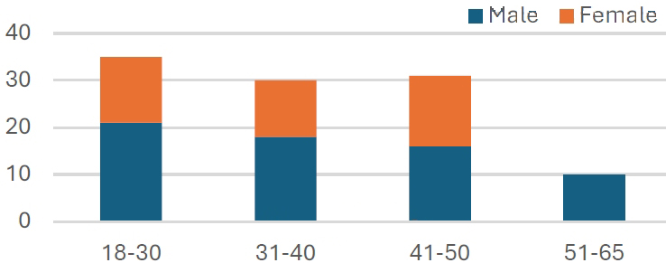
The respondents to the survey are as follows: 61% male, 33% female, and 6% unspecified. Among the respondents are the following age groups shown in the bar chart (Figure 1). The female respondents were skewed towards being older, with the majority in the 41–50 age group, whereas the male respondents were concentrated in the 18–30 age group.
Job Role and Experience
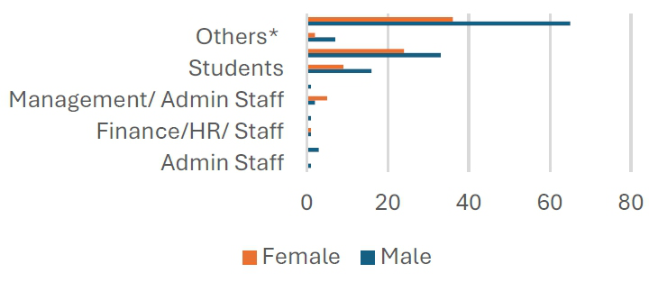
Figure 2 shows a chart of their roles, where Teaching staff account for 54%, Students 24%, and Administrative, Technical, and Engineering staff for 22%.
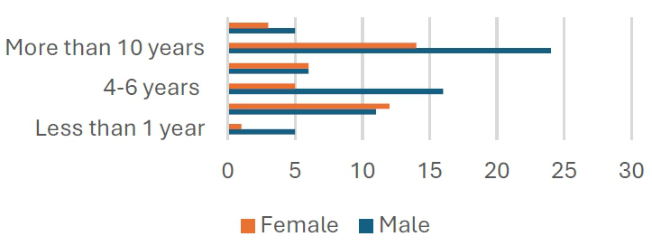
Figure 3 illustrates the years of experience, where Experienced staff were better represented in teaching and administrative roles, whereas students had the least workplace exposure.
Understanding Office Ergonomics and Employees’ Well-Being in the Workplace 1773
Location Insights
Malaysia reported the highest male representation and stronger ergonomic awareness.
Lebanon had the highest female participation but the lowest awareness of ergonomic practices and policies.
Kuwait and Canada presented moderate awareness levels but highlighted disparities in policy clarity and access to ergonomic tools.
Figure 1: Respondents age group.Figure 2: Respondents roles.Figure 3: Years of experience.
RESULTS AND DISCUSSIONS Awareness of Office Ergonomics
Findings
67% of men reported understanding ergonomics, compared to 50% of women.
Only 36% of respondents under 30 were ergonomically aware, compared to 64% of those aged 31 and above.
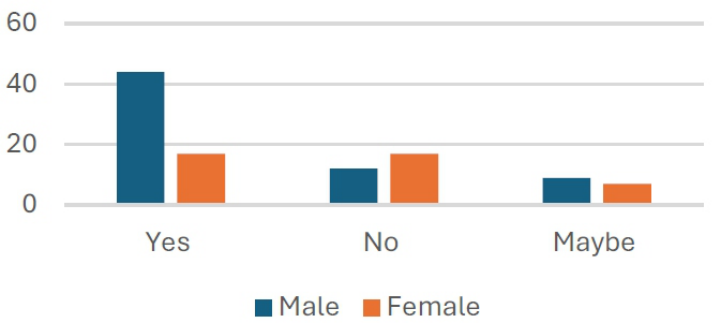
Figure 4 illustrates the awareness of office ergonomics by gender and age group, comparing awareness across gender and age categories. It’s evident that awareness was higher among older and male respondents, while younger employees and women reported lower familiarity. This generational and gender disparity mirrors findings by Rolfö et al. (2018) and Haapakangas et al. (2023), who emphasized that workspace design and ergonomic knowledge are unevenly distributed and often neglect diverse user needs.
Figure 4: Awareness of office ergonomics.
Ergonomics Training Attendance Findings
Only 14% of participants reported receiving formal ergonomic training.
The majority of respondents indicated that they were self-taught, relying primarily on online resources rather than structured, employer-provided programs.
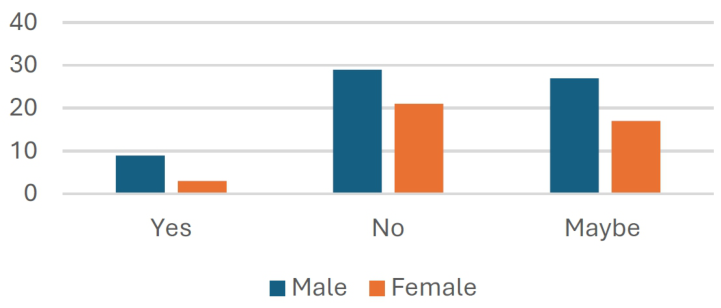
Male respondents were 30% more likely than female respondents to report participation in ergonomics training.
Analysis and Discussion
Figure 4: Awareness of Office Ergonomics by Response Category Note. The figure illustrates that while many participants reported general awareness of ergonomics, this knowledge did not always correspond to formal training.
Figure available in the original PDF paper.
Understanding Office Ergonomics and Employees’ Well-Being in the Workplace 1775
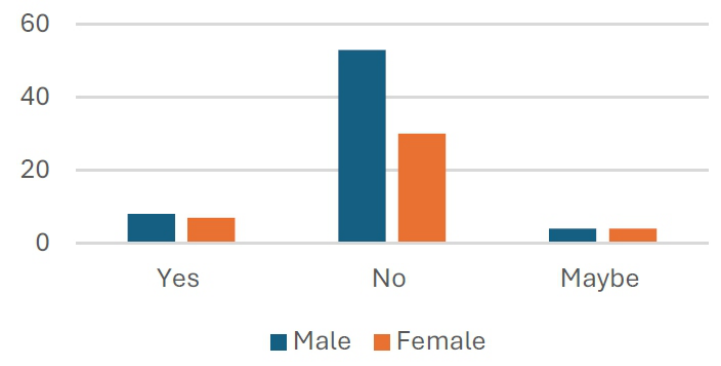
The relatively high proportion of “No” responses indicate a gap between awareness and structured educational initiatives.
Figure 5: Ergonomics Training Participation by Gender Shows male respondents were considerably more likely than female respondents to report attendance in ergonomics training. This suggests potential inequities in access to training opportunities or differences in self-directed learning practices.
Figure available in the original PDF paper.
Figure 5: Participation in ergonomic training.
The findings reveal a critical shortfall: formal ergonomic education is largely absent, leaving employees to rely on fragmented, informal sources of knowledge. This lack of structured training reflects institutional gaps in workplace health and safety initiatives.
The absence of systematic training opportunities has broader implications. Previous research (Amick et al., 2012; Menéndez et al., 2012) emphasizes that ergonomic interventions are most effective when training is combined with access to adjustable equipment. Such integrated approaches have been shown to produce sustained reductions in visual discomfort and musculoskeletal strain. By neglecting to implement similar initiatives, many workplaces are missing opportunities to enhance both employee well-being and organizational performance.
In sum, the low rate of training participation highlights a pressing need for organizations to establish comprehensive ergonomics programs that are inclusive, gender-sensitive, and integrated with practical tools and equipment.
Workstation-Related Discomfort Findings
65% of respondents experienced workstation-related discomfort.
Women were twice as likely to report discomfort to managers.
Men preferred self-research or tolerated discomfort without reporting.
Figure 6: Reported Discomfort or Pain Due to Workstation Setup. The prevalence of discomfort underscores the consequences of inadequate
Figure available in the original PDF paper.
ergonomic support. Gendered differences in reporting behaviour align with research by Robertson et al. (2013), which emphasized the importance of structured interventions rather than reliance on informal coping strategies. Left unaddressed, these discomforts can escalate into chronic musculoskeletal disorders.
Figure 6: Reported discomfort or pain due to workstation setup.
Access to Ergonomic Equipment Findings
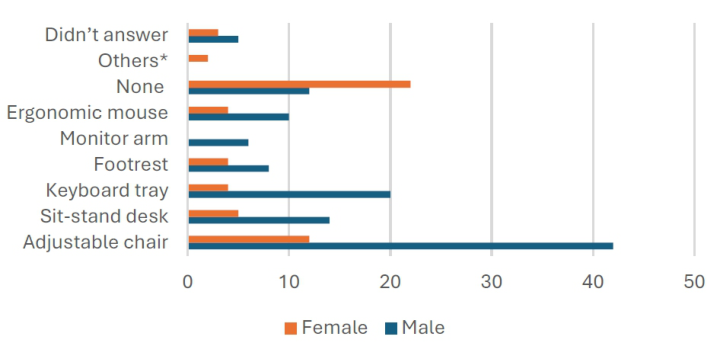
42% had adjustable chairs.
14% had sit-stand desks.
34% of women reported having no ergonomic tools, compared to 18% of men.
Students, particularly in Lebanon, had the lowest access.
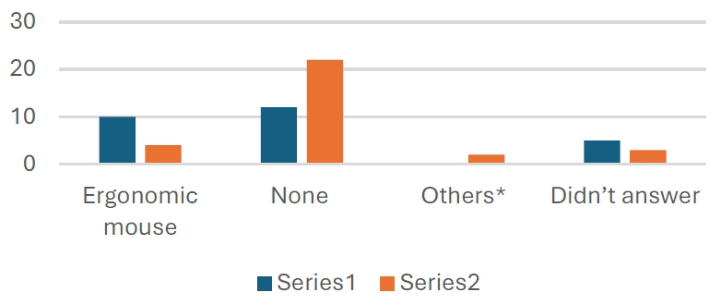
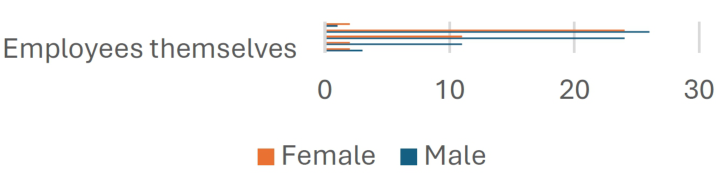
Figure 7: Access to Ergonomic Equipment by Gender and Role. Limited and inequitable access to ergonomic resources reflects organizational shortcomings in procurement. Studies by Robertson et al. (2008, 2009) emphasized that combining training with resource provision significantly improves workplace outcomes. The lack of inclusivity, particularly for women and students, signals systemic inequality in resource allocation.
Policy Awareness and Accountability Findings
52% reported having no formal ergonomic policy in their workplace.
Only 15% had read a relevant document.
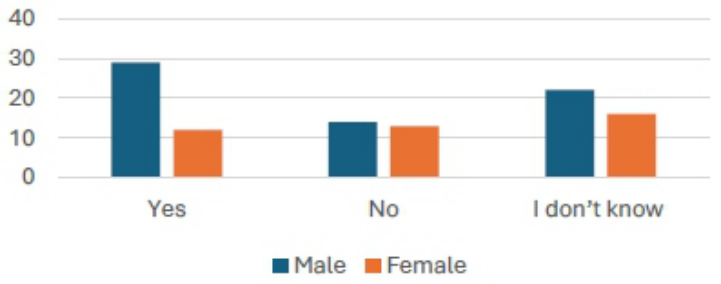
47% were unsure who was responsible for ergonomic standards.
Figures 8 and 9: Existence and Awareness of Ergonomic Policy. The leadership vacuum and lack of accountability are consistent with findings from So and Lam (2014), who argued that appreciation of ergonomics interventions depends heavily on management engagement. Where policies exist, they are often reactive—such as restricting ergonomic chairs to pregnant staff—rather than preventive and inclusive.
Understanding Office Ergonomics and Employees’ Well-Being in the Workplace 1777
Figure 7: Acecess to ergonomic equipment by gender and role.Figure 8: Existence of ergonomic policy.Figure 9: Awareness of ergonomic policy.
Wellness Programs and Attitudes Toward Training Findings
39% had access to wellness programs.
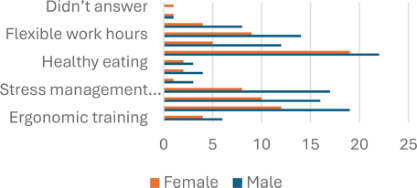
Programs often focused on mental health and stress management rather than physical ergonomics.
58% expressed interest in ergonomic training, while only 18% declined.
Figures 10 and 11: Availability of Wellness Programs and Interest in Receiving Ergonomics Training. While wellness programs exist, they are not sufficiently integrated with ergonomics. A substantial majority of employees
expressed interest in training, highlighting an unmet demand. Kropman et al. (2023) demonstrated that workplace design and wellness have a direct influence on mental health, suggesting that integrating ergonomics into broader wellness frameworks could enhance both physical and psychological outcomes.
Figure 10: Avaliability of wellness programs.
Overall, the results underscore systemic shortcomings across demographics, institutions, and regions:
Knowledge Inequity: Younger and female respondents demonstrated lower awareness, echoing literature emphasizing the importance of early ergonomic education.
Training Gaps: Formal ergonomic training remains rare, despite evidence supporting its long-term benefits.
Discomfort Prevalence: A majority experience workstation-related pain, yet many rely on informal coping strategies.
Resource Inequality: Access to ergonomic equipment is uneven, disadvantaging women and students.
Policy Deficiency: Most organizations lack clear ergonomic policies or accountability structures.
High Demand: Despite institutional neglect, employees show strong interest in ergonomic training.
Figure 11: Intrest in receiving ergonomic training.
These findings reinforce the call by Zink (2006) and Robertson et al. (2008, 2013) to reframe ergonomics as a strategic priority. A proactive, policy-driven approach—combining training, equipment provision, and
Understanding Office Ergonomics and Employees’ Well-Being in the Workplace 1779
wellness integration—can transform workplace ergonomics from a reactive intervention to a driver of organizational well-being and productivity.
CONCLUSIONS
This pre-training assessment highlights critical gaps in ergonomic awareness, access to equipment, and institutional support across diverse workplace settings. Despite growing recognition of ergonomics as a key contributor to occupational health and productivity, our findings reveal:
Limited ergonomic knowledge among younger employees and women.
A lack of structured, employer-provided training.
Widespread discomfort is linked to poorly designed or improperly adjusted workstations.
Inadequate and inequitable access to ergonomic resources.
Weak or absent policies and accountability measures.
At the same time, employee demand for ergonomic training and improved resources is intense. This aligns with global research indicating that integrating ergonomics into workplace design, policies, and wellness programs yields benefits that extend beyond physical comfort to encompass mental health, productivity, and organizational performance (Amick et al., 2012; Robertson et al., 2013; Kropman et al., 2023). In short, ergonomics must be reframed from a niche occupational concern to a strategic organizational investment. The evidence is clear: practical ergonomics enhances well-being, reduces musculoskeletal risk, and drives long-term sustainability.
RECOMMENDATIONS Based on the study findings and best international practices, we propose the following recommendations.
Training and Education
Develop modular ergonomics training programs (online, blended, and in-person).
Incorporate ergonomic awareness into the onboarding process for new employees.
Tailor training to diverse demographics, ensuring accessibility for women, students, and underrepresented groups.
Resource Provision
Ensure universal access to basic ergonomic tools such as adjustable chairs, monitor risers, and sit-stand desks.
Prioritize equitable distribution, particularly addressing disparities faced by women and students.
Policy and Accountability
Establish clear organizational policies for ergonomics, embedded within occupational health and safety frameworks.
Assign responsibility for ergonomic oversight to HR or facilities management.
Implement transparent procurement guidelines for ergonomic furniture and tools to ensure accountability and transparency.
Wellness Integration
Expand workplace wellness programs to include ergonomics alongside mental health and fitness.
Encourage proactive reporting of discomfort, supported by management training on sensitivity.
Research and Innovation
Leverage new technologies such as digital human modelling, VR simulations, and AI-driven workload assessment (Lin et al., 2018; Egeonu & Jia, 2024).
Conduct longitudinal studies to track the long-term impact of ergonomic interventions.
ACKNOWLEDGMENT
This research was supported by the Kuwait Foundation for the Advancement of Sciences (KFAS) under Grant No. 1621. The authors also extend their gratitude to participating institutions in Canada, Malaysia, Lebanon, and Kuwait for their collaboration.
Special thanks are due to the survey participants, whose insights made this study possible.
REFERENCES
Amick, B. C., et al. (2012). A field intervention examining the impact of an office ergonomics training and a highly adjustable chair on visual symptoms in a public sector organization. Applied Ergonomics, 43(3), 625–631. https://doi.org/ 10.1016/j.apergo.2011.09.006. Haapakangas, A., Sirola, P., & Ruohomäki, V. (2023). Understanding user behaviour
in activity-based offices. Ergonomics, 66(4), 419–431. https://doi.org/10.1080/ 00140139.2022.2092654. Kropman, D., Appel-Meulenbroek, R., Bergefurt, L., & LeBlanc, P. (2023). The business case for a healthy office: A holistic overview of relations between office workspace design and mental health. Ergonomics, 66(5), 658–675. https://doi.org/ 10.1080/00140139.2022.2108905. Lin, J. H., Kirlik, A., & Xu, X. (2018). New Technologies in Human Factors and
Ergonomics Research and Practice. Applied Ergonomics, 66, 179–181. https:// doi.org/10.1016/j.apergo.2017.08.012.
Understanding Office Ergonomics and Employees’ Well-Being in the Workplace 1781
Menéndez, C. C., et al. (2012). A replicated field intervention study evaluating the impact of a highly adjustable chair and office ergonomics training on visual symptoms. Applied Ergonomics, 43(4), 639–644. https://doi.org/10.1016/ j.apergo.2011.09.010. Robertson, M. M., Ciriello, V. M., & Garabet, A. M. (2013). Office ergonomics
training and a sit-stand workstation: Effects on musculoskeletal and visual symptoms and performance of office workers. Applied Ergonomics, 44(1), 73–85. https://doi.org/10.1016/j.apergo.2012.05.001. Robertson, M. M., et al. (2009). The Effects of Office Ergonomics Training and Chair Intervention on Worker Knowledge, Behaviour, and Musculoskeletal Risk. Applied Ergonomics, 40(1), 124–135. https://doi.org/10.1016/ j.apergo.2007.12.009. Robertson, M. M., Huang, Y. H., O’Neill, M. J., & Schleifer, L. M. (2008).
Flexible workspace design and ergonomics training: Impacts on the psychosocial work environment, musculoskeletal health, and work effectiveness among knowledge workers. Applied Ergonomics, 39(4), 482–494. https://doi.org/ 10.1016/j.apergo.2008.02.022. Rolfö, L., Eklund, J., & Jahncke, H. (2018). Perceptions of performance and satisfaction after relocation to an activity-based office. Ergonomics, 61(5), 644–657. https://doi.org/10.1080/00140139.2017.1398844. So, R. H. Y., & Lam, S. T. (2014). Factors affecting the appreciation generated through applying human factors/ergonomics principles to systems of work. Applied Ergonomics, 45(1), 99–109. https://doi.org/10.1016/ j.apergo.2013.04.019. Zink, K. J. (2006). Human factors, management and society. Theoretical Issues in Ergonomics Science, 7(4), 437–445. https://doi.org/10.1080/ 14639220500077346.
LISTED IN THE AHFE DIGITAL BOOKSTORE CATALOGUE
Explore the complete digital volume
Human Factors in Design, Engineering, and Computing
Read this individual research paper free through the original publisher, or explore the full digital proceedings book.
ISBN 978-1-964867-75-5
Explore this ISBN in the AHFE Bookstore ↗Listed in the July 2026 bookstore catalogue; search by ISBN to confirm current availability · Digital book purchase optional