Elisabetta Benelli, Laura Giraldi, Francesca Filippi (2026). AI and Automotive Design: The Ferrari Case as a Model of Human–Machine Co-Creation. In: Intelligent Human Systems Integration (IHSI 2026): Disruptive and Innovative Technologies. AHFE Open Access, vol. 200, pp. 755–760. https://doi.org/10.54941/ahfe1007134
Contemporary automotive design operates at the confluence of aesthetic culture, artisanal heritage, and technological innovation. The rapid evolution of digital tools and the advent of artificial intelligence (AI) have significantly reconfigured the very notion of industrial creativity, transforming the representational, simulation-based, and decision-making processes that underpin vehicular conception. In this context, design transcends its traditional aesthetic and functional dimensions to emerge as a complex cognitive activity, one that intertwines human intuition with the computational capabilities of intelligent systems.This study investigates how Ferrari—an emblematic brand within Italian design and global automotive culture—integrates AI-driven methodologies into its creative workflow while safeguarding the emotional, artisanal, and identity-defining components that constitute its distinctive design language. The Ferrari Design Center serves as a paradigmatic setting for examining the negotiation between tradition and innovation, specifically between the perceptual sensitivity of the designer and the analytical rigor of algorithmic systems.Through a qualitative analysis of the organizational and methodological structure of the Ferrari Design Center and, prospectively, through a direct interview with Chief Design Officer Flavio Manzoni, the research explores AI not as a substitute for human creativity, but as an instrument of cognitive augmentation. Rather than assessing the autonomous design capabilities of AI, the study seeks to understand how such systems can broaden the perceptual, speculative, and imaginative capacities of designers, thereby enabling the exploration of multidimensional and highly complex design scenarios.Within this framework, AI is conceptualized as a platform for human–machine co-creation, capable of processing extensive aesthetic, ergonomic, and aerodynamic datasets and translating them into formal and linguistic propositions aligned with Ferrari’s identity. The interaction between designer and algorithm becomes a heuristic dialogue in which the machine generates variations, correlations, and emergent patterns that the human agent interprets through cultural, sensory, and emotional criteria. This synergistic dynamic accelerates development processes, enhances decision-making, and fosters greater sustainability, all while preserving the emotional and symbolic qualities intrinsic to the brand.From a theoretical perspective, the paper advances an original methodological framework grounded in the principles of cognitive ergonomics, explainability, and augmented creativity. This framework aims to articulate how human–AI collaboration can be structured, evaluated, and optimized within industrial design practice. It contributes to the international discourse on Human–AI Interaction by offering a human-centered yet technologically progressive interpretation of contemporary creative processes.In conclusion, the study positions the Ferrari case as a distinctive model of AI integration within design practices characterized by strong symbolic, cultural, and aesthetic significance. It argues that when AI is conceived as a cognitive partner rather than an autonomous creative agent, it can support—and meaningfully extend—human intuition and artistic judgment without displacing their primacy. Within this perspective, the human designer remains central, guiding and interpreting algorithmic output through aesthetic sensibility, cultural competence, and emotional intelligence. AI thus emerges as a form of collaborative intelligence, capable of amplifying human design sensibility and enabling an unprecedented synthesis of emotion, function, and technology, in which the artistic dimension continues to originate from human creativity while being reinterpreted and enriched through novel cognitive and technological paradigms.
Automotive design is increasingly shaped by the convergence of aesthetic culture, artisanal knowledge and advanced computational systems. As artificial intelligence (AI) becomes embedded in creative workflows, it challenges conventional notions of authorship, form-giving and design cognition. Within this evolving landscape, Ferrari offers a paradigmatic case for examining how high-symbolic-value industries negotiate the relationship between human intuition and algorithmic reasoning. The Ferrari Design Center, under the artistic direction of Flavio Manzoni, exemplifies a design culture in which emotion, proportion and sculptural sensitivity remain central, while digital tools contribute to expanding conceptual and operational possibilities.
Recent developments in Ferrari’s broader innovation strategy—such as the company’s exploratory vision for immersive metaverse environments— further reflect an interest in integrating computational intelligence with experiential and narrative dimensions of design. These initiatives are not aimed at replacing human creativity, but at extending the perceptual and speculative bandwidth available to designers and users. In this context, AI assumes the role of cognitive augmentation, enabling the exploration of complex aesthetic, aerodynamic and ergonomic scenarios. This study investigates the methodological and cultural principles guiding Ferrari’s integration of AI, analysing how human judgement, emotional intentionality and brand identity remain primary in shaping design outcomes. The goal is to articulate a framework for human–AI co-creation capable of supporting innovation while safeguarding the brand’s distinctive expressive vocabulary.
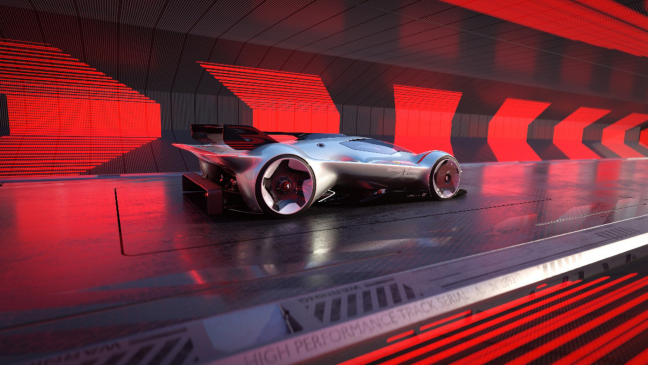
Figure 1: Ferrari Vision GT – front and rear/low views.
Front and rear low-angle views highlighting the sculptural design language, aerodynamic integration and light-based formal articulation.
THEORETICAL AND CONCEPTUAL BACKGROUND Contemporary discourse on design cognition and computational creativity highlights a transition from tool-mediated digital assistance to synergistic systems in which human intuition and algorithmic processes become mutually constitutive. Research in human–AI interaction (HAI) suggests that computational models can extend designers’ perceptual and inferential capacities by revealing latent relationships not easily accessible through manual exploration (Gero, 2020; Shneiderman, 2020). Creativity is increasingly framed as an emergent property of distributed cognitive systems involving both human and machine agencies. Parallel scholarship on high-symbolic-value industries underscores the need to preserve aesthetic identity, emotional resonance and artisanal knowledge when adopting advanced computational systems (Verganti, 2009; Carpo, 2017). Ferrari represents an exemplary case: its design language—rooted in sculptural purity, proportional tension and functional authenticity—embodies a cultural heritage that cannot be reduced to algorithmic recombination. The company’s exploratory work on metaverse-based immersive environments further illustrates how digital ecosystems may function as laboratories for narrative modelling and cognitive augmentation.
The challenge, therefore, is to understand how AI can be integrated into such a context without constraining the visionary component historically associated with master designers. Ferrari provides a fertile ground for examining this negotiation.
METHODOLOGY
The study adopts a qualitative interpretive methodology suitable for investigating socio-technical systems in which cultural, cognitive and technological dimensions interact. The objective is to analyse how AI-enabled tools are embedded within Ferrari’s design culture and how designers navigate the boundaries between intuition and computation.
Data are derived from: – documentary analysis of Ferrari’s design philosophy, innovation statements
and communication materials; – scholarly literature on design cognition, HAI, cognitive ergonomics and augmented creativity; – a semi-structured interview with Chief Design Officer Flavio Manzoni,
whose conceptual leadership frames Ferrari’s interpretation of creativity and technological innovation.
Semi-Structured Interview Protocol The interview aims to elicit reflections on:
– the cognitive limits of AI in relation to imagination and futurity; – preservation of visionary design culture in digital environments; – cross-departmental synergies in functional authenticity; – distinctions between functional and merely aesthetic elements.
Core questions:
1. According to your design experience, how does AI’s capacity to reprocess existing formal and conceptual structures limit or condition the forms of design imagination required to anticipate future scenarios in high– symbolic-value automotive design? 2. How can a design center preserve the “visionary spirit” of design masters in a context in which algorithmic tools tend to operate through the recombination of pre-existing knowledge? 3. To what extent do the internal positioning of the Design Center and its operational synergy with aerodynamics, materials and engineering shape the integration of AI tools as part of a socio-technical system, while preserving Ferrari’s identity coherence and design functionality?
Analytical Strategy The interview will be analysed through thematic coding integrating inductive emergence and deductive categories derived from cognitive ergonomics and HAI frameworks. Analytical dimensions include: creative cognition, identity coherence, explainability, designer–algorithm heuristics and visionary intentionality. The interviewee was selected as a key informant based on his central role in defining Ferrari’s design vision and strategic approach to AI integration.
RESULTS
The qualitative analysis highlights a consistent interpretative pattern across all analytical dimensions, confirming Ferrari’s approach to AI as a supportive cognitive infrastructure rather than an autonomous creative agent.
AI and Creative Discontinuity The interview confirms that AI operates predominantly within the logic of recombination and continuity. While effective in generating rapid formal and conceptual variations, AI lacks the capacity to introduce genuine discontinuities or symbolic ruptures. Future-oriented imagination— particularly in high-symbolic-value automotive design—emerges instead from human intentionality, cultural awareness and visionary courage. Designers assume an active curatorial role, selecting, rejecting and reshaping algorithmic outputs in order to translate intuition into meaningful form.
Visionary Culture and Design Heritage Ferrari’s design culture is explicitly grounded in a lineage of Italian design thinking characterised by imaginative audacity and archetypal foresight. Rather than reproducing past forms, the creative process seeks to establish “bridges” and productive frictions between apparently distant domains. In this sense, AI is interpreted as a facilitator of associative thinking, capable of accelerating the exploration of conceptual connections while remaining subordinate to a strongly imaginative design ethos.
AI and Automotive Design: The Ferrari Case as a Model of Human–Machine Co-Creation 759 Organisational Synergy and Identity Coherence
The internal positioning of the Ferrari Design Center and its continuous interaction with aerodynamics, materials science and engineering ensure that AI integration does not compromise identity coherence or functional authenticity. A shared value system and codified design DNA act as regulatory frameworks that govern the use of AI tools. Aesthetic, functional and performance-driven considerations are developed in parallel, reinforcing a model of codetermined form generation in which AI enhances efficiency without redefining authorship.
DISCUSSION
The findings contribute to the broader debate on human–AI interaction in design by challenging narratives that frame AI as a creative substitute. Instead, Ferrari exemplifies a model of human-led computational creativity, where AI functions as an amplifier of exploration rather than an originator of meaning.
From a cognitive ergonomics perspective, the effectiveness of AI lies in its ability to externalise and visualise latent intuitions, supporting designers in managing complexity and expanding perceptual horizons. However, interpretative authority remains firmly human. Meaning-making, symbolic coherence and aesthetic judgement are not emergent properties of algorithms but outcomes of culturally situated design intelligence.
The results also underscore the importance of explainability and transparency in AI-supported design processes. Designers must understand and interrogate algorithmic behaviour in order to integrate outputs coherently within an established design language. This interpretative control is essential to preserving brand identity in industries where form is inseparable from symbolic value.
A FRAMEWORK FOR HUMAN–AI CO-CREATION IN INDUSTRIAL DESIGN Building on the empirical analysis, the paper proposes a conceptual framework structured around five interrelated dimensions:
1. Human Intentionality Creative vision, imagination and value judgement define the direction of the design process and establish criteria for relevance and coherence. 2. Algorithmic Exploration AI supports rapid generation of formal variations, correlations and scenario simulations, expanding the space of possibilities without determining outcomes. 3. Interpretative Mediation Designers actively curate algorithmic outputs, transforming quantitative possibilities into qualitative meaning through cultural and emotional filters.
4. Organisational Embeddedness AI tools operate within a socio-technical ecosystem shaped by shared values, interdisciplinary collaboration and institutional memory. 5. Explainability and Cognitive Control Transparent interaction with AI systems enables designers to maintain authorship, accountability and ergonomic alignment between human cognition and computational processes. This framework positions human–AI collaboration as a heuristic dialogue, in which creative authority is preserved while computational intelligence enhances exploratory depth and decision-making quality.
CONCLUSION
This study demonstrates how Ferrari offers a robust and transferable model of human–machine co-creation in automotive design. By framing AI as a form of cognitive augmentation rather than creative automation, Ferrari preserves the primacy of human judgement, imagination and aesthetic intentionality.
The findings suggest that successful integration of AI in high-symbolic-value industries depends less on technological sophistication than on cultural clarity, organisational coherence and cognitive governance. When embedded within a strong design culture, AI can significantly enhance exploration and innovation without eroding identity or authorship.
Future research may extend this framework through comparative studies across different design-intensive sectors, as well as through longitudinal analyses of evolving human–AI relationships in industrial creativity.
ACKNOWLEDGMENT
The authors would like to acknowledge the Ferrari Design Center and Flavio Manzoni for their contribution to this research.
REFERENCES
Boden, M. (2004) The Creative Mind: Myths and Mechanisms. Routledge. Carpo, M. (2017) The Second Digital Turn. MIT Press. Cross, N. (2011) Design Thinking. Berg. Gero, J. (2020) Design Computing and Cognition. Springer. Norman, D. (2013) The Design of Everyday Things. MIT Press. Shneiderman, B. (2020) ‘Human-centered AI’, Communications of the ACM, 63(8), pp. 32–35. Suchman, L. (2007) Human-Machine Reconfigurations. Cambridge University Press. Verganti, R. (2009) Design-Driven Innovation. Harvard Business Press.
LISTED IN THE AHFE DIGITAL BOOKSTORE CATALOGUE
Explore the complete digital volume
Intelligent Human Systems Integration (IHSI 2026): Disruptive and Innovative Technologies
Read this individual research paper free through the original publisher, or explore the full digital proceedings book.
ISBN 978-1-964867-76-2
Explore this ISBN in the AHFE Bookstore ↗Listed in the July 2026 bookstore catalogue; search by ISBN to confirm current availability · Digital book purchase optional