Wataru Ogomori, Shunya Tanaka, Kimi Ueda, Hirotake Ishii, Hiroshi Shimoda (2026). Promoting Pro-Environmental Behavior Through Anticipated Emotions: A Preliminary Study Using an Episodic Recall Task to Encourage Positive Outcome Expectations. In: Intelligent Human Systems Integration (IHSI 2026): Disruptive and Innovative Technologies. AHFE Open Access, vol. 200, pp. 833–839. https://doi.org/10.54941/ahfe1007144
Publisher statistics will load when you open Metrics.
AHFE OPEN ACCESS OPEN ACCESS CONFERENCE PROCEEDINGS PAPER
Promoting Pro-Environmental Behavior Through Anticipated Emotions: A Preliminary Study Using an Episodic Recall Task to Encourage Positive Outcome Expectations
In the context of the rapidly intensifying global environmental and energy crises, promoting pro-environmental behavior (PEB) at the individual level has become a critical challenge. However, PEB often requires additional effort and time in daily life while providing few direct benefits or immediate rewards to the actor, making sustained engagement difficult. To address this challenge, previous research has explored various interventions, including the dissemination of environmental knowledge, the provision of financial incentives, and the implementation of nudges. Although these interventions have been shown to produce measurable effects, they do not directly target the inherent “burdensomeness” of PEB, and their limitations have been acknowledged.Against this background, this study focuses on “anticipated emotions” as a novel approach to overcoming the difficulties associated with PEB. Anticipated emotions are feelings generated by imagining the outcomes of one’s actions, and they are known to strongly influence decision-making. In particular, two types of anticipated emotions—expectation (anticipation of favorable outcomes) and regret (anticipation of unfavorable outcomes)—are considered to play important roles in everyday choices. Based on this facts, this study hypothesizes that these two anticipated emotions can facilitate PEB. While conventional studies have primarily emphasized externally easing or guiding PEB, this study explores the potential of using emotions to positively reframe the inherent burdensomeness of such behaviors.To test this hypothesis, we developed a novel anticipated emotion induction task. They were asked to recall and describe personal experiences in which exerting effort despite inconvenience led to a positive outcome (expectation) or in which refraining from action due to inconvenience resulted in regret (regret). Each task provided typical examples before prompting them to write about their own experiences, thereby eliciting anticipated emotions in a direct and personalized manner. An experiment was conducted where participants were randomly assigned to either the anticipated emotion group or a control group and completed the tasks individually on a computer in a laboratory setting. Baseline PEB was measured using the Pro-environmental Behavior Task (PEBT), a virtual travel task in which participants completed 24 trials choosing between an environmentally friendly but slower transportation option (SEST) and an environmentally unfriendly but faster option (TEFT). The time difference between the two options varied randomly across trials (0, 5, 10, or 15 seconds).Following the baseline measurement, the participants in the anticipated emotion group completed the emotion induction task, whereas the control group completed neutral, non-emotion-inducing tasks of the same format. After the intervention, the PEBT was administered again to assess changes in behavioral choices. In addition, a post-experiment questionnaire measured their habitual PEB, emotional states, perceived value of burdensome actions, and personality traits.The results indicated a tendency for increased SEST choices in the anticipated emotion group after the intervention, suggesting that changes in the perceived value of burdensome actions may have partially mediated behavioral change. Although exploratory, these findings suggest that anticipated emotions can facilitate pro-environmental behavior by assigning positive value to actions that are otherwise perceived as burdensome. Detailed results will be reported in the final manuscript.
In recent years, pro-environmental behaviors (PEBs) such as saving electric ity and water, separating waste, and choosing eco-friendly means of trans portation have become increasingly important. However, many PEBs involve a decrease in convenience or comfort, and the resulting sense of bothersome ness often serves as a psychological barrier to action.
To address this challenge, various approaches have been proposed—such as environmental education (Hungerford and Volk, 1990) and the introduc tion of monetary incentives (Maki et al., 2016)—and each has demonstrated certain levels of effectiveness. Nevertheless, most of these approaches do not directly tackle the fundamental psychological barrier inherent in PEBs them selves, namely the perception of inconvenience or effort.
Against this background, this study focuses on anticipated emotion as a new psychological perspective for overcoming the perceived burden of PEBs. Anticipated emotions are feelings that arise when individuals imagine the outcomes of their actions, and they are known to have a strong influence on decision-making (Rivis et al., 2009). In particular, this study highlights two representative anticipated emotions—expectation and regret—and aims to promote PEBs by evoking such emotions in advance: the expectation that “something good might happen after enduring inconvenience,” and the regret that “I might feel sorry later if I do not take action.” By evoking these emo tions before the behavior occurs, this study seeks to encourage a revaluation of inconvenience from something to be avoided into something meaningful or worthwhile.
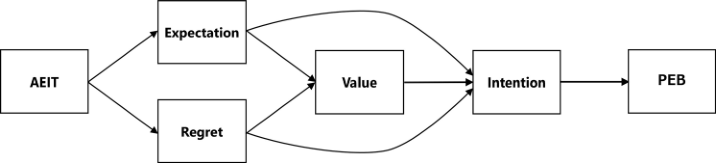
Figure 1: Hypothesized psychological model of anticipated emotion and pro-environmental behavior.
Based on this idea, this study proposes the mechanism illustrated in Figure 1. Specifically, it assumes that a psychological task designed to induce anticipated emotions—hereafter referred to as the Anticipated Emotion Induction Task (AEIT)—elicits expectation and regret, which in turn promote a positive reappraisal of inconvenience (Value), enhance behavioral intention (Intention), and ultimately promote pro-environmental behaviors (PEBs). To empirically test this hypothesis, the AEIT was developed and examined for its impact on behavioral choice and psychological evaluation.
DESIGN OF THE ANTICIPATED EMOTION INDUCTION TASK (AEIT) In this study, the Anticipated Emotion Induction Task (AEIT) was employed to effectively induce anticipated emotions. The AEIT was designed as a free-writing task that evokes recollection of past personal experiences. By prompting participants to describe concrete episodes based on their own experiences, the AEIT aimed to enhance both the realism and the intensity of the emotions recalled.
The AEIT began with three sample episodes illustrating two types of expe riences: those in which performing a bothersome action led to a positive outcome (expectation), and those in which refraining from a bothersome action resulted in regret (regret). Referring to these examples, participants were instructed to reflect on their own past experiences and freely describe corresponding episodes in their own words. All descriptions were written on a tablet device using a note-taking application, with each AEIT session lasting ten minutes.
Promoting Pro-Environmental Behavior Through Anticipated Emotions 835 Furthermore, after the recall and writing process, participants were pre sented with a brief supporting message emphasizing that “bothersome actions can hold value.” This message was intended to reinforce and sustain the anticipated emotions (expectation or regret) that had been evoked, rather than allowing them to remain as transient recollections. In this way, the AEIT was designed not only as a simple writing exercise, but also as a psychologi cal intervention that facilitates emotional reconstruction and the revaluation of inconvenience as something meaningful and worthwhile.
EXPERIMENT This study employed a two-group experimental design to examine changes in pro-environmental behavioral choice (PEB) between an Anticipated Emotion group (AE) and a Control group (CTL). The AE group performed tasks designed to evoke anticipated emotions, while the CTL group completed emotionally neutral writing tasks as a baseline. Specifically, CTL participants described “yesterday’s events” and “next week’s plans” in a fact-based man ner. Task format and duration were identical across groups to ensure equiv alence, with the manipulation limited to the induced psychological element. The overall procedure is shown in Figure 2.
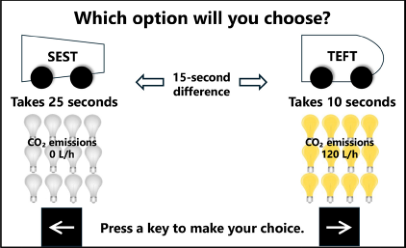
To evaluate the effects of the intervention, both objective and subjec tive measures were employed. As an objective behavioral indicator, the Pro- Environmental Behavioral Task (PEBT) was used to assess participants’ actual pro-environmental decisions (Lange et al., 2018). As shown in Figure 3, each trial of the PEBT presented two transportation options: SEST—an environ mentally friendly but slower mode—and TEFT—a faster but environmentally harmful one. The number of times participants chose SEST served as the behav ioral index of PEB. This study adopted a shortened version of the PEBT (24 trials per set) (Yamawaki et al., 2023), and participants completed the PEBT both before and after the intervention. Subjective measures were obtained through questionnaires designed to verify the psychological mechanism pro posed in Figure 1. These included four key variables—expectation, regret, value reappraisal (value of inconvenience), and behavioral intention—along with scales assessing personality traits and everyday PEB tendencies. Personality traits were measured using the Japanese version of the Ten Item Personality Inventory (TIPI-J) (Oshio et al., 2012), which assesses the five major factors: Extraversion, Agreeableness, Conscientiousness, Neuroticism, and Openness. Daily PEB tendencies were assessed with a 15-item scale based on previous research (Kimura and Shibata, 2019), covering behaviors such as waste separa tion, energy saving, and water conservation. All questionnaire items were rated on a 7-point Likert scale ranging from 1 (“strongly disagree”) to 7 (“strongly agree”), except for the daily PEB items, which used a 5-point frequency scale.
Figure 2: Overview of the experimental procedure.
Figure available in the original PDF paper.
Figure 3: Example of the pro-environmental behavioral task (PEBT).
RESULTS
A total of twelve students from Kyoto University participated in the experi ment. Participants were randomly assigned to one of two conditions: the AE group or the CTL group, with six participants in each. All participants were fluent in Japanese and able to understand and complete the written tasks without difficulty. The experiment was conducted individually on personal computers and tablets, and each session lasted approximately 90 minutes.
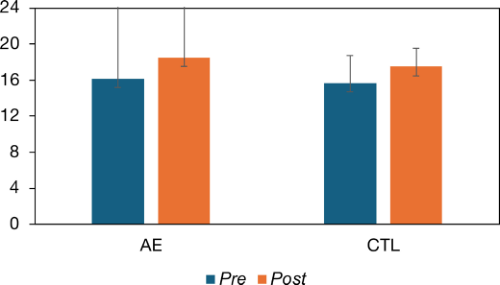
Figure 4 presents the results of the pre- and post-intervention comparisons of PEBT scores. In the AE group, the proportion of PEB choices significantly increased after the intervention, t(5) = 3.80, p = .013, d = 1.55. The CTL group also showed an upward trend, though the increase was not statistically significant, t(5) = 1.94, p = .110, d = 0.79. Although the difference in change scores between groups was not significant (t(10) = 0.44, p = .667), all par ticipants in the AE group exhibited a consistent increase in PEB choices, sug gesting that anticipated emotion may have contributed to promoting PEB. At the same time, the moderate increase observed in the CTL group indicates that PEB may also have been partially promoted even without emotional intervention—a point discussed later in this chapter.
Figure 4: Changes in PEB choices before and after the intervention (AE vs. CTL).Table 1: Descriptive statistics of psychological variables (expectation, regret, value, and intention).
Table available in the original PDF paper.
AE CTL t p Expectation 5.00±1.26 4.67±1.26 0.50 .628 Regret 5.67±0.82 5.00±1.79 0.83 .426
Value 5.00±0.82 5.83±1.17 −0.29 .780 Intention 5.00±1.17 5.00±1.10 0.25 .804
Table 1 summarizes the questionnaire results for expectation, regret, value reappraisal, and behavioral intention. Although no statistically significant group differences were found, expectation and regret scores tended to be higher in the AE group than in the CTL group, suggesting that the AEIT effectively elicited anticipated emotions. However, because the control tasks required participants to recall recent and upcoming daily experiences (“yes terday’s activities” and “next week’s plans”), they may also have uninten tionally evoked mild emotions of expectation or regret—for example, “I’m looking forward to that” or “I should have done that.” In addition, these introspective tasks may have fostered psychological calmness and self-reflec tion, functioning as a reflective writing exercise that promotes emotional regulation and thoughtful decision-making, thereby indirectly enhancing pro-environmental choices. Consequently, the control group showed rel atively high value reappraisal and behavioral intention scores despite the absence of explicit emotional induction. Overall, while the AEIT effectively evoked anticipated emotions, the non-neutral, introspective nature of the control task likely produced similar psychological effects, blurring the con trast between conditions.
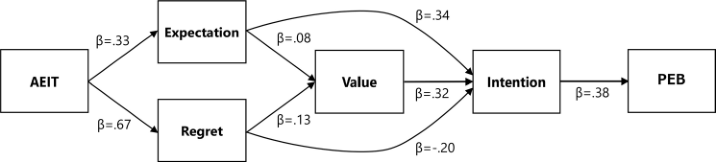
To examine how these psychological variables were interrelated and con tributed to behavioral change, correlation and multiple regression analyses were conducted on the key measures. The results, shown in Figure 5, present standardized regression coefficients (β) from an exploratory path analysis identifying the relative strengths and directions of associations. Expectation and regret each had weak but positive effects on value reappraisal (β = .08 and β = .13, respectively). Value reappraisal showed a moderate positive effect on behavioral intention (β = .32), which in turn predicted changes in PEBT (β = .38). A moderate correlation was also observed between value reappraisal and behavioral change (ΔPEBT; r = .46), indicating that value reappraisal served as a key mediating factor. Additionally, expectation had a moderate positive direct effect on behavioral intention (β = .34), whereas regret had a negative one (β = −.20), suggesting that expectation enhances proactive motivation, while regret may act as an avoidance-oriented emotion that suppresses intention.
Taken together, these results imply that the AEIT facilitated a psychologi cal chain in which anticipated emotions—expectation and regret—prompted participants to reappraise bothersome actions as meaningful, thereby strengthening behavioral intention and actual PEB choices. However, because the control tasks were not affectively neutral, similar motivational processes may have been partially shared across conditions, potentially masking the
AEIT’s unique contribution. Future studies should therefore adopt a more emotionally neutral control condition to isolate the causal role of anticipat ed-emotion induction.
Figure 5: Path model of the psychological mechanism underlying PEB promotion.Table 2: Correlations between personality traits (big five) and psychological/behavioral variables.
Finally, the effects of individual differences were examined through anal yses of personality traits (Big Five) and daily pro-environmental behavior tendencies. As shown in Table 2, Neuroticism correlated strongly and posi tively with value reappraisal (r = .70), suggesting that individuals with higher emotional sensitivity may be more likely to reinterpret bothersome actions in a positive light. Extraversion correlated positively with regret (r = .66), indi cating that more socially attuned individuals may respond more emotionally to behavioral outcomes, particularly in contexts involving social evaluation or feedback. Conversely, Conscientiousness and Openness showed negative associations with behavioral intention, implying that individuals who are typically self-disciplined and plan-oriented may rely less on affective cues when forming intentions. These findings indicate that the psychological mechanisms underlying pro-environmental motivation differ according to personality traits: emotionally reactive individuals may be more suscepti ble to emotion-based interventions, whereas self-regulated individuals may depend more on cognitive control and established habits.
In addition, daily PEB tendencies showed a moderate positive correlation with behavioral change (ΔPEBT; r = .46), suggesting that individuals who habitually engage in pro-environmental actions are more likely to exhibit enhanced PEB choices following emotional or introspective interventions. This pattern implies that the present intervention may not have created entirely new behaviors, but rather strengthened existing pro-environmen tal habits and motivations through emotional reinforcement and reflective engagement.
CONCLUSION
This study examined how anticipated emotions can promote PEB by refram ing the perception of inconvenience associated with such actions. The results indicated that the AEIT effectively elicited expectation and regret, facilitating cognitive reappraisal and enhancing behavioral intention. However, the con trol task—though designed as affectively neutral—appeared to evoke similar emotional and reflective states, suggesting that introspection itself may par tially promote PEB.
Overall, the findings highlight that emotional and reflective processes both contribute to internal motivation for sustainable behavior. Future research should expand the sample size and adopt a more strictly neutral control con dition to isolate the specific causal effects of anticipated emotion on pro-en vironmental action.
ACKNOWLEDGMENT
This work was supported by JSPS KAKENHI Grant Number 25K21429.
REFERENCES
Hungerford, H. R.; and Volk, T. L. (1990). “Changing Learner Behavior Through Environmental Education.” The Journal of Environmental Education, Volume 21, No. 3, pp. 8–21. Kimura, D.; and Shibata, K. (2019). “Relationship Between Consumers’ Pro-
Environmental Behavior and Lifestyle Values.” Journal of Life Cycle Assessment, Japan, Volume 15, No. 2, pp. 199–210. Lange, F.; Steinke, A.; and Dewitte, A. (2018). “The Pro-Environmental Behavior Task: A Laboratory Measure of Actual Pro-Environmental Behavior.” Journal of Environmental Psychology, Volume 56, pp. 46–54. Maki, A.; Burns, R. J.; Ha, L.; and Rothman, A. J. (2016). “Paying People to Protect
the Environment: A Meta-Analysis of Financial Incentive Interventions to Promote Proenvironmental Behaviors.” Journal of Environmental Psychology, Volume 47, pp. 242–255. Oshio, S.; Abe, S.; and Cutrone, P. (2012). “Development of the Japanese Version of the Ten Item Personality Inventory (TIPI-J).” Japanese Journal of Personality, Volume 21, No. 1, pp. 40–52. Rivis, A.; Sheeran, P.; and Armitage, C. J. (2009). “Expanding the Affective and
Normative Components of the Theory of Planned Behavior: A Meta-Analysis of Anticipated Affect and Moral Norms.” Journal of Applied Social Psychology, Volume 39, No. 12, pp. 2985–3019. Yamawaki, M.; Ueda, K.; Ishii, H.; Shimoda, H.; Ito, K.; Sato, H.; Fujioka, T.; Sun, Q.; Asa, Y.; and Numata, T. (2023). “Effects of Virtual Agent Interactivity on Pro-Environmental Behavior Promotion.” Journal of Environmental Psychology, Volume 88, Article 101999, pp. 1–12.
LISTED IN THE AHFE DIGITAL BOOKSTORE CATALOGUE
Explore the complete digital volume
Intelligent Human Systems Integration (IHSI 2026): Disruptive and Innovative Technologies
Read this individual research paper free through the original publisher, or explore the full digital proceedings book.
ISBN 978-1-964867-76-2
Explore this ISBN in the AHFE Bookstore ↗Listed in the July 2026 bookstore catalogue; search by ISBN to confirm current availability · Digital book purchase optional