Cheng Zheng, Yuan Gao, Yixin Chen (2026). Embodied Cognition Theory-Driven AR Board Game Design: Innovative Practice of the "Five Emperors" Cultural IP in Fujian Museum. In: Human Factors in Communication of Design. AHFE Open Access, vol. 216, pp. 54–66. https://doi.org/10.54941/ahfe1007624
As a representative intangible cultural heritage of folk custom in Fujian, the Fuzhou Wulinggong Culture carries profound regional cultural memory, the core of simple folk beliefs, and the traditional spirit of pursuing goodness and justice. Its value in cultural inheritance, social identity, and cultural tourism development is inestimable. Aiming at the current problems such as weak IP development of existing products, low cultural dissemination, and serious homogeneity of cultural and creative products, this study innovatively integrates IP image development, AR board game design, and UI interface design into the protection and inheritance of Fuzhou Wulinggong Culture. It constructs an interactive architecture of "physical cards + AR" to realize the virtual character interaction function. Based on the theory of embodied cognition, this study reactivates the folk charm of Wulinggong Culture through modern visual language and immersive interactive experience carriers, enhances its social recognition and appeal to young groups, and further realizes the creative transformation and innovative development of this regional intangible cultural heritage in the new era. It provides a new direction for the integration of cultural museums and AR technology and the dissemination of cultural and creative IPs.
The Five Ling Lords, namely Lord Zhang Shengjun, Lord Xiao, Lord Liu, Lord Lian, and Lord Chen, are important patron deities and prominent folk beliefs in Fuzhou. Each deity has distinct origins and legends, yet they share a common feature: all benefited the people in various ways during their lifetimes and were deified after death to become local protective gods [Xiang, 2006]. As a representative folk cultural resource in Fujian, they embody the local people’s religious sentiments and cultural memories, and carry the traditional spiritual core of loyalty, righteousness, benevolence, and prayer for blessings. Their cultural inheritance is supported by the
Embodied Cognition Theory-Driven AR Board Game Design 55 collection resources and exhibition platform of Fujian Museum. However, their communication has long been restricted by traditional models such as static displays and textual introductions. With monotonous forms and insufficient appeal, these approaches fail to reach young people, resulting in an audience gap in cultural inheritance. Therefore, innovative methods are urgently needed to revitalize the vitality of this culture. The state has vigorously promoted the strategy of cultural digitalization. The 14th Five- Year Plan for Cultural Development (Yu et al., 2023) explicitly proposes encouraging cultural and museum institutions to innovate communication forms and promote the digital activation of cultural heritage, providing clear policy guidance and development directions for this study. Currently, despite the explosive growth of digital products in the cultural and museum sector, they generally face numerous development bottlenecks: weak development of cultural IPs, mostly limited to the reproduction of superficial elements, lacking in-depth exploration and innovative expression of cultural cores; serious homogeneity of cultural and creative products, mostly simple derivatives of collection shapes, lacking uniqueness and interactivity, and failing to meet the personalized needs of the public; a severe separation between cultural communication and entertainment experience, with products mostly focusing on the instillation of cultural information and ignoring user experience, which restricts the breadth and depth of cultural dissemination.
Against the backdrop of the global wave of digital innovation and the rising awareness of local cultural identity, with the popularization of digital technologies such as 5G and big data, the public’s demand for cultural communication has shifted from “passive reception” to “active participation”. How to deeply integrate technology and culture to bring the accumulated cultural heritage into public life has become an important issue in the current cultural and museum sector (Wei et al., 2025). With its unique advantages of virtual-real superposition, scene immersion and real- time interaction, AR technology breaks the boundary between virtuality and reality, becoming a new carrier for cultural communication in museums and providing new possibilities for the activation of cultural heritage. Through AR technology, abstract cultural connotations can be transformed into concrete visual scenes, allowing the public to experience the charm of culture in real environments. However, the existing AR products in the cultural and museum sector still have obvious limitations. Most products feature shallow interaction forms, mostly simple applications of scanning codes to display virtual images, lacking in-depth interaction design. Meanwhile, the products have insufficient adaptability, failing to meet the needs of different age groups, especially catering to the aesthetic and experiential preferences of young people, and thus failing to truly achieve the deep integration of cultural connotations and interactive experiences.
Accordingly, the core research question of this study is how to integrate IP innovation with AR technology to break through the communication bottlenecks of Wudi Culture in museum scenarios and achieve the dynamic inheritance of cultural heritage. Targeting young people as the primary audience, this project relies on Embodied Cognition Theory and leverages the situational advantages of AR technology to develop a cultural and museum board game centered on the Wudi Culture IP image. The board game
56 Gao and Chen integrates multiple functions, including the restoration of AR scenes related to museum collections, virtual-real character interaction, and the embedded delivery of cultural knowledge points. Taking Fuzhou Wulinggong Culture as its core, this study conducts a modernized design based on traditional folk images. It integrates traditional spiritual connotations with contemporary aesthetic tastes to reinterpret the images of the five patron deities, creating IP images that possess both cultural significance and trendy appeal. The research aims to use cultural and creative products as the carrier and interactive experience as the bond, attracting young people to actively understand and disseminate Wudi Culture, thereby achieving cultural inheritance and emotional resonance.
RELATED WORK
Current Status of IP Image Design Applied to Traditional Culture Studies on Wudi Culture IP for cultural communication and image shaping focus on integrating folk elements with IP symbols. IP derivatives provide diverse carriers for the dynamic inheritance and mass communication of traditional culture. At present, domestic and international scholars have conducted extensive research on the design applications of folk culture IP, including cultural extraction, image innovation, and derivative transformation.
The research team led by Liyuan Cui et al. analyzed the local cultural resource system based on the geographical environment of the Qinba Mountain Area, designed IP images that highlight local cultural characteristics, and derived a product cluster centered on cultural tourism and creative products, agricultural products, and intangible cultural heritage (ICH) packaging. This provides a solution to the current situation of the region’s underdeveloped economy, sluggish industrial growth, and hindered ICH protection. It aims to transform resources into economic growth points, drive the sales of agricultural products and the development of related industries, promote the inheritance of ICH, build a southern Shaanxi brand and enhance its influence, assist in rural revitalization, provide referenceable development ideas for remote mountainous areas in China, and at the same time face up to challenges such as promotion and plan subsequent optimization and cooperative promotion [Cui et al., 2024]. Relying on the intangible cultural heritage Wuyuan Nuo Dance, Wang Min and Mao Haihong addressed the current problems such as insufficient adaptability of traditional communication and expression forms, low social attention, and hindered inheritance. Based on the principles of regionality and personalization, combined with the visual elements of Wuyuan Nuo Dance (including Nuo masks, costumes, and dance movements), they explored the approach of innovative IP image design, further creating a new Wuyuan Nuo Dance IP image integrating tradition and modernity, as well as designing supporting emoticons, illustrations, and corresponding promotion plans. The purpose is to inject new vitality into Wuyuan Nuo Dance, enhance its public recognition and cultural influence, promote its inheritance and development, and provide referenceable ideas for the inheritance and development of other intangible cultural heritages [Min et al., 2025].
Embodied Cognition Theory-Driven AR Board Game Design 57 At present, the development of folk culture IP products takes the integration of folk elements and IP symbols as the core direction, and advances around the pain points of intangible cultural heritage inheritance and regional development. Based on regional cultural resources and intangible cultural heritage characteristics, and following the principles of regionality and personalization, the core visual or spiritual elements of intangible cultural heritage are extracted and transformed into IP images with both traditional heritage and contemporary aesthetic appeal through modern design language. This targeted approach addresses practical problems such as the rigid forms of intangible cultural heritage communication and low cultural dissemination. Such a development model not only realizes the dynamic inheritance and innovative communication of intangible cultural heritage, but also injects cultural momentum into regional economic development, ultimately forming a virtuous cycle of win-win cultural and market values, and providing a replicable reference paradigm for the development and practice of similar folk culture IPs.
Research on AR Technology in the Field of Cultural Communication The innovative application of AR technology to board game design lies in integrating virtual elements with the physical board game experience. Virtual scenes and props provide immersive support as players engage with the board game and perceive the game narrative. At present, domestic and international scholars have conducted extensive research on the creation of immersive experiences with AR technology, the innovative integration of virtuality and physical board game environments, and the practical implementation of AR in board game interaction design.
Led by Rui Leitão, the research team developed the AR board educational game The Blue Bounty based on the Design, Play, and Experience (DPE) framework and participatory design principles, combining innovative integration of AR technology and board games. The game was applied in intervention activities, and its impact on dimensions related to ocean literacy was evaluated through a pretest-posttest design. Leveraging the immersion and interactivity of the AR board game, it enhanced students’ abilities in multiple dimensions such as marine knowledge acquisition, awareness enhancement, and communication skills, outperforming traditional lecture- based methods. Rui Leitão et al. contributed to the dissemination of ocean information, promoted the application of ocean literacy education in both formal and informal settings, and provided practical references for the integrated application of AR and board games in the educational field [Leitão et al., 2025]. Against the background of the rapid development of VR/AR technologies in the information age and the advantages of zSpace devices such as natural interaction and content visualization, Lulu Liu and Minh Tien Nhung, adhering to the concept of technology-enabled design and industry upgrading, took zSpace-based VR/AR technology as the research object. They analyzed its application scenarios in graphic design in detail, summarized the advantages and existing problems of this technology in the
58 Gao and Chen field of graphic design, and explored the driving role of emerging technologies in graphic design. This research provides references for the development of VR/AR technology in graphic design, helps improve design efficiency and expand designers’ thinking, promotes the progress of China’s graphic design industry, and offers insights for the integration of technology and design as well as strategic planning for related industries, exploring more application possibilities of VR/AR technology in the design field [Liu & Nhung, 2022].
At present, the integrated development of AR technology with board games and related design fields has formed a core framework centered on the deep integration of virtual elements and physical experience, aiming to enhance scene immersion and strengthen functional value. Its development process generally relies on specific theoretical frameworks or technological advantages, and is designed in response to the needs of specific application scenarios. This development model has realized the experience innovation and functional upgrading of traditional scenarios through technological empowerment, which not only effectively improves the practical effects in specific fields, but also provides referential ideas for the application of AR technology in different scenarios, promoting the integrated development of technology and industries.
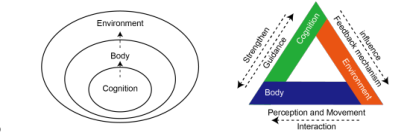
SOLUTION This study takes embodied cognition theory as its core framework (as shown in Figure 1). This theory holds that cognition does not occur purely inside the brain, but is rooted in a dynamic system composed of the body, the environment, and action (Qiang et al., 2025). It emphasizes that bodily engagement is the foundation of cognition, situated embedding provides the context for meaning generation, and multimodal feedback (visual, auditory, tactile, etc.) is the key to shaping experience. Based on embodied cognition theory, the study constructs a theory-driven, four-dimensional integrated design framework to achieve deep cultural immersion in museum contexts (as shown in Table 1). This framework follows a progressive logic from theory to practical application, and systematically establishes a mapping relationship from theoretical principles to design practice: (1) Theoretical mapping: Translate the principles of bodily engagement, situated embedding, and multimodal feedback in embodied cognition into concrete design criteria; (2) Demand and situational analysis: Define specific design constraints and opportunities through analysis of the physical space of Fujian Museum and the behavior of young audiences; (3) Cultural element extraction: Refine core cultural symbols from folk historical materials and museum collections; (4) Multidimensional system design: Guide the collaborative development of four modules: IP image (visual perception and emotional connection), AR interaction (behavioral extension through virtual-real integration), board game mechanism (social interaction guided by rules), and UI interface (intuitive action mediation). Through systematic design, this framework aims to transform abstract cultural spirit into perceptible, interactive, and explorative embodied experiences.
Figure 1: Embodied cognition theory.Table 1: Design framework based on embodied cognition theory.
Table available in the original PDF paper.
IP Image Design Based on the folk historical materials of Fuzhou Wulinggong (Jinfeng et al., 2025), relevant folk exhibition items in the collections of Fujian Museum, and Fuzhou regional cultural elements, core symbols are extracted for innovative reconstruction and transformed into the visual design foundation of IP images. This ensures the accuracy and uniqueness of cultural expression, while balancing folk recognition and contemporary aesthetics. Differentiated personality traits are endowed to different characters, corresponding to the visual identifiers of the folk functions of the Five Deities. Meanwhile, combined with the experience adaptability of Embodied Cognition Theory, the traditional majestic deity images are transformed into Q-version cartoon shapes to narrow the distance with visitors and enhance affinity through vivid expressions. This design not only conforms to the target positioning of young groups, but also echoes the research framework of the innovative design approach of IP images, realizing a balance between folk cultural recognition and modern communicability. Combined with links such as clue exploration and cultural question answering in the board game, players can intuitively perceive the cultural core of Wulinggong in the process of the game.
The term “Five Emperors” refers to the Five Ling Lords (Wulingong), also known locally in Fuzhou as the Five Great Blessing Emperors, which should not be confused with the “Three Sovereigns and Five Emperors” in
60 Gao and Chen traditional Chinese mythology. Each of the five deities has distinct origins and legends, and they are indigenous gods in charge of controlling plagues and expelling epidemic ghosts. Their core symbolic traits are extracted as follows (as shown in Table 2): Zhao Guangming represents courage, Zhang Yuanbo represents wisdom, Liu Yuanda represents compassion, Zhong Shixiu represents humor, and Shi Wenye represents mystery. Among them, Zhenling Lord Zhao Guangming is recorded as primarily responsible for suppressing evil spirits and vanquishing plague demons. His iconography is fierce and majestic, retaining the characteristic of a white face. Xianling Lord Zhang Yuanbo governs the central plague and oversees the overall effort of epidemic expulsion; he is the key decision-maker who sacrificed himself by jumping into a well to save the people. His image is dignified and composed, with the golden facial color preserved. In the design, grass green is added to correspond to the wood element in the Five Phases (Wuxing), symbolizing strategic command and foresight. Xuanling Lord Liu Yuanda is in charge of summer plagues, with the core function of using fire to drive away epidemics and heal the people. Cyan is chosen to symbolize purity and vitality, consistent with the nurturing virtue of the wood element. Yingling Lord Zhong Shixiu governs spring plagues, tasked with expelling evil and answering prayers to revive life. His iconography features a vivid green face, partly shaped like a bird’s beak. Orange is used to represent warmth and vitality, echoing the revival virtue of the wood element. Yangling Lord Shi Wenye presides over winter plagues, with the function of purifying epidemics through water and supervising midwinter plagues. Mauve/purple is employed to symbolize mystery and restraint, corresponding to the inclusive virtue of the water element.
Table 2: Element extraction.
Table available in the original PDF paper.
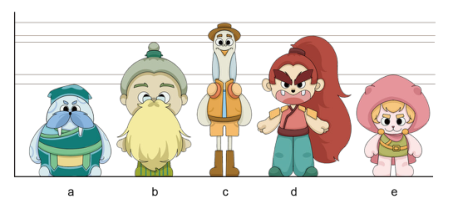
Based on the above personality analysis, this study divides the images of the Five Ling Lords into five different positions, corresponding to the designed roles of general, strategist, healer, musician, and hermit. Zhenling Lord Zhao Guangming, who eliminates plague demons with a fierce and solemn aura, is endowed with the core function of “guarding a region” as a general. His red hair reflects the outline tension and heroism of a military commander, endowing him with personality traits of courage, determination, and strong sense of justice, yet he may sometimes appear overly impulsive and straightforward (as shown in Figure 4d). Xianling Lord Zhang Yuanbo is set as a strategist, with personality traits of intelligence, calmness, and
Embodied Cognition Theory-Driven AR Board Game Design 61 good analytical skills, but he is slightly rational and lacks emotion (as shown in Figure 4b). Xuanling Lord Liu Yuanda is endowed with the function of “healing and purification” as a healer, with personality traits of benevolence, gentleness, and compassion, yet he may sometimes appear overly soft- hearted and indecisive (as shown in Figure 4a). The beak-shaped mouth of Yingling Lord Zhong Shixiu corresponds to the image of “birds being good at singing”, echoing the musician’s function of “controlling melody and conveying joy”. He is set with a humorous, witty, and optimistic personality, but he may sometimes appear overly casual and inattentive to details (as shown in Figure 4c). Yangling Lord Shi Wenye is endowed with the function of “mysterious and hidden edge” as a hermit, with a mysterious, profound, and introverted personality, but he may sometimes appear overly isolated and inaccessible (as shown in Figure 4e). The five prototypes are modernized on the basis of extracted elements, enabling players to intuitively perceive the cultural core in the game.
Figure 2: IP character images.
The IP series is named “Wudi Bu Zhua” (Five Lords Do Not Catch You), whose original meaning is “the Five Lords will not catch you”. In folk views, it was believed that if someone was a good person, the Five Lords would not capture them. It has evolved into a common exclamation nowadays, similar to “incredible” or “oh my god”. In Fuzhou dialect, its pronunciation is close to “Wudi Nie”, where “Nie” is an archaic Chinese word meaning “to catch”, retaining the dialectal meaning of “seize”. This naming highlights regional characteristics and cultural connotations.
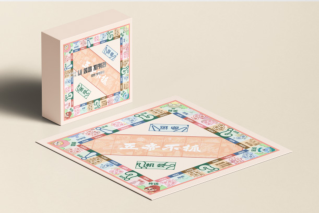
AR Board Game Design Taking the embodied cognition theory that “cognition originates from the interaction between the body and the environment” as the core guidance, the Five Ling Lords IP board game cultural and museum interactive product adopts a task-driven gameplay. Relying on the classic Monopoly gameplay rules, it combines clues from the collection of Fujian Museum, the cultural core of the Five Ling Lords, and the bound IP character settings. Through the core logic of moving forward by rolling dice and triggering tasks at points, it achieves the dual goals of entertainment experience and cultural communication. It adapts to the entertainment preferences and cognitive characteristics of young groups, inherits the classic Monopoly mechanism to
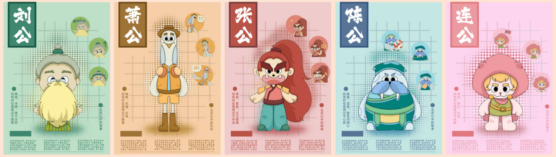
62 Gao and Chen lower the participation threshold and balance entertainment, and is mainly guided by strengthening physical participation and deepening cognition in the embodied cognition theory. Based on the IP character cards (as shown in Figure 6), a collaboration system is built to enhance multi-player interaction and realize the three-dimensional linkage of games, cultural relics and culture (as shown in Figure 5). Players first independently select the Five Ling Lords IP character cards as their game roles to establish an emotional connection with the IP, and then take turns rolling dice to move forward on the board as the core physical action, realizing an intuitive connection between the body and the cultural tourism scene. Each point triggers three types of core tasks: cultural quiz tasks are designed around folk allusions and cultural relic knowledge; scene exploration tasks link AR technology to unlock hidden cultural content. Completing tasks can accumulate game currency, while failing to complete them will trigger corresponding penalties. The player who first reaches the finish line and solves the ultimate cultural puzzle wins, realizing the synchronous improvement of entertainment and cultural cognition. The board game design is deeply consistent with the Monopoly gameplay, simplifying the rules, retaining the classics and integrating cultural tasks, which is in line with the habits of young groups, lowers the game threshold and is easy to get started. The overall board game system balances the difficulty and distribution of tasks to avoid experience fatigue, and drives players to understand culture through tasks, realizing the organic unity of entertainment and cultural communication.
Figure 3: Board game design.Figure 4: IP series character cards.
As a new type of visual experience technology for human-computer virtual information interaction and communication, AR technology focuses on projecting virtual objects and information into the user's real environment through the in-depth integration of real scenes and virtual content. The application of AR technology further enhances the embodied cognition
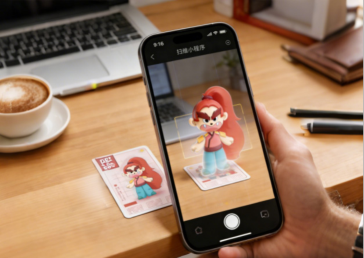
Embodied Cognition Theory-Driven AR Board Game Design 63 theory, which is consistent with its viewpoint that “environment influences cognition”. Based on the Kivicube software [Li et al., 2023], this study realizes AR development. Through efficient image recognition and positioning tracking technology, it ensures the stable triggering of card scanning and the accurate superposition of virtual content. It follows the process of real- scene capture, information processing, virtual-real synthesis, and interactive feedback: through the physical action of “scanning codes”, players trigger IP virtual images (as shown in Figure 7). Image recognition technology is used to complete the digital processing of preset IP images, construct virtual models and animations adapted to IP images and cultural symbols, and transform abstract culture into observable and interactive concrete content. Through AR technology, it achieves accurate superposition with real scenes, breaks through the physical space limitations of traditional board games, and enriches the forms of physical interaction. The entire design realizes the presentation of AR virtual images, enabling users to complete virtual-real interaction through the screen and achieve immersive cultural exploration.
Figure 5: AR application scenarios.
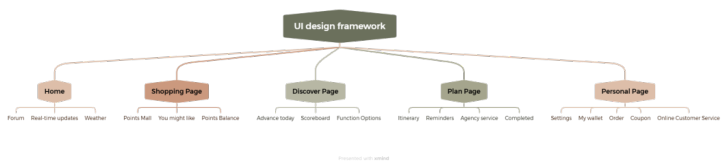
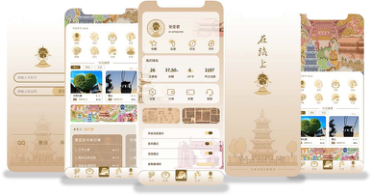
Design of the Online Interactive Mini-Program Guided by the “perception-action-cognition” mapping mechanism of the embodied cognition theory, this study constructs a three-level design principle system for the online interactive mini-program (as shown in Figure 8). The principle of perceptual adaptation adopts the color system of the Five Ling Lords IP, such as the red of Zhao Guangming and the golden-green of Zhang Yuanbo, as well as visual symbols including the bird-beak shape. By employing highly recognizable colors and regional cultural symbols, it strengthens visual perception, caters to the aesthetic preferences of young groups and the operating habits of all age groups, and serves as a core visual carrier for the communication of Fuzhou’s cultural tourism (as shown in Figure 9). Its functions are divided into three major sections of navigation services with multi-terminal adaptation, clearly distinguishing the local navigation area and the cultural exhibition area. Each area is functionally independent yet deeply linked, which not only ensures the smooth progress of local cultural tourism navigation in Fuzhou, but also realizes the accurate transmission of information about the Five Ling Lords and Fuzhou’s regional
64 Gao and Chen culture, as well as the convenient triggering of AR interactions. In terms of interface design, it closely aligns with the museum and Fuzhou’s local cultural tourism sites, adapting to scanning scenarios on mobile phones and tablets. The interface layout and touch interaction are optimized to simplify steps such as navigation query and site check-in. The local navigation area integrates core functions including navigation of Fuzhou’s cultural tourism sites and folk custom explanations, with a clear layout for quick access. The cultural exhibition area synchronously presents folk allusions of the Five Ling Lords, Fuzhou’s regional culture, and collection clues, updating in real time according to the navigation and game progress. The AR interaction area is equipped with a convenient scanning entrance, linking offline cards and cultural tourism sites to realize the rapid activation of virtual content. Meanwhile, the interface vision is consistent with IP elements and Fuzhou’s regional cultural symbols, balancing color recognition and visual comfort. Through concise interaction logic and clear functional zoning, user operation barriers are reduced, achieving the design goals of convenient navigation, visualized IP, and contextualized culture. This helps promote the coordinated development of online and offline services, enhancing the practicality of navigation services and the interest of cultural communication.
DISCUSSION AND LIMITATIONS During the user experience process, it was found that due to hardware and environmental constraints [Faiz et al., 2026], the AR board game is affected by differences in mobile device performance, which easily leads to scanning recognition delay and misalignment of virtual-real superposition. These issues are likely to reduce the triggering stability of offline cards and cultural tourism sites. However, more stable usage relies on technological research and development as well as later iteration and maintenance, which raises the
Embodied Cognition Theory-Driven AR Board Game Design 65 threshold for large-scale promotion and implementation of the product and makes it difficult to popularize widely.
CONCLUSION
To address the current problems such as weak IP development of cultural and creative products, low popularity of folk culture dissemination, and severe homogenization of museum cultural and creative products, this study focuses on the living inheritance of the Five Ling Lords folk culture and the innovation of cultural and museum products. It has completed the full- process research work and product development, constructed the physical card and AR interaction architecture, systematically finished the full set of design of the Five Ling Lords IP image, the development of AR interaction functions, the design of cultural and museum board game rules and props, and the adaptation of UI interface. This study breaks the communication bottleneck of the Five Emperors Culture in the museum scenario, forms a complete product prototype of “physical cards + AR interaction + cultural communication”, and creates an innovative cultural and museum product suitable for the museum scenario. Thus, it solves the problems of superficial dissemination of the Five Ling Lords Culture and audience fault, and realizes the in-depth integration of cultural inheritance and entertainment experience; meanwhile, it creates an innovative cultural and museum product suitable for the museum. At the theoretical level, this study enriches the application of embodied cognition theory in the field of integration of cultural and museum IP and AR, and improves the theoretical system of digital innovation of folk culture IP. At the practical level, through the integration of AR technology with cultural and creative IP and gamified design, it creates innovative products suitable for the Fujian Museum scenario, improves the path of digital practice of cultural and museum, builds a low-threshold and high- interest communication bridge for young groups to contact and understand the Five Ling Lords Culture, promotes the living inheritance of the Five Emperors Culture, and provides new ideas for the innovation of cultural communication in domestic museums. In the future, we can further optimize the stability of AR interaction, take into account the needs of diverse audiences, seek cooperation with cultural and tourism departments to share costs, or develop lightweight AR functions to reduce R&D investment, continuously improve product experience, and promote the in-depth development of digital inheritance of folk culture and innovation of cultural and museum products.
REFERENCES
Cui, L., Wei, S., Wang, K., Yuan, S., Lei, M., & Cheng, K. (2024). Research and design of cultural and creative industries in the Qinba Mountains of Southern Shaanxi. Results in Engineering, 22. Fan, Q., Qiao, Y. (2025). “Research on emotional design tools from the perspective
of embodied cognition”. Packaging Engineering, 46(20), 381–390.
reality technology: A review on selected features span ning three tracking sources. Lecture Notes in Networks and Systems, 1539 LNNS, 417–439. Leitão, R., Yao, S., & Guimarães, L. (2025). An augmented reality board game to work ocean literacy dimensions. Education and Information Technologies, 30(13), 19245–19268. Li, L., Zhang, Y., Lin, L., & Xue, J. (2023). “Conduct augmented reality (AR) in
medical textbook compilation: An innovative workflow”, in: ACM International Conference Proceeding Series. pp. 21–26. Liu, L., & Nhung, M.T. (2022). The application of VR/AR technology in graphic design based on zSpace. Wireless Communications and Mobile Computing, 2022. Wang, M., Mao, H.H. (2025). “Research on IP image design of Wuyuan Nuo dance
from the perspective of intangible cultural heritage inheritance”. Packaging and Design, 4, 40–41. Wei, Q., & Zuo, T. (2025). Design and evaluation of haptic experience in mobile augmented reality serious games. Journal on Multimodal User Interfaces, 19(4), 411–440. Ye, X. (2006). “The spread of Fuzhou Five Emperors’ belief to Taiwan”, in:
Proceedings of Cross-Strait Culture Research, Fujian Yanhuang Culture Research Association, Putian Municipal People’s Congress, Putian Municipal Committee of the Chinese People’s Political Consultative Conference, China Mazu Culture Exchange Association (Eds.). pp. 486–499. Yin, J.F., Chen, Y.B. (2025). “Research on the living inheritance and communication of intangible cultural heritage folk culture: A case study of Tantou God Tour in Changle, Fuzhou”. Journal of Social Science of Hunan Normal University, 54(5), 122–129. Yu, Z.W., Qun, R.C., Yu, J.Z. (2023). “Research on the development of China’s
cultural tourism industry during the ‘14th Five-Year Plan’ period”, in: Proceedings of 2nd International Conference on Creative Industries and Knowledge Economy (CIKE 2023), Sichuan International Studies University (Ed.). School of Hotel and Tourism Management, Macau University of Science and Technology; School of Economics and Management, Xi’an Mingde Institute of Technology. pp. 8–11.
LISTED IN THE AHFE DIGITAL BOOKSTORE CATALOGUE
Explore the complete digital volume
Human Factors in Communication of Design
Read this individual research paper free through the original publisher, or explore the full digital proceedings book.
ISBN 978-1-964867-92-2
Explore this ISBN in the AHFE Bookstore ↗Listed in the July 2026 bookstore catalogue; search by ISBN to confirm current availability · Digital book purchase optional