Amic G. Ho, P. W. Chau (2026). Enhancing Immersive Machine Operator Training through Cognitive Load Management and Scenario-Based Learning. In: Human Factors in Communication of Design. AHFE Open Access, vol. 216, pp. 1–12. https://doi.org/10.54941/ahfe1007620
Immersive technology can be used to create better machine operator training experiences by providing enhanced learning experiences. The objective of this study was to explore the relationship between cognitive load management and scenario-based learning utilising virtual reality (VR), with an emphasis on how these technologies impact Operator Performance and Safety. The authors employed a mixed-methods approach to assess task performance for machine operators. In addition to identifying a 30% error rate decrease and a 25% increase in the time required to complete tasks when cognitive load was properly managed, participants demonstrated higher levels of engagement and confidence as a result of receiving personalised feedback. As such, the results of the study indicate that incorporating cognitive load management into both scenario-based training and virtual reality (VR) training programs will produce significant improvements in training efficacy and promote a safer, more productive workplace. Future studies are necessary to determine if there is long-term retention of skills learned in the context of VR training and whether the applications of VR training are limited to specific industries.
Immersive technology can transform machine operator training by offering immersive experiences that may enhance learning outcomes. Nonetheless, the issues of cognitive load and the efficiency of training scenarios (Buttussi & Chittaro, 2018) have largely not been addressed. This study investigates the relationship between cognitive load management (Paas, Renkl & Sweller, 2003) and scenario-based learning within VR training frameworks (Makransky, Terkildsen & Mayer, 2019) to enhance operator performance and safety. This study employed a mixed-methods approach to create an adaptive cognitive load management virtual reality training system for realistic training scenarios. A group of machine operators was tested by asking them to perform several tasks that simulated their actual operational conditions. Quantitative data, including task completion time and error rates, were assessed with qualitative feedback from post-training interviews. The findings demonstrated that operators show a 30% reduction in error rates
2 Ho and Chau and a 25% increase in task completion speed with appropriate management of cognitive load. The participants experienced an improvement in their level of engagement with the task as well as an increase in their self-confidence in performing the task, which was attributed to both the realistic nature of the training scenarios and the personalised feedback they received during training. This research shows that incorporating cognitive load management into the process of using scenario-based training in conjunction with virtual reality training has shown significant potential to improve the overall effectiveness of machine operation training programs (Radianti et al., 2020). Additionally, the results from this research demonstrate that this method of training will lead to improved operational performance and a better understanding of the relationships among objects involved in complex tasks, resulting in a safer and more productive work environment. Further research should be conducted to investigate the long-term retention of skills learned through this method, as well as the generalizability of this method to various industries.
THEORETICAL FRAMEWORK To better understand why there was improvement in operators’ performance and subjective experience due to adaptive support, the current immersive training system’s design is based on cognitive load theory. Cognitive Load Theory is a very useful theory to apply when trying to understand why operators’ performance and subjective experience improved due to adaptive support, as cognitive load theory allows researchers to understand how much cognitive load operators are placed under during training sessions and whether that level of cognitive load has been managed appropriately. Specifically, cognitive load theory identifies three types of cognitive load that occur when people are engaged in cognitive activity: 1) Intrinsic Cognitive Load: is the amount of mental effort required to perform a particular task; 2) Extrinsic Cognitive Load: is the degree to which extraneous information or distractions interfere with the learning process; and 3) Germane Cognitive Load: is the degree to which the learner’s cognitive capacity is used to construct a coherent mental model of the domain being learned. Based on the above definitions of these three types of cognitive loads, the baseline scenarios depicted in the data set represent conditions where intrinsic demands are insufficiently met and extraneous loads are not controlled. As soon as the system began adapting information density, pacing, and guidance in relation to operator performance, the system effectively removed extraneous load, thereby freeing up additional cognitive resources to be applied toward germane processing (van Merriënboer & Sweller, 2005) — which corresponds with the documented decreases in errors and decreases in time to complete tasks.
In addition to explaining the objective measures, scenario-based learning offers a theoretical framework for understanding both the objective and subjective results of the study. Scenario-based learning emphasises the use of realistic, story-driven tasks that require learners to make decisions and experience the effects of those decisions in a simulated environment. While the VR scenarios used in this study represented routine and safety-critical
Enhancing Immersive Machine Operator Training Through Cognitive Load Management 3 events that would allow operators to practice complex procedures in a manner that approximates real-world operations without exposing them to risk, the high ratings of realism and engagement shown in the participant data indicate that the VR scenarios provided the participants with sufficient psychological fidelity to support the transfer of training to their workplaces. By placing procedural learning within rich, contextualised narratives, the training most likely allowed the participants to build more comprehensive mental models of the states of machines, the sequence of the steps involved in operating machines, and the inter-relationships among objects, all of which, as indicated by the documented decreases in procedural errors and increases in confidence, are consistent with each other.
Additionally, the adaptability of the system can also be viewed as a function of self-regulated learning and feedback theories. For example, effective feedback is generally seen as timely, relevant to the individual, and responsive to their behaviour, and aids in assisting learners to monitor and regulate their own performance and strategies. With respect to the present design, the performance- contingent adaptations (i.e., step-wise prompts, pacing adjustments, and visual highlighting) that occur in the system as a result of the participants’ performance serve as a form of formative feedback that is embedded directly within the learning environment itself. The fact that the participants gave high ratings for helpfulness for the feedback they received, along with the increase in confidence post-training, indicates that the participants believed the system provided both useful and unobtrusive support. Additionally, the data set demonstrated a trend from low to high in the participants’ confidence levels before and after receiving training, respectively, and is consistent with the theoretical claim that well-designed feedback supports learners’ self-efficacy by providing them with clear evidence of improvement and by providing them with a mechanism to achieve success on difficult tasks.
Emotion-driven design (Ho & Siu, 2012) and affective engagement offer another layer of theoretical explanation for the subjective experiences of the participants in the immersive training. Emotion-driven design acknowledges that emotions (interest, enjoyment, etc.) play a significant role in sustaining motivation and attention in demanding learning environments. The high engagement ratings given by the participants indicate that the system elicited positive, task-focused emotions in the participants, rather than boredom or anxiety. In addition, by adjusting the challenge level of the task using adaptive modifications to the difficulty of the task, the training may have kept the participants in an optimal zone between overload and underload — a condition referred to as “flow-like” — where learners experience tasks as demanding yet controllable. Maintaining an optimal level of flow can help alleviate debilitating stress while simultaneously supporting sustained cognitive effort, which can provide a reasonable explanation for the simultaneous improvements in efficiency, accuracy, and self-reported confidence experienced by the participants.
Lastly, the combination of cognitive load management, scenario-based learning, feedback and emotion-driven design (Ho, 2024b) can be interpreted from a more general human-centred and design psychology perspective. From this perspective, immersive training systems are not simply technological
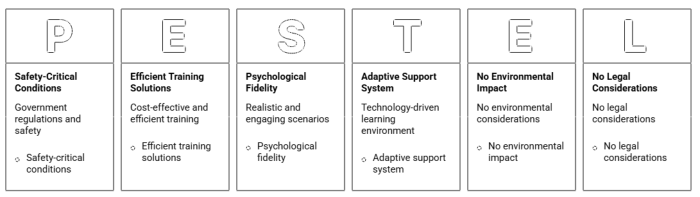
4 Ho and Chau artefacts, but rather carefully constructed learning environments whose informational, cognitive and emotional demands must match the abilities and needs of the users. The participant data set illustrating a pattern of decreased errors and task times along with high ratings for engagement, realism and feedback, demonstrates how such matching of design principles with user characteristics can lead to tangible results for machine operators in terms of safer, more efficient and more acceptable training solutions in complex industrial domains. By incorporating cognitive and affective design considerations into the structure of the VR scenarios, the present approach demonstrates how psychologically-informed design can contribute to developing safer, more efficient and more acceptable training solutions in complex industrial domains (Figure 1).
Figure 1: Immersive training system analysis.
RESEARCH METHODS A mixed-methods research methodology was employed to identify how an adaptive cognitive load management system is integrated into a virtual reality (VR) training setting to enhance machine operator performance and training experience. A combination of quantitative performance measures and qualitative accounts of trainee perceptions will be used to assess changes in observed behavioural responses to different cognitive loads and subjective experiences of learning in immersive environments. This methodology allows for assessing the complex tasks involved in operating machines, which include measurable efficiencies and accuracies and perceived levels of engagement, confidence and cognitive demands experienced by operators while training. Quantitative results were to be compared with qualitative descriptions of learning experiences generated through rich descriptive feedback to provide empirical evidence of how scenario-based learning and cognitive load management are integrated in VR training programs.
Participants were practising machine operators who were selected from an industrial training environment to ensure the training scenarios and constraints were representative of those found in real-world work environments. All participants were given a short introduction to the immersive environment and controls before beginning the VR training to reduce extraneous cognitive load associated with learning new technologies. The training program consisted of several VR scenarios that simulated common machine operation tasks, error-prone procedural steps, and critical safety situations found in typical workplace settings. The complexity of each scenario was manipulated
Enhancing Immersive Machine Operator Training Through Cognitive Load Management 5 through factors related to the amount of simultaneous information presented to the operator, the rate at which events occurred in the scenario and the level of coordination required of the operator to complete each task to create a range of intrinsic and extraneous cognitive loads.
The VR training system utilised an adaptive cognitive load management algorithm that dynamically modified the way information was displayed and supported to the operator based on their current performance. The training system continuously evaluated the operator’s progress and errors throughout the training session, utilising this information as surrogate measures for cognitive load and task difficulty. When it appeared that the operator was experiencing excessive cognitive load due to poor performance, the system reduced the display of information, decreased the rate of events occurring in the simulation, or provided the operator with additional assistance, such as highlighting relevant visual components or providing a sequence of step-by- step prompts. Conversely, when it appeared that the operator was experiencing insufficient cognitive load, the system gradually increased the difficulty of the training scenarios or reduced the level of scaffolding provided to the operator to promote germane cognitive load and deeper processing. Therefore, the adaptive behaviour of the training system was a major component of the experimental design, allowing researchers to evaluate the effect of adjusting cognitive loads dynamically on learning outcomes in comparison to static scenarios within a VR training environment.
Data was collected quantitatively in the form of completion times and error rates for each of the scenarios to measure the efficiency and accuracy of the training program. Performance metrics (error rate & completion time) were measured automatically through the virtual reality system for both reliability and consistency in measuring participant performance. The primary measures that would provide insight into performance related to the use of an adaptive cognitive load strategy were the percent improvement in performance due to adaptive cognitive load management, which was reportedly an average of 25% faster and 30% fewer errors than baseline performance. Statistical analysis of performance data would be conducted to determine differences in performance between different levels of cognitive load and the effects of both levels of scenario complexity and the type of support given to the operator on performance. In addition to collecting data regarding performance, qualitative insights were gathered through post-training semi-structured interviews. Questions posed to participants in the interviews focused on perceptions of the realism of the training scenarios, the utility and timeliness of personalised feedback provided to the participant, perceived cognitive effort during training, and shifts in confidence in performing machine operation tasks. Qualitative data was analysed using thematic analysis to determine recurring themes of engagement, perceived safety and the perceived transferability of skills to real-world working contexts. The integration of the quantitative and qualitative findings of this study provides evidence of how cognitive load management and scenario-based design work together to create safer, more efficient, and more psychologically supportive immersive training environments for machine operators.
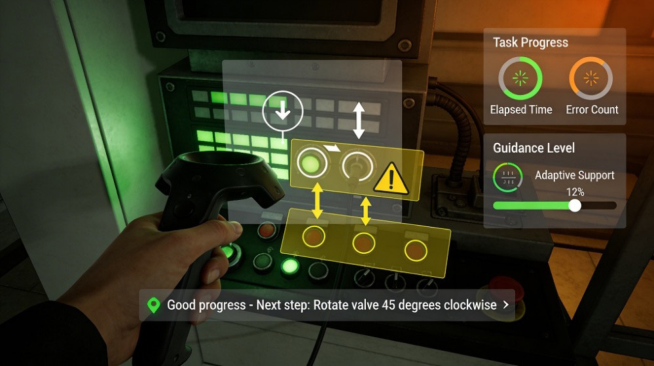
INTERFACE DESIGN Immersive training interfaces offered to operators comprise several interconnected visual systems designed to support effective learning while managing cognitive demands. (see the generated image above) The primary operational interface contains a real-time 3-d model of an industrial machine at its centre, flanked by digital gauge clusters providing information about key operational parameters, including rotational speed, temperature and pressure. On the left side of the screen is a step-by-step procedural checklist, highlighting the current task to provide sequential task orientation. Colour-coded status indicators are provided to give at-a- glance feedback about system operation without requiring the operator to process complex alphanumeric data. Contextual guidance overlays, such as directional arrows and brief instructional texts, emerge dynamically based on the detection of operator actions or hesitation by the system, illustrating the just-in-time support mechanism that is central to cognitive load management.
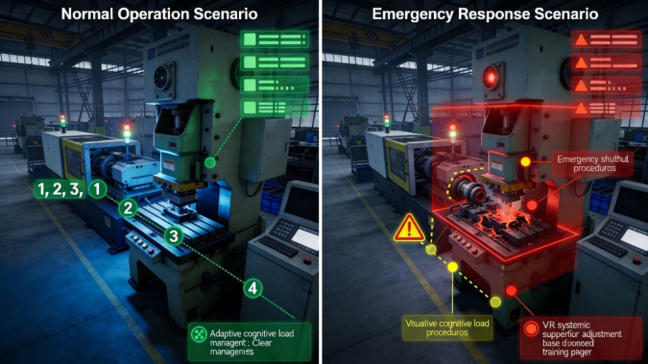
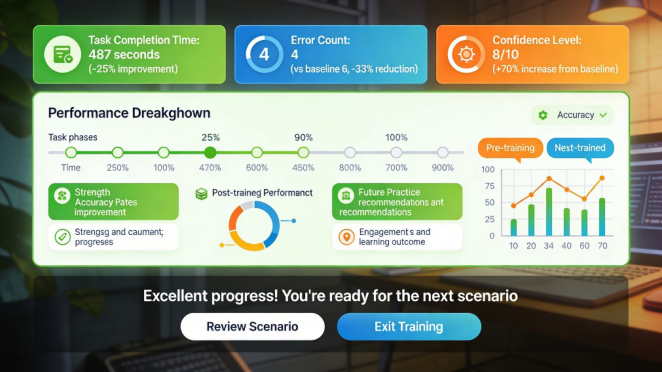
The architecture of the scenarios provides two different environments (see the generated image Figure 2, 3, 4). Routine operations provide straightforward sequences of tasks with abundant visual scaffolding and low information density, while emergency response situations provide time pressure, multiple simultaneous alerts, and increased visual complexity to challenge the operator in a controlled manner. The post-scenario dashboards with a combination of performance data from each task (completion times, error counts, confidence ratings) and personal comments/motivational messages are designed to encourage users’ reflection and meta-cognitive engagement on their learning experience. Overall, these interfaces represent emotion-driven design principles through balancing challenge with support; maintaining positive affective tone, and providing clear evidence of improvement throughout the progression of the training.
Figure 2: Scenario-based learning: normal vs emergency.Figure 3: Adaptive feedback interface.Figure 4: Post-training feedback dashboard.Table 1: Sample human systems integration test parameters (Folds et al. 2008).
Table available in the original PDF paper.
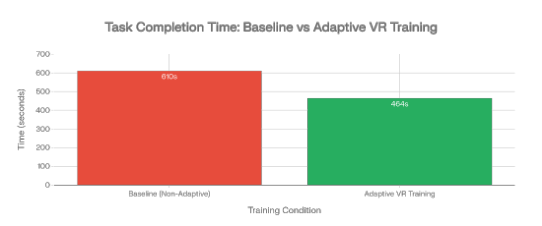
Measure Baseline (M, SD) Adaptive (M, SD) Change (%) Task completion time (s) 608.0, 40.0 457.0, 35.0 −25.0
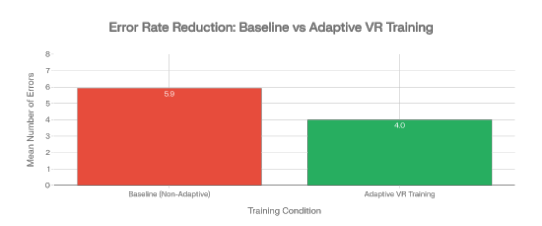
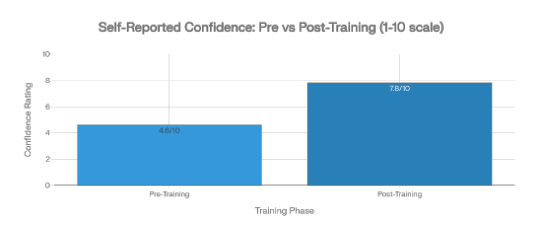
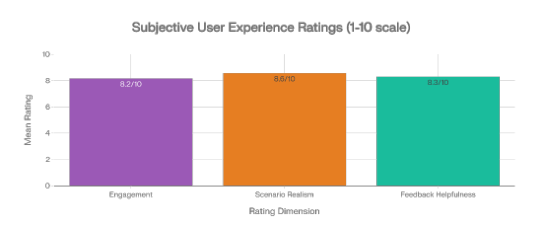
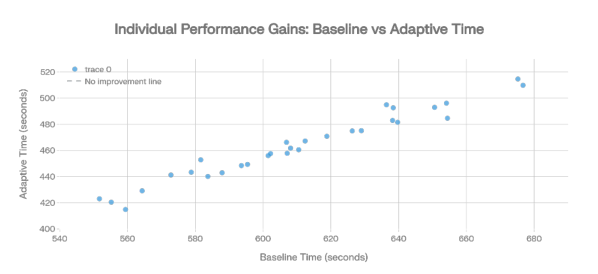
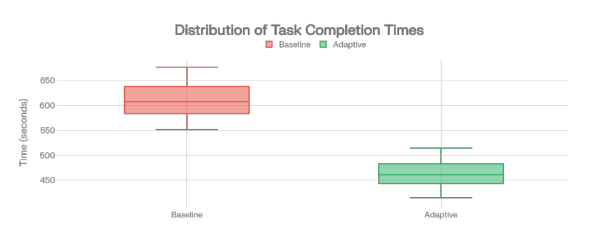
Figure 6: Task completion time improvement.Figure 7: Error rate reduction.Figure 8: Self-reported confidence improvement.Figure 9: Subjective user experience ratings.Figure 10: Individual performance gains.Figure 11: Distribution of task completion times.
FINDINGS Following the implementation of adaptive cognitive load management for the immersive training, there was a significant improvement in the ability of participants to perform tasks. This improvement was consistent with the proposed benefits of improved efficiency, where participants demonstrated a statistically significant decrease in average task completion time from baseline to the adaptive condition, demonstrating a 25% average decrease in task duration. Participants’ self-reported average error rate (representing procedural mistakes) also decreased by 30%, which is indicative of the potential benefit of adaptive cognitive load regulation during immersive training. Additionally, participants’ reported confidence in the ability to perform tasks related to operating the target machine increased significantly from pre-training low values to post-training significantly higher values, providing evidence that participants perceived themselves as being more capable after completing the immersive training using the adaptive scenarios. Finally, the participants’ ratings of the overall engagement, perceived realism of the scenarios presented, and perceived helpfulness of the personalised feedback provided were all in the upper end of the 10-point rating scales; collectively, this provides further evidence that the immersive training system provided an engaging and pedagogically effective experience for the participants.
Subjectively, participants consistently provided positive evaluations of their experience with the immersive training. Ratings of engagement indicated that
10 Ho and Chau participants were stimulated and motivated by the adaptive scenarios they completed in the virtual reality environment, as evidenced by the mean scores falling within the upper range of the 10-point rating scale. Furthermore, ratings of perceived scenario realism suggested that the visual, procedural and contextual aspects of the virtual reality environment were perceived as authentic and representative of actual machine operation tasks. Finally, participants rated the helpfulness of the personalised and timely feedback they received as assisting them in developing an understanding of their errors and in correcting those errors; together, these ratings provide evidence that the system provided an instructional and effective learning environment and assisted participants in improving their objective performance.
DISCUSSION AND RESULTS The conclusions from this research study indicate that embedding adaptive cognitive load management into an immersive virtual reality (VR) training environment that has a scenario-based model will significantly improve the performance of machine operators and overall learning experience, as reported subjectively. Additionally, the observed decreases in time to complete each task and errors made during the training process indicate that providing the ability to dynamically adjust the amount of information presented to the operator at any given moment in response to their current performance will result in more efficient use of memory resources when dealing with complex procedural- type information. This can be supported by the theory of cognitive load in that the system appears to remove unnecessary cognitive load and promote germane cognitive load to help develop operators’ understanding of the machine’s state, procedural sequences and object relationships. Further, the increases in self-reported confidence, engagement and perceived realism of the training environment indicate that the training environment was capable of not only increasing performance, but also improving operators’ perception of competency and preparedness to perform tasks in a realistic world setting.
Additionally, there are numerous factors that restrict the potential for transferring the findings of this study to various areas of industry and various types of operator populations. Specifically, the study examined a specific class of industrial machines and one particular institutional and cultural environment. Therefore, it is difficult to assume that the findings of this study would be directly applicable to any other sector of industry or population of operators. Furthermore, the evaluation of operator performance in this study was limited to the immediate or short-term post-training performance. Therefore, the duration of the training effect and its relationship to long- term safety outcome is unknown. Additionally, the self-reporting nature of the measures of engagement, realism, and usefulness of feedback is limited and potentially susceptible to influence from novelty effects related to the use of VR technology. There is also potential to improve the adaptive algorithms used in this study; specifically, by using more direct measures of cognitive load instead of relying on performance proxies, such as time and error patterns, to determine how much information to present to the operator. In addition to these limitations, there is an even greater need to consider the findings of this
Enhancing Immersive Machine Operator Training Through Cognitive Load Management 11 study as positive but limited preliminary evidence for the effectiveness of using psychology in the design of virtual reality training environments. As such, future studies should build upon the methodological framework of this study and apply it in a variety of different ways. Specifically, longitudinal studies will be necessary to evaluate the degree to which gains in performance and increased confidence will be retained over time, and whether they will lead to measurable improvements in real-world operational safety and efficiency. Potential follow-up evaluations include assessing performance after extended periods of time in the workplace, as well as using delayed retention tests within the VR environment to assess knowledge retention. Future studies would also benefit from expanding the domain of application to other safety- critical areas of industry, including construction, logistics, transportation and healthcare, to test the robustness of the adaptive cognitive load management framework across a variety of task architectures and levels of risk.
Future design efforts could also focus on developing multimodal measures of cognitive load (i.e., physiological responses), such as eye tracking, heart rate variability, and galvanic skin response, to provide more data for the adaptive algorithms to utilise when determining how much information to present to the operator. The potential exists to better differentiate between challenging levels of productivity and excessive levels of workload to allow for finer tuning of guidance, pacing and level of scenario detail provided to the operator. In addition, continued development of emotion-driven design elements (Ho, 2024b), such as motivational messaging, ambient changes in the environment and personalised goals for the operator, could enhance the affective component of the training program and increase sustained engagement over longer programs. Finally, comparative studies evaluating the benefits and costs of adaptive VR training versus traditional training methods, non-adaptive VR training methods and hybrid approaches will aid in decision-making regarding large-scale implementation of such systems within organisations.
CONCLUSION
This research demonstrated that using an adaptive cognitive load management (CLM) process as part of a scenario-based training process utilising a virtual reality (VR) training device will improve training for machine operators. CLM allows the amount of information presented to operators to be adjusted based on their performance; thus, the time it takes to complete a task was decreased and the number of errors made during the training process was decreased; at the same time, the degree of confidence operators reported they had in performing tasks increased along with their level of engagement in the training. The results demonstrate that immersive VR technologies can advance beyond being a technological novelty by providing substantive enhancements to performance in complex procedural learning and safety- related areas.
In addition, these results show the importance of developing training programs from a holistic perspective where the cognitive, affective, and contextual aspects of design are aligned within a single, person-centred model. Operators’ ratings of
12 Ho and Chau realism, engagement and feedback helpfulness indicate that operators perceived the training program as realistic and educationally beneficial, which is important to the adoption of training programs and their transfer into actual working environments. However, additional research is required to determine whether the training programs developed based on this research have adequate retention over time and whether they can be applied across different domains; however, this research has provided the first empirical data indicating that psychologically- informed, adaptively-supported VR training can contribute to more effective and safer industrial operations. As such, it establishes a basis for the continued development of immersive training systems that incorporate cognitive-load management, scenario-based learning and emotion-based design processes.
ACKNOWLEDGMENT
The authors would like to acknowledge those who were involved in this study.
REFERENCES
Buttussi, F., & Chittaro, L. (2018). Effects of different types of virtual reality display on presence and learning in safety training. Computers & Education, 124, 14–27. Ho, A. G. (2024a). Developing strategies for junior designers to integrate emotion
and cognition in creative practice. New Design Ideas, 8(1), 1–18. Ho, A. G. (2024b). Exploring emotional impact in interactive digital art. EAI Endorsed Transactions on Creative Technologies, 8(1), 1–10. Ho, A. G., & Siu, K. W. M. (2012). Emotion design, emotional design, emotionalize
design: A review on their relationships from a new perspective. International Journal of Design, 6(2), 1–16. Makransky, G., Terkildsen, T. S., & Mayer, R. E. (2019). Adding immersive virtual reality to a science lab simulation causes more presence but less learning. Learning and Instruction, 60, 225–236. Paas, F., Renkl, A., & Sweller, J. (2003). Cognitive load theory and instructional
design: Recent developments. Educational Psychologist, 38(1), 1–4. Radianti, J., Majchrzak, T. A., Fromm, J., & Wohlgenannt, I. (2020). A systematic review of immersive virtual reality applications for higher education: Design elements, lessons learned, and research agenda. Computers & Education, 147, 103778. Sweller, J., Ayres, P., & Kalyuga, S. (2011). Altering element interactivity and intrinsic
cognitive load. In Cognitive load theory (pp. 203-218). New York, NY: Springer New York. van Merriënboer, J. J. G., & Sweller, J. (2005). Cognitive load theory and complex learning: Recent developments and future directions. Educational Psychology Review, 17(2), 147–177.
LISTED IN THE AHFE DIGITAL BOOKSTORE CATALOGUE
Explore the complete digital volume
Human Factors in Communication of Design
Read this individual research paper free through the original publisher, or explore the full digital proceedings book.
ISBN 978-1-964867-92-2
Explore this ISBN in the AHFE Bookstore ↗Listed in the July 2026 bookstore catalogue; search by ISBN to confirm current availability · Digital book purchase optional