Krisztina Eva Lengyel-Almos, Joel Angel Bravo-Anduaga (2026). Thinking With AI: Human–AI Interaction and Critical Thinking in Scenario-Based Learning. In: Human Interaction and Emerging Technologies (IHIET-AI 2026): Artificial Intelligence and Future Applications. AHFE Open Access, vol. 201, pp. 119–126. https://doi.org/10.54941/ahfe1007166
The rapid adoption of generative artificial intelligence (GenAI) in higher education raises important questions about how human–computer interaction (HCI) shapes students’ reasoning and critical engagement. This study examines how guided classroom interaction with AI, designed to support comparison and reflection, influences undergraduate students’ critical thinking and awareness of artificial intelligence (AI)-related biases. The activity was conducted at the Tecnologico de Monterrey, Mexico, in late 2025 through a face-to-face classroom exercise focused on space exploration and future geopolitical scenarios. Students first developed arguments and scenarios collaboratively without AI; AI tools were then introduced to enable structured comparison and critique of AI-generated content in terms of depth, creativity, stakeholder inclusion, and bias, positioning AI as a comparative artifact rather than a decision-making agent. The intervention was implemented in two undergraduate courses (Global Public Goods and Geopolitics and Technology) using identical interaction design. A mixed-methods pre/post design was applied. Quantitative data from six Likert-scale items aligned with the CAE Critical Thinking framework were analyzed using Wilcoxon signed-rank tests in Minitab (paired samples: n = 15 and n = 18), revealing statistically significant improvements across all dimensions (p < .01). Qualitative findings indicate increased awareness of AI limitations and biases. Students consistently perceived human-generated scenarios as more creative, while AI outputs provided more data but tended toward superficial, mainstream framing. Together, the findings underscore the value of guided, HCI-informed classroom design in leveraging GenAI to enhance—rather than replace—critical thinking.
The rapid diffusion of generative artificial intelligence (GenAI) in higher education has intensified long-standing debates about the nature of critical thinking and how it is cultivated. Since early conceptualizations, critical thinking (CT) has been understood not merely as technical skill acquisition, but as purposeful, reflective, and self-regulatory judgment, involving the evaluation of evidence, assumptions, and alternative viewpoints (Ennis, 1962; Stanford Encyclopedia of Philosophy, 2023). Subsequent frameworks have emphasized its multidimensional character, combining analytical Received February 6, 2026; Revised February 26, 2026; Accepted March 10, 2026; Available online April 1, 2026
reasoning, metacognition, and disposition toward questioning authority and uncertainty (Lai, 2011). Within this tradition, higher education has been seen as a key space for developing students’ capacity to reason independently in complex, ambiguous contexts. Many higher educational institutions, among them the Tecnologico de Monterrey in Mexico, set the improvement of CT as an important learning outcome for its students by the end of their studies.
The introduction of GenAI tools into learning environments complicates this educational mission. On the one hand, recent studies suggest that GenAI- supported learning environments can enhance certain dimensions of critical thinking, ethical reasoning, and language competence when AI is embedded within structured, guided pedagogical designs (Muthmainnah, Seraj and Oteir, 2022; Tobias et al., 2025; Salvetti, Bertagni and Contardo, 2025). From this perspective, GenAI can function as a cognitive scaffold—supporting analysis, comparison, and reflection.
On the other hand, emerging empirical evidence raises concerns about the cognitive risks of over-reliance on GenAI, including reduced information retention, diminished independent reasoning, and the accumulation of what has been termed “cognitive debt,” whereby short-term efficiency gains may undermine long-term critical-thinking development (Kosmyna et al., 2025). Systematic reviews further highlight inconsistencies in how critical thinking is defined, operationalized, and assessed in GenAI-related educational research, complicating claims about AI’s educational benefits (Pedrosa Prats, 2025).
These contrasting findings point to a central dilemma: GenAI’s impact on critical thinking appears to depend less on its mere presence than on how human–AI interaction is designed and pedagogically framed. Yet, relatively little empirical work has examined how classroom interaction design can position GenAI not as a source of authoritative answers, but as a comparative and reflective artifact that actively prompts students to interrogate their own reasoning.
Addressing this gap, the present study investigates a guided, scenario-based classroom intervention in which undergraduate students first reason independently and collaboratively, and only subsequently engage with AI-generated content through structured comparison and critique. By focusing on an unfamiliar and underdetermined policy domain—the governance of outer space—the study examines how HCI-informed instructional design can foster critical thinking, mental flexibility, and awareness of AI-related biases, while mitigating the risks associated with uncritical GenAI reliance.
METHODOLOGY: CRITICAL THINKING EXERCISE WITHOUT AND WITH THE USE OF AI, AND COMPARATIVE REFLECTIONS Methodological Background
This study drew on the Council for Aid to Education’s (CAE) Seven Steps for Effective Critical Thinking as the methodological foundation for the classroom activity. The framework guided students through a structured reasoning process, from problem identification and evidence evaluation to the consideration of alternative perspectives and reflective judgment, while explicitly incorporating scenario thinking as a core pedagogical component. The selected topic—the governance of outer space through cooperation
or competition—was largely unfamiliar to undergraduate social science students, who initially had limited knowledge of its historical background, current governance arrangements, and recent technological and geopolitical developments.
To address this, students were provided with a concise briefing outlining basic context, key international treaties and terms, and recent advances in space activities. Beyond this shared knowledge base, they were encouraged to reason imaginatively and critically, developing multiple plausible future scenarios rather than converging prematurely on a single solution. This scenario-based phase proved critical, as it fostered mental flexibility, tolerance for uncertainty, presented multiple options as outcome and thus allowed a deeper engagement with underlying assumptions and trade-offs. By embedding scenario reasoning within the CAE critical thinking process, the activity made students’ cognitive processes explicit, supported higher-order reasoning, and reduced uncritical reliance on authoritative or GenAI-generated responses.
Instruments and Data Collection To assess changes in students’ critical-thinking capacities and perceptions of AI, the study employed a mixed-methods data collection strategy combining structured self-assessment items and open-ended reflective questions, before and after the classroom activity. During the activity, students worked collaboratively in small teams of two to three members, and two instructors were present in the classroom to facilitate discussion, monitor engagement, and guide reflection during both the human-only and GenAI-supported phases.
Quantitative data were collected using a pre/post questionnaire administered via Google Forms. The instrument consisted of six Likert-scale items aligned with core dimensions of the Council for Aid to Education (CAE) Critical Thinking framework, covering: (1) identification of biases in arguments, (2) recognition of insufficient or weak evidence, (3) consideration of multiple perspectives, (4) distinction between facts, opinions, and values, (5) confidence in debating disagreement, and (6) construction of logical, evidence-based arguments. Responses were measured on a 0–10 Likert scale, where higher values indicated greater self-perceived competence in each dimension.
In addition to the scaled items, the post-activity questionnaire included open-ended questions designed to elicit qualitative reflections on students’ reasoning processes, perceptions of AI-generated content, awareness of GenAI limitations and biases, and views on responsible AI use in learning contexts. Pre- and post-surveys were paired at the individual level using institutional email identifiers to enable within-subject comparison while preserving anonymity in analysis. Data collection was conducted immediately before and after the classroom activity to capture short-term changes associated with the intervention. All quantitative analyses were conducted using Minitab.
RESULTS
To capture both the measurable effects of the GenAI-supported intervention and the underlying human–AI interaction processes shaping students’ reasoning, results are presented through complementary quantitative and
122 Lengyel-Almos and Bravo-Anduaga qualitative analyses. Table 1 below summarizes the key characteristics and results in both groups.
Table 1: Group characteristics, intervention, and key quantitative & qualitative results.
Table available in the original PDF paper.
Dimension Group 1: Global Public Goods
Group 2: Geopolitics and Technology
Academic profile Advanced undergraduate social science students
Mixed academic programs, early undergraduate semesters
Paired sample size n = 15 n = 18 Observed engagement High focus, cohesion, sustained participation Heterogeneous engagement and motivation
Topic familiarity (pre) Very limited knowledge of space governance
Very limited knowledge of space governance
Pedagogical framework CAE Seven Steps for Effective Critical Thinking
CAE Seven Steps for Effective Critical Thinking
Intervention design Human-first reasoning → AI comparison → reflection
Human-first reasoning → AI comparison → reflection
Role of AI Comparative and reflective artifact
Comparative and reflective artifact
Scenario thinking Multiple futures (cooperation vs. competition)
Statistical test Wilcoxon signed-rank (paired) Key quantitative gains All 6 dimensions improved significantly (p = .001)
All 6 dimensions improved significantly (p < .001) Median shifts: 7.5–8 → 8–9 Median shifts: 7–8 → 7.5–8.5
Post-activity perceived improvement (Q10)
Equation reproduced from the original PDF.
High perceived improvement (qualitatively consistent)
AI as support, not replacement (Q11)
Equation reproduced from the original PDF.
Strong concern about overreliance on AI
Overall activity evaluation (Q14)
Equation reproduced from the original PDF.
High but more dispersed evaluations Heightened AI scepticism; emphasis on “thinking without AI”; bias awareness
Key qualitative themes Nuanced critique of AI bias; strong metacognitive awareness; confidence in independent reasoning Overall learning outcome Consolidation of critical- thinking confidence
Robust gains despite heterogeneity Source: Author’s own work based on pre- and post-intervention data collected via Google Forms; statistical analysis performed in Minitab using Wilcoxon signed-rank tests. Note: Q10, Q11 and Q14 correspond to post-activity question numbers in the Google Forms instrument used for data collection.
Thinking With AI: Human–AI Interaction and Critical Thinking 123 Quantitative Results
Quantitative analysis revealed statistically significant improvements across all six measured dimensions of critical thinking in both student groups following the intervention. Paired pre/post responses were analyzed using Wilcoxon signed-rank tests after Anderson–Darling normality tests indicated non-normal distributions for both samples. For Group 1 (Global Public Goods; n = 15), all six dimensions showed significant post-intervention increases (p = .001), with median scores rising from approximately 7.5–8 pre-intervention to 8.5–9 post-intervention, accompanied by tighter distributions, indicating both skill improvement and consolidation of critical-thinking confidence. For Group 2 (Geopolitics and Technology; n = 18), all six dimensions likewise exhibited statistically significant gains (p < .001), despite lower baseline medians and greater dispersion, demonstrating the robustness of the intervention in a more heterogeneous and less academically advanced cohort.
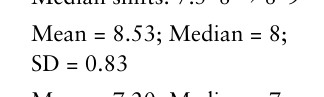
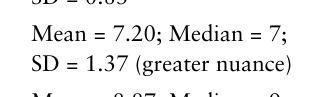
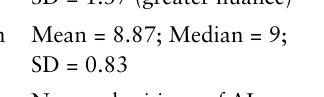
Post-activity assessment items provided additional descriptive support for these findings. In Group 1, students reported high perceived improvement in argument analysis (M = 8.53), expressed qualified agreement that AI can support—but not replace—critical thinking (M = 7.20), and evaluated the activity very positively overall (M = 8.87). In Group 2, post-activity responses showed similarly positive trends, though with greater variability, consistent with the group’s more heterogeneous engagement profile. Taken together, these results indicate consistent quantitative gains in critical-thinking capacities across both cohorts, alongside reflective awareness of AI’s appropriate pedagogical role.
Qualitative Results Qualitative analysis of open-ended reflections reveals marked shifts in students’ meta-cognitive awareness and AI literacy following the activity. Prior to the intervention, students in both groups frequently identified lack of information, fear of error, time pressure, and emotional responses as constraints on critical thinking. Group 1 students tended to describe more structured preparation strategies, while Group 2 students more often emphasized contextual and affective factors.
Post-activity reflections indicate a substantial increase in students’ ability to critically evaluate AI-generated content. Common themes across both groups include heightened awareness of AI biases (e.g., Western-centric framing, selective stakeholder inclusion, techno-optimistic assumptions), recognition of superficial or mainstream reasoning in AI outputs, and clearer differentiation between data richness and analytical depth. Students consistently contrasted AI’s structured, trend-based reasoning with what they perceived as greater human creativity, imagination, and willingness to explore unconventional or extreme scenarios.
Notably, students across both courses articulated explicit norms for responsible AI use, emphasizing that GenAI should be employed after independent reasoning, that outputs require verification, and that uncritical copy-paste practices undermine learning. These reflections align closely
124 Lengyel-Almos and Bravo-Anduaga with the instructional design, in which AI was intentionally positioned as a comparative and reflective tool rather than a source of authoritative answers.
DISCUSSION
Taken together, the quantitative and qualitative findings provide convergent evidence that guided, HCI-informed use of AI can enhance undergraduate students’ critical-thinking capacities, provided that human reasoning remains primary and AI is introduced as a comparative and reflective artifact. Statistically significant improvements across all six critical-thinking dimensions in both cohorts—despite differences in academic maturity, baseline scores, and engagement—indicate that the effectiveness of the intervention is not contingent on prior disciplinary expertise, but rather on pedagogical structure and interaction design. The consistent pre/post median shifts observed in both groups, coupled with students’ reflective accounts, suggest that learning gains were robust and not limited to highly prepared or homogeneous classrooms.
The explicit incorporation of scenario thinking emerged as a particularly influential design element. By asking students to reason across multiple plausible futures in the context of space governance—an unfamiliar policy domain—the activity encouraged exploration of alternative assumptions, stakeholders, and outcomes. This approach fostered mental flexibility and tolerance for ambiguity, as reflected in both the quantitative gains in perspective-taking and debate confidence, and qualitative reflections emphasizing imagination, creativity, and non-linear reasoning. Importantly, scenario-based reasoning appeared to counteract tendencies toward premature convergence and uncritical acceptance of AI-generated outputs, reinforcing higher-order cognitive engagement rather than efficiency-driven shortcutting.
The findings also complicate binary narratives that frame AI as either inherently beneficial or inherently harmful to critical thinking. Students’ post-activity evaluations and reflections indicate a nuanced understanding of AI’s role: while AI was valued for its structured reasoning and access to data, it was also perceived as prone to mainstream framing, selective bias, and superficial synthesis. Students consistently emphasized that meaningful learning emerged not from AI use alone, but from structured comparison, peer debate, instructor guidance, and collective reflection. This pattern aligns with the observed quantitative improvements and supports the interpretation of AI as a cognitive mirror—making assumptions, gaps, and biases visible—rather than as an epistemic authority.
CONCLUSION
This study provides empirical evidence that AI-supported, instructor- guided classroom activities can strengthen undergraduate students’ critical- thinking capacities and AI literacy when designed intentionally. Grounded in the Council for Aid to Education’s Critical Thinking framework and operationalized through scenario-based reasoning, the intervention made
Thinking With AI: Human–AI Interaction and Critical Thinking 125 students’ cognitive processes explicit and promoted reflective engagement with both human- and AI-generated arguments.
Across two undergraduate courses with distinct profiles, the activity produced statistically significant improvements in critical-thinking confidence and qualitatively meaningful gains in bias awareness, meta-cognitive reflection, and responsible AI use. The convergence of quantitative gains and qualitative insights suggests that AI’s educational value lies less in its autonomous capabilities and more in how it is embedded within human–computer interaction designs that prioritize dialogue, comparison, and reflection.
By demonstrating that structured, scenario-based, and guided AI use can enhance critical thinking across heterogeneous learning contexts, this study contributes to broader debates on AI in higher education and underscores the central role of pedagogical and interaction design—rather than AI capability alone—in shaping educational outcomes.
LIMITATIONS AND DIRECTIONS FOR FURTHER RESEARCH AND IMPLEMENTATION Several limitations of the presented study should be acknowledged. First, the study relies on self-reported measures of critical-thinking confidence rather than direct performance-based assessments. Second, sample sizes were modest and drawn from a single institutional context, limiting generalizability. Third, the short-term design does not capture longer-term retention or transfer of critical-thinking skills.
Future research could extend this work by integrating standardized performance measures (e.g., CLA+-style tasks), longitudinal designs through the career of students, or cross-institutional replications. Additional studies might also compare different AI interaction designs (e.g., AI-first vs. human-first sequencing) or explore disciplinary variations beyond social sciences. From a pedagogical perspective, the findings suggest that scenario-based, AI-supported critical-thinking activities are scalable and could be adapted to policy analysis, ethics, sustainability, and technological governance contexts.
ACKNOWLEDGMENT
The authors acknowledge the financial support provided by the Writing Lab, Institute for the Future of Education, Tecnologico de Monterrey, Monterrey, NL 64849, Mexico, which supported the preparation, production, and presentation of this work.
The authors also acknowledge Tecnologicode Monterrey for hosting and organizing the Critical Thinking course which later led to the implementation of the exercises in the two courses mentioned. The conceptual framework underlying the critical thinking exercise, including the Seven Steps for Effective Critical Thinking (Council for Aid to Education, 2025), was developed by the Council for Aid to Education (CAE) and informed the pedagogical design of the activity. Council for Aid to Education. https://www.cae.org.
DATA AVAILABILITY Data and Minitab outputs are available from the first author upon request.
AI USE DISCLOSURE Generative AI (OpenAI’s ChatGPT) was used to assist in revising the writing and improving clarity and presentation. All data analysis, interpretation, and conclusions are the sole responsibility of the authors.
REFERENCES
Council for Aid to Education (2025) The seven steps for effective critical thinking.
New York: Council for Aid to Education. Available at: https://www.cae. org (Accessed: 24 January 2026). Ennis, R.H. (1962) ‘A concept of critical thinking’, Harvard Educational Review, 32(1), pp. 81–111. Kosmyna, N., Hauptmann, E., Yuan, Y.T., Situ, J., Liao, X.-H., Beresnitzky, A.V.,
Braunstein, I. and Maes, P. (2025) Your brain on ChatGPT: Accumulation of cognitive debt when using an AI assistant for essay writing tasks. arXiv preprint arXiv:2506.08872. doi:10.48550/arXiv.2506.08872. Available at: https://arxiv. org/abs/2506.08872 (Accessed: 30 January 2026). Lai, E.R. (2011) Critical thinking: A literature review. Pearson Research Reports, 6(1), pp. 40–41. Muthmainnah, M., Seraj, P.M.I. and Oteir, I. (2022) ‘Playing with AI to investigate
human–computer interaction technology and improving critical thinking skills to pursue 21st century age’, Education Research International, 2022, Article ID 6468995, pp. 1–17. doi:10.1155/2022/6468995. Available at: https://doi. org/10.1155/2022/6468995 (Accessed: 24 January 2026). Pedrosa Prats, E. (2025) Assessment of AI’s impact on critical thinking in higher education: A systematic review of evaluation methods. Trabajo Fin de Grado. Universidad Pontificia Comillas, Madrid. Available at: http://hdl.handle. net/11531/94136 (Accessed: 30 January 2026). Salvetti, F., Bertagni, B. and Contardo, I. (2025) ‘AI-driven avatars for smarter
decisions: Reducing bias and strengthening critical thinking’, International Journal of Advanced Corporate Learning (iJAC), 18(2), pp. 60–69. doi:10.3991/ ijac.v18i2.52589. Stanford Encyclopedia of Philosophy (2023) Critical thinking. Available at: https:// plato.stanford.edu/entries/critical-thinking/ (Accessed: 25 January 2026). Tobias, R.G., Lozano, J.A.G., Torres, M.L.M., Ramírez, J.A., Baldini, G.M. and
Okoye, K. (2025) ‘AI and VR integration for enhancing ethical decision-making skills and competency of learners in higher education’, International Journal of STEM Education, 12, Article 52. https://doi.org/10.1186/s40594-025-00575-x. World Economic Forum (2025) The future of jobs report 2025. Geneva: World Economic Forum. Available at: https://reports.weforum.org/docs/WEF_Future_ of_Jobs_Report_2025.pdf (Accessed: 28 January 2026).
LISTED IN THE AHFE DIGITAL BOOKSTORE CATALOGUE
Explore the complete digital volume
Human Interaction and Emerging Technologies (IHIET-AI 2026): Artificial Intelligence and Future Applications
Read this individual research paper free through the original publisher, or explore the full digital proceedings book.
ISBN 978-1-964867-77-9
Explore this ISBN in the AHFE Bookstore ↗Listed in the July 2026 bookstore catalogue; search by ISBN to confirm current availability · Digital book purchase optional