Jan Philip Westerkamp, Lynn Katharina Lintzen-Hage, Sarah Irmer, Valentin Schulz, Nicolas Daniel Herzberger (2026). Perceived Thermal Comfort in Vehicles with Glass Canopies – A User Study in High Temperature Summer Conditions. In: Advances in Human Factors of Transportation. AHFE Open Access, vol. 224, pp. 310–320. https://doi.org/10.54941/ahfe1007859
Modern vehicles are increasingly designed with large glass surfaces, particularly panoramic canopies, raising questions about thermal comfort and user experience. This study, conducted near Barcelona during summer conditions, examined user perception of three sunroof technologies: (1) Standard canopy with a mechanical shutter in the closed position, (2) coated glass with infrared-reflective and low-emissive properties, and (3) coated glass with similar properties and switchable between clear and opaque states. The study revealed that, based on EN ISO 14505-3, thermal comfort was given across all roof configurations and the advanced thermal protection technologies (coatings, switchable) showed no statistically significant differences in perceived thermal comfort compared to a mechanical shutter. Additionally, participants preferred the switchable roof option, citing aesthetics and a cooler sensation at head level compared to the shutter solution. They also showed a higher willingness to pay for the switchable roof technology. These findings highlight the importance of integrating both physical and psychological factors in sun protection design for canopies and suggest that switchable technologies offer superior user experience. Future research should explore combinations with other coated glass surfaces such as windshields and investigate how subjective thermal perception and perceived comfort ratings vary across different regions.
Different thermal environments greatly impact our momentary perception of comfort or discomfort (Ji et al., 2017). Thermal comfort describes a psychological state which “expresses satisfaction with the thermal environment and is assessed by subjective evaluation” (ANSI/ASHRAE, 2013, p. 3). The research on thermal comfort is complicated by the fact that the perception of thermal comfort depends on interindividual factors like body mass index, gender or age and intraindividual factors such as hydration, medication, or physical activity (Danca et al., 2021a).
The predominant thermal comfort standards are described in ASHRAE 55 and ISO 7730 and are based on Fanger’s (1970) thermal comfort equation. The indices Predicted Mean Vote (PMV) and Predicted Percentage of Received February 5, 2026; Revised April 7, 2026; Accepted April 24, 2026; Available online July 20, 2026
Perceived Thermal Comfort in Vehicles With Glass Canopies 311 Dissatisfied (PPD) can be used to calculate indoor thermal comfort as an objective measurement (Yao et al., 2022). While PMV predicts the average rating of the environment based on the population, PPD describes the proportion which are likely to be dissatisfied with the environment.
A challenge that arises with these measurements is that they were created for uniform, steady-state conditions, but vehicles pose more difficult and fluctuating thermal environments (Danca et al., 2021b). Some studies show that PMV and PPD might not predict thermal sensation accurately (Cheung et al., 2019). For a more appropriate measurement, ISO 14505-3 (ISO, 2006) provides a guideline for thermal sensation evaluation under asymmetric and transient conditions (Cheng et al., 2012).
Glass properties have an interesting impact on the perception of thermal perception parameters. Vittori et al. (2021) measured window size, coating and light temperature while evaluating thermal comfort. The results show an increase of thermal comfort with window size, as well as warmer sensations occurring in lower light temperature. Although this study did not find a consistent effect of window coating, a study by Chinazzo et al. (2018) reported that blue glazing was perceived as cooler and linked to reduced thermal comfort compared to neutral glazing, whereas orange glazing produced the opposite effect, evoking a warmer sensation and greater thermal comfort, showing a variation in thermal perception regardless of actual temperature. This is described as the hue-heat hypothesis. Similar effects of thermal sensation shifting with cooler and warmer light conditions can be found (Alfano et al., 2019), though without an impact on thermal comfort. Thus, the exact influence of different glass coatings on thermal comfort is difficult to predict.
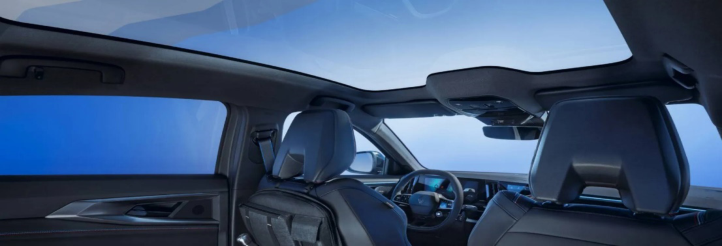
Figure 1: Glass sunroof and panoramic windshields, example Renault Rafale (Renault Group, 2024).
The growing use of large glass surfaces, especially panoramic canopies, has become a defining design trend in modern vehicles, creating openness and a premium cabin experience (Globe News Wire, 2022 & Figure 1). However, these expanded glass surfaces introduce challenges, particularly regarding perceived thermal comfort and energy management (Penning, 2023). Increased solar load makes maintaining a pleasant cabin climate more complex and heightens the need for advanced glazing solutions that ensure consistent performance and system qualities (Flemisch et al., 2024). These
demands are further intensified by global climate trends, including more frequent heat waves (IPCC, 2023), making effective thermal management crucial for vehicle usability and user satisfaction.
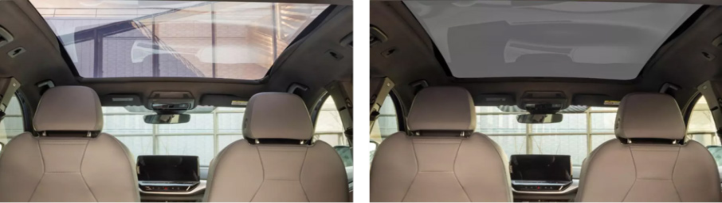
Mechanical shutters have traditionally been used to reduce solar radiation. Recent developments now offer coated glass with infrared (IR)-reflective and low-emissive properties, as well as switchable glazing such as Saint-Gobain Sekurit’s AmpliSky Ombra (Saint-Gobain 2025 & 2026, see Figure 2), which transitions from clear to opaque within milliseconds. These technologies enable dynamic shading and maintain comfortable cabin temperatures without excessive heating, ventilation and air conditioning (HVAC) demand. Their energy-saving benefits, well established in the building sector (Schaefer et al., 1997; Zhang et al., 2025), are increasingly leveraged in the automotive sector, especially for improving efficiency in electric vehicles (Dimovski, 2016; Manfre, 1991; Türler et al., 2003).
Figure 2: Saint-Gobain Sekurit AmpliSky Ombra, clear (left) and opaque (right) state (Saint-Gobain, 2026).
Despite proven technical performance to protect from the sun in a way no worse from having a physical shutter closed underneath a glass canopy, through simulation and testing, there are still voices arguing that a shutter is necessary for thermal comfort. The arguments mainly relate to users’ perception or acceptance, specifically that occupants without a shutter may feel less protected from the sun and therefore less comfortable.
This study evaluates perceived thermal comfort in vehicles with different glass canopy technologies under real summer conditions. By combining subjective assessments with objective measurements, coatings and switchable interlayers are compared against a mechanical shutter. The findings aim to improve understanding of user perceptions and address common misconceptions about glass canopies.
METHOD & MATERIALS In order to assess the perceived thermal comfort of users in vehicles with different glass roof technologies, a field study was conducted. The following section details the study design, the materials and methods used.
Study Design In this within-subject design user study, the effects of three different roof technologies on thermal comfort were investigated. The roof technologies
Perceived Thermal Comfort in Vehicles With Glass Canopies 313 “glass roof”, “switchable roof”, and “shutter” created the independent variable. The dependent variables consisted of temperature sensation, perceived comfortableness, stickiness, satisfaction, acceptability, and roof preference, as well as perceived quality and willingness to pay. Prior to answering the questions on perceived quality and willingness to pay, participants received standardized information about the anti-solar coating properties of the glass roof. Consequently, the related hypotheses (H7, H8) refer to the “anti-solar coating” (see Table 2). Before these questions, during the randomized blind test, participants were not made aware of the study being about the thermal protection properties of the different technologies and their influence on thermal perception. The study was conducted in early July 2025 over a two-week period in Tarragona, Spain. The location and date were chosen specifically to ensure hot summer conditions and high solar radiation during the tests. The three different vehicles were evaluated in a randomized order and with otherwise identical thermal conditions. The following tables provide an overview of the tested hypotheses.
Table 1: Hypotheses for comparison of “glass roof”, “switchable roof” and “shutter” in randomized blind test.
Table available in the original PDF paper.
H1 There is a difference in temperature sensation between glass roof, switchable roof, and shutter.
H2 There is a difference in the level of perceived comfortableness between glass roof, switchable roof, and shutter.
H3 There is a difference in the level of perceived stickiness between glass roof, switchable roof, and shutter.
H4 There is a difference in the level of satisfaction between glass roof, switchable roof and shutter.
H5 There is a difference in the level of acceptability between glass roof, switchable roof and shutter.
H6 There is a difference in the preference between glass roof, switchable roof and shutter.
Table 2: Hypotheses for post-test analyses for comparison of “anti-solar coating”, “switchable roof” and “shutter”.
Table available in the original PDF paper.
H7 There is a difference in the perceived quality between anti-solar coating, switchable roof and shutter.
H8 There is a difference in the willingness to pay between anti-solar coating, switchable roof and shutter.
Materials
Three identical Volkswagen ID.4 vehicles equipped with three different glass canopy technologies were presented to participants. One vehicle featured a glass canopy with an infrared-reflective, low-emissivity coating (“glass roof”). A second vehicle combined the same coating with a switchable interlayer that could be adjusted between clear and opaque states (“switchable roof”). The third vehicle was equipped with a standard glass roof with a closed mechanical roller blind (“shutter”).
The roofs differed in reflective and transmissive properties (see Table 3), including TL (percentage of visible light transmission) and TTS (percentage of the solar energy that reaches the interior, transmittance plus secondary heat transfer). The glass roof and the switchable roof in its clear state showed similar values, while the opaque state had a significantly lower TL. Haze levels (percentage of the perpendicular incoming light that deflects from the straight line at an angle of more than 2.5°) were likewise comparable for the glass and clear switchable roof, both perceived as transparent, whereas the opaque state shows a value on the opposite side of the spectrum.
The shutter being closed underneath a standard glass canopy in the third vehicle results in a TL value close to the one of the switchable roof in its opaque state and a TTS value slightly higher than that of the roof with coatings and the switchable one in its clear state. A haze value is not measurable for the shutter, since its material is highly anisotropic and inhomogeneous.
Table 3: Properties of the different vehicle roofs with standard roof values (open shutter) for reference.
Questionnaire The thermal comfort questionnaire was based on EN ISO 14505-3 (ISO, 2006). Demographic data was collected in the form of gender, age, weight, and height. Interest in technical developments was assessed with a short three- item scale similar to the technology affinity questionnaire TA-EG (Roesler et al., 2025). Additionally, participants were asked about the car they drive most often as well as the AC temperature they set.
The main questionnaire assessed immediate thermal comfort using the scales for thermal sensation, perceived comfortableness, perceived stickiness, temperature preference, and acceptability and satisfaction regarding the current environment from EN ISO 14505-3 (ISO, 2006). Since separate questions for head, torso (front and back), arms, legs (upper and lower, left and right) and feet as defined by EN ISO 14505-3 (ISO, 2006) proved to be not viable in pre-tests due to time constraints, modified questions were asked as sensations for the entire body and an additional question about local deviations from this overall feeling was added: “Is there any part of your body where the thermal sensation differs considerably from the rest of your body?”. If the participants answered “yes”, subsequent questions regarding which body part was affected and whether it was perceived as hotter or colder than the rest of the body were asked. If participants answered “no” to either of the two questions about acceptability and satisfaction, the reason for this answer needed to be given.
Perceived Thermal Comfort in Vehicles With Glass Canopies 315 The post-questionnaire aimed to assess preference, perceived quality and willingness to pay for the different canopy technologies, explicitly targeting evaluative judgments rather than the perceptual responses measured according to EN ISO 14505-3. Participants were asked to rank the three vehicles based on their preference regarding thermal comfort and to explain their ranking. With the knowledge about the anti-solar coating on the glass, they ranked the vehicles a second time with regard to perceived quality of the solar protection technologies. To assess willingness to pay, participants were asked the following questions: “Imagine you are buying a 35.000 € new car, how much on top of the 35.000 € would you personally pay for the options below?” for the three given options, switchable glazing, anti-solar coating, standard glass roof with mechanical shutter.
Objective Measurements The vehicles were equipped with sensors to collect objective data for comparison with participants’ responses and theoretical thermal comfort models. Recorded invehicle parameters included radiant and air temperature, humidity, air velocity and glass canopy temperature. Additional outdoor measurements captured radiant and air temperature as well as solar radiation. The results of these objective data are not discussed in this paper but are analyzed in subsequent work.
Sample The sample of N = 30 participants was in concurrence with the a priori Power analysis (~34; f = 0.25, 𝛼 = 0.05). It was balanced by gender (50 % male, 50 % female) and included participants aged between 22 and 65 years (Mean = 43.87, Md = 46, SD = 13.07). Half of the participants had either purchased a new vehicle within the past year or were planning to do so soon.
Procedure Each participant completed the same two-hour procedure. After arrival, they spent about 20 minutes in a climatized room to standardize metabolic rate. During this time, they filled out the first questionnaire (demographics, technology openness) and reported their usual in-vehicle air conditioning (AC) temperature. The AC settings of the test vehicles were adjusted accordingly to ensure perceived differences were not influenced by non-preferred AC settings. In addition, clothing was assessed by the experiment supervisor to determine the clo-value.
Participants were then guided to the test vehicles, positioned on an unobstructed parking lot facing south. The testing times were chosen to ensure a sun altitude angle that is sufficient for the sun to shine on the participants mainly through the roof, rather than the side windows or windshield. The order in which participants experienced the three vehicles was randomized.
For each vehicle, participants spent 20 minutes. They answered identical questions in each vehicle on thermal sensation, comfort, stickiness, temperature preference, acceptability and satisfaction at the beginning, after 10 minutes, and after 20 minutes. Between questionnaires, they played a simple video
game on a tablet to simulate the driving workload. After experiencing all vehicles, participants filled out a final comparative questionnaire on their preference of the different roofs. Before answering the questions on perceived quality and willingness to pay, the participants were informed about the specific anti-solar coating properties of the glass roof (“anti-solar coating”).
Data Analysis For the analysis of data, jamovi version 2.6 (Jamovi, 2024) was used. Every analysis was conducted for the first and last measurement point of the thermal comfort questionnaire. Since no difference between measurement point one and three could be observed, the reported results will only include the data from the last measurement point at 20 minutes after entering each vehicle. These were deemed the most relevant, because any effects from being outside during changing of the vehicles, or from the interior of the vehicle not being at the correct temperature because the doors were opened to enter are minimal.
To test for differences in temperature sensation (H1), perceived comfortableness (H2), stickiness (H3), preference (H6), perceived quality (H7), and willingness to pay (H8) between the three canopies, a Friedman test was used due to ordinal data scales. In the case of a significant result, pairwise comparisons in the form of Wilcoxon signed-rank tests for paired samples with Bonferroni correction would be conducted to determine which groups differ. To determine whether there was a difference in satisfaction (H4) or acceptability (H5) between glass roof, switchable roof and shutter, Cochran’s Q test had to be used due to the binary answer format. Effect sizes were calculated for each analysis.
EN ISO 14505-3 (ISO, 2006) defines cutoff values for the mean answer for each question as well as for the numbers of outliers per question (see Table 4). If these values are exceeded, thermal comfort is not given. The number of outliers was scaled to the sample size of N = 30, from 3 out of 8 as defined in the standard to 12 out of 30 for this study.
Table 4: Cutoff values for thermal comfort according to EN ISO 14505-3.
Table available in the original PDF paper.
Scale Median Outliers If any 12 answers are: > +2 (warm) OR < −2 (cool) Thermal sensation (cold to hot) [−3 to +3] > +1 (slightly warm) OR < −1 (slightly cool)
Level of discomfort [0 to +3]
> +1 (slightly uncomfortable)
If any 12 answers are: > +2 (uncomfortable)
Level of stickiness [0 to +3]
> +1 (slightly sticky) If any 12 answers are: > +2 (sticky) If any 12 answers are: > +2 (warmer) OR < −2 (cooler)
Temperature preference (colder, hotter) [−3 to +3]
> +1 (slightly warmer) OR < −1 (slightly cooler)
Satisfaction [Yes/No]
If > 12 answers are: “not satisfying”
Acceptability [Yes/No]
If > 12 answers are: “not acceptable”
RESULTS
The results show that in all vehicles at all times during testing, the mean value and the number of outliers were within the limits defined by EN ISO 14505-3. Therefore, thermal comfort was given in all vehicles at all times.
Tests of the hypotheses H1–H5 revealed no statistically significant differences between the three canopy technologies in terms of temperature sensation (p = .241), perceived comfort (p = .072), perceived stickiness (p = .247), satisfaction ratings (p = .651) and acceptability (p = .311).
When comparing the preference for three roof technologies (H6) on a three- tiered ranking, a significant result was found (χ2(2) = 18.9, p < .001, Kendall’s W = 0.315), indicating that there are statistically significant differences in the preference between the three canopy technologies, where switchable roof (Mean = 1.37) is preferred over the mechanical shutter (Mean = 2.20) (p < .001) and over the glass roof (Mean = 2.43) (p < .001), but with no significant difference between the shutter and glass roof (p = .288).
The analysis for H7 shows that after having been informed that the study is about sun protection and that the glass roof vehicle has protective anti-solar coatings, there are statistically significant differences in the perceived quality of the different sun protection technologies of the canopies (χ2(2) = 12.8, p = .002, Kendall’s W = 0.213), where switchable roof (Mean = 1.47) is evaluated higher on the three-tiered ranking than the mechanical shutter (Mean = 2.27) (p = .001) and the anti-solar coating (Mean = 2.27) (p = .001). There is no significant difference between the shutter and the anti-solar coating (p = 1.000).
The statistical tests for H8 demonstrate that there are statistically significant differences in the willingness to pay between all three canopy technologies (χ2(2) = 28.5, p < .001, Kendall’s W = 0.475). Willingness to pay was rated significantly higher for the switchable roof (Mean = 1.802 €) than the anti- solar coating (Mean = 1.328 €) (p = .014), and anti-solar coating was rated significantly higher than the mechanical shutter (Mean = 792 €) (p < .001). The difference between the highest ranking (switchable roof) and lowest ranking (shutter) was also significant (p < .001).
DISCUSSION
The fact that thermal comfort was given in all vehicles (based on EN ISO 145053) and there are no statistically significant differences in perceived thermal comfort in between the vehicles show, that a mechanical shutter is not needed to ensure thermal comfort. If the tested coated and/or switchable glazing technologies are being used, the same level of thermal comfort can be achieved, while maintaining the open feeling of a glass roof, which is lost when closing the shutter. This gives car manufacturers (OEM) the possibility to increase head clearance and reduce weight, cost, and complexity by omitting the mechanical shutter and instead opting for advanced glazing technologies. It could also be shown that, while ensuring the same level of
thermal comfort as a closed shutter and a coated roof, the switchable roof was preferred over these technologies.
The switchable roof was also of a higher perceived quality than the other roofs and users showed a higher willingness to pay for it, followed by a coated roof with the second highest willingness to pay, and the mechanical shutter with the lowest. Therefore, potential higher cost for the glazing technologies can be compensated for by charging higher prices for them. Future research is needed to compare the tested with other coated products, e.g. windshields, and in other regions, especially considering different UV awareness in different regions (e.g. lower levels if awareness in Europe and higher awareness in Australia/New Zeeland). Other factors like general usage of sunscreen, protective clothing and parasols (e.g. China) could influence the subjective ratings and should be further investigated (Heckman et al., 2019).
CONCLUSION
The user study results offer valuable insides into the end users’ perception of different thermal protection technologies. The thermal comfort in vehicles with glass canopies featuring different thermal protection technologies was observed to be equivalent, contradicting the common misconception that a mechanical shutter is necessary to ensure thermal comfort. The tested coated and/or switchable glazing products ensured the same level of thermal comfort while maintaining the open feeling a glass canopy provides and being preferred and of higher perceived comfort than a shutter. Therefore, thermal comfort and transparency for a premium cabin experience can be simultaneously enjoyed by end-users with a coated glass roof since it provides a level of comfort as satisfactory as the one with a closed shutter. There is also a higher willingness to pay for these technologies, the switchable roof being of the highest value. The findings have important implications for automotive design, suggesting that advanced glazing technologies can deliver equivalent or superior comfort and user satisfaction, potentially enabling manufacturers to optimize vehicle architecture and reduce reliance on mechanical shutters.
REFERENCES
Alfano, F. R. D., Bellia, L., Fragliasso, F., Palella, B. I., & Riccio, G. (2019). Thermal comfort and visual interaction: a subjective survey. IOP Conference Series Materials Science And Engineering, 609(4), 042061. ANSI/ASHRAE (2013). Standard 55-2013: Thermal Environmental Conditions for
Human Occupancy. ANSI/ASHRAE. Cheng, Y., Niu, J., & Gao, N. (2012). Thermal comfort models: A review and numerical investigation. Building And Environment, 47, 13–22. Cheung, T., Schiavon, S., Parkinson, T., Li, P. & Brager, G. (2019). Analysis of the
accuracy on PMV – PPD model using the ASHRAE Global Thermal Comfort Database II. Building And Environment, 153, 205–217. Chinazzo, G., Wienold, J., & Andersen, M. (2018). Combined effects of daylight transmitted through coloured glazing and indoor temperature on thermal responses and overall comfort. Building And Environment, 144, 583–597.
Perceived Thermal Comfort in Vehicles With Glass Canopies 319 Danca, P., Bode, F., Meslem, A., Croitoru, C., Sandu, M., Nastase, I., Lungu, C., &
Batali, L. (2021a). Experimental investigation of thermal vehicular environment during the summer season. Science And Technology For The Built Environment, 28(1), 42–54. Danca, P. A., Nastase, I., & Bode, F. (2021). The influence of different air flows introduced on the thermal comfort of car passengers during the cooling period – Numerical Study. IOP Conference Series Earth And Environmental Science, 664(1), 012112. Dimovski, M. P. (2016). Alternative solutions in automotive HVAC systems.
Comfort, efficiency and sustainability in car cabin temperature control (Master thesis, Design and Engineering). Politecnico Milano, Milan. Fanger, P. O. (1970). Thermal comfort: Analysis and applications in environmental engineering. Danish Technical Press. Flemisch, F., Preutenborbeck, M., Herzberger, N., & Wasser, J. (2024). Vom
Teufelsquadrat zum nachhaltigen Engelsdiamanten und holistischen Bow-Tie- Modell: Methodenentwicklung für die ganzheitliche Analyse, Gestaltung und Entwicklung von nachhaltigen Arbeitssystemen. Zeitschrift für Arbeitswissenschaft, 78(2), 146–159 Globe News Wire. (2022). Automotive glass global market report: Increasing applications of glass in SUVs & penetration of smart glass and sunroofs drives growth. Retrieved on january 30 2026, from https://www.globenewswire.com/ news-release/2022/12/05/2567429/28124/en/Automotive-Glass-Global-Market- Report-2022-Increasing-Applications-of-Glass-in-SUVs-Penetration-of-Smart- Glass-and-Sunroofs-Drives-Growth.html. Heckman, C. J., Liang, K., & Riley, M. (2019). Awareness, understanding, use, and
impact of the UV index: a systematic review of over two decades of international research. Preventive medicine, 123, 71–83. IPCC. (2023). Synthesis Report, Summary for Policymakers. Contribution of Working Groups I, II and III to the Sixth Assessment Report of the Intergovernmental Panel on Climate Change [Core Writing Team, H. Lee and J. Romero (eds.)]. IPCC, Geneva, Switzerland. ISO. (2006). Ergonomie der thermischen Umgebung – Bewertung der thermischen
Umgebungen in Fahrzeugen – Teil 3: Bewertung der thermischen Behaglichkeit durch Versuchspersonen (ISO 14505-3:2006). Deutsche Fassung EN ISO 14505- 3:2006. ISO. Jamovi. (2024). The jamovi project - jamovi. (Version 2.6) [Computer Software].
Retrieved from https://www.jamovi.org. Ji, W., Cao, B., Luo, M., & Zhu, Y. (2017). Influence of short-term thermal experience on thermal comfort evaluations: a climate chamber experiment. Building and Environment, 114, 246–256. Manfre, G. (1991). Coated glass in the automotive industry. International Journal of
Materials And Product Technology, 6(3), 227–242. Penning, A. K., & Weibel, J. A. (2023). Assessing the influence of glass properties on cabin solar heating and range of an electric vehicle using a comprehensive system model. Applied Energy, 339, 120973. Renault Group. (2024). SolarBay Opacifying Sunroof : Spectacular innovation born
from a unique joint-development. Retrieved on january 30 2026, from https:// www.renaultgroup.com/en/magazine/our-group-news/solarbay-opacifying- sunroof-spectacular-innovation-born-from-a-unique-joint-development/
Roesler, E., Karrer-Gauß, K., & Siebert, F.W. (2025). The TAEG Questionnaire: Assessing Individual Affinity for Technology Across Different Countries. Proceedings of the 2025 CHI Conference on Human Factors in Computing Systems. Saint-Gobain. (2025). Saint Gobain Sekurit ComfortSky® - Your glass roof for any
weather. Retrieved on january 30 2026, from https://www.saint-gobain-sekurit. com/and-preserving-our-future/enabling-sustainable-mobility/comfortskyr Saint-Gobain. (2026). Saint-Gobain Sekurit AmpliSky® Ombra – Interactive antiglare and privacy solutions for roof glazings. Retrieved on january 30 2026, from https://www.saint-gobain-sekurit.com/ampliskyr-ombra Schaefer, C., Bräuer, G., & Szczyrbowski, J. (1997). Low emissivity coatings on
architectural glass. Surface and Coatings Technology, 93(1), 37–45. Türler, D., Hopkins, D., & Goudey, H. (2003). Reducing Vehicle Auxiliary Loads Using Advanced Thermal Insulation and Window Technologies. SAE Technical Papers. 10.4271/2003-01-1076. Yao, R., Zhang, S., Du, C., Schweiker, M., Hodder, S., Olesen, B. W., Toftum, J.,
D’Ambrosio, F. R., Gebhardt, H., Zhou, S., Yuan, F., & Li, B. (2022). Evolution and performance analysis of adaptive thermal comfort models – A comprehensive literature review. Building And Environment, 217, 109020. Zhang, Y., Li, S., Peng, Y., She, C., Dong, M., Li, K., Yang, F., Hou, W., Gao, H., Wu, C., Huang, B., Zhou, J., Chow, P. C., & Yin, X. (2025). Scalable low-emissivity and RF-transparent dielectric coatings for year-round energy-saving buildings under all weather conditions. Materials Today, 91, 244–252.
LISTED IN THE AHFE DIGITAL BOOKSTORE CATALOGUE
Explore the complete digital volume
Advances in Human Factors of Transportation
Read this individual research paper free through the original publisher, or explore the full digital proceedings book.
ISBN 979-8-950676-00-0
Explore this ISBN in the AHFE Bookstore ↗Listed in the July 2026 bookstore catalogue; search by ISBN to confirm current availability · Digital book purchase optional