Yuki Aoki (2026). Paper Vision Town: Designing an Interactive System to Experience Color-Vision Diversity and Color Universal Design. In: Human Factors and Systems Interaction. AHFE Open Access, vol. 230, pp. 1–6. https://doi.org/10.54941/ahfe1007971
Understanding the diversity of human color vision is essential for creating inclusive environments and products. Although color universal design (CUD) principles have been widely discussed in design and human-factor research, opportunities for non-experts to experientially understand color-vision diversity remain limited. Many individuals with typical color vision find it difficult to imagine how visual information is perceived by individuals with color-vision deficiencies, which can hinder the effective application of CUD in real-world design practices. To address this issue, this study proposes an experiential learning system called Paper Vision Town, which enables participants to intuitively understand color-vision diversity and the importance of universal color design through hands-on exploration.Paper Vision Town is a paper-based educational system that represents a city environment. Two versions of a city were developed: one designed for individuals with typical color vision and another simulating the visual perception of individuals with deuteranopia, one of the most common types of color-vision deficiencies. The visual elements of the cities, such as signs, maps, buildings, and public information, were carefully designed to reflect differences in color perception, while maintaining identical layouts and functional structures. In addition, a set of theme cards was created to guide participants’ exploration. Each theme card presents a specific task or scenario such as finding a destination, identifying important information, or navigating a city.First, participants select a theme card and then explore both city versions according to a given task. By comparing their experiences in the two cities, participants can directly observe how differences in color vision affect visibility, information recognition, and usability. This comparative exploration allows participants to recognize the challenges faced by individuals with color-vision deficiencies and effectiveness of design strategies based on color universal design such as the use of luminance contrast, patterns, shapes, and redundant visual cues.The proposed system emphasizes experiential, rather than abstract, explanations. Through physical interaction and visual comparison, participants are encouraged to reflect on their own assumptions about visual perception and develop empathy toward users with different color-vision characteristics. Paper Vision Town can be used in educational settings, workshops, and design training programs to support learning about inclusive designs and human factors.This study contributes to the field of applied human factors and ergonomics by presenting a tangible and easily deployable method for communicating color-vision diversity. The results suggest that hands-on comparative experiences are effective in raising awareness of universal color design and promoting the practical application of inclusive design principles. The proposed approach highlights the importance of experiential learning tools in bridging the gap between theoretical knowledge and real-world design practice.
Human color vision exhibits substantial individual variability. Differences in spectral sensitivity and neural processing produce a wide range of color- perception experiences that affect how people recognize information, make decisions, and interact with their environments. In Japan, approximately 5% of men and 0.2% of women have some form of color-vision deficiency, indicating that color-vision diversity is not a marginal issue but one that affects a significant portion of the population. Consequently, perceptual differences in color vision influence safety, usability, and accessibility in everyday contexts, including public signage, transportation systems, consumer products, and digital interfaces.
Color Universal Design (CUD) has been proposed as a systematic approach to mitigate communication failures caused by color differences and to ensure that visual information is understandable to a broad range Received February 6, 2026; Revised April 4, 2026; Accepted April 21, 2026; Available online July 20, 2026
2 Sueki and Aoki of users. In Japan, the CUD has been actively promoted through guidelines, certification systems, and educational materials, particularly in the design of public infrastructure and information displays. Although these initiatives have contributed to increased awareness and institutional adoption, many designers and non-experts still lack an experiential understanding of how color-vision diversity manifests in real-world tasks.
It is often difficult for individuals with typical color vision to clearly imagine how visual information appears to people with different color-vision characteristics. This gap between conceptual knowledge and perceptual experience can hinder the effective application of CUD principles in everyday design practice. Designers may understand the recommended rules in theory but fail to anticipate how specific design choices—such as subtle hue differences or insufficient luminance contrast—can affect information recognition and task performance.
From an applied human-factor perspective, presenting human characteristics merely as abstract knowledge is insufficient. Instead, these characteristics should be operationalized as design constraints and interaction scenarios that support understanding, empathy, and informed decision- making through human–system interactions.
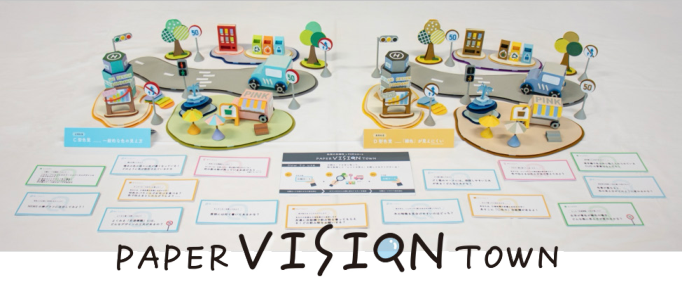
Figure 1: Paper vision town.
RELATED WORK AND POSITIONING Research on color-vision diversity has accumulated over the years, focusing on the physiological mechanisms of vision, classification of color-vision types, and perceptual effects on color discrimination and visibility. These findings have provided practical design strategies, such as maximizing the luminance contrast, avoiding problematic color pairings, and incorporating redundant non-color cues.
Color-vision simulation tools are useful for previewing how designs appear under specific conditions. Still, they often present static representations removed from task contexts, making it difficult to understand their behavioral impacts. Therefore, experiential and interaction-driven learning approaches are required.
CONCEPT AND DESIGN RATIONALE The design of Paper Vision Town is grounded in three applied human factors principles: operationalizing perceptual differences as design constraints, situating learning in a familiar context, and enabling active task-driven interaction.
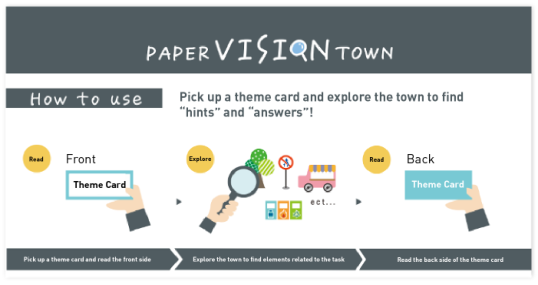
Figure 2: Learn about color-vision diversity and color universal design (CUD).
First, perceptual differences were operationalized by embedding color- vision characteristics directly into visual representations of the environment. Instead of abstractly describing color-vision diversity, the system allows participants to observe how specific design choices affect visibility and information recognition.
Figure 3: Intentionally non-inclusive design element.Figure 4: Example of hatching represented using paper media.
4 Sueki and Aoki Second, an urban streetscape was selected as the learning context because it contains numerous familiar color-based elements, such as signage, wayfinding, and public notices. This everyday context reduces cognitive load and facilitates the transfer of insights into real design situations.
Figure 5: Urban streetscape.
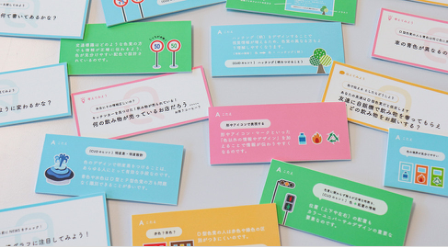
Third, the system employs task-driven interactions using theme cards that present concrete scenarios, such as locating a destination or identifying key information. These tasks encouraged participants to explore, compare, and make judgments, allowing them to discover perceptual differences through actions rather than explanations.
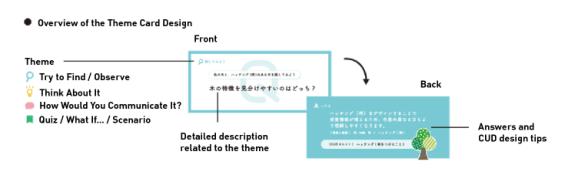
Figure 6: Designed theme cards.Figure 7: Overview of the theme card design.
A paper-based physical system was adopted to support embodied interactions. Tangible artifacts enable participants to manipulate objects, change viewing distances, and experience perspective effects. Paper models are inexpensive, portable, and easy to deploy in educational and workshop settings.
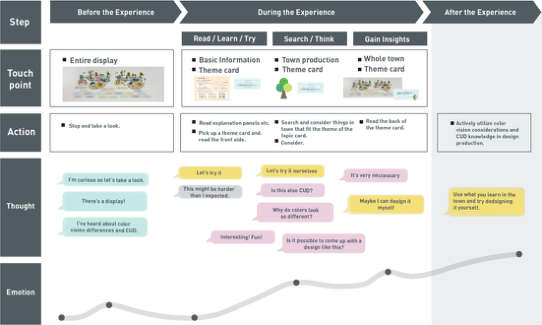
SYSTEM DESIGN Paper Vision Town consists of two paper-based city models placed side by side, a set of theme cards, and supporting materials. Both city models share identical spatial layouts, including building placements and road structures, ensuring that perceived differences arise primarily from visual representations rather than structural variations. One city was designed using color schemes optimized for typical color vision, whereas the other applied visual representations simulating deuteranopia based on established color-transformation methods. Some elements intentionally omit CUD considerations to highlight the contrast between inclusive and non-inclusive designs. The key CUD techniques implemented in the system include luminance contrast adjustment, redundant encoding using shapes and icons, the use of patterns and outlines, and explicit textual labeling. Theme cards guide experiences by framing tasks and scenarios. Participants completed the same tasks in both cities and then compared their experiences, supported by facilitator-led reflection.
Figure 8: Customer journey.
EXPERIENCE PROCESS AND APPLICABILITY Paper Vision Town supports both short workshop sessions and longer instructional activities. Informal pilot implementations with design students and mixed professional audiences showed consistent qualitative outcomes: participants became more aware of their reliance on color, identified concrete design improvements, and expressed greater motivation to apply CUD strategies. This system can be applied to design human factors education, professional training workshops, and public exhibitions to raise awareness of perceptual diversity. Its paper-based nature allows flexible scaling, cultural adaptation, and easy transportation.
DISCUSSION AND CONCLUSION Paper Vision Town operationalizes color-vision diversity as an embodied, comparative learning experience that bridges the gap between theoretical
6 Sueki and Aoki knowledge and practical design decisions. Its contributions include translating perceptual diversity into observable interaction outcomes, providing a low- cost, deployable educational system, and demonstrating the effectiveness of comparative experiential learning in promoting awareness of inclusive design.
The limitations include the current focus on a single simulated color-vision type and sensitivity to environmental factors such as lighting. Future work should expand the range of simulated conditions, integrate complementary digital technologies, and introduce controlled evaluation methods to quantitatively assess learning outcomes.
In conclusion, Paper Vision Town demonstrated that low-tech, task- oriented comparative experiences can effectively support applied human- factor objectives. The system contributes to the field of Human Factors and Systems Interaction by offering a practical approach for fostering an experiential understanding of color-vision diversity and universal color design.
REFERENCES
CUDO – Color Universal Design Organization (2024a). What is Color Universal Design (CUD). Available at: https://cudo.jp (Accessed: 6 February 2026). CUDO – Color Universal Design Organization (2024b). What is Color Vision
Diversity. Available at: https://cudo.jp (Accessed: 6 February 2026). CUDO – Color Universal Design Organization (2024c). Examples of CUD-Certified Designs. Available at: https://cudo.jp (Accessed: 6 February 2026). CUDO – Color Universal Design Organization (2024d). CUD-Certified Products and
Systems Awarded the Good Design Award. Available at: https://cudo.jp/?page_ id=9877 (Accessed: 6 February 2026). CUDO – Color Universal Design Organization (ed.) (2007). Guidebook of Color Universal Design. Tokyo: Kyoiku Shuppan. Japan Color Certification Institute (2022). Official Textbook for Color Certification
UC Level: Color Universal Design (Revised edition). Tokyo: Japan Color Certification Institute.
LISTED IN THE AHFE DIGITAL BOOKSTORE CATALOGUE
Explore the complete digital volume
Human Factors and Systems Interaction
Read this individual research paper free through the original publisher, or explore the full digital proceedings book.
ISBN 979-8-950676-06-2
Explore this ISBN in the AHFE Bookstore ↗Listed in the July 2026 bookstore catalogue; search by ISBN to confirm current availability · Digital book purchase optional