Kristian Fettig, Arno Semke, Maria Hagl (2026). Towards Sustainable Operations of High Altitude Platforms: Optimizing Crew Configuration Through Task Distribution. In: Human Systems Engineering and Design (IHSED2026): Future Trends and Applications. AHFE Open Access, vol. 237, pp. 681–693. https://doi.org/10.54941/ahfe1008207
High Altitude Platforms (HAPs) are uncrewed aerial vehicles flying in the higher stratosphere, providing a unique platform to observe and monitor a specific area of interest on earth’s surface continuously for a longer time period and thus complementing satellite-based observations. The German Aerospace Center has developed a solar powered heavier-than-air HAP named HAP-α which has the capability to stay airborne for several weeks.To enable sustainable operations for HAPs, an increasing concern regarding crew size and operational efficiency has emerged. Even flight testing in its operating environment in the higher stratosphere will require missions with continuous piloting and supervision for at least 16 hours, as further automation to facilitate a reduced crew in skill a size will highly rely on this crucial step. Questions about feasible crew size and skill profile, possible underutilization of crew members and conflicts with mandatory rest periods have to be answered.This paper addresses the necessity of maintaining operational safety while simultaneously reducing crew numbers to foster sustainable operation of the HAP-α. We propose a two-step methodological approach, consisting of a preliminary competency analysis and a subsequent simulator campaign to assess subjective workload of individual crew members. Given the novelty of the system and the absence of established crew design standards or formalized competency frameworks or a comprehensive, structured knowledge, skills, abilities (KSA) portfolio, the initial test crew was selected according task profiles and a best-fit approach based on expert judgement and early operational considerations. Analysis of crew competency profiles utilizing the EASA Evidence Based Training (EBT) framework uncovers relevant competency portfolios. Insights gained from subjective workload data recorded during a weeklong simulator campaign under normal and abnormal operating conditions inform our understanding of task distribution and its impact on subjective workload. This approach necessitates a careful evaluation of workload and competency overlap between roles. Specifically, we will assess whether the workload associated with two roles is sufficiently low to justify their consolidation and whether the competency profile required for these roles share enough overlap to facilitate this merger. If consolidation proves impractical, we will consider an equitable distribution of tasks within the remaining roles, focusing on optimal alignment with skill sets and workload parameters.
Earth observation from above with a large number of different sensors forms the data basis for a variety of services and processes, ranging from RGB-image recordings with small Unmanned Aerial Vehicles (UAV), airborne gravimetric and magnetometric data collection at low altitude with conventional airplanes to weather satellites in a geostationary orbit. A promising, but still unrealised contribution is earth observation from the lower stratosphere by airplanes, which use solar generators to compensate for the biggest disadvantage of conventional aircraft with their dependence on energy sources carried from the outset and thus inadequately limited flight time. This new category of airplanes called high-altitude-platforms (HAPs) operate at around 20km in the lower stratosphere, largely without disturbing Received June 30, 2026 Revised July 9, 2026 Accepted July 25, 2026 Available online September 25, 2026
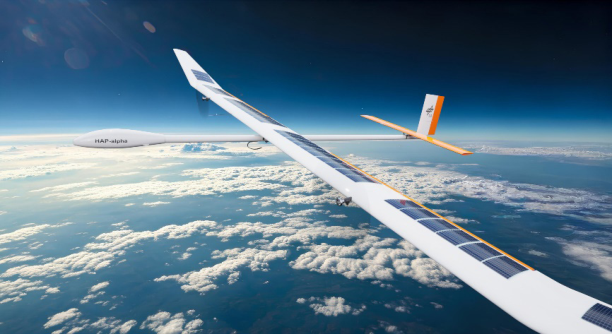
commercial civil aviation and unaffected by weather in the troposphere, an essential element to maximise harvesting of solar radiation undisturbed by cloud coverage. To further investigate these topics and enable advancements towards fully solar powered HAPs with substantial payload, able to perform sustained flights in the stratosphere, the German Aerospace Center (DLR) is developing the HAP-alpha platform (Nikodem, 2023) (see Figure 1).
The HAP-alpha is an unmanned, 27-meter wingspan conventional configuration airplane with a take-off mass of 140kg, with 5kg payload capacity. It is designed to operate at 20km altitudes for at least two hours continuously to enable testing of payloads at mission altitude, being propelled by dual electric propulsion powered by batteries and solar cells. Design constraints imposed by the operating environment results in a very narrow flight envelope and limited manoeuvrability, while low automation in the development stage and system complexity requires a constant system monitoring. The projected mission time is at least 16 hours, consisting of ascent, two hours at altitude and descent. Further development stages are projected to enable continuous multi-day operation in the stratosphere. Currently, Airbus subsidiary AALTO (AALTO, n.d.) and Korea Aerospace Research Institute (KARI) (Choi et al., 2025) are developing and testing similar platforms. Until now, no HAP project has yet reached the stage of maturity for commercialisation.
Figure 1: HAP-α high altitude plattform UAS (DLR, 2024).
The HAP-alpha was consistently designed as an UAS (Unmanned Aerial System) from the outset. The goal of a mission duration of several weeks in the stratosphere is not suitable for a manned system simply because of the constraint of the human crew not being able to sustain this long a period. Currently, the operation of the HAP-alpha requires, at minimum in dual staffing, a large crew of system experts, pilots, and supporting crew. This is partly due to the prototype stage and partly to the remaining uncertainties regarding the system’s behavior during a mission under extreme conditions (e.g. very low air density, high velocity winds). At present, almost all safety- critical flight tasks are distributed among four flight crew roles consisting of the Remote Pilot (RP), the Remote Pilot Support (RPS), the Flight Test
Towards Sustainable Operations of High Altitude Platforms 683 Engineer (FTE) and the Flight Director (FD). Accordingly, this paper focuses on the flight crew only. Due to the novelty of the UAS, flight crew roles and responsibilities were initially defined based on the best available system knowledge and operation expert judgment. In a subsequent step, their applicability and behavior under operational conditions had been tested, evaluated, and refined through simulator-based exercises (Hagl et al., 2026). Derived high-level tasks and initial responsibilities of each flight crew member are described in Table 1.
Table 1: HAP crew roles and corresponding high-level tasks and responsibilities.
Table available in the original PDF paper.
Role name High-Level Tasks and Responsibilities Remote Pilot (RP) Directly controlling the aircrafts flight state and path by manipulating input devices consisting of sidestick and throttle levers in a HOTAS-setup with additional rudder pedals. Responsible to keep the aircraft within the extremely narrow flight envelope.
Remote Pilot Support (RPS)
Managing the flight path by advising heading and altitude to the RP considering the current wind, flight area limitations and mission tasks. Assists the RP in adhering to the flight envelope and by callouts in critical flight phases such as final approach. When active, configuring the autopilot or selecting preplanned waypoint missions. Activates predefined, automatically injected flight test manoeuvres.
Flight Test Engineer (FTE)
Monitoring the systems of the aircraft, especially drivetrain parameters such as temperatures and battery state-of-charge as well as actuator behaviour over time. Has limited means of trouble shooting in case of subsystem failures by restarting individual sub system through power bus shut down. Will advise the Flight Director accordingly on the degradation of the overall system and possible consequences.
Flight Director (FD)
Guiding the crew through checklists, flight test manoeuvres and emergency procedures. Communicating with third parties such as ATC and test site personnel. As Pilot-in-Command responsible for maintaining operational safety, mission success, monitoring crew performance and external conditions. Has the mandate and technical means to terminate the flight when out of control or exceeding flight area boundaries.
The expected mission duration of at least 16 hours, together with the maximum duty time of 10 hours for each individual flight crew member, requires the training of additional relief personnel. Furthermore, an additional standby crew is needed to fill in sick leaves and other personnel shortage. This poses a significant challenge from an organizational and resource perspective. Therefore, reducing the crew from four roles to three or even two represents an attractive option for improving operational viability. However, such a reduction involves more than a simple reallocation of individual tasks. To merge roles meaningfully, an analysis of crew role-specific competency structures might be helpful.
Within this context, established aviation training frameworks such as Competency-Based Training (CBT) and Evidence-Based Training (EBT) offer a structured basis for identifying, evaluating, and reinforcing the required
role competencies for safe and effective task performance. Following (ICAO, 2013), CBT has a focus on measuring performance and performance standards, whereas EBT has a focus on development and assessment of overall capabilities across a range of core competencies derived from operational data. In the broader aviation industry, it is largely driven by the industry’s need for enhanced safety, operational efficiency and effective crew performance. Two prominent sets of guidelines that address this evolution are the EBT Manual (ICAO, 2013) of the International Civil Aviation Organization (ICAO) and the European Union Aviation Safety Agency (EASA) EBT Manual (EASA, 2025), which adapts and expands the core framework of the former. It was recognised, that increasing complexity in modern airplanes led to increasingly non-standard failures, which necessitates a new strategy in crew training focusing more in developing specific competencies described in the EASA and ICAO guidelines, rather than focusing on mastering specific tasks. The methodology has been since expanded by implementing quantitative means to assess crew performance in an airline training environment (Sun et al., 2023; Zabirov, Zabirov, & Shestakov, 2022) and also been applied in other aviation domains (Buck et al., 2023; Ziakkas, Sarikaya, & Natakusuma, 2023). We propose, that the application of the evidence-based framework is well suited for the crew of HAP operations, as it seeks to prepare crew members not only for operational standard tasks but also for unexpected and abnormal situations likely to occur due to the largely unexplored operational and technical environment.
However, role consolidation is not only constrained by the distribution and availability of the competencies required to perform these tasks safely and effectively, but also by role-specific task demands. In fact, combining roles may lead to an uneven distribution of operational demands and may therefore change the mental workload experienced by individual crew members. This is crucial, as operator performance can be altered by either under- or overload (Brookhuis & de Waard, 2000). As defined by Longo et al. (2022, p. 18), mental workload refers to the activation of “a finite pool of resources” during task execution, influenced by external and situational factors as well as the operator’s capacity to cope with task demands in a given context. Accordingly, maintaining an adequate distribution of mental workload within operators is essential to ensure safe and effective HAP operations, especially under conditions of increased external stressors such as emergency situations.
To address the above-mentioned challenges related to crew role-specific competency analysis and experienced workload and mental stress, a two- step methodological approach was adopted, consisting of a preliminary competency analysis and a subsequent one-week simulator campaign.
METHOD
Selection of Core Competencies and Behavioural Indicators In a first step prior to the simulator campaign, core competencies and behavioural indicators in relation to the four crew roles were selected.
Towards Sustainable Operations of High Altitude Platforms 685 The ICAO defines core competencies (CC) as “A group of related behaviours, based on job requirements, which describe how to effectively perform a job and what proficient performance looks like.” (ICAO, 2013, p. xi). The eight core competencies originally identified in the ICAO document have been extended by EASA with ‘application of knowledge’ (EASA, 2025) and are displayed for reader convenience in Table 2. For extended definition and explanation of the individual competencies together with their behavioural indicators, refer to the EASA EBT manual.
Table 2: EASA core competencies.
Table available in the original PDF paper.
No Code Core Competency
0 KNO Application of knowledge
1 PRO Application of procedures
2 COM Communication
3 FPA Aircraft flight path management, automation
4 FPM Aircraft flight path management, manual control
5 LTW Leadership and teamwork
6 PSD Problem solving and decision making
7 SAW Situational Awareness
8 WLM Workload management
To make the CCs observable, the framework defines a set of behavioural indicators (BI) for each competency, further breaking it down and indicating overt, observable actions. The CCs and BIs were mapped to each role considering their tasks and responsibilities as well as the mission profile of HAP-alpha. The mapping was made through expert judgement by a panel of operation and human factor experts in a table-top setting, on the basis of experience gained from initial simulator sessions intended to develop procedures (Hagl et al., 2026). The result is presented in Table 3, the numbers corresponding to the enumeration of BIs as shown in the EASA EBT Manual (EASA, 2025, pp. 76). As anticipated, each role is expected to have some level of proficiency in each CC, with differences becoming apparent when further diving into the expected BIs.
The meaning of FPM and FPA was adapted to HAP operation so that FPM means manual control as in respect to no flight controller assisting the pilot is used. In contrast, FPA shall include the ‘Augmented’-mode of the HAP-alpha flight controller, a Rate Command Attitude Hold (RCAH) mode with additional envelope protection reducing workload significantly, which can be used by the RP in most flight phases baring take-off, certain failure conditions and flight test manoeuvres.
Table 3: Observed behaviours of crew members related to the core competencies.
Subjective Crew Role Workload Assessment Subjective workload of crew roles (i.e. FD, FTE, RP, RPS) was assessed during a weeklong simulator campaign. To ensure realistic operating conditions, a high fidelity simulator environment of the HAP-alpha was used. Moreover, user interfaces identical to those used in real flight were provided for each crew member. The crew composition remained the same across the campaign. In total, three simulation runs under normal conditions and five simulation runs under abnormal conditions were conducted. Each simulation run consisted of a standard mission with a 45-60 minute flight duration, depending on simulated flight conditions and injected failures to simulate abnormal operating conditions. Each mission included take-off, landing, and a series of mission items in manual and flight controller-assisted flight phases. It was deemed unfeasible to reproduce an altitude mission of 16 hours in the simulator, instead the standard mission was created to include most tasks and mission items to be expected in an altitude mission. Abnormal conditions included, for example, engine overtemperature, C2-link loss, sensor failure, and rapidly changing wind conditions.
To assess each crew member’s subjective workload, a set of standardized questionnaires was utilized, answered directly after each simulation run. The Bedford Workload Rating Scale (BWRS) (Stanton et al., 2017) was selected based on its association of task workload with the amount of spare resources the crew members feel they have while performing their duty tasks. This is seen as a suitable indicator of whether the individual crew member could potentially take on additional duties. Furthermore, BWRS has been extensively used in aviation context to estimate workload of pilots (Roscoe & Ellis, 1990) and UAS operators (Turpin et al., 2018). Also, it is suggested as a suitable tool to validate procedure complexity for UAS operations in the EASA UAS regulatory framework according to AMC2 UAS.SPEC.030(3)
Towards Sustainable Operations of High Altitude Platforms 687 (e) (EASA, 2022). Given that HAP operations go beyond individual task execution and require team communication, coordination, and monitoring of shared tasks, the ‘team workload’ subscale of the Team Workload Questionnaire (TWQL , Sellers et al., 2014) was selected. TWQL has been applied specifically in context of UAS crew performance analysis (Maeng & Itoh, 2025; Sellers et al., 2015).
RESULTS
Analysing Behavioural Indicator Distribution and Communalities To analyse BI distribution among crew roles, we first identified the matching BIs between each role. Subsequently, we calculated the percentage of matching BIs when comparing roles, enabling an initial assessment to which extent the roles share common BIs and are therefore candidates for consolidation from a competency perspective. The results are displayed in Table 4, the table is to be read as e.g. 79% of the BIs assigned to the FD are also assigned to the FTE, whereas 96% assigned to the FTE are also assigned to the FD, giving an indication to which extent qualification and training gaps would need to be filled amongst personnel who are already qualified for other roles. The roles with the most overlap are FTE and FD (79% and 96%), RPS and FTE (85% and 81%) and RP and RPS (84% and 75%). These pairings are analysed further as promising candidates for role consolidation.
Table 4: Percentage of matching behavioural Indicators comparing crew roles.
FD FTE RPS RP FD 96% 79% 77%
When examining the differences in the indicators between FTE and RPS roles, it is noticeable that the gaps are distributed relatively evenly. In total, the RPS is expected to show nine exclusive BIs in mainly FPA (6) and FPM (2) and to lesser extent in SAW (1). This is to be expected as FPA and FPM are competencies exclusive to RP and RPS as they are tasked with managing
the flight condition and navigation of HAP-alpha. Complementary, the FTE is expected to show additional seven BIs in KNO (1), LTW (1), WLM (1) and extensively in PSD (4), reflecting the role focused on system monitoring and troubleshooting.
Finally, the third highest overlap in indicators can be observed between RP and RPS, whereas RP has seven unique BIs in COM (1), FPM (3), LTW (1) and WLM (2) and RPS twelve unique in PRO (1), COM (2), FPA (3), FPM (1), LTW (1), PSD (1), SAW (2) and WLM (1). The BIs in FPM and WLM of RP can be explained by the task of maintaining control of HAP-alpha without any assistance by automation solely through ‘stick and throttle’. As this is a demanding task in itself, RP is encouraged to actively manage their workload by asking for assistance by other roles for example to monitor flight envelope parameters such as bank angle. The larger number of unique BIs of the RPS compared to the RP can be explained, on the one hand, by their responsibility to guide HAP-alpha using the autopilot and, on the other hand, by their role as the link between RP and the rest of the flight crew, as they must for example translate instructions such as ‘abort flight, go to land’ into navigational instructions for RP.
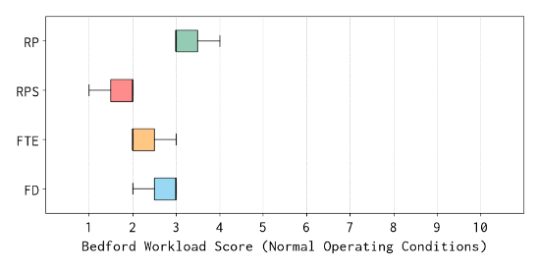
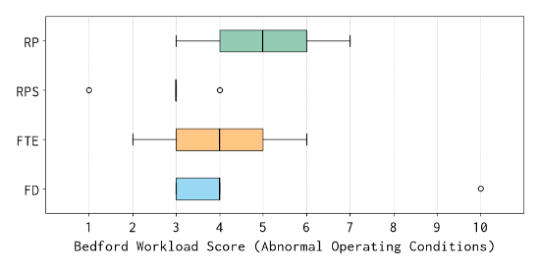
Subjective Evaluation of Workload and Team Workload Subjective workload was assessed after each simulation run through BWRS resulting in a scoring from 1 to 10. The results as shown in Figure 2 for normal operating conditions indicate that under normal conditions, the roles RPS (M = 1.67; SD = 0.58; p50 = 2.0), FTE (M = 2.30; SD = 0.58; p50 = 2.0) and FD (M = 2.67; SD = 0.58; p50 = 3.0) display low experienced workload in the ‘satisfactory without reduction’ range, while RP (M = 3.33; SD = 0.58; p50 = 3.0) has a slightly higher rating with workload ‘satisfactory tolerable’ in certain scenarios. Although the scenarios where similar to a high degree, the variation in the results could be explained through wind and turbulence conditions that varied to a certain extent as well as the training effect during the campaign. In contrast, under abnormal conditions all roles indicate a higher workload (see Figure 3), with RP (M = 5.0; SD = 1.58; p50 = 5.0) and FTE (M = 4.0; SD = 1.58; p50 = 4.0) showing the highest increase, followed by the FD (M = 4.80; SD = 2.95; p50 = 4.0) and RPS (M = 2.80; SD = 1.10; p50 = 3.0). In the scope of BWRS, RPS is the only role upholding the rating as ‘satisfactory without reduction’, while FD was wavering between this and ‘satisfactory tolerable’ with little variation compared to FTE, where the results range from score 2 to score 6 within the two aforementioned score ranges. RP indicated most scores in the ‘satisfactory tolerable’ range with exceptions in both directions, recording the highest score with ‘possible to complete task with very little spare capacity’.
Figure 2: Distribution of the subjective workload (BWRS) by crew role under normal operating conditions.Figure 3: Distribution of the subjective workload (BWRS) by crew role under abnormal operating conditions.
Noticeable is also the increased variability in results across the scenarios, which can be attributed to certain failure conditions affecting the roles individual tasks to a varying degree, e.g. C2 link loss affects greatly FTEs ability to monitor the system and troubleshoot, while RP is completely out of the loop as HAP-alpha performs automated contingency manoeuvres. Challenging wind conditions on the other hand increases greatly the difficulty for RP to achieve desired directional control. The outlier by FD is owed to the scenario being completely unsuccessful due to adverse operating conditions and following the BWRS scale, an unsuccessful task is rated 10. Overall, the subjective workload remained largely within the ‘workload satisfactory without reduction’ and ‘workload tolerable for the task’ of the BWRS.
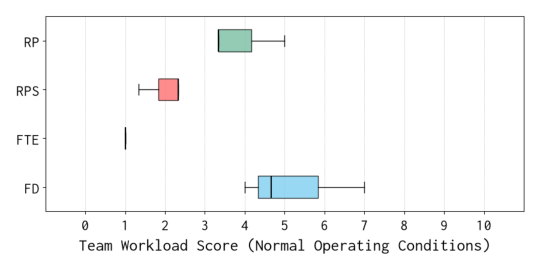
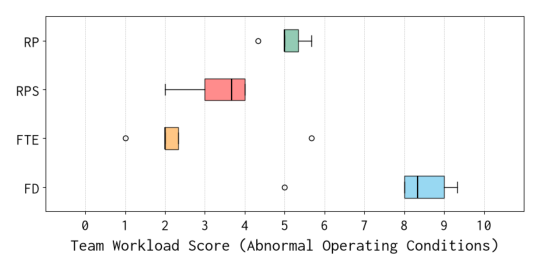
To assess the workload component rooted in the task of communicating within the crew, coordinating between each other and in some instances monitoring the performance of other crew members, the ‘team workload’ factor of the TWLQ Questionnaire on a scale from 0 to 10 was examined. As shown in Figure 4, under normal operating conditions the FD (M = 5.22; SD = 1.58; p50 = 4.67) and RP (M = 3.89; SD = 0.96; p50 = 3.33) show significant workload with the FD being the most occupied, whereas RPS
(M = 2.0; SD = 2.33; p50 = 2.33) and FTE (M = 1.0; SD = 0.0; p50 = 1.0) apparently are less inflicted by ‘team workload’. Interestingly, under abnormal operating conditions as shown in Figure 5, RP (M = 5.07; SD = 0.49; p50 = 5.0), FTE (M = 2.6; SD = 1.79; p50 = 2.0) and RPS (M = 1.0; SD = 0.0; p50 = 1.0) show an equal increase in ‘team workload’ which can be attributed to the overall increase in coordination and communication activity in abnormal scenarios. A significant increase in ‘team workload’ can be observed with FD (M = 7.93; SD = 1.72; p50 = 3.67), possibly explained by their task to guide through emergency checklists and simultaneously coordinate with relevant third parties necessarily part of managing emergencies (e.g. ATC).
Figure 4: Distribution of the answers relating to the ‘team workload’ factor of the TWLQ by crew role under normal operating conditions.Figure 5: Distribution of the answers relating to the ‘team workload’ factor of the TWLQ by crew role under abnormal operating conditions.
CONCLUSION
Following the proposed two-step methodological approach, a preliminary competency analysis and a weeklong simulator campaign to assess crew workload was conducted to explore the feasibility of consolidation of crew roles in HAP operations. It should be highlighted, that the first step of the
Towards Sustainable Operations of High Altitude Platforms 691 methodological approach answers the question of feasibility more from a resource standpoint, as missing competencies can be covered by further training or a revision of crew personnel selection. The second step considering subjective workload is strongly correlated to effective and most importantly safe operations and therefore an acceptable workload is a necessary condition for crew reconsolidation, while a workload that leads to underchallenge and thus reduced performance is also not desirable.
The results of the competency analysis indicate varying levels of shared competencies, with FTE and FD displaying the most common BIs. As discussed, the unique BIs to the FTE profile are related to the task of monitoring the system, which are seen as acquirable by the FD with limited effort. In the other direction, two clusters of BIs related to higher proficiency in procedures and regulations, and to leadership were identified. An obvious option would be to examine if the FTE has already some proficiency in that respect, as until now they have had no opportunity to demonstrate these BIs. In any case, a targeted training to strengthen the necessary competencies should be provided. Regarding workload experienced by FD and FTE, the results point to a low workload under nominal conditions with a larger degree of spare capacity and a higher, but still manageable workload under abnormal conditions. Therefore, FD and FTE appear as suitable candidates to consolidate two roles of the HAP crew. In this case, the possibility of the resulting workload in abnormal operations exceeding the tolerable limit poses a valid question that has to be answered in a validation simulator campaign. Regarding operation under nominal conditions, the expected higher workload might appear beneficial to counter underutilization which has not been deliberately assessed in previous simulator campaigns but could become a factor once mission times with longer sections of automated flight with autopilot increases. An additional favorable aspect persists in the distribution of the ‘team workload’ score between FD as the generally highest scoring role in that aspect, and FTE as the lowest scoring role.
We examined the communality regarding competencies of the RPS and FTE, which showed a promising set of overlaps. When further taking workload distribution and ‘team workload’ scoring into account, the viability becomes even more apparent, as both roles have comparably low scores on BWRS and Team Task scale. Consequently, we would recommend this as the primary candidates for consolidation, when aiming for a reduction of HAP-alpha crew from four to three members.
The RP and RPS share a substantial set of BIs in their competency profiles, leading questions which effort has to be undertaken to train each one to display the required competencies. The RP has the unique competency of manually controlling the aircraft which requires proficiency in hand-eye coordination and motor skills, something the RPS necessarily has to be trained in extensively and which also needs an adequate training environment. On the other hand, the RP will have to show proficiency in several additional BIs to fulfill the competency profile of the RPS, but again, the same provision mentioned above applies, as the RP has yet to have a chance to show these. From a workload perspective under normal operating conditions, RPS
experienced a constant low level of workload, while RP rated the workload higher, in part ‘satisfactory tolerable’. Careful evaluation of workload from combining these two roles will have to be conducted, possibly exploring the possibility to shift tasks around monitoring adherence to the flight envelope to FD or FTE. This equally applies to operations under abnormal operating conditions. While RPS still experienced workload ‘satisfactory without reduction’ RP experienced a higher workload indicating ‘workload tolerable’ but with insufficient to little spare capacity to additional tasks. A promising aspect yet to be examined closer in longer simulated missions, is the effect on RP workload imposed by longer phases of automated flight using the autopilot of HAP-alpha, where subjective workload is expected to decrease. A consolidation of RP and RPS roles seems justified, but careful evaluation is necessary. To summarize, we would propose the consolidation of the roles FTE and RPS when aiming for a crew size reduction from four to three, and FTE and FD as well as RP and RPS when reducing from four to three.
The logical next step is to validate the new crew composition with the proposed consolidated roles with existing crew members as they are the best trained available, following EASA guidelines. If consolidation of roles is perceived as unsafe and/or ineffective, we might consider an equitable distribution of tasks within the remaining roles, focusing on a better alignment with competency sets and workload parameters. With a view to future developments in HAP systems increasing system automation and UAS autonomy, further reduced crew size seem as a favourable outlook and when taken to its logical conclusion paving the way to m-to-n operations, where a single operator controls multiple UAVs. Another aspect may be, that in the existing crew concept, aircraft handling and operating the payloads of HAP- alpha are separated quite strictly between flight crew and payload operators, in regular commercial operation, this might shift more towards integral professional workflows necessitating new competencies when operating closer together.
REFERENCES
AALTO. (n.d.). Zephyr sets world-record for longest continuous flight, flying 67 days in stratosphere. Retrieved 14 May 2026, from Aaltohaps.com website: https://aaltohaps.com/wp-content/uploads/2025/05/Zephyr-sets-world-record- for-longest-continuous-flight-flying-67-days-in-stratosphere.pdf Buck, B., Biddle, E., … Eager, K. (2023). Towards a Vision of Standardized
Competency-Based Training and Assessment Implementation. In R. A. Sottilare & J. Schwarz (Eds), Adaptive Instructional Systems (pp. 206–218). Cham: Springer Nature Switzerland. https://doi.org/10.1007/978-3-031-34735-1_15 Choi, H., Kim, S.-Y., … Jung, Y. (2025). Low-altitude fight test of 30m wingspan stratospheric UAV EAV-4 [PDF]. 6 pages. https://doi.org/10.13009/ EUCASS2025-048 EASA. (2022). ED Decision 2022/002/R [Agency Decision]. EASA. (2025). EBT MANUAL [EASA Safety Promotion Material]. Hagl, M., Fettig, K., … Kapol, T. (2026). Learning from “One-and-Done” Exercises
on a Complex Uncrewed Aircraft System. 2026 New Trends in Civil Aviation (NTCA), 305–316. Prague, Czech Republic: IEEE. https://doi.org/10.23919/ NTCA68808.2026.11524142
Towards Sustainable Operations of High Altitude Platforms 693 ICAO (Ed.). (2013). Manual of evidence-based training (1st ed). Montreal:
International Civil Aviation Organization. Maeng, S., & Itoh, M. (2025). Standardized Phraseology in Bvlos Drone Team Operations: Impact Analysis on Performance and Communication Efficiency. SSRN. https://doi.org/10.2139/ssrn.5372739 Nikodem, F. (2023). Overview of the DLR High Altitude Platform and Scientific
Potential of the Technology Demontrator HAP-alpha. Deutscher Luft- Und Raumfahrtkongress 2023. Retrieved from https://elib.dlr.de/198509/ Roscoe, A. H., & Ellis, G. A. (1990). A Subjective Rating Scale for Assessing Pilot Workload in Flight: A decade of Practical Use. Retrieved from https://api. semanticscholar.org/CorpusID:107439078 Sellers, J., Helton, W. S., … Knott, B. A. (2014). Development of the Team
Workload Questionnaire (TWLQ). Proceedings of the Human Factors and Ergonomics Society Annual Meeting, 58(1), 989–993. https://doi. org/10.1177/1541931214581207 Sellers, J., Helton, W. S., … Knott, B. A. (2015). The Team Workload Questionnaire (TWLQ): A Simulated Unmanned Vehicle Task. Proceedings of the Human Factors and Ergonomics Society Annual Meeting, 59(1), 1382–1386. https://doi. org/10.1177/1541931215591231 Stanton, N. A., Salmon, P. M., … Jenkins, D. P. (2017). Human Factors Methods:
A Practical Guide for Engineering and Design (1st edn). CRC Press. https://doi. org/10.1201/9781315587394 Sun, H., Zhou, X., … Song, W. (2023). Competency-based assessment of pilots’ manual flight performance during instrument flight training. Cognition, Technology & Work, 25(4), 345–356. https://doi.org/10.1007/s10111-023-00737-3 Turpin, T., Surana, A., … Taylor, G. S. (2018). Removing the bottleneck: Utilizing
autonomy to manage multiple UAS sensors from inside a cockpit. In C. M. Shoemaker, R. E. Karlsen, … H. G. Nguyen (Eds), Unmanned Systems Technology XX (p. 22). Orlando, United States: SPIE. https://doi.org/10.1117/12.2303915 Zabirov, Z., Zabirov, A., & Shestakov, V. (2022). Modelling a quantitative assessment method of pilots’ performance in evidence-based training. Aviation, 26(4), 217– 223. https://doi.org/10.3846/aviation.2022.18037 Ziakkas, D., Sarikaya, I., & Natakusuma, H. C. (2023). EBT-CBTA in Aviation
Training: The Turkish Airlines Case Study. In D. Harris & W.-C. Li (Eds), Engineering Psychology and Cognitive Ergonomics (pp. 188–199). Cham: Springer Nature Switzerland. https://doi.org/10.1007/978-3-031-35389-5_14
FIND THE COMPLETE VOLUME IN THE AHFE DIGITAL BOOKSTORE
Explore the complete digital volume
Human Systems Engineering and Design (IHSED2026): Future Trends and Applications
Read this individual research paper free through the original publisher, or explore the full digital proceedings book.