Elham Morshedzadeh, Shruti Shukla, Wallace Santos Lages, Shiva Ghasemi, Andre Muelenaer (2026). Translating User Needs Into Telemedicine Training: A Mixed-Methods Approach to Designing an Augmented Reality System. In: Human Factors in Design, Engineering, and Computing. AHFE Open Access, vol. 238, pp. 2873–2885. https://doi.org/10.54941/ahfe1008511
Telemedicine carts (TCs) are being used more often in telehealth systems, which they allow remote clinical examinations. However, successful examinations require well-trained operators who can effectively coordinate equipment operation, communication, and patient/provider interactions. This study investigated the challenges faced by TC operators during pediatric visits using a mixed-methods approach that combined contextual inquiry, interviews, observations, eye-tracking, and user journey mapping. The findings showed that while the current hands-on training improves the familiarity with technology and equipment of TCs for novice users, it does not fully prepare the operators for the dynamic cognitive, procedural, and visuospatial communication demands of real telemedicine encounters. The identified needs and priorities, synthesized via user journey mapping, guided the design and development of an Augmented Reality Assistive Training System (ARATS). The proposed prototype provides frequent access to an adjustable, context-rich and immersive training within simulated clinical scenarios while preserving the values of hands-on learning. This study showcases a design-driven approach for translating user research into technological interventions for telemedicine training.
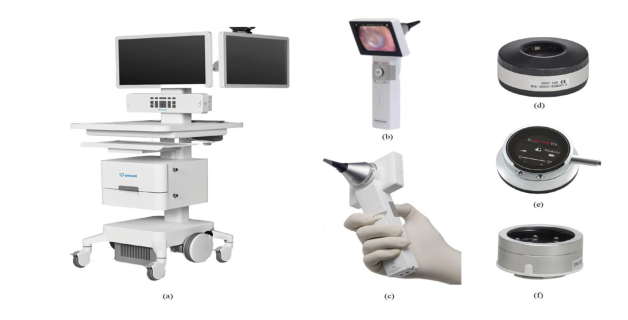
Recent progress in telehealth technology has resulted in the creation of many products in advancing telemedicine, including telemedicine carts (TCs) (Figure 1.a). These cutting-edge platforms enable healthcare professionals to engage with patients remotely, irrespective of their geographical location, thus decreasing the need for direct physical presence in the patient’s room in some clinical visits. Pediatrics, which encompasses the medical care of children up to 21 years of age according to various definitions (Strouse et al., 2022), can greatly benefit from TCs. These devices facilitate remote examinations during pediatric visits and would be particularly valuable in
rural areas where access to pediatric specialists is limited. By leveraging telehealth technology, practitioners can bridge geographical disparities and ensure timely access to pediatric healthcare services.
Despite the increased utilization of telemedicine during the COVID-19 pandemic, many telehealth encounters remain limited to audio-video communication, while telemedicine carts offer additional clinical capabilities through integrated peripheral devices (Figure 1.b-f). For telemedicine to be effective and foster patient trust, telehealth operators must receive thorough training and be able to align technologies into established clinical workflow (U.S. Department of Health and Human Services, 2024).
While investigating the challenges of telecommunications in pediatric settings, the potential of extended reality (XR) to create a safe, interactive learning environment that replicates real-world clinical scenarios was explored. In particular, our research questions were: RQ1: What are the drivers and blockers of telecommunication via the TCs
in pediatric visits? RQ2: What are the critical factors for designing a successful interactive telemedical learning system for remote pediatric physical exams? RQ3: How can a simulated environment/experience be used to provide
hands-on training to TC operators?
Our contributions include: 1) a detailed analysis of the interactions during TC usage; 2) the identification of the critical challenges operators encounter when using TCs; 3) the design of an augmented reality (AR) interactive learning system to create an accessible training opportunity and address common issues observed. Together, these contributions point toward an efficient way to improve the readiness of TC operators for pediatric telemedicine interactions.
Figure 1: Starting from left (a) Amwell Cart, (b) Horus Scope with Otoscope lens (back), (c) Horus Scope with Otoscope lens (front), (d) Dermatoscope, (e) Stethoscope, (f) General scope.
BACKGROUND
While telehealth has become increasingly vital in public health infrastructure, offering healthcare regardless of social or economic status, growing absence of in-person visits and associated risks underscore telehealth’s importance (Kobeissi & Hickey, 2023). Telemedicine, have evolved significantly since the 1950s (Baumann & Scale, 2016). While telehealth encompasses clinical and nonclinical services, telemedicine specifically refers to virtual appointments and visits (Kobeissi & Ruppert, 2022).
The Use of TCs in Pediatric Visits Telemedicine carts (TCs) are increasingly used to support remote clinical services, including pediatric care (Jacovas et al., 2021). However, responses from surveys, mainly at university medical centers, have highlighted several barriers, including licensure requirements, provider interest, and a lack of training resources (De Paolis et al., 2017). McSwain et al. touched upon the necessity for careful attention to children and their caregivers’ needs when using telehealth for pediatric patients (McSwain et al., 2017). Furthermore, Riley et al. explored the effectiveness of simulation-based learning experiences in remote healthcare scenarios, particularly for nursing students. Their findings indicated that such techniques fostered critical thinking and communication skills, consequently improving the efficacy of telehealth through better training protocols (Riley et al., 2022). In a related context, Boyd et al. discussed the utility of telemedicine in recording patient data, facilitating medication adherence and daily task management, while also enabling remote access to patient information without the need for physical visits (Boyd et al., 2020).
AR Applications in Healthcare and Clinical Support Extended reality (XR) including augmented reality (AR), virtual reality, and mixed reality, has increasingly been used for healthcare training and clinical application (Chen et al., 2022; Heneghan et al., 2021; Knotkova et al., 2017). Unlike fully immersive virtual environments, AR allows users to see the real world, making it well-suited for training that involves interactions with physical equipment and several people (Azuma, 1997; Tene et al., 2020). Despite the widespread use of XR and assistive technology in various health-related projects, there remains a scarcity of research on instructional XR-based instructional systems for TC operators and existing training practices in real-world clinical settings. Gerup et al. highlight the potential of XR-based approaches to enhance operators’ guidance (Gerup et al., 2020). However, limitations such as battery life and portability, and the risk of poor learning outcomes continue to present challenges for its use in medical education (Gerup et al., 2020; Wijdenes et al., 2018). Limited research has examined how the needs and challenges of TC operators can inform the design of technology-supported training within real clinical context.
MATERIALS AND METHODS
To address the research questions and better understand and assess the challenges associated with telemedicine cart operation, as well as examining the strengths and limitations of existing training practices in pediatric care, an in-depth analysis of the current training process and operation of a telemedicine cart in the context of pediatric practice were conducted at the Carilion Clinic Center for Simulation, Research and Patient Safety (CSRPS). A mixed-methods approach was applied to gather a comprehensive view of primary and secondary user experiences as well as stakeholder feedback, using interview, observation, and think-aloud responses, and eye-tracking for data collection. These data were analyzed through coding, user journey mapping, and task analysis using MAXQDA (Kuckartz & Radiker, 2019), Tableau and Tobi Pro Lab. The findings were subsequently synthesized to identify needs and challenges informing support design decisions of an AR-based training prototype.
Study Design and Participants During primary research, it became apparent that our collaborative clinical institute would occasionally (mainly on demand) set up training sessions for nurses and providers who were novices with telemedicine carts, offering hands-on learning experiences. These occasional training sessions usually consisted of 20-30 minutes of instruction on the cart and its various functions, mainly focused on technical TC features, delivered by a technician to nurses and doctors/providers.
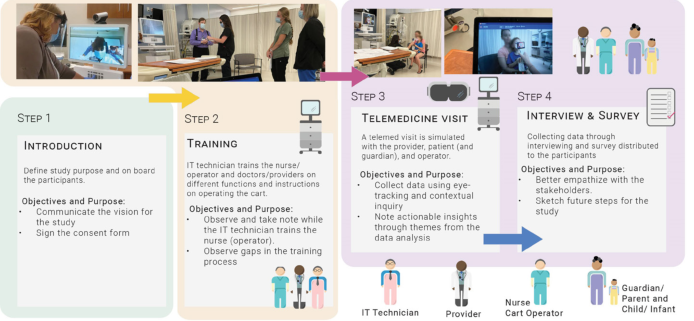
Based on this information a study plan (Figure 2) consisting of four main steps were developed: 1) introduction and consent process (~10 minutes), 2) a simulated hands-on training by a technician to nurses and doctors (~30-40 minutes), 3) a simulated exam session, with nurse (cart operator), a provider, and patients and their guardian (parent/s) as participants (~30-40 minutes), 4) post-session semi-structured interviews with all participants in step 3 (~15 minutes).
Contextual inquiry (CI), as an ethnographic research method that combines in-depth observation and interviews with a small sample of users, was used to gain a robust understanding of work practices and behaviors (Salazar, 2024). CI has been shown to add value to design and development of healthcare technologies and has helped Human Compute Interaction researchers to gain insights from user data, leading to more empathetic designs (Vitanen, 2011; Bednar & Welch, 2008).
To complement the CI, eye tracking, a widely used HCI method for examining visual attention and user interactions (Rosengrant et al., 2021; Rutledge et al., 2021; Mar´ın-Conesa et al., 2021; Sanchez-Ferrer´ et al., 2017), was also conducted during simulated telemedicine visits (Step 3; Figure 2). Cart operators wore Tobii Glasses 3 while interacting with the TC, patient, parents/guardians, and remote providers, enabling researchers to analyze gaze behavior, visual attention, and patterns related to cognitive processing.
Figure 2: Study plan showing the different stages of the study with stakeholder information. The photos in Step 2 (yellow block) show the nurse and the doctor getting the training from the IT technician. The photos in Step 3 (purple section) capture the study with the infant simulator.
Study Design and Participants Qualitative data, including interview transcripts, observations and think- aloud notes were coded and analyzed using MAXQDA. A coding framework consisting of Training, Feedback, Equipment Handling, Tech Skills, Tech Issues, Patient Engagement, Human Error, Communication, and Workspace Handling was developed. All categories were assigned impact values through multi-coder consensus (Table 1) among research team members and stakeholders with expertise in medicine, healthcare, engineering, and design (see Result for details of coded actions and their impacts).
Table 1: Impact values for actions within the training and examination phases of the user journey.
Table available in the original PDF paper.
Action Category Impact Value Workspace Overview 1
Environment set up 2 Demonstrate proper usage of the cart with all tools charging 3
Proper use of tools 4 Purpose of Cart and Tools are unclear 5
Use of tools and optimization 6 Nurse/Provider Interaction with Tools 7
Communication between nurse and the specialist 8 Nurse/Provider Interaction with Screen (Navigation) 9
Safety pertaining to tools used on patients 10
Actions were also further classified according to the study steps in which they occurred, (Training [T] or Examination [E]) and their effect Positive [P] or Negative [N] (Table 2).
Table 2: Legend for data analysis T: Training, E: Examination, P: Positive, N: Negative.
Table available in the original PDF paper.
Code Meaning EP1, EP2 .. EP22 Positive actions occurring during the examination
EN1, EN2 .. EN33 Negative actions occurring during the examination TP1, TP2 .. TP8 Positive actions occurring during the training
TN1, TN2 .. TN23 Negative actions occurring during the training Eye-tracking measures, including fixation durations and locations, were carefully analyzed to provide additional insight into operators’ attention, interactions (identifying successes and error moments).
Findings from the above-mentioned methods were synthesized to construct user journeys, identify recurring interaction patterns, across telemedicine training and examination activities and visualize the workflow throughout a typical telemedicine training and visit.
RESULTS
Emerging Patterns From Qualitative Analysis Analysis of qualitative data led to three major patterns: a) communication and engagement among stakeholders, b) interactions with equipment and the system, and c) training retention and operator performance. These patterns revealed how TC operation does not solely depend on technical familiarity and that its outcome is greatly impacted by the clinical context, communication, workflow coordination, and the ability to adopt to the unique demands of each pediatric visit.
The first pattern/theme captures actions related to stakeholder communi cation and hands-on engagement.
Regarding the first pattern, the importance of seamless communication among TC operators, providers, patients and parents were highlighted by the results. Operators heavily relied on communication with providers to adjust the equipment, determine and approve an appropriate viewing angle, and simultaneously interact and communicate with parents and children/infants. As a result, during the post-study interviews, concerns raised by physicians and parents regarding trust in the procedure, quality of communication, and confidence in the diagnosis highlighted the importance of adequate operator preparation and communication during telemedicine visits. Participants also noted that limited familiarity with the TC could negatively affect communication and confidence during telemedicine visits.
The second theme reflects equipment-related successes and failures during TC operation. Operators experienced difficulties using peripheral devices. For example, one of the most commonly observed challenges was achieving optimal focus while using different peripheral attachments, particularly the Otoscope caused by a nontraditional design of them which required the
Translating User Needs Into Telemedicine Training: A Mixed-Methods Approach 2879 operators to relearn using devices that they were trained to use in a certain way for many years from physical, functional and cognitive point of view. Challenges similar to this would become more apparent when operator also had to communicate efficiently with providers and interact with the children and parents while handling the equipment. One of the TC operators stated:
“The ear thing is hard. I think older kids would be much easier. It’s hard to do with a regular Otoscope at that age. The infant didn’t like it at all.”
The third theme examines training-related retention and operator performance that contributed to either the success or failure of the process and interactions. The observations showed that over time and with hands-on learning using the TC and peripheral devices operators became more comfortable with the system. However, hesitation and forgotten steps remained evident during the simulated examination. Lengthily and complex procedure including many steps, equipment, interactions as well as clear and efficient communication expectation would interrupt the workflow and impact the trust in system and its reliability. These observed issues and post study-interview suggested that familiarity with the individual devices did not necessarily translate into readiness for managing this complex encounter.
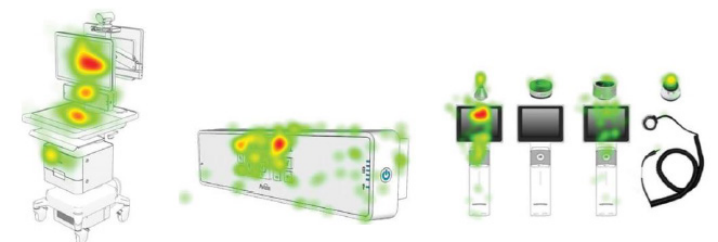
Eye-Tracking Analysis Eye-tracking finding further supported the pattens identified through qualitative methods revealing divided visual attention during TC operation. The operator’s attentions were frequently shifted between provider’s screen, patient, Horus Scope, physical control panel, peripheral devices and the cart. During the examination period and when changing peripheral devices, the TC operator experienced substantial eye-toggling and difficulty finding the right area of focus (Figure 3). This became particularly worst when the operators attempted to coordinate equipment operation with the ongoing clinical interaction.
User attention points were also examined on the button panel, showing that most attention was on the right-side auxiliary and the left-side HOME buttons. While there is a functional reason behind close attention on the auxiliary button – it is used between every step and when changing each peripheral device – the amount of attention directed toward the HOME button appeared disproportionate. Comparing the eye-tracking and observational data, it made it apparent that attention to the HOME button frequently coincided with moments when cart operators were uncertain about the next procedural step.
Looking at the Horus Scope’s eye-tracking data, it was apparent that the nurse/cart operator struggled most with the Otoscope compared to the other peripherals. Comparing these data with the observation data suggested that the untraditional shape of the Otoscope made it difficult for the operator to find the right angle from which they could monitor what they were seeing on the Horus Scope’s small screen. Overall, the eye-tracking findings supported the qualitative observation that although hands-on training improved familiarity with the TC, it did not fully prepare operators for the complexity of real telemedicine visits (3).
Figure 3: (left) Heat map: Distracted attention between the screen and the control and screen taking up most of the attention, (middle) Attention to the left of the AUX detected, (right) Eye tracking over the Horus Scope with each peripheral attachment.
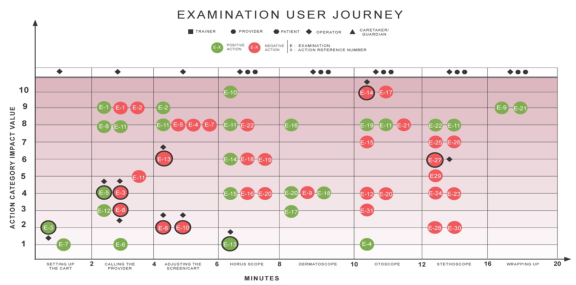
Integrated User Journey To integrate the findings from all data sources, including interviews, observations, and eye-tracking, we synthesized two user journeys representing the training (Figure 4 Top) and examination (Figure 4 bottom) phases. The journeys visualize actions and their corresponding impacts (Positive and negative) and the temporal distribution of interactions throughout each workflow.
Figure 4: (Top) Training journey map (Bottom) Examination journey map.
Translating User Needs Into Telemedicine Training: A Mixed-Methods Approach 2881 The training journey showed that operators gradually became more comfortable with the telemedicine cart through hands-on practice while also revealing recurring difficulties with equipment handling, workspace organization, and environmental setup.
The examination journey synthesized the workflow observed during simulated pediatric telemedicine visits and highlighted the most recurrent actions and pain points. This journey highlights recurring challenges related to cart setup, camera adjustment, stethoscope operation, and AUX button activation. Audio feedback during the use of stethoscope and repeated omission of the AUX button disrupted the workflow, a finding that was further supported by the eye-tracking analysis. Positive interactions primarily reflected successful cart preparation and workflow readiness before the examination.
DISCUSSION
While hands-on training helped operators and providers become familiar with the basic functions and flow of the TC, the findings showed that it was not enough to prepare operators for a telemedicine visit with unpredictable yet probable variables. During the simulated exam, operators had to simultaneously interact with the equipment, communicate with providers, engage with patients and parents, and remember the workflow while making continuous decisions throughout the visit. The combination of these demands caused many challenges, which were observed and detected during the study.
Participants frequently mentioned that having access to more opportunities for practice and hands-on learning would be extremely helpful in increasing their confidence and competency. Providers and parents also raised concerns that the limited familiarity of the operators was noticeable and impacted their trust in the exam’s quality. These findings strongly suggest that effective telemedicine training should prepare operators not only with functional, and technical aspects of the device, but also to manage the dynamic nature of real clinical encounters.
In addition, while participants valued the hands-on training experience, they admitted that providing training like this was demanding, and very time- consuming, making repeating practice sessions highly unlikely. Considering that to run a high-quality firsthand training, the presence of an IT specialist, nurse, provider, equipment, network connectivity, and often a patient or simulator is necessary.
The design requirements identified through this study informed the selection of the technological solution, rather than the technology defining the design approach. Considering priorities, needs, and constraints, technology was not selected simply because it is available. Instead, the findings of this study shaped the design requirement and Augmented Reality (AR) was selected because it was the technology that fit those requirements the best. In this study keeping the connection to physical equipment and real clinical environment while providing context-rich, accessible, and adjustable hands-on practice was essential, with AR become the most suited one. These insights guided the design of the proposed Augmented Reality Assistive (ARA) System, which its main goal is to address the detailed user needs identified and presented in the user journeys.
ARA Training System Prototype The identified user needs and recurring challenges were translated into design decisions that guided the development of the proposed Augmented Reality Assistive (ARA) training system. The synthesized findings suggested three complementary types of knowledge; procedural knowledge (what to do), contextual knowledge (when to do), and visuospatial knowledge (where to do) (Table 3), that were essential for TC operation and therefore became the foundation for the design decisions behind the proposed training system.
Table 3: Codes relevant to AR training were classified into procedural knowledge (what to do), contextual knowledge (when to do), and spatial knowledge (where to do).
Table available in the original PDF paper.
Codes Example Knowledge Type Procedural TN9, TN5, EN10, EP7, EP4, EP19, EN10, EP12, EP20, EN24, EN5, EN11
Aux button was repeatedly forgotten, and provider was requiring to remind nurse Contextual
EN14, EN26, EP8, EN2, EP3
(The operator) is looking back at the cart over half of the time to check the view, does not look at Otoscope or the patient Visuospatial
TN19, TN17, TP2, TN19, EP17, TP2, EP7
(Operator) hesitates about where to plug in Horus Scope
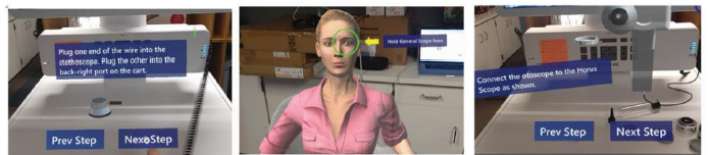
To address procedural knowledge, Tasks were deconstructed into a sequence of small steps, with an adjustable pace for the liking of each TC operator. Using and augment/simulated space would allow the trainees to move backward, forward, and/or pause during the training without the fear of missing the opportunity or falling behind (Figure 5, left). Clear visual and textual cues as well as 3D models and short animations were added to the operator’s AR headset screen.
To support contextual knowledge, a simulated telemedicine visit was designed, enabling operators to perform tasks in a clinical scenario based on the required context. A virtual patient and online provider were created to recreate the divided attention demands identified during the study, requiring operators to coordinate communication, patient interaction, and equipment operation simultaneously. This approach elevated the training from fixed step-by-step structure to an immersive in-context experience. The goal was to develop various scenarios that could support TC operators in circumstances that they might be less familiar (Figure 5 middle). The scenarios can be adapted to different providers, diagnoses, and examination routines.
For visuospatial knowledge, AR allowed the trainee to receive virtual guidance while maintaining their connection to the physical objects and environment, utilizing AR’s unique ability to display augmentations in 3D space. Overlaying guidance via AR glasses by recognizing the real environment would make the transition from training to the actual exam much easier. Digital arrows directed trainees to specific physical locations on the TC. In addition, digital 3D model and short animation of the physical attachment and their function were incorporated to support recognition and interaction (Figure 5, right).
Figure 5: Screenshots from the cart operator’s point of view while wearing the AR training prototype.
The proposed system was implemented as a functional prototype using Unity and Microsoft HoloLens 2, establishing the feasibility of the proposed design for pediatric telemedicine training.
CONCLUSION
This study’s findings showed that while the current telemedicine training (hands-on, and in person) improves the familiarity of novice users with interventional equipment used in telemedicine (in this case TC), it does not fully prepare operators for the clinical context and the real-world experience and various possible scenarios. It became apparent that to create a trustworthy experience within telemedicine settings that meets the clinical expectations, a series of dynamic cognitive, procedural, and communication skills. Using mixed methods, this study findings guided the development of an Augmented Reality Assistive (ARA) training system.
The design requirements identified through this study guided the selection of the technological solution, rather than the technology defining the design approach. The evidence-informed design decisions determined that AR was the most appropriate technology to address the needs and requirement identified through the user journeys. AR qualities enabled preservation of interaction with physical objects and real clinical setting, while providing features addressing the detailed identified user needs. The proposed prototype offers an immersive yet hand-on experience for training the healthcare workforce using wearable augmented reality that is accessible at anytime and anywhere. This work showcases a design-driven approach in translating user research into a technological intervention that seeks to reduce cognitive load and make training more accessible, repeatable, and context-rich. As next steps, the system will be formally evaluated for feasibility, usability and effectiveness across additional clinical settings and scenarios.
ACKNOWLEDGMENT
Research reported in this publication was partly supported by the National Center for Advancing Translational Sciences of the National Institutes of Health under Award Number UL1TR003015. The content is solely the responsibility of the authors and does not necessarily represent the official views of the National Institutes of Health.
REFERENCES
Azuma Ronald T. A survey of augmented reality // Presence: Teleoperators and virtual environments. 1997. 6, 4. 355–385. Baumann, P. K., & Scales, T. (2016). History of Information Communication
Technology and Telehealth. Academy of Business Research Journal, 3, 48–52. Bednar Peter M, Welch Christine. Contextual inquiry and requirements shaping // Information Systems Development: Challenges in Practice, Theory, and Education Volume 1. 2008. 225–236. Boyd Nicholas, Hawkins Jacob, Yang Thomas, Valcourt Scott A. Augmented reality:
Telehealth demonstration application // Practice and Experience in Advanced Research Computing. Portland, OR, USA: ACM, VII 2020. 452– 455. Chen Yuhan, Zhou Zhuoren, Cao Min, Liu Min, Lin Zhihao, Yang Weixin, Yang Xiao, Dhaidhai Denzel, Xiong Peng. Extended Reality (Xr) and telehealth interventions for children or adolescents with autism spectrum disorder: Systematic review of qualitative and quantitative studies // Neuroscience & Biobehavioral Reviews. 2022. 138. 104683. De Paolis Lucio Tommaso, Bourdot Patrick, Mongelli Antonio. Augmented Reality,
Virtual Reality, and Computer Graphics: 4th International Conference, AVR 2017, Ugento, Italy, June 12–15, 2017, Proceedings, Part I. 10324. 2017. Gerup Jaris, Soerensen Camilla B, Dieckmann Peter. Augmented reality and mixed reality for healthcare education beyond surgery: An integrative review // International Journal of Medical Education. 2020. 11. 1. Heneghan Nicola R, Jagodzinska Jenna, Tyros Isaak, Johnson Wendy, Nazareth
Madeleine, Yeung Euson, Sadi Jackie, Gillis Heather, Rushton Alison. Telehealth e-mentoring in postgraduate musculoskeletal physiotherapy education: A mixed methods case study // Musculoskeletal Science and Practice. 2021. 56. 102448. Jacovas Vanessa Cristina, Chagas Maria Eula´lia Vinade´, Constant Hilda Maria Rodrigues Moleda, Alves Suelen Stihl, Krauzer Joa~o Ronaldo Mafalda, Guerra Luciano Remia~o, Almeida Pires Aristo´teles de, Cunha Luciane Gomes da, Matte Maria Cristina Cotta, Campos Moreira Ta´ıs de, others. Telemedicine in pediatric intensive care units: Perspectives from a Brazilian experience // Current Pediatrics Reports. 2021. 9. 65–71. Knotkova Helena, Riggs Alexa, Portenoy Russell K. Proceedings 23. A patient-tailored
protocol of tDCS stimulation paired with telehealth support for athome symptom management in seriously ill patients with multiple chronic symptoms // Brain Stimulation: Basic, Translational, and Clinical Research in Neuromodulation. 2017. 10, 4. e77–e78. Kobeissi, M. M., & Hickey, J. V. (2023). An Infrastructure to Provide Safer, Higher- Quality, and More Equitable Telehealth. Joint Commission Journal on Quality and Patient Safety, 49(4), 213–222. https://doi.org/10.1016/j.jcjq.2023.01.006 Kobeissi, M. M., & Ruppert, S. D. (2022). Remote patient triage: Shifting
toward safer telehealth practice. Journal of the American Association of Nurse Practitioners, 34(3), 444–451. https://doi.org/10.1097/JXX.0000000000000655 Kuckartz Udo, Ra¨diker Stefan. Analyzing qualitative data with MAXQDA. 2019. Mar´ın-Conesa Ester, Sa´nchez-Ferrer Francisco, Grima-Murcia Mar´ıa Dolores, Sa´nchezFerrer Mar´ıa Luisa. The application of a system of eye tracking in laparoscopic surgery: A new didactic tool to visual instructions // Frontiers in surgery. 2021. 8. 643611.
Translating User Needs Into Telemedicine Training: A Mixed-Methods Approach 2885 McSwain S. David, Bernard Jordana, Burke Bryan L., Cole Stacey L., Dharmar
Madan, Hall-Barrow Julie, Herendeen Neil, Herendeen Pamela, Krupinski Elizabeth A., Martin Amanda, McCafferty Dan, Mulligan Deborah Ann, North Steve, Ruschman Jennifer, Waller Morgan, Webster Kathleen, Williams Sherrie, Yamamoto Susan, Yeager Brooke. American telemedicine association operating procedures for pediatric telehealth // Telemedicine and eHealth. IX 2017. 23, 9. 699–706. Riley Elizabeth, McCance Colton, Ward Nicole, deGravelles Pamela. Evaluation of a simulation-based learning experience using a prenatal telehealth scenario with prelicensure nursing students // Teaching and Learning in Nursing. 2022. 17, 2. 220–224. Rosengrant David, Hearrington Doug, O’Brien Jennifer. Investigating student
sustained attention in a guided inquiry lecture course using an eye tracker // Educational Psychology Review. 2021. 33. 11–26. Rutledge Carolyn M., O’Rourke Jennifer, Mason Anne M., Chike-Harris Katherine, Behnke Lyn, Melhado Lolita, Downes Loureen, Gustin Tina. Telehealth competencies for nursing education and practice: The four p’s of telehealth // Nurse Educator. IX 2021. 46, 5. 300–305. Sa´nchez-Ferrer Mar´ıa Lu´ısa, Grima-Murcia Mar´ıa Dolores, Sa´nchez-Ferrer
Francisco, Herna´ndez-Pen~alver Ana Isabel, Ferna´ndezJover Eduardo, Sa´nchez Del Campo Francisco. Use of eye tracking as an innovative instructional method in surgical human anatomy // Journal of Surgical Education. VII 2017. 74, 4. 668–673. Salazar Kim. Contextual Inquiry: Inspire Design by Observing and Interviewing Users in Their Context. April 2024. Accessed: 2024-04-16. Strouse Peter J, Trout Andrew T, Offiah Amaka C. Editors’ notebook: What is
Virtual reality and augmented reality in medical education: An umbrella review. Front Digit Health. 2024 Mar 14;6:1365345. doi: 10.3389/fdgth.2024.1365345. PMID: 38550715; PMCID: PMC10973128. Viitanen Johanna. Contextual inquiry method for user-centred clinical IT system design // User Centred Networked Health Care. 2011. 965–969. Wang Y. & Ruhe G. The cognitive process of decision making // International Journal of Cognitive Informatics and Natural Intelligence. 2007. 1, 2. 73–85. Wijdenes Pierre, Borkenhagen David, Babione Julie, Ma Irene, Hallihan Greg.
Leveraging augmented reality training tool for medical education: A case study in central venous catheterization // Extended Abstracts of the 2018 CHI Conference on Human Factors in Computing Systems. 2018. 1–7.
SEARCH THE AHFE DIGITAL BOOKSTORE BY ISBN
Explore the complete digital volume
Human Factors in Design, Engineering, and Computing
Read this individual research paper free through the original publisher, or explore the full digital proceedings book.