Ellen Taylor, Sue Hignett (2021). Patient Safety, Human Factors & Ergonomics, and Design: The Environment as a Larger-Scale Strategy to Reduce Falls. In: Advances in Human Aspects of Healthcare. AHFE Open Access, vol. 13. https://doi.org/10.54941/ahfe100535
Falls are a key consideration for patient safety and play a prominent role under US legislation for affordable care. The built environment can either enhance safe practices and policy or act as an impediment for safe patient care. Falls are associated increased length of stay in hospitals and higher healthcare costs due to additional care, discharges to institutional care and litigation claims. With an increased focus on reimbursement related to patient safety as part of healthcare reform in the USA, organizations are becoming more aware of their own shortcomings and grappling with solutions to improve performance – typically people and processes. Yet the influence of the built environment, the space in which care is provided, can act as a barrier or enhancement to achieving the desired results – physically, cognitively, and organizationally. This paper presents the results from a mixed methods literature review on healthcare facility environmental design and falls. It is part of on-going research for the development of a Safety Risk Assessment (SRA) tool to promote discussion for proactive decision-making during the design of healthcare facility projects.
In many evaluations of patient safety, the search for causation ends with blame-and-retrain mentality that identify human errors - treating the symptoms instead of the underlying causes . Human factor and Ergonomics (HFE) has emerged as a branch of practice in healthcare, with links to aviation and stemming from the need to address error, teamwork and communication issues . HFE views healthcare from a systems approach, recognizing that individual abilities and limitations should be considered when optimizing system performance .
While HFE is sometimes considered in three domains: physical, cognitive, and organizational, research in the area of the design of the physical environment is often limited to individual products, equipment and furnishings. However, a larger context for the design of the environment could be considered from an HFE perspective. Recent HFE papers start to distinguish between the physical environment of the work system and the external environment that can influence all work system , but the lack of specificity of the physical environment continues to leave gaps in fully integrated HFE considerations. Hignett argues that poor design can permeate throughout the system and result in a reliance on behavior changes rather than beginning with the design. This is described as fitting the user to the environment, rather than fitting the environment to the user.
Safety and Falls
As an adverse event, falls are pervasive throughout hospital settings and can occur in both inpatient and outpatient areas and impact patients, staff, and visitors. In many countries, hospital falls are a prevalent safety issue and one of the most common adverse events reported , but injury from falls is also a significant issue . As a result of the Deficit Reduction Act of 2005, several high cost and high volume adverse events were defined as non-reimbursed hospital- acquired conditions (HACs). These included falls resulting in injury (e.g. fracture, dislocation) . With the reimbursement changes that commenced in 2009, falls have re-emerged in the US as a focus. Current falls-related HACs are included as part of a composite patient safety indicator score .
Falls are caused by intrinsic and extrinsic factors. Intrinsic risk factors are integral to each individual and may be associated with demographics such as age, weight, and gender, as well as previous falls, reduced vision, mental status deficits, development stage (for children), acute illness, and chronic illness, mobility or balance disorders, misperception of the environment, or loss of consciousness . Schaffer goes on to state (p 11), “the interactions of these environments may result in increasing or decreasing the risk for a fall and the potential for injury as a result.” Although the aim of this review is to identify latent conditions of the built environment that contribute to the risk of falls there are other contributory categories that have been included in the review to allow a future consideration of their relationship to the built environment.
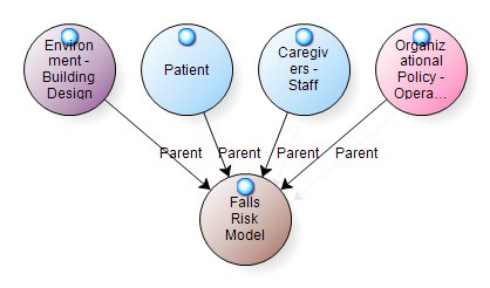
This literature search was conducted to identify features of the built environment associated with falls (the case study topic). The aim was to explore and identify aspects of the built environment that would allow facility designers to take a proactive approach to the latent conditions that can contribute to the risk of falls. Frameworks described for the three retrieved systematic reviews were adapted, resulting in a multifactorial overview (Figure 1).
Figure 1: Falls Model
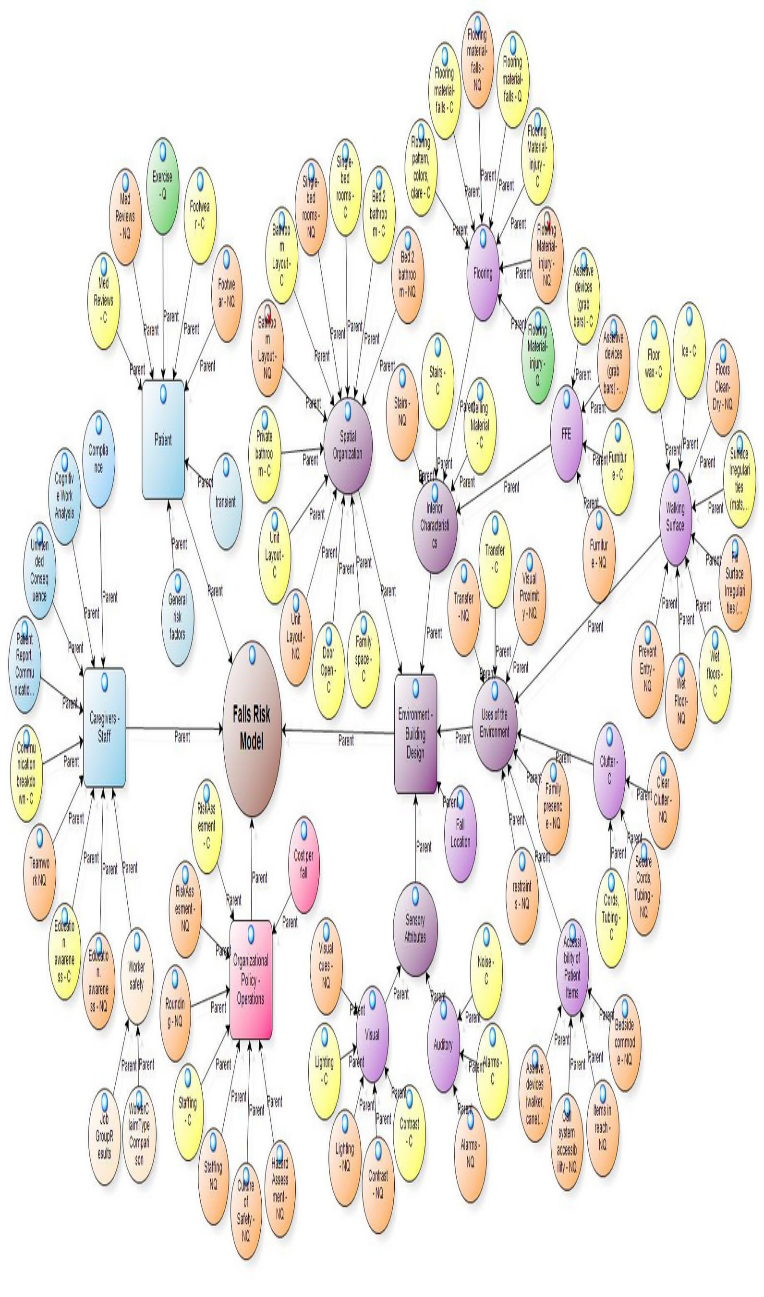
THEMATIC ANALYSIS RESULTS The papers included in the final review were coded in NVivo 10, with coding reviewed in two stages – firstly, to refine codes following initial coding and secondly, to consolidate overlapping codes. The subthemes (child nodes) are categorized by people, organizational factors, and the environment. Figure 2 provides a summary of the themes (codes) to show conditions correlated to the occurrence of falls (C), part of an intervention, but not individually quantified (i.e. included as a multifactorial “bundle”) (N), or individually quantified through empirical research (Q). This figure highlights an issue cited by Bell et al. that is applicable to most falls prevention research – the variety of elements, introduced together, make it impossible to isolate which of the components were most effective.
Figure 2: NVivo Model for Falls
In fact, most multifactorial intervention programs include various modalities that include a combination of individual, environmental, and interactive factors and, there is a lack of research to systematically examine environment-related interventions for falls in hospital settings . Furthermore, most falls researchers do not include building features as discrete variables, making it virtually impossible to determine the relative role of the built environment on fall and fall risk .
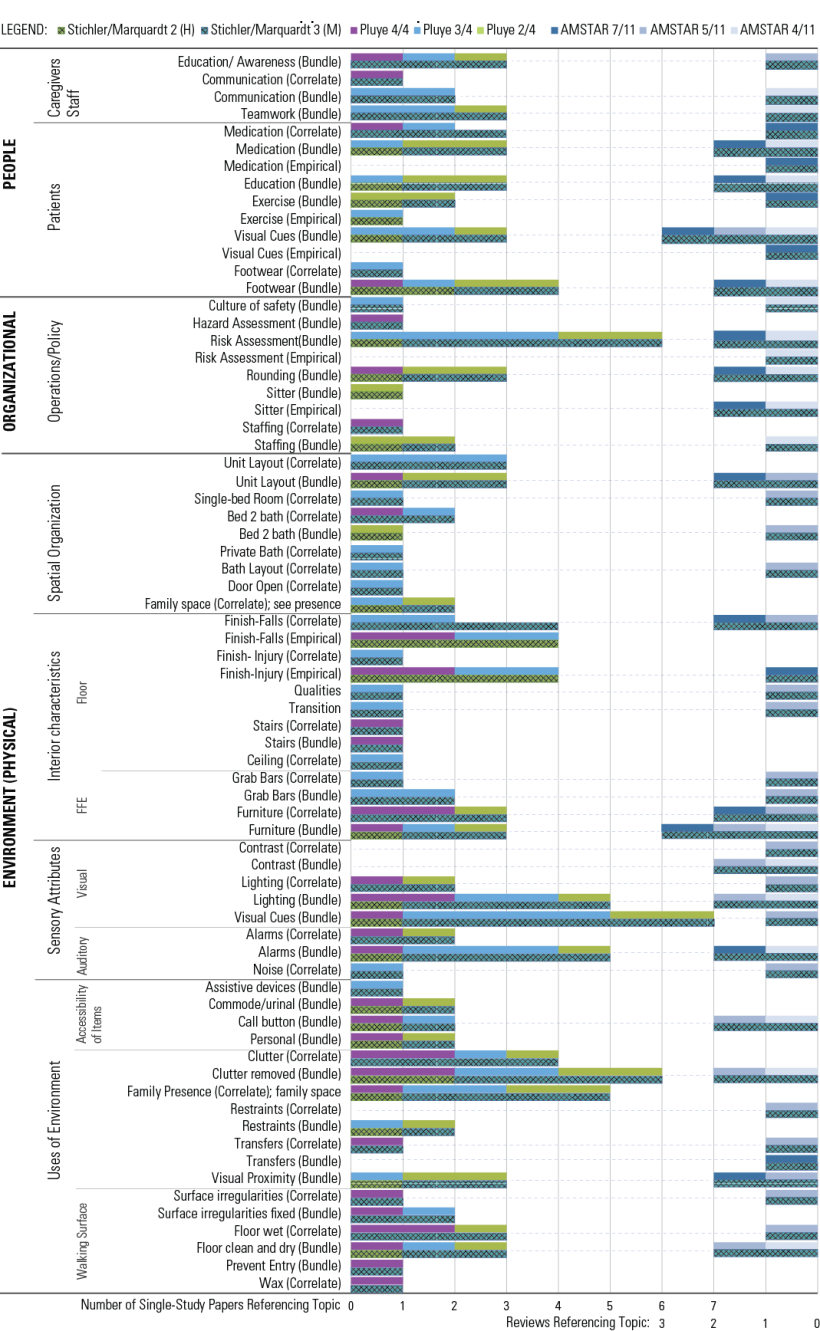
Node coding was charted to the appraisal categories to clarify the density of themes according to types and quality appraisal of varied fall prevention interventions (Figure 3). Visually, it is easy to ascertain that the most common topics included in the reviewed papers are part of bundled solutions that include: risk assessments (operational), visual cues, and the removal of clutter. However, the strongest quality of evidence exists for a smaller set of studies in the area of flooring, where several empirical studies examine the relationship of specific materials to falls and falls with injury.
ORGANIZATIONAL POLICY/OPERATIONS AND FALLS A “culture of safety” was often the foundational element for successful fall prevention programs. Employee engagement across all roles (not just nursing) is achieved through education and training, but creating this culture also requires administrative support, a well-developed comprehensive plan, staff participation and buy-in . Most fall prevention programs include the identification of at-risk patients through a validated or an in-house risk assessment tool that include a specific interventions to prevent falls . A general risk assessment may be just as effective , and Spoelstra cites numerous studies to indicate the lack of evidence for a specific fall-risk assessment. However, some nurses believe the information is incomplete, even when entered in the patient record . An on-site hazard assessment can also be used to identify environmental conditions that increase a falls risk. Some of these conditions can be remediated quickly (loose cords), while others may need to be addressed as time and funding allow .
Patients are at risk for falls when they require additional staff assistance or when they are left unattended, due to heavy staff workloads . Patients may feel there is a need for more staff to assist them , and organizations often consider “sitters” to address the additional need associated with closer surveillance of an at-risk patient . However, Spoelstra also cites studies that suggest staff assignments should be in close proximity to at-risk patients. Fall prevention programs typically include timed rounding and a timed toileting schedule . Toileting before administration of pain medication has also been shown to help reduce falls .
PEOPLE Caregivers/Staff
Numerous studies cite the need for awareness and education. This can include campaign for staff safety related to STFs , or staff education related to risks and prevention of patient falls . However, staff must balance their workload (e.g. staffing, physical difficulty, time) with their “cognitive head data” (e.g. conducting patient assessments, planning care, analyzing data) and patient data (communication, test results, incident reports) . Intervention programs might lead to performance bias, with staff feeling re-assured about patients’ safety and relaxing observation . Without monitoring and standardized reporting, compliance with intervention plans can vary from unit to unit . Ohde et al.’s study found a substantial increase in compliance rates after beginning a Quality Improvement (QI) program, but a pre-existing “culture of compliance” may have been a contributing factor. .
Teamwork was referenced in two studies as part of a falls prevention program. This can be as simple as nursing staff and physicians meeting about patient-specific fall plans , but it can be considered in several other contexts, such as covering each other’s patients during breaks, watching all patients when in the hallway, and learning from and being helped by other healthcare providers, especially physical and occupational therapists . This shared workload can create potential obstacles, for example, when a staff member does not respond to a call light for fear of not knowing the specifics of a patient’s condition ; an environmental condition (a visual cue) is provided, but not used as intended (a lack of compliance) . Breakdowns in patient-nurse communication can contribute to falls , and communications between team members can be a challenge, as well. Consistency and accuracy of reporting about fall risks and interventions are variable and are dependent upon the individuals giving and receiving report. This can result in waiting for nurse availability for discussion, due to generic care plans or “siloized patient records” .
Patients According to one systematic review, the foremost predictors of inpatient falls includes gait instability or limb weakness, urinary incontinence, prior history of falls, cognitive impairment, and certain medications . Brandis found that 77 percent of falls occurred in people over the age of 60. Extrinsic factors can include environmental factors, but also includes staff communication, risk assessments, medications, care planning, and unavailable or delayed care provision . Other risk factors include: poor health status, balance problems or dizziness, age, vision disturbance, urinary frequency, self-overestimate of ability to ambulate, wandering, and subjective fall risk assessment by nurses . Sedatives are noted as a risk for falls , and medication reviews are cited by several studies as an intervention for falls prevention . One study found that a pharmaceutical intervention reduced falls by 47 percent . However, some of these factors, such as medication changes or fainting, can be temporary , requiring vigilance in reassessment and monitoring.
Socks and bare feet can be a risk for falls and numerous studies cite non-slip footwear as part of a falls-prevention strategy . This strategy applies to staff, as well, especially for those working in water-prone areas (e.g. food service) .
While staff education is often included as part of a falls intervention program, patient and family education is frequently included as well. This can include written information to raise awareness , conversations with patient and/or family , and patient education on use of call light . Many studies include the use of colored wristbands (although there is no consensus on color) as a method of communicating a falls risk to other staff (e.g. nurse assistants) and family members . However, one study found that the single intervention of identification bracelets was of no benefit in reducing falls among high-risk patients .
Figure 3: Appraisal Comparison of Fall Prevention Interventions Included In Reviewed Papers
ENVIRONMENT/BUILDING DESIGN Spatial Organization: Unit Layout, Patient Rooms, Bathrooms
The most overarching consideration was spatial organization that can hinder patient visibility or accessibility. Unit and room layouts are some the first decisions required, associated with establishing the structural grid and determining the bathroom location: inboard (hallway side), outboard (window side); headwall or footwall. Changes in this area are most costly following occupancy. Unit layout is a contributory factor in falls , but there are usually simultaneous changes that occur in fall prevention programs, making the specific impact of spatial layout difficult . One study found one ward with a layout precluding easy patient observation recorded significantly more falls as compared to other wards with a ‘nuclear’ layout offering better visibility. Another study found that unit layout removed nurses from physical proximity to their patients , therefore suggesting designs to relocate nurses’ indirect care tasks to be in close physical proximity to the patients’ bedside.
Calkins found a significantly higher rate of falls in shared rooms compared to private rooms, possibly due to higher census in shared rooms. A private room may be a supportive factor, because of family presence and engagement in providing assistance . This is supported by Calkins (2012) where there were approximately half as many falls in patient rooms with a designated family area. Lopez et al. also suggest space for patient family members to stay overnight as an intervention strategy. However, there is speculation that private rooms may be a potential risk due to the lack of a roommate to remind an at-risk individual to call for assistance .
Tzeng cites the distance of the bathroom from the bed as potential hazard and this is indicated as one consideration included as part of a comprehensive approach to reduce falls . Calkins did not identify any statistically significant differences with bathroom location, although there were more falls when the bathroom was on the headwall than on the footwall. Calkins also found that while visibility to or into the bathroom didn’t show strong correlations, the ability to have the door remain “out of the way” in an open position did.
Features in the bathroom identified as hazards include inappropriate door openings (not further defined); slippery floors; poor design or placement of rails and accessories; and incorrect toilet and furniture heights . A toilet on a sidewall was associated with fewer falls than when the toilet was directly across from the entrance, perhaps due to handrail availability or not having to cross the bathroom to get to the toilet .
Interior Characteristics: Flooring, Furniture, Fixtures, and Equipment Flooring is a correlate to falls and most of the research isolating a single variable relate to material selections and the relationship to falls and fall with injury. Linoleum has been linked to significantly more falls (and falls with injury) than either vinyl composition tile (VCT), vinyl, ceramic tiles (in bathrooms) or other materials . Carpeted bedrooms did not reduce the incidence of falling but resulted in fewer injuries . There were no significant differences for falls between carpet and vinyl when aggregating wards, but ward demographics affected the outcomes . Shock-absorbing floor may reduce injuries, but result in an increased risk of falling .
Other factors include floor patterns and glare. While the sample was small, Calkins found patient rooms having a medium-size pattern in the flooring were associated with greater falls than no pattern, small, or large patterns. Carpeting with high contrasting patterns was associated with more stumbles or pausing than carpeting with low color contrast . Polished or shiny floors are also considered a risk factor because of the potential for glare, although this has not been specifically tested .
There are several correlates between furnishings and patient falls, including the ergonomic design and stability of furniture ; the location of furniture to allow clear paths of travel ; and bedrails and bed height . The number and location of grab bars in the bathroom is also correlated to falls, where only one grab bar in the bathroom was associated with more falls compared to multiple grab bars, and grab bars located on each side of the toilet (as opposed to one on the side and one on the back wall) reduced the number of falls . Stand-alone, portable (“best position”) rails, requiring no special installation were included (in bathrooms and near beds) at the onset of one QI study . Over five years, this study found a significant decrease in inpatient falls (although not with injury), with staff compliance levels reported as a key factor in success.
Sensory Attributes: Visual and Auditory
Contrasts between surfaces and fixtures are possible but untested interventions . Poor lighting may contribute to a lack of contrast, and insufficient lighting is cited as a factor , but one study found no significant relationship between lights and falls . Interventions include appropriate lighting (such as night lights in the bedroom and bathroom) . However, the evenness of light must also be considered . Adequate lighting in work areas (e.g. outdoor stairwells and parking garages) applies to staff slips trips and falls .
Other visual aspects of the environment include visual cues (such as signage at the door or headwall, educational posters, and pictograms) to alert staff and family to the risk of falls . Signage is also cited as an intervention to alert facility users to wet or slippery floors. . Noise can be a contributing factor to falls, possibly associated with sleep quality and fatigue resulting in falls. Calkins found that frequent paging and alarms were associated with higher falls when compared to moderate, infrequent use.
Uses of Environment: Visual Proximity and Family Presence One of the primary issues raised for use of the environment includes visual proximity. On one hand, this is facilitated by layout design; on the other hand, this is operationalized through staffing and official or unofficial policies related to patient placement and visualization. There are numerous references to high-risk patients being placed close to the nurse station for direct observation . This is often considered as part of a stratification of interventions using categories ranging from low to high risk. Visualization may also include video surveillance if the unit layout precludes easy observation . The effectiveness of proximity can be difficult to quantify, as most near falls (an avoided incident due to increased surveillance) are generally not recorded. .
Patient surveillance by staff is recognized with respect to Spatial Organization and Visual Proximity, but family members can also be engaged as part of the fall prevention team . Family members are often asked to stay and assist with a high-risk patient when possible . However, this can be difficult to control, as participation is voluntary .
Uses of Environment: Walking Surfaces and Clutter Another frequently referenced condition pertains to the maintenance of walking surfaces – the removal of spills or other liquid contaminants or the avoidance of irregular surfaces. Wet or slippery surfaces are often cited as a cause for falls, whether due to water, grease, urine or weather . The studies suggest a plan of preparedness whether for weather or spills . Staff should have easy accesses to resources to quickly clean up and dry a floor to prevent further injury . Bell et al. also suggest preventing entry into areas that are wet. However, caution should be used on some maintenance techniques, including floor wax, which was a hazard for falls in one study .
Surface irregularities are also a factor for falls and can include holes or cracks in sidewalks outside, or loose carpeting or tile inside . The authors suggest that both interior and exterior surfaces should be monitored with maintenance to eliminate unevenness that can cause slips, trips, and falls for employees and staff , but also visitors and other users of the hospital.
Clutter is also a risk factor related to use of the environment and suitable organized storage can be the built environment hazard . Several studies identify the prevalence of objects (e.g. chairs, stools) or unused equipment (i.e. left in rooms with no extra space) as a contributory factor for staff and patient falls, but this also applies to cords and tubing from medical equipment . The modifications included as part of most falls-prevention programs include maintaining clear pathways, especially the route to the bathroom ; removing items not in use ; and securing tubes and cords . The elimination of clutter was referred to as ‘‘common sense’’ actions in one study .
Uses of Environment: Transfers, Alarms, Accessibility of Items Gulwadi & Calkins cite several studies indicating falls are often related to transferring from a wheelchair in both inpatient (e.g. to/from the bed) and diagnostic and treatment environments. Other studies suggest these are hazards related to staff transfer techniques . One organization using acuity adaptable rooms to reduce patient transfers found a reduction in falls, but this is attributed to a combination of factors, including nurse proximity .
Bed alarms are also frequently referenced as part of an intervention package . The lack of bed alarms or the non- compliance of bed alarm use can be a contributing factor for falls , but the efficacy of use is also not completely clear . This may be due to habituation, but one study found that the bed alarm systems being used were too sensitive or too insensitive; difficult to use and reset (i.e. complicated interfaces); or difficult to hear with other competing sounds and background noise .
Patients can also fall when extending their reach. Most studies suggest keeping items such as bed tables, call lights, assistive devices (e.g. walkers), personal items (e.g. glasses), bed pan/bedside commode, and phones in reach of the patient as part of a multifactorial program . Call light accessibility is notable, as patients are “educated” to call the nurse for assistance .
CONCLUSION
Hignett, Griffiths, Sands, Wolf and Costantinou describe a new model that describes the system elements in terms of the level of flexibility or transience (duration of action/involvement). They suggest that the building design is the least frequently changing component and is therefore represented at the core of a falls management system that considers the patient/resident as an active (though transient) member of the risk management endeavor. However, there are also levels of permanence within the built environment, and the impact of some decisions is more long- lasting than others. Furniture can be moved; flooring can be replaced as part of life-cycle maintenance; but spatial organization related to room and unit layout can be a bigger challenge if change is needed due to structural limitations and service components (e.g. plumbing).
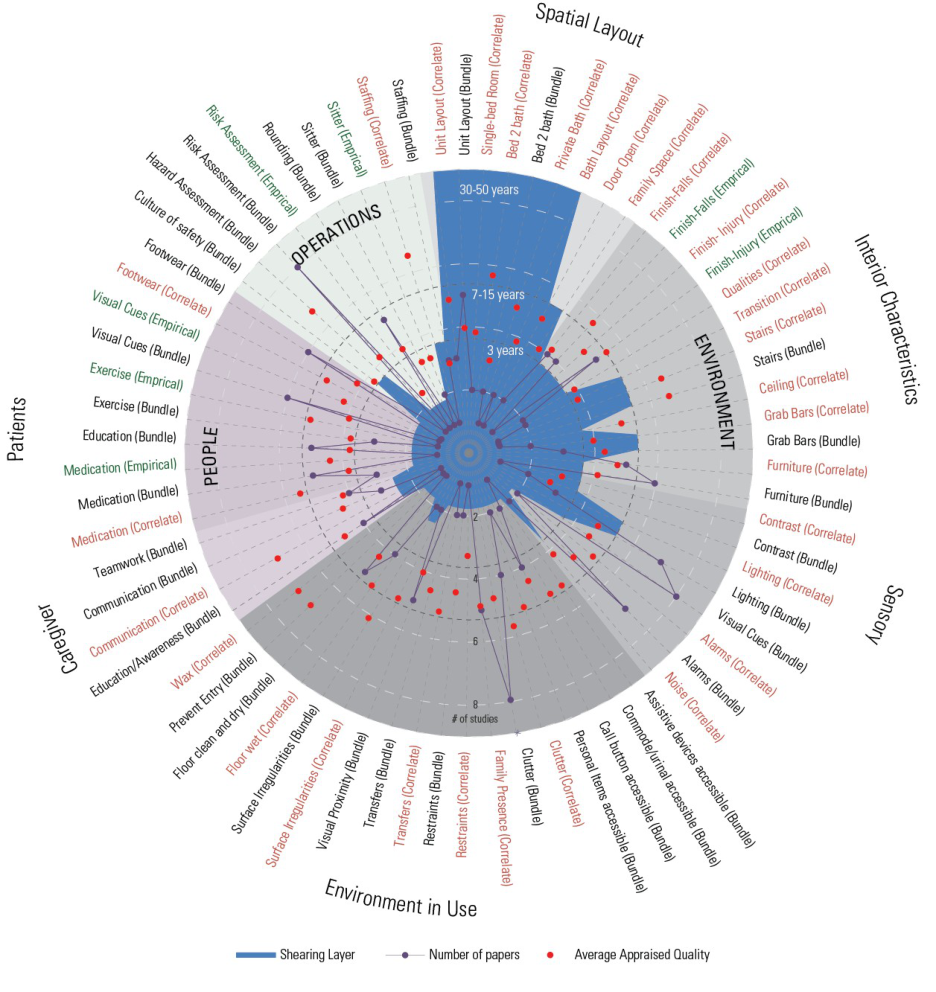
These levels flexibility or transience can be aligned with Stewart Brand’s elaboration of shearing layers described in his 1994 book, How Buildings Learn: What Happens After They’re Built. Stewart defines these layers as: Site (eternal; the legally defined lot); Structure: 30+ years (the foundation and load-bearing elements); Skin (20 years; exterior surfaces); Services: 7-15 years (HVAC (heating, ventilating, and air conditioning), electrical, elevators and escalators); Space Plan (3 years; the interior layout of walls and doors); and Stuff: daily to monthly; chairs, desks, phones, pictures. Mapping the latent condition and possible fall prevention intervention with their average approximated life highlights the permanence level of some decisions over others. Overlaying the average quality appraisal of risks and interventions, with the shearing layers, can offer additional insight into an informed decision- making process in comprehensive multifactorial strategies to reduce patient falls (Figure 4).
Figure 4: Latent Conditions and Interventions for Falls Overlaid with Shearing Layers and Appraised
Quality
REFERENCES
Bagian, J. P. (2012). Health care and patient safety: The failure of traditional approaches – how human factors and ergonomics can and MUST help. Human Factors and Ergonomics in Manufacturing & Service Industries, 22(1), 1-6. doi: 10.1002/hfm.20261 Bell, J. L., Collins, J. W., Wolf, L., Gronqvist, R., Chiou, S., Chang, W. R., . . . Evanoff, B. (2008). Evaluation of a
comprehensive slip, trip and fall prevention programme for hospital employees. Ergonomics, 51(12), 1906- 1925. doi: 904367317 [pii] 10.1080/00140130802248092 Brandis, S. (1999). A collaborative occupational therapy and nursing approach to falls prevention in hospital inpatients. J Qual Clin Pract, 19(4), 215-220. Calkins, M. P., Biddle, S., & Biesan, O. (2012). Contribution of the designed environment to fall risk in hospitals
(pp. 1-95). Concord, CA: The Center for Health Design. Carayon, P., Wetterneck, T. B., Rivera-Rodriguez, A. J., Hundt, A. S., Hoonakker, P., Holden, R., & Gurses, A. P.
(2013). Human factors systems approach to healthcare quality and patient safety. Appl Ergon. doi: 10.1016/j.apergo.2013.04.023 Catchpole, K. (2013). Spreading human factors expertise in healthcare: untangling the knots in people and systems.
BMJ Qual Saf, 22(10), 793-797. doi: 10.1136/bmjqs-2013-002036 Choi, Y. S., Lawler, E., Boenecke, C. A., Ponatoski, E. R., & Zimring, C. M. (2011). Developing a multi-systemic fall prevention model, incorporating the physical environment, the care process and technology: a systematic review. J Adv Nurs, 67(12), 2501-2524. doi: 10.1111/j.1365-2648.2011.05672.x Final Changes to the Hospital Inpatient Prospective Payment Systems and Fiscal Year 2009 Rates, CMS-1390-F
C.F.R. § F. Preventable Hospital-Acquired Conditions (HACs), Including Infections (2008). Hospital Inpatient Prospective Payment Systems for Acute Care Hospitals and the Long-Term Care Hospital Prospective Payment System and Fiscal Year 2014 Rates, CMS-1599-F C.F.R. § F. Adjustment to MS– DRGs for Preventable Hospital-Acquired Conditions (HACs), Including Infections (2013). Dacenko-Grawe, L., & Holm, K. (2008). Evidence-based practice: a falls prevention program that continues to
work. Medsurg Nurs, 17(4), 223-227. Donald, I. P., Pitt, K., Armstrong, E., & Shuttleworth, H. (2000). Preventing falls on an elderly care rehabilitation ward. Clin Rehabil, 14(2), 178-185. Drahota, A. K., Ward, D., Udell, J. E., Soilemezi, D., Ogollah, R., Higgins, B., . . . Severs, M. (2013). Pilot cluster
randomised controlled trial of flooring to reduce injuries from falls in wards for older people. Age Ageing. doi: 10.1093/ageing/aft067 Dykes, P. C., Carroll, D. L., Hurley, A., Lipsitz, S., Benoit, A., Chang, F., . . . Middleton, B. (2010). Fall prevention in acute care hospitals: a randomized trial. JAMA, 304(17), 1912-1918. doi: 10.1001/jama.2010.1567 Dykes, P. C., Carroll, D. L., Hurley, A. C., Benoit, A., & Middleton, B. (2009). Why do patients in acute care
hospitals fall? Can falls be prevented? J Nurs Adm, 39(6), 299-304. doi: 10.1097/NNA.0b013e3181a7788a Gulwadi, G., & Calkins, M. (2008). The impact of Healthcare Environmental Design of Patient Falls. Concord, CA: The Center for Health Design CHER Research Committee. Gurses, A. P., Ozok, A. A., & Pronovost, P. J. (2012). Time to accelerate integration of human factors and
ergonomics in patient safety. BMJ Qual Saf, 21(4), 347-351. doi: 10.1136/bmjqs-2011-000421 Haumschild, M. J., Karfonta, T. L., Haumschild, M. S., & Phillips, S. E. (2003). Clinical and economic outcomes of a fall-focused pharmaceutical intervention program. Am J Health Syst Pharm, 60(10), 1029-1032. Healey, F. (1994). Does flooring type affect risk of injury in older in-patients? Nurs Times, 90(27), 40-41. Heinze, C., Halfens, R. J., Roll, S., & Dassen, T. (2006). Psychometric evaluation of the Hendrich Fall Risk Model.
J Adv Nurs, 53(3), 327-332. doi: 10.1111/j.1365-2648.2006.03728.x Hendrich, A. L., Fay, J., & Sorrells, A. K. (2004). Effects of acuity-adaptable rooms on flow of patients and delivery of care. Am J Crit Care, 13(1), 35-45. Hignett, S. (2013). Why design starts with people. The Health Foundation, 1-5. Hignett, S., Griffiths, P., Sands, G., Wolf, L., & Costantinou, E. (2013). Patient Falls: Focusing on Human Factors
rather than Clinical Conditions. Proceedings of the International Symposium of Human Factors and Ergonomics in Healthcare, 2(1), 99-104. doi: 10.1177/2327857913021019 Hitcho, E. B., Krauss, M. J., Birge, S., Claiborne Dunagan, W., Fischer, I., Johnson, S., . . . Fraser, V. J. (2004).
Characteristics and circumstances of falls in a hospital setting: a prospective analysis. J Gen Intern Med, 19(7), 732-739. doi: 10.1111/j.1525-1497.2004.30387.x JGI30387 [pii] Krauss, M. J., Tutlam, N., Costantinou, E., Johnson, S., Jackson, D., & Fraser, V. J. (2008). Intervention to prevent falls on the medical service in a teaching hospital. Infect Control Hosp Epidemiol, 29(6), 539-545. doi: 10.1086/588222 Lopez, K. D., Gerling, G. J., Cary, M. P., & Kanak, M. F. (2010). Cognitive work analysis to evaluate the problem
of patient falls in an inpatient setting. J Am Med Inform Assoc, 17(3), 313-321. doi: 10.1136/jamia.2009.000422 Mayo, N. E., Gloutney, L., & Levy, A. R. (1994). A randomized trial of identification bracelets to prevent falls among patients in a rehabilitation hospital. Arch Phys Med Rehabil, 75(12), 1302-1308. Ohde, S., Terai, M., Oizumi, A., Takahashi, O., Deshpande, G. A., Takekata, M., . . . Fukui, T. (2012). The
effectiveness of a multidisciplinary QI activity for accidental fall prevention: staff compliance is critical. BMC Health Serv Res, 12, 197. doi: 10.1186/1472-6963-12-197 Oliver, D., Daly, F., Martin, F. C., & McMurdo, M. E. (2004). Risk factors and risk assessment tools for falls in hospital in-patients: a systematic review. Age Ageing, 33(2), 122-130. doi: 10.1093/ageing/afh017
Perritt, M., McCune, E., & McCune, S. (2005). Research Informs Design: Empirical Findings Suggest Recommendations for Carpet Pattern and Texture. Alzheimer's Care Quarterly, 6(4), 300-305. Schaffer, P. L., Daraiseh, N. M., Daum, L., Mendez, E., Lin, L., & Huth, M. M. (2012). Pediatric inpatient falls and
injuries: a descriptive analysis of risk factors. J Spec Pediatr Nurs, 17(1), 10-18. doi: 10.1111/j.1744- 6155.2011.00315.x Spoelstra, S. L., Given, B. A., & Given, C. W. (2012). Fall prevention in hospitals: an integrative review. Clin Nurs Res, 21(1), 92-112. doi: 1054773811418106 [pii] 10.1177/1054773811418106 Tzeng, H. M. (2011). A feasibility study of providing folding commode chairs in patient bathrooms to reduce
toileting-related falls in an adult acute medical-surgical unit. J Nurs Care Qual, 26(1), 61-68. doi: 10.1097/NCQ.0b013e3181d94f4d 00001786-201101000-00009 [pii] Tzeng, H. M., & Yin, C. Y. (2008). The extrinsic risk factors for inpatient falls in hospital patient rooms. J Nurs Care Qual, 23(3), 233-241. doi: 10.1097/01.NCQ.0000324588.91837.84 00001786-200807000-00010 [pii] Vassallo, M., Azeem, T., Pirwani, M. F., Sharma, J. C., & Allen, S. C. (2000). An epidemiological study of falls on
integrated general medical wards. Int J Clin Pract, 54(10), 654-657. Vieira, E. R., Berean, C., Paches, D., Costa, L., Decombas-Deschamps, N., Caveny, P., . . . Ballash, L. (2011). Risks and suggestions to prevent falls in geriatric rehabilitation: a participatory approach. BMJ Qual Saf, 20(5), 440-448. doi: 10.1136/bmjqs.2010.042382 Von Renteln-Kruse, W., & Krause, T. (2007). Incidence of In-Hospital Falls in Geriatric Patients Before and After
the Introduction of an Interdisciplinary Team–Based Fall-Prevention Intervention. Journal of the American Geriatrics Society, 55(12), 2068-2074. Warren, C. J., & Hanger, H. C. (2013). Fall and fracture rates following a change from carpet to vinyl floor coverings in a geriatric rehabilitation hospital. A longitudinal, observational study. Clin Rehabil, 27(3), 258-263. doi: 10.1177/0269215512455530
LISTED IN THE AHFE DIGITAL BOOKSTORE CATALOGUE
Explore the complete digital volume
Advances in Human Aspects of Healthcare
Read this individual research paper free through the original publisher, or explore the full digital proceedings book.
ISBN 978-1-4951-2093-0
Explore this ISBN in the AHFE Bookstore ↗Listed in the July 2026 bookstore catalogue; search by ISBN to confirm current availability · Digital book purchase optional