Bonnie Kudrick, Fran Greene (2021). Human Factors Engineering at the Transportation Security Administration. In: Advances in Human Aspects of Transportation: Part I. AHFE Open Access, vol. 15. https://doi.org/10.54941/ahfe100605
Transportation Security Administration Office of Security Capabilities Mission Analysis Division/Requirements and Systems Engineering 701 South 12th Street Arlington, VA 20598
The Transportation Security Administration (TSA) has three engineering psychologists within the Office of Security Capabilities (OSC) who address the human element for the Agency. While many activities and programs cannot be elaborated upon due to security restrictions, a few human factors activities will be reviewed. The human factors team is tasked with writing and reviewing acquisition documents, as well as participating in acquisition milestones that span the Acquisition Lifecycle Framework. The team also works to improve operational efficiency, training effectiveness and data mining efforts by examining how human factors and interactions can be optimized for various processes and procedures. The two primary customers are the Checkpoint Technology and Checked Baggage Technology Programs.The Office has several ongoing research efforts with a number of different performers to investigate a range of human-centered issues. For example, through the Risk-Based Security Workforce Transformation Group, hypotheses were presented regarding the specialization of Officers at the checkpoint: image analysis, passenger interface, and effective interaction. Industrial/Organizational psychologists match job task analysis competencies with batteries of assessments to test for attitudes, attributes and aptitudes that would be predictive of these competencies on the job. Additional human-centered efforts will be discussed throughout this paper.
INTRODUCTION TO HUMAN FACTORS AT TSA While recognition of the human as a key element in system design and development has been evident in various industries and government agencies for six decades, the existence of a workforce of human factors engineers is a relatively recent manifestation within the Transportation Security Administration (TSA). TSA has engineering psychologists within the Office of Security Capabilities (OSC) who provide input on how to improve operational performance with the end user in mind. While many activities and programs cannot be elaborated upon due to security, a few human factors activities will be reviewed, after a comprehensive look at the elements within the airport passenger screening checkpoint.
HUMAN FACTORS IN THE AIRPORT CHECKPOINT ENVIRONMENT Much like the Department of Defense (DoD), TSA sees the human as an integral part of a system. The system to be described for the purposes of this paper is the passenger screening checkpoint at the airport (Transportation Security Administration, 2013). Specific interfaces with the Transportation Security Officers (TSOs) and the passenger are of interest and concern to the human factors team for a number of reasons. Please note that the six positions described below are not held by six different people; they are in fact rotated and performed by every member of the checkpoint team.
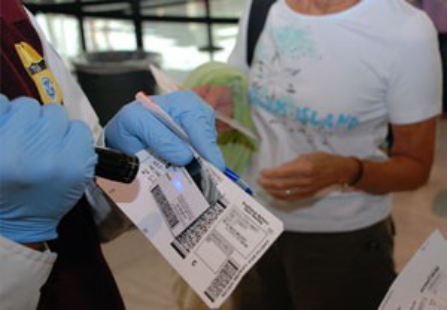
Figure 1 below shows a snapshot of your first interface with TSOs for the traveling public as they enter the checkpoint. This Officer, called a Travel Document Checker (TDC; position 1) is responsible for validating all forms of identification, checking the face with the traveler, as well as determining the boarding pass information is a match for the same passenger on the ID, at the correct airport, on the right day for the outbound flight.
Figure 1. Position 1 - Travel Document Check of Identification with black light
The human factors team has been asked to evaluate new equipment for credential authorization, as well as boarding pass scanners. The cognitive workload, visual search patterns and throughput pressure are just a few of the variables of interest.
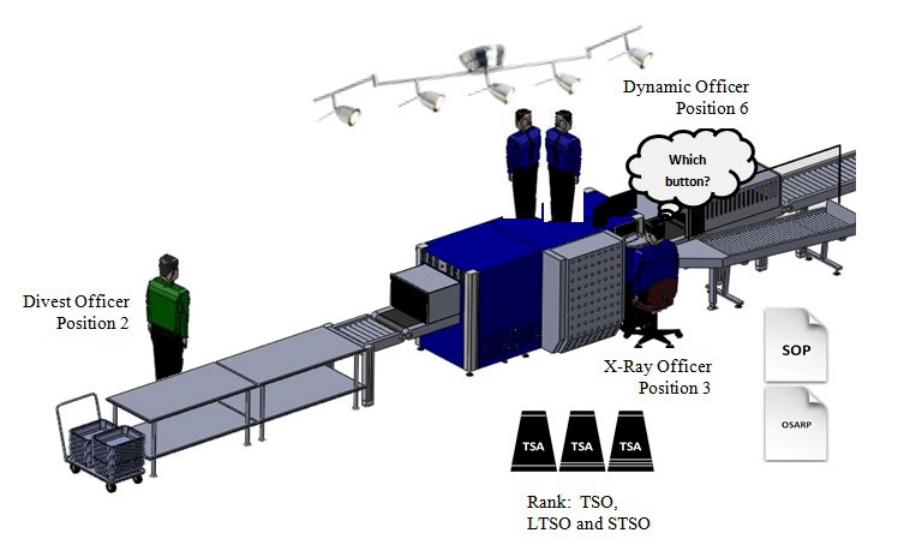
Figure 2 shows the general lay-out of the checkpoint, with a few pieces of equipment missing. These pieces of detection hardware, along with the human interface, will be discussed later in this paper.
Figure 2. Checkpoint layout with three TSO positions
The next encounter for the passenger is the Divestiture Officer (position 2, DO) shown in figure 2, above by the divestiture tables and bins, before the x-ray tunnel. The Divestiture Officer is responsible for giving instructions to passengers and assists individuals in divesting items for x-ray screening, as well as helping prepare individuals for the screening process. Their primary responsibilities entail monitoring and managing of the Advanced Imaging Technology (AIT) /Walk Through Metal Detector (WTMD) queue and instructing individuals on what to divest.
The DO will remind you to use bins to divest personal belongings such as purses, carry-on bags, backpacks, laptops, Liquids, Gels and Aerosols (LGAs) in quart-sized bags, shoes, jackets, etc. The DO is responsible for the flow of the passengers and bags into the x-ray machine and his/her success in communicating and ensuring compliance with the standard screening lane rules will mean fewer bag checks and pat downs due to items not divested.
The X-ray Officer’s (position 3) job is to interpret the x-ray images of your divested property, including your luggage contents, bins, shoes and bowls. With the airlines charging a luggage fee for each checked bag, the items per person carries through the checkpoint has correspondingly increased. This avoidance of the $25 checked bag fee by traveling passengers’ results in more items going through the x-ray machines of increasing image complexity. The tasks of the X-ray operator involving visual search principles and object recognition are crucial to our airways security. The X-ray Officer’s job is an understandably high workload, fast-paced position. The design of the operator control panel for the x-ray machines is one topic with which the human factors team has been consulted.
The X-ray screener has a difficult task of visual search, where by a decision must be made to search for a target among simultaneous distractors in the cluttered carry-on bags, backpacks, purses and bowls of random metal and other objects. The size of the bounding box that the technology algorithms generate to highlight potential threats was the subject of a recent research endeavor at TSA. Duty cycle time of how long an x-ray position should be occupied by the same TSO is a current research effort under study, including investigating how that cycle time changes as a function of the new TSA Pre✓™ allows laptops and quart bags of liquids, gels and aerosols (LGA) to remain in the bag. All these elements, including the continuous belt movement in TSA Pre✓™, are all experimental variables taken into consideration when investigating the duty cycle and scheduling.
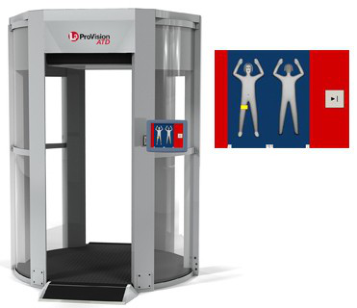
Figures 3 and 4 show the Walk Through Metal Detector (WTMD) and the Advanced Imaging Technology (AIT) hardware. Each piece of equipment has an Officer (positions 4 and 5) with responsibilities for its operation and passenger flow, including both a male and a female Screening Officer at the AIT to complete pat down procedures in the case of an anomaly identified by the machine. The AIT is primarily used to screen passengers for metallic and nonmetallic threats, including weapons and explosives, which may be concealed under clothing without physical contact.
Figure 3. Walk Through Metal DetectorFigure 4. Advanced Imaging Technology
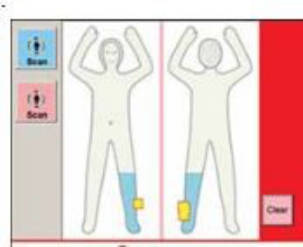
The human factors team could be asked to recommend options for number and types of alarms on the WTMD, as well as format and placement of the display on the AIT. The technology in place at many checkpoints were developed and deployed without many human/system interface considerations. The previous systems deployed in airports spawned a controversy beginning in fall 2010, when airports began using full-body scanners. The scanners quickly resulted in widely-publicized open criticism for producing images many considered too “anatomically revealing.” The airports removed all those scanners and the current upgrade to these machines means less-revealing images through advanced target recognition technology and a more amorphous image of the passenger, as shown in Figure 5.
Figure 5. Color coded (blue/male; pink/female) amorphous images of anomaly location
This cartoon-like image, with no anatomical features causing public concern, is a satisfactory change to displaying areas of concern/interest on a passenger by highlighting areas for target pat downs or additional screening.
The final position in the checkpoint, the Dynamic Officer (position 6), has a primary responsibility of standard pat downs and secondary bag checks, involving Explosives Trace Detection (ETD) of the bag and passenger.
HUMAN FACTORS TOPICS AT THE CHECKPOINT These Officer positions from Travel Document Checker through to Dynamic Officer form a cohesive team of security personnel, augmented with hardware and software contained in the deployed technology at the checkpoint. Human factors engineers at TSA are concerned with common problems in the human/system interface: cognitive processing demands, fatigue, scheduling, team performance, ergonomics, and control and display design, just to name a few.
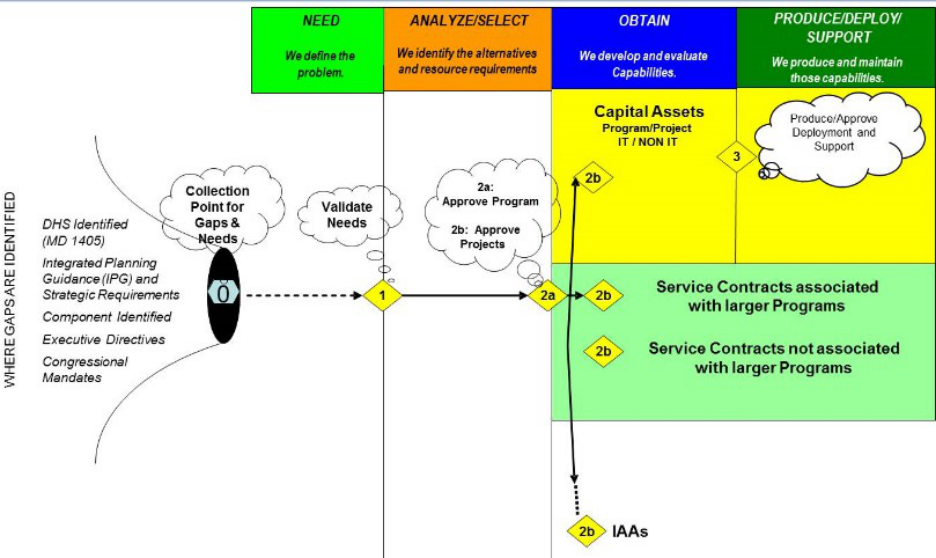
HUMAN FACTORS CONSIDERATIONS IN TSA ACQUISITION Moving to the checkpoint equipment, the human factors team is tasked with writing and reviewing acquisition documents, as well as participating in acquisition milestones that span the Acquisition Lifecycle Framework for new and modified technology. Figure 6 shows the Department of Homeland Security’s acquisition lifecycle.
Figure 6. Department of Homeland Security Acquisition Lifecycle Framework
Much like DoD, TSA has recognized the criticality of the human factors requirements to be determined as early as possible. Human factors must have a seat at the table when the new capability, initiative or need is being fleshed out, as well as constant participation in Integrated Product Teams (IPTs) and across all milestones and reviews in the phases of system development and deployment.
For new and innovative designs and developments, or modifications to existing systems, the human factors team must be engaged as soon as possible. One example is a new common Operator Control Panel for all x-ray technology that has obvious aspects and involvement of the human/system interface that drive the requirements process. With this move towards a common graphical user interface for all its equipment, the Agency will see reductions in training time and costs, and avoid idiosyncrasies between different manufacturers’ interfaces.
Bottle Liquid Scanners and Explosives Trace Detection equipment are two more pieces of complicated and sophisticated technology with which the TSO must interface. Physical ergonomics comes into play when considering the size and shape of the wand that collects a trace sample from a passenger’s hands, as well as the specifications for an intense-use x-ray screener chair at the checkpoint.
HUMAN FACTORS TOOLS AND PROCEDURES AT TSA The next area of concern where human factors is involved is with respect to tools and procedures. An example of a procedures’ question is related to the cognitive task analysis and workload assessment for a new Standard Operational Procedure (SOP) for TSA Pre✓™, and the impact of the Officer switching between a standard screening lane and a pre-check lane where the passenger does not have to divest as many garments or shoes, as well as leave large electronics and LGAs in their carry-on bags.
HUMAN / ENVIRONMENT AT THE CHECKPOINT The environment of use in the checkpoint is a noisy, bustling, often space-constrained, crowded airport, where the passengers are not always amenable to the procedures being carried out by the Officers on behalf of TSA. Challenges of operating efficiently and effectively in constrained space, lighting, noise, all combined with a wide variety of passenger types and carry-on items’ content while meeting TSA’s mission to “protect the Nation's transportation systems to ensure freedom of movement for people and commerce,” can make for a challenging solution set for the human factors engineers. The job is fast and furious and we are always presented with new and interesting challenges, all while keeping our focus to the future and way forward for this important mission at TSA.
HUMAN FACTORS AND NEW TSA INITIATIVES If you travel by air at all, you are aware of changes occurring within the Transportation Security Administration (TSA) checkpoint screening processes. Most of these are based on risk-based security principles. What it entails is the application of new intelligence-driven, risk-based screening procedures and enhanced use of combined technology in initiatives such as TSA Pre✓™ and Managed Inclusion with the use of risk assessment enhanced by Passenger Screening Canines and Behavior Detection Officers. Obviously these changes will enhance the experience for the majority of airline passengers who are low risk. This move to increase security by focusing on unknowns; expedite known and trusted travelers, has brought new SOPs and mitigations to the checkpoint. Along with welcome changes for the passenger, the jobs of the Officers at the checkpoint are also changing. This brings new human-rich research topics involving hiring, training, performance and effective writing and implementation of these new procedures. We are fortunate to have strong leadership support from the top down, and as word of the positive human factors impacts on systems requirements or new procedures increases, our team grows in size and diversity of skill sets.
ONGOING HUMAN FACTORS RESEARCH AT TSA The human factors team has a contract to investigate the feasibility of specialized positions at the checkpoint. The idea of specialization came from the Risk-Based Screening Workforce Transformation Working Group in 2012. The feasibility of investigating the importance and effect of individual characteristics, like attitudes, attributes and aptitudes for either the x-ray operator position or the remaining passenger-focused positions are currently under contract. If psychometric batteries of tests from validated instruments are predictive of performance at the checkpoint for these two positions, the impact to screening, hiring, training, and on-the-job performance, plus the impact to security are obvious.
CONCLUSION
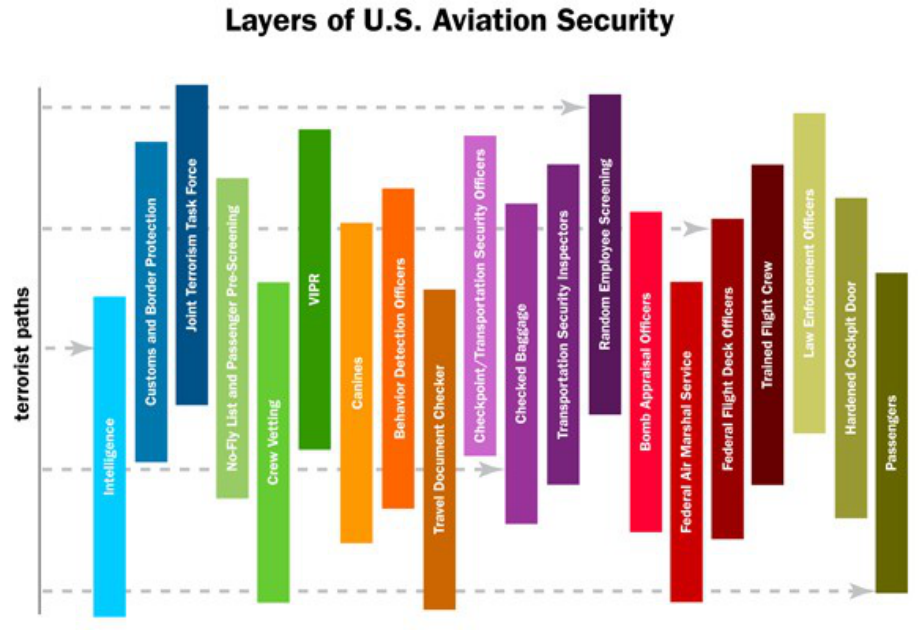
Since one of the many layers of security includes our TSOs, the human element is a key factor in the success of many of these initiatives. The team analyzes the human/system interface of new technology and procedures and examines the potential human-centered impacts and concerns, like increase in cognitive workload that might accompany these changes.
TSA continues to be forward thinking and continually establishes multidisciplinary groups to brainstorm ideas in order to help improve operational efficiencies while enhancing security. Performance metrics, hiring the best person for our Officer force, reduce turnover and retraining costs, as well as enhance passenger experience.
This paper talked mostly about the Checkpoint at airports, yet our area of interest and responsibility include Checked Baggage, Customs and Border Patrol, not to mention the multi-layers of security depicted below in Figure 7, just to name a few.
Figure 7. Layers of Aviation Security
The human factors team at TSA faces a new day, every day with different problems and exciting human-focused questions. The impact human factors makes is real and immediate. The Officers face a difficult job at our airports. The Agency equips them with excellent training, standardized procedures and cutting edge technology. The airports are fully staffed, trained, and have hardware established is in place. The next decade will mean attention on risk- based security initiatives to improve the passenger experience with no increase in threat to air travel. The human factors team is poised to bring swift solutions and results to form the data-driven decisions the Agency makes.
Advances in Human Aspects of Transportation: Part I
Read this individual research paper free through the original publisher, or explore the full digital proceedings book.
ISBN 978-1-4951-2097-8
Explore this ISBN in the AHFE Bookstore ↗Listed in the July 2026 bookstore catalogue; search by ISBN to confirm current availability · Digital book purchase optional