Adrian Morales Casas, Clara Solves Camallonga, José Manuel Rojas, Vanessa Jimenez, Fabien Divo, Aneta Andrzejczyk (2025). Smart Glasses and Augmented Reality to Support Healthcare. In: Healthcare and Medical Devices. AHFE Open Access, vol. 171, pp. 191–198. https://doi.org/10.54941/ahfe1006205
Augmented Reality (AR) holds considerable promise in transforming clinical practice by enabling hands-free, real-time access to critical information. This paper examines the current state, challenges, and prospects of integrating AR smart glasses in healthcare environments through a human-centred design framework. Despite technological advances and promising pilot studies, the widespread clinical adoption of AR remains limited due to issues in comfort, spatial accuracy, usability, and insufficient clinical validation. Smart glasses and head-mounted displays (HMDs) such as Microsoft HoloLens have demonstrated their utility in surgical settings, medical training, and remote collaboration. These systems enhance situational awareness and procedural efficiency by overlaying digital information within the clinician’s field of view. However, significant barriers such as ergonomic discomfort, inadequate integration with electronic health records (EHR), cognitive overload, and limited interoperability with hospital systems hinder broader acceptance. The EU-funded POPULAR project addresses these limitations by proposing a human-centred AR Eyewear (ARE) platform tailored for clinical settings. This platform emphasises ergonomic design, ophthalmic customisation, and context-sensitive data presentation, aligning with healthcare workflows and professional needs. A user-centric methodology underpins the development process, involving qualitative and quantitative research with healthcare professionals and educators. Through interviews, focus groups, and usability benchmarking, “training in medical procedures” emerged as the primary application area. Additional functionalities such as vital sign projection, procedural alerts, and medical history access were also prioritised. Early-stage prototypes with side-mounted and top-mounted projection systems underwent testing at the Medical University of Lodz (MUL). Field trials under simulated emergency scenarios revealed user preferences for side-mounted configurations due to superior comfort and visibility. Continuous participant feedback informed iterative design refinements, improving usability and acceptance. The study found that visual clarity, optimal fit, and seamless information integration into clinical tasks are critical to long-term adoption. Despite these advances, challenges remain. Data security and patient privacy concerns are paramount, especially when AR systems incorporate real-time audio-visual capture and EHR access. Additional barriers include device weight, thermal discomfort, and steep learning curves. The successful deployment of smart glasses in healthcare requires addressing these multifaceted issues through robust encryption, ergonomic engineering, intuitive interfaces, and structured user training. Looking ahead, further clinical validation and large-scale deployment are necessary to confirm the effectiveness and safety of AR smart glasses in real-world healthcare scenarios. By embedding user feedback throughout the development cycle, smart glasses can evolve into reliable tools that enhance care quality, clinical efficiency, and professional satisfaction across diverse medical contexts.
Augmented Reality (AR) main advantage is the capacity to provide hands- free access to critical information, which could enhance the precision and efficiency of medical professionals while reducing cognitive load during highly demanding tasks such as surgical interventions (Birlo et al., 2022). Although AR technology has gained significant traction in fields such as maxillofacial and orthopaedic surgery, its real-world implementation is still in a developmental stage. Recent systematic reviews highlight the growing number of AR-assisted surgical systems—particularly those utilising heads- up displays and optical see-through head-mounted displays (HMDs) such as Microsoft HoloLens, but also emphasise existing limitations, including comfort, use with prescription glasses, spatial perception, and system
calibration accuracy (Baashar et al., 2022; Birlo et al., 2022; Hassani et al., 2024). Despite the increasing research output and technological refinement, clinical integration remains limited, often due to challenges caused by human factors and a lack of robust clinical validation (Baashar et al., 2022). To address these issues, current research initiatives like the EU-funded POPULAR project (Prescription Optics Providing a Universal Lens for Augmented Reality eyewear) are pioneering generic AR Eyewear platforms that prioritise ergonomics, interoperability, and technological acceptance (Hernández et al., 2024). These AR systems are designed to support clinical tasks and align with user needs and workflows. This user-centric focus is essential in ensuring the successful deployment of wearable AR devices in dynamic healthcare environments, where usability, safety, and system integration are as critical as technological innovation (Bitkina, Kim and Park, 2020). This paper explores the intersection of smart AR glasses and clinical practice through a comprehensive, human-centred framework. Presenting a methodology first to understand professional needs and the technical and ergonomic requirements of AR deployment in a healthcare use case. Lastly, it will bridge the gap between emerging technology and medical practice by targeting an early-stage definition of the usability and effectiveness of AR in improving patient outcomes and supporting healthcare professionals in their demanding roles.
BACKGROUND
To contextualise this work, one must first understand the current AR real-world applications and examine how AR is utilised and its challenges within clinical environments. By analysing AR technologies’ potential and constraints, particularly smart AR glasses, we can better understand their fit within complex medical workflows. This sets the stage for a deeper exploration of how these devices function in practice and where design and integration gaps persist.
Integrating digital technologies into healthcare systems revolutionises clinical workflows, enhancing efficiency and patient outcomes. By superimposing digital data onto the physical environment, AR enables more intuitive access to medical records, surgical planning data, and intraoperative imaging. Specifically, wearable AR devices such as smart glasses and head- mounted displays (HMDs) offer hands-free, heads-up interfaces that are particularly beneficial in time-sensitive, sterile, or hands-on environments (Cheng et al., 2024).
Although AR technologies have seen widespread research and prototyping, their clinical adoption remains limited. (Khan et al., 2024). Among the key barriers are insufficient integration with existing hospital information systems, lack of standardised usability evaluations, and various operational constraints such as adaptation to the user’s eye prescription and user integration as a wearable. Next, AR applications often suffer from hardware limitations, such as low-resolution cameras and dependency
Smart Glasses and Augmented Reality to Support Healthcare 193
on environmental markers, which restrict usability for bedridden patients and compromise measurement accuracy (Romare and Skär, 2020). Head- mounted displays (HMDs), particularly the Microsoft HoloLens, are associated with physical discomfort due to device weight and fit and a steep learning curve that may induce cognitive overload among users unfamiliar with the interface (Oun et al., 2024).
In response to these challenges, smart glasses have been increasingly employed in surgical settings for tasks such as interoperative data visualisation, remote collaboration, and real-time procedural guidance, especially in emergency and maxillofacial contexts (Ok, Basoglu and Daim, 2015; Oun et al., 2024). These clinical applications are supported by growing evidence demonstrating gains in efficiency, situational awareness, and patient interaction. Parallel to these advancements, adoption strategies emphasise the importance of ergonomic design, integration of electronic health records (EHR), and user-centric development informed by Human- Computer Interaction and Technology Acceptance Models (TAMS), which identify perceived usefulness and ease of use as key drivers of clinical acceptance (Göken, Ba¸so˘glu and Dabic, 2016).
Furthermore, significant engineering efforts are directed at miniaturising core components such as displays, sensors, and batteries to fit within traditional glasses frames (Syberfeldt, Danielsson and Gustavsson, 2017). This will improve comfort, extended use, and social acceptability without compromising performance. These innovations represent a critical step toward mainstream clinical adoption by aligning technological capabilities with real-world operational needs (Elder and Vakaloudis, 2015).
TECHNOLOGICAL FRAMEWORK In the healthcare sector, the technological framework of smart glasses bridges the gap between procedural visualisation and real-time data access and telecollaboration. Their integration into clinical workflows is particularly promising in the frame of EHRs, training and telemedicine (Ghavami Hosein Pour, Karimian and Hatami Niya, 2025).
Some of the most impactful uses of AR smart glasses in healthcare are their ability to help in the adoption process of EHRs. Through voice activation, clinicians can access EHRS in real-time, document and transcribe physician- patient conversations, or reduce the need for the clinician to break eye contact to consult a desktop information system (Mitrasinovic et al., 2015).
In the past, HMDs like Google Glass have demonstrated substantial promise in medical training and education. In graduate medical education, they have been employed to enhance resident supervision, provide real- time procedural guidance, and facilitate video-based assessment of clinical skills through point-of-view broadcasting and two-way communication (Carrera et al., 2019). Now, a recent review by Baashar et al. (2023) AR in healthcare has highlighted smart glasses ‘feasibility and usability in training environments, including nursing and radiographic education. Despite limitations such as battery life and display constraints, their integration supports interactive, immersive learning and real-time feedback.
While promising, adopting smart glasses in healthcare requires careful attention to factors such as data security, connectivity reliability, device usability and adaptation to the user. Successful deployment will depend on addressing technical, ergonomic, and regulatory challenges in diverse clinical environments. The POPULAR project, a European Union-funded initiative, has proposed a human-centred Augmented Reality Eyewear (ARE) platform tailored for healthcare settings in response to these operational needs. This platform emphasises three critical design goals: (1) ergonomic optimisation for extended and daily wear, (2) ophthalmic personalisation to accommodate individual visual requirements, (3) context-sensitive display of relevant information based on user roles and workflows (Hernández et al., 2024).
USER-CENTRIC DESIGN METHODOLOGY The development of smart glasses within the healthcare domain of the POPULAR project applied a deeply user-centric design methodology to ensure relevance, usability, and clinical integration. In the initial phase, qualitative and quantitative methods were used to identify user needs. Qualitative methods involved in-depth interviews with healthcare professionals at the Medical University of Lodz (MUL), focus groups with medical students and professors, and benchmarking existing ARE technologies. Quantitative results were obtained from a European Survey completed by 267 health professionals from five countries (N = 267).
These activities led to prioritising “training in medical procedures” as the primary and most demanded healthcare use case. The focus group work also highlighted other functional demands, including the projection of vital signs, medical history data, procedural guidance, and alerts linked to patient health status. These inputs guided the definition of technical requirements, content to be projected, and interface control preferences.
HUMAN FACTORS AND USABILITY Building on the identified needs, conceptual design validation was conducted through iterative mock-ups and user assessments through a human-centred design approach. Stakeholders have started to evaluate conceptual designs and mock-ups of the eyeglasses and the mobile application, projection interfaces, and physical prototypes with different light engine placements. Two alternative light engine configurations, side-mounted and top-mounted, were prototyped and tested at the IBV laboratory. In this early-stage research, experts in ergonomics took part in a field trial with the two alternative prototypes to select the better option. The side-mounted design emerged as superior in comfort and visibility, with 86% of users rating it positively for long-term wear.
The next step of the project involves conducting an on-site analysis at the MUL facilities to assess how the training activities are currently carried out and to identify the needs and expectations of potential users. This assessment will support the definition of the integration model for the new ARE and its companion mobile application, including usage protocols as well as the management of information and content projected through the smart glasses.
Smart Glasses and Augmented Reality to Support Healthcare 195
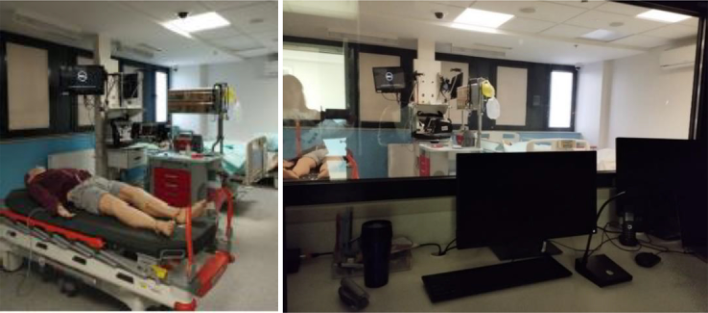
Figure 1 shows the simulation setting where students will use the smart glasses.
Figure 1: Simulation centre of the medical university of Lodz.
Additional outcomes included the importance of optimal fit, thermal comfort, visual clarity, and the seamless integration of projected information into clinical workflows. The continuous feedback loop between users and designers enabled incremental refinements that enhanced user acceptance and functional efficacy. These findings underscore the value of embedding human factors research throughout the design lifecycle of wearable technologies for healthcare applications.
CHALLENGES AND CONSIDERATIONS Current findings on the ongoing project suggest that, despite the promise of smart glasses in augmenting clinical efficiency and supporting hands-free information access, several critical challenges must be addressed to ensure successful adoption in healthcare environments. The findings suggest that data security and patient privacy are among the most significant concerns. Next, integrating real-time audio-visual capture and EHR access amplifies the need for robust encryption and user authentication protocols.
Additionally, ergonomic limitations, such as device weight, thermal comfort, and fit variability, can hinder long-term use and user acceptance, especially during prolonged procedures or shifts. Evaluations of the new product are planned at the Simulation Centre of MUL to identify these ergonomic limitations and propose solutions during product development. These solutions include improving weight distribution or incorporating elements that allow adapting the fit, such as a deformable temple or an adjustable nose bridge.
Interoperability with existing hospital information systems and variability in clinical workflows further complicate the deployment. Moreover, usability barriers such as steep learning curves, cognitive overload, and resistance from clinicians accustomed to traditional modalities underscore the importance
of intuitive interfaces and structured training. (Romare and Skär, 2023). Addressing these multifaceted challenges requires a harmonised approach that combines regulatory foresight, ergonomic engineering, and continuous user feedback to ensure that smart glasses function as reliable and non- disruptive tools within the clinical ecosystem. (Elder and Vakaloudis, 2015).
Ongoing work within the project is focused on resolving these constraints through iterative design refinement, stakeholder engagement, and integration testing to achieve a clinically viable and widely acceptable augmented reality eyewear solution.
IMPLICATIONS AND FUTURE DIRECTIONS Integrating smart glasses into healthcare can transform clinical workflows by enabling hands-free, real-time access to critical data, enhancing procedural training, and supporting remote collaboration. In high-stakes environments where efficiency, hygiene, and cognitive focus are paramount, augmented reality eyewear offers a novel interface for delivering relevant information without interrupting clinical tasks (Romare and Skär, 2020). The user-centric methodology adopted in this project ensures that the resulting technology is functional and aligned with healthcare professionals’ ergonomic and cognitive requirements.
The continued development of the Augmented Reality Eyewear platform will focus on optimising interoperability with hospital information systems, scaling personalisation features such as ophthalmic correction, and refining the context-aware display of medical content. Further clinical validation and field trials in diverse healthcare settings will be crucial for establishing effectiveness, safety, and acceptance. Moreover, as the technology matures, its application may extend beyond training to include intraoperative support, chronic disease management, and emergency care coordination. Realising this potential will require close collaboration among designers, clinicians, and regulatory bodies to ensure ethical, secure, and user-driven innovation.
CONCLUSION
This study has presented a comprehensive, human-centred approach to designing and preliminary evaluating smart glasses for clinical use, focusing on procedural training in healthcare environments. By integrating user insights from healthcare professionals and students, the development process has addressed critical human factors such as comfort, usability, and cognitive load. Iterative testing under realistic simulation scenarios has demonstrated the potential of augmented reality eyewear to support hands-free access to context-sensitive information and to enhance training efficacy. However, key data security and ergonomic design challenges in workflow integration remain central to achieving clinical acceptance. Ongoing work within the POPULAR project continues refining hardware and software components through real-world trials and stakeholder engagement. As smart glasses move toward broader adoption, aligning technical capabilities with clinical needs will be essential to ensure safe, effective, and sustainable integration into modern healthcare practice.
Smart Glasses and Augmented Reality to Support Healthcare 197
ACKNOWLEDGMENT
The POPULAR project has received funding from the European Union’s Horizon Europe research and innovation programme under grant agreement No 101135770. This publication reflects the views only of the author, and the Commission cannot be held responsible for any use which may be made of the information contained therein. The authors would like to thank all partners of the Popular Consortium.
REFERENCES
Baashar, Y. et al. (2022) ‘Effectiveness of Using Augmented Reality for Training in the Medical Professions: Meta-analysis’, JMIR Serious Games, 10(3). Available at: https://doi.org/10.2196/32715. Baashar, Y. et al. (2023) ‘Towards Wearable Augmented Reality in Healthcare: A
Comparative Survey and Analysis of Head-Mounted Displays’, Int J Environ Res Public Health, 20(5). Birlo, M. et al. (2022) ‘Utility of optical see-through head mounted displays in augmented reality-assisted surgery: A systematic review’, Medical Image Analysis, 77, p. 102361. Available at: https://doi.org/10.1016/J. MEDIA.2022.102361. Bitkina, O. V., Kim, H. K. and Park, J. (2020) ‘Usability and user experience of
medical devices: An overview of the current state, analysis methodologies, and future challenges’, International Journal of Industrial Ergonomics, 76, p. 102932. Available at: https://doi.org/10.1016/J. ERGON.2020.102932. Carrera, J. F. et al. (2019) ‘A Systematic Review of the Use of Google Glass in Graduate Medical Education’, J Grad Med Educ, 11(6), pp. 637–648. Cheng, A. et al. (2024) ‘Use of augmented and virtual reality in resuscitation training:
A systematic review’, Resuscitation Plus, 18. Available at: https://doi.org/10.1016/ j.resplu.2024.100643. Elder, S. and Vakaloudis, A. (2015) ‘Towards uniformity for smart glasses devices: An assessment of function as the driver for standardisation’, in 2015 IEEE International Symposium on Technology and Society (ISTAS), pp. 1–7. Available at: https://doi.org/10.1109/ISTAS.2015.7439424. Ghavami Hosein Pour, B., Karimian, Z. and Hatami Niya, N. (2025) ‘A narrative
review of advancing medical education through technology: The role of smart glasses in situated learning’, BMC Med Educ, 25(1), p. 359. Göken, M., Ba¸so˘glu, A. N. and Dabic, M. (2016) ‘Exploring adoption of smart glasses: Applications in medical industry’, in 2016 Portland International Conference on Management of Engineering and Technology (PICMET), pp. 3175–3184. Available at: https://doi.org/10.1109/PICMET.2016.7806835. Hassani, S. et al. (2024) ‘A systematic review of data fusion techniques for optimised
structural health monitoring’, Information Fusion, 103, p. 102136. Available at: https://doi.org/10.1016/J.INFFUS.2023.102136. Hernández, J. L. et al. (2024) ‘Augmented Reality Eyewear with ophthalmic correction for mainstream applications, overcoming acceptance barriers through Human Factors Plan’, Health Informatics and Biomedical Engineering Applications, 142(142). Available at: https://doi.org/10.54941/AHFE1005068. Khan, H. U. et al. (2024) ‘A comprehensive study on unravelling the advances
of immersive technologies (VR/AR/MR/XR) in the healthcare sector during the COVID-19: Challenges and solutions’, Heliyon, 10(15). Available at: https:// doi.org/10.1016/j.heliyon.2024.e35037.
Mitrasinovic, S. et al. (2015) ‘Clinical and surgical applications of smart glasses’, Technol Health Care, 23(4), pp. 381–401. Ok, A. E., Basoglu, N. A. and Daim, T. (2015) ‘Exploring the design factors of
smart glasses’, in 2015 Portland International Conference on Management of Engineering and Technology (PICMET), pp. 1657–1664. Available at: https:// doi.org/10.1109/PICMET.2015.7273236. Oun, A. et al. (2024) ‘Mobile Devices or Head-Mounted Displays: A Comparative Review and Analysis of Augmented Reality in Healthcare’, IEEE Access, 12, pp. 21825–21839. Available at: https://doi.org/10.1109/ACCESS.2024.3361833. Romare, C. and Skär, L. (2020) ‘Smart Glasses for Caring Situations in Complex
Care Environments: Scoping Review’, JMIRMhealth Uhealth, 8(4), p. e16055. Romare, C. and Skär, L. (2023) ‘The use of smart glasses in nursing education: A scoping review’, Nurse Educ Pract, 73, p. 103824. Syberfeldt, A., Danielsson, O. and Gustavsson, P. (2017) ‘Augmented Reality Smart
Glasses in the Smart Factory: Product Evaluation Guidelines and Review of Available Products’, IEEE Access, 5, pp. 9118–9130. Available at: https://doi.org/ 10.1109/ACCESS.2017.2703952.
LISTED IN THE AHFE DIGITAL BOOKSTORE CATALOGUE
Explore the complete digital volume
Healthcare and Medical Devices
Read this individual research paper free through the original publisher, or explore the full digital proceedings book.
ISBN 978-1-964867-47-2
Explore this ISBN in the AHFE Bookstore ↗Listed in the July 2026 bookstore catalogue; search by ISBN to confirm current availability · Digital book purchase optional