Risk in Older Persons (2020). Influence of Footwear on Fall. In: Advances in Social and Organizational Factors. AHFE Open Access, vol. 9. https://doi.org/10.54941/ahfe100348
It has been shown that several gait parameters are predictive for fall risk in older persons. There is evidence that footwear can influence foot position and gait patterns, especially in older persons. We carried out experiments to study the effects of type of footwear on gait patterns in persons aged 60+. We found an association between the type of footwear and certain gait parameters that are predictive for falls. In conclusion footwear can increase fall risk. Footwear for older people should be designed in such a way that risk of falls is minimized.
Falls are a major problem in the older population. One third of community dwelling older persons experience a fall at least once a year, of those fallers 50% fall more than one time per year (Campbell, et al., 1990; Tinetti & Williams, 1997; Tromp, et al., 2001). Most falls occur in and around the house (VeiligheidNL, n.d.). In a pilot study at the Geriatrics Outpatients Clinic in the Erasmus University Medical Center we found that older people prefer to wear open heel slippers in and around the house (Oei, 2005; VeiligheidNL, n.d.).
The association between footwear and falls has been demonstrated (Boelens, Hekman, & Verkerke, 2013). Inappropriate footwear has been identified as a contributor of up to 45% of falls (Gabell, Simons, & Nayak, 1985). It has been found that walking barefoot or in socks elevates fall risk (Koepsell, et al., 2004; Menz, Morris, & Lord, 2006). Also wearing shoes with a low collar or a high heel may increase fall risk. These features of shoe design have been implicated as having an impact on balance (Lord & Bashford, 1996; Lord, Bashford, Howland, & Munroe,
1999).
Several investigators have reported effects of footwear on gait characteristics (Arnadottir & Mercer, 2000; Stephen, et al., 2012). Wearing walking shoes increased gait speed compared to wearing dress shoes (Arnadottir & Mercer, 2000). The application of insoles with a mechanical stimulation to the soles of the feet decreased stride-to-stride variability in step width and stride length (Stephen, et al., 2012).
Gait parameters as measured with an electronic walkway system have been shown to be associated with increased fall risk in several studies (Camicioli & Licis, 2004; Hausdorff, Rios, & Edelberg, 2001; Maki, 1997; McGough, Logsdon, Kelly, & Teri, 2013; Nakamura, Meguro, & Sasaki, 1996; Sterke, van Beeck, Looman, Kressig, & van der Cammen, 2012; Verghese, Holtzer, Lipton, & Wang, 2009).
Literature on the use of open heel slippers and fall risk is lacking. We were interested in the possible relationship between use of open heel slippers and fall risk. In this study we used gait parameters as a derivative of fall risk. We therefore investigated the influence of footwear, including an open heel slipper, on gait parameters which are associated with fall risk in older persons.
Project GERON in Delft Before starting an experimental study on this topic, we first did an explorative study into the variation of characteristics of healthy older people that could be relevant to designers. This study was first described in Steenbekkers and Beijsterveldt (1998) and later the data are also included on the DINED platform (dined, n.d.) and are shown under DINED2004. Is daily-life equipment sufficiently adapted to use by the older persons? Or are product developers biased towards voting, healthy males with technical skills and insight? When designing products to he handled at home or in a professional situation or in the public domain, designers ought to base their choices of technical properties on the capacities, habits and preferences of the user group. Although there is a continuing increase in the grey sector of society, design-relevant data on older persons users are almost nonexistent. This project attempts to narrow this gap in gerontechnology: product design for the older persons. This name is closely related to Inclusive Design, which focuses on design for older persons and handicapped.
In this study 750 subjects, who lived independently, were assessed. In total about 80 variables, all more or less important for product use, were measured. The sample consisted of four age groups ranging from 50 to over 80 years of age: a group of young people (20 - 30 years) was also studied for the purpose of comparison. Women and men participated in about equal numbers. The variables covered a variety of human characteristics, such as body and limb measurements, maximum forces exerted, speed of movements, eye-hand co-ordination, etc., as well as their seeing, hearing and feeling capacities and certain aspects of memory. In addition, a questionnaire was used to probe the problems experienced with various products.
This study consisted of a survey of how characteristics differ between the age groups or generations. Some variables proved to deteriorate earlier and some later in life, and some hardly at all. The theory that the ageing process means a slow increase in the differences between people, i.e. individualization, is confirmed. The ageing process also implies a decrease in the level of capacities: older people exhibit a growing tendency to resemble weaker young people. In most respects, however, differences between people are influenced more by sex than by age. These general rules can provide inspiration for product innovators. Inclusive Designers can use these results in their innovations to include older persons and handicapped when designing products and or services.
About Feet and Walking A selection of the above 80 project variables concerned feet and walking and are described for this paper. In daily life walking is an integral part of many activities, such as shopping, visiting friends, moving around. In literature, information can be found about the influence of step length and walking velocity on the pattern of the effects of age and balance (Berg & Norman, 1996; Judge, Ounpuu, & Davis, 1996). The influence of age on the pattern of walking can probably be explained by such factors as deterioration of visual capacities, resulting in diminished visual contrast sensitivity. This together with reduced sense of balance and slower reflexes results in fear of falling, which is compensated for by a different pattern of walking whereby the feet remain in contact with the floor for a longer period of time. The steps of the older persons are 12 to 18 % shorter compared to younger individuals. The velocity of walking also decreases with age. After the age of 70 the walking velocity decreases by 12 to 16 % per decade (Judge, et al., 1996).
METHOD OF MEASUREMENT Choice of variables
Step length and walking velocity are the variables chosen to be measured. The relevance of step length to product design is the fact that the space for walking has to be known when designing, for example, push cars, trolleys and other products which precede a walking individual. Knowledge of walking velocity at a fast pace is required to assess the period of time needed to cross a street. For the sake of comparison, walking velocity at normal pace was measured too. Step length was assessed by asking the subjects to walk at normal pace. They were told to stand still at the tenth step and not to change the placement of their feet. The distance from the starting point to the heel of the foot that made the tenth step was measured and divided by ten to obtain an estimation of step length. The number of steps was more or less arbitrary. It had to be enough to achieve a normal walking pattern and to counteract the effect of mass inertness on balance and gait. Walking velocity was measured with a stopwatch, clocking the time the subjects needed to walk a distance of 10 meter. First they had to walk at their normal pace, defined as the pace which they 'usually adopt when walking outside'. After that they had to walk the same distance at fast pace, defined as the pace adopted if they 'had to catch a bus or train, but without running'.
RESULTS
The results of the (Spps-function) Scheffé post hoc show that, generally speaking, people above 75 years of age differ significantly from younger subjects. Individuals between 70 and 74 years of age are slower than those below 65. The age group 65 to 69 years differs from the younger group.
The differences between men and women were statistically significant. Men walk faster and take larger steps than women, as could be expected. This difference might be explained by differences in leg length between men and women.
Stepwise regression analysis was applied to assess the relative influence of leg length, age and sex on step length. The results indicate that all three variables have a significant effect on step length. The size of beta shows that sex is the most important factor, followed by leg length and age.
The formula describing this relationship is: step length = 42.2 + 0.61 * leg length - 0.18*age - 7.2 *sex (sex: male = 1 and woman = 2)
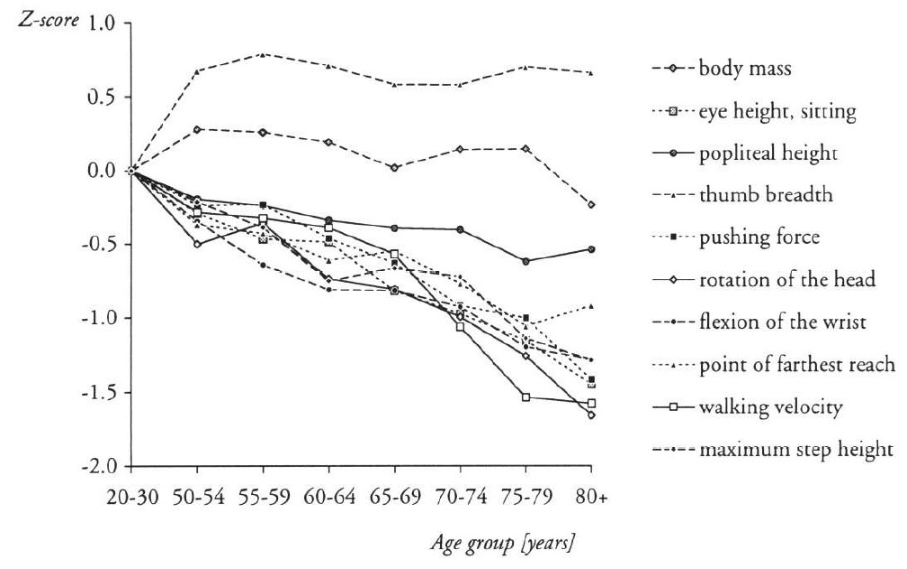
Some other results: our step length is significantly decreasing with our age (Table 1) as does our pace (Table 2).
Table 1 The breakdown of step length with age groups
Table 2 The breakdown of the pace with age groups
Figure 1. Influence of age on walking velocity and other variables
DESIGN OF FOOTWEAR Most of the design students of our school use our DINED information system (dined, n.d.) when they need ergonomics or anthropometric information because they are taught from the first year on how to use these data. One of the master students, Bianca Oei (Oei, 2005), designed a pair of shoes which could contribute to a decrease in fall risk in older persons. After observational research she saw that older persons want to wear safe shoes but tend to wear ill-fitting and hazardous footwear. This because they have problems getting in and out their shoes.. She decided to design a shoe that offers a good fixation around the ankles as with shoelaces but without the hassle of bending over to fasten it. For easy stepping in and out her design contains a moveable heel counter
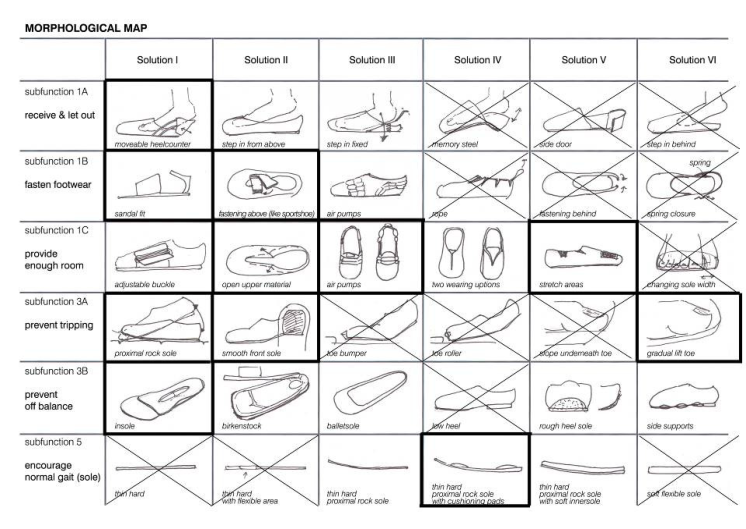
Her principle solutions (figure 2 and 3) were done together with the supervisory team. The chosen ideas were all rated as good. An important thing is that the actual user of the footwear should also be attracted to the concept and the way it should be used. It might be that their perspective on the principle solutions and concepts are very different, which could lead to an unsuccessful product.
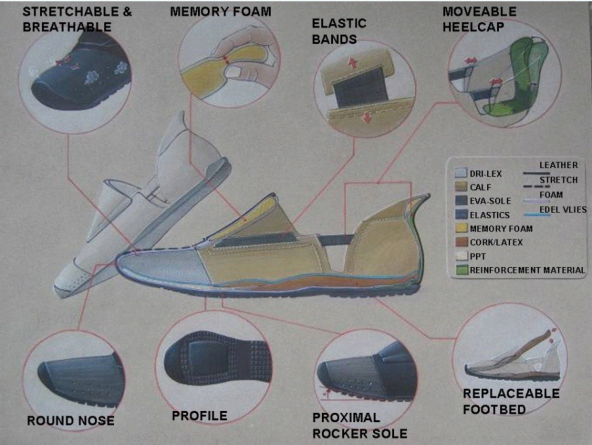
This means the design proposal (figure 4) provides in the following needs: A. to reduce risk of falls:
Good fixation around the ankles and easy to fasten. A gradual toe lift to prevent stumbling. A flat heel with maximum inclination of 14˚ (Snijders 2005). A sole with high mid-sole hardness, low mid-sole thickness for sufficient feedback. Large heel surface for stability. A light weighted sole to prevent tiring out the user.
B. to adapt to older persons needs: Enough space in the toe box (10 and 15 mm (Snijders 2005)) Variability in width to be compatible for people with oedema A low shaft perceived as more convenient and appreciated as ‘ their’ style. Space for personal foot bed. Soft leather upper material perceived as best quality material together .
The characteristic features of the design
1. The combination of properties which all lead to an ideal shoe for seniors. Comfortable and supporting shoes: The design offers the ease and comfort of a slipper but at the same time the stability and support of a sturdy shoe. 2. Putting on and taking off footwear without the need to bend over. A moveable heel counter in the shoe, which has the form of a shoe horn, makes it possible to easily put on and take off shoes without the need for the consumer to bend over. While entering the shoe with the foot, the heel counter is leaning backward and is making room for the foot. When the foot is in the shoe the heel counter bends back in its original position. With this application, people with hip problems and/or stiff fingers will be able to stay more independent putting their shoes on and taking them off, while wearing good fixated in-house shoes. 3. The use of memory foam in the filling of the upper material of the shoe which offers extra comfort to changeable measurements of the foot. It offers enough space for foot problems like a hallux valgus, hammertoes and wide feet. The upper material has memory foam in its lining. This way the shoe can adapt itself to changing volumes of the feet caused by oedema, without putting pressure on the (sometimes sensitive) feet.
Feet
Protecting Feet (Indoor use) Subfunction 2
Donning and Doffing Subfunction 1
Lower the risk of falls Subfunction 3
Upper material Outsole
Collar Prevent -tripping Subfunction 3a
Shaft
Receive & let out the feet Subfunction 1a
Heel counter
Fastening
Insoles & Outsoles
Fasten foot with footwear Subfunction 1b
Prevent - off balance (Or provide stability) Subfunction 3b
Last Toe box Provide enough room Subfunction 1c Nose, Vamp
Figure 2. Function Structure of a shoe as a means to walk and not slip away.
Figure available in the original PDF paper.
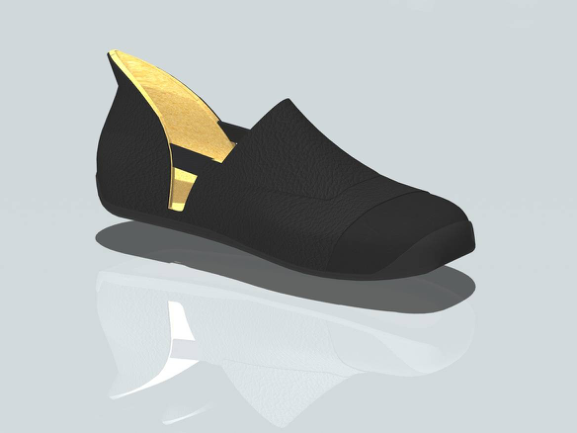
Figure 3. Morphological mapFigure 4. Characteristics of the design proposalFigure 5. Final rendering of the design
CONCLUSIONS
After the research of design relevant characteristics we did get more insight in the influence of walking related variables of senior citizens and their change with age. These results were used in the design of footwear which should contribute to the prevention of falls in older persons. This design was manufactured by a company and is tested with a sample of older persons. The results will be described in a following paper.
REFERENCES
Arnadottir, S. A., & Mercer, V. S. (2000). Effects of footwear on measurements of balance and gait in women between the ages of 65 and 93 years. Phys Ther, 80(1), 17-27. Berg, K., & Norman, K. E. (1996). Functional assessment of balance and gait. Clin Geriatr Med, 12(4), 705-723. Boelens, C., Hekman, E. E., & Verkerke, G. J. (2013). Risk factors for falls of older citizens. Technol Health Care, 21(5), 521-
533. Camicioli, R., & Licis, L. (2004). Motor impairment predicts falls in specialized Alzheimer care units. Alzheimer Dis Assoc Disord, 18(4), 214-218. Campbell, A. J., Borrie, M. J., Spears, G. F., Jackson, S. L., Brown, J. S., & Fitzgerald, J. L. (1990). Circumstances and
consequences of falls experienced by a community population 70 years and over during a prospective study. Age Ageing, 19(2), 136-141. Gabell, A., Simons, M. A., & Nayak, U. S. (1985). Falls in the healthy older persons: predisposing causes. Ergonomics, 28(7), 965-975. Hausdorff, J. M., Rios, D. A., & Edelberg, H. K. (2001). Gait variability and fall risk in community-living older adults: a 1-year
prospective study. Arch Phys Med Rehabil, 82(8), 1050-1056. Dined. http://dined.nl/ergonomics/ Judge, J. O., Ounpuu, S., & Davis, R. B., 3rd. (1996). Effects of age on the biomechanics and physiology of gait. Clin Geriatr Med, 12(4), 659-678. Koepsell, T. D., Wolf, M. E., Buchner, D. M., Kukull, W. A., LaCroix, A. Z., Tencer, A. F., et al. (2004). Footwear style and risk
of falls in older adults. J Am Geriatr Soc, 52(9), 1495-1501. Lord, S. R., & Bashford, G. M. (1996). Shoe characteristics and balance in older women. J Am Geriatr Soc, 44(4), 429-433. Lord, S. R., Bashford, G. M., Howland, A., & Munroe, B. J. (1999). Effects of shoe collar height and sole hardness on balance in older women. J Am Geriatr Soc, 47(6), 681-684. Maki, B. E. (1997). Gait changes in older adults: predictors of falls or indicators of fear. J Am Geriatr Soc, 45(3), 313-320. McGough, E. L., Logsdon, R. G., Kelly, V. E., & Teri, L. (2013). Functional mobility limitations and falls in assisted living
residents with dementia: physical performance assessment and quantitative gait analysis. J Geriatr Phys Ther, 36(2), 78- 86.
Menz, H. B., Morris, M. E., & Lord, S. R. (2006). Footwear characteristics and risk of indoor and outdoor falls in older people.
Gerontology, 52(3), 174-180. Nakamura, T., Meguro, K., & Sasaki, H. (1996). Relationship between falls and stride length variability in senile dementia of the Alzheimer type. Gerontology, 42(2), 108-113. Oei, B. H.Y.. (2005). Design of footwear for the prevention of falls among seniors. Masters' thesis. Final Master project Faculty
Industrial Design Engineering, Delft University of Technology, Delft, The Netherlands. Steenbekkers, L. P. A., & Beijsterveldt, C. E. M. (1998). Design Relevant Characteristics of Older Users. Delft: Delft University Press. Stephen, D. G., Wilcox, B. J., Niemi, J. B., Franz, J. R., Kerrigan, D., & D'Andrea, S. E. (2012). Baseline-dependent effect of
noise-enhanced insoles on gait variability in healthy older persons walkers. Gait Posture, 36(3), 537-540. Sterke, C. S., van Beeck, E. F., Looman, C. W., Kressig, R. W., & van der Cammen, T. J. (2012). An electronic walkway can predict short-term fall risk in nursing home residents with dementia. Gait Posture, 36(1), 95-101. Tinetti, M. E., & Williams, C. S. (1997). Falls, injuries due to falls, and the risk of admission to a nursing home. N Engl J Med,
337(18), 1279-1284. Tromp, A. M., Pluijm, S. M., Smit, J. H., Deeg, D. J., Bouter, L. M., & Lips, P. (2001). Fall-risk screening test: a prospective study on predictors for falls in community-dwelling older persons. J Clin Epidemiol, 54(8), 837-844. Veiligheid NL. http://www.veiligheid.nl/csi/veiligheidnl.nsf/content/brongegevens-onderzoek. Retrieved 12 February, 2014 Verghese, J., Holtzer, R., Lipton, R. B., & Wang, C. (2009). Quantitative gait markers and incident fall risk in older adults. J
Gerontol A Biol Sci Med Sci, 64(8), 896-901.
LISTED IN THE AHFE DIGITAL BOOKSTORE CATALOGUE
Explore the complete digital volume
Advances in Social and Organizational Factors
Read this individual research paper free through the original publisher, or explore the full digital proceedings book.
ISBN 978-1-4951-2102-9
Explore this ISBN in the AHFE Bookstore ↗Listed in the July 2026 bookstore catalogue; search by ISBN to confirm current availability · Digital book purchase optional